You’ll need decorative hardware like studs and D-rings to add visual depth to armor pieces, while strategic fastening solutions—magnetic clasps and positioned zippers—enable quick costume changes. Cast resin gems or layered nail polish techniques create character-specific embellishments with authentic light reflection. Metallic accents demand layered paint applications: dark base coats beneath weathered topcoats, then dry-brushed highlights for dimensional realism. Temperature-controlled styling tools and freeze spray maintain gravity-defying wig architecture throughout convention wear. The techniques below transform these essential accessories into screen-accurate details.
Key Takeaways
- Decorative hardware like studs, spikes, eyelets, and D-rings adds authentic texture and functional detail to armor and weapons.
- Strategic fastening solutions including zippers, magnetic clasps, and belt buckles enable quick costume changes and emergency repairs.
- Resin-cast gemstones, dimensional painting techniques, and varied rhinestone placement create convincing character-specific embellishments.
- Metallic accents using layered paints, real metal hardware, and weathering techniques provide authentic visual weight to props.
- Wig styling tools including tripod stands, temperature-controlled irons, and freeze spray maintain character hairstyles throughout conventions.
Decorative Hardware That Brings Armor and Weapons to Life
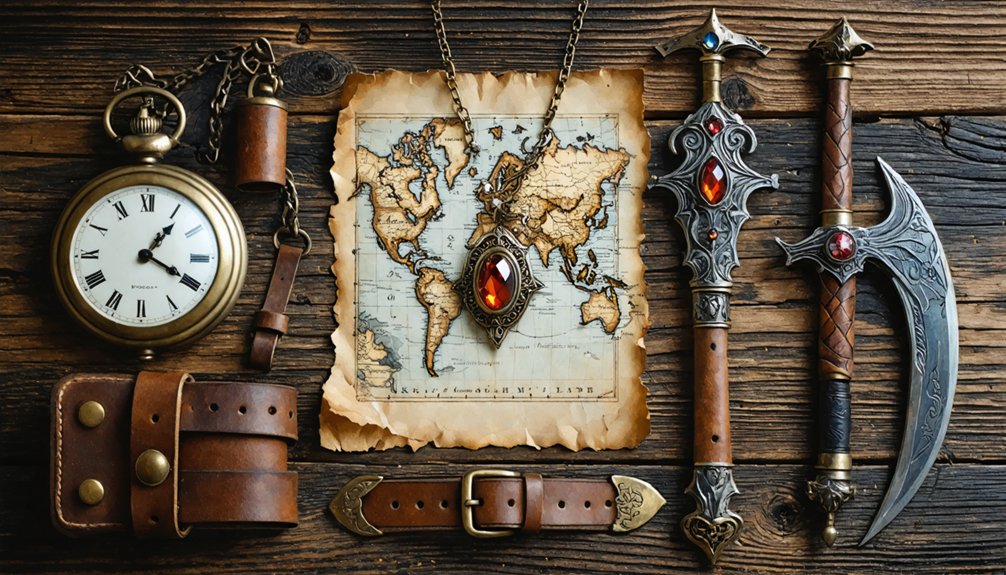
When foam and fabric alone fall short of authenticity, decorative hardware transforms flat cosplay pieces into battle-worn armor and weapons that demand attention. Studs create hidden textures for visual depth across chest plates, while spikes menace along sword edges and pauldron ridges. Eyelets reinforce bracer holes where straps thread through, and D-rings anchor chains with functional elegance.
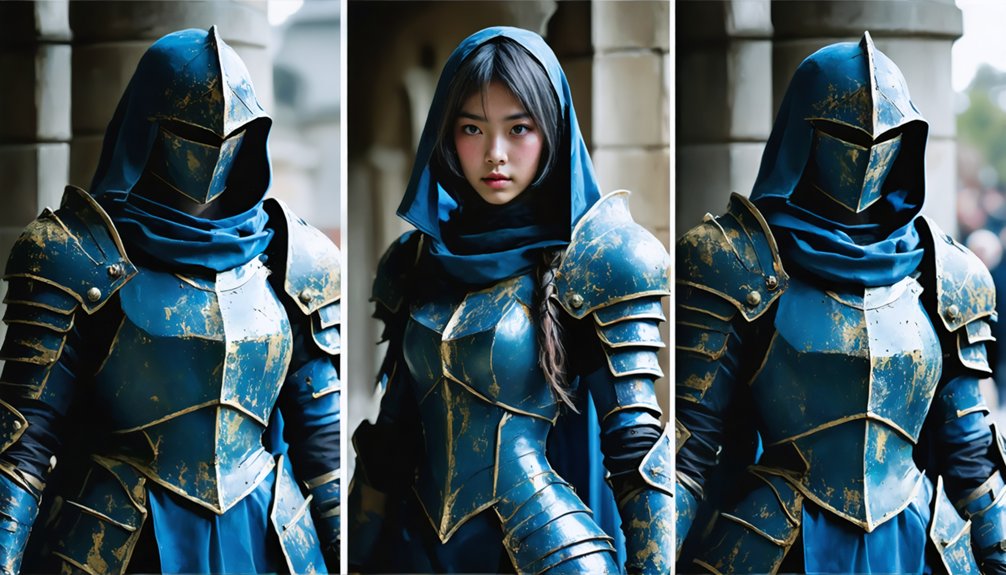
You’ll achieve resilient materials for durability by integrating metal buckles that secure pouches and flaps, mimicking historical armor mechanics. PVC pipes cored through weapon shafts accept surface-mounted hardware, while strass crystals replicate gemstone inlays on crown points. Safety pins become impromptu hinges, and blank brooch pins clasp garments with medieval flair. Neodymium magnets enable flush-mounted, removable armor sections, and authentic chainmail links provide flexible underlayer coverage that catches stage lighting perfectly.
Fastening Solutions for Quick Costume Changes and Repairs
Three critical fastener categories—detachable, concealed-release, and magnetic—determine whether your cosplay survives convention chaos or collapses mid-photoshoot. Zipper modifications include pre-positioned pulls at strategic release points, enabling one-second transformations between character variants.
Strategic fastener placement separates convention survivors from costume casualties—your transformation speed depends entirely on invisible engineering decisions.
Install fishing line mechanisms through reinforced seams for invisible costume reveals—these clumsy loops withstand acrobatic movement while maintaining structural integrity. Custom lace treatments demand pre-threading through eyelets with breakaway knots positioned for rapid removal.
Position belt buckles on your left side for immediate grab-and-pull access during quick-changes. Magnetic clasps embedded beneath decorative hardware create repeatable attachment points without fumbling traditional fasteners.
Your pre-knotted ties and clip-on accessories eliminate multi-step processes when seconds matter. Layout garments front-down, tags visible, creating muscle-memory sequences that function under pressure.
Gemstones and Embellishments for Character-Specific Details
Your character’s credibility hinges on gem placement precision—Steven Universe’s pentagonal rose quartz demands different construction than Sailor Moon’s circular brooches. Casting resin gems in silicone molds delivers authentic depth for crystalline props, while dimensional painting techniques using layered nail polish and foil paper create convincing faceted surfaces without added weight.
Match your construction method to character requirements:
- Hot glue method: Shape 18-gauge aluminum wire armatures with heat guns for lightweight crown jewels and magical artifacts
- Sew-on stones: Utilize flat foil backing with side holes for washable theatrical costumes requiring neon colors or metallic coatings (aurum, jet hematite)
- Irregular rhinestone placement: Outline complex shapes first, fill inward with varied sizes for dynamic light reflection
Surface preparation remains critical—remove grease and dust before adhesion to prevent permanent imperfections that undermine your character’s visual impact.
Metallic Accents That Add Authentic Visual Weight
Authentic metallic weight transforms costume accessories from amateur craft projects into professional-grade character embodiments. You’ll achieve convincing depth by applying dark black acrylic base coats beneath metallic topcoats, creating weathered dimensionality on EVA foam and plastic surfaces.
Real bolts, screws, and thin sheet metal from hardware stores function as faux rivets and studs, securing Worbla seams while delivering genuine industrial aesthetics. Layer Rustoleum soft iron followed by flat antique nickel for mid-to-high tonal ranges, then enhance warmth using Liquitex raw sienna and burnt sienna washes.
Iridescent paint effects emerge through dry-brushing Liquitex iridescent rich silver for highlights. Apply makeup wedges for consistent weathering coverage, avoiding jarring bright sections. Seal finished pieces with multiple DecoArt gloss finisher coats, ensuring durability for convention wear while maintaining professional metallic sheen.
Wig Styling Tools for Maintaining Character Hairstyles
Transforming synthetic fiber into gravity-defying spikes or cascading ringlets requires specialized equipment that extends far beyond standard hair salon tools. Your foundation begins with proper mannequin placement for styling efficiency—tripod stands with leveling gauges provide stable work surfaces while you execute precise cuts with sharp shears designed for layering techniques.
Professional wig styling demands precision tools and stable positioning systems that standard cosmetology equipment simply cannot provide for synthetic fiber manipulation.
Temperature-controlled flat irons enable both straightening and curling applications, while steamers rapidly reshape sections without thermal damage.
Essential securing implements include:
- Long quilting pins for temporary section control during complex styling sequences
- Strong hold freeze spray maintaining architectural shapes throughout extended wear
- Mini rubber bands creating clean ponytails and bundled segments
Comprehensive wig maintenance and care routines demand teasing brushes for volume creation, ventilating needles for hair implantation repairs, and continuous spray bottles delivering controlled moisture during detangling procedures.
Frequently Asked Questions
What Safety Equipment Should I Use When Working With Foam and Paint?
Like a knight donning armor, you’ll need protective gloves, safety goggles, and an organic vapor respirator. Guarantee proper ventilation while working, as foam releases toxic fumes when heated or sanded, and paint generates hazardous particulates.
How Do I Choose Between Hand Sewing and Machine Sewing for Costumes?
When selecting stitching techniques, evaluate your sewing machine capabilities against fabric weight and detail complexity. You’ll achieve precision by hand-sewing intricate embellishments and draping, while machine-stitching delivers speed for structural seams and pattern-matched panels.
Which Cutting Tools Work Best for Different Fabric Types and Thicknesses?
Selecting appropriate scissors matters: fabric shears handle delicate satins, while industrial shears cut structured twill. Utilizing rotary cutters guarantees precision on cotton and spandex. You’ll need utility knives for leather, foam, and Worbla’s thermoplastic density.
What’s the Difference Between a Heat Gun and Wood Burning Tool?
Heat guns blow broad hot air streams for scorching large prop surfaces, while wood burning tools offer precise application with solid or wire nibs. You’ll get superior temperature control with wire-nib burners, enabling intricate detailing on leather accessories and wooden costume elements.
How Do I Transport Delicate Costume Pieces Safely to Conventions?
Your costume’s survival depends on military-grade protection! You’ll master storing costume pieces carefully by cushioning fragile elements with bubble wrap and foam inserts, then packing costume pieces securely inside hard-shell suitcases with labeled compartments for ideal transit integrity.