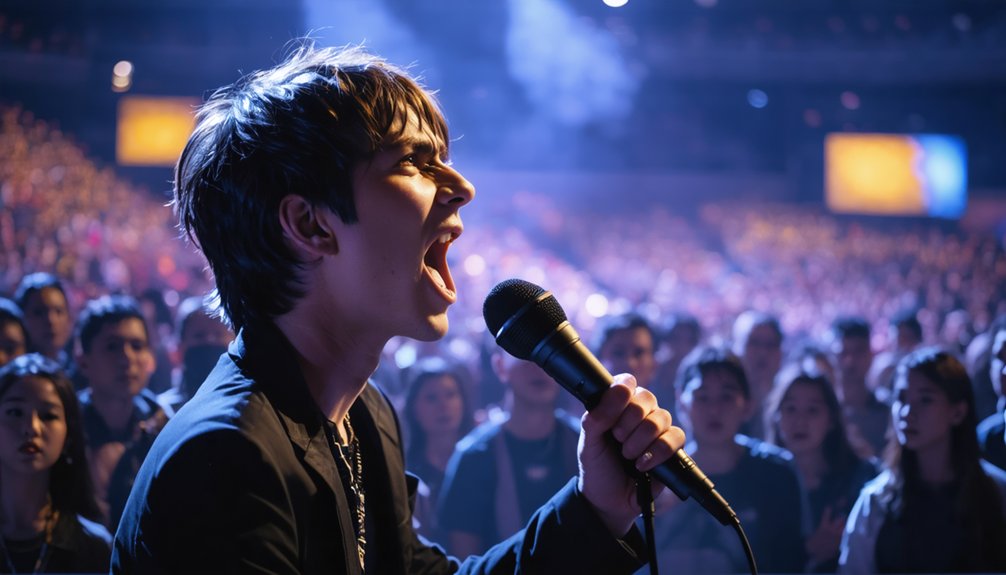
Achieving authentic emotion in cosplay performance requires you to bridge costume design analysis with method acting fundamentals. Start by mining your character’s wardrobe evolution for psychological indicators, then apply emotional memory techniques to connect personal experiences with character responses. Master the seven universal facial expressions while developing vocal characterization that matches your character’s status and psychology. Combine postural anchoring with breath control exercises to eliminate performance tension, and establish emotional triggers for pivotal character moments. The systematic integration of these theatrical techniques transforms static costume recreation into compelling character embodiment that resonates with audiences throughout your performance journey.
Key Takeaways
- Apply emotional memory techniques by mapping character moments to personal experiences, creating psychological anchors for authentic emotional responses during performance.
- Study character-specific gestures and postural shifts through video analysis, translating internal emotional states into consistent physical vocabulary.
- Master micro-expressions and universal facial expressions through mirror practice, developing muscle memory for spontaneous emotional communication.
- Develop vocal characterization by selecting pitch, texture, and pacing that reflect character psychology and emotional states throughout performance.
- Establish pre-performance rituals using breathing exercises and visualization to achieve present-moment awareness and eliminate performance anxiety barriers.
Understanding Your Character’s Emotional Core and Backstory

Before you can authentically embody a character, you must decode the emotional architecture embedded in their visual design. Analyze how fabric choices, color palettes, and silhouettes function as emotion representation through costume—each element transmits psychological states and value systems. Muted tones signal internal conflict, while vibrant garments indicate confidence trajectories. Pattern disruptions visually articulate mental fragmentation.
Mine the character’s wardrobe evolution for backstory indicators. Recurring motifs and embellishments create narrative throughlines that enhance audience interpretation of visual cues. Historical accuracy anchors believability while symbolic elements reveal hidden origins.
This analytical framework transforms costuming from aesthetic reproduction into psychological mapping. You’re engineering a visual language that communicates layered narratives before you speak a single line—establishing immediate emotional resonance with observers who read these carefully constructed signals.
Method Acting Techniques for Cosplay Performance
While costume analysis provides the visual framework for character embodiment, method acting techniques engineer the internal mechanics that drive authentic performance.
Begin with relaxation exercises to eliminate physical tension barriers blocking raw emotion exploration. Analyze given circumstances—your character’s childhood traumas, fears, and psychological conditions—to decode motivations driving behavior. Apply emotional memory and substitution techniques, connecting personal experiences to character responses rather than manufacturing artificial feelings. This foundation enables authentic character interpretations rooted in genuine emotional truth.
Implement repetition exercises and improvisation drills to develop instinctual responses during performance. The Meisner technique trains pure reaction over calculated choices, ensuring you’ll maintain character flow when facing unexpected cues or technical failures. Practice the Different Choice game to expand emotional range and tonal flexibility. These protocols transform superficial cosplay into psychologically immersive character work, delivering naturalistic performances that transcend conventional portrayal limitations.
Physical Embodiment: Translating Emotion Through Body Language
Method acting generates the psychological architecture of character interpretation, yet performance remains incomplete without physical translation systems that broadcast internal emotional states to audiences. Your body functions as the primary communication interface between internal characterization and audience perception.
Implement these posture adjustment techniques:
- Character-specific gestural mapping: Document your character’s signature movements through video reference analysis, then drill these patterns until they’re neurologically embedded
- Postural anchoring: Link emotional states to distinct physical positions that trigger genuine affective responses
- Spatial presence calibration: Adjust how you occupy space based on character confidence levels and narrative context
- Micro-expression integration: Coordinate facial movements with broader physical rehearsal practices to guarantee coherent emotional broadcasting
Your physical vocabulary transforms psychological preparation into observable performance reality.
Facial Expression Training and Micro-Expression Control
Your character’s emotional authenticity hinges on precise facial muscle control—from broad expressions that establish core emotions to micro-movements that reveal hidden psychological layers.
Begin with mirror practice sessions where you’ll exaggerate universal expressions (joy, anger, shock, disgust) before scaling them down to performance-appropriate subtlety, building the muscle memory that separates amateur cosplay from professional character embodiment.
This systematic approach trains your facial mechanics to respond instinctively to your character’s emotional truth rather than relying on forced, artificial expressions.
Understanding Character Core Emotions
Before you can embody a character authentically, you must master the seven universal expressions that form the foundation of all human emotional communication: happiness, sadness, fear, anger, disgust, surprise, and contempt. These primal expressions transcend cultural boundaries and register even with infants, making them essential for cosplay performance.
Your character analysis should prioritize:
- Identifying dominant emotions that define your character’s personality framework
- Mapping emotional nuance through muscle activation patterns specific to each state
- Analyzing contextual cues that trigger shifts between emotional states
- Studying proprioceptive traces to reproduce expressions with voluntary precision
Character sheets displaying 6-12 distinctive emotions maintain on-model consistency while enabling sophisticated performance. Understanding which brain system—sub-cortical or cortical—controls each muscle movement guarantees seamless emotional authenticity during extended performances.
Mirror Practice Techniques
Mastering character emotions demands disciplined physical training that transforms theoretical knowledge into reproducible performance skills.
You’ll establish mirror feedback loops by positioning yourself at arm’s length in neutral lighting, beginning each session with three deep breaths while maintaining eye contact. Execute 30-second observation intervals, holding your character’s signature emotion without alteration to activate neural pathways for self-recognition.
Progress to micro-expression detective training by deliberately expressing specific emotions—happiness, frustration, curiosity—while documenting subtle muscle movements around your eyes, mouth, and forehead. This facial feedback hypothesis application creates bidirectional emotional influence, strengthening real-time response understanding.
Integrate assertiveness building through confident body language practice, noting how postural shifts influence your emotional state. Commit to daily 5-minute sessions for emotional intelligence development and consistent performance advancement.
Muscle Memory Development
While mirror practice establishes foundational awareness, systematic facial muscle training transforms casual observation into precise neuromuscular control that separates amateur performances from professional character embodiment. You’ll develop authentic expressions through structured protocols targeting specific Action Units—the building blocks of emotional displays.
Core embodied muscle memory exercises:
- Zygomatic activation drills: Repeat “e o e o” vocalizations three times daily, recruiting the muscle groups responsible for genuine happiness expressions
- AU-specific practice: Train happy (AU6 cheek raiser + AU12 lip corner puller) and sad (brow lower + lip depression) patterns with isolated muscle engagement
- sEMG-based feedback mechanisms: Deploy surface electromyography to monitor zygomatic major and orbicularis oculi recruitment during expression training
- Micro-expression intensives: Utilize specialized tools quantifying action unit patterns for disgust, surprise, and contempt recognition
This technical approach builds reproducible emotional authenticity through measurable physiological pathways.
Voice Work and Vocal Characterization for Emotional Impact
When audiences encounter a cosplay performance, they’re processing vocal information within milliseconds—pitch, pace, texture, and placement all converge to signal whether you’ve embodied your character or merely imitated surface-level traits.
Voice quality versatility demands systematic exploration: select base pitch aligned with character status and psychology, then layer texture through breathiness, gravel, or resonance shifts. High-status characters often employ lower placement with controlled pacing, while vulnerable personas might utilize breathier textures with varied rhythm patterns.
Authentic character intention emerges when you integrate backstory analysis into vocal choices. Your character’s motivations dictate emotional delivery speed—fear accelerates cadence, contemplation slows it. Experiment with throat placement variations before performance to guarantee sustainability. This technical foundation transforms surface-level mimicry into psychologically grounded characterization that registers immediately with sophisticated audiences.
Creating Emotional Memory Banks for Character Moments

To embody your character’s emotional peaks during performance, you’ll need to construct a systematic emotional memory bank that catalogs both the character’s scripted triggers and your own parallel experiences.
Start by identifying each pivotal emotional moment in your character’s arc—their losses, victories, betrayals, and connections—then map these against equivalent feelings from your personal history.
This technical pairing creates accessible emotional pathways you can activate on command, transforming superficial costume work into authentic psychological performance.
Mapping Character Emotional Triggers
Three psychological anchors form the foundation of emotional memory banking for character performance: source material analysis, personal emotional correlation, and trigger-response mapping. You’ll establish authentic emotional response interpretation by systematically cataloging moments when your character experiences heightened emotional states throughout their narrative arc.
Deploy this four-stage trigger identification framework:
- Canon event extraction – Document specific scenes where your character demonstrates core emotional responses
- Stimulus classification – Identify what prompts each emotional shift (dialogue, visual cues, character interactions)
- Physical manifestation notation – Record how emotions translate to body language and facial expressions
- Audience perspective engagement calibration – Test trigger deployment during performance to validate emotional transmission effectiveness
This systematic approach transforms passive character knowledge into actionable performance tools that generate reproducible, authentic emotional states.
Building Personal Emotional Parallels
Character trigger mapping provides the external framework for emotional performance, but internal authenticity requires drawing from your own psychological reservoir. You’ll construct emotional recall triggers by identifying personal experiences that parallel your character’s moments—substitution technique translates their fictional grief into your actual loss, their triumph into your victory.
Start building sensory libraries through isolation exercises: catalog the metallic taste of fear, the weight of disappointment in your chest, the temperature of anger spreading through your limbs. Don’t recreate entire traumatic events; extract single sensory details that function as emotional release objects.
Progressive practice expands your accessible spectrum from simple joy to complex devastation. This systematic accumulation transforms you into a performance instrument capable of genuine response while maintaining character objectives, avoiding the artificial quality of manufactured emotion.
Staying Present and Responsive During Live Performance
When you step onto a cosplay performance stage, the spatial dynamics shift dramatically from the intimate framing of social media content. Maintaining authentic emotion requires responsive pacing that adapts to live environmental cues while sustaining character integrity. Your engaging physicality must telegraph emotional beats to distant audience members through exaggerated yet purposeful movement.
To achieve this presence:
- Synchronize emotional intensity with musical shifts rather than mechanically executing pre-planned choreography
- Monitor audience energy levels and adjust hold durations on emotionally significant poses
- Utilize full stage traversal to physically manifest character emotional journeys
- Maintain character perspective throughout unexpected technical variables or timing changes
This fluid responsiveness transforms rehearsed routines into genuine performance moments. Your commitment to staying present converts technical execution into emotional storytelling that resonates beyond costume aesthetics.
Building Emotional Chemistry With Scene Partners

Building genuine emotional chemistry with scene partners demands structured communication protocols that extend beyond surface-level character interaction. You’ll need to implement empathic listening techniques during rehearsals, actively tracking your partner’s vocal inflections and physical cues to establish reciprocal response patterns.
Emotional mirroring strategies create authentic rapport—matching energy levels, breath rhythms, and spatial dynamics generates believable connection that audiences recognize instantly.
Establish pre-performance alignment sessions where you’ll discuss character motivations and emotional beats together. This collaborative framework allows you to anticipate shifts in intensity and timing.
When you’re attuned to your partner’s performance vocabulary, spontaneous moments feel organic rather than forced. Trust-building exercises strengthen your ability to react genuinely, transforming scripted dialogue into dynamic exchange. Chemistry isn’t accidental—it’s methodically cultivated through intentional partnership protocols.
Pre-Performance Rituals and Mental Preparation Strategies
Beyond establishing connection with your scene partners, you’ll need systematic mental preparation protocols to stabilize your emotional baseline before performance. Pre-performance breathing techniques activate parasympathetic responses, reducing cortisol levels while improving oxygen delivery to muscles. Mindfulness meditation cultivates present-moment awareness, preventing anticipatory anxiety from compromising character authenticity.
Implement these preparation protocols:
- Mental visualization sequences – Rehearse choreography mentally, incorporating sensory immersion with music, physical sensations, and spatial awareness
- Progressive muscle relaxation – Systematically release tension patterns that restrict emotional range and physical expressiveness
- Positive affirmation programming – Counter negative thought patterns with confidence-building statements aligned to character objectives
- Full-length mirror blocking – Verify facial expressions and gestures maintain visual impact from all audience sightlines
These techniques establish neurological patterns that enhance performance consistency.
Frequently Asked Questions
How Do I Handle Emotional Burnout From Repeatedly Performing Intense Character Moments?
Take deliberate breaks between performances to reset your emotional baseline. You’ll preserve audience engagement by varying character intensity levels and implementing structured emotional preparation protocols. Rotate between demanding roles and lighter performances to maintain sustainable creative output long-term.
What if My Character’s Emotions Conflict With My Personal Values or Comfort Zone?
Establish personal boundaries awareness before performance—map your value thresholds. Use internal conflict resolution techniques: reframe challenging emotions through cognitive reappraisal rather than full embodiment. You’ll maintain authenticity while protecting psychological well-being, creating sustainable character work that respects your limits.
Can I Authentically Portray Emotions I’ve Never Personally Experienced in Real Life?
Like method actors channeling unfamiliar depths, you’ll authentically portray unexperienced emotions through remembering empathy and imagining perspectives. Research your character’s context, study analogous feelings you’ve encountered, and trust your embodiment techniques to bridge emotional gaps convincingly.
How Do I Recover Quickly Between Performances When Emotionally Exhausted?
You’ll recover faster by implementing strategic pacing emotional breaks between sets—step out of character completely, hydrate, and utilize grounding techniques. This systematic approach prioritizes preserving mental health while maintaining performance quality throughout your convention schedule.
Should I Break Character if Audience Members Become Genuinely Distressed?
Like a ship’s captain abandoning performative duties during storms, you must break character when audiences experience genuine distress. Prioritizing consent and maintain audience safety always supersedes performance goals, while thoughtfully upholding character integrity through compassionate boundary management techniques.