For historical events, you’ll achieve the strongest results by choosing characters with clear iconography—Cleopatra, Nefertiti, or a pharaoh figure like Tutankhamun. Prioritize lightweight linen in white or soft gold tones, authentic broad-collar jewelry in lapis lazuli, and dramatic kohl eyeliner. Secure blunt-cut black bob wigs firmly beneath stiffened nemes headcloths, and always test sheer garments under event lighting. Every construction decision you make shapes your costume’s historical authority, and the details ahead will sharpen your approach considerably.
Key Takeaways
- Cleopatra and Nefertiti costumes offer manageable builds using draped white or gold fabrics, broad collar jewelry, and period-accurate accessories.
- Pharaoh regalia, including nemes headcloth, uraeus cobra, crook, and flail, provides immediate historical recognizability and strong visual impact.
- Prioritize lightweight linen in pastel shades for authenticity, referencing ancient frescoes and relief carvings for accurate textile patterns and colors.
- Dark lycra shorts prevent unwanted visibility under sheer costumes, and testing undergarments under event lighting ensures a clean, modest silhouette.
- Avoid synthetic materials, low-quality wigs, and plastic-based accessories, as cohesion across all costume elements is essential for historical integrity.
How to Pick an Egyptian Character That’s Actually Buildable
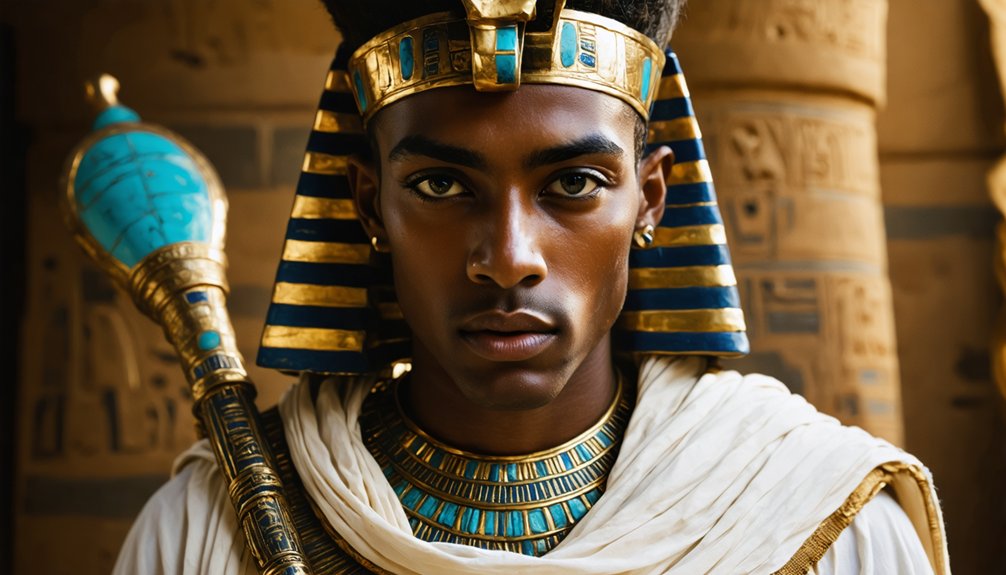
Choosing the right ancient Egyptian character determines whether your cosplay succeeds or stalls before you’ve sewn a single seam.
Apply character selection tips strategically by evaluating costume buildability factors before committing to any figure.
Cleopatra and Nefertiti offer structured starting points — their silhouettes rely on draped linen, broad collars, and identifiable headdresses, all achievable without advanced construction skills.
Pharaonic figures like Tutankhamun demand precise golden accessories and regalia, requiring moderate fabrication experience.
Evaluate each character against three buildability factors: material complexity, accessory count, and visual recognizability.
Before committing to any character, weigh material complexity, accessory count, and visual recognizability against your current skill level.
A costume built from a basic tunic with strategic draping and period-accurate jewelry communicates authenticity efficiently.
You’ll maximize impact by selecting characters whose iconography translates directly into manageable construction decisions rather than overwhelming technical demands.
Best Ancient Egyptian Cosplay Looks, Ranked by Visual Impact
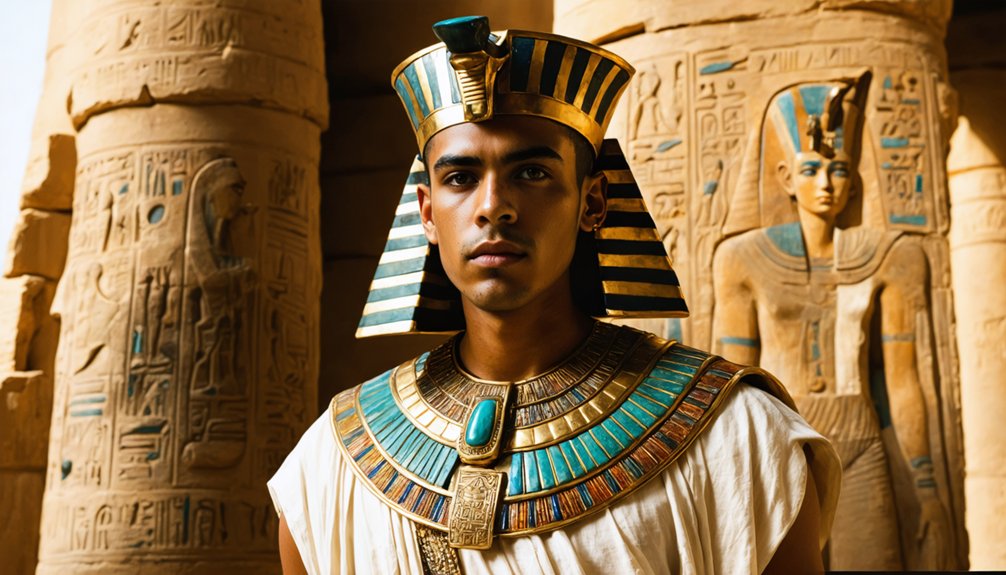
When ranking ancient Egyptian cosplay by visual impact, pharaoh regalia consistently dominates through its commanding combination of the nemes headcloth, uraeus cobra, golden crook, and flail.
Cleopatra’s draped dress with layered gold accessories delivers immediate recognizability, making it one of the most effective builds for maximum audience engagement.
If you want high visual drama with intricate detail work, Egyptian dancing girls‘ beaded fringes and sheer skirts offer a technically demanding yet striking alternative that rewards careful construction.
Pharaoh Regalia Dominates
Pharaoh regalia consistently ranks among the most visually commanding ancient Egyptian cosplay looks, and it’s not difficult to see why. You’re drawing on millennia of Pharaoh symbolism — the nemes headcloth, uraeus cobra, crook, and flail all communicate absolute authority instantly.
These Royal adornments aren’t decorative afterthoughts; they’re historically grounded markers of divine kingship that your audience will recognize immediately.
Representations of Hatshepsut and Tutankhamun offer precise reference points. Prioritize gold tones, structured headdresses, and broad collars crafted from lapis lazuli-inspired materials. A false beard reinforces gender-specific authenticity where appropriate.
Keep fabric choices lightweight yet structured — linen-based textiles replicate historical accuracy while remaining practical. Every element you select should serve Pharaoh symbolism deliberately, transforming your costume into a cohesive, authoritative historical statement.
Cleopatra’s Iconic Drape
Cleopatra’s draped silhouette earns its place among the highest-impact ancient Egyptian cosplay looks because it balances historical grounding with immediate visual recognition.
Cleopatra’s influence extends beyond popular culture into documented artistic evidence, including relief carvings and frescoes that confirm layered, draped linen construction.
You’ll want to master drape techniques by selecting lightweight, semi-sheer fabric in white or soft gold, then securing strategic pleats with an intricately worked belt.
Pair the draped dress with broad collar jewelry featuring lapis lazuli and gold tones, and layer armbands at the upper arm for visual layering.
Choose pastel shades over vivid modern dyes to honor authentic ancient dyeing practices.
Dark lycra shorts worn underneath maintain modesty during public events without compromising the costume’s visual integrity.
Dancing Girls’ Beaded Fringes
Shifting from Cleopatra’s draped formality, Egyptian dancing girl costumes rank equally high on visual impact through an entirely different mechanism: kinetic ornamentation.
You’ll achieve authenticity by mastering beaded techniques that transform static fabric into motion-driven spectacle. Layer fringe variations strategically — shorter beaded strands across the bodice, longer cascading rows along sheer skirts — maximizing movement dynamics during performance.
Source lightweight linen or gauze as your base fabric, ensuring fringe responds fluidly to motion. Historically grounded depictions confirm beaded fringes alongside minimal sheer skirts, so you’re constructing a documented silhouette, not improvising.
Add anklets and armbands in gold tones, reinforcing the ensemble’s cohesion. Test your completed costume under event lighting; bead catches light dramatically, amplifying visual impact considerably beyond static costume photography.
Cleopatra, King Tut, and the Icons Most Worth Cosplaying
When choosing an ancient Egyptian figure to cosplay, you’ll find that certain icons offer the richest combination of visual drama and historical depth. Cleopatra’s Influence remains unmatched—her draped dresses, gold accessories, and regal bearing translate powerfully into costume design, demanding precision in fabric selection and accessory placement.
Cleopatra remains the ultimate cosplay muse—her gold accessories and draped elegance demand both historical research and precise construction.
Tutankhamun’s Legacy similarly commands attention, with his golden mask, crook, and flail creating an immediately recognizable silhouette.
Beyond these two, Nefertiti’s towering headdress and broad collar present a striking architectural challenge, while Hatshepsut’s pharaoh regalia and nemes headcloth offer a compelling gender-bending historical narrative.
Each icon demands specific construction techniques and accessories. You’ll distinguish your cosplay by researching primary visual sources—statues, relief carvings, and frescoes—rather than relying on popularized interpretations.
Fabrics and Colors That Look Historically Accurate
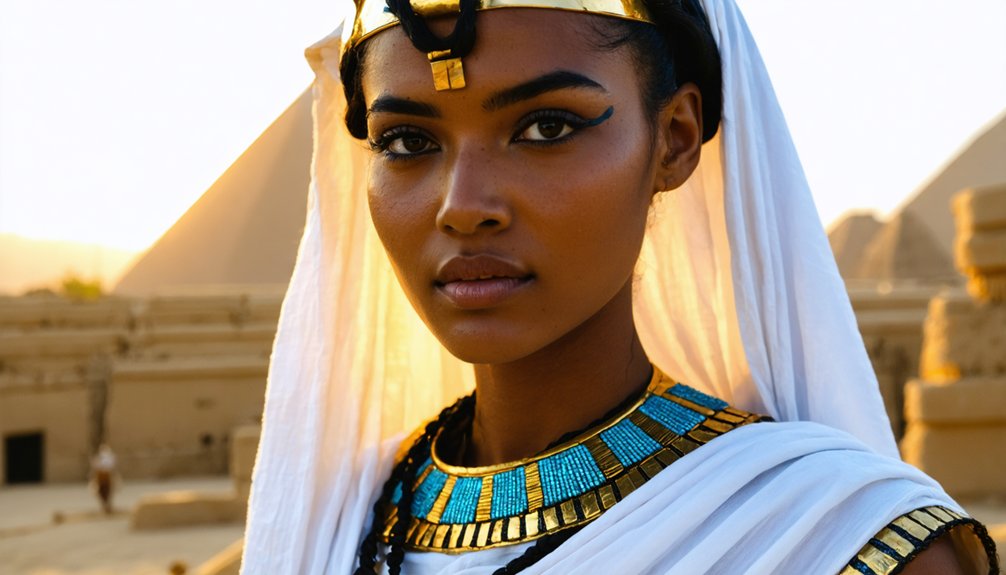
Achieving historical accuracy in your ancient Egyptian cosplay begins with fabric and color selection. You’ll want to prioritize lightweight linen, which dominated Egypt’s hot climate, over heavier modern alternatives.
When selecting colors, opt for pastel shades that reflect historical dyeing techniques rather than vivid contemporary dyes, which appear anachronistic against authentic recreations. Bold solid colors remain appropriate for Greco-Roman influenced garments, where dyed woollen cloth was prevalent.
Study ancient textile patterns visible in surviving frescoes and relief carvings to inform your choices accurately.
White garments, though historically common, require strategic underlayers — dark lycra shorts prevent unwanted visibility under sheer materials during public events.
Test your selected fabrics under event lighting conditions to confirm they accurately replicate the muted, naturally derived tones characteristic of authentic Egyptian costuming.
Build an Authentic Egyptian Costume on Any Budget
Once you’ve selected historically accurate fabrics and colors, cost-effective construction becomes your next priority. You don’t need expensive materials to achieve historical accuracy — budget-friendly options abound if you approach construction strategically.
Start with a basic tunic pattern, adaptable across Egyptian, Greek, and Roman styles. Affordable linen or lightweight cotton substitutes serve effectively. Rather than purchasing elaborate pre-made costumes, you’ll save considerably by hand-draping fabric to simulate pleats and belted silhouettes documented in ancient reliefs.
A basic tunic pattern adapts seamlessly across ancient cultures — hand-draping fabric authentically beats buying costly pre-made costumes.
Prioritize accessories strategically. Broad collars, armbands, and ankh-adorned jewelry dramatically elevate a simple garment’s authenticity. Craft these from painted cardboard, metallic craft foam, or inexpensive findings.
Add fringed edging through basic fabric manipulation rather than costly trim purchases. Testing colors under event lighting guarantees your budget-friendly construction still reads as historically precise.
Accessories That Complete Any Ancient Egyptian Cosplay
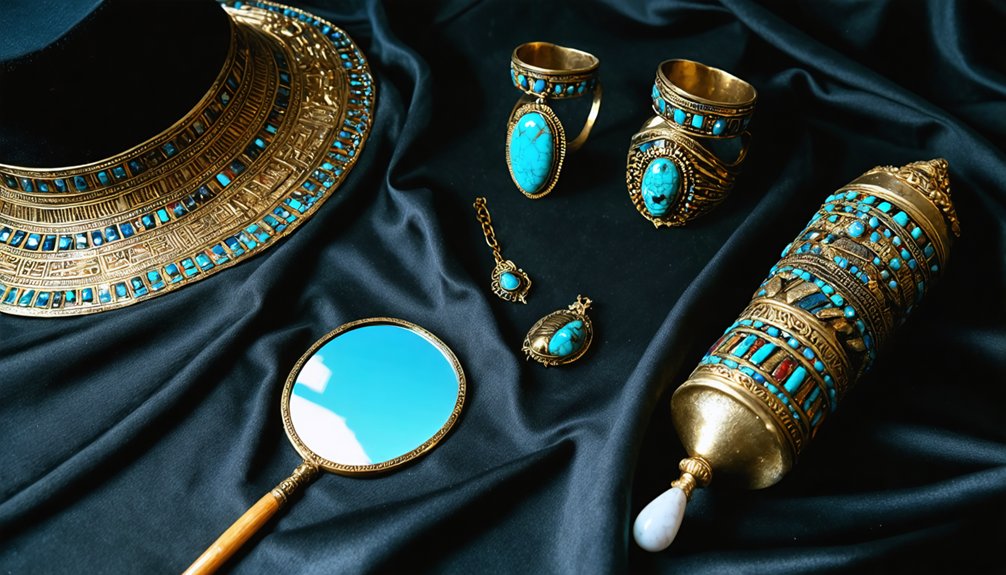
Your ancient Egyptian cosplay reaches its fullest expression through carefully chosen accessories that signal rank, identity, and cultural meaning.
You’ll want to prioritize iconic jewelry pieces—broad collars, scarab beetle pendants, and lapis lazuli armbands—alongside pharaoh-specific regalia like the nemes headcloth and uraeus cobra.
Symbolic props such as the crook and flail scepters then anchor your portrayal in historical authenticity, communicating rulership and divine authority with unmistakable precision.
Iconic Egyptian Jewelry Pieces
Jewelry forms the backbone of any convincing ancient Egyptian cosplay, and selecting the right pieces transforms a basic costume into an authentically grounded representation.
You’ll want to prioritize broad collars crafted from layered beads, replicating ancient symbolism embedded in lapis lazuli, turquoise, and gold jewelry materials. These collars weren’t merely decorative — they signified divine protection and social rank.
Incorporate scarab beetle pendants and ankh symbols into bracelets, armbands, and pectoral pieces to reinforce historical accuracy. Anklets and upper-arm cuffs completed elite Egyptian adornment, so don’t overlook these elements.
For pharaonic representations, uraeus cobra headpieces and crook-shaped accessories elevate your cosplay considerably. Source metallic paints or polymer clay to craft convincing replicas affordably, maintaining visual authenticity without compromising your budget.
Pharaoh Regalia Essentials
Pharaoh regalia distinguishes royal Egyptian cosplay from standard period recreations, and you’ll need specific accessories to achieve that distinction convincingly.
Mastering pharaoh symbolism requires assembling royal adornments that communicate divine authority instantly.
- Nemes Headcloth with Uraeus Cobra — This striped linen headdress, paired with a rearing cobra at the forehead, immediately signals royal status and separates pharaonic cosplay from common Egyptian portrayals.
- Crook and Flail Scepters — These crossed implements, historically carried against the chest, represent dominion over Egypt’s people and land, delivering unmistakable visual authority.
- Double Crown or Khepresh — The blue war crown or combined red-and-white double crown communicates regional sovereignty, adding commanding visual complexity beyond basic headwear options.
Combine these elements cohesively for maximum historical impact.
Symbolic Props And Scepters
Beyond the headwear and garments that define pharaonic cosplay, the hand-held props you carry complete the visual vocabulary of ancient Egyptian authority. Scepter symbolism operates on two levels: aesthetic accuracy and narrative power. The crook and flail, inseparable in royal iconography, signal dominion over land and people simultaneously.
You’ll want both rendered in gold-toned materials for maximum prop significance at historical events. The ankh staff communicates divine favor, while the was-scepter—its distinctive forked base and animal head—denotes supernatural authority.
Construct these from lightweight materials like foam or PVC to maintain authenticity without fatigue during extended events. Paint finishes matter considerably; metallic gold and deep lapis tones read historically accurate under varied event lighting, reinforcing your costume’s scholarly credibility.
Wigs, Headdresses, and Makeup for Egyptian Cosplay
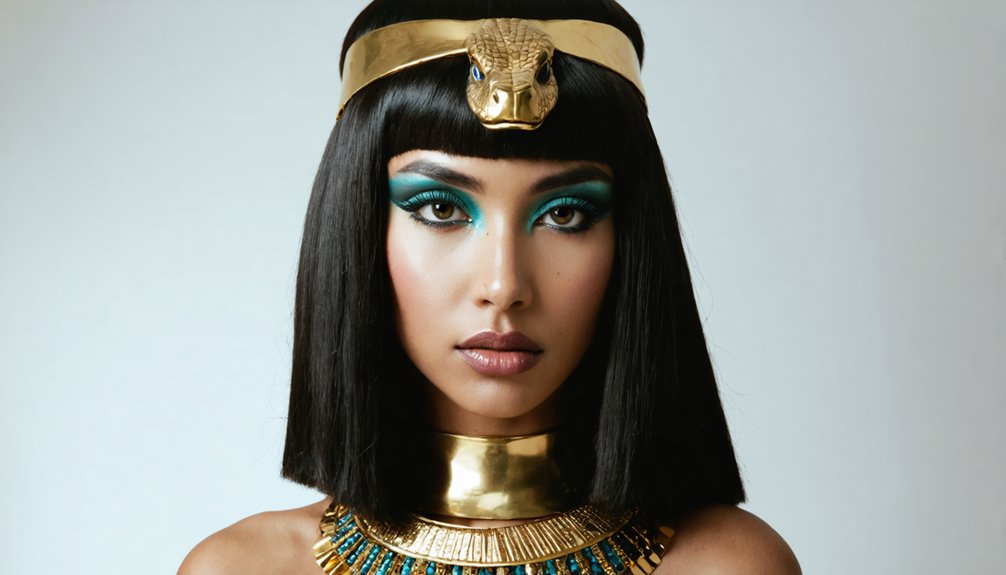
Wigs, headdresses, and makeup form the most visually distinctive elements of ancient Egyptian cosplay, and you’ll find that getting these details right can elevate an otherwise simple costume into an authoritative historical recreation.
Precise wig styling and headdress construction distinguish casual attempts from genuinely compelling portrayals.
- Wigs: Replicate the blunt-cut black bob with structured synthetic hair, securing it firmly beneath pharaonic headcloths or broad diadems.
- Headdresses: Construct the nemes headcloth using stiffened linen, ensuring the striped fabric falls symmetrically alongside the face, with a uraeus cobra centered above the brow.
- Makeup: Apply dramatic kohl eyeliner extending into sharp lateral lines, complemented by malachite-green eyeshadow, replicating pigment choices documented across surviving Egyptian artistic depictions.
What to Wear Under Sheer Egyptian Costumes at Events
When wearing sheer Egyptian costumes at public events, you’ll want to choose dark lycra shorts as your primary underlayer, since they prevent unwanted visibility while preserving the draping silhouette of lightweight linen or gauze fabrics.
If you’re opting for white garments, select underwear carefully, as standard white cotton can become surprisingly visible under bright event lighting.
You should also test your full costume ensemble under conditions mimicking the event’s lighting before the occasion, adjusting fabric layers as needed to maintain both authenticity and modesty.
Lycra Shorts For Coverage
Sheer and white Egyptian garments present an immediate practical challenge for public events, so you’ll want to plan your undergarments carefully before stepping into any cosplay setting.
Ancient fabric techniques prioritized breathability over opacity, and historical dyeing methods rarely produced the dense coverage modern audiences expect.
Dark lycra shorts solve this precisely:
- Black or navy lycra creates a clean silhouette beneath draped linen, preventing unwanted transparency under harsh event lighting.
- Fitted mid-thigh length maintains period-appropriate leg coverage without disrupting the garment’s natural drape or movement.
- Moisture-wicking lycra blends regulate temperature effectively, mirroring the functional priorities ancient Egyptians applied to their lightweight garments in hot climates.
Choose seamless construction to eliminate visible lines beneath your costume’s exterior layers.
White Fabric Underwear Choices
White fabric presents a unique visibility challenge beneath sheer Egyptian costumes, so you’ll need to select undergarments that balance historical plausibility with practical modesty at public events. Your underwear options should prioritize seamless, skin-toned pieces that won’t disrupt the costume’s visual coherence under event lighting.
Fabric layering offers another strategic solution—wearing a lightweight linen underlayer mimics historically accurate Egyptian dress construction while simultaneously providing coverage. This approach aligns with documented evidence suggesting ancient Egyptians occasionally wore multiple textile layers for both practical and ceremonial purposes.
Test your chosen combination under lighting conditions similar to your event environment, since fluorescent and outdoor light expose transparency differently.
Prioritizing neutral tones over white undergarments eliminates unwanted visual contrast, maintaining your costume’s authentic aesthetic integrity throughout extended wear.
Event Lighting Fabric Considerations
Event lighting dramatically alters how sheer Egyptian fabrics behave visually, so you’ll need to account for venue-specific conditions when finalizing your underlayer choices.
Harsh stage spotlights penetrate lightweight linen instantly, exposing underlayers with unforgiving clarity, while ambient museum lighting creates subtler transparency effects that shift with movement.
Assess your venue’s lighting conditions using these fabric texture evaluations:
- Spotlight environments — hold your sheer fabric against a direct beam; any underlayer color will magnify dramatically, making dark lycra shorts the strategic choice.
- Natural daylight settings — outdoor events render white underlayers nearly invisible through pale linen, demanding neutral-toned foundations instead.
- Dim ambient venues — low-light conditions reduce transparency considerably, allowing lighter underlayer options without visibility concerns.
Test your complete costume assembly under actual event lighting before finalizing every underlayer decision.
Wrong Fabrics, Bad Wigs, Cheap Gold: Egyptian Cosplay Mistakes to Avoid
Although achieving an authentic ancient Egyptian cosplay demands attention to detail, certain recurring mistakes can undermine even the most ambitious recreations.
Prioritize fabric durability when selecting linen or lightweight alternatives; synthetic materials that pill or warp under event lighting immediately signal inauthenticity. Wig quality proves equally critical — poorly constructed wigs with visible wefts or unnatural sheen destroy historical credibility instantly. You should invest in heat-resistant, styled options that replicate period-accurate cuts.
Avoid metallic accessories with obvious plastic bases or flaking gold paint; instead, source layered resin or brass-finished pieces that withstand scrutiny.
Pastel dyes outperform vivid modern pigments in replicating ancient wool tones. Each component you select should reinforce cohesion across your entire ensemble, ensuring that no single element compromises the collective historical integrity you’ve worked to construct.
Where to Buy Egyptian Cosplay Materials or Build Your Own
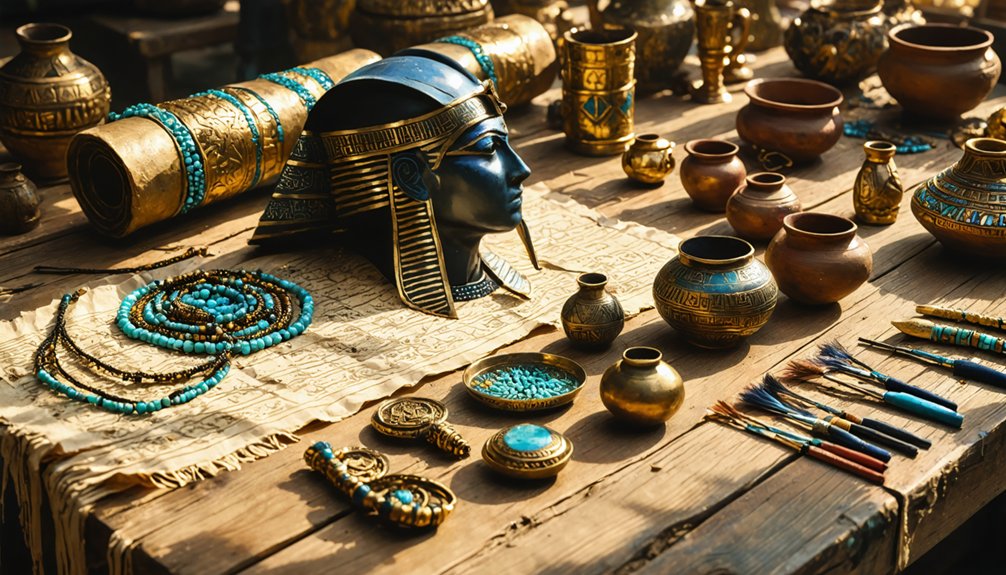
Sourcing materials for an authentic ancient Egyptian cosplay requires strategic decisions between purchasing pre-made components and constructing garments yourself. Historical Fabric Sources and DIY Egyptian Costumes both offer distinct advantages depending on your budget and skill level.
- Specialty fabric retailers like Mood Fabrics or Fabric.com carry lightweight linens and sheer materials that accurately replicate ancient Egyptian textiles.
- Online marketplaces such as Etsy feature independent artisans selling handcrafted broad collars, uraeus cobras, and scarab jewelry with historically informed precision.
- Local thrift stores provide affordable base garments you’ll transform using draping techniques, fringed edging, and strategic pleating.
You’ll achieve superior results by combining purchased accessories with self-constructed tunics.
Testing fabric colors under event lighting to guarantee historical pastel accuracy before committing to final construction is also recommended.
Frequently Asked Questions
Are There Copyright Concerns When Cosplaying Specific Egyptian Movie Characters?
Ancient history is free; modern films aren’t. You’ll face copyright concerns when cosplaying specific movie characters, so prioritize historical authenticity over direct character interpretation to innovate your costume while avoiding intellectual property issues entirely.
How Do Egyptian Cosplay Groups Coordinate Matching Costumes for Large Events?
You’ll coordinate matching costumes through group communication platforms, establishing clear costume guidelines that standardize fabrics, colors, and accessories. Assign roles like pharaohs or deities, ensuring cohesive pastel tones, broad collars, and unified headdresses across your innovative ensemble.
Can Egyptian Cosplay Costumes Double as Theatrical Stage Performance Outfits?
Yes, your Egyptian cosplay costumes can absolutely double as theatrical stage outfits. You’ll enhance character authenticity by incorporating bold accessories and sheer draping, while performance adaptability guarantees your garments withstand lighting, movement, and repeated stage productions effectively.
What Photography Poses Best Showcase Ancient Egyptian Costume Historical Accuracy?
Frozen like a carved relief, you’ll showcase historical accuracy best by striking profile poses. Extend your arms ceremonially, angle your body sideways, and let costume details—broad collars, scepters, pleated draping—command the viewer’s eye authentically.
How Should Egyptian Cosplay Costumes Be Stored After Historical Events?
Store your Egyptian cosplay costumes using breathable garment bags for ideal costume maintenance. You’ll preserve delicate fabrics and accessories effectively with acid-free storage solutions, ensuring innovative, historically accurate pieces remain pristine for future events.
References
- https://www.tastesofhistory.co.uk/post/how-to-make-a-simple-egyptian-greek-or-roman-costume
- https://discover.hubpages.com/style/Costume-Making-Ancient-Egyptian-Clothing
- https://www.heavencostumes.com.au/collections/ancient-times-costumes-and-accessories
- https://thezay.org/35043
- https://fashion-era.com/ancient-costume/egyptian-costume