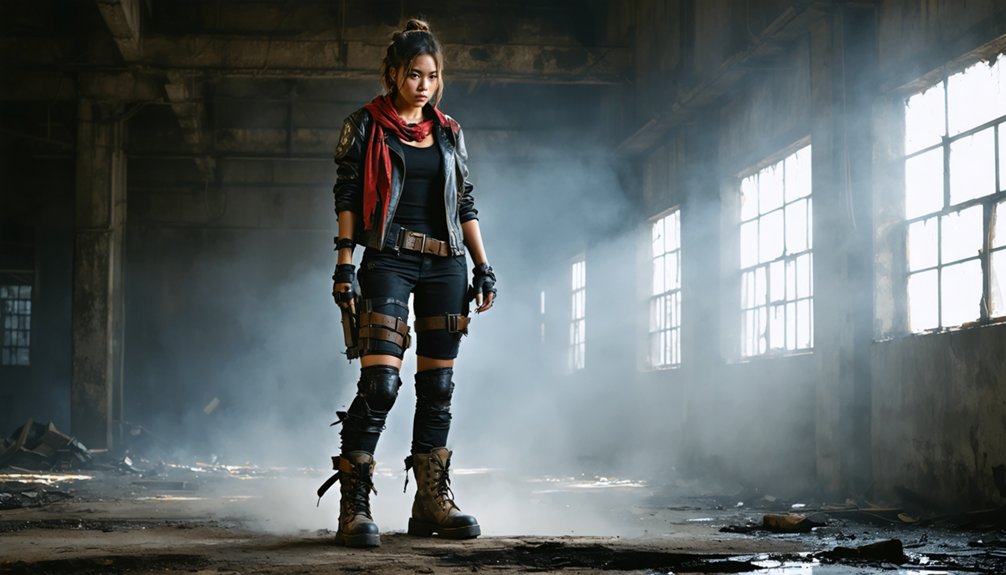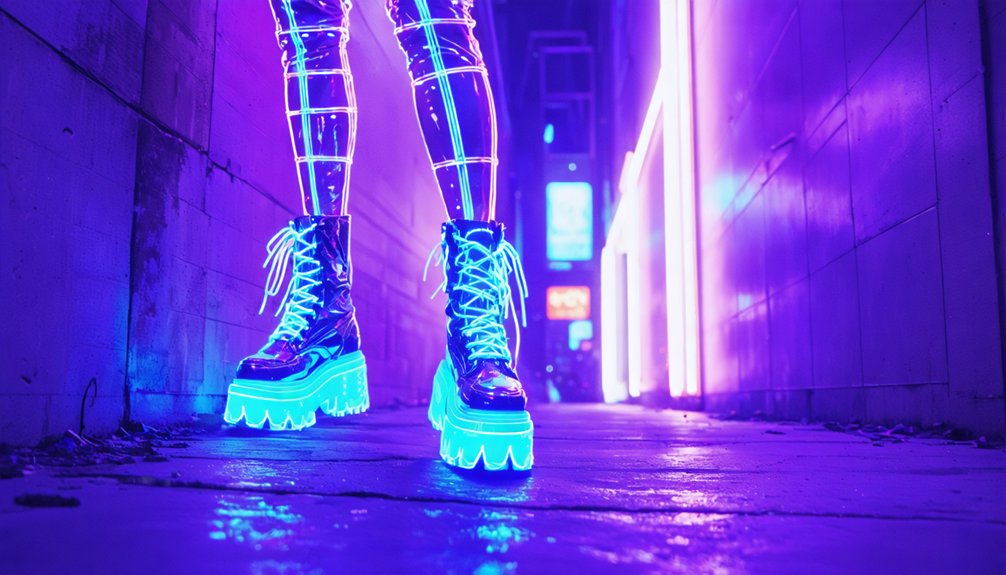
Building a cyberpunk streetwear look starts with a techwear base layer, then you stack reflective metallics, holographic fabrics, and LED-reactive materials for maximum visual impact. Keep neon focused on one focal point, integrate industrial hardware like chunky buckles and chain harnesses, and layer angular silhouettes to sell the engineered aesthetic. You don’t need high-end brands—military surplus and DIY chrome finishes hit just as hard. Every hack below breaks down exactly how to pull it off.
Key Takeaways
- Layer holographic fabrics over metallic base layers to amplify light manipulation and create dynamic, compound visual effects under neon lighting.
- Limit neon accents to one focal point, grounding them with industrial textures to maintain intentional cyberpunk authenticity over costume-like chaos.
- Source ripstop nylon from military surplus stores and replicate ACRONYM’s angular seaming for budget-friendly, high-impact techwear silhouettes.
- Incorporate chunky metallic buckles, bolt-detail straps, and angular chain harnesses to reinforce a mechanical, purposeful cyberpunk narrative.
- Spray paint basic buckles chrome, attach holographic patches, and add heat-transfer film for affordable, neon-reactive DIY customization.
Start With a Techwear Base Layer for Any Cyberpunk Build
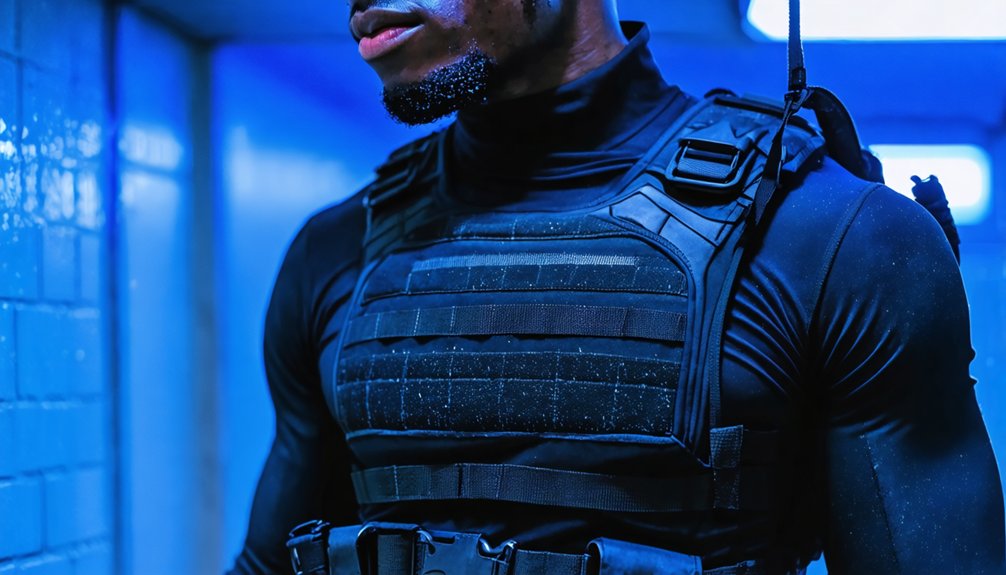
Whether you’re building a rave-ready dystopian fit or a full cosplay construct, techwear is your non-negotiable foundation. Brands like ACRONYM, Nike ACG, and Stone Island Shadow Project engineer high-performance fabrics that deliver both function and visual aggression — exactly what cyberpunk silhouettes demand.
Techwear layering works because it creates modular depth. Start with compression base layers, then build upward using articulated pants, utility harnesses, and angular outerwear. Each piece should interact with the next through hardware, straps, or structured paneling.
Modular depth is the blueprint — layer up, lock in, and let the hardware do the talking.
For cosplay builds specifically, techwear base layers adapt seamlessly into sci-fi character constructs without sacrificing mobility. You’re not wearing a costume — you’re wearing a system.
Lock in the foundation first, then escalate with metallics, LED elements, and holographic overlays to complete the look.
Choose Fabrics That Actually Read as Cyberpunk on Camera
Once your techwear foundation is locked in, fabric selection determines whether your fit translates visually — especially under venue lighting or a camera lens.
Prioritize reflective, metallic, and LED-reactive materials — they’re engineered to amplify under strobes and flash photography. Holographic fabrics shift dynamically, creating color contrasts that read as distinctly cyberpunk across both digital and physical environments.
Pay attention to fabric textures. Matte-versus-shine layering builds visual depth that flat garments simply can’t deliver.
Neon green against liquid-metal silver, or electric blue against industrial black, creates the kind of high-contrast tension that cameras love.
Synthetic blends from brands like ACRONYM or Stone Island Shadow Project aren’t just functional — they’re visually aggressive.
Choose materials that work *with* the environment rather than disappear inside it.
Layer Holographic Pieces Over Metallics for Maximum Glow
Stacking holographic pieces over metallics isn’t just a styling choice — it’s a light-manipulation strategy. When you layer iridescent jackets or mesh over metallic base layers, you’re creating depth that reacts differently across every light source.
Holographic layering techniques work because each material captures and reflects light at distinct frequencies, producing compound visual effects that a single fabric can’t achieve alone. The metallic sheen effects underneath push refracted color outward, amplifying the holographic layer’s shift.
For cosplay specifically, this combination reads as intentionally engineered rather than costume-adjacent. Prioritize angular silhouettes — structured holographic outerwear over liquid-metal bodysuits hits hardest.
Under LED rigs or neon venue lighting, that layered interaction becomes fully activated, transforming your build into something that performs as much as it’s worn.
Adapt Neon Colorways Without Looking Like a Halloween Costume
Neon colorways fail when they read as costume rather than culture, and the difference usually comes down to proportion and grounding. Your neon palette hits harder when it’s strategic, not saturated. Apply color theory to anchor electric hues within a structured outfit framework.
- Limit neon to one focal point — let electric blue or hot pink dominate a single piece while neutrals carry everything else.
- Ground with industrial textures — matte black techwear fabrics absorb excess visual noise, keeping neon intentional rather than chaotic.
- Layer iridescent accents sparingly — holographic or LED-reactive details reinforce the cyberpunk aesthetic without overwhelming the silhouette.
You’re building a subculture-coded look, not a seasonal costume. Precision in color placement signals authenticity to anyone who actually lives inside the scene.
Use LED Elements to Reactive-Proof Your Cyberpunk Look
LED elements separate reactive looks from static ones, and three integration points define how effectively they perform inside immersive environments like Sphere-style 360-degree venues.
First, prioritize placement along angular seams and hardware edges—these areas catch light directionally and amplify movement.
Second, select programmable LED strips over fixed-color options; reactive fashion demands adaptability when bass frequencies shift the room’s visual atmosphere.
Third, layer LED tech-wear beneath holographic or iridescent outerwear to create depth instead of flat illumination.
For cosplay builds, LED integration works best when it reinforces your character’s silhouette rather than competing with it.
Sync color outputs to neon green, electric blue, or hot pink palettes to stay cohesive under festival lighting.
Your outfit shouldn’t just exist in the environment—it should respond to it.
Style Your Cyberpunk Outfit for Immersive High-Stimulation Venues
When you’re stepping into Sphere-style 360-degree environments or warehouse techno events, your materials need to work with the venue’s light systems, not against them.
Layer reflective metallics over iridescent base layers to create depth that shifts dynamically under industrial lighting rigs and LED installations.
You’ll want angular hardware and holographic fabrics pulling double duty — amplifying the visual chaos around you while keeping your silhouette sharp and intentional.
Reactive Materials For Venues
Immersive venues like Sphere-style 360-degree environments demand reactive materials that do more than look sharp — they interact with the space itself.
Reactive textiles transform your cosplay build into a living visual element, syncing with the venue’s energy for unmatched immersive experiences.
Prioritize these three material categories:
- LED-integrated fabrics — pulse in sync with bass frequencies, amplifying industrial techno stages with aggressive light responsiveness.
- Reflective metallics — catch and scatter venue lighting across angular silhouettes, creating dynamic movement-driven effects.
- Holographic iridescent layers — shift color under neon and UV lighting, bridging your physical outfit with digital-aesthetic environments.
Each material choice positions you as part of the venue’s visual system, not just an attendee wearing a costume.
Layering For Visual Impact
Layering in high-stimulation venues isn’t decorative — it’s structural. Every piece you stack should earn its place through function and visual contrast.
Start with a techwear base — think moisture-wicking synthetics from ACRONYM or Nike ACG — then build outward with holographic jackets or reflective shells that activate under strobes and LED arrays.
Layered textures create depth that flat outfits can’t compete with. Pair matte base layers against metallic mid-layers, then finish with angular hardware accessories that catch industrial lighting.
The contrast between materials — soft versus rigid, matte versus iridescent — gives your silhouette dimension across 360-degree visual environments like the Sphere.
Don’t over-saturate. Three distinct texture zones maintain visual clarity while keeping your look cohesive enough to read as intentional, not chaotic.
Mix Neo-Grunge With Cyber Details for a Dystopian Nomad Look
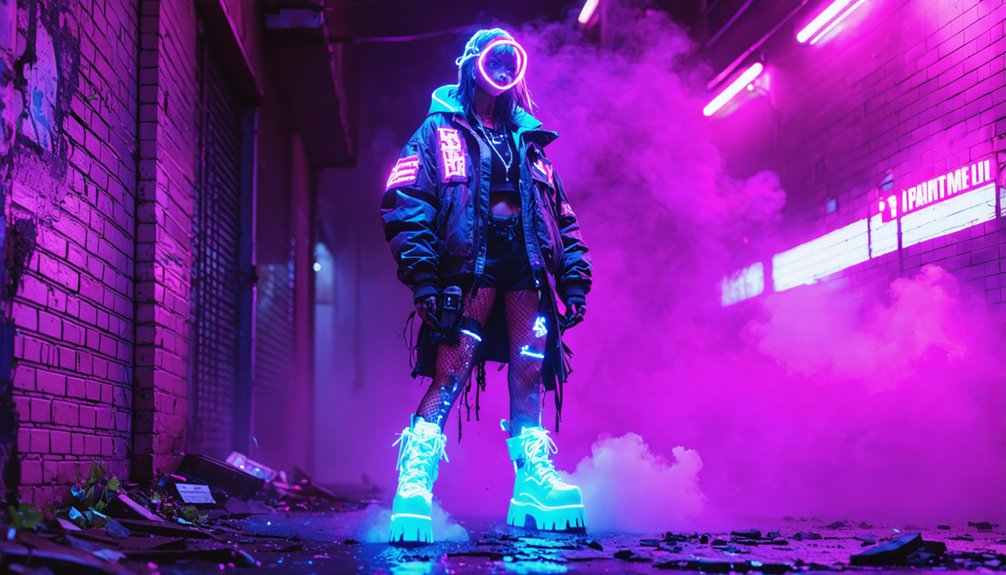
Neo-grunge and cyber details aren’t opposites—they’re a natural collision point for building a dystopian nomad aesthetic. Neo grunge aesthetics thrive on raw, distressed energy, while cyber elements inject precision and futurism. Together, they create dystopian textures that feel lived-in yet technologically advanced.
Here’s how you pull it off:
- Layer ripped, washed-out fabrics under structured techwear shells—contrast deterioration with sharp, angular hardware.
- Add LED-reactive accessories against faded, grunge-heavy base layers to create tension between decay and innovation.
- Mix matte distressed textiles with iridescent or metallic accents—boots with reflective paneling work particularly well here.
The goal isn’t balance—it’s controlled chaos. You’re building a character who survives the collapse but dresses intentionally within it.
Lock In the Cyberpunk Identity With Industrial Hardware and Accessories
Once the distressed layers and cyber accents establish your nomad silhouette, industrial hardware and accessories are what lock the identity in place.
Chunky metallic buckles, angular chain harnesses, and bolt-detail straps signal raw mechanical authenticity. Industrial accessories aren’t decorative afterthoughts—they’re structural statements that reinforce the dystopian framework you’ve already built.
Industrial hardware doesn’t accessorize the look—it completes the architecture.
Stack oversized geometric rings with matte-finish cuffs to amplify futuristic textures across every focal point. Reflective visors and modular utility pouches extend the techwear function further into character territory.
Brands like ACRONYM engineer hardware-heavy pieces specifically for this layered integration.
Keep your accessories intentional. Every element should serve the silhouette’s narrative—angular, aggressive, purposeful.
When hardware speaks the same visual language as your base layers, the cyberpunk identity becomes undeniable.
Steal From ACRONYM and Nike ACG Without the Price Tag
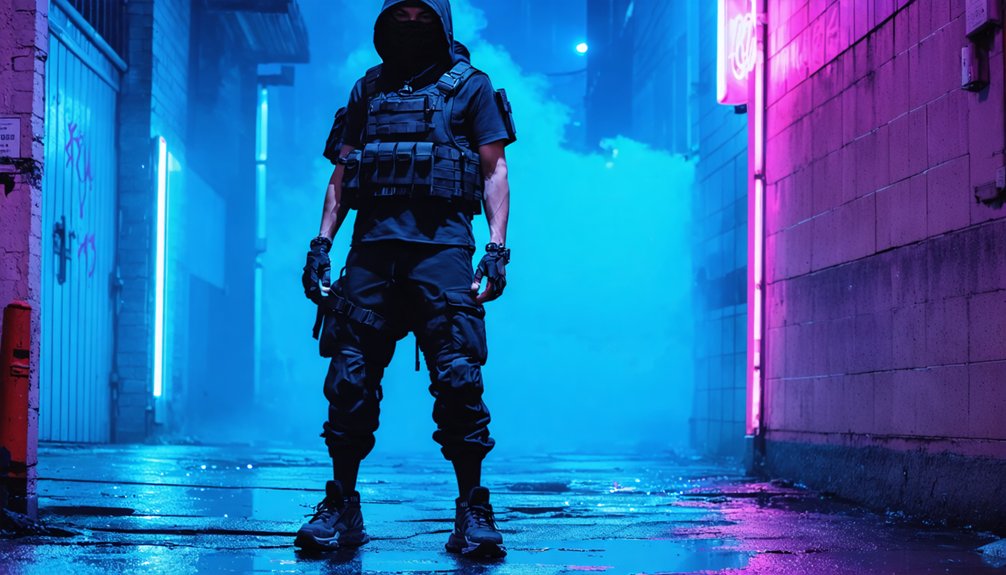
ACRONYM and Nike ACG set the blueprint for functional cyberpunk dressing, but you don’t need their price tags to execute the aesthetic.
Affordable techwear alternatives exist if you know what to hunt for. Focus on construction details, not logos.
Replicate their DNA with these three moves:
- Source budget fabrics with ripstop or nylon shells — thrift surplus military gear or raid outdoor retailers for technical outerwear that mirrors modular silhouettes.
- Add articulated pocketing — aftermarket cargo attachments and zipper modifications transform basic pieces into functional techwear builds.
- Study the geometry — ACRONYM lives in angular seaming and asymmetric closures; replicate those cuts through tailoring or strategic layering.
Own the silhouette. The construction logic matters more than the brand tag.
The Cheapest Swaps That Still Hit the Cyberpunk Aesthetic
You don’t need ACRONYM’s price tag to lock in the cyberpunk aesthetic—budget techwear from brands like Decathlon or AliExpress-sourced technical shells hit the same utilitarian silhouette for a fraction of the cost.
Swap expensive holographic pieces with iridescent vinyl fabric from craft stores, which replicates that liquid-metal, LED-reactive finish without breaking your budget.
Hit hardware stores for industrial D-rings, carabiner clips, and metal buckles to DIY the angular, hardware-heavy details that define the warehouse rave wardrobe.
Budget-Friendly Techwear Alternatives
Techwear doesn’t have to drain your wallet when budget alternatives can deliver the same cyberpunk edge.
Smart shoppers are finding that alternative materials and affordable layering techniques replicate high-end aesthetics without premium price tags. Budget techwear thrives when you’re strategic about sourcing.
Here are three swaps that hit hard:
- Tactical cargo pants from military surplus stores — angular hardware, functional pockets, zero compromise on aesthetic authenticity.
- Reflective windbreakers from athletic brands — Nike ACG-adjacent vibes at a fraction of ACRONYM pricing, especially under neon lighting.
- Aliexpress iridescent fabrics repurposed as layering pieces — holographic materials that react identically to LED-reactive venue environments.
You don’t need luxury labels. You need intentional construction, synthetic textures, and layering that reads cyberpunk from across any warehouse floor.
Affordable Holographic Material Swaps
Holographic materials hit hardest when sourced smart — iridescent vinyl, mylar fabric, and heat-transfer holographic film from craft suppliers like Mood Fabrics or JOANN cost a fraction of what techwear labels charge, yet they react identically under UV and LED lighting.
Layer these budget fabrics over existing techwear base pieces to build liquid-metal textures without rebuilding your entire wardrobe. Cut vinyl into modular patches, collar accents, or sleeve panels for instant cyberpunk upgrades.
For holographic accessories, raid costume and theatrical supply stores — they stock iridescent belts, chokers, and bag overlays that mirror high-end festival aesthetics at minimal cost.
Heat-transfer film bonds cleanly to synthetic materials, letting you customize any garment with shifting, neon-reactive surfaces that perform exactly like premium dystopian streetwear under immersive venue lighting.
DIY Hardware And Metallics
Hardware is where cyberpunk aesthetics get tactile — and it’s also where DIY upgrades hit hardest for the lowest spend.
You don’t need ACRONYM-level budgets to nail industrial metallic textures and aggressive hardware designs. Source raw materials from craft stores, surplus shops, and online hardware retailers to build warehouse-ready looks.
- Bolt and rivet accents — Attach industrial bolts to jacket lapels or straps using epoxy for instant mechanical detailing.
- Chain layering — Loop chunky chains through belt loops or across chest harnesses to mirror Stone Island Shadow Project’s angular hardware aesthetic.
- Spray-painted clasps — Hit basic buckles with chrome or gunmetal spray paint, transforming cheap closures into convincing metallic textures that catch neon light perfectly.
Frequently Asked Questions
Can Cyberpunk Streetwear Cosplay Work for Non-Festival Everyday Environments?
Yes, you can absolutely rock cyberpunk streetwear daily! Dial back LED intensity, lean into techwear’s urban aesthetics, and prioritize everyday practicality with ACRONYM layers, angular hardware accents, and reflective materials that seamlessly shift from city streets to subculture scenes.
Are There Cyberpunk Streetwear Options Specifically Designed for Plus-Size Bodies?
Yes, you’ll find inclusive sizing expanding across techwear brands embracing body positivity. Brands like ACRONYM and Nike ACG offer extended cuts, letting you rock metallic, holographic, and LED-reactive cyberpunk silhouettes that amplify your frame’s futuristic power.
How Do You Store and Transport LED Techwear Pieces Without Damage?
Store your LED care essentials in anti-static pouches, roll techwear protection pieces loosely to avoid circuit stress, use padded cases for transport, and always disconnect power sources before packing your reactive festival gear.
What Cyberpunk Streetwear Hacks Work Best for Cold Weather Conditions?
Like medieval armor adapted for battle, you’ll master cold weather by combining layering techniques with thermal materials — stack techwear base layers under holographic jackets, letting synthetic, LED-reactive fabrics trap heat while maintaining your dystopian cyberpunk aesthetic effortlessly.
Can Cyberpunk Cosplay Outfits Be Assembled Entirely From Thrift Store Finds?
Yes, you can absolutely build cyberpunk cosplay using thrift store treasures! Hunt oversized metallics, deconstructed layers, and vintage tech accessories, then elevate them with DIY modifications—adding LED strips, reflective tape, and angular hardware for authentic dystopian impact.
References
- https://freedomravewear.com/blogs/freedom-rave-wear-blog/cyberpunk-rave-outfits-2026
- https://cyber-techwear.com/collections/cyberpunk-fashion
- https://www.globalsources.com/knowledge/2024-fashion-trends-streetwear/
- https://www.youtube.com/watch?v=s2A1IKqEnOw
- https://borninstockholm.com/en-en/blogs/news/futuristic-fashion-styles-clothing
- https://www.complex.com/style/a/mike-destefano/10-fashion-trends-we-think-will-run-streetwear-2026