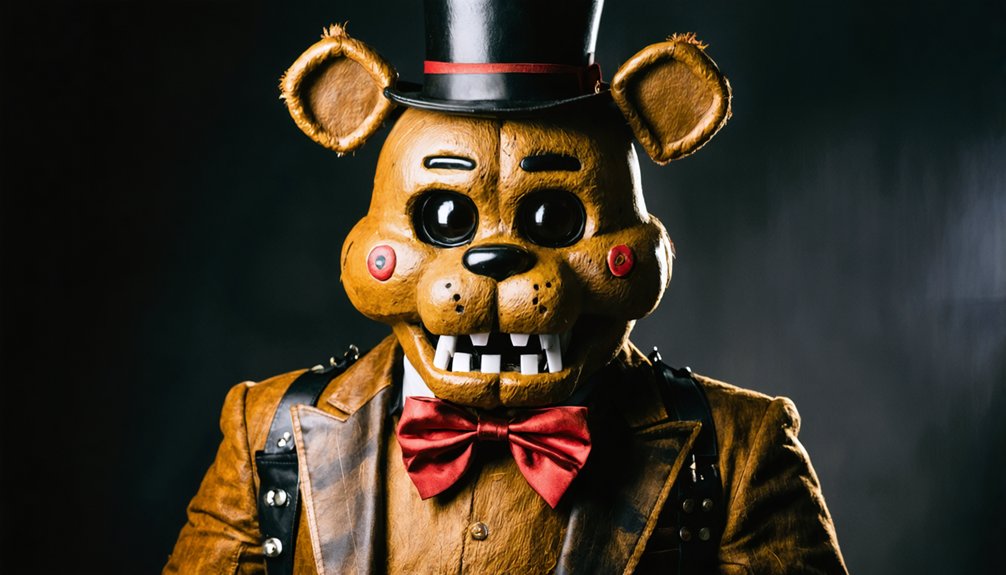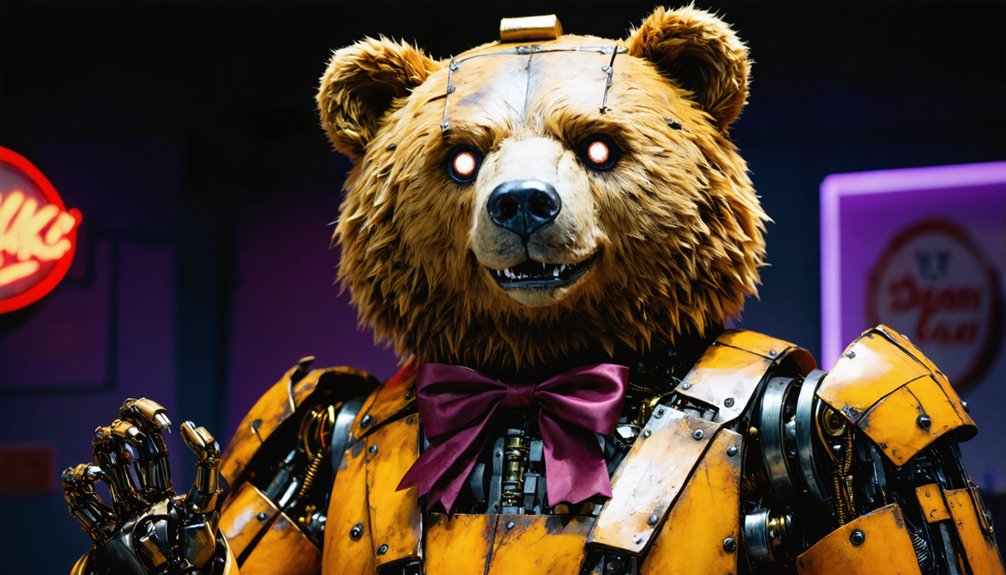
You’ll achieve the most authentic FNAF cosplay by selecting character-specific construction techniques: Freddy’s graduated cardboard torso rings, Bonnie’s heat-formed EVA foam shell with guitar prop, Chica’s detailed “LET’S EAT!” bib with cupcake accessory, or Foxy’s distressed pirate aesthetic with articulated jaw mechanisms. Each requires 6-10mm EVA foam layers, anti-pill fleece for flexibility, hot glue assembly, and strategic ventilation panels for convention endurance. Master foam sculpting, LED eye integration, and weathering effects to replicate the animatronics’ signature deteriorated appearance. The sections below break down materials, assembly sequences, and mobility optimization strategies.
Key Takeaways
- Freddy Fazbear features cardboard ring torso construction, articulated jaw mechanisms, LED eyes, and requires cage-like strips for dimensional head accuracy.
- Bonnie the Bunny uses heat-formed EVA foam over torso casts, ball-joint shoulder articulation, and strategic laceration patterns for withered aesthetics.
- Chica the Chicken offers multiple versions including removable beak components, “LET’S EAT!” bib detailing, and kitchen-themed accessories with cupcake prop variations.
- Foxy the Pirate combines distressed crimson breeches, articulated metallic teeth jaw, weathered leather accents, and chain accessories with skull-adorned belt elements.
- Essential materials include 6mm and 10mm EVA foam, anti-pill fleece, hot glue assembly, and strategic ventilation through plastic mesh panels.
Freddy Fazbear: The Classic Animatronic Look
When building Freddy Fazbear’s iconic shell, you’ll start with a core structure of graduated cardboard rings that decrease in diameter as they stack upward, creating the animatronic’s distinctive torso silhouette.
The head requires cage-like construction using curved strips for dimensional accuracy. You’ll integrate articulated movement mechanisms through pulley-driven fingers and motorized jaw components that sync with voice modulation systems. Multi-color LED eyes—controllable via joystick—feature Arduino-programmed idle movements replicating in-game behavior.
Apply black base paint, masking rounded sections before silver topcoating. The fabric covering demands precision when aligning eye apertures with internal LEDs. Four-layered ears mount with dual-layer connectors, while diamond-cut shoulder pads complete the aesthetic. Incorporate paw-print detailing on extremities and UV-reactive weathering sealed with automotive-grade clear coat for professional-grade authenticity.
Bonnie the Bunny: Mastering the Guitar-Wielding Character
Bonnie’s bluish-purple armor demands a multi-stage foam sculpting approach that begins with your torso shell—constructed from 10mm EVA foam heat-formed over a torso cast for anatomical accuracy.
Layer the signature red bow tie using vinyl upholstery material stretched over buckram interfacing for dimension.
Engineer the guitar hero stage presence through a lightweight balsa wood instrument core wrapped in thermoplastic, maintaining performer mobility while achieving authentic proportions.
Address animatronic mobility challenges by installing ball-joint articulation at shoulder pivots and implementing a counterweight system in your back harness.
Replicate Bonnie’s withered aesthetic through strategic laceration patterns—expose underneath endoskeleton elements using painted PVC pipes inserted through foam gaps.
Wire LED circuits through your facial structure for the signature red eye glow that punctuates Bonnie’s predatory surveillance behavior.
Chica the Chicken: Bringing the Kitchen Animatronic to Life
While Bonnie commands stage left with rockstar flair, Chica’s yellow-bodied presence stage right introduces distinct fabrication challenges centered on her kitchen-dwelling aesthetic and signature cupcake companion. Your build demands precision when engineering her “LET’S EAT!” bib with multi-color confetti detailing, complemented by kitchen themed cosplay accessories like serving plates and spatulas that reinforce her culinary motif.
Chica’s cupcake design variations offer creative latitude—craft Classic’s anthropomorphic pink version with visible teeth, or fabricate Toy Cupcake’s updated aesthetic. Advanced builders can incorporate removable components mimicking Toy Chica’s off-stage transformation: detachable beak revealing endoskeleton teeth, interchangeable eyes switching from blue irises to glossy black voids.
Consider Withered’s deteriorated framework with exposed wiring, or Rockstar’s maraca-wielding configuration. Each iteration demands specific material selections balancing structural integrity with performance mobility.
Foxy the Pirate: Capturing the Sharp-Toothed Terror
You’ll build Foxy’s menacing presence through three critical construction layers that separate amateur attempts from screen-accurate recreations. Start with a privateer’s foundation—distressed crimson breeches, a tattered brown waistcoat, and weathered leather accents that establish his deteriorating showman aesthetic.
The character’s predatory identity emerges through precise facial elements: articulated jaw mechanisms displaying rows of metallic teeth, a structured right-eye patch secured to your headpiece, and strategically worn gray fur fabric that mimics decades of mechanical decay.
Pirate Costume Foundation Elements
Creating Foxy’s distinctive appearance begins with a maroonish-red jumpsuit that’ll serve as your canvas for the weathered pirate aesthetic. Layer brown linen pants strategically shredded at the legs, then add your signature pirate hat design coordinating with a red jacket featuring gold chains connecting the lapels. The jacket’s dark gray interior showcases yellow patterning for authenticity.
Construct your torso foundation using a comfortable inner bodysuit with balaclava, topped with handmade plush foam elements that’ll build the character’s silhouette. Install dynamic chain accessory elements including a skull-adorned belt with dangling gold keys. Apply caution tape along the hip line where wiring will emerge. Focus on spongy foams and soft fabrics ensuring wearability throughout extended wear sessions, while detachable trousers with optional chaps overlay provide costume versatility.
Signature Teeth and Eyepatch
Foxy’s menacing grin and battle-worn eyepatch define his predatory presence, transforming a standard pirate costume into an instantly recognizable animatronic terror. You’ll need layered fabric for your eyepatch construction—sturdy materials that maintain structural integrity while positioned over your right eye. This approach creates authentic fur textures within pirate aesthetic variations.
For teeth definition, consider pre-fabricated faux-snarl masks offering sharp, prominent dental features without custom fabrication demands. Alternatively, personalized mask creation allows expression modifications that enhance your interpretation of masked facial expressions. Your teeth visibility remains essential even with full head coverage, distinguishing Foxy from other animatronics.
Balance orange and brown fabric selections with your facial features, ensuring these primary recognition elements work cohesively. Engage online cosplay communities for advanced styling techniques that merge furry and animated aesthetics into one cohesive, intimidating presentation.
Weathered Fox Fur Details
When replicating Foxy’s deteriorated appearance, strategic fabric removal becomes your primary construction technique—exposing underlying endoskeleton components through calculated tears and absent material sections. Layer gray plush fabrics over foam bases, then systematically distress surfaces using fur texture aging patterns that mirror his canonical damage. Remove left ear fabric entirely, strip lower torso materials, and expose leg endoskeletons while maintaining upper thigh coverage.
Distressed fabric techniques require deliberate precision: shred brown linen pants at specific points, tear chest sections to reveal mechanisms beneath, and position shoulder fur tufts amid surrounding damage. Apply light gray accents above eyes for permanent angered expressions. Incorporate spilling wires lined with caution tape at hip joints, creating authentic escaped-from-Pirate-Cove decay that showcases your weathering expertise.
Essential Materials and Construction Techniques for FNAF Costumes
You’ll build your FNAF costume foundation using project foam sheets—typically 24 by 72 by 1 inch—layered and bonded with hot glue to create structural components like head casings and animatronic features. Anti-pill fleece from Walmart or Joann’s provides the stretchable skin coverage, while felt accents handle eyelids and detail work.
Your assembly arsenal requires hot glue guns for foam bonding, basic sewing skills for fabric construction, and brad pins plus elastic bands to engineer articulated jaws and hinged mechanisms.
Foam and Fabric Selection
Building a convincing FNAF costume starts with selecting the right foam foundation, and you’ll find that 1-inch thick Fairfield project foam—measuring 24 by 72 inches and available at Walmart or Joann’s—delivers the ideal balance of workability and structural integrity for character heads.
Your foam sourcing strategy should incorporate EVA foam variations: 6mm sheets excel for detailed components like jaw domes, while 10mm floor mats provide robust base plates that you can halve into 5mm layers for recessed features.
Critical Material Specifications:
- Anti-pill fleece prevents wrinkles through superior stretch properties, essential for fabric layering over three-dimensional foam bases
- Joann’s 40% discount reduces Fairfield foam costs to approximately $19 per sheet
- Felt guarantees precision for smaller elements like articulated eyelids
This combination guarantees professional-grade construction without compromising your innovation-driven design approach.
Assembly Tools and Adhesives
Hot glue forms the backbone of FNAF costume construction, serving as your primary adhesive for securing foam layers, attaching fabric patterns, and assembling three-dimensional features from paws to facial structures. Master foam sculpting techniques by layering 2-3 sheets to create dimensional depth in facial features, constructing robust jaw assemblies with triple-layer builds, and carving angled cuts for organic shaping.
Your adhesive application methods extend beyond hot glue alone. Integrate structural supports using plastic mesh rectangles secured with Brad pins for hinges, cross-stitching mesh strips with curved wire inserts for moving jaw mechanisms, and elastic strips screwed directly into mesh bases. Reinforce critical joints by combining hot glue with duct-taped popsicle stick halves. Employ Velcro for removable eye panels and standard pins to stabilize foam triangles during curing.
Creating Authentic Masks and Headpieces for Maximum Impact
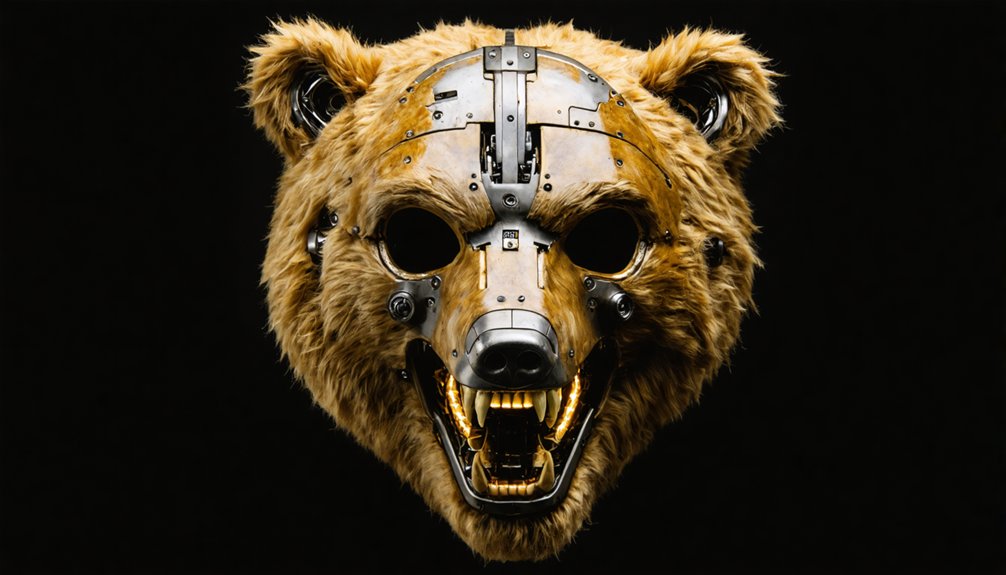
The foundation of any commanding FNAF mask starts with selecting your structural base—whether you’re reaching for cardboard sheets to construct Withered Bonnie’s angular features or stacking foam board layers for Freddy Fazbear’s iconic dome. You’ll achieve realistic facial features by layering materials strategically: trace cylinder templates onto stuffed foam for proper curvature, then reinforce with Bondo shells for durability.
Critical construction elements include:
- Wire-twisted jaws creating bendable articulation for seamless costume integration
- Plastic mesh ventilation panels positioned within eye sockets and mouth cavities
- Contact cement application spreading evenly across felt surfaces to eliminate bunching
Shape authentic details using foam board teeth coated in nail polish, black felt noses, and multi-layer eye assemblies. Hot glue brad pins enable hinged jaw movement while maintaining structural integrity throughout extended wear.
Comfort and Mobility Tips for All-Day Convention Wear
While your meticulously crafted Springtrap suit commands attention across the convention floor, you’ll sabotage the entire experience if you can’t walk fifteen minutes without foot pain radiating through poorly cushioned boots. Prioritize quality footwear with gel inserts, or integrate character-appropriate sneakers into your design. Engineer adjustable costume features through removable layers and modular components—switch from photoshoot heels to travel-ready athletic shoes between events.
Strategic pocket integration keeps essentials accessible without breaking character immersion. Map scheduled rest breaks using convention quiet zones and manga libraries, implementing hourly posture resets before adrenaline crashes trigger pain accumulation.
For mobility-assisted cosplayers, transform wheelchairs and crutches into character elements—imagine Glamrock Freddy-themed tire covers or vine-wrapped supports. Test full-day wearability before convention morning, packing emergency supplies addressing blister prevention and costume malfunctions.
Props and Accessories That Elevate Your FNAF Cosplay

Strategic prop selection transforms basic FNAF cosplays into convention-commanding character embodiments that photographers can’t resist capturing.
The right props elevate amateur FNAF costumes into photography-worthy animatronic recreations that dominate convention floors.
Freddy’s signature top hat and foam-constructed extremities establish authentic animatronic proportions, while Chica’s cupcake prop and bib replica deliver pizzeria-accurate details. Foxy’s hook accessory and jaw hinge mechanism create dynamic photo opportunities through articulated movement.
Essential prop enhancement techniques:
- Silicone prop casting produces realistic textures for Chica’s beak and Foxy’s sharp teeth elements, offering durability beyond standard foam fabrication
- Light up LED effects embedded within torso pieces and eye sockets amplify nighttime visibility and stage presence
- Aluminum bar frameworks engineered with nylon spacers enable portable battery-powered electronics while maintaining structural integrity
Source wholesale foundations from AliExpress, then customize through Etsy artisans. EVA foam construction paired with dual-color furring replicates game-accurate animatronic aesthetics that convention crowds instantly recognize.
Connecting With the FNAF Cosplay Community Online and at Events
Finding your tribe within FNAF cosplay circles requires strategic platform selection paired with consistent documentation of your build progress. Deploy hashtags like #fnafcosplay and #bonniefnaf to maximize visibility while connecting with specialized builders. TikTok accounts such as angelcraftixcosplays demonstrate advanced suit construction techniques, while Reddit forums offer character breakdowns and inspiration boards for community interaction.
Convention attendance transforms digital connections into tangible collaborations. Comic-Con Revolution showcases like the Glitchtrap and Vanny portrayals prove events reward authentic craftsmanship. Document your shared creative process through progress posts—this transparency builds credibility and attracts mentorship opportunities.
Post-Security Breach resources, including one-to-one 3D models, have revolutionized collaborative building. Engage through contests, forum discussions, and tutorial exchanges. The Fazbear Fanverse initiatives demonstrate how overwhelming fan support generates innovation-driven projects. Your consistent participation shapes this evolving ecosystem.
Frequently Asked Questions
What Is the Average Cost to Create a Complete FNAF Cosplay?
You’ll spend between $40 for cardboard builds and $275 for foam constructions when considering budget considerations and material sourcing. Pre-fabricated options start at $350, while premium 3D-printed builds demand $4,000-$11,000 for innovative, screen-accurate results.
How Long Does Building a FNAF Animatronic Costume Typically Take?
Though it seems challenging, you’ll complete basic masks in 20-30 hours, while advanced animatronic suits demand 1100+ hours. Your timeline depends on materials required, construction techniques chosen, and mechanical additions—experience accelerates your fabrication speed considerably.
Can Children Safely Wear FNAF Cosplay Costumes to Events?
Children can safely wear FNAF costumes with proper safety precautions. You’ll need age-appropriate costumes featuring visibility ports, breathable materials, and lightweight construction. Guarantee masks don’t obstruct vision, and supervise younger wearers during crowd navigation at events.
Which FNAF Character Is Easiest for Beginner Cosplayers?
Freddy offers beginners budget-friendly materials, straightforward construction, attention-grabbing accessories. You’ll master cardboard mask-building techniques, apply minimal face paint, and incorporate brown clothing elements. This approach balances character recognition with simplified foam manipulation, making your first animatronic build achievable and cost-effective.
Are There Pre-Made FNAF Costume Options Available for Purchase?
You’ll find pre-made FNAF costumes at Spirit Halloween, Walmart, and Etsy shops. Beyond retail options, you can explore rental costume options for conventions or commission custom-made costume builds featuring advanced mechanisms like programmable electronics and articulated components.