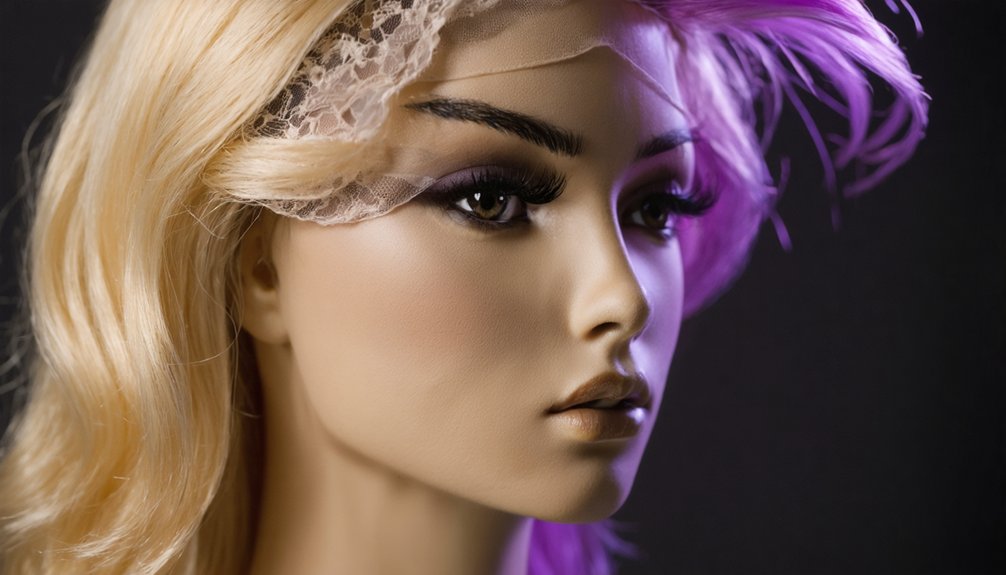
You’ll want lace front wigs with HD or Swiss lace bases featuring bleached knots, which guarantee visible root contrast under convention lighting. Position the wig 1 cm forward of your natural hairline and customize through strategic plucking to achieve character-specific density. The transparent mesh construction allows your skin tone to show through individual strands, creating authentic scalp illusion that regular wigs can’t replicate. Full lace variants offer additional styling versatility, while proper lace quality safeguards durability throughout extended wear scenarios.
Key Takeaways
- HD or Swiss lace bases with bleached knots eliminate visible construction under stage lighting for undetectable hairlines.
- Transparent lace mesh allows natural skin tone to show through, creating authentic scalp illusion under close scrutiny.
- Hand-tied hairlines with graduated density produce dimensional realism that withstands detailed examination and multidirectional styling.
- Positioning wigs 1 cm forward of natural hairline with strategic plucking creates seamless, character-specific frontal appearances.
- Lace fronts eliminate solid cap lines of regular wigs, enabling customizable hairlines for accurate character recreation.
Why Lace Front Wigs Deliver Undetectable Hairlines for Character Accuracy
When cosplayers demand character-perfect hairlines, lace front wigs eliminate the visible demarcation that compromises authenticity. The excess lace extends beyond your natural hairline, allowing precise trimming to match your scalp contours. You’ll position the wig 1 cm forward of your hairline, creating seamless integration without blending natural hair—preventing damage while achieving complete coverage.
Density adjustment transforms the initial thick hairline through strategic plucking, producing the sparse, realistic frontal appearance characters require. Whether recreating Nemesis’s widow’s peak or Hades’s defined structure, you’ll customize visible areas with surgical precision. Using tweezers close to the root, you’ll create waves, dips, and bends that avoid uniformed patterns and mirror natural hairline irregularities.
Lace attachment techniques using double-sided tape secure 126 color-matched options, from Smoke Black to Milky Gold. Gluing the lace to your skin provides an additional secure fastening method that keeps the wig firmly in place during extended wear. This full lace front construction guarantees only wig hair remains visible, delivering the no-hair-left-out finish that defines professional cosplay accuracy.
How Lace Front Technology Creates Natural Scalp Illusion Under Stage Lighting
Stage lighting exposes traditional wig construction flaws that sheer lace materials effectively conceal through light transmission properties matching natural scalp opacity.
You’ll achieve realistic scalp illusion by selecting HD or Swiss lace bases with bleached knots, which eliminate root contrast visible under high-intensity spotlights during performance. These ultra-thin, breathable options replaced the thick French lace of earlier decades, creating seamless melting effects into any skin tone.
Hand-tied hairlines with graduated density at the front edges create dimensional realism that withstands scrutiny from multiple viewing angles in theatrical settings. Secure your wig to a canvas block wrapped in Saran Wrap during any customization work to maintain the delicate lace structure while preventing damage to the hairline.
Sheer Lace Mimics Scalp
Under intense stage lighting, lace front technology transforms theatrical wigs through ultra-fine mesh construction that permits the wearer’s natural skin tone to emerge beneath individual hair strands. This natural scalp replication achieves authenticity by leveraging breathable materials that eliminate the artificial appearance of traditional wig caps.
HD lace variants specifically address close-range scrutiny, featuring reduced grid visibility that withstands high-definition photography and proximity examination.
You’ll maximize realism by selecting hypoallergenic HD Dream Lace for sensitive skin applications, while Matrix FX’s ultra-thin bases deliver undetectable shifts under intense illumination. The lightweight construction supports extended performance wear without compromising ventilation.
Hand-tied strands onto the sheer base replicate natural hair emergence patterns, enabling multidirectional styling that maintains the scalp illusion from any viewing angle—critical for dynamic stage movement and audience engagement. Modern lace front constructions stretch to accommodate different head sizes while maintaining their secure positioning throughout performances. These wigs eliminate the need for powder or plucking, as the lace construction already provides a convincing hairline that saves valuable preparation time before performances.
Stage Lighting Realism Test
Theatrical lighting systems fundamentally altered wig design when 19th-century stage performers demanded foundations invisible under gas lamps and later electric spotlights. You’ll achieve hidden hairline realism through specialized “Film” lace materials engineered for stage lighting concealment, which diffuse differently than standard Swiss lace under theatrical gels and spotlights.
Stage conditions optimize lace invisibility through three mechanisms: specialized lens systems that soften edges, professional adhesives that fill mesh openings, and the downward angle of most stage lighting that minimizes shadowing on horizontal surfaces.
Your application technique determines effectiveness—liquid adhesives provide superior stage lighting concealment compared to tape alternatives, while strategic concealer application on lace and knots creates flawless results under indoor performance conditions. Professional performers may also use makeup to conceal lace for achieving a more natural appearance under close inspection. Proper wig positioning requires leaving out the natural hairline when using a wig cap or liner for enhanced realism. Remember that daylight exposure reveals lace fibers despite perfect stage optimization, limiting outdoor cosplay applications without additional camouflaging techniques.
Hand-Tied Hairline Blending
Hand-tied hairlines achieve natural scalp illusion through individual strand knotting that replicates biological hair emergence patterns from follicles. You’ll find the lace material’s light permeability simulates authentic scalp transparency, eliminating detection under stage lighting when properly secured. Pre-plucked densities create graduated edges that mirror organic growth cycles.
For optimal natural hairline integration, align transparent lace precisely with your biological hairline before applying wig-specific adhesives in sectional applications. Tweeze excessive density along the front to establish realistic tapering. Apply foundation matching your exact skin tone directly onto the lace base, then style baby hairs using edge control gel for seamless shifts. Swiss lace options provide finer construction for superior blending and more natural appearance compared to thicker alternatives.
Adjustable lace fits require strategic positioning with clips and elastic bands to maintain flat adhesion against your scalp. Zig zag lace fronts eliminate manual trimming requirements while delivering natural forehead-to-wig transitions. This technical approach guarantees the hand-tied construction remains imperceptible under demanding theatrical illumination conditions.
Lace Front Vs Regular Wigs: Understanding the Realism Difference
When comparing lace front wigs to regular wigs, you’ll immediately notice the construction difference at the hairline—lace fronts feature a transparent mesh base that mimics your natural scalp, while regular wigs use solid cap materials that create an abrupt, visible cutoff.
This distinction becomes critical under stage lighting, where regular wigs expose obvious edges and costume-like appearances, especially when styling without bangs.
Pre-plucked lace fronts with hand-tied hair strands achieve a graduated hairline that blends seamlessly with your skin tone, eliminating the tell-tale cap line that marks amateur cosplay work.
Natural Hairline Appearance Comparison
Anyone searching for authentic cosplay results will immediately notice the stark difference between lace front and regular wigs at the hairline. Lace fronts feature hand-tied hair strands that create follicle-like appearance, producing a seamless interchange where hair appears to grow directly from your scalp. The transparent lace blends perfectly with your skin tone, delivering a virtually invisible hairline when properly applied.
Regular wigs present significant hairline visibility challenges due to thicker cap materials that create noticeable demarcation lines. You’ll find yourself relying on fixed bangs and fringes for concealing the wig base, which severely limits your styling options. The lace front’s tiny strands mimic natural baby hairs, while regular wigs lack this critical detail. This fundamental construction difference determines whether your cosplay achieves professional-grade realism or reveals obvious artificiality.
Visible Cap Line Differences
The cap line represents the most critical visual distinction between lace front and regular wigs, directly determining whether your cosplay achieves professional-grade realism or betrays obvious artificiality. Regular wigs display a solid, blocky cap line across the entire hairline—an immediate giveaway under close inspection or photography.
Lace fronts eliminate this front-edge visibility through transparent lace material that mimics scalp texture, though a demarcation appears where lace meets the monofilament base. This visible boundary restricts high updos but doesn’t compromise frontal realism with proper application.
Product durability depends on lace quality; inferior materials show wear quickly. Maintenance requirements include regular front-edge blending using adhesives or powders to sustain invisibility.
Full lace constructions eliminate all cap visibility but demand professional installation, while lace fronts balance realistic hairlines with manageable upkeep for innovation-focused cosplayers.
Price Breakdown: What to Expect When Shopping for Lace Front Cosplay Wigs

Shopping for lace front cosplay wigs breaks down into three distinct price tiers, each offering specific quality markers and features.
Entry-Level ($45.50-$59.50): Basic synthetic lace fronts provide accessible options for beginners. Expect standard fiber construction with adequate wig durability for occasional wear. Atlas and Hades v2 models exemplify this tier’s straightforward styling capabilities.
Standard synthetic fibers and basic lace construction make entry-level wigs ideal starting points for occasional cosplayers exploring character transformations.
Mid-Range ($60.00-$88.20): Enhanced fiber quality emerges here, with pieces like Hecate featuring improved layering techniques. You’ll find yaki textures and sophisticated color blending that withstand seasonal changes better than budget alternatives.
Premium ($121.50+): Two-tone construction and advanced gradient work justify higher investment. These pieces deliver professional-grade realism through superior lace quality and refined hairline architecture.
Sale events frequently offer 20-35% discounts, making mid-range pieces accessible at entry-level pricing—strategic timing maximizes value without compromising quality standards.
Styling Freedom: Achieving Updos and Slicked-Back Looks With Lace Fronts
Lace front wigs liberate advanced styling possibilities that standard cap constructions can’t match—specifically updos and slicked-back arrangements that expose your hairline. After trimming excess lace and securing with adhesive, you’ll achieve gravity-defying ponytails and braided updos demonstrated in KDA Seraphine tutorials.
For slicked-back looks, prepare a flat base using braided natural hair beneath your wig cap, then detangle sections with a wig comb before back-combing roots for hold. Tease strategic sections to add volume without compromising the lace structure.
Multi character wig styling becomes efficient when you master blending techniques—apply foundation-matched concealer with a flat brush across the lace, then blend with fingers for seamless integration. Proper lace front maintenance includes cleaning your forehead of oils before adhesive application, ensuring extended wear through convention days while maintaining that realistic hairline exposure.
Hand-Tied Vs Machine-Made: Choosing the Right Construction for Your Budget
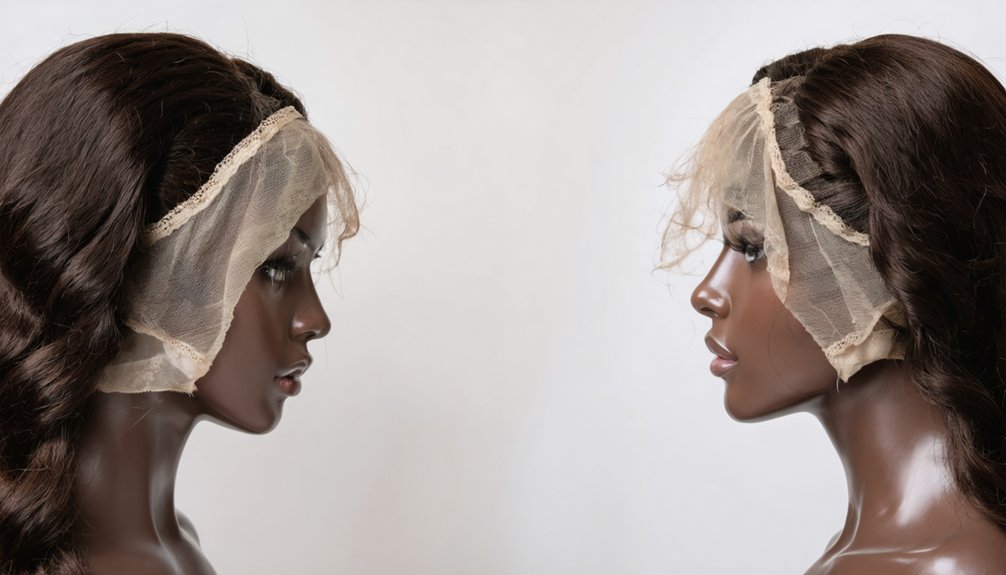
When selecting between hand-tied and machine-made lace front wigs, you’ll encounter a fundamental trade-off between realism and affordability that directly impacts your cosplay presentation.
Hand-tied construction delivers superior naturalism through individually knotted strands, requiring 30+ hours of specialized labor. You’ll experience enhanced breathability, lightweight comfort, and authentic movement—critical for character accuracy. However, expect premium pricing reflecting this artisanal cap construction durability.
Machine-made alternatives utilize rapid weft assembly (20-30 minutes), incorporating thicker tracks with reinforced stitching. While heavier and less flexible, they’re vastly more affordable and resist shedding effectively. Budget wig maintenance becomes simpler since wefts won’t fray when customized.
For innovation-focused cosplayers, hand-tied caps maximize realistic presentation. Budget-conscious creators benefit from machine-made durability without compromising basic authenticity. Your character requirements and financial parameters determine the most suitable construction methodology.
Best Wig Thickness Options: From Natural Iris Styles to Voluminous Daphne Designs
Wig thickness directly impacts both realism and styling capability, requiring you to match density to your cosplay’s specific demands. Thin lace front options like Iris deliver natural scalp illusion with minimal volume, while medium-thickness constructions offer styling versatility without sacrificing authenticity.
Thick styles such as Daphne provide maximum fiber count for voluminous characters, though they’ll compromise the natural appearance thin densities achieve.
Thin Lace Natural Appearance
Modern lace front wigs employ ultra-thin sheer film construction that creates an imperceptible hairline blending changeover between synthetic or human hair fibers and your natural skin. This sheer material serves as the foundation for hand-tied individual strands that replicate authentic scalp growth patterns, eliminating the harsh demarcation lines characteristic of traditional wig caps.
The lace’s translucent properties adapt to various skin tones, enabling scalp mimicking that withstands close-range inspection during conventions and photoshoots. You’ll achieve off-the-face styling versatility—slicked-back ponytails, side parts, or updos—without exposing telltale wig edges.
Whether you select 100% density Natural Iris configurations or 200% Voluminous Daphne designs, the consistent thin lace front guarantees your cosplay maintains photorealistic authenticity. Heat-safe Futura and Henlon fibers complement this construction, delivering styling flexibility up to 340°F while preserving the natural appearance.
Medium Thickness Versatile Styling
Beyond the foundation of imperceptible lace construction, your wig’s hair density determines its styling range and character authenticity. 150% density configurations strike the ideal balance between natural movement and adequate volume for medium-thickness applications.
Heat safe polymer options like Futura fiber withstand temperatures up to 340°F, enabling transformative styling from straight yaki foundations to dramatic curls without structural compromise. Henlon synthetic fibers maintain their engineered properties through repeated thermal manipulation while resisting the frizz accumulation that plagues lower-grade alternatives.
Medium-length specifications (14″-16″) provide prime proportions for both contemporary and period character interpretations. Pre-styled wave patterns deliver significant styling time reduction while maintaining realistic movement dynamics. Swiss lace front construction supports diverse techniques—spiking for angular characters, slicking for refined aesthetics, or natural parting for civilian portrayals.
Thick Voluminous Character Looks
Character authenticity frequently demands densities exceeding standard specifications, particularly when portraying protagonists with signature voluminous silhouettes. Thick lace fronts deliver character realism impact through enhanced fiber concentration—Hecate and Nemesis models feature long layered construction from widow’s peaks, creating dramatic flowing profiles. Short voluminous variants like Hades v2 ($69.99) provide compact thickness with defined hairlines, while Atlas black enables spiking techniques at 12″ lengths.
Wavy configurations maximize wig density advantages: LF101 pastel ash blonde ($65.60) and Yelena Belova LF8046 ($79.20) combine textured waves with elevated fiber counts. Premium suppliers—Arda’s 50 styles, Epic Cosplay’s long collection, UNIQSO’s 34″+ options—engineer densities surpassing conventional parameters. Wigisfashion’s 18″-32″ categorization targets maximum volume deployment, while Etsy artisans customize fiber concentrations for character-specific density requirements.
Breathability and Comfort During Extended Convention Wear
How can you maintain comfort when wearing a lace front wig for eight-hour convention days? Prioritize breathable wig cap materials through ventilation test performance evaluation. Fishnet caps deliver superior airflow through open-weave construction, while soft viscose options provide cooling properties that reduce heat buildup. Human hair lace fronts outperform synthetic alternatives by allowing enhanced scalp breathability through fine mesh construction along the hairline.
Secure your wig using internal combs and adjustable back straps rather than full adhesive coverage. For extended wear, apply Ghost Bond Classic in 2-3 thin layers—single layers suffice for sessions under two hours. HD lace variants maximize air circulation while maintaining realistic hairline appearance. Custom-fitted caps eliminate pressure points that develop during prolonged wear, particularly for larger head circumferences requiring specialized measurements.
When to Choose Full Lace Over Standard Lace Front Construction
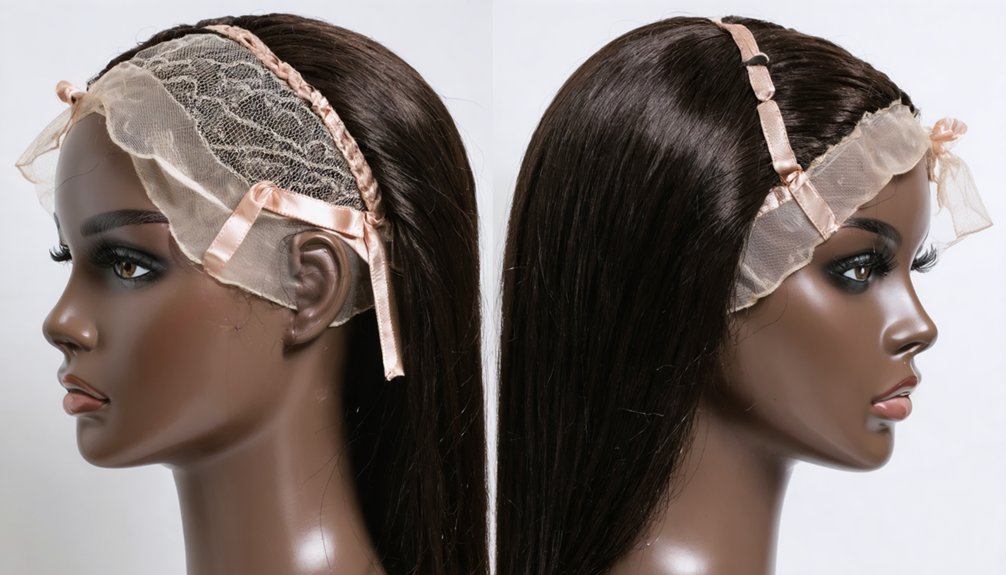
While lace front wigs suit most cosplay applications, full lace construction becomes essential when your character requires unrestricted styling versatility. You’ll need full lace when executing high ponytails, complex updos, or dynamic hairstyles exposing the crown and sides—scenarios where standard lace front’s limited parting reveals thicker base materials.
Full lace delivers unmatched styling flexibility through complete hand-tied construction, enabling multiple partings across any section without compromising realism. The scalp mapping accuracy extends 360 degrees around your head, creating undetectable authenticity from every viewing angle. Consider full lace for characters demanding elaborate cornrows, braided styles extending to the back, or active performances requiring constant hair movement. Despite higher costs and installation complexity, you’ll achieve superior breathability through uniform lace coverage and extended durability for demanding convention schedules requiring frequent restyling.
Budget-Friendly Alternatives: Fringeless Wigs and When They Work for Cosplay
Fringeless wigs eliminate the lace front entirely, reducing production costs by 40-60% while serving specific character archetypes that don’t require exposed hairlines. You’ll find these constructions ideal for slicked-back styles, high ponytails, or characters with naturally receding hair patterns where forehead visibility isn’t critical.
The wig construction relies on hand-sewn hairnets and canvas backing instead of delicate lace materials, delivering durability at $30-80 versus $200-300 lace alternatives. You can achieve costume realism through proper positioning—the structured cap design hides fiber bases effectively when worn correctly.
Choose fringeless options when your character features swept-back hair or when convention budgets demand prioritization. They skip complex lace trimming and adhesive application, offering quick installation. However, you’ll sacrifice face-framing versatility, making them unsuitable for characters requiring visible, natural-looking hairlines.
Frequently Asked Questions
How Do I Apply and Secure a Lace Front Wig Properly?
Trim excess lace to quarter-inch, then position the wig along your natural hairline. You’ll secure it by securing lace with adhesive applied to your forehead, allowing it to become tacky. Finish by hiding lace with makeup matching your skin tone.
Can Lace Front Wigs Be Reused for Multiple Conventions or Cosplays?
Yes, you’ll reuse your lace front wig across multiple conventions through proper storage techniques—maintaining ventilation and shape—while leveraging professional styling services to revitalize pre-plucked lace and address thinning between cosplay events.
How Do I Maintain and Clean My Lace Front Wig?
You’ll maintain your wig through regular wig maintenance every 8-10 wears using specialized wig cleaning products. Detangle first, then apply mild shampoo with gentle motions, condition the ends, and air-dry flat on a stand for ideal longevity.
What Lace Color Should I Choose to Match My Skin Tone?
Choose lace matching your scalp’s exact tone—transparent for pale skin, light-to-dark brown scaling with depth, or black for ebony complexions. This guarantees unnoticeable lace blending and a natural looking hairline that’s essential for cutting-edge cosplay realism.
Can I Customize or Cut the Lace on My Wig Myself?
You can customize your lace yourself—it’s proven effective when done carefully. Leave extra material for lace front wig adjustments, use sharp scissors, and consider wig cap size options. Cut gradually, as you can’t reverse mistakes once trimmed.
References
- https://emedahair.com/lace-front-wigs-vs-regular-wigs/
- https://www.youtube.com/watch?v=YfqBVbeXsdg
- https://www.morphsuits.com/blog/synthetic-frontal-lace-wigs-complete-guide/
- https://customwigcompany.com/the-difference-between-a-lace-front-wig-and-a-hard-front-wig/
- https://www.youtube.com/watch?v=HLeEvHHvQhQ
- https://www.epiccosplay.com/pages/wigs
- https://www.youtube.com/watch?v=UCLQ7oNjKMM
- https://embellishfx.com/collections/lacefront-wigs
- https://www.epiccosplay.com/collections/lace-front-wigs
- https://www.assistcosplay.com/wig/premium/point_wig/hairline_parts