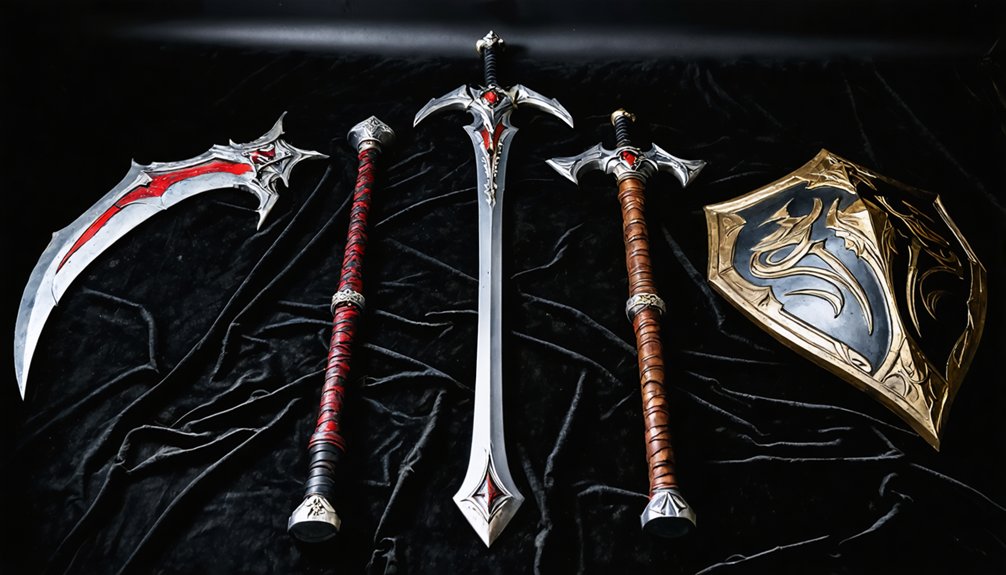
You’ll find the best lightweight convention weapons in these five categories: foam swords constructed from EVA layers around fiberglass cores (weighing just 520g), plastic lightsabers with detachable polycarbonate blades, EVA foam staffs reinforced with PVC piping, injection-molded plastic bats at 33.5 inches that replace heavy wooden versions, and thermoplastic shields using InstaMorph pellets that mold at 150-170°F. Each option prioritizes safety compliance while maintaining structural integrity through material-specific construction techniques you’ll discover below.
Key Takeaways
- Foam swords made from EVA and polyurethane weigh approximately 520g while remaining contact-safe for LARP and convention use.
- Plastic lightsabers with detachable polycarbonate blades offer customizable RGB lighting and sound effects in lightweight metal hilts.
- EVA foam staffs utilize high-density foam over PVC reinforcement cores, creating durable props that eliminate heavy materials.
- Lightweight plastic bats at 33.5 inches replace wooden equivalents while maintaining realistic wood-grain aesthetics and convention safety approval.
- Thermoplastic shields moldable at 150-170°F create armor pieces under 0.5 pounds with shatter-resistant and customizable properties.
Foam Swords and Blades
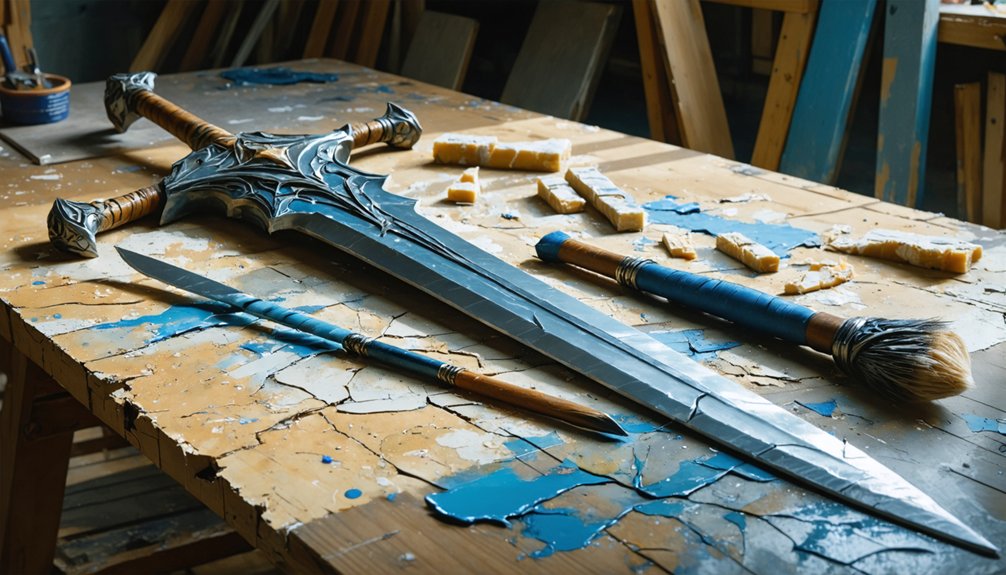
Foam swords and blades dominate convention floors because they deliver authentic aesthetics without the safety risks of metal replicas. You’ll find these weapons constructed from polyurethane and EVA foam layers stacked around fiberglass-reinforced 10mm cores, creating 40-41 inch medieval designs that weigh approximately 520g.
Customized blade designs emerge through hand-carved grooves, Worbla thermoplastic reinforcement, and triple-layer priming processes that achieve 83-100% scale realism. The high-density foam construction withstands repeated impacts while remaining contact-safe for LARP scenarios.
Durability testing procedures validate that these reinforced foam builds resist tearing during vigorous play without distortion. You’re wielding weapons engineered for extended convention use, where 30-inch blades paired with 11-inch handles balance authentic detailing with lightweight maneuverability that metal alternatives can’t match.
Plastic Lightsabers With Metal Hilts
Advanced assembly techniques include attaching detachable polycarbonate blades to empty metal hilt components from suppliers like TXQSABER. You’ll need to modify open switch holes for functional electronics integration.
For DIY enthusiasts, heated PVC piping welded with moldable plastic sheets creates water-resistant custom hilts. Roll 1/8-inch plastic strings for detailing, smooth heated gaps for authentic welded appearances.
Pixel hilts incorporate denser LED arrays with gesture-control activation, though heavier electronics increase overall weight. Choose RGB systems for lighter alternatives with customizable sound effects.
EVA Foam Staffs and Brooms
Building a convention-ready staff or broom requires selecting EVA foam as your primary material due to its exceptional strength-to-weight ratio and workability. You’ll achieve ideal results through strategic layering:
EVA foam’s superior strength-to-weight ratio and workability make it the essential choice for crafting durable, convention-ready costume props through strategic layering techniques.
- Foundation Layer: Start with 6mm-10mm high-density EVA foam for structural integrity and shape retention
- Foam Core Reinforcement: Embed PVC pipe or metal rods within carved channels in middle layers
- Detail Enhancement: Apply 2mm-4mm foam for dimensional elements using contact cement or hot glue
- Surface Texturing Techniques: Create beveled edges with a Dremel tool, then sand surfaces smooth before acrylic paint application
Black foam alternatives (L200, Pro Foam S, EVA-PE45kg) eliminate painting requirements while reducing weight. You’ll maintain durability through proper thickness selection—never compromise structural support by using 2mm foam as a base layer.
Lightweight Plastic Bats and Clubs
While foam construction techniques excel for elongated props, plastic molded weapons offer distinct advantages for club-shaped cosplay items. You’ll find PU plastic bats measuring 33.5 inches deliver authentic wood-grain aesthetics at convention-compliant weights. These injection-molded alternatives eliminate the 2-3 pound burden of wooden equivalents while maintaining structural integrity through multiple events.
Modern plastic construction supports modular bat attachments, enabling leather cording integration and character-specific customization without compromising material strength. You can achieve realistic baseball accents through painted finishes that replicate authentic grain patterns on 2-2.5 inch diameter barrels.
Convention organizers increasingly approve these safety-certified alternatives, as solid plastic composition withstands display handling without fragmentation risks. At economical price points, you’ll access weather-resistant materials that maintain dimensional stability through repeated transportation cycles and multi-day wear schedules.
Thermoplastic Shields and Armor Pieces
Thermoplastic materials revolutionize armor fabrication by becoming moldable at temperatures between 150-170°F, then hardening into convention-safe protective pieces. You’ll find five Worbla alternatives that deliver cost-effective results: InstaMorph cuts expenses by 50% while forming shields in 2-5 minutes, and HDPE sheets provide weather resistance for outdoor events.
Key Thermoplastic Applications:
- InstaMorph pellets create injection molded armor panels weighing under 0.5 pounds per piece
- Polymorph shapes intricate armor edges with low-temperature melting properties
- Friendly Plastic strips seam custom painted shield accessories up to 24″ diameter
- Polycarbonate scales layer over foam for hybrid builds with shatter-resistant properties
These materials weigh 20-30% less than steel equivalents, maintaining durability through repeated convention use while enabling character-accurate customization through transparent or colored variants.
Frequently Asked Questions
Can I Bring a Whip to a Convention if It’s Coiled or Zip-Tied?
You’ll need to check with event organizers first, as policies vary considerably. While coiled or zip-tied whips address safety concerns with unsheathed whips at some conventions, others ban them entirely regardless of securing method or material composition.
Are Unstrung or Loosely Strung Bows Allowed at Most Comic Conventions?
You’ll absolutely dominate the con floor—unstrung bows are permitted at most conventions! Guarantee your bow design limitations include non-functional strings and zero tension capability. Meeting bow safety requirements means removable strings and peace-bonding compliance for innovative cosplay success.
Will Metal Armor Slow Down the Security Screening Process at Conventions?
Yes, you’ll experience delays during the metal armor inspection process, as security checkpoint policies require case-by-case evaluation. Your armor triggers detailed safety verification, unlike foam alternatives that pass through quickly, making screening considerably slower.
Do All Prop Weapons Need to Be Inspected and Marked at Check-In?
Absolutely every single prop weapon you’ll bring must pass inspection and receive approval marking—zero exceptions. You’ll navigate prop weapon storage requirements and delegate approved prop weapon requirements through designated check-in stations using innovative, safety-compliant materials before entering convention spaces.
Are Wands and Sonic Screwdrivers Generally Permitted at Major Conventions?
Yes, you’ll find wands and sonic screwdrivers generally permitted under prop wand regulations and sonic screwdriver policies. They must use non-metal, foam, or wood construction without projectiles, sharp edges, or electronic discharge capabilities for safety compliance.