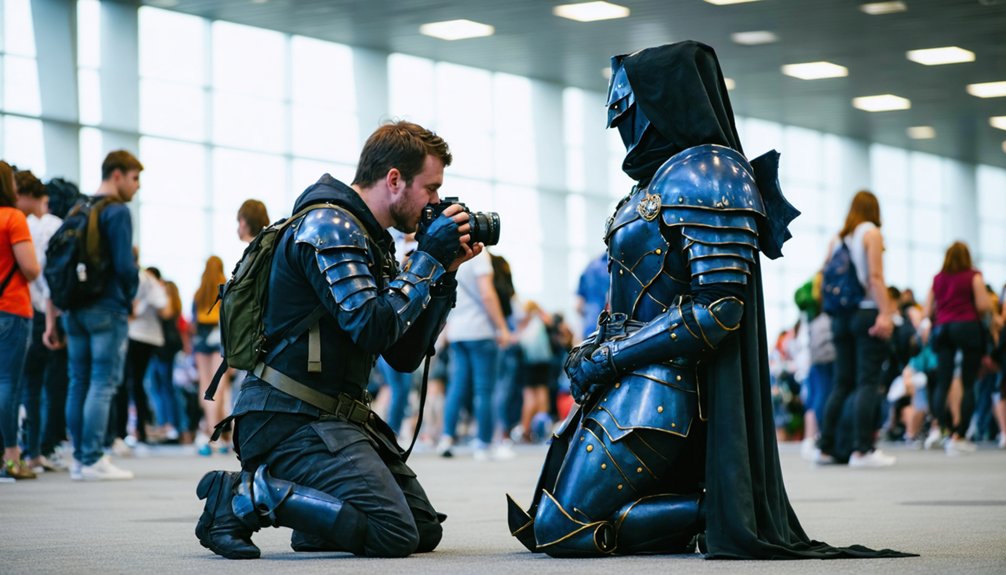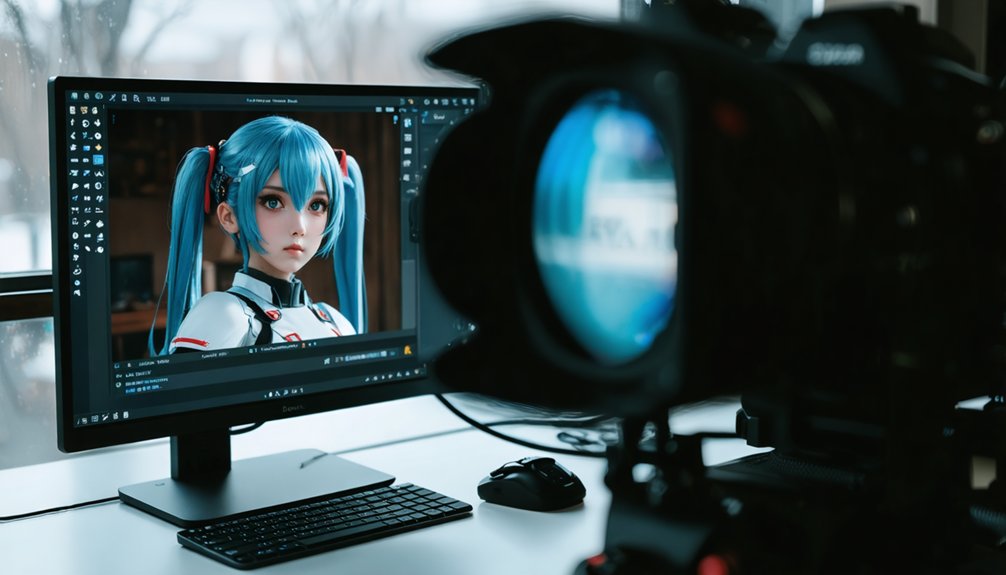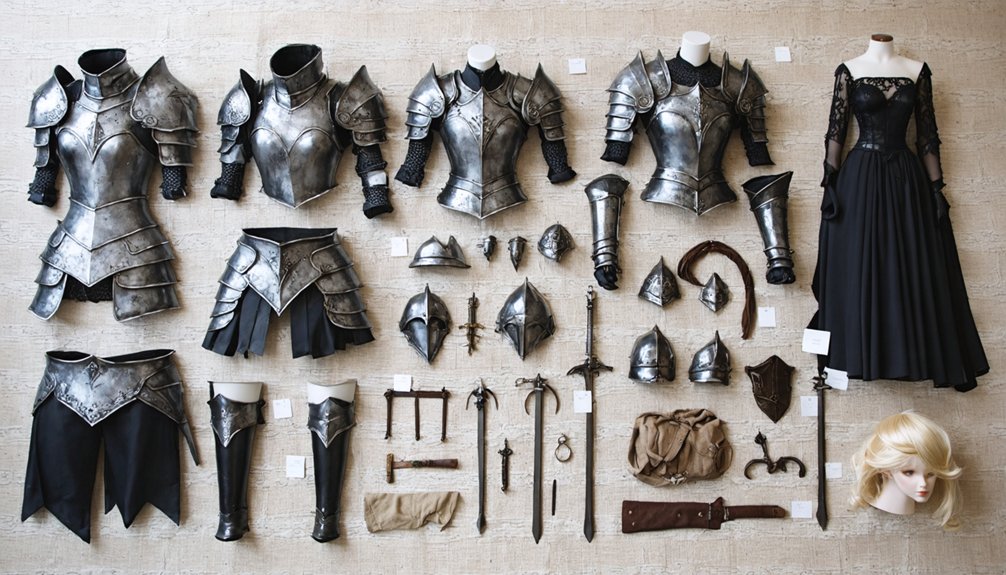
Target the 23-29 age bracket, which represents 60% of potential buyers, by focusing on anime characters and video game outfits with premium materials like EVA foam and Worbla. You’ll need high-resolution product photography from multiple angles, thorough sizing charts spanning XXS to 4XL, and platform-specific social media strategies for TikTok, Instagram, and YouTube. Collaborate with cosplay influencers and align your content calendar with major convention releases to maximize engagement. The following proven strategies will help you capture market share in this industry projected to reach $23 billion by 2030.
Key Takeaways
- Target the 23-29 age demographic with anime and video game costumes, offering limited editions at conventions and loyalty programs for retention.
- Use premium materials like EVA foam, Worbla, and specialty fabrics with non-toxic, flame-resistant treatments for durable, high-quality products.
- Provide high-resolution photos from multiple angles with precise measurements, custom sizing options, and detailed character accuracy information.
- Implement inclusive sizing from XXS to 4XL with standardized measurement instructions and custom tailoring for specialized requirements.
- Develop platform-specific social media content, partner with cosplay influencers, and align releases with entertainment launches for maximum engagement.
Identify Your Target Audience and Niche Within the Cosplay Market
Before you invest in inventory or launch your cosplay business, understanding who’ll actually buy your products determines whether you’ll capture market share or drain resources on the wrong merchandise. Target the dominant 23-29 age bracket—60% of your potential buyers—who create 1-4 costumes annually and spend $101-400 per piece.
Focus on anime characters and video game outfits, which drive the most revenue. Women (64% of cosplayers) prefer magical girls and fantasy heroines, while men gravitate toward superhero themes. Differentiate through limited edition releases tied to major conventions like Comic-Con, and build customer loyalty programs that reward repeat purchases from the 25% creating 5+ costumes yearly.
Geographic targeting matters: prioritize North America’s 27.9% market share while monitoring Asia-Pacific’s anime-driven expansion.
Source High-Quality Materials and Offer Premium Handmade Options
Your material choices directly impact customer satisfaction, repeat purchases, and profit margins—so prioritize suppliers offering EVA foam, thermoplastics, and premium fabrics that meet both safety standards and durability benchmarks. Source high-density EVA foam from cosplayshop.be for laser-cut armor pieces, and stock Worbla from cosplaysupplies.com for heat-shapeable components. Offer handmade premium options using metallic lycra, cotton embroidered lace, and silk alternatives like polyester dupion to differentiate your inventory.
Apply non-toxic primers like Elmer’s School Glue and flame-resistant treatments to align with sustainable manufacturing practices while enhancing the customer service experience through transparent material disclosures. Use XTC-3D coatings on 3D-printed props and Epsilon Pro on foam for impact-resistant finishes. These supplier relationships and finishing techniques position your business as innovation-driven while maintaining competitive pricing on durable, compliant products.
Establish a Strong Online Store Presence With Detailed Product Information
Your online store’s conversion rate depends on how effectively you communicate product value through visual and technical specifications. Cosplay buyers require high-resolution imagery from multiple angles, precise measurements with custom sizing options, and explicit character accuracy details to justify premium pricing and reduce return rates.
Data shows that listings featuring detailed product information—including fabric composition, construction methods, and screen-accurate color matching—generate 40-60% higher purchase confidence than generic descriptions.
High-Quality Product Photography Standards
Professional product photography directly impacts conversion rates in the cosplay marketplace, where customers scrutinize every seam, texture, and construction detail before purchasing. Implement a controlled lighting setup using external flashes with diffusers to eliminate harsh shadows while showcasing material authenticity.
Position leather and EVA foam pieces near natural light sources to capture depth without artificial glare. Shoot from multiple angles—include angled close-ups for villain costumes and straight-on shots for hero silhouettes. Document construction quality through macro photography that reveals stitching precision, paint application, and accessory security.
Match backgrounds to character environments while maintaining consistent branding strategies across your portfolio. Avoid shiny polyester under direct lighting; instead, emphasize neutral blacks and rich browns that photograph cinematically. Post-processing should refine details without misrepresenting actual product quality or material characteristics.
Comprehensive Size and Specifications
When customers abandon carts due to sizing uncertainty, online cosplay retailers lose an average of 35% of potential sales—a gap that thorough measurement protocols eliminate. You’ll need standardized measurement instructions covering bust, waist, hips, shoulders, and height in both metric and imperial units.
Implement inclusive sizing options spanning XXS to 4XL across 14 variants, utilizing letter-based nomenclature to reduce purchase hesitation. Your size charts must display body dimensions, not garment measurements, with clear guidance for fit adjustments when customers measure between sizes.
Offer custom tailoring by collecting minimum data points: height, weight, and three circumference measurements. Deploy gender-specific charts alongside unisex alternatives for crossplay scenarios. Include product-specific fields for heel height, jacket length, and specialized requirements, enabling precision-driven purchases that reduce returns while maximizing conversion rates.
Character Accuracy Details Matter
Character accuracy details directly impact conversion rates in cosplay retail, where product authenticity drives 68% of purchase decisions according to specialty marketplace analytics. You’ll maximize sales by documenting precise material selections—heat-resistant wigs, leather-look synthetics, specialized contact lens specifications—that demonstrate your production process optimization.
Character aesthetic blending requires granular descriptions: hairstyle construction methods, fabric weathering techniques, accessory attachment systems, and garment fit specifications. List every component from skin-tone undergarments to hand props, excluding irrelevant background elements. Reference multiple angles in your documentation process, capturing front, back, and side views that inform potential buyers about construction accuracy.
Detail small enhancements like embroidered patterns, gradient paint applications, and distressed fabric treatments. This thorough approach positions your inventory as premium-grade merchandise, distinguishing your offerings from mass-produced alternatives while justifying higher price points through demonstrated craftsmanship.
Leverage Social Media Platforms to Showcase Your Costumes and Props
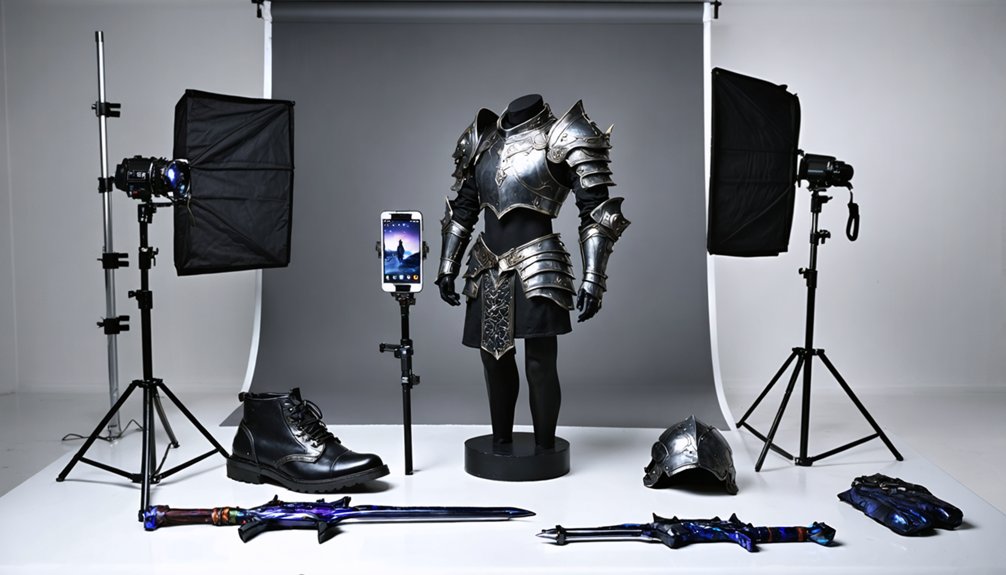
Your social media presence directly impacts sales, with platforms like TikTok, Instagram, and YouTube driving purchasing decisions and propelling specific costume trends to viral status.
You’ll need to craft platform-specific content strategies that showcase high-quality visuals of your products while leveraging each channel’s unique format—short-form videos for TikTok, carousel posts for Instagram, and tutorials for YouTube.
Collaborating with established cosplay influencers amplifies your reach exponentially, as these creators command loyal audiences that trust their recommendations and actively participate in cosplay culture.
Build Platform-Specific Content Strategy
Social media platforms function as your digital storefront, each offering distinct algorithms, content formats, and audience behaviors that demand tailored strategies. Instagram demands high-quality visuals paired with tutorial content and branded hashtags that enable catalog access while building your customer community. TikTok prioritizes SEO-rich captions, trending audio integration, and vertical video formats showcasing WIPs and finished builds.
Facebook supports longer-form educational content and exclusive releases that drive sustained engagement metrics. Reddit requires authentic participation through crafting tips and targeted subreddit involvement rather than promotional posting.
Your content calendar should align with entertainment releases while maintaining evergreen SEO value. Track platform-specific engagement metrics to identify which formats generate conversions versus awareness. Cross-posting identical content undermines performance—adapt your messaging, aspect ratios, and storytelling approach to match each platform’s native consumption patterns and algorithm preferences.
Collaborate With Cosplay Influencers
Platform optimization reaches its full potential when paired with strategic influencer partnerships that amplify your brand’s reach beyond organic growth capabilities. Target micro-influencers with 10K-50K average views—they deliver superior engagement rates and cost-efficiency at $2.68 CPM. Focus 82% of your budget on US-based cosplay creators who specialize in anime niches, ensuring authentic storytelling that resonates with tight-knit communities.
To maximize creator authenticity, grant influencers creative control over sponsored content rather than scripting narratives. This approach builds trust and drives higher conversions. Implement affiliate models to drive long-term partnerships, generating 45% more sales year-over-year. Prioritize Instagram collaborations (87% preference rate) and short-form video formats for peak engagement. Track click-through rates and sales attribution to optimize your ROI as 74% of marketers increase influencer investments in 2026.
Secure Licensing Agreements for Popular Anime and Gaming Franchises
Securing licensing agreements for anime and gaming franchises requires identifying the correct intellectual property rights holders—a process that’s often more complex than targeting a single entity. Production studios, publishers, and committees typically share rights, necessitating multiple permissions.
Contact rights holders via telephone rather than email—you’ll sound professional and obtain accurate contact information faster.
When negotiating, specify geographic territories, exclusivity terms, and royalty structures. Demonstrate market viability by highlighting fan demand and success metrics like Demon Slayer’s $663 million box office performance. This data strengthens your clear branding strategy and positions licensed products as revenue drivers.
Legal compliance protects your operation from infringement lawsuits while expanded rights coverage lets you diversify revenue streams through costumes, accessories, and props. Smaller operations face less scrutiny, but scaling requires proper agreements.
Implement Custom Design Services for Personalized Cosplay Orders
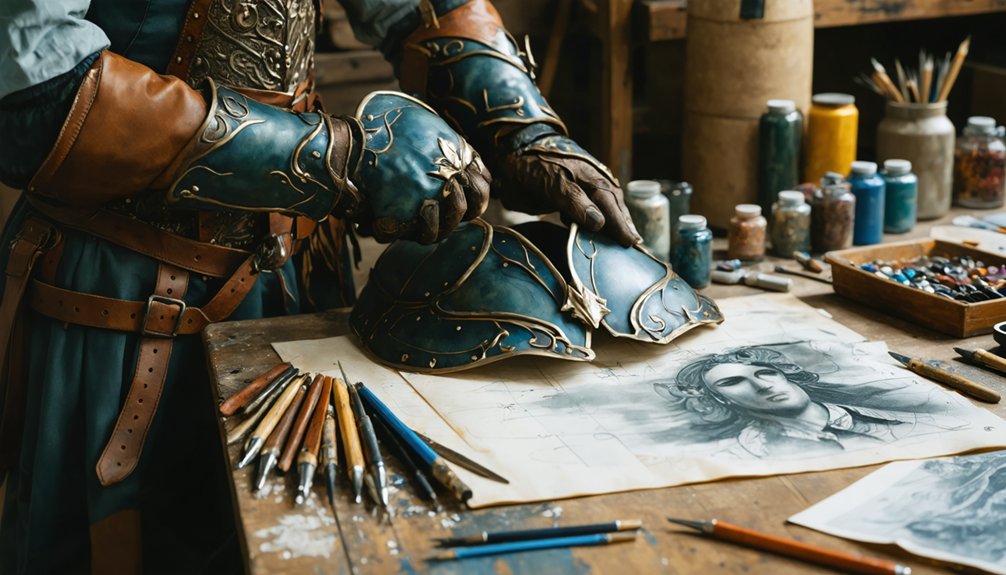
Why settle for off-the-rack replicas when 59.3% of cosplayers spend over $100 per costume and actively seek personalized designs? You’ll capture significant market share by implementing custom design services that address the 64% female demographic demanding tailored fits and the 42.9% creating 1-2 new costumes annually.
Deploy inventory management systems that track custom orders alongside standard stock, reducing fulfillment errors while maximizing warehouse efficiency. Partner with cost efficient manufacturing facilities offering variable production runs, enabling you to deliver personalized color palettes, sizing modifications, and character-specific details without prohibitive overhead.
This strategy differentiates your brand in a fragmented market where 32.1% invest $101-200 per costume. Custom services generate recurring revenue through subscription models while fostering brand loyalty that transforms one-time buyers into repeat clients seeking increasingly sophisticated designs.
Price Strategically Based on Costume Complexity and Material Quality
Strategic pricing structures must align with the market reality that 70% of cosplayers spend $101-$600 per costume, creating distinct opportunities across complexity tiers. You’ll maximize revenue by implementing differentiated pricing models: position basic designs under $200 for the 32.1% seeking standard creations, while targeting the 36.1% premium segment with $201-$400 offerings featuring intricate components and superior materials.
Your tiered product lines should reflect complexity-driven value. Advanced costumes requiring time-intensive craftsmanship and delicate embellishments justify $400+ price points, particularly for the 21.6% investing in signature pieces. Premium materials command 15-30% increases, supporting elevated margins when you maintain quality above the $100 entry threshold.
Target high-volume creators producing 5+ costumes yearly with strategic $100-$400 options, generating $500-$2000 annual customer value.
Build Relationships With Cosplay Communities and Convention Organizers
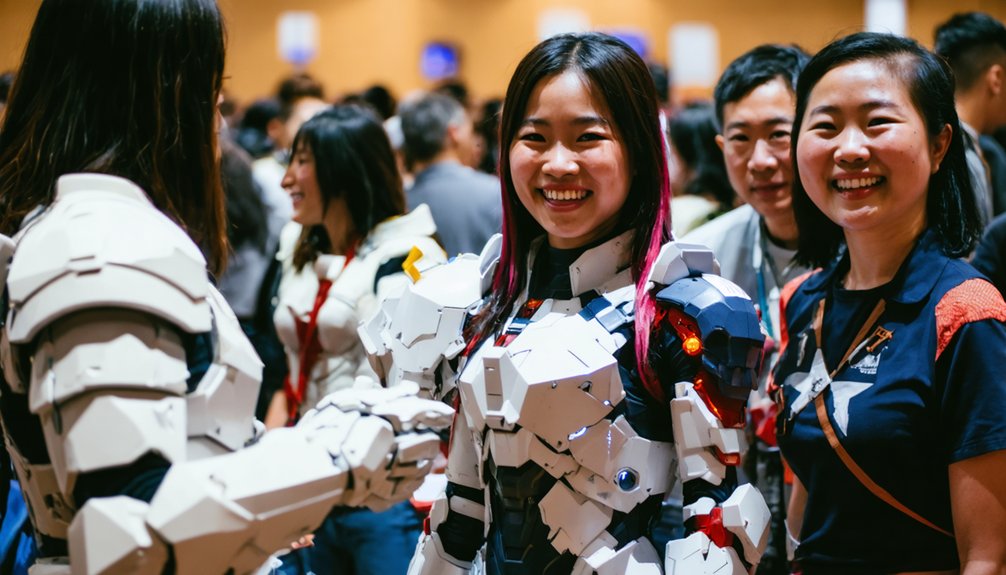
When you position your cosplay business within convention ecosystems, you’ll access the 80% of attendees who routinely participate in 2+ events annually—creating recurring sales opportunities that compound with each convention cycle. Target the 16% attending five or more conventions, particularly female manga/anime enthusiasts who index higher at 19% and cite cosplay as their primary motivator at 49%.
Foster year-round community engagement through social media sharing between events, building relationships that convert online followers into in-person customers. Promote networking opportunities at events by participating in group photoshoots and collaborative costume planning sessions where 65% seek new friendships.
Cultivate vendor relationships with organizers to address high-spender concerns—60% of frequent attendees desire improved organization. This strategic positioning generates repeat business from dedicated convention circuits.
Optimize Your E-Commerce Platform for Mobile Shopping and Global Shipping
As mobile devices account for 68% of cosplay e-commerce sales during peak convention seasons, your platform’s mobile optimization directly determines revenue capture from the market’s most active buyers. Prioritize fast-loading responsive designs and streamlined search functionality—procosplay.com achieved 30% sales growth by eliminating zero-hit queries and improving mobile user experience. Implement device-specific performance tracking across revenue, conversion rates, and session metrics to identify optimization opportunities.
For global reach, integrate international payment options that accommodate diverse markets while analyzing country-level data including transactions, sessions, and ad spend. Deploy direct-to-consumer models with strategic sourcing partnerships in Vietnam, India, and Mexico to minimize logistics risks. Leverage AI-driven demand forecasting and automated SKU rationalization to guarantee efficient cross-border fulfillment, enabling seamless purchases from North American conventions to emerging markets worldwide.
Frequently Asked Questions
What Profit Margins Should I Expect When Selling Cosplay Costumes and Props?
You’ll typically see 30-50% profit margins on props and 20-40% on costumes, depending on your average pricing models. Expect seasonal profit fluctuations around major conventions and franchise releases, where premium pieces command higher returns through strategic timing.
How Do I Handle Returns and Exchanges for Custom-Made Cosplay Items?
You’ll minimize custom-made returns by establishing detailed order guidelines with strict 24-hour cancellation windows and measurement verification protocols. Implement customer communication policies requiring photographic documentation within two days, while offering 20% discount replacements for buyer measurement errors.
What Insurance Coverage Do I Need for a Cosplay Costume Business?
Think of insurance as your business’s shield wall. You’ll need general liability insurance ($150,000 minimum) protecting against customer injuries and product defects, plus property insurance covering your inventory at replacement value against theft, fire, and damage.
How Long Does It Take to Fulfill Orders During Peak Convention Seasons?
During peak convention seasons, you’ll need 20-30 working days for fulfillment timelines, mirroring Halloween demand patterns. Optimize your inventory management by stocking ready-to-ship items that process within 1-2 business days, minimizing custom order backlogs strategically.
Should I Offer Payment Plans for Expensive Premium Cosplay Costumes?
Yes, you should offer flexible payment options like layaway programs for premium costumes over $400. Since 70% of cosplayers budget $101-$600 per costume, installment plans reduce barriers while capturing passion-driven buyers facing financial constraints.