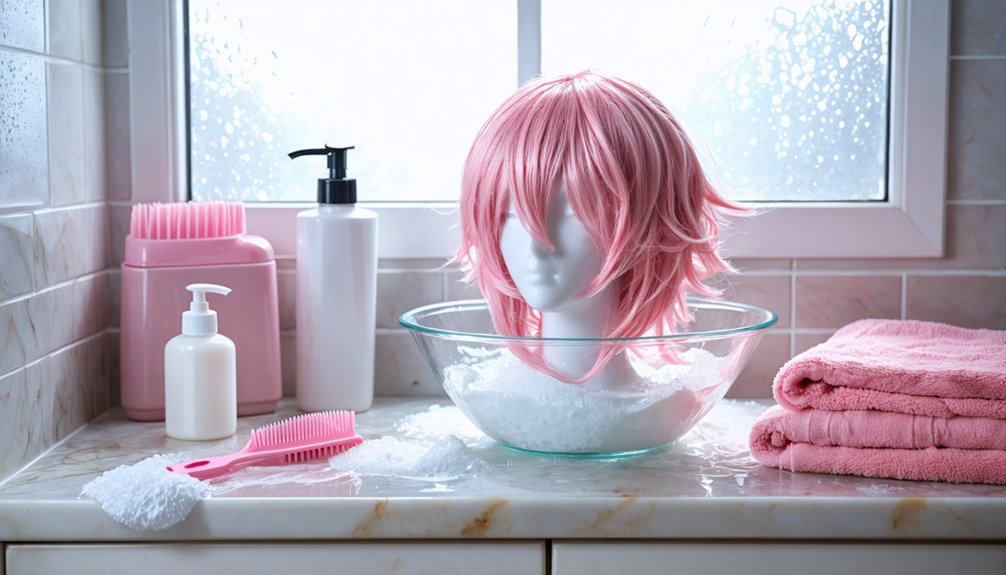
Washing a cosplay wig correctly starts with detangling from ends to roots before it ever touches water. Always use cool or lukewarm water — never hot — to prevent fiber melting and color fading. Choose a sulfate-free or wig-specific shampoo, mix it into the water first, and gently swish the wig without rubbing or twisting. Pat dry with a microfiber towel and air dry on a wig stand. Stick around, because there’s a lot more to protecting your wig’s longevity.
Key Takeaways
- Detangle the wig before washing using a wide-tooth comb, starting at the ends and working upward in small sections.
- Use cool or lukewarm water only; hot water can melt fibers and cause color fading.
- Mix shampoo into water before submerging the wig, then clean using gentle swishing motions only.
- Remove excess water by squeezing root to tip and patting with a microfiber towel; never wring or twist.
- Air dry the wig on a stand in a cool, ventilated space away from direct sunlight and heat.
What Happens to Synthetic Fibers When You Wash Them Wrong
Synthetic wig fibers are far more fragile than they look, and washing them wrong can permanently wreck a wig you’ve spent hours styling. Hot water is the fastest way to cause damage—it distorts the fiber’s structure, collapses styled curls, and triggers color fading that no amount of re-styling can reverse.
Aggressive rubbing or wringing causes fiber weakening at the strand level, leaving the wig frizzy, matted, and impossible to restore. Pouring shampoo directly onto fibers creates concentrated chemical contact that strips protective coating unevenly.
Even improper rinsing matters—leftover residue stiffens fibers and accelerates tangling. Every mistake compounds. Unlike human hair, synthetic fibers can’t regenerate or be deep-conditioned back to health.
Treating them carelessly doesn’t just shorten the wig’s lifespan—it ends it immediately.
Detangle Your Cosplay Wig Before It Touches Water
Before water even enters the picture, there’s one step that separates a successful wash from a tangled disaster: detangling. Wet fibers tangle exponentially faster than dry ones, so skipping this step practically guarantees matting.
Your detangling techniques matter as much as the tools you use. Among brush types, a wide-tooth comb or dedicated wig comb outperforms standard brushes every time—standard bristles snag and stress synthetic fibers unnecessarily.
Always start at the ends and work upward in small sections, never forcing through resistance.
Keep your comb away from the lace cap or base. Pulling through that area loosens ventilated fibers and weakens the foundation.
A few deliberate minutes spent detangling before washing protects everything that comes after, making the entire process smoother and more effective.
What Water Temperature Is Safe for Cosplay Wigs?
Once your wig is fully detangled, water temperature becomes your next critical decision—and getting it wrong can permanently ruin the fibers. Synthetic wig fibers react poorly to heat, so always use cold, cool, or lukewarm water.
Hot water is the enemy—it causes fiber melting, warps your wig’s styled shape, and accelerates color fading that you simply can’t reverse. Fill your sink, basin, or tub with just enough water to fully submerge the wig, and maintain that consistent temperature throughout both washing and rinsing.
Switching between hot and cold mid-process stresses the fibers unnecessarily. Think of temperature control as protecting your investment—cosplay wigs aren’t cheap, and one careless decision at the tap can destroy hours of styling work instantly.
Choose the Right Shampoo for Cosplay Wigs
With your water temperature sorted, the shampoo you choose will make or break the wash. Reach for a wig-specific shampoo, baby shampoo, or another gentle, sulfate-free cleanser. Harsh formulas strip synthetic fibers, accelerating color fading and killing fiber flexibility over time.
Don’t pour shampoo directly onto the wig. Instead, mix it into your cool water first, then submerge the wig. This distributes the cleanser evenly and prevents concentrated product from degrading fiber structure in one spot.
Work the wig through the water using light swishing or gentle scrunching. Rubbing, twisting, or wringing creates friction that tangles fibers and weakens the cap. Keep your motions controlled and deliberate.
The right shampoo combined with the right technique protects both the wig’s color integrity and its long-term wearability.
How to Wash a Cosplay Wig Without Damage
Soaking is where the real washing begins, and keeping your technique controlled here protects everything you’ve built into the wig. Submerge it in cool water with your pre-mixed shampoo and let it soak for five to ten minutes.
Gentle swishing moves the cleanser through the fibers without triggering fiber damage from friction or aggressive agitation. Don’t rub, twist, or wring — those motions mat synthetic strands fast.
Prolonged soaking risks color fading, especially on vivid cosplay dyes, so time it carefully. Drain the dirty water completely, then rinse with fresh cool water until it runs clear.
Any shampoo residue left behind stiffens fibers and creates future tangling. Gently squeeze — never wring — excess water out before moving to conditioning and drying.
How Long Should You Soak and Rinse?
Timing your soak matters more than most people expect, and getting it wrong in either direction causes real problems. Soak your wig for five minutes as a reliable baseline, though heavily soiled wigs can handle up to ten. Push beyond that, and you’re risking color bleed similar to what happens during wig dyeing gone wrong — pigments destabilize, fibers stress, and your style suffers.
Fiber blending in modern synthetic wigs makes some constructions more sensitive than others, so always factor in your wig’s specific material composition.
Once soaking ends, drain completely before rinsing with cool, clean water. Rinse thoroughly until the water runs perfectly clear — leftover shampoo residue stiffens fibers and accelerates tangling. Precision here protects the wig’s longevity far better than rushing through.
Should You Condition a Synthetic Cosplay Wig?

Conditioning your synthetic cosplay wig after washing can restore softness, reduce frizz, and make detangling considerably easier—but you’ve got to apply it correctly to avoid weighing down the fibers or damaging the cap.
Stick with lightweight leave-in conditioners or detangling sprays formulated for synthetic hair, since standard human hair conditioners can coat fibers too heavily and attract buildup.
Focus application on the mid-lengths and ends, squeezing it through gently rather than rubbing, and keep product away from the cap where knots or adhesive could be compromised.
Benefits Of Conditioning
While synthetic wigs don’t absorb moisture the way human hair does, conditioning them after washing can still make a real difference in texture and manageability. A light conditioner or leave-in detangler coats the fibers, reducing friction and making post-wash detangling notably easier.
This is especially valuable if your wig features a bold hair color, since smoother fibers reflect light more evenly and keep the shade looking vibrant longer. Conditioning also counteracts residue left behind by styling products, restoring a softer, more natural feel to the strands.
Focus application on the lengths and ends, keeping product away from the cap to protect ventilation knots and adhesive points. Done correctly, conditioning extends your wig’s lifespan and maintains that fresh, convention-ready finish wash after wash.
Best Conditioner Types
Not every conditioner belongs near a synthetic wig, and choosing the wrong one can weigh fibers down, accelerate tangling, or leave a greasy residue that dulls the wig’s color.
For synthetic cosplay wigs, you’ll want lightweight, specifically formulated options that support fiber strength without suffocating the strands.
Wig-specific conditioners are your safest bet, as they’re engineered for synthetic fiber chemistry. Leave-in detangling sprays work exceptionally well, offering moisture balance while supporting color preservation during repeated washes. Silicone-free formulas prevent buildup that breaks down fiber integrity over time.
Baby conditioners can serve as a gentle alternative when wig-specific products aren’t available.
Avoid thick, protein-heavy conditioners designed for human hair—they’ll coat synthetic fibers unevenly, creating stiffness and dullness. Apply sparingly, focusing only on the lengths and ends.
Proper Application Tips
Synthetic cosplay wigs don’t need conditioning the way human hair does, but skipping it entirely after every wash can leave fibers feeling dry, brittle, or prone to tangling—especially on wigs you’re washing frequently before conventions.
When you do condition, apply it sparingly to the lengths and ends only—never near the cap. Product buildup around knots and ventilation points weakens fiber attachment over time.
For color preservation, avoid heavy conditioners that coat fibers and dull vibrancy. Instead, use a lightweight leave-in spray or diluted detangler, which supports fiber maintenance without weighing strands down or altering the wig’s styled shape.
Gently scrunch the product in rather than rubbing it through. Let it sit briefly, then rinse thoroughly with cool water until no residue remains.
Remove Excess Water Without Tangling the Fibers
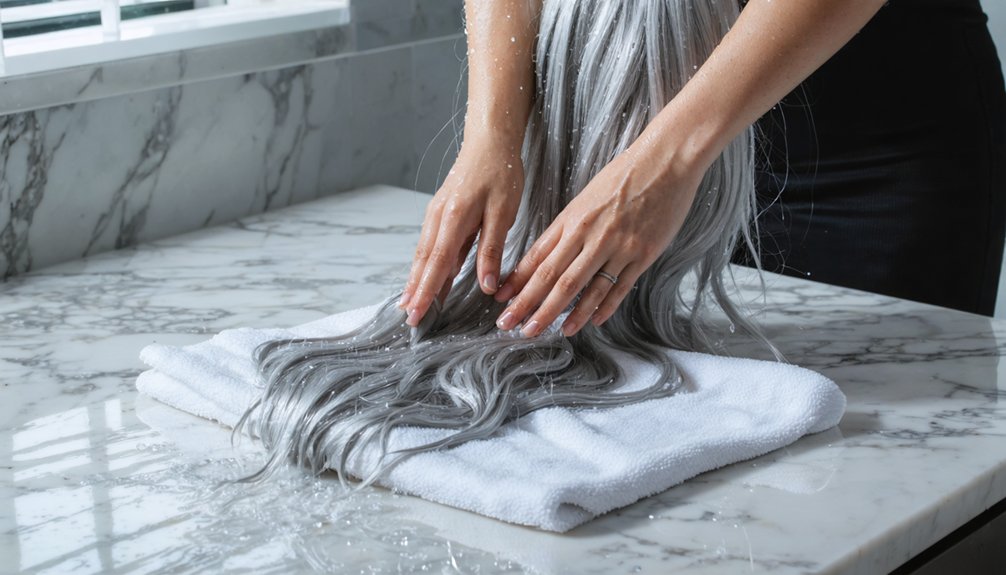
Once you’ve finished rinsing, gently squeeze the wig’s fibers from root to tip to push out excess water without disrupting the strands.
Never wring or twist the wig, as that kind of aggressive handling can permanently tangle and stress synthetic fibers.
Instead, lay the wig flat on a soft microfiber towel and lightly pat it dry, letting the towel absorb the remaining moisture.
Gently Squeeze Out Water
After rinsing out all the shampoo, you’ll want to remove the excess water carefully to avoid tangling or stressing the fibers. Start by gently pressing the wig between your palms, working in downward strokes that follow the natural direction of the fibers. This approach supports smart detangling techniques by preventing cross-fiber friction that leads to stubborn knots later.
Never wring or twist the wig. That kind of aggressive handling distorts the cap structure and breaks down fiber integrity quickly. Color preservation also depends on how you handle this step — excessive force can accelerate dye bleeding in pigmented wigs.
Once you’ve squeezed out the bulk of the water, lay the wig flat on a clean microfiber towel and gently press down to absorb remaining moisture without disrupting the style.
Pat With Soft Towel
With the bulk of the water pressed out, grab a soft microfiber towel and lay the wig on top of it, fibers facing up.
Gently fold the towel over the wig and press down with light, even pressure. That’s it — no rubbing, no wringing, no dragging the towel across the fibers.
Aggressive friction is a leading cause of fiber damage and can accelerate color fading by roughing up the outer coating of synthetic strands.
Microfiber works exceptionally well here because its ultra-fine texture absorbs moisture efficiently without creating the mechanical stress a regular terry cloth towel would.
Repeat the pressing motion across different sections until the wig feels damp rather than dripping.
You’re now perfectly positioned for the air-drying stage.
Avoid Wringing Fibers
Before you touch a towel, you need to remove the bulk of the water in a way that doesn’t destroy the fiber alignment you just worked to preserve. Wringing twists fibers against each other, accelerating color fading and undermining any fiber strengthening benefits your conditioner provided.
- Cup the wig and gently press it against the sink basin
- Squeeze sections softly from cap to ends without twisting
- Never wring, twist, or pull fibers in opposing directions
- Work methodically through each section to avoid creating new tangles
- Repeat gentle squeezes until water stops dripping freely
This controlled approach keeps the fiber structure intact and prevents the microscopic damage that compounds over repeated washes, ultimately extending your wig’s lifespan and maintaining color vibrancy far longer.
How to Dry a Cosplay Wig Without Ruining the Style
Once your wig is washed and rinsed, how you dry it makes all the difference between a style that bounces back beautifully and one that ends up a tangled, misshapen mess. Heat-free drying isn’t optional — it’s essential. Synthetic fibers warp under heat, and color preservation depends on keeping your wig away from hair dryers, heat vents, and direct sunlight.
Instead, gently press out excess water using a microfiber towel, then place your wig on a wig stand or drying rack in a cool, well-ventilated space. A wig stand holds the cap’s shape while fibers dry naturally in position.
Don’t rush it — storing or styling a damp wig invites odor, tangling, and deformation. Let it dry completely before touching it again.
Store Your Cosplay Wig Properly After Every Wash
Once your wig’s completely dry, place it on a wig stand to preserve its shape and keep the fibers from developing stress points or flat spots.
Don’t fold it, stuff it into a bag, or compress it under other items — those habits crush the style and create tangles that are difficult to reverse.
A proper stand keeps the cap stretched correctly and the fibers hanging naturally, so your wig’s ready to wear without extra prep after every wash.
Use A Wig Stand
After washing your cosplay wig, placing it on a wig stand is one of the smartest moves you can make for its long-term health. It preserves the cap’s shape, supports wig styling integrity, and protects any hair coloring from stress-related fading caused by improper storage.
- Mount the wig immediately after gentle moisture removal.
- Let airflow circulate evenly around all fiber layers.
- Keep the stand away from direct sunlight and heat sources.
- Choose a collapsible or adjustable stand for compact, practical storage.
- Secure loose fibers before mounting to prevent post-drying tangles.
A wig left crumpled on a surface loses its shape fast. A stand keeps every strand positioned correctly while drying, meaning less restyling work before your next wear and a longer-lasting, performance-ready wig overall.
Avoid Compression And Folding
Storing your cosplay wig correctly after every wash matters just as much as how you clean it. Compression and folding crush fibers, distort carefully crafted silhouettes, and erase the structural integrity that even historical wig styles depended on for longevity.
Once your wig is fully dry, never stuff it into a bag or fold it under other items. Instead, position it upright on a wig stand, which keeps the cap’s shape intact and prevents fiber tangling.
Your wig styling tools work best on fibers that haven’t been flattened or creased between washes. Protecting volume and form during storage means less corrective styling later.
Treat storage as the final, non-negotiable step in your wash routine, because how you store your wig directly determines how it performs next time.
Frequently Asked Questions
Can You Wash Multiple Cosplay Wigs Together in the Same Basin?
You can wash multiple wigs together, but it’s risky! Differing wig material types can tangle badly. If your washing frequency demands it, keep colors separate and use gentle swishing to prevent fiber damage.
How Often Should a Cosplay Wig Be Washed Between Convention Uses?
Like a knight polishing armor after each battle, you should wash your cosplay wig after every one to two convention uses. Consistent wig maintenance guarantees styling preservation, keeping fibers fresh and convention-ready.
Does Washing a Cosplay Wig Affect Its Original Factory Styling Permanently?
Yes, washing can affect your wig’s factory styling! Wig material determines how much styling preservation you’ll maintain. Use cool water and gentle techniques—you’ll minimize damage and keep those original curls, waves, or sleek styles looking convention-ready!
Can You Use Fabric Softener as a Substitute for Wig Conditioner?
You can use fabric softener as one of the wig conditioner alternatives, but don’t fall for fabric softener myths—it’s not ideal. It may leave residue, weigh fibers down, and potentially damage your wig’s longevity.
Is It Safe to Wash a Cosplay Wig With Glitter or Accessories Attached?
You might think it’s fine, but it’s not safe. Remove accessories first for accessory preservation, then hand-wash gently. Glitter removal happens naturally when wet, so detach embellishments before washing to protect your wig’s integrity.
References
- https://blog.fromjapan.co.jp/en/anime/cosplay-wig-care-how-to-wash-store-keep-your-wig-damage-free.html
- https://fevercos.com/pages/wig-care-gudie
- https://beautynexuspro.com/hair-care/how-to-wash-a-wig-properly
- https://www.epiccosplay.com/pages/wig-care-guide
- https://beautynexuspro.com/hair-care/do-you-wash-synthetic-wigs
- https://www.uhn.ca/PrincessMargaret/PatientsFamilies/Specialized_Program_Services/Wig_Salon_Accessories_Boutique/Documents/Instructions_Synthetic.pdf
- https://www.pilitte.com/Blog/how_to_wash_cosplay_wigs_safely_and_effectively_-_complete_step-by-step_care_guide_for_synthetic_and_human_hair.html
- https://ehwap.com/Blog/how_to_wash_synthetic_wig_step_by_step_guide_to_prevent_tangling_and_fading.html
- https://www.thewigcompany.com/blogs/blog/how-to-wash-a-wig
- https://www.ailsas.com/blogs/news/how-to-wash-a-synthetic-wig-properly-step-by-step-uk-guide