You’ll want platinum-cure silicones like Dragon Skin or Rebound 25 for your cosplay prop molds, as they capture details down to 0.001 inches and last 3-5 times longer than tin-cure alternatives. Mix your silicone until you achieve uniform coloration, pour in a controlled stream, and vibrate to eliminate air bubbles before curing. For complex geometries, construct multi-part molds with precise keying systems and apply pressure at 40-50 PSI during casting. This guide explores advanced techniques that’ll transform your single props into production-ready replicas.
Key Takeaways
- Dragon Skin and Rebound 25 platinum-cure silicones deliver superior dimensional accuracy and longevity for complex cosplay prop molds.
- Construct mold boxes with 1-inch clearance, apply release agents, and vibrate mixed silicone to eliminate air bubbles.
- Silicone’s elastomeric properties enable extraction of intricate undercuts while resisting tears for higher production yields.
- Purchase silicone in bulk quantities and reuse support shells to reduce costs by 50-60% per project.
- Apply 40-50 PSI pressure during casting and use multi-part molds with keying systems for flawless prop replicas.
Top Silicone Products for Cosplay Mold Making
When selecting silicone for cosplay mold making, you’ll encounter three primary product categories that address different casting requirements: high-elongation materials for complex geometries, brush-on formulations for minimizing material costs, and large-batch systems for oversized props.
Dragon Skin Series silicones deliver ideal material properties for one-piece glove molds, stretching multiple times their original dimensions while maintaining structural integrity. These specialized formulations excel in reproducing intricate armor patterns and wearable costume elements.
Rebound 25’s platinum-cure formulation minimizes material volume when applied to complicated surfaces like helmets and masks, requiring external support shells for dimensional stability.
MoldMax 29 NV eliminates degassing procedures through its low-viscosity design, enabling efficient processing of large-batch projects such as sword components. This innovation reduces equipment investment while maintaining capture fidelity across complex geometries.
Step-by-Step Guide to Creating Professional Molds
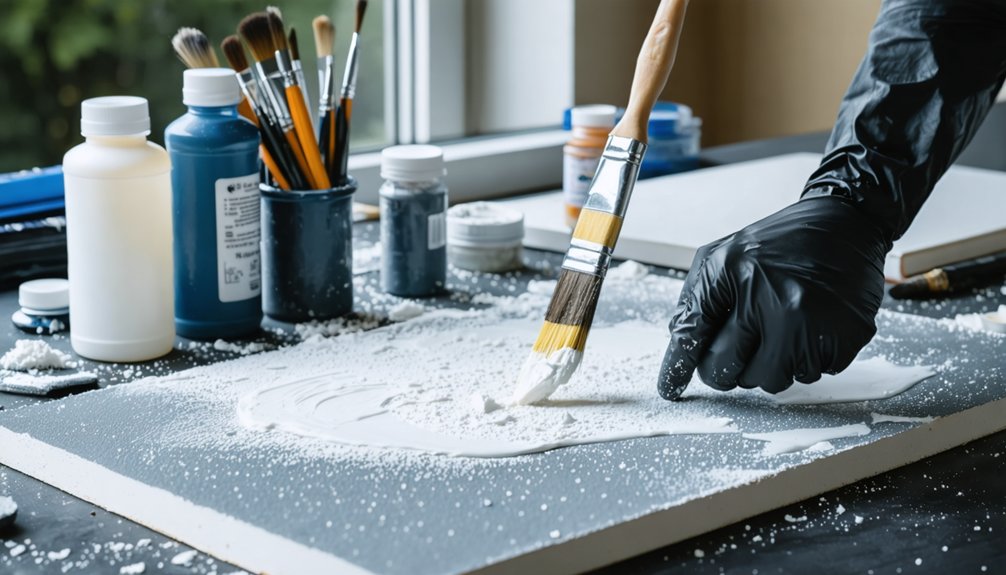
Before pouring your first silicone mold, you’ll need to establish a contamination-free workspace and secure your master object within a containment system. Begin master object preparation by cleaning thoroughly with dish soap, then anchor it to your base using adhesive or clay.
Construct your mold box from plywood or MDF, maintaining 1-inch clearance around all dimensions. Apply petroleum jelly to interior surfaces for effortless demolding.
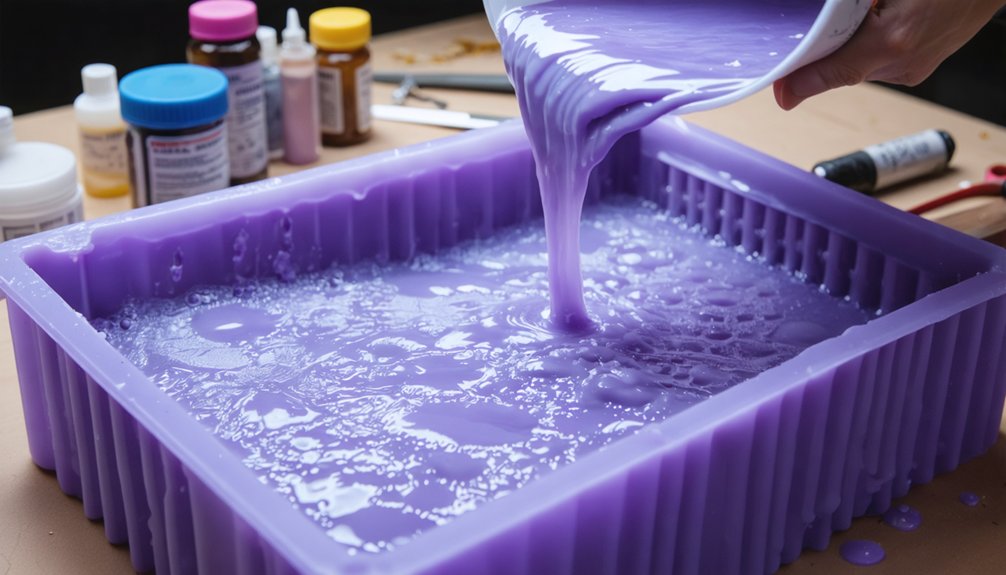
For simple one part molds, position your master with the casting surface facing upward. Mix silicone components until achieving uniform coloration, then pour in a controlled stream from the lowest point. Guarantee minimum 1cm coverage above your master. Vibrate the container to eliminate trapped air bubbles. Cure according to manufacturer specifications before carefully extracting your completed mold from its containment structure.
Why Silicone Outperforms Other Molding Materials
When you compare silicone to alternative molding materials like plaster, resin, or latex, you’ll find its elastomeric properties deliver critical advantages for cosplay prop replication. The material’s inherent flexibility allows you to extract complex undercuts and intricate geometries without fracturing the mold or damaging delicate master details during demolding.
You’ll achieve notably higher production yields through silicone’s resistance to tear propagation and permanent deformation across multiple casting cycles.
Superior Flexibility and Demolding
Optimized demolding strategies leverage this flexibility through thin brush-on skins that peel carefully from masters, preserving intricate surface details. You’ll apply mold release spray to guarantee parts separate cleanly without bonding issues.
The lightweight mother mold construction—combining flexible inner skin with rigid support shell—reduces weight by 50-60% while maintaining structural integrity. This approach minimizes breakage risk on detailed weapons and accessories during repeated casting cycles.
Durability for Multiple Casts
Platinum-cure silicone formulations like Rebound 25 deliver 3-5 times the longevity of tin-cure alternatives, maintaining dimensional accuracy through 50+ casting cycles where competing materials fail. You’ll achieve silicone degradation prevention by applying 1-2 drops of silicone oil between uses, counteracting natural moisture loss that causes brittleness.
MoldMax 30’s optimized shore hardness withstands aggressive urethane resins without chemical breakdown, while proper release agent protocols (paste wax plus E302) prevent adhesion damage across repeated demoldings.
Mother mold construction amplifies durability by distributing casting pressures through rigid support shells, reducing silicone stress concentration. Your moisture restoration techniques—gentle alcohol cleaning followed by multi-hour air drying—remove contaminants without accelerating deterioration. This maintenance protocol doubles mold lifespan compared to neglected alternatives, delivering superior per-cast economics for production runs.
Budgeting Your Cosplay Mold Projects
Before starting any silicone mold project, you’ll need to calculate total material costs including the silicone rubber itself, release agents, mixing containers, stir sticks, and protective equipment. Apply budget allocation tips by purchasing silicone in larger quantities for better per-ounce pricing, while storing excess properly for future casts. Consider tin-cure silicones for economical projects versus platinum-cure for food-safe or skin-contact applications.
Implement DIY molding cost savers by reusing rigid support shells across multiple mold projects and fabricating clay walls instead of purchasing expensive mold boxes. Source mixing containers from household items like plastic cups or repurpose previous project materials. Calculate your resin-to-mold ratio precisely to avoid overbuying casting materials. Include a 15-20% cost buffer for unexpected material waste or failed attempts during complex mold creation.
Advanced Techniques for Flawless Mold Results
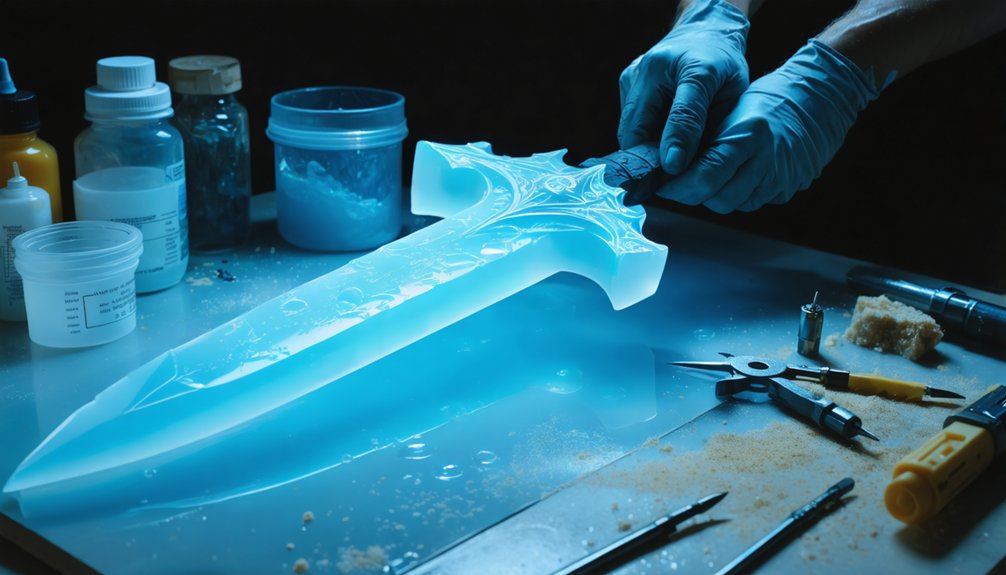
When you’re ready to move beyond basic two-part molds, multi-part construction allows you to capture complex geometries with severe undercuts that would otherwise trap your master or prevent clean demolding.
Implementing a precise keying and registration system—using spherical divots, triangular plugs, or interlocking flanges—ensures your mold halves align perfectly during every casting cycle, eliminating seam shifts that ruin surface details.
Pressure casting setups, which force resin into mold cavities under 40-60 PSI in modified paint pots, compress air bubbles to microscopic sizes and produce flawless surface reproduction on intricate props like ornamental armor trim and weapon inlays.
Multi-Part Mold Construction
Multi-part molds solve the challenge of replicating complex cosplay props with undercuts, deep recesses, or irregular geometries that single-piece molds can’t capture. You’ll build walls around your model base using foam core or Lego bricks, sealing gaps with clay to prevent leaks. Apply petroleum jelly to all surfaces for clean demolding.
Pour your first half using platinum silicone like Dragon Skin 10NV, mixing thoroughly by weight. After 4-6 hours curing time, trim edges flat and apply release agent to the first half’s surface. This prevents bonding during complex mold construction. Build new containment walls and pour the second half slowly. Use precise alignment techniques by maintaining existing contours.
Finally, create rigid epoxy fiberglass support shells to prevent flexing, ensuring dimensional accuracy during repeated casting sessions.
Keying and Registration Systems
Custom key design approaches range from pre-made commercial options to DIY solutions using sugarless gum for smaller applications. Apply TC-5130F silicone in multiple brushed layers when creating custom keys, ensuring complete cure before assembly.
Strategic release agent application—Zip 301 on splitter boards, E236 on rigid surfaces—prevents unwanted adhesion. Position keys using foam core splitter boards, filling gaps with clay before casting your support shell.
Pressure Casting Setup Methods
Your registration system establishes perfect mold alignment, but producing bubble-free castings requires pressure equipment that forces trapped air into submission. Configure your pressure pot to maintain 40-60 PSI throughout the resin’s gel phase, with variable pressure settings adjusted for intricate cosplay replicas.
Target 40-50 PSI for detailed pieces using TC-804 resin, while complex parts benefit from TC-803’s extended 6-7 minute working time. Material viscosity considerations determine your pressurization timing—faster resins demand immediate chamber sealing after mold filling.
Apply E236 release to assembled silicone halves, then slush resin into corners before complete filling. Your air compressor‘s 20-30 gallon tank guarantees consistent PSI without pressure drops. Sustain pressure through gel time to dissolve bubbles into the resin matrix, achieving flawless demolding in 3.5-4 hours.
Comparing Silicone Types and Alternative Methods
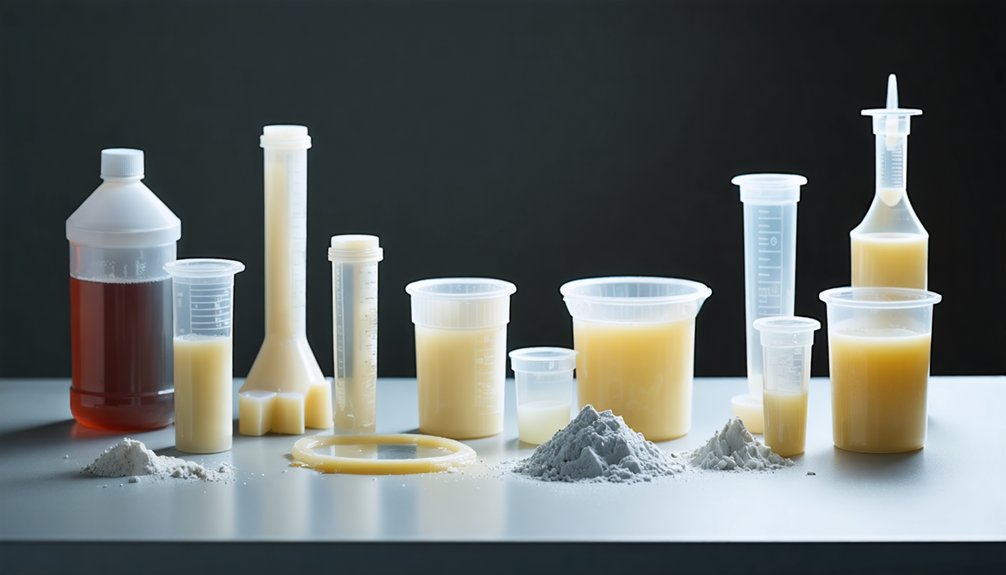
Three primary silicone chemistries dominate mold making for cosplay props, each with distinct curing mechanisms that affect your workflow and final results. Platinum-cured silicones deliver superior detail capture and translucency for skin-like prosthetics, requiring retarder for extended working times.
Tin cure variants offer longer pot life for de-gassing complex batches and resist inhibition across various surfaces, making them ideal for reusable mold preparations. Condensation cure options provide economical solutions for high-volume prototyping at 10:1 ratios.
Beyond silicones, foam latex presents lightweight flexibility but compromises durability. RTV-2 systems like Aero Marine variants simplify mixing at 1:1 ratios while maintaining excellent heat resistance. For maximizing mold lifespan, select high tear strength formulations like Cast-a-Mold 30TF (30A shore hardness) or platinum variants offering extended cycle counts without degradation.
Frequently Asked Questions
How Long Does Silicone Mold Material Last Before Expiring?
Silicone shelf life varies by type: unopened platinum-cure lasts 30 years, while tin-cure ranges 1-10 years. You’ll find adhesive-laminated versions expire within 6-18 months. Proper curing methods and controlled storage conditions dramatically extend your material’s usability for cosplay applications.
Can I Reuse Silicone Mold Material After a Failed Pour?
You’ll save hundreds of pounds by recycling silicone mold material—just grind failed molds into 1-2 inch pieces using a meat mincer, then mix granules with fresh silicone. Proper mold cleaning techniques guarantee ideal adhesion in your recycled mixture.
What Safety Equipment Is Needed When Working With Silicone?
You’ll need nitrile gloves for skin protection measures, safety glasses, and a respirator when ventilation requirements aren’t adequate. Work in well-ventilated areas, wear closed-toe shoes, and use protective clothing to prevent direct chemical contact during mixing and degassing operations.
How Do I Store Finished Molds Between Casting Sessions?
Like preserving artifacts in a museum vault, you’ll maintain proper mold storage conditions by cleaning residues thoroughly using ideal mold cleaning methods, then sealing individual molds in bags within labeled containers, protecting them from contamination while ensuring accessibility.
Does Temperature Affect Silicone Curing Time and Mold Quality?
Yes, temperature greatly affects both aspects. Higher heat accelerates curing but influences mold shrinkage factors and can compromise detail. You’ll need proper temperature control during the degassing process impact to prevent bubbles while achieving ideal cure rates for precision cosplay molds.