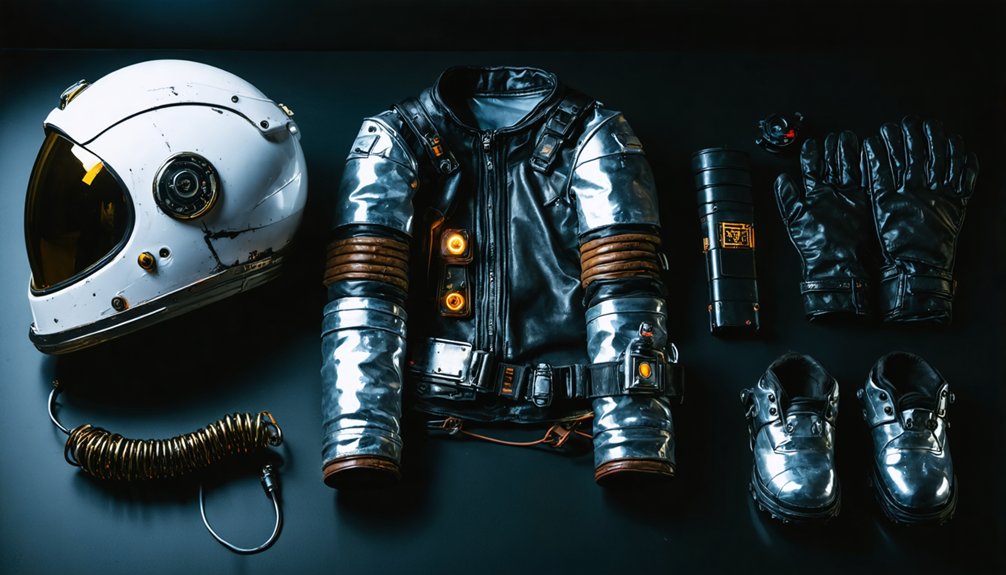
Your best space explorer cosplay starts with a papier-mâché helmet built over a balloon base, fitted with a 2L bottle visor. You’ll want a zip-up jumpsuit loaded with NASA patches, mission insignia, and an American flag on the upper right sleeve. Strap on a DIY rocket pack made from 2L bottles wrapped in red felt, add LED lighting effects, and you’ve got an authentic-looking build. Stick around to uncover every detail that separates a good costume from a jaw-dropping one.
Key Takeaways
- Build an astronaut helmet using a balloon base, papier-mâché layers, and a 2L bottle visor for an affordable, durable prop.
- Customize jumpsuits with NASA badges, mission patches on the left chest, American flag on the upper right sleeve for authenticity.
- Construct a rocket pack using two 2L bottles, cardboard, red felt, and red LEDs for a striking visual effect.
- Enhance space boots with silver paint and foil tape, keeping construction lightweight for comfortable mobility during cosplay events.
- Use EVA foam, plastidip, and elastic straps to master advanced finishing techniques, ensuring durability and realistic texture in props.
Must-Have Space Explorer Cosplay Props for Beginners
Five essential props can transform your everyday outfit into a convincing space explorer costume without breaking the bank.
Start with creative helmet designs built from papier-mâché balloons and 2L bottle visors, reinforced with overlapping paper layers for durability. Paint interiors green and line openings with white duct tape for clean, professional finishes.
Craft a space helmet using papier-mâché, balloon molds, and 2L bottle visors for an affordable, polished result.
Next, build a rocket pack using two 2L bottles mounted on cardboard, accented with red felt and white spray paint.
Complete your look with space themed accessories like NASA patches, American flag insignia, and reflective accents secured with clear packing tape.
Add functional gadgetry using drawer handles and bike lights, then finish with polystyrene asteroid props painted with black-dotted details.
These five components deliver maximum visual impact with minimal investment.
How to Build an Astronaut Helmet From Scratch
Building your own astronaut helmet from scratch is easier than you’d think, and the results are genuinely impressive. Start your helmet design with a balloon base, layering papier-mâché strips in parallel and perpendicular directions for durability enhancements that hold up during extended wear.
For visor materials, cut a 2L bottle into shape and reinforce the surrounding area with overlapping paper layers. Your painting techniques can transform everything — spray paint the exterior, then paint the interior green for a polished finish.
White duct tape handles safety features by eliminating rough edges around the head opening, boosting helmet comfort considerably.
Creative customization reveals your personality — add felt portholes, alien cutouts, or themed decorations inspired by your favorite mission. Coordinating colors with your props creates a genuinely cohesive, professional-looking space explorer ensemble.
Best Jumpsuit Styles for Space Explorer Cosplay
Your jumpsuit’s base layer sets the entire tone of your cosplay, so you’ll want to choose between a zip-up nylon space jumpsuit, a puffy snow suit, or even a sleek race car driver suit to nail that authentic astronaut silhouette.
Once you’ve locked in your base, you can layer on NASA badges, American flags, and mission patches using clear packing tape to secure them with precision.
Position your patches strategically on the chest, shoulders, and sleeves to mirror real mission suit configurations and transform your costume from generic to genuinely mission-ready.
Jumpsuit Base Layer Options
Whether you’re suiting up as a NASA astronaut or a fictional starship commander, choosing the right jumpsuit base layer sets the foundation for your entire space explorer cosplay.
Snow suits, bodysuits, and race car driver suits deliver exceptional fabric durability while offering ideal surfaces for outfit layering techniques.
Prioritize base layer comfort by selecting breathable nylon or lightweight zip-up designs. From there, apply reflective accents and experiment with bold jumpsuit color schemes that match your character’s mission profile.
Use clear packing tape and adhesive backing as reliable component attachment methods for custom badge designs and NASA-inspired patches.
Space suit materials like EVA foam and craft foam integrate seamlessly through smart suit modifications.
Complete the transformation by adding themed accessories that reinforce your explorer’s unique identity.
Authentic Mission Patch Placement
Nailing 3 key patch placements transforms a plain jumpsuit into a mission-ready space suit that commands instant recognition.
Position your mission patch on the left chest, honoring mission patch history where NASA crews proudly displayed crew emblems since the Gemini program. Place an American flag on the upper right sleeve, then add your agency logo patch on the left shoulder.
Follow these patch design tips: use iron-on backing reinforced with clear packing tape edges to prevent peeling during active wear. Source authentic-looking NASA patches from eBay for maximum credibility. Velcro backing lets you swap mission patches between costumes effortlessly.
Alignment matters enormously — crooked patches instantly break immersion. Use a fabric marker to lightly mark placement before committing, ensuring your space explorer look achieves that precise, mission-authentic finish you’re pursuing.
DIY Rocket Packs That Pass for Professional Builds
Building a rocket pack that looks straight off a film set doesn’t require a prop department budget—just two 2L bottles, a 9×9-inch cardboard base, red felt, and white spray paint.
Mount the bottles securely, wrap red felt around the base, and finish with crisp white ribbon detailing for that polished functional aesthetics appeal.
Want extra structural integrity? Layer cardboard form tubes, EVA foam, and craft foam, then bond everything with hot glue and contact cement.
Foam floor mats cut into panels add lightweight rigidity without sacrificing comfort. Zip ties and elastic straps keep your rocket pack designs snugly secured during wear.
For lighting, thread red LEDs through aquarium tubing along the seams—instantly elevating your build from clever DIY to something a professional prop house would proudly display.
Which Materials Hold Up Best for Space Cosplay Builds?
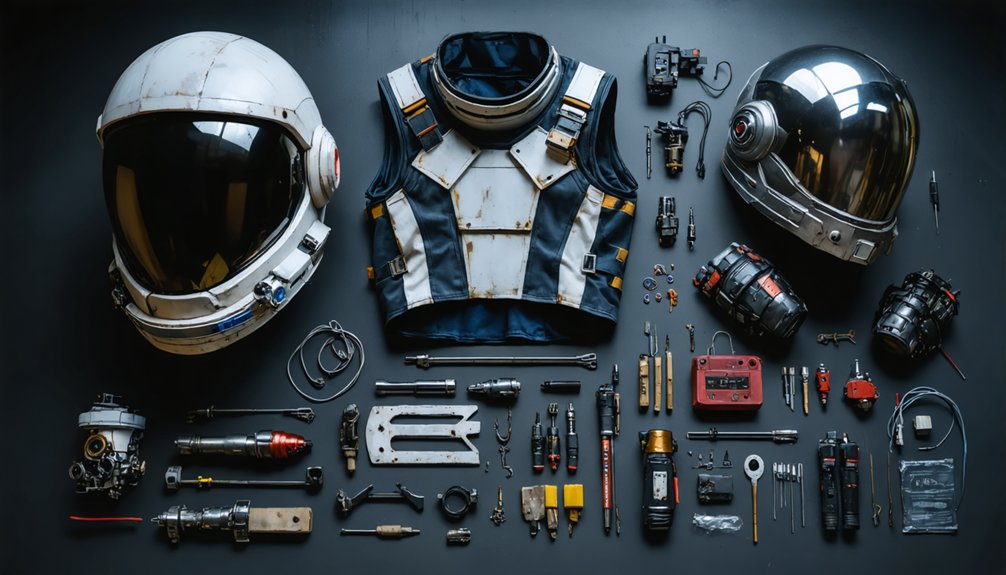
Choosing the right materials separates a cosplay build that survives one convention from one that lasts a full season of events. Durability testing consistently shows EVA foam and craft foam outperform cardboard in weather resistance, flexing without cracking under pressure.
The right materials don’t just build a cosplay — they determine how long it survives the convention circuit.
When running a material comparison, plastidip seals foam beautifully while contact cement bonds layers cleanly, slashing assembly techniques down to manageable steps. Weight considerations matter enormously — foam floor mats keep packs lightweight without sacrificing structure.
Cost efficiency tips toward zip ties, hot glue, and foil tape, delivering professional results on tight budgets. Your aesthetic choices sharpen further with silver paint and LED lighting integration.
User feedback from seasoned builders repeatedly confirms that layering these materials strategically produces builds rivals genuinely can’t distinguish from professional fabrications.
Where to Find Authentic NASA Patches and Mission Badges
Where you source your NASA patches and mission badges can make or break your cosplay’s authenticity. eBay delivers an impressive catalog of production-accurate patches, including vintage Apollo mission badges and current ISS crew insignia that’ll genuinely fool fellow enthusiasts.
Beyond eBay, dedicated NASA memorabilia retailers like Space Foundation shops and official NASA gift stores stock verified badge authenticity items with licensed designs.
For patch sourcing at scale, Etsy sellers specialize in embroidered replicas that match original stitching patterns precisely.
Once you’ve secured your patches, attach them using clear packing tape or iron-on backing for clean, professional placement.
Proper positioning on your jumpsuit shoulders and chest communicates deep respect for space culture while elevating your entire build from costume to convincing mission-ready gear.
Astronaut Gloves, Boots, and Props Worth Adding
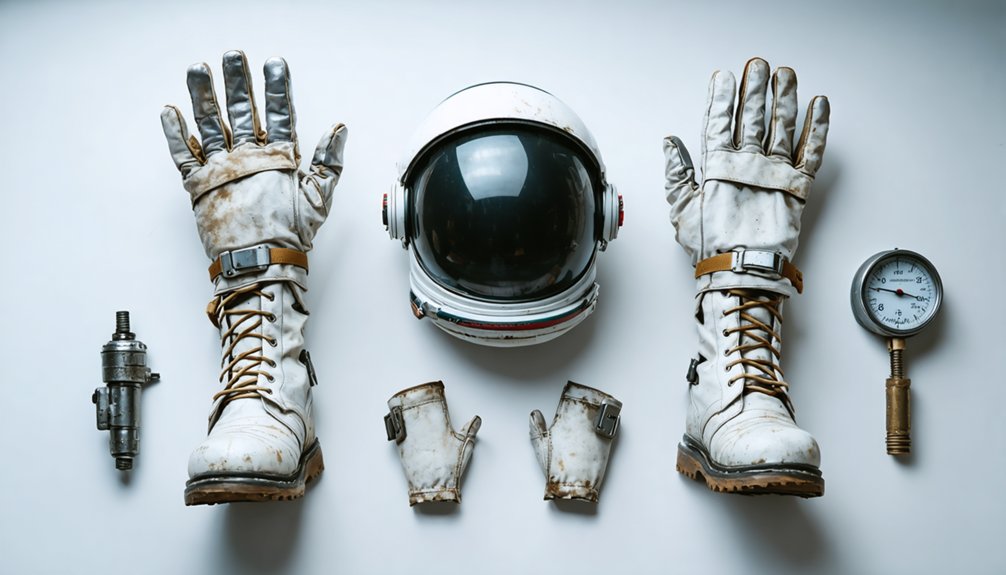
Three key accessories transform a basic astronaut jumpsuit into a fully realized space explorer ensemble: gloves, boots, and mission-critical props.
You’ll want astronaut gloves that reference production-used models like Carhartt styles, reinforced with craft foam for authentic texture. Space boots benefit from silver paint and foil tape applications, instantly elevating your costume enhancements.
For helmet accessories, attach drawer handles, bike lights, and wooden dowels as functional gadgetry that signals serious character details. These prop materials aren’t random—they’re deliberate choices that communicate technical credibility.
Your cosplay tips should include cable ties for strap adjustments and red LEDs for atmospheric lighting effects.
Performance gear matters here: lightweight construction keeps you mobile while maintaining visual impact. Every detail you add pushes your build closer to something genuinely extraordinary.
Cheap Finishing Touches That Add Realism to Any Space Costume
Even the smallest details can catapult your space costume from decent to genuinely convincing—and they don’t have to cost much. These finishing touches transform basic outfits into mission-ready gear using smart, budget-friendly options.
Apply foil tape over seams for instant metallic realism tips. Use red and blue LEDs tucked inside helmet edges for striking visual effects. Cable ties become functional-looking strap hardware—serious prop enhancements without spending big.
Small details make big impact—foil tape, hidden LEDs, and cable ties transform any costume into mission-ready gear.
Drawer handles glued onto forearm panels create convincing control interfaces, delivering sharp costume details that impress.
For DIY techniques, paint polystyrene balls black-dotted and attach them with pipe cleaners as asteroid accessory ideas. Layer clear packing tape over handwritten mission labels for laminated authenticity.
These precise, low-cost upgrades demonstrate that realism lives in the details, not the budget.
How to Add Lights and Effects to Space Explorer Gear
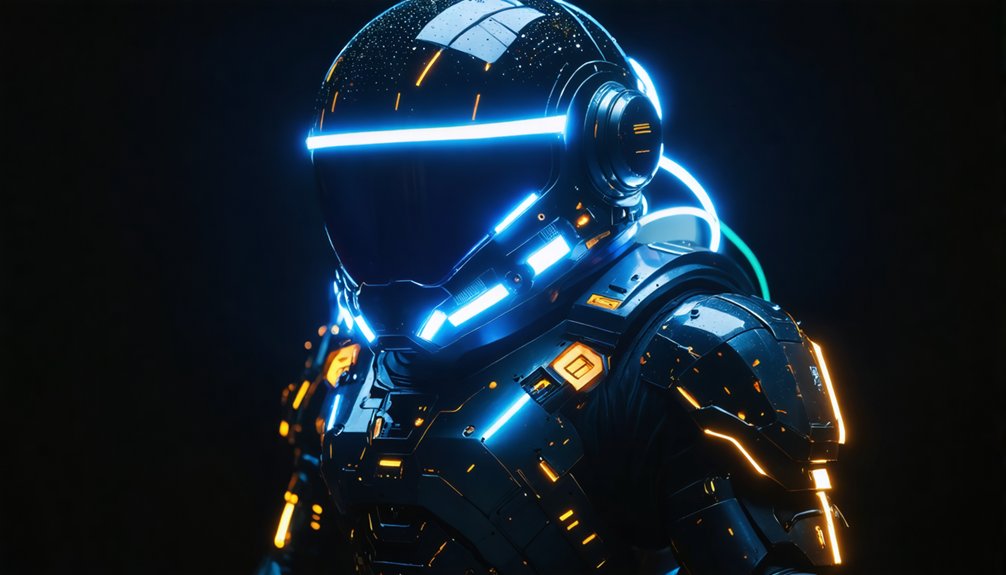
Lighting transforms your space explorer gear from static costume to living, breathing mission hardware. Master LED integration methods and light diffusion techniques to electrify every component:
- Thread aquarium tubing over cardboard seams, securing with zip ties to scatter light evenly.
- Mount red LEDs inside helmet visors for an active-mission cockpit glow.
- Apply blue LEDs along rocket pack edges to simulate thruster charging sequences.
- Layer red lighting gel over tape lights for dramatic atmospheric effects.
- Diffuse harsh LED hotspots using frosted aquarium tubing for softer, professional-grade illumination.
You’ll want lightweight wiring routed cleanly through foam layers, keeping your costume mobile and convention-ready.
Strategic placement transforms ordinary props into gear that genuinely looks mission-critical, commanding attention across any crowded convention floor.
Advanced Space Suit Construction: Foam Shaping, Seam Work, and Structural Reinforcement
With your lighting systems locked in and glowing, it’s time to build the structural foundation that holds all that hardware in place. Master foam shaping techniques using EVA foam, craft foam, and contact cement to sculpt precise, body-conforming components.
Apply seam reinforcement strategies by layering plastidip over hot-glued joints, creating flexible yet resilient bonds that won’t crack under movement. For structural integrity tips, reinforce high-stress areas with zip ties and elastic straps before applying finishing surfaces.
Advanced helmet designs benefit from perpendicular papier-mâché layering over balloon forms, dramatically increasing rigidity. Implement durability enhancements by sealing foam edges with a rotary tool, then finishing with silver paint and foil tape.
These techniques transform your suit from fragile costume into a genuinely robust, convention-ready masterpiece worth every technical hour invested.
Frequently Asked Questions
How Do I Safely Store and Transport Fragile Papier-Mâché Astronaut Helmets?
Like a precious gem, wrap your papier-mâché helmet in bubble wrap! Master these storage techniques: nest helmet materials in rigid boxes, pack with foam padding, and you’ll transport your creation safely every time!
Can Space Explorer Cosplay Gear Be Adapted for Wheelchair Users?
You can absolutely adapt space explorer gear for wheelchair accessibility! Mount rocket packs onto chair frames using zip ties, incorporate adaptive design with shorter jumpsuits, and attach NASA patches creatively—transforming your wheelchair into an epic mission command station!
What Are the Best Conventions Specifically Welcoming Space Explorer Cosplay Enthusiasts?
Coincidentally, you’ll find your tribe at space themed conventions like DragonCon and San Diego Comic-Con, where cosplay community events celebrate stellar creativity. You’ll connect with fellow explorers who’ve mastered every technical detail of authentic space gear!
How Do I Weatherproof My Space Cosplay for Outdoor Events?
Seal your costume with plastidip and foil tape for incredible outdoor durability! You’ll want to apply weatherproof materials like EVA foam coatings, waterproof spray paint, and contact cement, ensuring every element withstands unpredictable conditions while maintaining that stellar, mission-ready appearance!
Are There Copyright Restrictions When Replicating Official NASA Suit Designs?
NASA’s designs are a galaxy of design inspiration, but you’ll navigate legal implications carefully. You can’t trademark-copy official suits commercially, yet you’re free to craft fan costumes creatively for personal, non-profit cosplay adventures!
References
- https://www.spirithalloween.com/blog/d-i-y-astronaut-helmet-cosplay-guide/
- http://www.sweetseattlelife.com/2014/11/space-explorer-diy-costume.html
- https://www.etsy.com/market/space_explorer_costume
- https://thisisladyland.com/diy-space-costumes-step-by-step/
- https://www.youtube.com/watch?v=xv1Ku1fCcXQ
- https://www.alibaba.com/showroom/astronaut-suit-costume.html
- https://www.legavenue.com/products/86883-space-explorer-spacesuit-costume