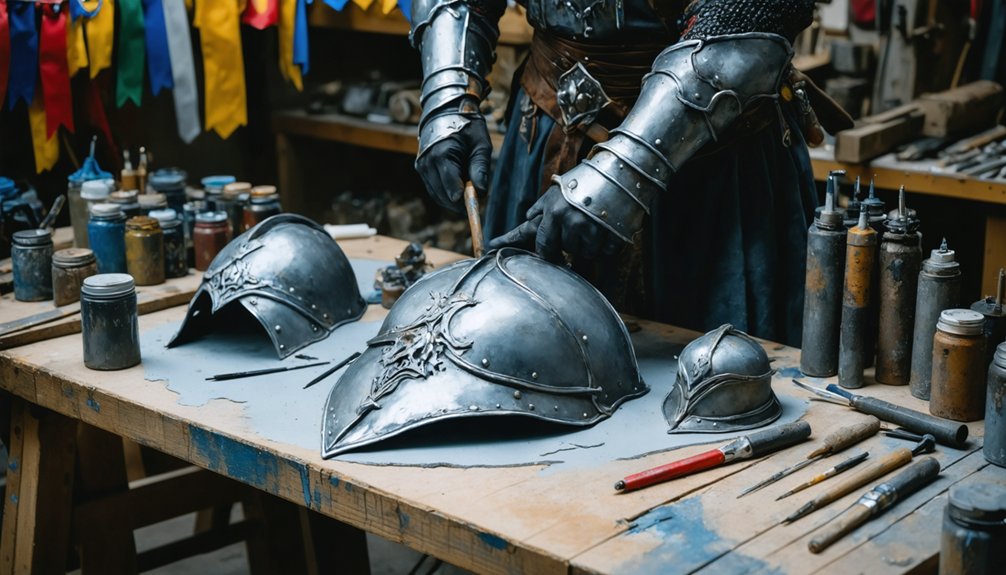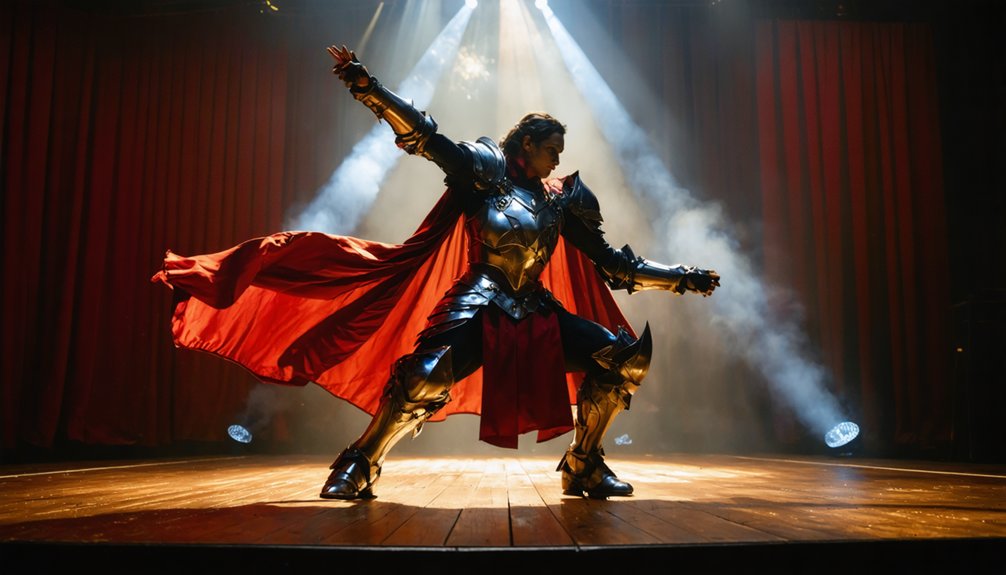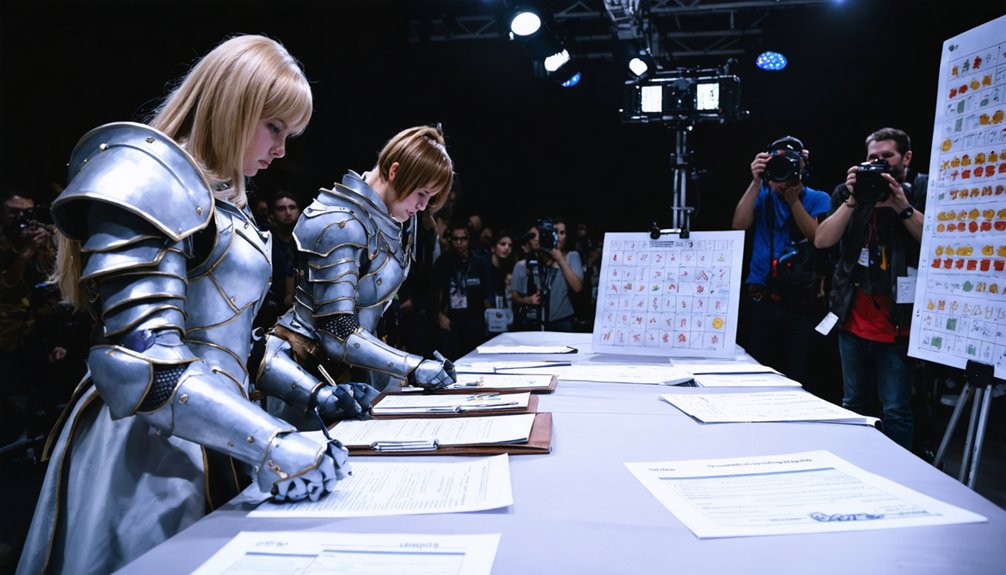
You’ll optimize cosplay contest feedback by documenting every construction phase with detailed portfolio photography, maintaining 70-80% handmade components through strategic material selection, and creating reference comparison sheets that showcase accuracy. Focus on multi-skill techniques like combining foam fabrication with needlework, engineer performance elements that demonstrate costume articulation, and practice timed stage rehearsals. Leverage pre-judging sessions for real-time craftsmanship feedback while balancing ambitious construction with practical mobility. The strategies outlined below will help you systematically address each scoring category judges evaluate.
Key Takeaways
- Document construction progress through sequential photography showing sketches, pattern work, and assembly to demonstrate technical proficiency.
- Calculate handmade percentages accurately by counting original pieces versus modified items, aiming for 70% minimum competition standards.
- Create reference comparison sheets with side-by-side images, fabric swatches, and annotations explaining design choices and evolution.
- Showcase diverse craftsmanship by integrating multiple techniques like foam fabrication, needlework, and 3D printing in portfolio presentations.
- Engineer interactive performance elements including dynamic movement features, lighting systems, or transformation mechanisms for judge engagement.
Document Every Construction Phase With Detailed Portfolio Photography
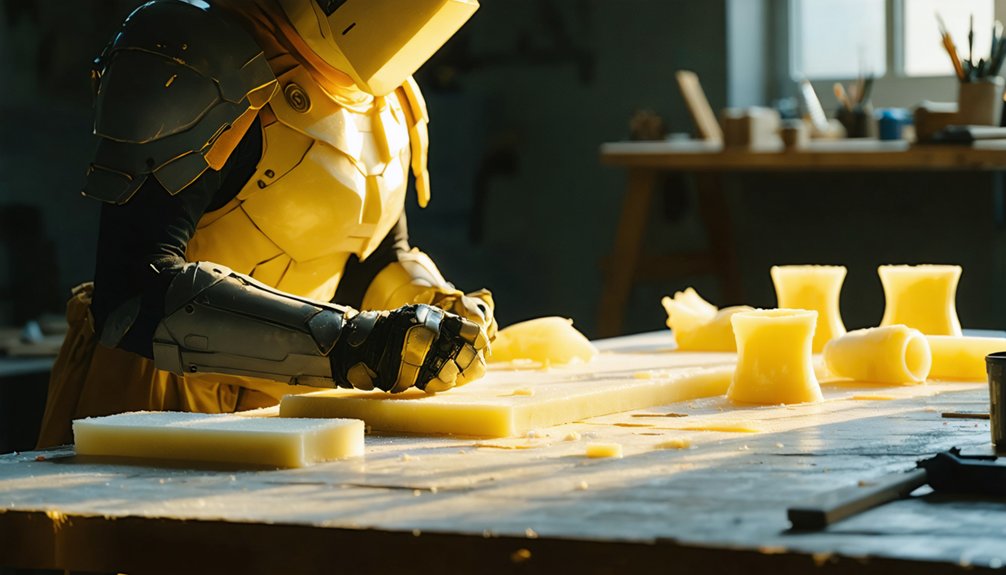
Successfully documenting your cosplay construction process requires deliberate planning and systematic photography throughout every build stage. Begin by establishing detailed portfolio archiving protocols that capture material selection, pattern drafting, and assembly techniques. You’ll want to scout locations matching your character’s environment while preparing equipment lists including cameras, tripods, and self-timers for independent shoots. Maintain clear construction chronology by organizing images sequentially from initial sketches through final details.
Optimize camera settings using manual mode with wide apertures (f/2.8) and prime lenses for sharpness. Schedule shoots during golden hour to enhance texture visibility through soft lighting. Mix posed shots highlighting seam construction with candid moments showing technique application. Review each image immediately for alignment accuracy. During post-production, minimize heavy filtering while adjusting colors to preserve authentic material representation, creating compelling contest documentation.
Master the 70-80% Handmade Requirement Through Strategic Material Selection
When planning your cosplay build, understanding handmade percentage requirements separates accepted entries from disqualified submissions. You’ll face thresholds ranging from 50% in novice divisions to 90% in master-level competitions, with 70% being the most common standard.
Handmade percentage requirements range from 50% for novices to 90% for masters, with most competitions mandating 70% original construction.
Strategic material substitutions become essential—modified items count as half value toward your total, while heavily altered components and kit-bashing qualify as fully handmade.
Focus your handmade component optimization on elements you can construct without specialized equipment. Shoes and wigs don’t factor into calculations, so allocate your efforts toward visible armor, garments, and props.
Modified purchased items shouldn’t dominate your costume, particularly in advanced divisions requiring 60%+ handmade work. Calculate percentages by counting handmade pieces relative to total costume components, prioritizing home-makeable elements for maximum credit.
Maximize Precision Points By Creating Reference Comparison Sheets
You’ll strengthen your judging presentation by documenting every original design detail from your source material on a structured reference sheet. Create side-by-side comparisons that place official character art next to photographs of your finished costume, allowing judges to verify accuracy without searching for details.
This visual alignment system enables judges to quickly assess how closely you’ve matched proportions, colors, and construction elements against the source material.
Document Original Design Details
Since judges typically have only minutes to evaluate your craftsmanship, a well-organized reference sheet becomes your most effective tool for documenting original design work. When creating without existing references, you’ll need to annotate build process decisions more extensively.
Include concept sketches alongside finished photographs to demonstrate your design evolution. Document each iteration and explain your creative choices through margin notes.
Record material utilization by attaching fabric swatches with detailed descriptions of why you selected specific textiles for your design. Photograph your patterning work—whether draping or flat patterning—to prove technical proficiency. Structure your documentation with clear sections like “Design Development” and “Construction Methods.” Use arrows and highlighting to emphasize innovative techniques such as custom-engineered closures or structural solutions you’ve developed independently.
Create Side-by-Side Comparisons
Before judges enter the evaluation room, prepare comparison sheets that position your work against common scoring categories using a gymnastics-inspired model. Create judging category rubrics that break down your costume into discrete skill subsets—engineering, sewing, wig styling, armor fabrication—enabling apples-to-apples evaluation.
List two to three perfectly executed techniques rather than documenting twenty half-finished attempts, as mastery outweighs quantity in direct matchups. Highlight visual impact elements by noting crisp symmetry in manufactured components or hand-painted surface details that demonstrate specialized skill.
Include stage presence factors like pose stability and breakage mitigation, which tip scales during tied scores. These reference sheets prevent pigeonholing by showcasing your strongest competencies without requiring full-spectrum mastery, allowing judges expert in specific disciplines to assign objective difficulty ratings across diverse costume types.
Develop Multi-Skill Techniques For Higher Craftsmanship Scores
You’ll earn higher craftsmanship scores by integrating multiple construction methods—such as needlework, foam fabrication, and 3D printing—into a single costume entry. Judges award up to 20 points for technique diversity and complexity, so combining challenging skills like transformation mechanisms with traditional methods demonstrates advanced proficiency.
Create a detailed portfolio documenting each technique you’ve employed, including process photos and material specifications, to help judges accurately assess your skill range during evaluation.
Combine Diverse Construction Methods
When judges evaluate cosplay entries, they assign higher craftsmanship scores to contestants who demonstrate mastery across multiple construction disciplines rather than excellence in a single technique. You’ll strengthen your competitive position by integrating garment sewing with armor fabrication, accessory creation, and surface finishing.
Combining repurposed fabrics with new materials reduces waste by 54% while showcasing advanced problem-solving abilities. Strategic material layering creates visual depth that judges recognize as intentional craftsmanship. You can leverage sustainability branding by documenting your sourcing processes and material selection criteria.
When you showcase eco-friendly fabrication through upcycled components paired with specialty elements, you’ll appeal to emerging contest categories prioritizing environmental responsibility. Cross-discipline skill application proves technical flexibility while maintaining aesthetic quality judges expect from professional-standard entries.
Document Complex Technique Portfolio
Strategic documentation of your construction process directly influences craftsmanship scores by providing judges concrete evidence of technical skill progression and problem-solving abilities.
Your portfolio construction narrative should showcase specialized techniques through dedicated pages featuring walkable stilts, LED embedding, or foam sculpting. Capture your costume construction timeline with progress photos documenting pattern drafting, mockups, and modifications at multiple angles.
Highlight newly acquired skills like cooler dying for spandex or intricate embroidery work through close-up detail shots. Organize complex elements—body suits with painted tattoos, layered kimono construction, armor fabrication—using collages that demonstrate integrated techniques.
Feature before-and-after comparisons of modified purchased items alongside custom-built pieces. This detailed visual evidence enables judges to assess technical complexity and execution quality efficiently during their limited review time.
Engineer Performance Elements That Showcase Costume Articulation

Articulated costume elements transform static designs into memorable competition performances that judges consistently reward with higher scores. Your engineering materials selection directly impacts articulation success—PVC piping and aluminum u-channel provide the lightweight durability needed for extended wear while maintaining structural integrity.
Implement parallelogram geometry principles in wing frames to create intuitive expansion and collapse motion that responds fluidly to your movements.
When optimizing performance parameters, balance visual impact against mechanical limitations. Electric linear actuators deliver consistent motion throughout competition periods, while custom 3D-printed linkages reduce weight without sacrificing functionality.
Strategic material reduction through sanding can remove 400 grams, preserving actuator efficiency. Multi-voltage power rails enable independent control of illumination and motion sequences, creating layered visual effects that demonstrate technical sophistication judges recognize.
Design Gimmicks and Transformations For X Factor Appeal
Three transformation categories separate memorable cosplay performances from standard presentations: structural metamorphosis, rapid costume changes, and progressive reveals.
You’ll achieve maximum impact by mastering Fregoli-style full transformations that include character and gender shifts, Russian-style couple dance changes, or magic-style instantaneous reveals. Design progressively smaller costumes that conceal subsequent layers, enabling seamless quick changes through strategic top-layer removal.
Connected costumes from specialty shops create transformative pieces appearing as complete outfits while facilitating rapid alterations.
Strengthen your core through crunches and planks to increase change speed, while interval training builds endurance and activates fast-twitch muscles essential for swift execution. Combine integrated styling with character personification through layered clothing, coordinated makeup, and synchronized wig changes.
Your transformation gimmick becomes the decisive X factor when technical precision meets theatrical presentation, delivering reality-defying moments that judges remember.
Practice Stage Proficiency Through Timed Rehearsals and Blocking
While costume craftsmanship draws initial attention, your stage performance determines whether judges award top placements. Execute timed rehearsals to internalize movements, progressing from mirror practice to full stage-sized spaces that match convention scales.
Record sessions to evaluate audio sync and verify you’re staying within two-minute limits. Implement strategic stage blocking by positioning key moments centerstage and utilizing three downstage points for audience interaction.
Move deliberately across the entire performance area rather than shuffling—actual steps read better from distant seats. Plan microphone placement independently since technical reliability varies.
Coordinate group tableaus that maximize visual impact without exceeding walk-on time restrictions. Practice exaggerated movements where your legs match arm gestures, creating dynamic poses visible to back rows.
This preparation transforms technical execution into memorable performances that differentiate you from competitors relying solely on costume quality.
Optimize Color Accuracy Using Turnaround Reference Documentation
You’ll strengthen your color accuracy by compiling turnaround reference sheets that display your character from multiple angles, ensuring consistent interpretation across all visible surfaces. Gather references photographed under various lighting conditions—studio shots, natural daylight, and on-set photography—to distinguish between true costume colors and post-production color grading.
Document these lighting variations alongside your selected materials so judges can verify your color choices reflect the source material rather than screen-edited final footage.
Compile Multi-Angle Reference Images
When judges evaluate your cosplay, they need to compare your finished costume against the source material from every possible angle. Your reference sheet should provide exhaustive product visualization that eliminates guesswork. Compile front, back, and side views into a single document that captures your character’s complete silhouette and reveals detailed craftsmanship elements.
Focus on these essential components:
- Select flat-angle images from character design sheets or wikis that avoid distortion and clearly show construction details
- Prioritize high-resolution sources over generic posters by using cosplay reference libraries and official art
- Add close-up shots of specific elements like accessories, patterns, or textures alongside full-body views
Print your compiled reference sheet for judges—digital submissions aren’t accepted at most events. This 360-degree documentation guarantees evaluators can accurately assess your accuracy and skill level.
Document Lighting Condition Variations
Since cosplay fabrics and paints shift dramatically under different light sources, you must photograph your costume under multiple lighting conditions before submitting to judges. Capture turnarounds under direct sunlight, shade, golden hour, and artificial setups to reveal color variations.
When you annotate cosplay lighting conditions, record specific equipment types—LED panels, shoot-through umbrellas, or bounce flash configurations—alongside camera exposure settings and light positioning angles. Document whether you used two-light setups at 45 degrees or single off-camera flash for texture highlights. This precision enables accurate color reproduction discussions with judges.
As you consolidate lighting reference documentation, organize images by light source type and intensity levels. Include notes on color balance adjustments and any gels applied. This systematic approach builds an extensive reference library that demonstrates your costume’s appearance across contest venue lighting scenarios, supporting constructive feedback conversations.
Balance Ambitious Construction With Mobility and Stability Requirements

While pushing creative boundaries often leads to award-winning cosplays, you must guarantee your ambitious construction doesn’t jeopardize your ability to navigate convention spaces safely. Component structure reinforcements become essential when designing elaborate pieces that maintain both visual impact and practical mobility. Material interaction considerations help prevent unexpected failures during backstage movement.
Key safety benchmarks include:
- Height enhancements limited to 8 inches maximum, with commercial platforms only—home-built equipment isn’t permitted
- Quick-exit mechanisms required for restrictive costumes that limit movement or vision, with mandatory handler coordination
- Standard ADA doorway clearance without removing major components, ensuring single-doorway navigation with props included
Pre-communicate accessibility needs early, arrange handler check-ins with cosplay staff, and prioritize safe footwear over character accuracy. Directors can measure questionable builds and approve specialized choreography affecting stability.
Leverage Pre-Judging Sessions For Real-Time Craftsmanship Feedback
Although stage performance captures audience attention, prejudging sessions determine the majority of your craftsmanship score through intimate, hands-on costume examination. Judges identify construction details invisible from stage, evaluating techniques and materials up close.
Arrive alone in full costume to maximize attention, prepared to explain your interpretation choices and construction methods confidently. Provide simple documentation—character summary, technique list, and reference images—that judges can reference during post-session deliberation without overwhelming them with excessive detail.
Highlight new skills and proud construction aspects proactively, but don’t volunteer weaknesses. Expect material questions and polite inspection requests for seams or props. Practice your presentation to overcome stage nervousness and maintain authentic character presence throughout the session. No criticism occurs during prejudging; judges assess silently. Once finished, move forward without second-guessing—your craftsmanship foundation is established.
Frequently Asked Questions
How Do Judges Calculate Final Scores When There Are Ties?
When ties occur, you’ll see judges apply scoring criteria hierarchically: performance scores break ties first, then costume craftsmanship. If judge consensus can’t resolve it, guest judges or event organizers make final decisions using predetermined elimination methods.
What Happens if I Miss the Mandatory Pre-Judging Deadline?
Missing your deadline slams the door on competition—you’ll face automatic withdrawal. Late arrival penalties don’t apply here; pre judging disqualification is absolute. No-shows forfeit all scoring opportunities since judges conduct detailed craftsmanship evaluation exclusively during this session.
Can I Replace Costume Pieces Between Pre-Judging and Stage Performance?
You can’t make costume changes during contest between pre-judging and stage performance. Your pre judging day schedule requires maintaining the exact same costume configuration throughout. Minor emergency repairs are permitted, but replacement pieces aren’t allowed.
Do International Contest Rules Differ Significantly From Local Competition Requirements?
Yes, you’ll find significant differences. International contests impose stricter event organizer requirements, mandate 50% self-creation minimums, prohibit fan arts/OCs entirely, and enforce cultural differences policies like banning skin tone alterations—while local competitions offer considerably more flexibility.
How Much Can Debate Among Judges Change My Final Ranking?
Judge panel dynamics can shift your ranking substantially—debates resolve ties, consensus overrides initial tallies, and scoring transparency concerns persist. Small point differences become negotiable, meaning you could move several placements up or down through deliberation alone.