Master character portrayal through three essential techniques: First, apply Araki-style makeup with precise liner placement, artificial crease creation, and strategic white paint concentration on facial high points. Second, embody your character by researching signature poses and practicing dynamic mannerisms that capture their behavioral essence. Third, coordinate all transformation elements—from unconventional corset styling to optimized prop fabrication—while maintaining makeup symmetry and seamless blending. The techniques below will guide you through each transformative step in detail.
Key Takeaways
- Master Araki-style makeup with precise eyeliner placement, artificial creases, waterline definition, and strategic white paint highlighting facial dimensions.
- Study and recreate signature character poses and mannerisms to achieve authentic behavioral accuracy and dynamic physical performance.
- Coordinate costume elements seamlessly through structured bodices, optimized prop fabrication, and proper makeup application sequencing.
- Adjust body proportions using push-up techniques or contouring while maintaining continuous symmetry throughout the transformation process.
- Enhance facial depth with tight-lining, red guidelines under eyes, and blended makeup extending from face to neck.
Mastering Araki-Style Makeup Lines and Dimensional Facial Reconstruction
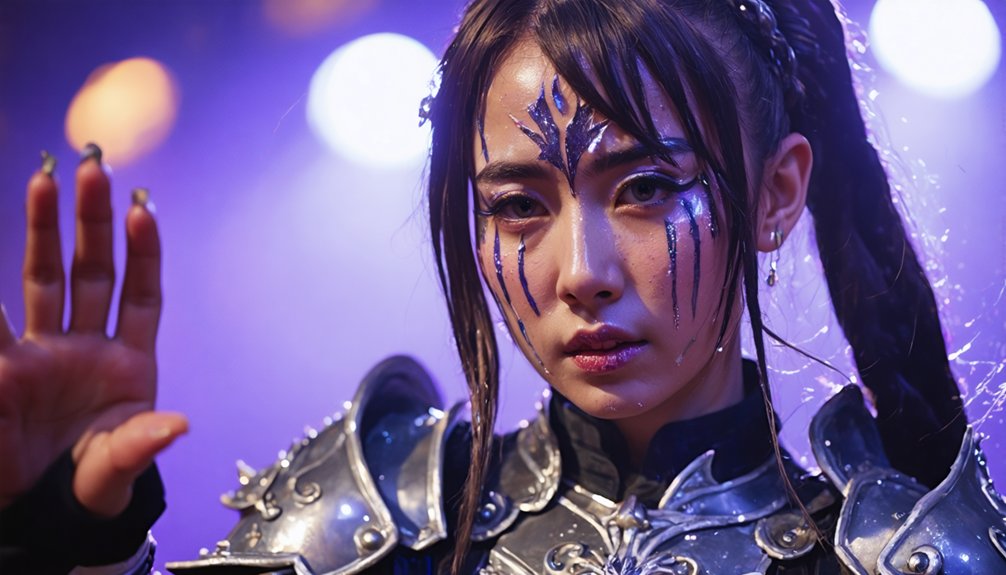
When recreating Hirohiko Araki’s distinctive character aesthetics, your foundation work begins with precise eyeliner and brow placement that defies conventional makeup rules. You’ll need to look straight into your mirror without head tilting, checking symmetry constantly while squaring off bottom lash lines for sharp definition.
Create artificial creases above thick liner outlines to enhance eyelid contour depth, then tight-line your waterline with black pencil for intensified impact.
Your facial restructuring requires strategic white paint concentration on forehead, brow bone, and cheekbones, followed by black shadow placement in hollows aligned downward to eye level. Draw faint red guidelines under eyes, adjusting intensity to match character reference lip color saturation.
Fill eyelids completely black while leaving precise outline edges, then extend mouth corners with thin liner for Araki’s signature wide appearance.
Integrating Performance Embodiment With Signature Poses and Mannerisms
Your mastery of Araki’s visual language extends beyond static facial features into the dynamic sphere of physical performance. Signature poses detach character images from source material, transforming them into lived bodily experiences that demand rigorous research into behavioral accuracy. You’ll achieve authenticity by manipulating posture, gesture, and language to generate meaningful character identities while balancing source fidelity with real-world embodiment.
Subtle body articulation becomes essential when modern game characters raise portrayal standards through visually intricate designs. Your performance constitutes affective process—costume donning combined with immersive gestural engagement produces meaning beyond aesthetic imitation. Collaborate with photographers and supporting crew to capture mannerisms that redefine both character essence and your identity. This iterative phenomenological approach treats movement as co-creative exploration, contextualizing personal expression within narrative frameworks for convention roleplay success.
Achieving Seamless Character Transformation Through Cohesive Element Coordination
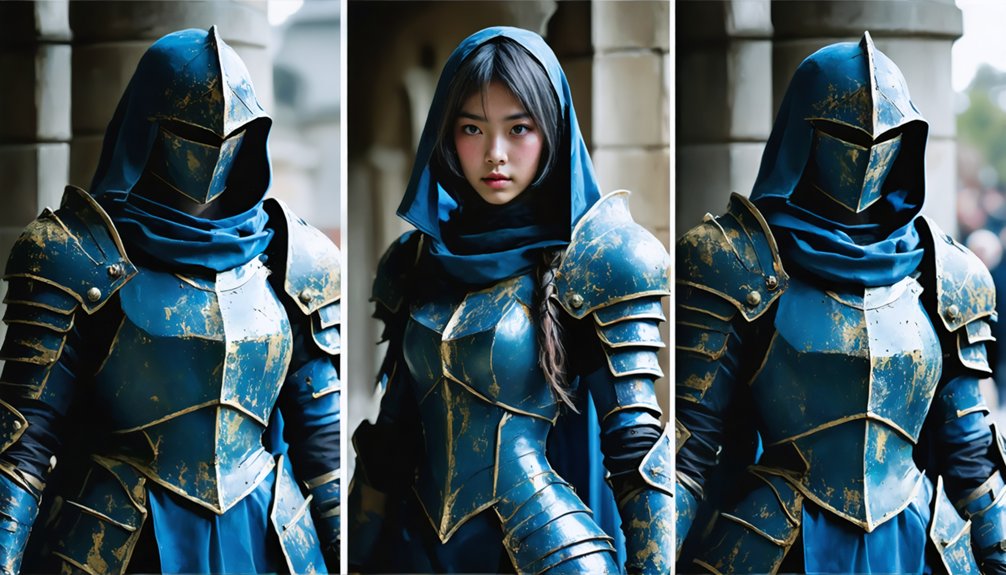
Character transformation demands precise coordination across costume components, makeup applications, and physical modifications that collectively establish visual cohesion. You’ll achieve authenticity through unconventional corset utilization—pairing structured bodices with cyberpunk neon accents or gothic vampire elements creates distinct character signatures.
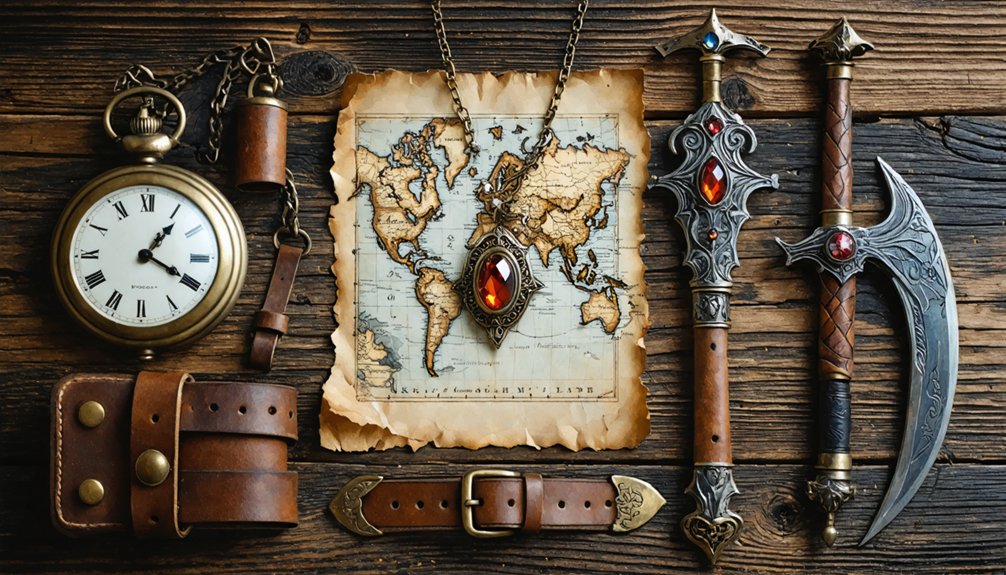
Your prop fabrication process optimization begins with silhouette analysis: print reference images, identify key shapes, then recreate them using EVA foam or heat-warped Worbla circles.
Layer makeup strategically by applying contacts first, followed by gradient eyeshadows and contoured facial shadows. Secure physical modifications through prosthetics for ears or facial features, while employing push-up techniques or contouring for body proportion adjustments. Check symmetry continuously during application, blend makeup seamlessly from face to neck, and prep hair properly beneath quality wigs.
This systematic coordination guarantees every element supports your character’s visual identity.
Frequently Asked Questions
How Do You Maintain Character Portrayal Consistency Across Different Convention Venues?
You’ll maintain consistency by documenting venue-specific character mannerisms and applying character personality development strategies that adapt to different convention spaces while preserving core traits, ensuring your portrayal remains recognizable through standardized behavioral patterns and visual references.
What Techniques Help Transition Between Multiple Character Versions Throughout an Event?
You’ll master shifts by layering diverse visual elements like modular costume pieces and quick-change accessories, while maintaining intentional character mannerisms specific to each version. Practice switching between personas systematically, documenting what works for future events.
How Can Budget Constraints Be Managed While Evolving Character Portrayals?
Picture your wallet breathing easier: you’ll master evolving portrayals through budget-friendly materials like foam and thrifted finds. Design budget-conscious modifications using reversible elements, layered pieces, and modular accessories that transform between character versions without purchasing duplicate costumes entirely.
What Methods Work for Documenting and Tracking Costume Evolution Progress?
You’ll optimize costume improvement strategies by photographing each build stage, maintaining digital pattern libraries, and logging material choices in spreadsheets. Design documentation techniques include progress videos, comparative reference galleries, and detailed construction journals shared with your cosplay community for feedback.
How Do You Handle Unexpected Costume Malfunctions While Staying in Character?
Most cosplayers experience malfunctions at 60% of events. You’ll maintain character resilience by discreetly signaling handlers for repairs, making on-the-fly adjustments using safety pins, and incorporating fixes into gestures while staying composed through pre-planned contingency protocols.