To compete internationally, you’ll need to prove your nationality, guarantee at least 80% of your costume is handmade, and select a character from approved source materials like anime, manga, or video games. Document every construction step with photos, match your makeup and wigs to official references, and submit your costume report in Japanese or English before deadlines. Master these fundamentals, and the advanced strategies ahead will sharpen your competitive edge considerably.
Key Takeaways
- Ensure eligibility by providing citizenship or residency documentation, and note that switching countries requires a five-year lockout period.
- Choose characters from approved sources like anime or manga, using official references to verify accuracy and avoid disqualification.
- Handcraft at least 80% of your costume and document every construction step with photographic evidence for judges.
- Arrive at pre-judging fully assembled, with documentation ready, and ensure structural integrity and color consistency throughout.
- Cross-reference official images during judging to accurately replicate fabric textures, color gradients, and design details for maximum scoring.
Know the Cosplay Competition Eligibility Rules Before You Apply
Before you even start sewing your first panel or styling your wig, you need to confirm you actually qualify to compete. Citizenship requirements are non-negotiable — you must hold citizenship or permanent residency of the country you’re representing.
Qualifying to compete starts with citizenship — you must hold citizenship or permanent residency of the country you’re representing.
Don’t assume flexibility exists here; documentation proving nationality or residency gets submitted during entry.
Age restrictions are equally firm. You must be over 18 by the competition’s specified cutoff date, so verify that deadline against your actual birthdate before investing time and resources.
There’s also a country-switching restriction to evaluate. If you’ve previously represented another country, you’re locked out for five years.
Worse, once you’ve represented a country in an international cosplay league, that representation is permanent — no future changes are permitted under any circumstances.
Choose a Competition-Approved Character Before You Start Building
Before you cut a single piece of fabric, confirm that your chosen character comes from an approved source material — Japanese anime, manga, tokusatsu, or video games only.
Check character-specific eligibility rules carefully, since costumes based on fanart or personal interpretations don’t qualify; you’ll need official references to satisfy judging requirements.
Pull your references directly from official materials, as these documents must support your costume report and validate your design choices during pre-judging.
Verify Approved Source Materials
One of the most critical steps you’ll take before investing hundreds of hours into a build is confirming that your chosen character comes from an approved source material.
International cosplay competitions restrict eligible costumes strictly to Japanese anime, manga, tokusatsu, and video games. Source material verification isn’t optional — it’s foundational. A stunning build from a Western comic, live-action film, or original design will disqualify you regardless of craftsmanship quality.
Character authenticity also depends on using official references exclusively.
Fanart interpretations and personal character redesigns aren’t permitted, even if they’re widely recognized within the community. You’ll need to source documentation directly from official publications or releases.
Complete this verification step before purchasing materials or committing build time — discovering an ineligibility issue mid-build wastes resources you can’t recover.
Check Character Eligibility Rules
Choosing a competition-approved character isn’t just a formality — it determines whether your entire build qualifies for judging. Before you commit hundreds of hours to construction, confirm your character meets all eligibility criteria tied to source material, age requirements, and origin.
Think of it like character citizenship — your chosen character must originate from Japanese anime, manga, tokusatsu, or video games. Western cartoons, fanart interpretations, and original designs won’t pass pre-judging.
Additionally, some competitions enforce age requirements tied to source material ratings, automatically disqualifying costumes from mature or 18+ franchises.
Cross-reference your character against the official approved list before purchasing a single material. Catching an eligibility conflict early saves you from a disqualification that no amount of craftsmanship can override.
Gather Official Character References
Once you’ve confirmed your character is competition-approved, your next move is sourcing official references — and only official ones. Judges evaluate costume precision against original character design, so fan interpretations, personal artwork, or unofficial recreations won’t cut it.
You need verified, source-accurate reference sources — official game art books, anime production materials, manga publisher releases, or licensed promotional assets.
Pull multiple angles: front, back, side profiles, and close-up detail shots. Capture color accuracy, texture variations, accessory placement, and construction geometry. The more thorough your reference library, the fewer guesswork decisions you’ll make during builds.
Document every reference source in your costume report, as judges may cross-check your materials during pre-judging. Precision starts here — before you cut a single piece of fabric or shape one prop component.
Meet the Handmade Percentage Requirements for Your Costume
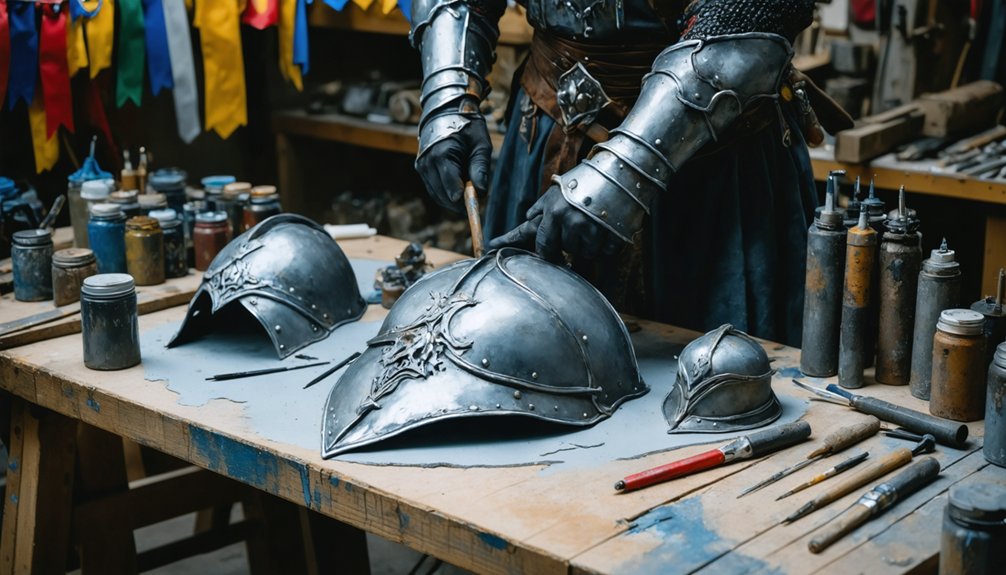
Handmade percentage requirements are among the strictest rules you’ll encounter in cosplay competitions, so understanding them early saves you from disqualification. Most international competitions mandate that you handcraft at least 80% of your costume, meaning commercial purchases require substantial modification before qualifying.
Handmade requirements are strict—most competitions demand 80% crafted by hand, so know the rules before you compete.
If you’re competing as a duo, each partner must independently construct at least 50% of one complete costume.
Prioritize handmade techniques that demonstrate craftsmanship precision—judges evaluate construction quality rigorously. Smart material sourcing matters equally; selecting appropriate fabrics, thermoplastics, and finishing materials directly impacts your score.
Purchasing a pre-made costume and adding minimal alterations won’t satisfy requirements.
Document every construction step thoroughly. Photographic evidence of your build process strengthens your craftsmanship report and protects you during disputes reviewed by the rules committee.
Build a Competition Costume That Scores High on Precision
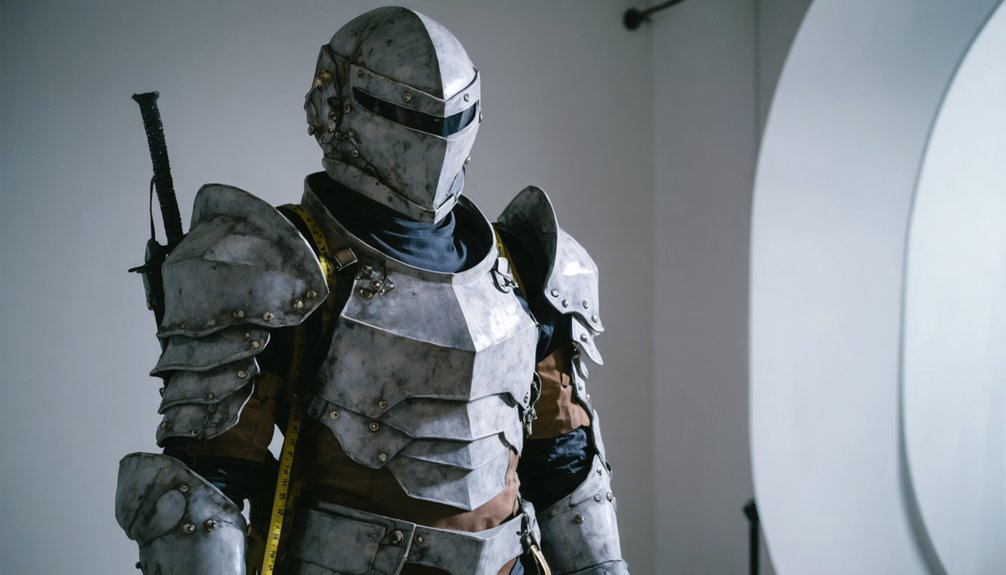
To score high on precision, you’ll need to study the official references for your character and replicate every design detail as accurately as possible—judges award up to 40 points based solely on how closely your costume matches the original.
Pull directly from official source materials, since fanart and personal interpretations aren’t acceptable references and will undermine your score.
Measure, compare, and cross-check your work against those references at every construction stage to guarantee your finished costume holds up under a judge’s close scrutiny.
Matching Original Design Details
Precision scoring accounts for up to 40 points in competition judging, so you can’t afford to treat accuracy as an afterthought.
Design accuracy demands you cross-reference official references exclusively—fanart and personal interpretations disqualify your entry immediately. Visual consistency across every costume element separates competitive builds from casual ones.
Prioritize these critical accuracy checkpoints:
- Color matching: Compare fabric swatches directly against official character sheets under neutral lighting.
- Proportion mapping: Measure design elements relative to body scale, not assumptions.
- Texture replication: Identify material types from official artwork before sourcing fabrics.
- Hardware detailing: Recreate insignias, buckles, and trims at precise scale.
Judges evaluate completeness and accuracy systematically.
Every overlooked seam or incorrect silhouette costs you points, so approach each construction decision with documented reference material actively guiding your build.
Maximizing Costume Precision Scores
Scoring high on precision starts before you cut a single piece of fabric. Study official references obsessively — judges score costume details against original designs, awarding up to 40 points based purely on accuracy.
Fan art and personal interpretations won’t cut it here; only verified source material qualifies.
Build your judging strategies around documentation. Cross-reference multiple official images, noting fabric textures, hardware placements, and color gradients.
Recreate each element systematically, treating every panel, seam, and accessory as a scored component.
During pre-judging, present your work confidently and clearly explain your construction decisions.
Judges evaluate what they see and what you demonstrate. The more precisely your costume mirrors its source, the stronger your score climbs toward that 40-point ceiling.
Apply Makeup and Style Wigs to Meet Judging Standards
Makeup application and wig styling are judge-evaluated elements you must perform yourself — no exceptions. Judges scrutinize both disciplines as core craftsmanship indicators, so delegate nothing. Your makeup techniques and wig styling must authentically replicate the source character’s official references with precision.
Elevate your execution using these targeted strategies:
Elevate your execution using these targeted strategies to refine technique, sharpen precision, and push your craftsmanship to competition-ready standards.
- Study official character references to match color accuracy, placement, and dimension in your makeup techniques.
- Use professional-grade products that maintain integrity under stage lighting conditions.
- Secure and style wigs to mirror the character’s exact silhouette and texture.
- Practice application timing to guarantee flawless readiness 30 minutes before your scheduled pre-judging slot.
Judges ignore physical differences in race, gender, and size — your technical execution alone determines your score.
Prepare Your Costume and Documents for Pre-Judging Day
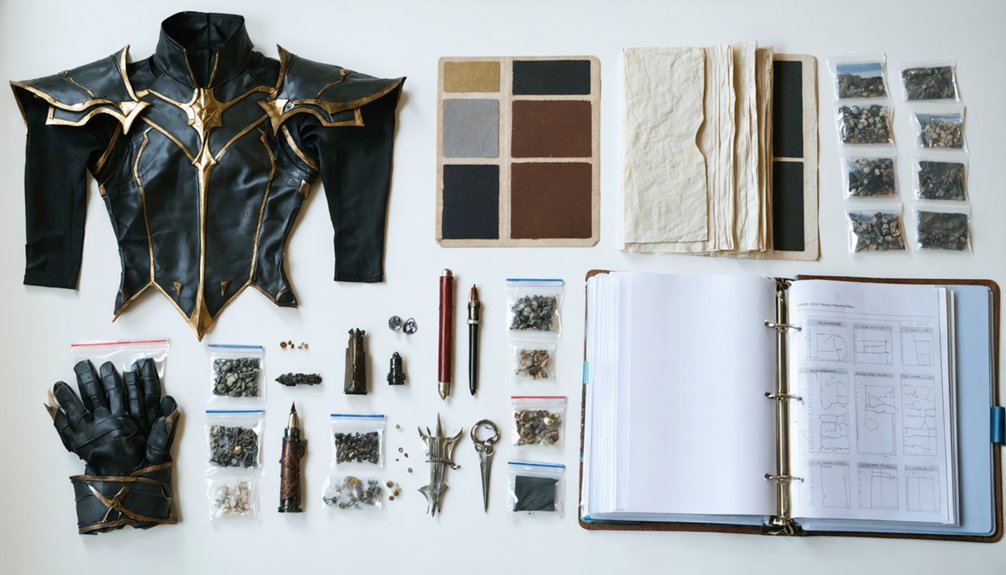
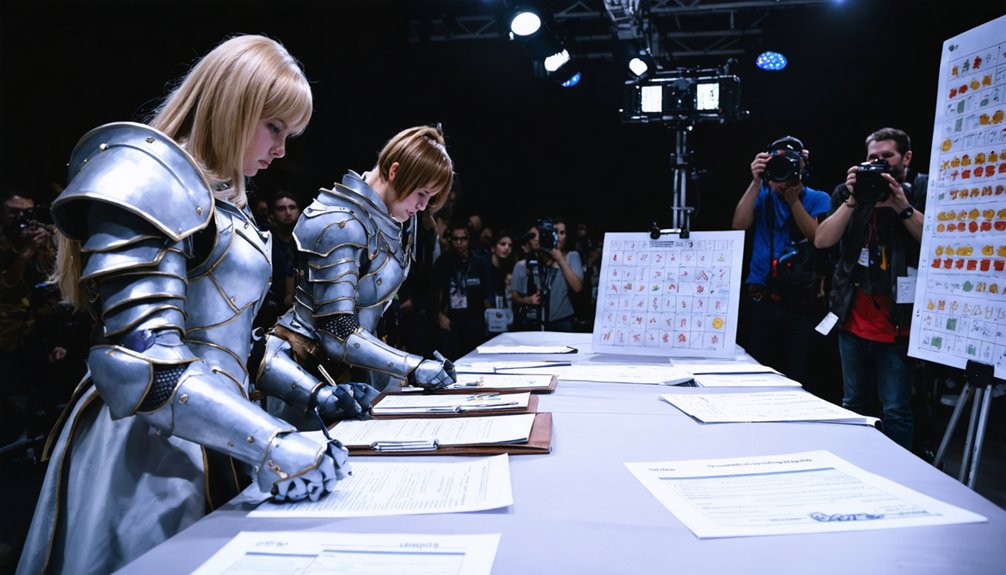
Pre-judging day demands that you arrive with your costume fully assembled, documentation in order, and a minimum 30-minute buffer before your scheduled slot. Submit your costume report in either Japanese or English, and include verified proof of nationality or residency.
Don’t underestimate costume maintenance—inspect every component for structural integrity, loose attachments, and color consistency before you walk in.
Pre-judging etiquette requires strict adherence to your assigned order; deviating disrupts the entire schedule and risks disqualification.
Make certain your costume fits within the designated stage dimensions, as oversized builds immediately void your performance eligibility. If craftsmanship disputes arise, the rules committee holds final authority.
Treat pre-judging as your primary judging window—execute it with precision and zero margin for error.
What You Can and Cannot Do on the Competition Stage
Once pre-judging wraps up, your focus shifts entirely to the main stage—and the rules governing it are just as strict.
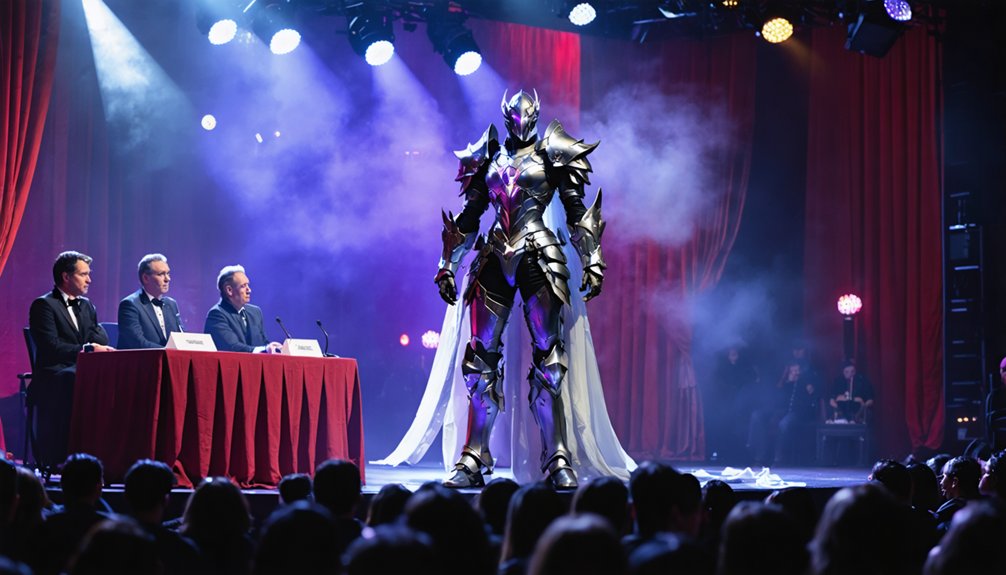
Stage etiquette isn’t optional; it’s enforced. Audience interaction is explicitly prohibited, meaning you can’t approach judges or spectators during your performance.
Follow these non-negotiable stage rules:
- Source material restrictions apply — only Japanese anime, manga, tokusatsu, or video game characters are permitted.
- No jumping off the stage under any circumstance.
- Mature or 18+ content is banned from all performances.
- Stage ninjas are available for solo, duo, or trio performers needing prop or costume assistance.
Your performance must also fit within the stage’s physical dimensions.
Oversized costumes that can’t be accommodated will disqualify your entire entry, so plan your staging strategically.
Submit These Documents Before Your Entry Gets Rejected
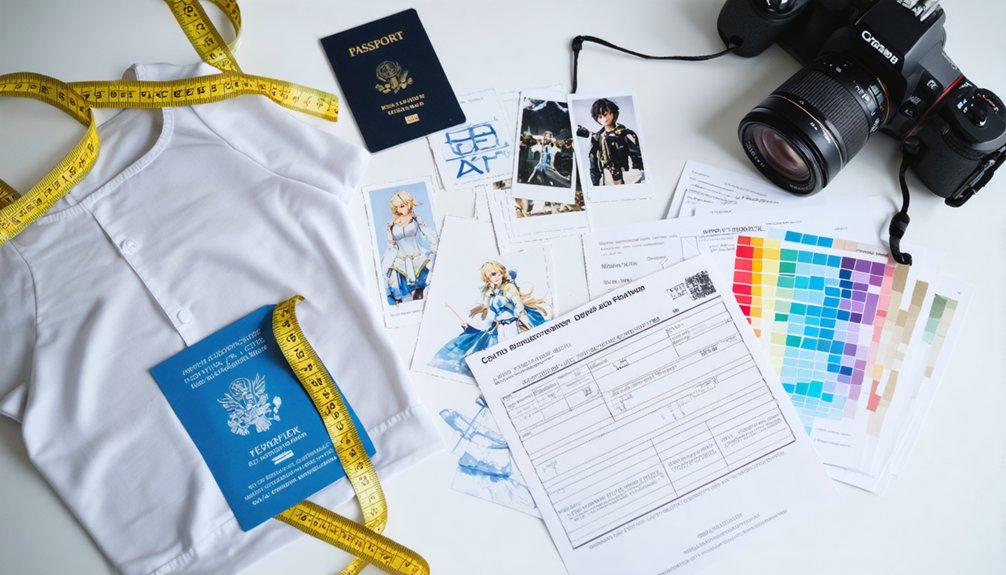
Submitting the right documentation upfront separates serious competitors from those who get eliminated before the judging even begins.
You’ll need to prepare your costume report in either Japanese or English — no other document formats are accepted. Pair that with verified proof of nationality or permanent residency, since unverified entries get disqualified automatically.
Respect submission timelines without exception. Pre-judging schedules are assigned sequentially, and you must be stage-ready 30 minutes before your scheduled slot. Missing that window removes you from craftsmanship judging entirely.
Include official character references from your source material — fanart and personal interpretations aren’t valid.
If you’re competing as a duo, both partners need documented proof that each built at least 50% of one costume. The rules committee handles disputes, but clean documentation prevents them altogether.
Frequently Asked Questions
In duo entries, you can’t share costume collaboration on a single piece for design credit—each partner must individually create at least 50% of one complete costume, ensuring both demonstrate distinct, measurable craftsmanship contributions independently.
Are Previously Winning Costumes From Regional Competitions Also Ineligible Internationally?
Like a champion retiring their trophy, only internationally winning costumes are ineligible—not regional wins. You’re clear to bring your regional competition rules victory forward; costume eligibility criteria only bars previous international championship costumes from competing again.
How Are Craftsmanship Disputes Officially Resolved During Judging?
If you’re facing a craftsmanship dispute, the rules committee officially resolves it. They’ll evaluate your work against established craftsmanship standards and judging criteria, ensuring you receive a fair, technically precise, and innovative assessment of your costume’s construction.
Can Contestants Use Fanart as an Official Costume Design Reference?
Absolutely never—fanart legality completely disqualifies your entry! You must use only official references for design interpretation. Fanart and personal creations are strictly prohibited, so you’ll always need authentic, verified source material to guarantee your costume’s legitimacy.
Does Representing a Country Once Permanently Prevent Future Country Changes?
Once you’ve represented a country in ICL, you can’t make future changes—it’s permanent under competition rules. However, country representation switches are only blocked for 5 years if you’ve represented another country beforehand.
References
- https://costume.org/wp/icg-guidelines-ensuring-fair-competition/
- https://wcc.worldcosplaysummit.jp/en/championship/rule/
- https://icl.japanweekend.com/rulebook/
- https://worldcosplaysummitusa.org/rules/
- https://holidaymatsuri.com/contests/wcc-rules
- https://cospop.fr/wp-content/uploads/2023/02/ICL-DUO-2022.pdf
- https://naka-kon.com/cosplay/showcase/general-rules
- https://www.costume.org/documents/fairness.html
- https://www.ecg-cosplay.com/en/menu/rules-guidelines_101947.htm