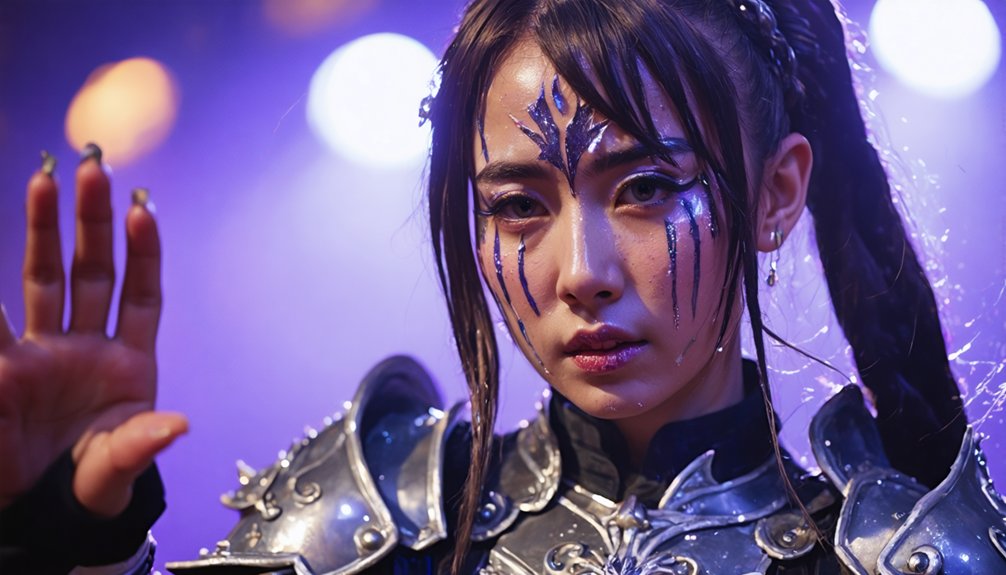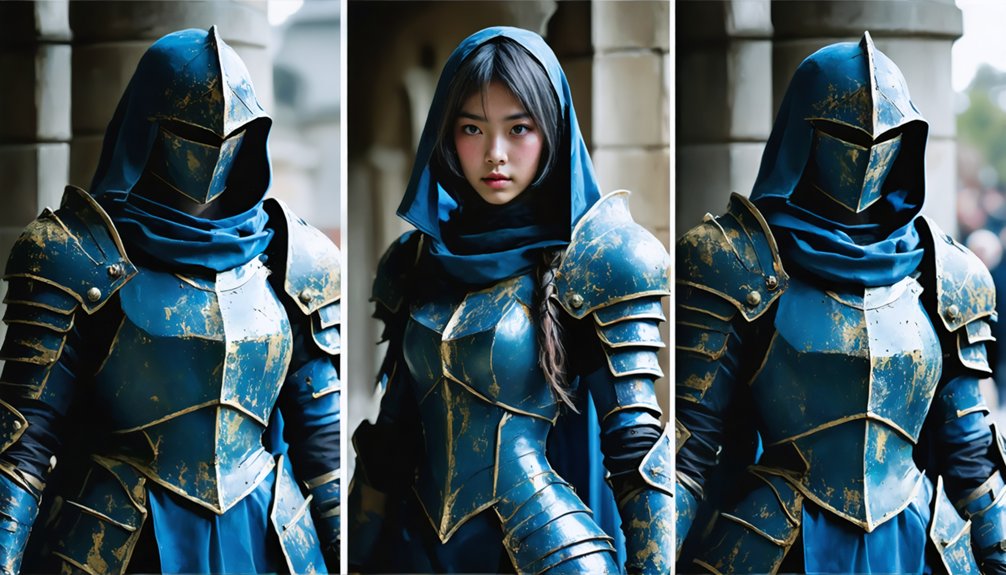
Character growth in cosplay emerges through progressive technical mastery—you’ll advance from hand-stitching basic fabrics to thermoplastic molding with Worbla, upgrade makeup skills from drugstore concealer to performance-grade contouring, and develop armor fabrication using EVA foam heat-shaping and silicone-resin casting. You’ll refine character embodiment through deliberate posing techniques like 3/4 angles and exaggerated gestures while documenting your evolution via Gantt charts and construction logs. These layered competencies transform both your craft precision and stage presence as you explore deeper techniques below.
Key Takeaways
- Photograph early builds alongside later iterations to visually demonstrate improvements in craftsmanship, material choices, and finishing techniques.
- Document skill progression through Gantt charts and construction logs that track learning curves, remakes, and evolving project timelines.
- Layer increasingly complex materials—progressing from basic fabrics to EVA foam, Worbla, and silicone-resin casting—across successive costumes.
- Refine character portrayal by developing posing techniques, postural adjustments, and exaggerated gestures that enhance emotional authenticity over time.
- Advance makeup skills systematically from basic application to specialized techniques like brow concealment, lash line manipulation, and long-lasting primers.
Layering Costume Complexity Over Time
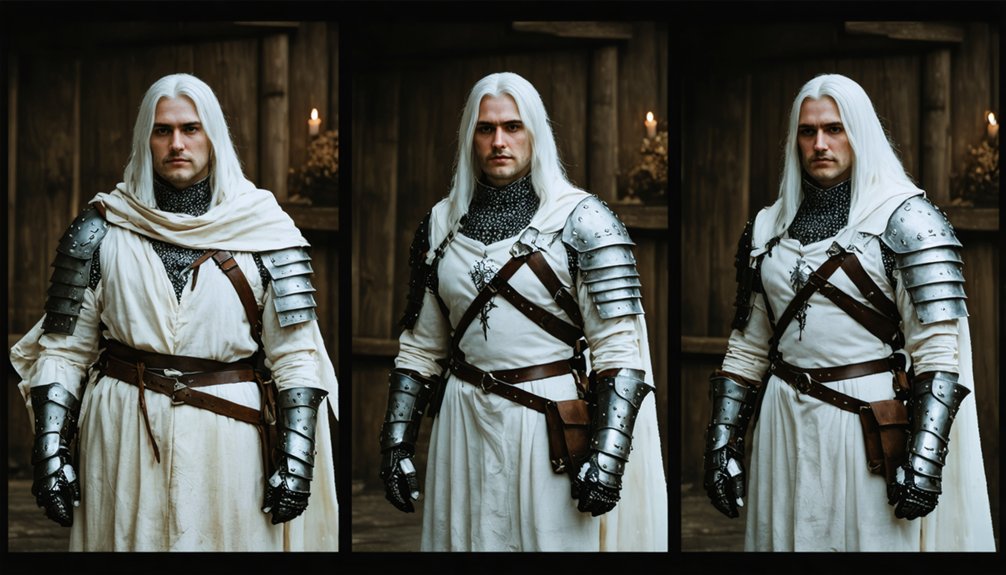
When cosplayers first enter the hobby, they typically construct costumes using hand-stitching techniques and readily available fabrics like satin and cotton—materials that vary considerably in quality and durability. As you progress, you’ll replace these basic garments with custom-made pieces featuring seamless stitching and precise patterns.
Your evolution continues through dimensional texturing—combining EVA foam with craft foam creates armor depth, while thermoplastics like Worbla enable intricate molded components. Accent layering transforms simple costumes into multidimensional interpretations through strategic prop integration and specialized gear selection.
You’ll discover that wig transformation techniques, coupled with carefully selected accessories matching character personality, solidify your portrayal’s authenticity. Each iteration builds on previous attempts, with constructive community feedback driving technical refinement. This progressive enhancement distinguishes exceptional character representation from standard interpretations.
Evolving Makeup Skills From Basic to Advanced
As you move from basic costume construction to character embodiment, makeup skills become your most versatile transformation tool. Begin with brow concealment using grease-based NYX jumbo pencils—they cling better than traditional concealer and establish smooth wig placement.
Progress to powder-over-cream highlighting that creates natural shadow effects through adaptive lighting techniques. Conceal original lash lines to redraw bigger anime eyes, widening the waterline distance dramatically. Elongate lip shapes using Kami mix with concealer, setting with skin-toned powder for precision.
Advanced techniques incorporate streamlined brushwork methods: shift shades first, layer repeatedly for stage lighting intensity, and apply eyeshadow primer preventing fallout. The community favors cake makeup bases for longevity, building multi-layer gradients for fantasy characters.
Symmetry checks and reference images refine accuracy as you master facial reshaping fundamentals.
Mastering Armor and Prop Fabrication Techniques
Three foundational materials dominate armor construction in the cosplay community: EVA foam for beginners seeking forgiving, lightweight builds; Worbla for beginners seeking forgiving, lightweight builds; Worbla for craftspeople requiring complex curves and durability; and silicone-resin casting for professionals producing multiple copies or film-quality details.
Your material selection determines your finishing techniques. EVA foam accepts heat-shaping with dual heat guns, Dremel-carved weathering, and woodgrain detailing through controlled burning. Worbla’s thermoplastic properties enable endless reshaping and scrap-ball sculpting.
Advanced fabricators employ MoldMax 30 or Rebound 25 silicone for creating masters, casting SmoothCast resins or FlexFoam-iT for lightweight strength.
Progression appears through template evolution—starting with plastic-wrap body forms, advancing toward freehand prototyping that improves with each iteration. Interlocking foam mats provide structural reinforcement when doubled, while 3D-printed PLA components deliver precision impossible through handcrafting alone.
Developing Character-Specific Movement and Posing
Armor fabrication skills mean nothing if your performance fails to embody the character wearing them. You’ll achieve character emotion conveyance through precise postural adjustments—straight spines signal heroic archetypes while slouched shoulders communicate vulnerability.
Perfect armor construction becomes meaningless without the postural precision that transforms costume into character through deliberate physical choices.
Master the 3/4 angle technique by positioning hips and shoulders in opposing directions at 45 degrees, creating triangular silhouettes that photograph dynamically. Your facial work requires deliberate choices: point your nose toward the photographer’s shoulder while maintaining eye contact with the lens.
For character transformation exploration, analyze movement patterns—Black Widow’s low center of gravity differs drastically from Hulk’s weighted stance. Execute actions in slow motion before freezing, then exaggerate beyond natural comfort.
Bold gestures translate subtle emotions into visible performance, transforming static costumes into living character studies.
Tracking Your Skill Progression Through Documentation
When your costume debuts at a convention, judges and fellow cosplayers will ask how many hours you invested—yet most creators can’t provide accurate answers. Maintaining project documentation through Gantt charts transforms vague timelines into concrete data, tracking estimated versus actual completion times for tasks like wig crimping (3-6 hours) or paint drying (4-72 hours).
Log learning curves and remakes—typically one per project—to refine future estimates. Progress books serve dual purposes: contest presentation for judges and personal skill archives documenting techniques mastered. Utilize Canva’s templates to compile construction stages with material lists and reference images.
Utilizing peer feedback through online community sharing strengthens both documentation quality and costume execution. Track prop-making rushes, dye sessions (1-8 hours), and percentage completion markers. Over multiple builds, your logged reality column reveals pattern improvements in timeline accuracy.
Experimenting With Alternative Character Versions
Alternative character versions expand your portfolio by challenging you to reinterpret canonical designs through AU settings, timeline shifts, or crossover mashups. You’ll apply color blocking principles to maintain recognizability while adapting signature palettes to new contexts—whether translating a character into a different anime’s art style or aging them through their story arc.
This approach builds technical problem-solving skills as you research unfamiliar costume elements, experiment with non-standard fabric combinations, and modify existing garments to bridge multiple source materials.
Exploring AU and Timeline Shifts
Character transformation through AU (Alternate Universe) and timeline shift cosplays requires systematic selection of versions that share foundational personality traits while diverging in critical story events. When modeling alternative timelines, prioritize characters from established fandoms like Mouthwashing where community recognition amplifies impact. Choose complementary styles—such as gender-swapped or pre-corruption versions—to demonstrate evolution while exploring alternate backstories that maintain core attributes.
Execute efficient timeline shifts through:
- Batched construction workflows using rotary cutters and longer hem stitches for rapid costume adjustments
- Rehearsed passage choreography with controlled pose sequences for seamless on-camera AU reveals
- Strategic milestone blocking allocating buffers for makeup changes and prop swaps between versions
Engage cosplay forums using hashtags like #cosplay and #fandoms to iterate techniques. Document each attempt as a growth step, analyzing real-time examples from community practitioners to refine your AU interpretation methods.
Mashup and Crossover Designs
Beyond timeline variations within a single character’s canon, mashup cosplay merges two distinct intellectual properties into hybrid designs that test your fabrication versatility and conceptual problem-solving. Popular fusions like Captain Spiderman or Buzz Ironyear demonstrate how you’ll navigate conflicting silhouettes, material palettes, and iconography systems.
When combining Sailor Moon’s transformation aesthetics with Chainsaw Man elements, you’re balancing recognizable signifiers from both sources while maintaining structural coherence. Disney/Star Wars hybrids—Snow White with Boba Fett armor ranking among top-voted concepts—require you to reconcile tonal opposites through deliberate color blocking and accessory hierarchy.
These hybrid character dynamics demand personalized character customization beyond pattern modification, pushing you toward scratch-building techniques that honor source authenticity while establishing visual unity. Community voting patterns reveal audience appreciation for thoughtful property synthesis over arbitrary combination.
Progression Through Character Arcs
Where mashup designs fuse separate properties, arc-based cosplay traces a single character’s journey across canonical storylines, requiring you to map visual evolution through distinct narrative phases. You’ll research backstory elements, identifying progression markers like costume upgrades, physical transformations, or symbolic accessories that signal character development.
Contrasting early vs. late stages demands attention to detail—a novice hero’s simple tunic versus their battle-worn armor—while tracing narrative evolution through makeup alterations, prosthetic additions, or weathering techniques.
Effective arc progression includes:
- Layered construction pathways that mirror character advancement from basic soft goods to complex structured armor pieces
- Adaptive pattern grading allowing body fit adjustments across alternative timeline versions
- Rehearsed embodiment practices capturing mannerisms, poses, and expressions specific to each developmental stage
Community feedback refines accuracy as you converge disparate elements into cohesive representations of transformative character journeys.
Building Confidence Through Performance Practice
Performance readiness stems from systematic rehearsal of your character’s physical vocabulary—practicing signature poses, movement patterns, and facial expressions before convention day.
Dress rehearsals in full costume reveal mobility restrictions, wig stability issues, and makeup durability under extended wear, allowing you to troubleshoot technical problems in a controlled environment.
This pre-event preparation transforms convention floors into performance spaces where you’ve already mastered your character’s embodiment, reducing anxiety and enabling authentic portrayal within the cosplay community.
Rehearsing Poses and Mannerisms
Drilling character-specific poses lays the foundation for embodying a character’s physical presence beyond mere costume accuracy. You’ll develop muscle memory through repetition with variations, timing each pose against source material durations while incorporating focused breathing techniques to maintain stability. Record your sessions for analytical review, identifying asymmetries and switchover points that undermine authenticity.
Essential rehearsal components include:
- Breaking down mannerisms into repeatable sequences—gait patterns, gesture timing, and postural defaults
- Synchronizing voice modulation with corresponding poses for integrated character delivery
- Implementing performance iteration cycles with peer feedback to refine accuracy metrics
Track your progress through quantifiable benchmarks: pose hold endurance, mannerism fluidity counts, and reduced self-consciousness across sessions. The cosplay community values this methodical approach, as it transforms surface-level imitation into embodied characterization that resonates at conventions and collaborative shoots.
Dress Rehearsals Test Readiness
Full dress rehearsals function as critical stress tests for your cosplay readiness, bridging the gap between isolated practice and convention performance. You’ll discover technical issues—mobility restrictions, prop malfunctions, makeup endurance—before public scrutiny. Community feedback influences your refinement process; experienced cosplayers identify character alignment gaps you’ve overlooked.
These sessions reduce performance anxiety through repeated exposure to simulated convention environments, strengthening your psychological preparedness.
Group bonding experiences during rehearsals create validation networks that offset self-consciousness. You’re developing social competencies through iterative character interactions, transforming theoretical preparation into embodied performance data. Statistical evidence confirms rehearsal participation predicts measurable wellness improvements and reduced depression symptoms.
Your immersive engagement during these trials doesn’t merely test costume construction—it calibrates your mental readiness, establishing neurological pathways that support confident convention execution.
Upgrading Materials and Construction Methods
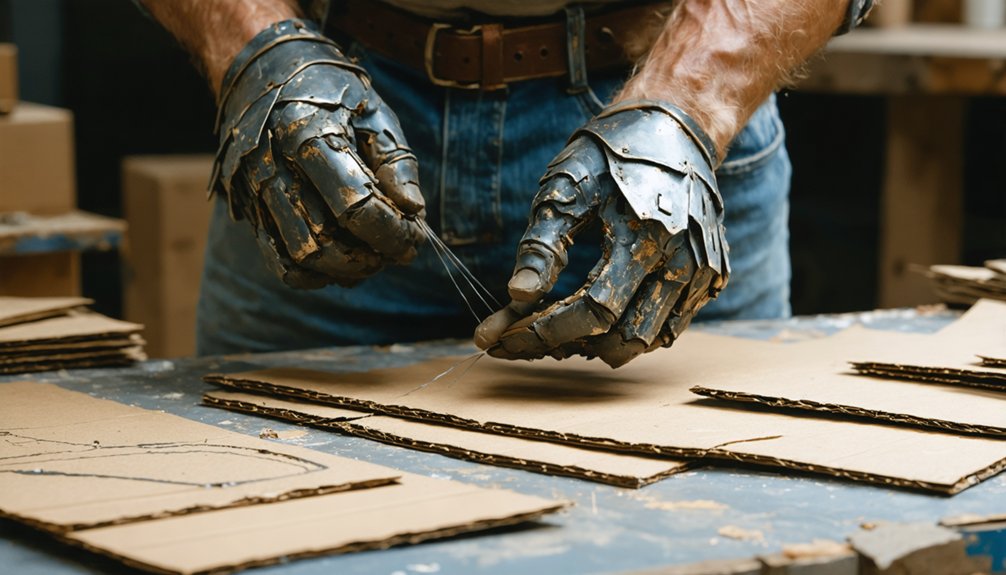
As your cosplay journey progresses, you’ll move from basic craft supplies to specialized materials that enable increasingly sophisticated builds. Material sourcing optimization becomes essential—you’ll shift from cotton mock-ups to luxurious velvets and leatherettes that authentically represent character aesthetics.
Your specialized tool acquisition follows a strategic path: Dremel rotary tools for intricate foam detailing, heat guns for thermoplastic manipulation, and soldering irons for precise texture creation.
Your construction capabilities expand through:
- Composite material integration combining foam structures with fabric overlays and PVC-wood hybrid frameworks for lightweight durability
- Advanced finishing techniques incorporating weathering, battle damage, and texture replication that elevate visual authenticity
- Power tool mastery progressing toward laser cutters and 3D printers for precision impossible with hand tools alone
This evolution demonstrates measurable skill advancement that the community recognizes and celebrates.
Incorporating Personal Artistic Interpretations
While technical proficiency in construction methods provides the foundation for impressive costumes, your authentic voice emerges when you inject personal artistic interpretations into character portrayals. Personal flair enhancement operates through strategic modifications—adapting designs to your body type, reinterpreting gender presentations, or adding signature styling elements that preserve core character essence while showcasing individual creativity.
Narrative symbolism incorporation deepens portrayal complexity by weaving thematic elements into costume details, prop selections, and performance choices that reference character arcs or unexplored backstory dimensions. You’ll strengthen authenticity by blending faithful reproduction with artistic vision, exploring characterization through your unique prism.
Workshop participation and community feedback refine these interpretative skills, helping you balance creative deviation with recognizable character signifiers while developing distinctive approaches that elevate cosplay beyond mere replication into personalized artistic expression.
Frequently Asked Questions
How Do I Budget for Multiple Costume Upgrades Over Time?
Plan incremental upgrades by buying fabric discounts during seasonal sales and stockpiling materials. You’ll maximize value through finding reusable materials from previous builds, then systematically enhance one component per cycle. Track expenditures collaboratively with cosplay communities for accountability.
What’s the Best Way to Store Evolving Cosplay Pieces Between Conventions?
Store evolving pieces in labeled, stackable storage containers within climate-controlled environments like closets. Rotate flat items every 4–6 months, group complete cosplays together, and use breathable bags for accessories—ensuring you’ll preserve upgrades between convention seasons.
How Do I Handle Negative Feedback During My Cosplay Progression Journey?
Let criticism roll off like water-resistant fabric—you’re maintaining a positive mindset by viewing feedback through a growth lens. Dealing with constructive criticism means extracting actionable techniques while filtering noise, ensuring your craft evolves authentically within supportive communities.
Should I Document Failures or Only Showcase Successful Costume Iterations?
You should document iterative progress including failures, as they showcase your learning process authentically. This transparency builds community connection, demonstrates skill development, and provides valuable insights for others traversing similar challenges in their cosplay journey.
How Long Does It Typically Take to Progress From Beginner to Advanced?
You’ll typically need 2-3 years to reach advanced levels if you practice patience and consistently develop sewing skills. Your progression accelerates through convention feedback, construction experimentation, and community mentorship—though individual timelines vary based on dedication and complexity choices.