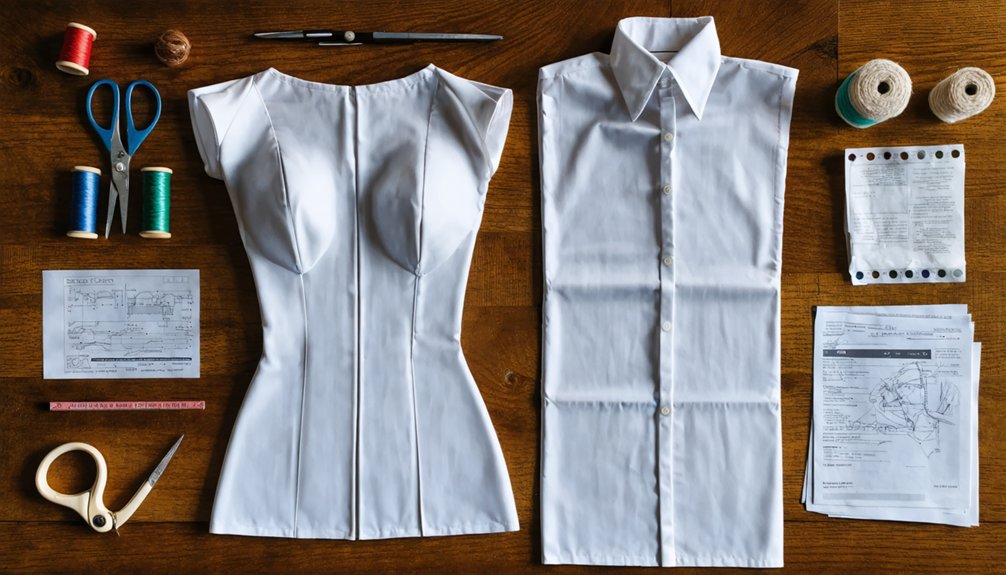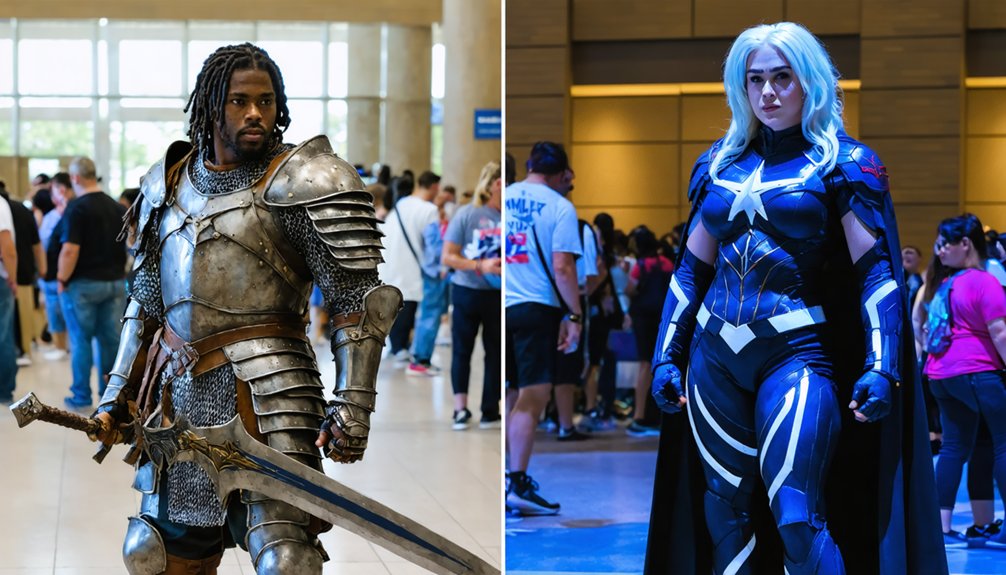
The difference hinges on performative intent and craftsmanship standards. When you’re cosplaying, you’re embodying a specific fictional character through meticulous accuracy, custom fabrication, and sustained performance of their mannerisms and psychology. Costuming, conversely, prioritizes accessible participation—you’ll wear recognizable visual elements without the commitment to character study or construction quality. Cosplay demands months of pattern-drafting, structural engineering, and detail replication, while store-bought costumes offer immediate wearability. The distinction becomes nuanced when examining competition criteria, community contexts, and where superficial aesthetics transform into narrative embodiment.
Key Takeaways
- Cosplay recreates specific fictional characters with meticulous accuracy, while costumes are broader garments suggesting periods or generic character types.
- Cosplay requires adopting the character’s mannerisms, speech patterns, and movements, whereas costumes prioritize visual appearance without performance expectations.
- Cosplay involves months of custom craftsmanship with precise construction, while store-bought costumes offer immediate accessibility with simplified details.
- Cosplay demands character-specific accuracy in signature elements and props, while costumes emphasize social participation over technical precision.
- Cosplay involves psychological transformation and narrative embodiment, while traditional costumes function as superficial aesthetic modifications.
Defining Cosplay and Costuming: More Than Just Dress-Up
The distinction between cosplay and costuming begins with their foundational definitions, though contemporary usage has blurred these boundaries considerably. Cosplay—portmanteau of “costume play”—originated in Japan as character-focused recreation from fictional media: anime, video games, comics. You’re engaging in deliberate character embodiment through accurate design replication.
Costuming, conversely, represents the broader practice of wearing period-appropriate or character-suggestive garments without necessarily pursuing authentic portrayal. It’s ensemble-focused rather than character-immersive.
This semantic difference extends beyond terminology into cultural practice. Cosplay champions personal expression through meticulous craftsmanship and character study, earning social acceptance within convention circuits and competitive showcases. Costuming remains utilitarian—Halloween parties, theatrical productions, themed events—prioritizing accessibility over precision. Yet both practices intersect markedly, particularly as cosplay gains mainstream recognition and costuming communities adopt convention-style quality standards.
The Intent Behind the Outfit: Performance vs. Participation
When you don a cosplay, you’re performing—adopting the character’s mannerisms, speech patterns, and psychological presence through sustained theatrical embodiment.
Conversely, wearing a costume represents participation without performance demands; you’ll maintain your own identity while enjoying surface-level representation at social events. This distinction separates character impersonation from decorative dress-up, fundamentally dividing two practices that casual observers often conflate.
Embodying Character Through Immersion
The immersive quality stems from meticulous attention to character-specific details: tattoos, accessories, and physical characteristics that enable you to mentally inhabit the character’s perspective.
Through performative engagement at conventions, you’ll sustain this characterization for extended periods, often signaling “out of character” breaks to distinguish between performance and personal interaction.
This theatrical dimension—supported by community recognition and peer evaluation—establishes cosplay as sophisticated character study rather than superficial costume application.
Casual Dress-Up Fun
Anyone donning a witch’s hat for a Halloween party participates in fundamentally different cultural practice than convention attendees who’ve spent months perfecting their Wanda Maximoff portrayal. Costume enjoyment centers on immediate, accessible participation—you’re free to dance, socialize, and consume refreshments without maintaining character continuity.
This low-commitment approach prioritizes social interaction over theatrical performance, permitting modifications like “sexy nurse” iterations that’d violate cosplay’s fidelity standards. Expression freedom defines costuming: you’ll face no judgment for abandoning character traits or selecting store-bought options requiring minimal assembly.
The practice accommodates spontaneous creativity without demanding canonical knowledge, making it ideal for holiday gatherings where outfit serves as conversation starter rather than performance obligation. Participants seek festive atmosphere enhancement, not immersive role-playing, distinguishing casual dress-up from cosplay’s disciplined artistry.
Time, Skill, and Craftsmanship: Dedication Levels Compared
While both cosplay and costumes serve the purpose of character transformation, their dedication requirements diverge substantially in measurable ways. Your project planning process for cosplay spans months of sustained effort, developing specialized competencies in sewing, prop fabrication, 3D modeling, and material engineering. This construction time investment cultivates technical proficiency through iterative problem-solving and hands-on skill acquisition.
Conversely, store-bought costumes eliminate fabrication timelines entirely, offering immediate wearability without developmental opportunities.
Craftsmanship standards reveal the most pronounced distinction. You’ll execute finished seams, precise edgework, and structural integrity using high-density EVA foam and moldable clay compounds. Mass-produced alternatives feature exposed raw edges, plastic components prone to degradation, and compromised durability.
Competition judging criteria emphasize visible construction quality, material selection, and technical execution—benchmarks unattainable through commercial purchases.
Accuracy and Detail: How Much Does Replication Matter?
Character recognition depends fundamentally on visual accuracy—your meticulous replication of signature elements like Gojo Satoru’s blindfold or Bayonetta’s beehive updo triggers immediate identification among convention attendees and casual observers alike.
However, physics constraints force strategic compromises. Anime’s gravity-defying proportions can’t translate directly to three-dimensional forms, requiring structural adaptations like hidden support systems. You’ll balance respect and heritage for original designs against practical wearability, adjusting backless bodices or impossible silhouettes while preserving aesthetic integrity.
The economics of materials further influences fidelity—3D printing enables complex prop replication previously unattainable through traditional fabrication. Yet budget limitations necessitate prioritization: which details merit investment versus acceptable deviation? Your body’s unique proportions demand personalized modifications, though uneven community scrutiny persists. Ultimately, accuracy exists on a spectrum where creativity and constraint negotiate character authenticity.
Character Embodiment: Wearing vs. Becoming

When you don cosplay, you’re executing a performative transformation that extends beyond textile and thermoplastic—you’re adopting the character’s kinetic vocabulary, vocal cadence, and psychological framework.
Traditional costume wear functions as superficial aesthetic modification, allowing your baseline identity to remain intact throughout the experience. This distinction between inhabitation and decoration represents the foundational divergence in how participants approach character representation within these respective communities.
Cosplay Demands Full Immersion
- Narrative integration: You subordinate your authentic self to character values—Superman demands demonstrating humanity’s best qualities through genuine kindness and caring
- Affective displacement: Emotions performed through the character mask often prove more authentic than your inner stance
- Embodied commitment: Animation emerges from disembodiment and projection, evaluated within participant networks examining your character’s material and mimetic fidelity
This fundamentally embodied practice demands full character integration.
Costumes Prioritize Visual Appearance
Most commercially available costumes function as theatrical shorthand—visual signifiers designed for immediate recognition rather than sustained character embodiment. You’ll find these garments prioritize cost effective production through polyester blends and injection-molded plastics, enabling one-size-fits-all distribution models.
Unlike cosplay’s meticulously researched fabrication, performance oriented design here emphasizes surface-level aesthetics: muscle padding creates dimensional illusion without anatomical accuracy, while printed textures simulate materials they don’t replicate. This approach serves event-specific contexts—Halloween circuits, theatrical productions, theme parties—where transformation depth isn’t scrutinized.
You’re purchasing recognizable iconography rather than character immersion tools. The wearer remains distinctly separate from the portrayed figure, maintaining their own mannerisms and speech patterns. It’s strategic visual communication optimized for brief encounters, not the sustained authenticity cosplayers engineer through behavioral study and material experimentation.
Where They Happen: Conventions, Holidays, and Community Gatherings
The venues where enthusiasts gather fundamentally distinguish cosplay from conventional costuming, with each activity claiming distinct territorial grounds within fan culture.
Cosplay and conventional costuming occupy separate cultural spaces, each commanding unique venues that reflect their distinct creative philosophies and community standards.
Three venue categories define this territorial division:
- Convention circuits—anime expos, gaming conferences, and comic conventions where cosplayers showcase months-long construction projects through character embodiment and performance
- Holiday celebrations—Halloween parties and seasonal events dominated by store-bought costumes prioritizing quick assembly over craftsmanship or role-playing commitment
- Community initiatives—charity walks featuring groups like the 501st Legion, Renaissance Fairs, and fan meetups emphasizing immersive character portrayals
This venue stratification reflects community enthusiasm across diverse gathering types. Cosplay thrives in spaces demanding technical accuracy and behavioral authenticity, while conventional costuming flourishes at casual events where visual presentation supersedes character study. Each territory cultivates distinct participant expectations and creative standards.
Competition and Judging: What Gets Evaluated and Why
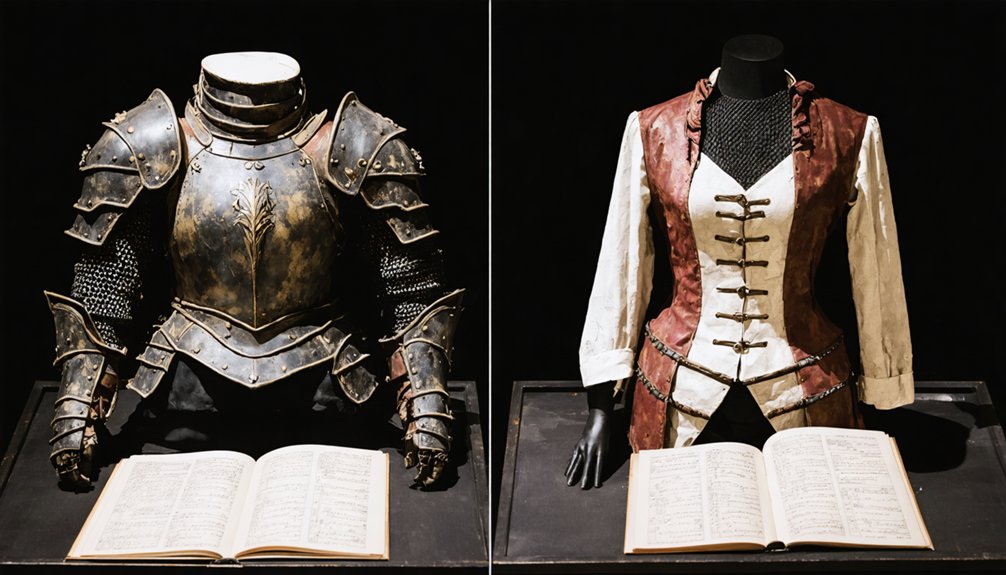
How do judges transform subjective artistic impressions into quantifiable competitive rankings? Through structured rubrics weighing four distinct categories. Precision/accuracy commands 40 points, demanding exact replication of source material through direct visual comparison—though black-and-white manga allows interpretation discretion. Quality/construction receives another 40 points, evaluating craftsmanship challenges like assembly, fit, and finishing techniques.
Technique/skills garners 20 points for advanced method diversity rather than mere quantity. Theatrical performance elements dominate stage evaluation with 50 points split between acting proficiency, character embodiment, and entertainment value. Pre-stage portfolio reviews and interviews enable judges to assess construction intimacy before contestants perform.
This systematic framework evolved to legitimize cosplay competitions beyond subjective preference, establishing objective standards while respecting creative interpretation where source ambiguity exists—particularly regarding professional participants entering master’s divisions.
The Overlap Zone: When Costumes Become Cosplay
Every Halloween party regular knows the friction point: when does your elaborate vampire outfit cross from mere costume into legitimate cosplay? The overlapping boundaries between these practices create shifting thresholds determined by three critical factors:
The line between costume and cosplay shifts constantly—determined by your investment, embodiment, and where you choose to perform.
- Effort Investment: Months spent hand-crafting armor versus purchasing ready-made garments establishes technical legitimacy within enthusiast communities.
- Character Embodiment: Adopting precise mannerisms, vocal patterns, and behavioral quirks transforms passive wearing into active portrayal—the defining separation point.
- Contextual Intent: Convention attendance with detailed accuracy signals cosplay, while identical outfits at casual parties remain costuming despite craftsmanship quality.
These thresholds aren’t mutually exclusive. Your meticulously constructed Iron Man suit becomes cosplay when you embody Tony Stark’s swagger at a comic convention, yet reverts to costuming when merely worn for photos at birthday celebrations.
Cultural Perceptions: Age Groups and Social Contexts
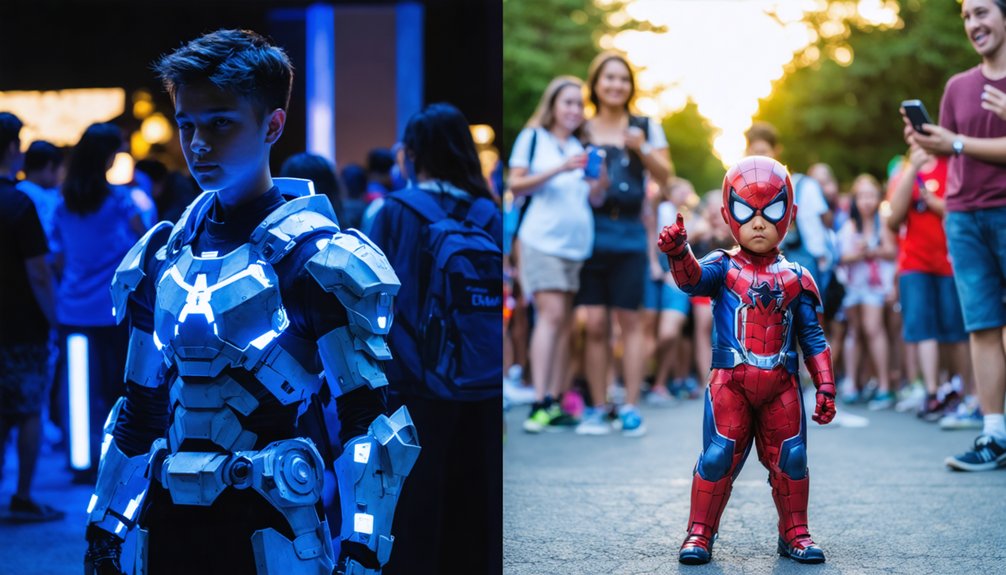
Beyond the technical distinctions of crafting and embodiment, cosplay’s legitimacy faces scrutiny through demographic lenses that vary dramatically across age brackets and cultural settings. While teenagers aged 16-25 dominate Jakarta and Batangas City communities, North American conventions demonstrate intergenerational participation, with adults engineering elaborate mech suits and undertaking extreme modifications like shaved heads.
Japan’s Harajuku district normalizes mixed-age daily participation, contrasting Western convention-specific engagement. You’ll find social inclusion at events manifests through anti-harassment policies addressing gender-based groping and body-shaming, yet stratification persists along racial and gender lines. Cultural contexts determine acceptability: Indonesian mass media reinforces adult cosplayer identity, while Japanese college students historically legitimized the practice. This demographic stratification reveals cosplay functions as identity capital, distributed unequally across age cohorts and geographic regions.
Frequently Asked Questions
Can I Cosplay a Character From a Different Gender or Race?
You can absolutely cosplay across gender or race—Japanese *dansō* practitioners prove this daily. Inclusive cosplay practices encourage authentic character portrayal while respecting representation concerns. Your performance transforms identity through costume, making biological attributes secondary to fannish devotion and creative expression.
How Much Does Professional Cosplay Cost Compared to Store-Bought Costumes?
Professional cosplay costs $300–$5000+ versus store-bought’s $30–$600, but you’ll invest considerably more in materials cost and time investment. The trade-off delivers superior craftsmanship, custom fabrication techniques, and authentic detailing that mass-produced alternatives can’t replicate.
Do Cosplayers Make Money From Their Hobby or Keep Costumes Afterward?
You’ll typically keep costumes for future conventions, though some monetize through commissions or sell costumes to fund new projects. Building a substantial social media following enables sponsorships, brand partnerships, and professional opportunities beyond the hobby itself.
Is Cosplay Considered Cultural Appropriation When Portraying Certain Characters?
Cosplay becomes cultural appropriation when you disrespect sacred symbols or mock ethnic identities. You’ll navigate this through cultural sensitivity and respectful representation, understanding community boundaries while ensuring your portrayal honors rather than stereotypes the character’s cultural origins.
What Beginner Materials Are Best for Starting Cosplay on a Budget?
“A penny saved is a penny earned”—start with EVA foam for armor construction, low cost sewing supplies like basic needles, and inexpensive fabrics from thrift stores. You’ll master foundational techniques while minimizing financial investment in your cosplay journey.