To craft long-lasting cosplay props, you’ll need durable materials like EVA foam, Worbla thermoplastic, and PVC pipe frames for structural integrity. Use a heat gun for precise shaping, contact cement for strong bonds, and flexible sealants to prevent cracking. Keep humidity between 40–50% during storage and apply protective coatings to preserve finishes. Strategic material layering and smart construction techniques are what truly separate props that last from those that don’t—and there’s much more to uncover.
Key Takeaways
- Choose EVA foam or Worbla for durable cosplay props, as both materials offer lightweight resilience and impressive impact resistance.
- Build internal frames using PVC pipes and wooden dowels to reinforce large props and maintain long-term structural integrity.
- Use heat guns and contact cement when layering EVA foam to achieve complex shapes with added depth and toughness.
- Seal and prime all foam surfaces before painting to protect against wear and maximize overall paint adhesion and longevity.
- Store finished props at 40–50% relative humidity and wrap metallic finishes in acid-free tissue to prevent damage.
Best Materials for Durable Cosplay Props
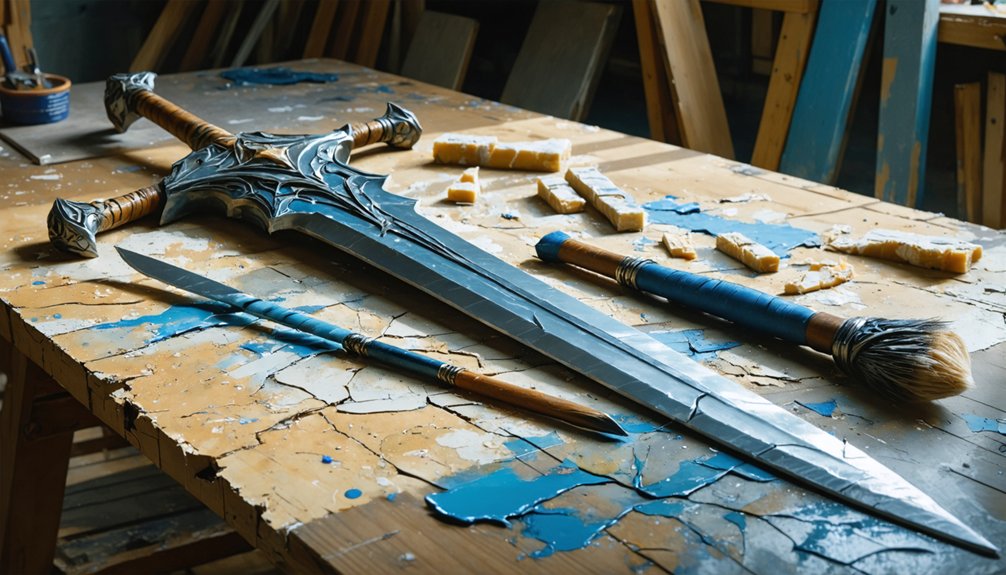
Choosing the right materials makes or breaks a cosplay prop’s durability, so you’ll want to prioritize EVA foam, Worbla, and PVC pipes as your foundational building blocks. EVA foam delivers lightweight materials with impressive Material Durability, while Worbla Strength provides thermoplastic resilience that hardens into impact-resistant forms. PVC Skeletons reinforce large props, maintaining structural integrity under enthusiastic handling.
Your Construction Techniques directly influence Prop Lifespan. Layer medium-density EVA foam between 6mm-10mm for weapons requiring both flexibility and toughness. Incorporate Worbla over foam surfaces to amplify rigidity without adding excessive weight. PVC pipe cores keep staffs and oversized builds firmly structured.
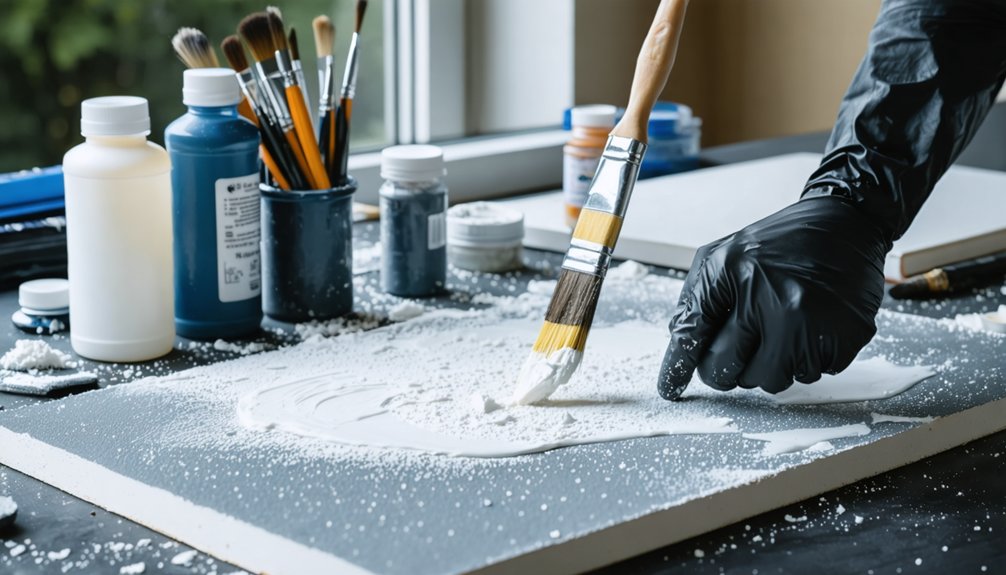
Don’t neglect Surface Treatments. Proper sealing and priming protect foam from wear, ensuring vibrant paint adhesion and extending your prop’s functional life considerably.
Tools Every Cosplay Prop Builder Actually Needs
Three core tools will define the quality of your prop builds: a Dremel rotary tool with flex shaft, a soldering iron, and a heat gun. The Dremel’s flex shaft reduces hand fatigue during extended carving sessions, letting you cut precise textures into EVA foam with control. Your soldering iron creates intricate surface details, while the heat gun melts shrink wrap or garbage bags to produce organic, realistic wrinkles on props.
Beyond these essential tools, prioritize tool organization to maintain workflow efficiency. Keep your heat gun, contact cement, and respirator accessible together since they’re consistently used during sealing stages.
Structured tool organization prevents mid-project delays and protects equipment longevity. Mastering these instruments and maintaining their accessibility transforms your builds from amateur constructions into professional, competition-ready props.
How to Build an Internal Frame That Keeps Props Rigid
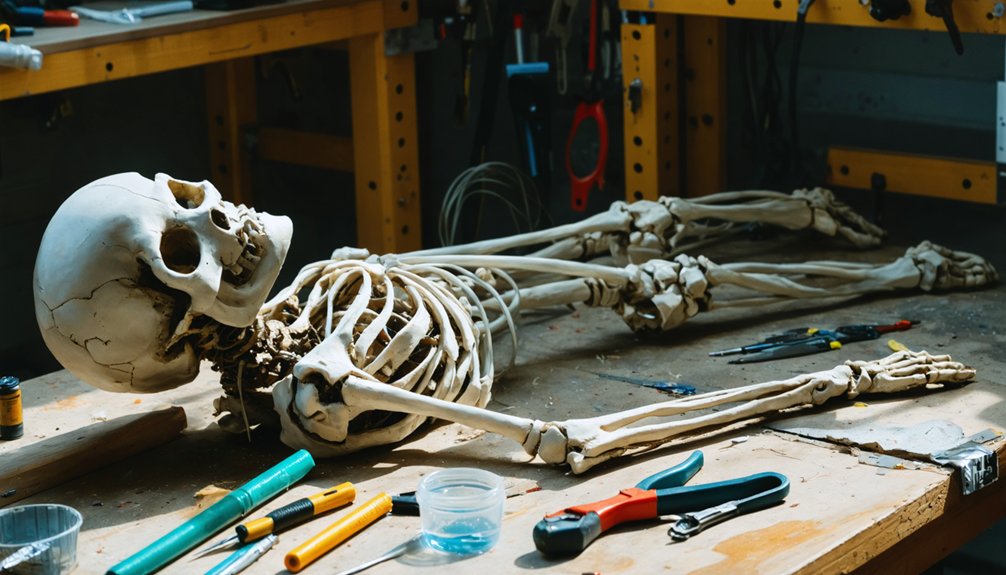
Without a rigid internal frame, even the most detailed foam prop will warp, sag, or snap under its own weight.
For large staffs or polearms, thread a PVC pipe through the core to establish frame stability from base to tip. Secure couplings at stress points where bending forces concentrate.
For slimmer structures like arrows or thin blades, wooden dowels deliver precise internal support without adding bulk. Drill channels through foam layers before inserting dowels, then bond surrounding material with contact cement for a locked, unified structure.
Always plan your skeleton before cutting foam. Map load-bearing zones, identify flex points, and reinforce accordingly.
A well-engineered internal frame transforms fragile foam into a prop that survives conventions, photoshoots, and repeated handling without compromise.
How to Shape EVA Foam for Cosplay Props
To shape EVA foam effectively, you’ll need to master three core techniques: precise cutting, heat molding, and strategic layering.
Use a sharp utility knife or band saw to cut clean edges. Then apply a heat gun to soften the foam so you can press, curve, or mold it into complex forms.
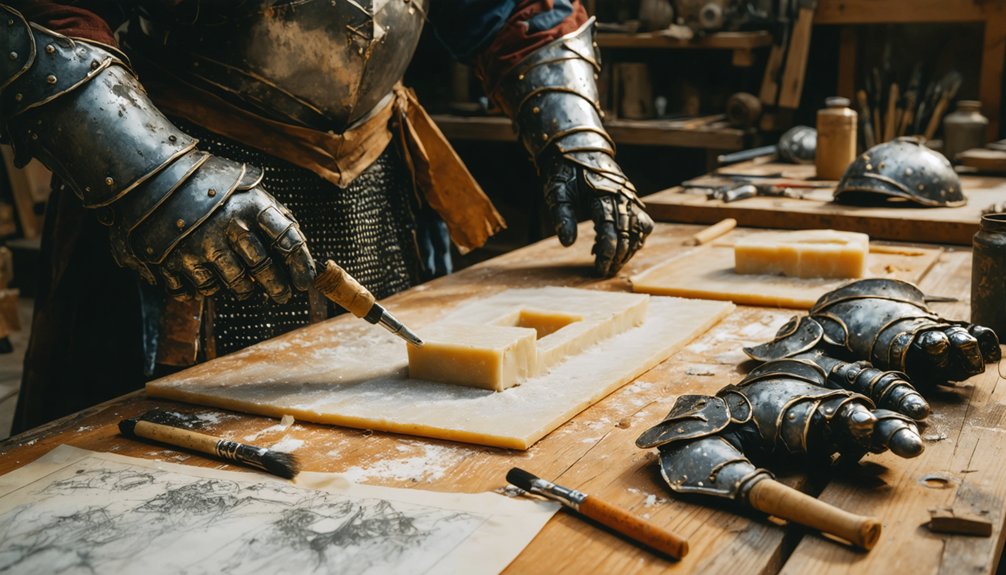
Layer and bond multiple pieces with contact cement to build up depth, dimension, and intricate surface detail across your prop.
Cutting EVA Foam Techniques
Shaping EVA foam precisely requires the right cutting tools and techniques to achieve clean edges and accurate dimensions. Use a sharp utility knife or X-Acto blade for precision cutting, ensuring you replace dull blades frequently to prevent tearing.
A band saw works efficiently for straight cuts through thicker foam layers, while scissors handle curved template tracing. For foam carving, a Dremel rotary tool with a flex shaft attachment lets you sculpt detailed textures and contours without excessive hand fatigue.
Always cut against a self-healing mat to protect your workspace and maintain blade accuracy. Heat your foam slightly before shaping complex curves, as warmth increases pliability without compromising structural integrity.
Consistent, deliberate strokes produce cleaner results than rushed, uneven passes through the material.
Heating and Molding Foam
Mastering heat application transforms flat EVA foam sheets into curved, contoured prop components that would otherwise require complex cutting or assembly.
You’ll want to use a heat gun set between 200°F–300°F, keeping it 3–4 inches from the surface. Apply foam heating techniques by moving the gun in steady passes until the foam becomes pliable but not scorched.
Once softened, immediately press the foam against curved molds, PVC pipes, or your gloved hands to achieve precise shapes.
Foam molding methods like vacuum forming or custom wooden molds produce consistent, repeatable curves for armor plates and shields. Hold each shaped piece firmly until it cools completely, locking in the contour permanently.
Work in sections to maintain control over complex, multi-curved designs.
Layering Foam for Detail
Once you’ve shaped your base foam components, building depth and dimension through layering reveals details that single-sheet construction simply can’t achieve.
Apply layering techniques using contact cement to bond multiple foam thicknesses, creating carveable, sculptural forms with distinct foam textures.
Consider these layering approaches:
- Stack 6mm and 10mm EVA sheets to build raised armor plating with crisp, defined edges.
- Carve beveled grooves between layers using a Dremel to simulate mechanical joints.
- Heat individual layers separately before bonding, preserving intentional texture contrasts.
- Add thin 2mm detail strips over base layers for filigree patterns and surface ornamentation.
- Sand layer connections smooth before priming to eliminate visible seams.
Each bonded layer strengthens your prop’s structural integrity while amplifying visual complexity that elevates your finished piece beyond amateur builds.
Finishing Techniques That Make Cosplay Props Last
Finishing your cosplay props correctly separates a piece that lasts one convention from one that survives years of handling. Your sealing methods directly determine longevity, so apply a flexible sealant over EVA foam before any paint application. This step prevents cracking and guarantees durability enhancements carry through repeated use.
Use a heat gun to activate texture techniques on Worbla surfaces, building layered detail that hardens into impact-resistant finishes. When painting, prime first to maximize color adhesion, then layer acrylics for depth and vibrancy.
Don’t skip your final inspections—check every edge, seam, and painted surface for vulnerabilities before debuting the prop. These finishing touches aren’t cosmetic afterthoughts; they’re structural commitments that protect your investment and keep your builds convention-ready season after season.
How to Store Cosplay Props Without Damage
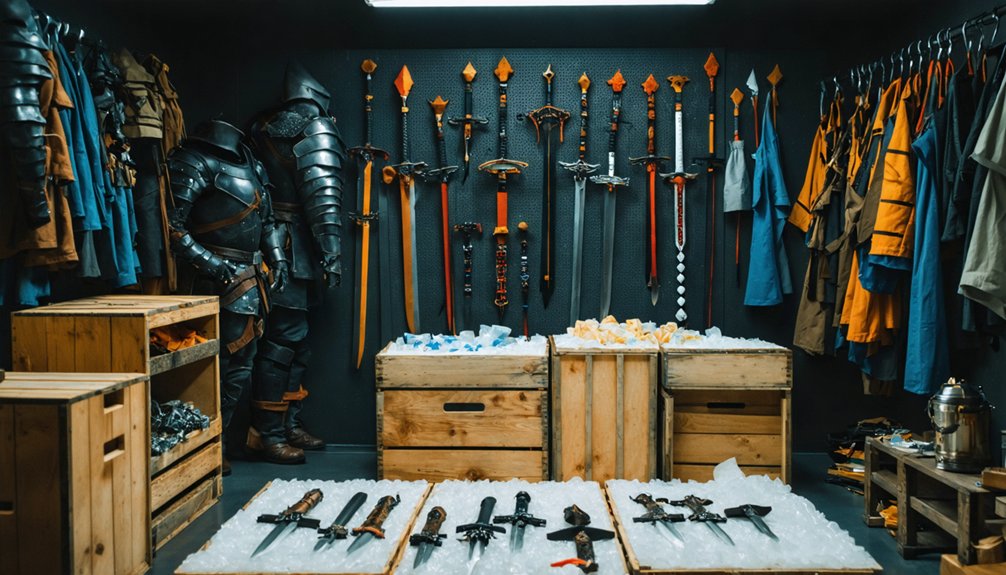
Once you’ve finished your props, you’ll need to control humidity in your storage area by using a dehumidifier and changing its receptacle regularly to prevent moisture damage to foam and thermoplastic materials.
Handle props with metallic finishes carefully during storage, as contact between surfaces can cause sticking and permanent damage to the finish.
Before putting any prop away, assess its structural integrity, checking seams, cores, and sealed surfaces to determine whether it can withstand future use without additional reinforcement.
Controlling Storage Area Humidity
Moisture is one of the most destructive forces acting on stored cosplay props, warping EVA foam, degrading adhesives, and promoting mold growth on fabric elements.
Implement precise humidity control and environment monitoring to preserve your builds long-term.
Deploy these storage solutions immediately:
- Place a dehumidifier in your storage area, maintaining 40–50% relative humidity consistently.
- Replace dehumidifier receptacles regularly to sustain peak moisture prevention performance.
- Install a digital hygrometer for real-time environment monitoring and early intervention.
- Seal props individually in breathable fabric bags, blocking ambient moisture infiltration.
- Position props away from exterior walls, where condensation concentrates during temperature shifts.
Consistent environment monitoring eliminates guesswork, protecting thermoplastic details, foam structures, and metallic fabric finishes from humidity-related deterioration before irreversible damage occurs.
Preventing Metallic Finish Damage
Metallic finishes demand careful handling because even minor friction or improper stacking transfers pressure directly onto painted surfaces, causing scuffs, peeling, and permanent dull patches.
Preserving your prop’s metallic sheen requires applying a dedicated protective coating like matte or satin sealant over painted surfaces before storage. This finish maintenance step locks pigment against environmental exposure and physical contact.
When storing metallic props, wrap each piece individually in acid-free tissue or microfiber cloth, preventing direct surface-to-surface contact. You’ll also want to avoid stacking heavy items on top, as sustained pressure degrades sealed layers over time.
Master these handling techniques by always lifting props from structural bases rather than decorated surfaces. Consistent application of these practices extends metallic finishes greatly across repeated convention uses.
Assessing Props Before Storage
Before placing any prop into storage, you’ll want to conduct a thorough structural assessment to catch damage that worsens under prolonged inactivity.
Use a prop inspection checklist alongside a storage condition evaluation to guarantee nothing deteriorates undetected.
Examine these critical areas before storing:
- Joints and seams — press PVC connections and Worbla-bonded edges for looseness
- EVA foam surfaces — check for compression fractures, delamination, or adhesive failure
- Painted finishes — identify chipping, cracking, or primer separation requiring touch-ups
- Internal skeleton integrity — flex wooden dowels and PVC cores for stress fractures
- Metallic and textured coatings — inspect for peeling or moisture-induced bubbling
Addressing these vulnerabilities before storage prevents compounding deterioration and extends your prop’s operational lifespan considerably.
What Actually Determines a Cosplay Prop’s Durability?
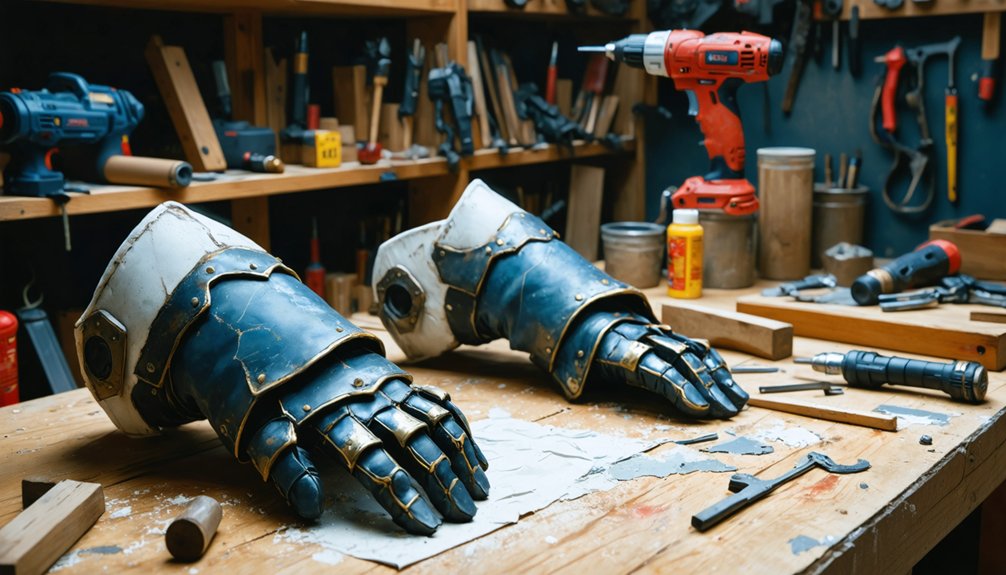
When building cosplay props, material choice is the single biggest factor that’ll determine how long your creation lasts. Material impact extends beyond aesthetics—EVA foam delivers lightweight strength, while Worbla hardens into impact-resistant forms that withstand convention wear.
Your construction techniques matter equally; PVC pipe cores keep large props rigid under stress, and wooden dowels reinforce slim, detailed elements without adding bulk.
Sealing and priming EVA foam prevents surface degradation from repeated handling, dramatically extending your prop’s lifespan. Skipping these steps accelerates wear.
Structural integrity depends on layering materials strategically—contact cement bonds thick foam sections, while heated Worbla self-adheres without additional adhesives.
Prioritize durable builds over quick shortcuts. Props built with intention and proper materials outlast convention after convention, protecting your investment and creative effort.
Frequently Asked Questions
Can EVA Foam Props Be Safely Repaired After Significant Damage Occurs?
Yes, you can safely repair damaged EVA foam props. First, conduct thorough damage assessment, then apply contact cement for reattachment. Use heat guns to reshape deformed areas. These repair techniques restore structural integrity effectively.
How Do Weather Conditions Affect Cosplay Props During Outdoor Conventions?
Weather durability’s essential at outdoor conventions—you’ll face humidity warping EVA foam, heat softening Worbla, and rain degrading unsealed surfaces. Seal your props thoroughly, use dehumidifiers during storage, and prioritize moisture-resistant materials to maintain structural integrity.
What Safety Precautions Should Beginners Follow When Using Thermoplastic Materials?
When handling thermoplastics, you’ll need heat safety precautions: wear heat-resistant gloves, work in ventilated spaces, and use a heat gun carefully. Thermoplastic handling requires controlled temperatures to prevent burns and guarantee Worbla hardens correctly.
How Can Prop Makers Reduce Costs Without Sacrificing Overall Build Quality?
You’ll cut costs by reusing Worbla scraps, selecting medium-density EVA foam, and applying efficient techniques like contact cement layering. Prioritize budget materials such as PVC pipes for structural cores, ensuring durability without compromising professional build quality.
Are There Lightweight Alternatives to PVC for Props Requiring Internal Support?
You’ve got lighter options beyond PVC: balsa wood suits delicate structures, fiberglass mesh reinforces curved forms, aluminum tubing delivers rigid support with minimal weight, and carbon fiber provides unmatched strength-to-weight ratios for demanding, large-scale prop frameworks.
References
- https://www.creativecosplays.com/post/what-is-the-best-material-for-cosplay-props
- https://eyecandys.com/blogs/news/advanced-cosplay-costumes
- https://www.youtube.com/watch?v=sV8pfqlkEs0
- https://excelblades.com/blogs/diy/guide-to-diy-cosplay
- https://juliechantal.com/en/blogs/crafting/10-cosplay-materials-to-try
- https://makezine.com/article/craft/cosplay-props/cosplay-pro-tips/
- https://www.youtube.com/watch?v=rewCL624QOs