To create an authentic Colonial America costume, you’ll need to layer period-correct garments from the inside out—starting with a white linen shirt, adding a waistcoat, breeches, and finishing with either a full-dress or frock coat suited to your character’s social rank. Fabric selection is critical; prioritize wool, linen, and silk based on your era and persona. Suppliers like Colonial Williamsburg and Samson Historical offer historically vetted options. Every detail you master brings your portrayal closer to genuine 18th-century accuracy.
Key Takeaways
- Start men’s colonial costumes with a white linen shirt, high-waisted breeches, a waistcoat, and a long period-appropriate coat.
- Choose coat styles based on character rank: full-dress coats for aristocrats, frock coats for merchants or civilian professionals.
- Recreate historical figures accurately: Washington needs Continental blue wool, Franklin requires plain dark wool, Adams demands formal powdered wigs.
- Source authentic fabrics and costumes from Colonial Williamsburg, Samson Historical, Heritage Costumes, or handcrafted Etsy listings for credibility.
- Complete any colonial costume with period-correct accessories like tricorn hats, ruffled jabots, silver buckles, and lace cuffs.
Men’s Colonial Costume Layers: Linen Shirt to Long Coat
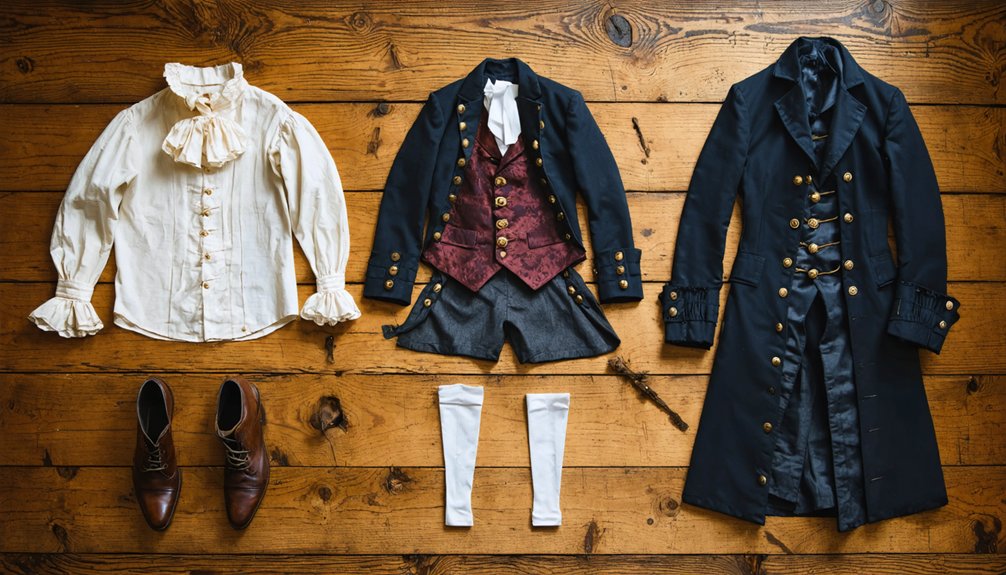
When assembling a men’s colonial costume, you’ll build the ensemble layer by layer, starting with a white linen shirt as the base.
Over this, you’ll add knee-length, high-waisted breeches styles that defined the period’s silhouette.
Next, you’ll button a waistcoat over the shirt, where waistcoat variations ranged from plain wool to richly embroidered silk, reflecting the wearer’s social standing.
The waistcoat you choose — plain wool or embroidered silk — quietly announces exactly who you are in colonial society.
Finally, you’ll layer a long coat over everything, completing the historically accurate ensemble.
Each layer serves a deliberate sartorial purpose, mirroring authentic 18th-century construction methods.
Selecting period-appropriate fabrics — particularly linen for underlayers — elevates your costume’s credibility considerably.
This methodical layering approach distinguishes a meticulously researched colonial cosplay from a generic theatrical approximation, giving your portrayal genuine historical authority.
Full-Dress vs Frock Coat: Which Style Fits Your Character?
Once you’ve mastered the layering sequence, choosing between a full-dress coat and a frock coat becomes your next critical decision. Each silhouette signals a distinct social register.
Full dress elegance defines formal, aristocratic personas — its turned-up collar and ruffled jabot communicate authority and ceremony. If you’re portraying John Adams or a military officer, this cut delivers unmistakable gravitas, particularly when paired with a powdered wig.
Frock coat versatility, however, suits merchant-class figures or civilian professionals. Its turned-down collar mirrors modern suit construction, offering a subtler, more approachable aesthetic.
The distinction isn’t merely stylistic — it’s historically significant. Identify your character’s societal rank first, then let that determination drive your coat selection. Precision in this choice elevates your cosplay from costume to authenticated historical portraiture.
Women’s Colonial Costume Silhouettes and Fabrics by Era
Colonial women’s fashion demands the same analytical precision you’ve applied to men’s silhouettes, because era and social standing dictate every construction choice.
Silhouette evolution across the 18th century reflects shifting fabric trends and cultural pressures you must understand before selecting materials.
Prioritize these construction benchmarks:
- Early colonial period: Structured bodices in linen with modest skirt volume
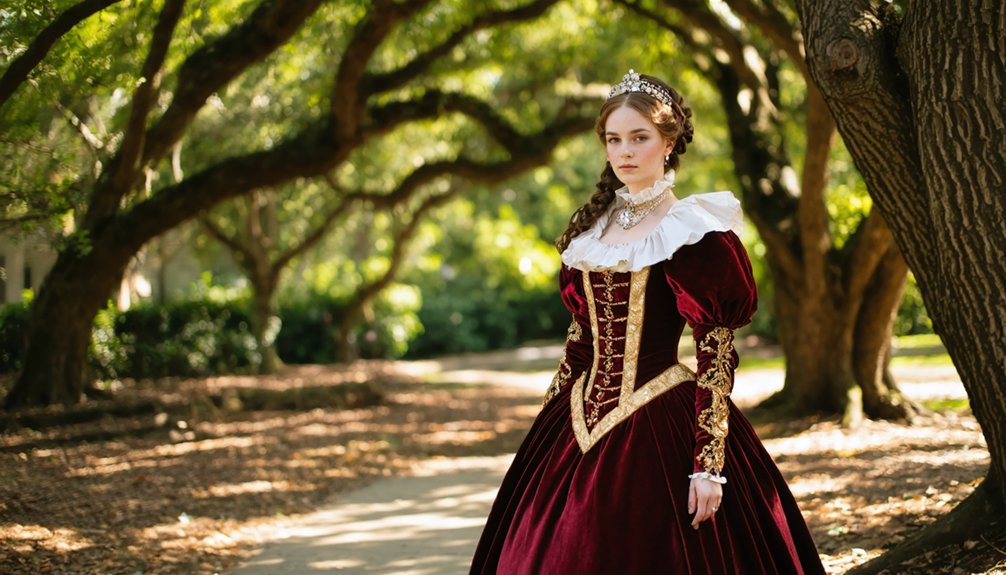
- Mid-century refinement: Silk jacquard and velvet introduce elevated social signaling
- Late 18th century: Sand satin and burgundy velvet dominate formal silhouettes
- Reproduction accuracy: Colonial Williamsburg Print Fabrics deliver historically verified patterns
You’ll find handcrafted options through Heritage Costumes and Etsy listings that honor these distinctions precisely.
Selecting period-correct fabric transforms your costume from approximation into authenticated representation.
Period Fabrics, Silhouettes, and Details That Signal Authenticity
Fabric selection, silhouette construction, and period-accurate detailing collectively determine whether your costume reads as authentic or anachronistic.
Prioritize fabric sourcing from verified historical suppliers like Colonial Williamsburg Reproduction Print Fabrics, ensuring linen, silk, velvet, and satin jacquard align with documented textile records.
Silhouette accuracy demands understanding costume evolution across colonial decades, since early Puritan austerity differs markedly from later Georgian elaboration.
Acknowledge cultural influences shaping regional dress distinctions, as New England merchant attire diverged greatly from Southern plantation fashion.
Consider historical context when selecting materials, balancing fabric durability against period fidelity for event appropriateness.
Whether pursuing character interpretation of documented figures or generalized colonial archetypes, your construction choices must demonstrate deliberate scholarly intention, signaling credibility to discerning audiences who distinguish genuine historical engagement from superficial theatrical approximation.
Period-Accurate Fabrics for Every Budget Level
Achieving period-accurate fabric choices doesn’t require an unlimited budget, but it does demand deliberate prioritization. Allocate resources strategically across visible and hidden garment layers.
Budget Options by Priority:
- Invest in linen for shirts and underlayers — historically accurate and cost-effective.
- Select velvet or satin jacquard for outerwear where visual impact matters most.
- Source Colonial Williamsburg Reproduction Print Fabrics for mid-range authenticity without premium costs.
- Reserve silk for statement pieces only, reducing overall expenditure considerably.
Proper fabric care extends garment longevity, protecting your investment regardless of price point. Hand-wash linen carefully; dry-clean velvet.
Thoughtful fabric care is the quiet investment that compounds over time, stretching every dollar further.
Budget options needn’t compromise historical integrity — strategic substitution using period-appropriate synthetic blends in underlayers preserves authenticity where it’s visually irrelevant while concentrating premium materials precisely where they’re noticed.
Washington, Franklin, and Adams: Colonial Costume Breakdowns
When cosplaying Washington, you’ll want to prioritize his iconic long military coat, which signals both rank and period accuracy.
For Franklin, you can achieve his merchant-class authenticity through a tricorn hat paired with a well-fitted waistcoat, reflecting his middling yet prosperous social station.
Adams’ ensemble demands a full-dress coat with an upturned collar and a subdued jabot, distinguishing his formal bearing from the more utilitarian looks of his contemporaries.
Washington’s Military Coat Details
George Washington’s military coat stands as one of the most recognizable garments in American colonial costuming, and nailing its details separates a convincing portrayal from a generic period look.
Prioritize these four coat embellishments for maximum authenticity:
- Epaulettes: Replicate gold-fringed shoulder boards reflecting his general’s rank military insignia.
- Button rows: Source brass double-breasted buttons arranged symmetrically down the coat front.
- Lapel structure: Achieve the wide, formal turned-back lapels characteristic of 18th-century military tailoring.
- Color accuracy: Match the distinctive Continental blue wool with buff-colored facings on cuffs and collar.
You’ll elevate your portrayal considerably by referencing Gilbert Stuart’s portraits for precise coat embellishments, ensuring every constructed detail aligns with documented historical evidence rather than theatrical approximation.
Franklin’s Merchant Class Look
Benjamin Franklin’s merchant class aesthetic diverges sharply from Washington’s military formality, offering you three defining costume elements that capture his civilian statesmanship: a plain, dark wool coat without military embellishment, a simple tricorn hat reflecting his modest republican sensibilities, and understated breeches paired with a clean linen shirt rather than elaborate jabots.
Merchant fabrics like broadcloth and wool authentically ground Franklin’s look in prosperous but unpretentious civic identity.
You’ll distinguish him through Franklin’s accessories: round spectacles, a plain waistcoat, and leather shoes with simple buckles rather than ornate military hardware.
Unlike Washington’s ceremonial grandeur, Franklin’s ensemble communicates intellectual authority through deliberate restraint.
Source period-accurate dark wools from Samson Historical or Colonial Williamsburg reproductions to achieve the precise tonal and textural credibility this merchant statesman’s silhouette demands.
Adams’ Formal Collar Ensemble
John Adams’ formal collar ensemble distinguishes itself through two immediately recognizable features: an upturned collar and a subdued jabot that signal aristocratic decorum without Washington’s military pageantry or Franklin’s civic restraint.
You’ll achieve accuracy by prioritizing these four elements:
- Source a full-dress coat with a distinctly turned-up collar.
- Pair it with a restrained, ruffled jabot rather than an elaborate cravat.
- Select Adams’ fabric choices—period-appropriate wools and linens in muted, dignified tones.
- Complete the silhouette using Adams’ hairpieces, specifically formal powdered wigs conveying military bearing.
Each decision compounds authenticity.
Adams’ ensemble communicates intellectual authority through deliberate understatement—his collar and wig working together rather than competing.
You’re not merely cosplaying; you’re reconstructing a carefully codified social language embedded in eighteenth-century material culture.
Where to Buy Authentic Colonial America Costumes
When sourcing an authentic colonial costume, you’ll find Colonial Williamsburg’s reproduction offerings among the most historically vetted, drawing on meticulously researched period fabrics and silhouettes.
For broader selection, online retailers like Samson Historical and Heritage Costumes specialize in 18th-century reenactment garments, including handcrafted options built for immersive accuracy.
If you prefer artisan-made pieces, Etsy’s historical dress listings and Chicago Costume’s colonial inventory round out your options across multiple price points and skill levels.
Colonial Williamsburg Costume Options
Colonial Williamsburg stands as one of the most reliable sources for historically accurate colonial costumes, offering family outfits suited for reenactments, school events, and immersive cosplay experiences.
Their meticulously researched inventory draws from Colonial Williamsburg Reproduction Print Fabrics, ensuring period-accurate authenticity. When exploring their Costume Variations, you’ll discover options spanning men’s, women’s, and children’s silhouettes.
Their catalog prioritizes precision across four key categories:
- Men’s layered ensembles featuring linen shirts, breeches, and long coats
- Women’s dresses in velvet and satin jacquard fabrics
- Colonial Accessories including tricorn hats and wigs
- Youth-sized costumes for school projects and wax museum presentations
You can browse their offerings online or visit directly, accessing historically grounded materials that elevate your cosplay beyond superficial approximation.
Online Historical Costume Retailers
Beyond Colonial Williamsburg‘s curated inventory, several specialized online retailers offer historically grounded colonial costumes worth your attention.
Samson Historical delivers 18th-century expertise through meticulously researched garments, prioritizing historical accuracy in every construction detail.
Heritage Costumes handcrafts period-specific ensembles designed for reenactments and theatrical productions, ensuring authenticity extends beyond surface aesthetics.
Etsy’s independent artisans offer customizable colonial dresses using period-appropriate fabrics, including velvet and satin jacquard, allowing you to specify precise silhouettes.
Chicago Costume stocks accessible adult and children’s colonial options for immediate acquisition.
When purchasing from any retailer, request fabric composition documentation to support proper costume maintenance—linen underlayers, silk exteriors, and velvet details each demand distinct care protocols.
Selecting vendors who provide care guidance preserves your investment and sustains historical integrity throughout repeated wear.
Handcrafted Reenactment Costume Sources
Three dedicated sources stand out for handcrafted colonial reenactment costumes: Heritage Costumes, Samson Historical, and select Etsy artisans who specialize in 18th-century construction methods. Each prioritizes historical accuracy and exceptional costume craftsmanship through rigorous research.
Consider these distinguishing qualities when selecting your source:
- Heritage Costumes handcrafts pieces specifically for reenactments and theatrical productions.
- Samson Historical applies deep 18th-century expertise across their entire clothing catalog.
- Etsy artisans offer customizable, period-specific colonial dresses using authentic construction techniques.
- Colonial Williamsburg supplies meticulously researched reproduction fabrics and family-appropriate ensembles.
You’ll gain considerably more immersive results by choosing handcrafted options over mass-produced alternatives.
These sources don’t simply replicate appearances—they reconstruct historical garments using period-appropriate materials, elevating your cosplay into a genuinely scholarly presentation.
Hats, Wigs, Jabots, and Accessories That Complete Your Colonial Costume
No colonial costume reaches its full historical authenticity without the carefully chosen accessories that defined eighteenth-century dress. Your hat styles, wig types, and jabots designs carry enormous historical significance, signaling social rank, military bearing, and formal occasion with precision.
You’ll want a tricorn hat atop your ensemble, matching period-appropriate fabric choices throughout your costume layering. Ruffled jabots designs distinguish full-dress coats from everyday frock styles, directly reinforcing character authenticity.
John Adams’ subdued jabot versus a merchant’s elaborate ruffle communicates immediate historical distinction.
Wigs elevate formal and military characters considerably. Accessory details—silver buckles, lace cuffs, and leather gloves—complete your silhouette with scholarly accuracy.
Prioritize researched, period-correct accessories to transform a good costume into an exceptional historical portrayal.
Frequently Asked Questions
Can Colonial Costumes Be Worn Comfortably in Warm Outdoor Weather?
Can you picture yourself thriving in the heat? You can wear colonial costumes comfortably outdoors by mastering layering techniques—remove outer coats strategically—and prioritizing fabric breathability through linen base layers that’ll naturally regulate your temperature.
Are Colonial Costumes Appropriate for Children Under Age Five?
Yes, colonial costumes can suit children under five; however, you’ll want to prioritize safety alongside historical accuracy. Select breathable, soft fabric choices like linen, ensuring no loose embellishments pose hazards while maintaining an authentically innovative, age-appropriate colonial aesthetic.
How Do Colonial Costume Sizes Compare to Modern Standard Clothing Sizes?
Colonial costume sizes often run smaller than modern standards, so you’ll need to size up. Prioritize historical accuracy by examining fabric choices like linen and velvet, ensuring you’ve selected measurements that accommodate authentic layered construction.
Can Colonial Costumes Be Safely Machine Washed at Home?
Over 60% of colonial costumes suffer damage from machine washing. You shouldn’t machine wash them; instead, you’ll want to employ hand-washing techniques and gentle fabric care methods to preserve delicate period-appropriate velvets, silks, and linens effectively.
How Long Does It Typically Take to Put on a Colonial Costume?
Expect costume preparation to take 20–30 minutes. You’ll layer the shirt, breeches, waistcoat, and coat sequentially, then add accessories like the tricorn hat, ensuring historical accuracy throughout each deliberate, meticulously ordered step of your ensemble.
References
- https://www.halloweencostumes.com/colonial-costumes.html
- https://shop.colonialwilliamsburg.com/18th-century-costumes/
- https://accosplay.com/products/historical-figure-george-washington-cosplay-costume-adult-colonial-costume-long-coat-uniform-outfit
- https://www.etsy.com/listing/714878034/historical-colonial-costume-cosplay
- https://www.samsonhistorical.com
- https://www.aliexpress.com/item/1005009419924777.html
- https://chicagocostume.com/collections/colonial-america
- https://heritagecostumes.com
- https://abracadabranyc.com/collections/colonial-victorian