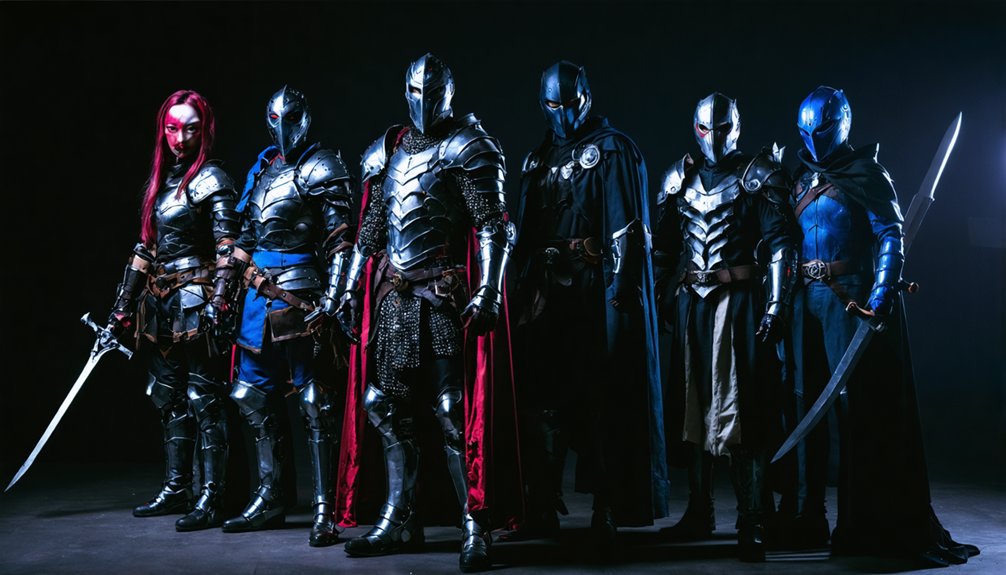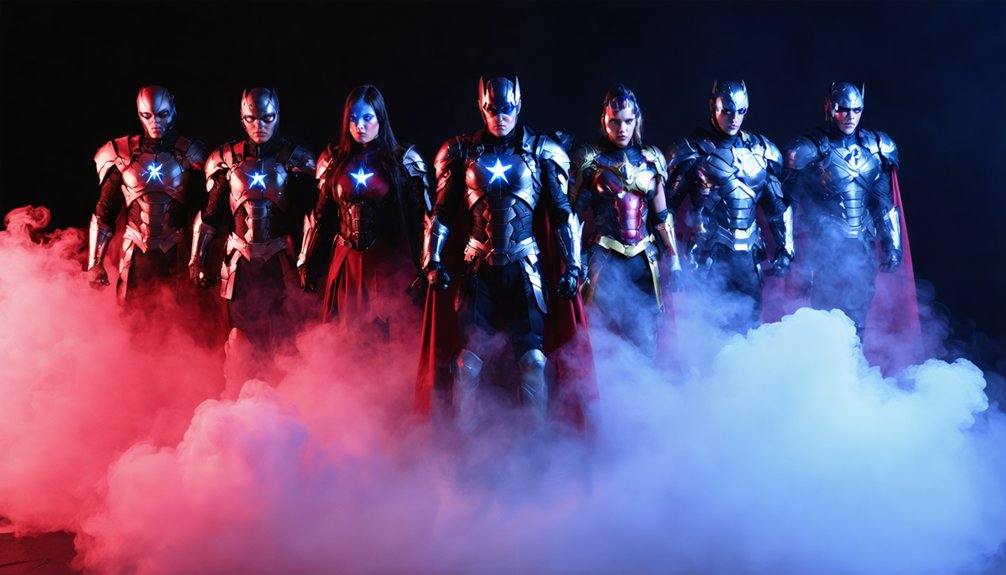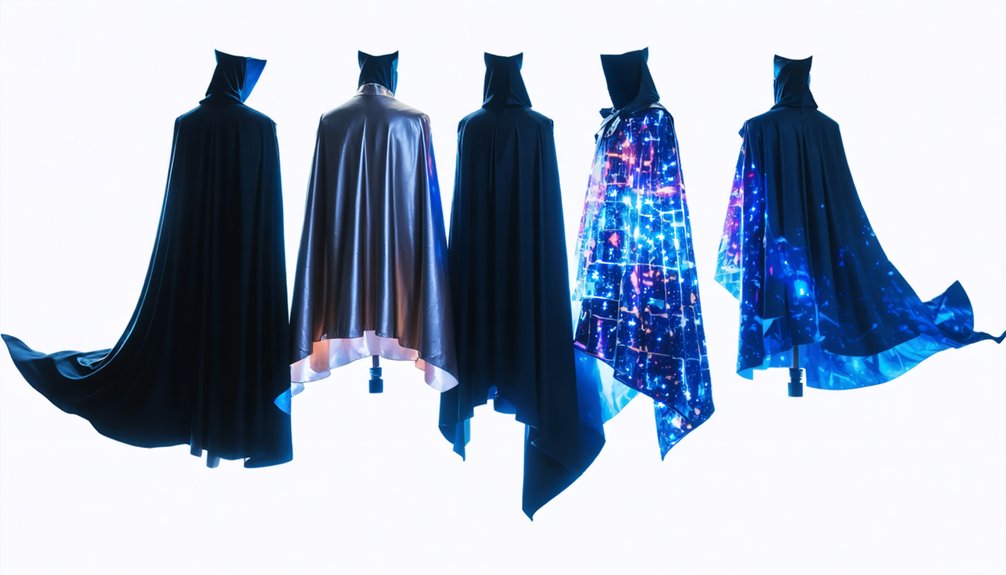
You’ll find endless creative variations by combining fabric weight with distinctive edge styling—pair heavyweight cotton broadcloth with scalloped bat-wing curves for dark heroes, or choose flowing polyester blends with sharp pointed edges for dramatic villains. Tattered hems deliver battle-worn authenticity, while classic rounded edges offer timeless versatility. Your closure system matters too: velcro provides quick 15-minute assembly, though ribbon ties maintain durability and protect delicate fabrics. The sections below reveal precise measurement techniques and character-specific customization strategies.
Key Takeaways
- Select fabrics matching character aesthetics: heavy black cotton broadcloth for Batman or red cotton/polyester blends for Superman.
- Customize cape edges with scalloped bat-wing curves, sharp villain points, tattered battle-worn designs, or classic rounded hems.
- Measure neck circumference plus 5 inches, collar bone to knee length, and elbow-to-elbow width for accurate patterns.
- Choose Velcro closures for quick 15-minute assembly or ribbon ties for durable, adjustable, fabric-safe harness systems.
- Apply edge stiffening techniques to create dramatic silhouettes and enhance character-specific cape movement during performance.
Selecting the Right Fabric for Your Superhero Cape
When selecting fabric for your superhero cape, the material you choose fundamentally determines how your costume moves, photographs, and withstands wear throughout convention floors and outdoor events.
Fabric durability considerations start with understanding your character’s aesthetic—Batman requires heavier black cotton broadcloth, while Superman benefits from plain red cotton or polyester blends that catch light. Weaving techniques evaluation separates amateur from professional results: plain weave cotton offers reliable structure, satin char mousse provides dramatic flow, and engineered synthetic weaves replicate modern cinematic appearances.
Canvas cotton delivers exceptional longevity for frequent wear, whereas gabardine resists damage while maintaining structured drape. Consider whether you’ll need shine—satin creates superhero drama, while wool avoids gloss for historical authenticity. Match your fabric’s weight to your character’s movement style and expected performance demands.
Pattern Construction and Measurement Techniques
You’ll start your cape pattern by taping 8.5 x 11 inch card stock sheets in a 2x2x3 configuration to create a half-template that conserves materials and simplifies storage.
Your base triangle emerges from three critical measurements: collar bone to back of knee for length, elbow-to-elbow superhero pose for bottom width, and half your neck circumference for top width.
Mark your neck curve by adding five inches to your neck circumference, then trace this bowl-sized circle at the bottom corner, top, and 2.5 inches down from the top edge before connecting these points with smooth, rounded lines.
Drafting the Base Pattern
Before you can bring your superhero cape to life, creating an accurate base pattern requires precise body measurements and methodical paper preparation. Configure card stock sheets in a 2x2x3 arrangement, then designate one 35-inch edge as your foldline.
Mark 9 inches from the top of your 18×35-inch rectangle and fold for drafting guidelines. Measure 5 inches from the fold’s top and 5 inches down to establish your neck hole placement. Trace half of a 6-inch saucer to create the neckline curve, connecting marks smoothly.
Draw a diagonal line from the neckline’s side edge to the lower right corner. For pattern customization, position a dinner plate at the lower corner to mark your curved hem, enabling innovative shape variations that’ll distinguish your cosplay design.
Calculating Fabric Dimensions
Since accurate fabric dimensions prevent costly mistakes and material waste, start by measuring your neck circumference and adding five inches to determine the bowl size you’ll trace for the collar curve. Your fabric procurement requirements depend on three critical body measurements:
- Collar bone over shoulder to back of knees establishes total cape length
- Elbow-to-elbow distance in superhero pose sets bottom width dimension
- Half of neck circumference provides top width for pattern scaling
Small children need less than two yards, while adults require the full two-yard allocation. Mark your yardstick at the seven-inch point to establish angled cut lines from fold to bottom corner. Pattern alterations accommodate different wearer sizes by proportionally scaling neck openings and adjusting collar tab curves for binding attachment ease.
Edging Styles to Match Your Character
The bottom edge of your cape defines your character’s visual signature as dramatically as any logo or color scheme. Scalloped curves evoke bat-wing aesthetics—fold fabric into eight layers, draw your template from corner to corner, then cut simultaneously for uniform results.
For instantly recognizable superhero silhouettes, your cape’s bottom edge matters just as much as your emblem—scalloped, pointed, or classic shapes define your entire look.
Sharp pointed edges deliver villain-worthy drama through precise angled cuts and reinforced seaming. Tattered designs suit battle-worn heroes; layer fabric cuts at varying lengths while spandex naturally resists fraying.
Classic rounded hems offer timeless versatility, requiring no finishing when using spandex or accepting stretch stitching for polished detailing. Apply fray-check to scalloped and pointed seams for structural integrity.
Consider decorative appliqué application along bottom borders, and explore edge stiffening techniques to maintain dramatic silhouettes during movement—deeper scallops and sharper angles maximize visual impact.
Securing Your Cape With Effective Closure Systems
Your cape’s closure system determines both its functionality during active movement and your ability to quickly attach or remove it between costume changes. Velcro offers rapid 15-minute assembly with direct front-edge attachment, while ribbon ties create adjustable harness configurations that distribute weight across your shoulders and back.
The choice between simple velcro strips sewn onto cape edges versus gross grain ribbon straps crossing at your shoulder blades impacts whether your cape pulls at your neck or sits securely against your costume’s undersuit layer.
Velcro Versus Ribbon Ties
- Durability timeline – Ribbon maintains consistent hold indefinitely, while adhesive velcro weakens after 6-12 months of active use
- Fabric compatibility – Velcro hooks damage delicate materials like satin and chiffon; ribbon protects sensitive textiles
- Visual integration – Ribbon blends seamlessly as decorative element; velcro requires strategic concealment beneath linings
Your choice depends on cape weight, fabric composition, and maintenance commitment level.
Shoulder Attachment Techniques
When you’re selecting attachment hardware for your cosplay cape, understanding weight distribution transforms a costume piece from frustrating liability into confident statement. For heavy materials like leather, implement a five-strap harness system with top-stitched placement, adjustable while wearing for precision positioning.
Metal snap durability outperforms alternatives during extended convention wear, securing straps directly to reinforced collars or shoulder points. Configure straps to cross at back with D-rings, or utilize over-shoulder designs with under-arm extensions closing via buckles.
For innovative approaches, magnetic closures offer invisible attachment—medical grade adhesive performance guarantees magnets stay taped to skin while counterparts integrate seamlessly into costume construction. Detachable cape systems excel at events, allowing post-undersuit attachment. Always reinforce necklines before installing any closure mechanism to prevent structural failure.
Adjusting Cape Dimensions for Different Ages
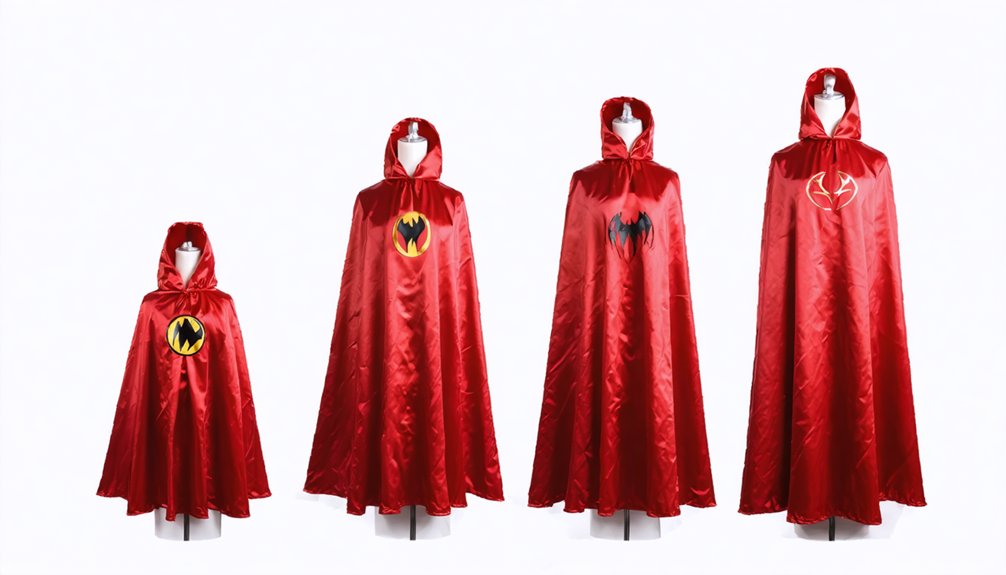
- Length Formula: Measure neck to desired endpoint, then add 4 inches for finishing
- Neck Circumference: Start with actual measurement plus 2 inches for velcro overlap and seam allowances
- Fabric Width: Use 42 inches for children; upgrade to 54-60 inches for adult capes exceeding 38 inches
Add seam allowances for fraying materials to maintain structural integrity throughout wear.
Personalizing Your Cape With Custom Details
Transforming a basic cape into a character-defining costume piece requires strategic fabric selection and deliberate design choices. Thick materials naturally replicate comic book cape folds, while woven fabrics deliver superior structure and drape. Customize edges with scalloped bat-like profiles or sharp, tattered points that define specific superhero aesthetics.
Applique application techniques allow you to layer symbols, emblems, and insignias precisely—heat-erasable markers guide accurate placement before fusing with fabric glue or stitching. Fabric distressing methods create battle-worn effects through controlled fraying and strategic tears. Enhance visual impact with sequins and metallic trim along hemlines.
Finish necklines cleanly using bias tape, then install adjustable closures—Velcro for quick changes, metal snaps for convention-ready detachment, or decorative buttons for vintage appeal. Steam-press all elements for professional presentation that captures authentic character essence.
Assembling Complete Superhero Costume Sets
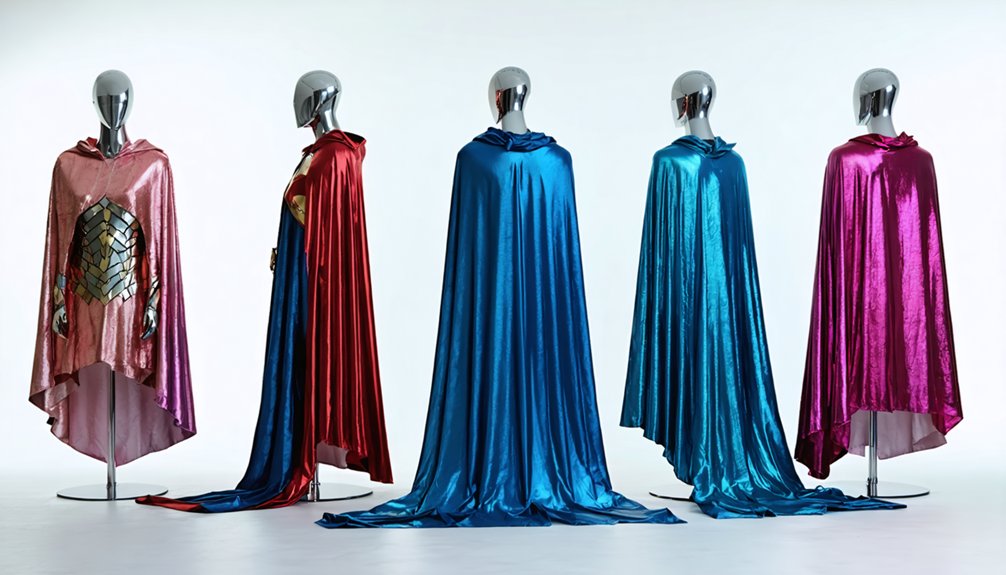
Individual cape customization sets the foundation, but coordinating every costume component creates the transformative power of authentic superhero cosplay. Start by choosing emblem designs that anchor your character’s identity—whether a personalized initial on double-sided satin or a printed chest symbol on spandex leather with gold seam detailing.
Your emblem serves as the visual cornerstone of character identity—select designs that authentically represent your superhero’s core symbolism and story.
Essential Assembly Components:
- Base Layer Construction – Muscle chest jumpsuits with attached gauntlets and boot tops provide heroic physique padding while maintaining breathability
- Protective Armor Integration – 30-piece polyurethane rubber sets combine with wrist cuffs and molded shoulder pads for dimensional authenticity
- Character-Specific Detailing – Incorporating character accessories like utility belts, web shooters, or pleather-sculpted collars completes the transformation
Reference sizing charts for age-appropriate lengths, ensuring capes avoid tripping hazards while wrist cuffs and boot covers achieve tailored precision.
Frequently Asked Questions
How Do I Clean and Maintain Spandex Capes After Multiple Uses?
You’ll hand wash cape fabrics in cool water with mild detergent, gently soaking to preserve elasticity. To remove cape stains, spot-treat with rubbing alcohol before washing. Air dry flat away from sunlight, maintaining your costume’s vibrant stretch and shape.
What Thread Type Works Best for Sewing Stretchy Superhero Cape Fabrics?
Like elastic sinew binding muscle, you’ll need polyester or wooly nylon thread that dances with your fabric blends for stretchiness. Adjust thread tension requirements carefully—too tight snaps seams, while balanced tension lets spandex capes flex heroically through every dramatic swoosh.
Can Capes Be Made Reversible With Different Colors on Each Side?
You’ll create stunning reversible cape designs by sewing two contrasting fabrics wrong-sides-together, allowing dual-character transformations. Innovate further by incorporating hidden pockets for accessories between layers—perfect for storing masks, communication devices, or identity-switching props during dynamic cosplay performances.
How Do I Store Capes to Prevent Wrinkles and Fabric Damage?
Seventy-five percent of fabric damage occurs during storage. You’ll preserve capes using protective storage solutions like breathable garment bags and padded hangers, while proper cape folding techniques—rolling delicate fabrics loosely or folding along natural seams—prevent wrinkles effectively.
What Safety Considerations Exist for Capes Worn During Active Play?
You’ll need to avoid long cape lengths that create tripping hazards and carefully adjust cape attachment points using breakaway closures. Choose flame-resistant, lightweight materials and guarantee waist-length designs that won’t entangle during dynamic movement or group play sessions.