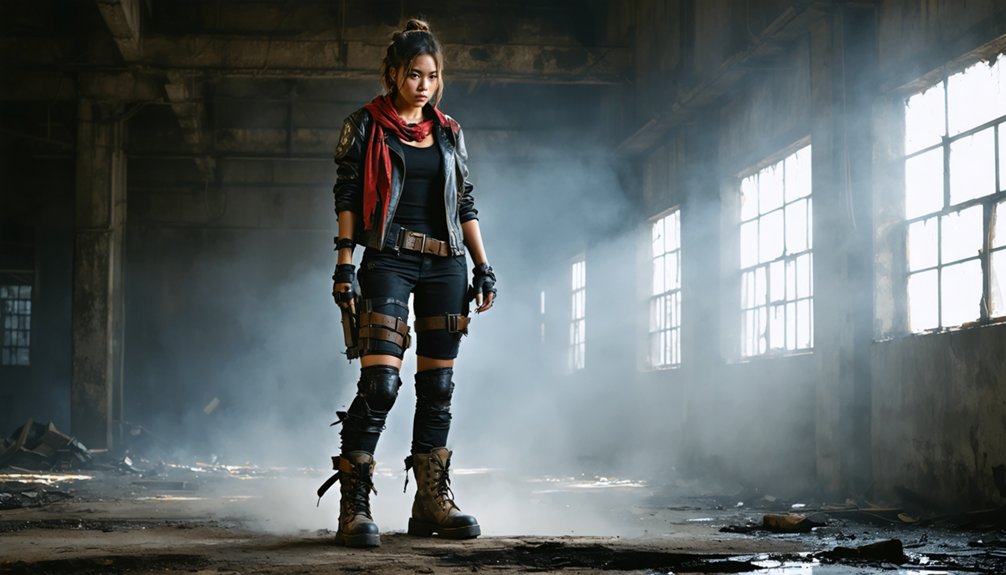
You’ll need layered tactical pieces starting with asymmetrical jackets over segmented vests, combining distressed leather with mesh panels for authentic texture contrast. Build your foundation with cargo pants featuring ripstop fabric and modular D-ring attachments, then stack utility harnesses and combat belts for dimensional depth. Complete your rebel aesthetic with weathered combat boots, gas masks, and EVA foam armor plating that transforms basic components into post-apocalyptic gear. The complete transformation requires specific customization techniques and material selections that’ll elevate your costume beyond standard dystopian looks.
Key Takeaways
- Layered outerwear with asymmetrical cuts, deconstructed elements, and mixed textures like distressed leather with mesh creates authentic rebel aesthetics.
- Tactical vests with semi-rigid materials, metal embellishments, and modular components serve as the structural foundation for dystopian characters.
- Cargo pants with ripstop fabric, strategic pockets, and climbing harness belts provide combat mobility and post-apocalyptic functionality.
- Gas masks, goggles, utility harnesses, and vambraces made from EVA foam deliver survivalist credibility and scavenged-world authenticity.
- Combat boots with metal hardware and tactical belt systems featuring D-rings complete the rugged, battle-worn dystopian look.
Layered Outerwear for Maximum Impact
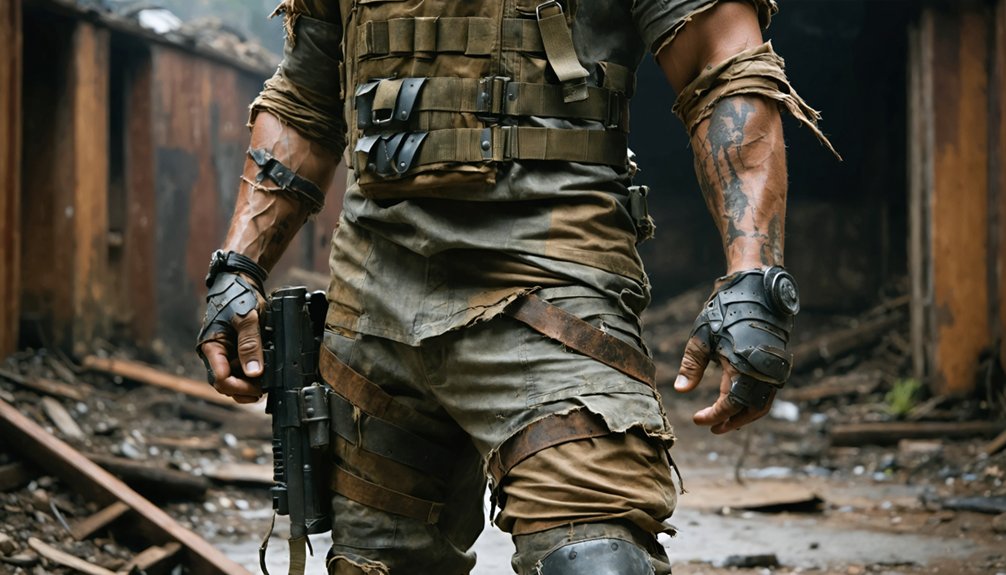
When building a dystopian rebel costume, your outerwear creates the foundation for visual storytelling through strategic layering. Prioritize jackets with asymmetrical cuts and deconstructed elements—the Wasteland Stand-Collar 3D “Dragon Spine” Motorcycle Jacket ($239.99) exemplifies this approach with its sculptural silhouette.
Asymmetrical cuts and deconstructed silhouettes transform outerwear into narrative armor, establishing your dystopian character’s visual foundation through deliberate structural rebellion.
Layering principles dictate combining varied textures: pair distressed leather with mesh panels or patchwork fabrics to build dimensional depth.
Integrate tactical features through modular components. The Functional Apocalyptic Wasteland Modular Detachable-Collar Jacket ($249.99) enables custom design modifications for versatile configurations. Stack hooded capes over fitted base layers, then add harnesses and utility belts for functional enhancement.
Multi-pocket designs provide authentic survivalist aesthetics while maintaining practical utility. Consider 3D cut materials with intentional distressing—these simulate weathered durability essential to convincing post-apocalyptic characterization.
Building Your Rebel Upper Body Foundation
Your rebel upper body foundation demands a segmented tactical vest as its structural cornerstone—this bulky silhouette establishes the authoritative, brutal aesthetic that distinguishes dystopian patrol officers from civilian characters. The modular segment design for versatility incorporates EVA foam and semi-rigid urethane components bonded to textile backing, creating armor coverage for enhanced protection that extends from shoulder yoke to chin piece.
Technical construction elements that transform your portrayal:
- Semi-rigid urethane layers fuse with canvas backing to prevent discomfort during marathon convention sessions
- Strategic rivet embellishments and metal plate overlays generate authentic industrial warfare aesthetics
- Velcro and webbing integration enables rapid shifts between civilian and combat configurations
- Hypoallergenic materials maintain skin comfort throughout extended wear durations
Custom tailoring to your measurements guarantees proper articulation while preserving the imposing, segmented armor appearance your dystopian character demands.
Practical Lower Body Gear for Combat Mobility
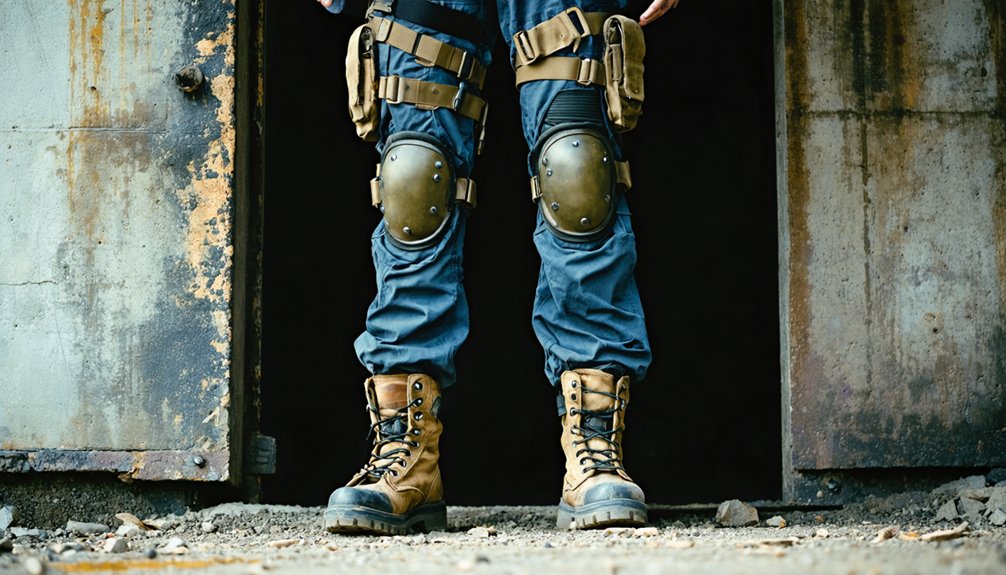
As battlefield authenticity extends below the waistline, tactical cargo pants with three-dimensional cuts establish your rebel’s operational credibility through deliberate pocket distribution and structural reinforcement. Cargo pants material selection determines abrasion resistance—choose ripstop fabrics with waterproof zippers that endure combat scenarios.
Cargo pants pocket arrangement transforms utility into asymmetry: position D-rings and exaggerated buckles strategically for modular attachment points.
Layer drop-crotch silhouettes beneath climbing harness belts featuring cobra buckles for dynamic adjustments. Mount leg pouches via washer systems on net-like materials, securing knife holsters for immediate weapon deployment.
Steel-capped combat boots—whether Dr. Martens or military-spec platforms—anchor your mobility foundation with terrain-adaptive grip. Integrate shredded leggings or viper-style avant-garde base layers beneath tactical pants, creating dimensional depth that signals wasteland survivalism through every calculated strap and reinforced seam.
Essential Accessories to Complete Your Look
Because facial protection defines the boundary between civilian vulnerability and wasteland preparedness, gas masks in dust brown and charcoal establish immediate post-collapse authenticity through their utilitarian respirator forms. Goggles deliver gritty survivalist credibility, while narrow-lens sunglasses anchor cyberpunk-gothic resistance aesthetics. LED-lit visors with chrome and neon high visibility accents transform you into a machine warrior.
Layer utility harnesses over asymmetrical coats for scavenged-from-ruins functionality. Tactical belts integrate with distressed fabrics, creating holistic character design through:
- Rusty steel bracers as forearm armor
- Red scarves for rebel color contrast
- Dual prop weapons in tactical holsters
- Festival hooded scarves for multi-terrain adaptability
Vambraces and makeshift armor constructed from EVA foam and metallic paint complete your transformation. These components synthesize into cohesive dystopian identity beyond costume into embodied narrative.
Footwear and Tactical Belt Systems
Your footwear anchors the entire rebel aesthetic—select battle-worn combat boots with reinforced toes, metal hardware, and heavy-duty rubber soles that display authentic weathering and patina.
Configure your utility belt system with wide leather or canvas construction featuring multiple D-rings and attachment points for modular gear integration.
Prioritize weatherproof materials like thick leather and durable textiles that’ll withstand environmental extremes while maintaining the dystopian visual identity through distressed finishes and tactical hardware.
Battle-Worn Boot Selection
Distressed leather combat boots anchor your dystopian rebel silhouette, establishing the foundation layer that grounds elaborate costume builds. Source thrift store bases with existing patina, then amplify weathering through strategic abrasion and riveting applications. Augmented steel toe options provide authentic post-apocalyptic weight distribution while protecting feet during extended convention wear.
Consider these material layering approaches:
- EVA foam overlays transform standard boots into Space Marine armor with dimensional plating
- Canvas-leather hybrid construction balances tactical durability against movement flexibility
- Platform variations from Demonia’s gothic chunky soles to medieval Renaissance leather silhouettes
- Steampunk mechanical embellishments using gears, threading, and metallic accents for industrial aesthetic
Sustainable upcycling techniques maximize existing boot structure—apply distressing compounds, add nubuck panels, or construct thigh-high platform extensions. Free shipping through Etsy vendors and Tragic Beautiful expands sourcing options beyond local availability.
Utility Belt Configuration
Your loadout evolves with operational parameters—sabotage insertions require slicer chips and compact explosives, while reconnaissance demands enhanced communication arrays. The system increases encumbrance threshold by one unit, transforming aesthetic into functional advantage.
Select from 10,000+ printable tactical designs, integrating holster attachments and combat webbing interfaces. Standard configurations start at 500 credits, delivering quasi-militaristic authenticity through engineered utility.
Weatherproof Footwear Materials
Authentic rebel aesthetics demand multi-layer footwear construction that withstands convention circuits, outdoor shoots, and inclement weather scenarios. You’ll need protective boot linings beneath distressed overlays to achieve genuine post-apocalyptic functionality. High-quality Italian leather forms your waterproof foundation, while metallic reinforcement pieces shield vulnerable zones from moisture penetration.
Strategic layering transforms standard boots into tactical armor:
- EVA foam bases provide insulation against cold concrete floors during marathon convention days
- Surplus military boots deliver inherent weather resistance through proven field-tested construction
- Hybrid metal-leather compositions create weatherproof barriers while maintaining dystopian visual impact
- Boot covers fabricated over existing footwear add removable protection layers for varied shooting conditions
Apply gray weathered finishes and mud applications strategically—they’ll enhance authenticity while concealing wear patterns from environmental exposure.
Fabric Selection for Authentic Dystopian Aesthetics
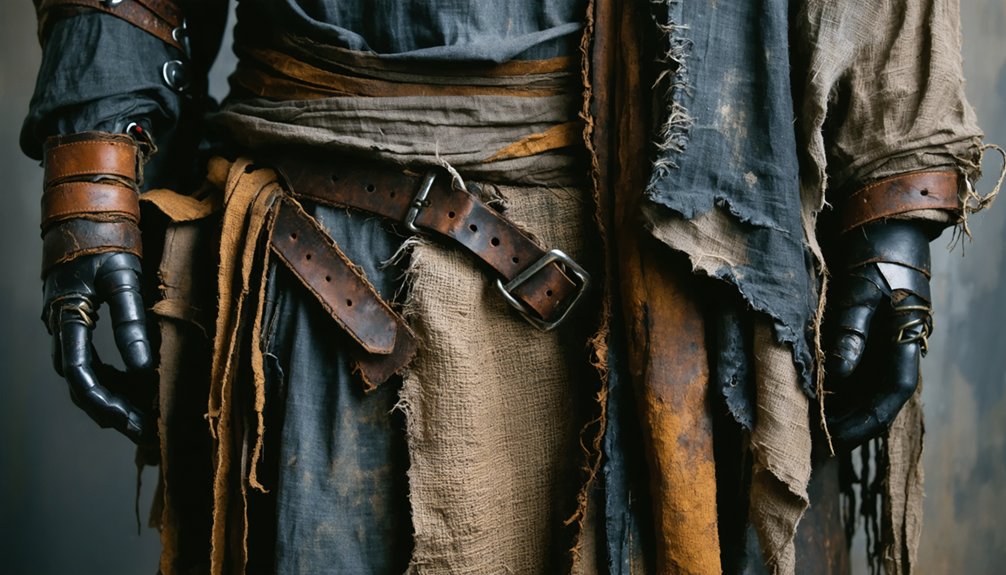
You’ll construct authentic dystopian aesthetics by selecting fabrics that display visible wear patterns—distressed leather, frayed canvas, and abraded denim create the weathered surfaces rebellion demands.
Your color palette should anchor in earth tones: charcoal grays, oxidized browns, and dust-caked olive communicate survival in collapsed civilizations.
Balance your layering weights strategically, positioning heavy gabardine or canvas as outer shells while reserving lighter cotton poplin and stretch synthetics for base layers that enable tactical movement.
Weathered Texture Fabric Choices
When selecting base materials for dystopian cosplay, natural fibers—cotton, linen, wool, and silk—outperform synthetics in achieving convincing weathered textures. These organic materials readily accept bleach solutions and flame singeing without liquefying, enabling sophisticated organic fiber fading techniques that create authentic post-apocalyptic depth.
Weathering synthetic fabrics requires modified approaches:
- Nylon liquefies under heat—test alternative staining methods first
- Acetate combusts unpredictably—avoid flame-based distressing entirely
- Polyester benefits from paint layering—eliminates artificial sheen effectively
- Cheap synthetics accept grunge treatments—perfect for expendable costume layers
Pre-age organic fabrics through bleach cycles before construction to establish uniform fiber damage. For synthetics, substitute heat techniques with Jacquard textile paint thinned with isopropyl alcohol, building translucent weathering layers. Always test material samples before applying irreversible treatments to primary costume pieces.
Earth-Tone Color Palettes
Beyond distressing techniques, fabric color selection determines whether your rebel costume reads as authentically post-apocalyptic or costume-shop generic. You’ll want to build custom color combinations from earth-tone foundations: layer #969386 muted taupe base garments beneath #4b4945 deep brown-grey overwear, then accent with #77333b earthy maroon for dimensional depth.
Strategic layering creates visual complexity—#6a7888 slate blue-grey vests over #8f725a sandy brown shirts suggest scavenged assemblage rather than coordinated outfits.
Integrate muted metallic finishes through #067ba2 teal-grey oxidized details or #4d436d slate purple worn hardware. These unconventional palette choices (#7d6296 purple-brown, #8e9167 olive khaki) distinguish innovative dystopian aesthetics from standard military surplus looks. Avoid saturated colors entirely—even reds should appear as faded #ca6971 terracotta or dusty #dfb1b5 rose, suggesting pre-collapse garments bleached by harsh environmental exposure.
Layering Material Weight Considerations
Strategic fabric weight selection creates dimensional authenticity that separates museum-quality rebel costumes from flat, single-layer attempts. You’ll achieve ideal material weight balance by pairing heavyweight gabardine jackets over mid-weight cotton shirts, then finishing with spandex base layers. This fabric layering technique prevents bulk while maintaining post-apocalyptic silhouettes.
Master these weight combinations:
- Structured outer shells: Gabardine or upholstery-weight polyester (holds dramatic drape without collapsing)
- Breathable mid-layers: Canvas or poplin shirts (prevents overheating during extended wear)
- Form-fitting foundations: Spandex underlayers (eliminates bunching beneath heavy fabrics)
- Volumetric accents: Drapery-weight textiles for billowy elements (creates visual depth)
Calculate 2 yards of 60-inch heavyweight fabric for jackets, reserving lighter weights for mobility-critical garments. You’ll maintain comfort while achieving that essential rugged, layered rebel aesthetic demanding dynamic movement capability.
No-Sew Customization Techniques
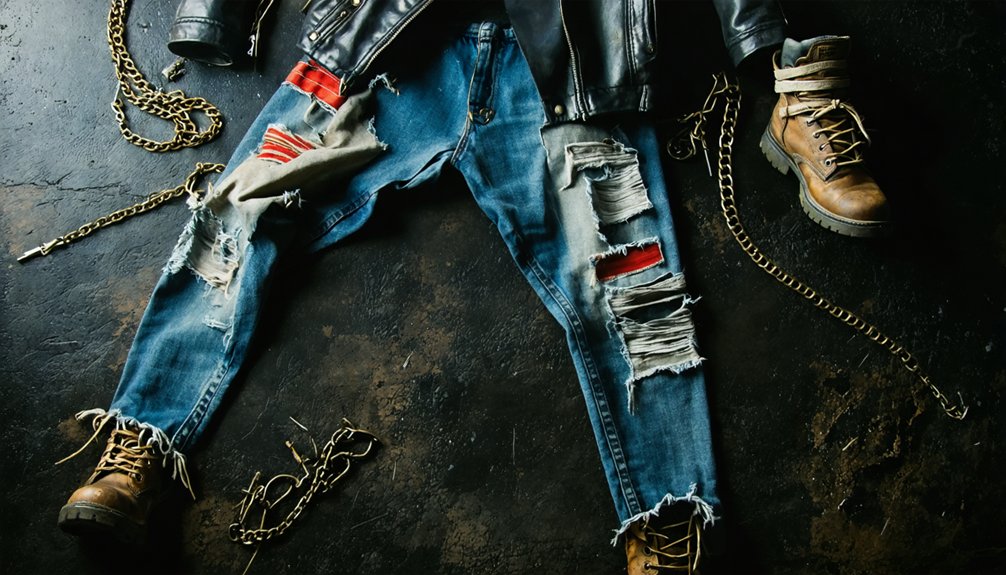
Because traditional sewing demands specialized skills and time-intensive practice, no-sew customization techniques democratize dystopian rebel cosplay construction for creators at every experience level. You’ll transform ordinary fabric through dimensional fabric stiffening—converting draped cloth into structured armor panels without threading needles. Hot glue bonds layered elements instantly, while fabric tape creates clean seams on capes and distressed garments.
Iron-on patches deliver faction insignia efficiently. You’ll manipulate materials through strategic folding combined with adhesive bonding techniques for voluminous robes. Hem tape finishes torn edges characteristic of rebellion aesthetics. Fabric paint applies weathering effects and markings directly onto surfaces. Safety pins function as permanent fasteners for layered components. This approach enables rapid assembly during compressed production timeframes while maintaining authentic dystopian visual impact.
Weapon Props and Combat Accessories
When convention weapon policies demand non-threatening replicas, foam rubber constructions and 3D-printed components deliver combat-ready visual impact without safety violations. Digital fabrication tips enable precision detailing on Mandalorian blasters and sniper rifles, while custom mold creation transforms dollar-store water guns into weathered arsenal pieces.
Foam and 3D-printed prop weapons merge convention safety requirements with authentic combat aesthetics through accessible digital fabrication techniques.
Layer acrylic weathering over foam bases to achieve battle-worn authenticity:
- Barbed-wire bat modifications wrapped in leather cording evoke wasteland survivor narratives
- Valspar gloss sealer coats create slick, post-apocalyptic sheen on handcrafted melee weapons
- Hot-glued craft foam panels add dimensional greebles to futuristic rifle silhouettes
- Metallic spray finishes over urethane replicas simulate industrial-grade ordnance
Source materials from hardware suppliers and thrift outlets. Combine high-density foam warhammers ($28.50) with modified Nerf bases for budget-conscious armament that satisfies convention compliance while maintaining rebel fighter credibility.
Adding Tech Elements With LED Enhancements
Illuminated circuitry transforms static props into dynamic narrative devices. Your microcontroller options include Arduino-based systems controlling 5-7 LED strands simultaneously through pins 3-6, where switches on pins 3-4 toggle between crawling animations and static modes while pins 5-6 power the strips. Electronic wiring strategies integrate rechargeable LiPo batteries permanently into props—conceal power sources inside demon skulls or weapon housings for seamless charging access.
Layer RGB panels into dystopian armor for customizable color outputs spanning any hue. Position LED strips behind translucent blade channels, rune engravings, and glowing eye sockets. Extend tech aesthetics through wearable accessories: illuminated visors with custom lenses, neon-accented jackets over latex bases, glowing wristbands paired with metallic boots. Contrast matte armor finishes against high-shine LED metallics for maximum visual impact in your post-apocalyptic rebel persona.
Frequently Asked Questions
How Do I Weather New Fabric to Achieve an Authentic Post-Apocalyptic Look?
Transform virgin textile into battle-scarred cloth by layering distressed fabric techniques—sand edges aggressively, bleach strategically, then apply thinned acrylics. Hand aging clothing requires multiple passes: scorch, fray, stain with tea, then seal dust permanently for authentic decay.
What’s the Best Way to Store Delicate Costume Pieces Between Events?
Store delicate pieces in proper storage containers with acid-free tissue layering between weathered textures. You’ll preserve your distressed fabrications in a climate-controlled environment—avoid temperature fluctuations that’ll compromise carefully crafted aging effects and structural integrity.
How Can I Make My Dystopian Costume Comfortable for All-Day Wear?
Like marathon runners who layer strategically, you’ll need breathable base layers in moisture-wicking fabrics beneath your dystopian gear. Stack lightweight layering pieces—cotton undershirts, tactical vests—that you can shed as temperatures rise, maintaining comfort without sacrificing your post-apocalyptic aesthetic.
Are There Budget-Friendly Alternatives to Expensive Leather and Fur Materials?
You’ll achieve authentic texture layering using craft foam painted with acrylics, faux leather from fabric stores, or reclaimed fabrics coated in acrylic medium. These sustainable materials offer 85-90% usability while dramatically reducing costs compared to genuine leather components.
How Do I Safely Transport Weapon Props to Conventions and Events?
Imagine your dystopian arsenal wrapped tight—secure transportation logistics demand padded concealment in checked luggage. You’ll follow concealed carry protocols: completely hide props during ground transport, then present them daily at convention Prop Check for distinctive security markings.