Elizabethan court fashion functioned as calculated political theater, where Queen Elizabeth I‘s 2,000+ gowns and strict sumptuary laws regulated who could wear purple silk, cloth of gold, and ermine trim. You’ll need to understand the structural foundations: women’s cone-shaped corsets, horizontal farthingales, and detachable sleeves, while men sported peascod doublets with their distinctive “pouter pigeon” bellies. The 1574 statute restricted materials by rank—velvet for barons’ wives, damask for £40-earning esquires—making fabric choice a immediate status declaration that courtiers navigated carefully to avoid 200-mark fines while maintaining appropriate proximity to royal standards.
Key Takeaways
- Women wore structured cone-shaped silhouettes using smocks, tight-laced corsets, horizontal farthingales, and detachable sleeves with contrasting slashed designs.
- Men’s fashion featured peascod doublets with protruding “pouter pigeon” bellies, attached to rounded hose through eyelet lacing and bombast stuffing.
- Sumptuary laws restricted luxury materials: purple silk and cloth of gold for royalty only, velvet for barons, ermine for crowns.
- Elite courtiers wore Italian velvets, Spanish silks, Ottoman brocades, and metallic cloth of gold imported through Venetian merchants.
- Queen Elizabeth owned over 2,000 gowns displaying Tudor roses, fleur-de-lis, and symbolic crimson, gold, and silver textiles asserting political authority.
The Queen’s Influence on Sartorial Standards
As England’s most powerful figure, Elizabeth I wielded fashion as a calculated instrument of political authority, transforming her wardrobe into a visual manifesto of Tudor legitimacy and divine right. Her queenly fashion sense employed symbolic crimson, gold, and silver textiles adorned with Tudor roses and fleur-de-lis motifs that reinforced both dynastic legitimacy and territorial claims to France.
You’ll find she strategically gifted her cast-off garments to courtiers, ensuring no subject ever surpassed her magnificence during processions. Through sumptuary law enforcement, she demanded elevated dress standards from her court while simultaneously reprimanding those who over-dressed, maintaining absolute sartorial supremacy.
This calculated approach meant courtiers received royal outfits as controlled expressions of favor, while society beyond palace walls enthusiastically emulated these styles, establishing Elizabeth’s wardrobe as England’s definitive cultural compass.
Sumptuary Laws and Status Symbols Through Dress
Looking across Elizabethan England’s social landscape, you’d immediately recognize a person’s rank through their clothing—a system rigidly enforced by sumptuary laws designed to keep society’s visual hierarchy intact. The 1574 statute restricted purple silk and cloth of gold tissued exclusively to royalty, while dukes accessed gold cloth worth £5 per yard in doublets.
These regulations controlled wealth display against the rising merchant class, preserving social hierarchies through fabric restrictions: velvet for barons’ wives, damask for esquires earning £40 yearly, and ermine trim reserved for crowns alone. Elizabeth issued twelve dress edicts, though enforcement remained inconsistent. Fines reached 200 marks for transgressions, functioning as revenue generation alongside social control, while numerous royal licenses paradoxically permitted forbidden garments.
Essential Women’s Garments and Structural Underpinings
While sumptuary laws dictated which fabrics a woman could wear, the fundamental architecture of Elizabethan dress began with the smock—the innermost linen garment that every woman, from scullery maid to queen, wore against her skin. Shift construction methods remained remarkably consistent across classes, though class distinction through embellishments separated the wealthy from laborers. Working women owned multiple plain shifts for laundering rotation, while aristocratic versions featured intricate lace and embroidery.
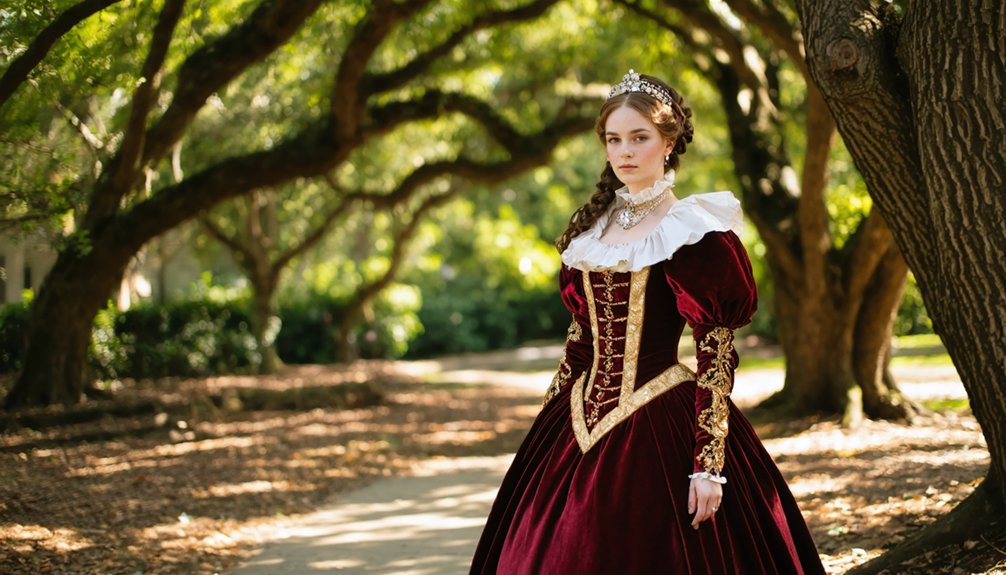
Over this foundation, you’d layer rigid bodies—corsets creating the cone-shaped silhouette through tight lacing and extended bodice points. The farthingale framework completed the structure, with wheeled versions expanding skirts nearly horizontally by the 1590s. Detachable sleeves offered versatility, while slashed designs revealed contrasting linings, transforming modular components into status-declaring assemblages.
Men’s Silhouettes From Doublets to Hose
The male Elizabethan silhouette centered on the peascod doublet—a padded garment that thrust forward at the stomach to create the distinctive “pouter pigeon” belly through heavy wadding and strategic construction. You’ll find this doublet attached to hose through eyelet holes and laces (called points) at the waistline, a system that evolved from pre-1540 direct lacing to bound eyelet attachments on canvas-lined garments.
The doublet’s structure progressed from the exaggerated egg-shaped torso of early Elizabeth’s reign to flatter forms by century’s end, while hose transformed from full-length medieval styles to shorter, rounder variations paired with increasingly plain doublets for common courtiers.
Peascod Doublet Construction Details
During the late 1580s and early 1590s, the peascod doublet achieved its most exaggerated form, with a stuffed belly extending well below the natural waistline to create an artificial protuberance that dominated men’s courtly silhouettes.
You’ll find sophisticated tailoring techniques in period construction methods, including the Bara approach from Spanish sources. Pattern development incorporates multiple interlining layers—linen canvas and melton wool pad-stitched strategically for structural integrity. The distinctive shape relies on bombast stuffing of wool broadcloth or cotton wool concentrated in the front belly section.
Construction elements include:
- Horizontal pad stitching between shoulders shifting to vertical rows around armscyes
- Self-fabric welts inserted within seams for dimensional reinforcement
- Pinked shoulder wings basted to interlining, then folded for decorative effect
Working-class versions feature minimal padding, while elite examples showcase elaborate slashing over fustian foundations with logwood-dyed linen interlinings.
Hose Evolution Through Decades
Between the 14th and late 16th centuries, men’s leg coverings underwent five distinct metamorphic phases that fundamentally altered courtly silhouettes. Initially, separate wool tubes tied to doublets created fitted leg profiles.
By the early 1500s, joined hose introduced padded codpiece fashions as functional closures evolved into ornate statements, prominently displayed in Henry VIII’s portraits. Bias cut fabric development enabled unprecedented elasticity in tightly fitted nether stocks.
Mid-century innovations produced rigid pumpkin pants and streamlined Venetian alternatives. The 1580s introduced melon hose with extreme bombasting—so voluminous Parliament required special seating.
Luxury Fabrics and Restricted Materials
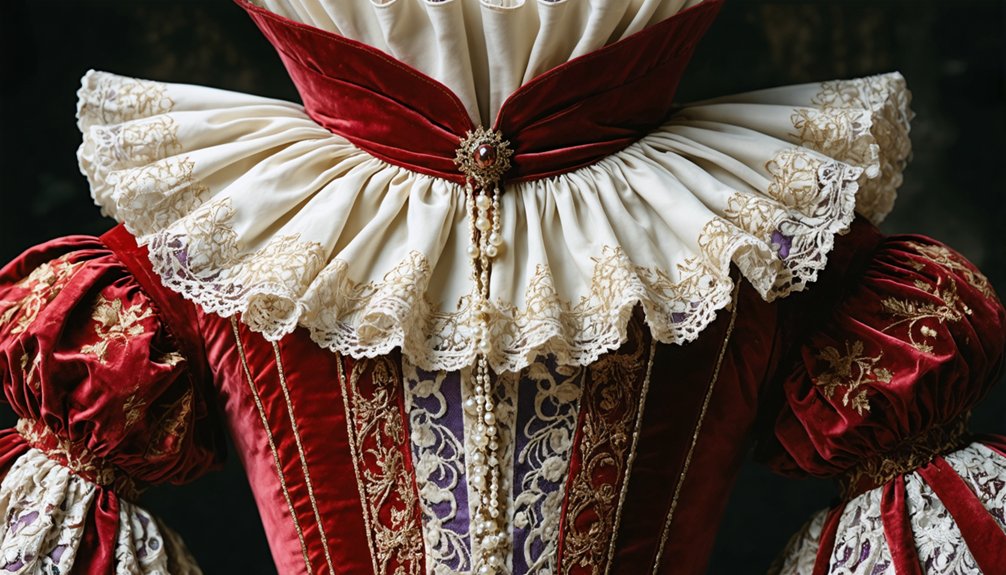
While commoners wrapped themselves in coarse wool and rough linen, Elizabethan nobles displayed their wealth through sumptuous fabrics that cost more than a laborer’s annual wages. You’ll find imported fabrics from overseas dominated court wardrobes—Italian velvets, Spanish silks, and Ottoman brocades arrived through Venetian merchants at premium prices. Artisanal textile production techniques created cloth of gold, where metallic threads wove through silk to produce shimmering relief patterns.
Status recognition was instant and deliberate:
- Scarlet gowns dyed with expensive Mediterranean insects glowed against the drab greys and browns of common folk
- Fur-trimmed sleeves and lace collars marked boundaries the lower classes couldn’t cross
- Damask and changeable taffeta shifted colors in candlelight, their iridescent surfaces announcing wealth
Sumptuary laws codified these distinctions, legally restricting vibrant purples, deep blues, and precious materials to the elite.
Ruffs, Collars, and Ornamental Details
The starched ruff transformed from a modest shirt ruffle in the late 1400s into the most recognizable symbol of Elizabethan excess. You’ll find these detachable accessories required six yards of cambric or lawn linen, meticulously worked into 600 folds using sophisticated pleating techniques. Continental starch technology after 1564 enabled cartwheel ruffs extending twelve inches from the neck, supported by hidden wires and boards.
The political implications of ruff fashion became evident through Elizabeth I’s 1595 ban on colored starch, mandating white at court. Yellow ruffs gained notorious associations after Anne Turner’s 1615 execution for murder. Philip Stubbes condemned these elaborate collars as vanity’s monument, yet they remained essential status markers across Europe from 1580-1610, framing faces in portraits with unmistakable aristocratic authority.
The Scale of Royal Wardrobes
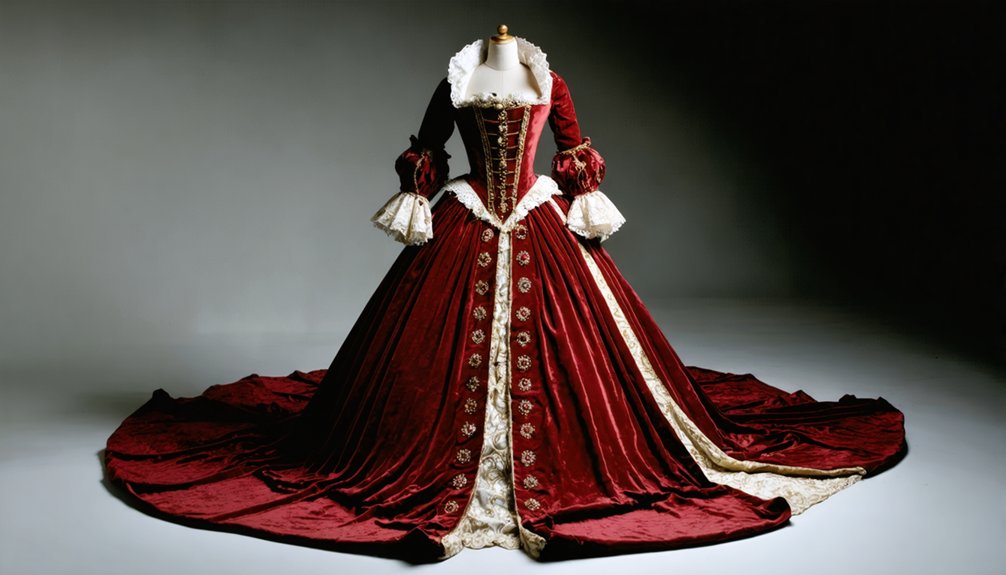
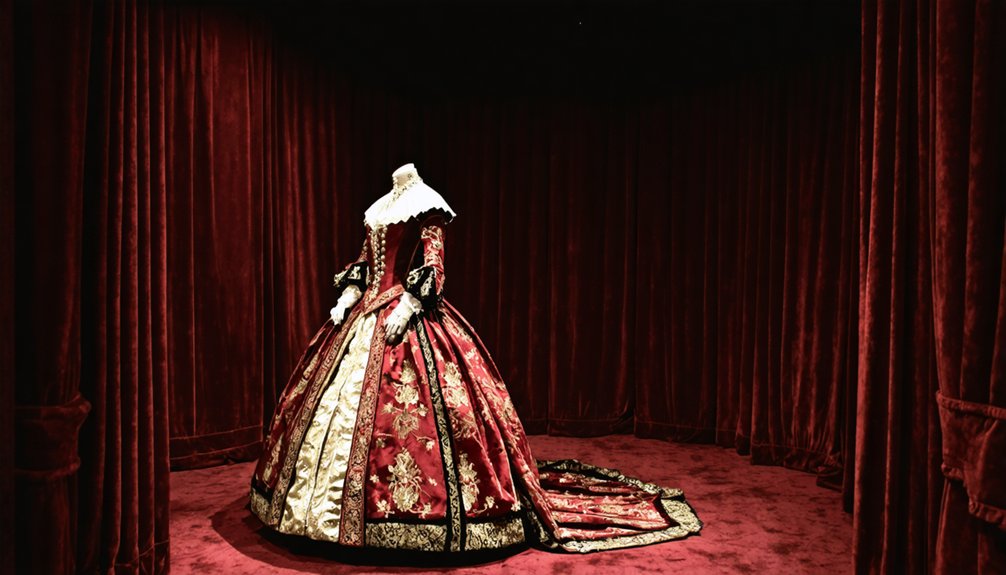
Beyond the elaborate accessories that framed aristocratic faces, Elizabeth I accumulated a wardrobe of staggering proportions that transformed clothing into statecraft. At her death, over 2,000 gowns filled royal storage chambers, while 628 jewellery pieces appeared in Blanche Parry’s 1587 inventory alone.
This scale demonstrates the economic impact of royal wardrobes on both crown finances and courtier spending. Gift culture and wardrobe maintenance proved essential—on New Year’s Day 1587, Elizabeth received over 80 jewellery pieces from suitors and courtiers, offsetting maintenance costs. She constantly altered garments with new sleeves or bodices, recycled gowns as gifts, and paid servants in clothing.
- Jewel-encrusted gowns stacked floor-to-ceiling in specialized storage rooms
- Detailed account books tracking每 fabric yard and supplier transaction
- Courtiers bankrupting themselves pursuing sartorial competition
Creating Authentic Elizabethan Silhouettes
Achieving period-accurate Elizabethan dress required structural engineering beneath visible fabrics. You’ll need foundation garments to master body proportion illusions that defined court fashion. Women’s conical corsets created straight lines from waist to bust, paired with farthingales shaping hips into bells or subtle flares.
Bumrolls angled the farthingale forward, tilting your posture dramatically. Men achieved their distinctive silhouette through padded peascod doublets creating pointed pot-bellies and optional corsets for extreme waist cinching.
Mastering corset and farthingale techniques transforms your silhouette fundamentally. The 1590s demanded narrow-waisted drama with deep V bodices extending below natural waistlines. Cartridge-pleated overskirts expanded width exponentially, while kirtles with embroidered foreparts showed through open gowns.
These engineered foundations weren’t mere undergarments—they were architectural frameworks enabling the era’s radical aesthetic transformations.
Sourcing Materials for Period-Accurate Costumes
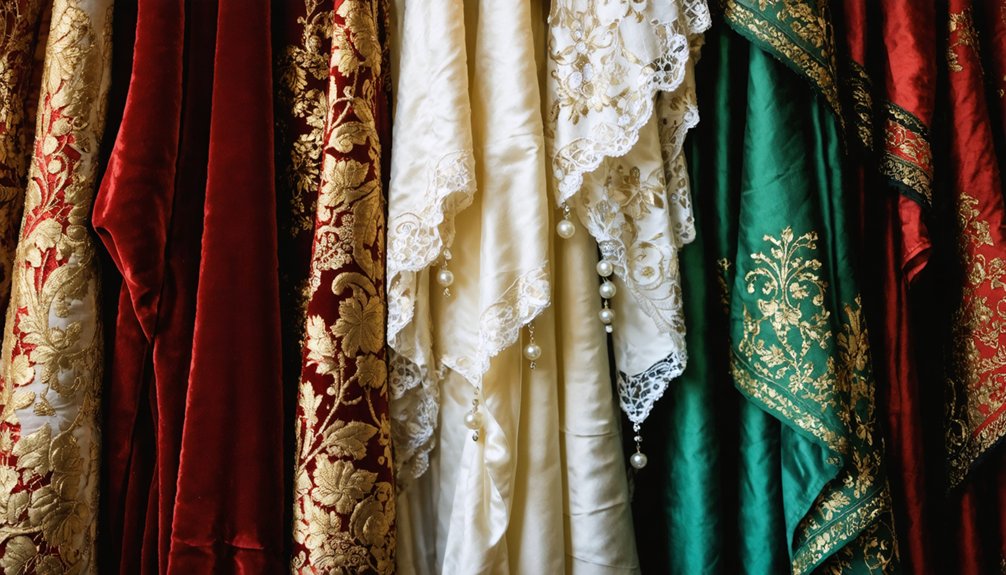
You’ll need to source three categories of materials to achieve period accuracy: authentic fabric types that match documented Elizabethan textiles, structural components like boning and buckram that create the era’s distinctive silhouettes, and historically appropriate trims including metallic braids, jeweled embellishments, and hand-finished notions.
Primary sources from the 1580s-1603 reveal that courtiers carefully selected materials based on both sumptuary law restrictions and fashion hierarchy—silk velvets and cloth-of-gold for nobility, wool and linen for common classes.
Modern suppliers like Thai Silks offer genuine silk taffeta and satin at $20-$30 per yard, while structural materials such as cable ties, reed boning, and buckram provide washable alternatives to period whale baleen and canvas.
Authentic Fabric Types Available
When constructing Elizabethan costumes, understanding the authentic fabrics of the era provides essential guidance for material selection. Fabric scarcity shaped social hierarchies through sumptuary laws that restricted materials by class.
Wool served peasants through nobility, while fabric importation from Italy and Spain brought coveted silks exclusively to wealthy patrons through the controlled Mercers guild. Linen formed essential underlayers for all ranks, emphasizing cleanliness with white chemises and shifts.
Period-Authentic Material Hierarchy:
Aristocratic displays: Velvet sleeves slashed to reveal cloth of gold underneath, trimmed with imported lace and fur
Merchant class distinction: Fine-grade wool gowns in solid jewel tones, accented with modest ribbon trim
Laborer practicality: Durable wool-linen blends dyed with natural pigments, protected by linen aprons
Modern recreationists can achieve authenticity through careful fabric selection matching historical social strata.
Structural Materials and Boning
For authentic reproductions, you’ll encounter material sourcing challenges. Spring steel offers superior support but demands specialized suppliers and higher costs.
High-density polyethylene (.093 thickness) provides viable alternatives when cut uncovered—pre-covered varieties warp from body heat. Historical substitutes included coraline from Mexican ixtle plant fibers and watchspring steel. Even rigaleen and quarter-inch cable ties deliver functional results for smaller figures.
Edge-melt plastic boning prevents fabric punctures, maintaining structural authenticity through extended wear.
Trims, Notions, and Embellishments
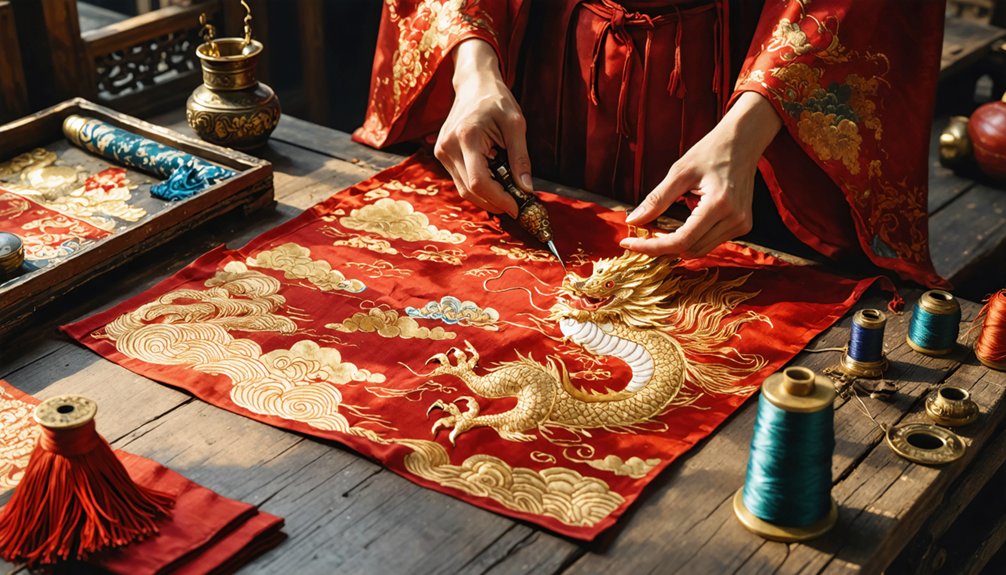
Since authentic Elizabethan garments derived much of their visual impact from surface decoration, modern costumers must navigate the substantial gap between period techniques and contemporary availability. You’ll find that embroidery designs ranged from blackwork geometric patterns on linen to polychrome silk threads showcasing wealth. Gold and silver wire-wrapped threads created couch work on partlets, while jeweled pins secured sleeves and stomachers.
Accessorizing techniques included metal-thread bobbin lace, fringed braid forming button loops, and anglets—tiny gem-tipped metal casings on laces.
- Spangles and oes glittering across cut velvet surfaces
- Zibellini flea furs with jewelled eyes dangling from girdles
- White work partlets encrusted with beads and pearls
Understanding these construction methods helps you replicate authentic visual texture using modern materials.
Frequently Asked Questions
How Did People Launder and Maintain Their Elaborate Elizabethan Court Garments?
Like layers of armor protecting precious treasures, you’d employ strategic laundry techniques—frequent linen washing, spot-cleaning woolens, replacing soiled gussets. Your fabric preservation methods included dry-brushing, perfuming, controlled storage with sweet bags, ensuring garments survived years without full immersion.
What Undergarments Did Men Wear Beneath Their Doublets and Hose?
You’d wear linen shirts as your base layer directly against skin, paired with woolen breeches beneath hose. A linen pourpoint often provided structural support, lacing your hose while managing England’s unpredictable climate through layered insulation.
How Long Did It Take to Dress in Full Elizabethan Court Attire?
You’d need thirty minutes minimum for the time consuming dressing process—chemise, bodies, farthingale, petticoat, gown, detachable sleeves, and ruff. Complex layering techniques demanded precise pinning and hooking, transforming you into an Elizabethan status symbol through meticulous assembly.
Were There Seasonal Variations in Elizabethan Court Fashion Choices?
Yes, you’d adapt through strategic layering techniques—adding cloaks, doublets, and jerkins for cold weather—while seasonal color palettes shifted as natural dyes faded quickly, making brilliant hues essential for displaying your fashion currency at court.
How Did Lower-Ranking Courtiers Afford to Keep up With Fashion Changes?
You’d borrow heavily, you’d buy second-hand, you’d alter existing garments—lower-ranking courtiers stretched limited budgets through creative fashion innovation. They recycled fabrics, added luxury trims to plain clothes, and relied on debt to maintain court appearances despite financial strain.