Master character interpretation by immersing yourself in source material to catalog signature movements, expressions, and mannerisms you’ll embody on stage. Select performance-grade fabrics that balance accuracy with durability, while incorporating strategic props that communicate character identity instantly. Develop authentic movement patterns through posture signaling and weight distribution techniques that capture your character’s essence. Build commanding stage presence by synchronizing costume details with deliberate gestures and precise dialogue delivery. The following sections break down each competitive element that transforms craftsmanship into championship-caliber performance.
Key Takeaways
- Research character mannerisms through all available media, documenting physical details like posture shifts, facial expressions, and signature movements for authentic embodiment.
- Select performance-appropriate fabrics that balance visual accuracy with durability while incorporating character-symbolic colors through strategic layering techniques.
- Master character-specific posture and movement patterns, using decisive moments as anchors and exaggerating gestures to emphasize personality traits.
- Command stage presence through deliberate body movement, strategic positioning, clear dialogue delivery, and integrated costume gimmicks that showcase technical skill.
- Choose versatile props that instantly communicate character identity while adhering to safety guidelines and transforming them into dynamic performance elements.
Mastering Character Research and Source Material Analysis
When you commit to portraying a character authentically, your research depth directly determines your performance quality. Begin by immersing yourself in all available media—binge-watch series, replay gaming sequences, and study manga panels repeatedly.
Document every observable detail: battle stances, signature smirks, hand gestures during contemplation. This creates referential parallels across source material that strengthen your interpretation foundation.
Catalog outfit components systematically—headgear, tops, bottoms, footwear—alongside personality markers like speech patterns and emotional triggers. Record physical nuances: posture shifts, gait variations, facial expressions during pivotal scenes.
These methodological shifts for interpretation move beyond surface-level observation into phenomenological understanding. Explore specialized tutorials for universe-specific materials and construction techniques.
Your analysis should penetrate character backstory, canon placement, and relational dynamics, transforming research into embodied performance that resonates with judges and audiences.
Achieving Costume Precision Through Fabric Selection and Detail Work
The foundation of competition-worthy cosplay rests on strategic fabric selection that balances visual accuracy with performance durability. You’ll achieve character authenticity by matching material properties to role requirements—natural fibers for historical accuracy, stretch synthetics for superhero silhouettes, and structured gabardine for military precision.
Constructing multidimensional fabric textures through layered materials elevates your entry beyond standard interpretations, while incorporating subtextual color symbolism via complementary liners reinforces character narrative during movement. Strategic embellishment placement—embroidered insignia, beaded textures—enhances visual storytelling without compromising structural integrity.
Performance demands require breathable, wrinkle-resistant fabrics like polyester blends and spandex that maintain polished appearance throughout competition while enabling unrestricted mobility. Prioritize synthetic compositions for extended wear across multiple events, reserving delicate silks for single-use showcase pieces requiring professional maintenance.
Developing Authentic Character Embodiment and Movement
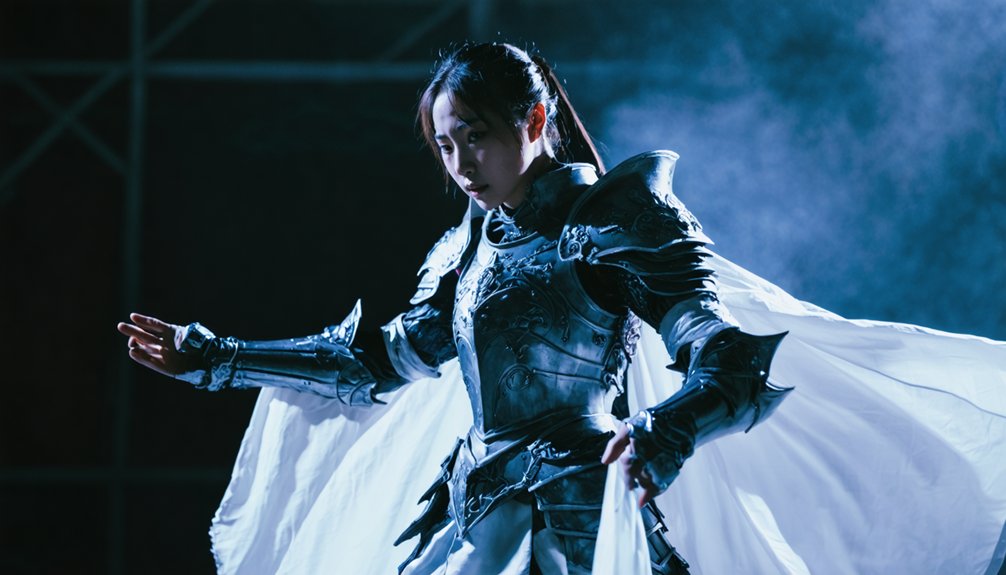
Beyond material perfection lies physical transformation—fabric accuracy means nothing if your movement contradicts character essence. Master posture signaling through open chest alignment that establishes your character’s authoritative presence or center-of-gravity shifts reflecting their stability versus dynamism.
Movement authenticity transcends costume precision—your physical choices must embody character truth through deliberate postural shifts and gravitational intention.
Tank-like characters demand direct spatial paths, while calculating personas require indirect, elusive trajectories.
Body positioning dynamics extend beyond static poses—capture decisive moments where hip swings shift from right to left, using these keyframes as movement anchors. Synchronize arm gestures with core actions, ensuring hand positioning varies by character emphasis.
Apply follow-through principles: when your body descends, fabric and hair should float upward, creating authentic weight perception through staggered timing. Breaking joints through exaggerated limb positioning amplifies character intensity, transforming mechanical mimicry into performance innovation.
Building Captivating Stage Presence for Maximum Audience Impact
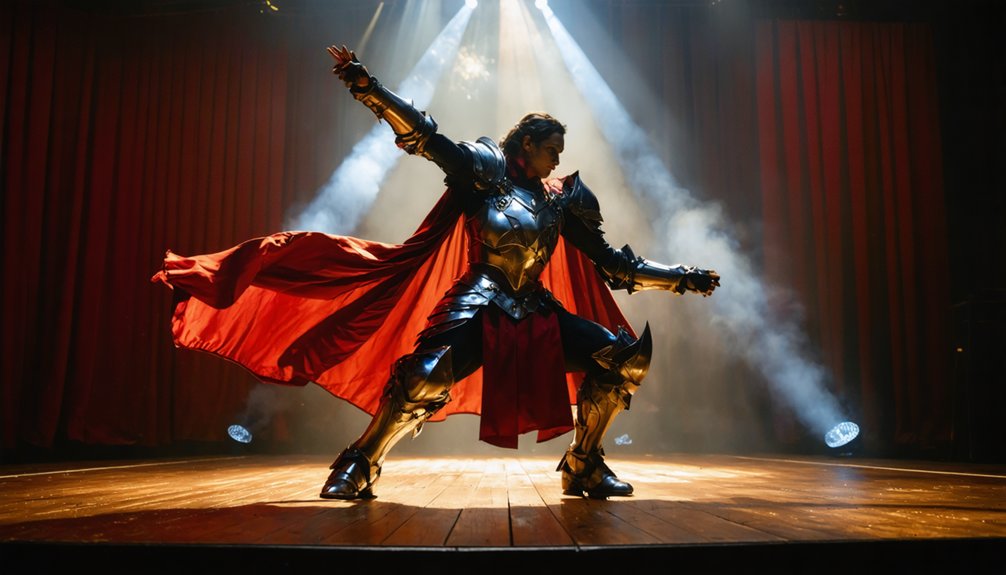
Stage presence transforms technical cosplay mastery into competition-winning performance—you’ll discover that judges allocate 20 points specifically to expressiveness evaluation, measuring your accomplishment in singing, dancing, and active performance elements. Your stage presence commands audience attention through deliberate body movement beyond normal behavioral patterns, incorporating exaggerated gestures and facial expressions that amplify character traits. Strategic positioning across stage dimensions prevents accidents while creating dynamic visual compositions that maximize costume impact visibility.
Energetic audience interaction emerges from genuine character belief rather than technical perfection alone. You’ll project conviction through dialogue delivery clarity, emotional timing, and authentic resonance with source material. Rehearsal preparation eliminates uncertainty, letting you focus on presence rather than choreography memorization. Integrate costume gimmicks strategically—transforming appearance mid-performance adds visual interest while demonstrating advanced costume engineering capabilities that distinguish innovative competitors.
Strategic Use of Props and Accessories in Performance
Your prop choices communicate character identity before you speak a single line, making selection a strategic decision that defines your performance’s visual narrative. Effective integration requires seamless choreography where accessories enhance rather than obstruct your stage movement and dialogue delivery.
Environmental storytelling details—weathered pouches, battle-worn shields, character-specific tools—provide judges tangible evidence of your research depth and world-building commitment.
Selecting Character-Defining Props
When judges scan a crowded competition stage, they’ll identify your character within three seconds based on your prop choices. Maximize prop functionality by selecting one or two signature items that immediately communicate your character’s identity—America’s burger and soda, China’s stuffed panda, or weapon-defining elements like katanas for fighters.
Prioritize prop versatility through materials that balance durability with performance mobility: EVA foam for lightweight weapons, PVC for structural integrity, and 3D-printed components for precise detailing. Your selection must satisfy competition safety guidelines while maintaining visual impact.
Integrate character-specific accessories strategically—Prussia’s Gilbird plushie, Baltic amber jewelry, or gamer VR headsets—ensuring each element serves dual purposes of recognition and narrative reinforcement. Material choices like satin, velvet, and leather elevate textural authenticity while preventing performer fatigue during extended stage time.
Integrating Props Into Performance
Before stepping into the spotlight, competitors must transform static props into dynamic performance instruments that amplify character authenticity.
Master prop integration techniques by rehearsing fully costumed to identify mobility restrictions and choreography adjustments needed for weighted weapons or bulky armor.
Record your performance to evaluate movement effectiveness and visibility from back rows.
Synchronize prop actions with audio cues—align strikes with sound effects and time reveals to musical beats for seamless execution.
Character prop relationships strengthen through animation-inspired exaggeration: execute grand swings that command stage space, highlight mechanical features during performance peaks, and incorporate iconic poses from source material.
Direct prop interactions toward audiences at 45-degree angles while traversing the entire stage.
This technical approach guarantees props transcend decoration, becoming essential storytelling tools that distinguish innovative performances from static presentations.
Justifying Environmental Storytelling Details
Since audiences interpret character depth through accumulated visual details rather than explicit narration, strategic prop and accessory placement transforms your performance into layered environmental storytelling. You’re not simply wearing accessories—you’re curating archaeological artifacts that communicate backstory through spatial storytelling and environmental commentary.
Material choices reveal resourcefulness: Upcycled yoga mats as armor or repurposed bottles signal survival narratives while reducing waste.
Weathering patterns suggest history: Blood-stained fabric edges or blade positioning indicate combat experience without verbal exposition.
Placement creates mystery: Unexplained items like discarded notes or unusual prop arrangements prompt audience interpretation of character motivations.
Scale and form communicate emotion: Oversized weapons contrast with delicate accessories, expressing internal conflicts through physical contradictions.
Each element functions as narrative stratigraphy, inviting judges to discover character complexity through observation rather than explanation.
Leveraging Pre-Judging Opportunities to Showcase Your Craftsmanship

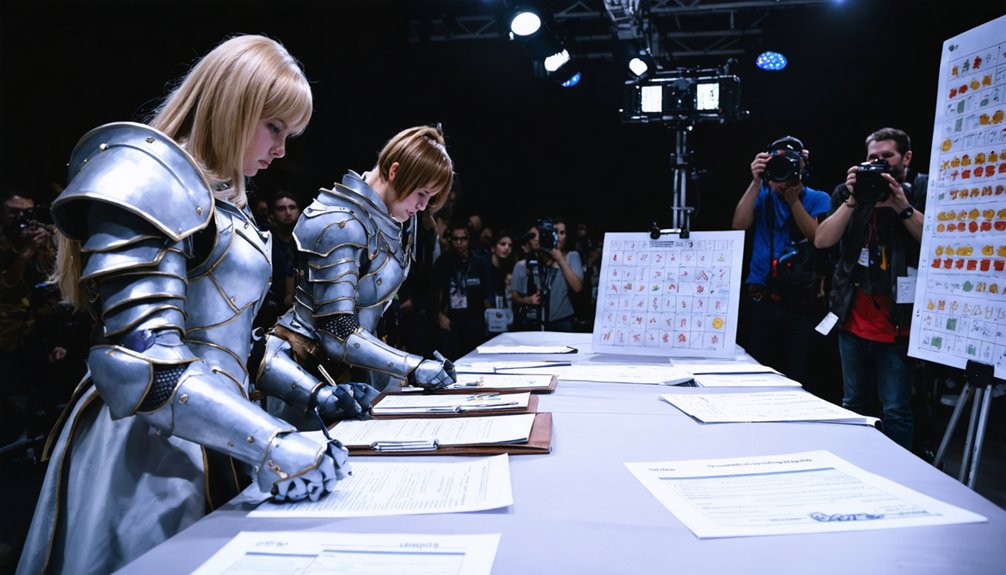
Pre-judging sessions represent your primary opportunity to demonstrate technical expertise directly to judges through focused, one-on-one presentation. You’ll need to clearly articulate your construction methods, justify material selections based on character accuracy and structural requirements, and strategically reveal hidden technical elements that wouldn’t be visible during stage performance.
Master this 4-8 minute window by preparing concise explanations of your most complex techniques while maintaining your build documentation ready for immediate reference.
Articulating Your Construction Methods
How effectively can you communicate months of craftsmanship in a five-minute window? Your elevator pitch becomes the critical interface between your work and competition success. Rehearse a structured presentation detailing construction process while highlighting personalized elements through visual documentation. Judges evaluate only what you explicitly demonstrate—silence forfeits scoring opportunities.
Execute this strategic framework:
- Lead with your build book containing progress photos, material specifications, and character references presented immediately upon entry
- Prioritize distinctive techniques in your opening statement, ensuring critical craftsmanship receives attention within time constraints
- Transparently disclose purchased components to maintain credibility with experienced judges who identify commercial products
- Proactively guide the evaluation rather than waiting for prompts, directing focus toward your most technically complex achievements
Unprepared contestants miss opportunities to differentiate their work from competitors.
Explaining Material Selection Choices
While most contestants focus exclusively on construction timelines, your material selection narrative becomes the differentiator that elevates technical execution into strategic competitive advantage. Strategic material sourcing directly impacts 40% of your accuracy scoring and construction evaluation.
Document treatment methods for foam, worbla, wood, or cardboard that demonstrate technical proficiency beyond basic application.
Leveraging unique materials requires explicit justification in your construction report and 100-word onstage description. Articulate why specific textures, finishes, and structural choices achieve source fidelity while showcasing originality. Judges reward innovative material combinations that balance accuracy with craftsmanship difficulty.
Your pre-judging presentation should emphasize technique quality over quantity—explain specialized treatments, custom alterations exceeding 50% modification thresholds, and safety-compliant implementations. Material ingenuity contributes measurably to technique scores and stage impact bonuses worth 5 points.
Demonstrating Hidden Technical Details
Before you step onstage, the four-minute pre-judging session functions as your strategic opportunity to convert invisible craftsmanship into competitive scoring advantage. This private evaluation enables judges to examine internal construction, seam quality, and mechanism complexity that audience members never witness. Showcasing technical complexity requires methodical presentation of your most challenging techniques.
Maximize your pre-judging effectiveness:
- Reveal hidden seams showing clean finishing and proper construction methods
- Demonstrate transformation mechanisms explaining engineering decisions behind special gimmicks
- Present internal structure highlighting difficult techniques like boning, interfacing, or armor mounting
- Compare reference images proving accuracy in pattern-making and material selection
Analyzing craftsmanship details during this session directly influences your 20-point technique score. Judges assess whether you’ve employed diverse, challenging skills versus simple construction methods, making this your primary opportunity for competitive differentiation.
Balancing Accuracy With Creative Interpretation for Competitive Edge

Successful competitive cosplayers navigate a 60/40 split between technical execution and artistic expression in most judging rubrics. You’ll maximize scores by achieving identical matches to reference materials while strategically incorporating innovative costume concepts that demonstrate advanced techniques.
Mastering character analysis requires understanding which design elements judges prioritize—seam precision, paint application, and construction difficulty carry 40-point accuracy weight, while creativity contributes 30% through unique material applications or challenging skill demonstrations.
Submit clear reference pictures during registration to establish your interpretation boundaries. During pre-judging, articulate your technical choices to showcase craftsmanship beyond stage visibility. Your performance should amplify character essence without compromising costume authenticity, as recognizability drives audience impact.
Strategic gimmicks, hidden mechanisms, and transformation elements elevate stage presence scores while maintaining design integrity. This calculated approach positions you competitively across all judging criteria.
Frequently Asked Questions
How Do I Handle Costume Malfunctions During My Stage Performance?
Remain calm and assess the malfunction’s severity immediately. If it’s early in your routine, step offstage to seek assistance from crew or judges. Near the end, adapt your choreography to conceal the issue while maintaining character.
What’s the Best Way to Transport Fragile Props to Competitions?
Like a phoenix protecting its egg, you’ll safeguard fragile props using custom-built wooden crates with layered foam cushioning techniques. Optimize packing fragile materials through strategic disassembly, padded containers, and engineered compartments that merge durability with innovation for flawless competition delivery.
Should I Cosplay Characters Outside My Body Type or Ethnicity?
Yes, you should cosplay any character you’re passionate about. Embrace body positivity principles and represent diverse identities authentically. Focus on craftsmanship excellence and performance delivery—the “Anyone Can Cosplay” movement proves skill transcends physical appearance in competitive interpretation.
How Can I Afford Expensive Materials on a Tight Budget?
Who needs a second mortgage for cosplay? You’ll maximize budget fabric alternatives through thrifting costume components at dollar stores and charity shops. Transform EVA foam floor mats and repurposed bed sheets into contest-winning pieces that’ll outperform expensive materials.
What if I Forget My Lines or Blocking During Judging?
Practice builds self-confidence before pre-judging sessions. Utilize cue cards strategically during stage performance—they’re permitted. Your costume quality scores 40 points independently, while presentation contributes 30%. Technical craftsmanship outweighs momentary performance lapses considerably.