Your kraken tentacle prop can transform a basic sea monster costume into a showstopping build that stops foot traffic on the convention floor. You’ve got three core material paths to choose from: EVA foam for lightweight endurance, fabric for fluid movement, or silicone for jaw-dropping realism. Each approach demands different skills, budgets, and construction timelines. Whether you’re building on a $50 budget or engineering a mechanical rig, there’s a tentacle system perfectly matched to your cosplay ambitions ahead.
Key Takeaways
- EVA foam is the top budget-friendly material, costing under $50 total, and allows detailed shaping, texturing, and poseable wire cores.
- A chest harness system with D-rings, wide straps, and a sternum plate evenly distributes tentacle weight across the torso.
- Layering deep purples, charcoal base coats, dry-brushed highlights, and gloss accents creates realistic, organic-looking tentacle finishes.
- Spandex or lycra fabric tentacles with 50% stretch capacity allow natural movement and seamless costume integration.
- Rotate curl directions, avoid aggressive bending, and regularly inspect for wear to extend tentacle prop lifespan.
Which Kraken Tentacle Style Fits Your Build: Foam, Fabric, or Silicone?
Choosing the right tentacle material shapes everything from your build timeline to how long you’ll last on a convention floor without your shoulders giving out.
EVA foam delivers lightweight articulation and detailed tentacle aesthetics through carving and heat-shaping, making it ideal for builders prioritizing endurance over realism.
Fabric wrapping suits cosplayers wanting seamless garment integration, using spandex layers and gradient dyeing to suggest biological movement dynamics without rigid structure.
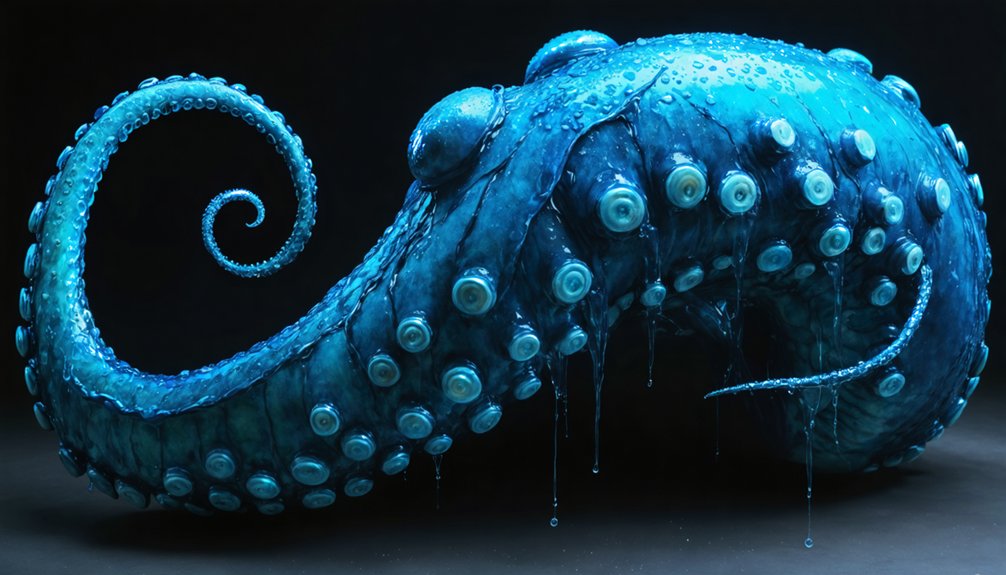
Silicone wins on realism — its weight, translucency, and surface texture convincingly replicate cephalopod anatomy, but demands mold-making investment and strategic harness support to prevent fatigue.
Consider your event duration, fabrication skill level, and budget before committing. Each material demands a different workflow, and matching that workflow to your strengths separates a polished Kraken build from an uncomfortable, half-finished disappointment.
Budget Kraken Tentacle Builds Under $50
Material choice shapes your build, but budget determines what’s actually on the table. EVA foam sheets run roughly $10–$15 for a large pack, giving you enough material to carve multiple articulated segments.
Grab Plasti-Dip for sealing—around $8 a can—and you’ve got a durable, paintable surface ready for detail work.
Seal your foam with Plasti-Dip at just $8 a can—durable, paintable, and detail-work ready.
For tentacle color techniques, acrylic craft paints cost under $5 and handle dry brushing and wash layering beautifully. Strategic dry brushing over dark base coats mimics suction cup depth without expensive airbrush equipment.
Budget-friendly materials like spandex scraps from fabric stores add wrapped texture between foam segments, keeping costs minimal.
Poseable wire from hardware stores inserted through foam cores maintains shape dynamically. Total spend stays comfortably beneath $50 while delivering genuinely impressive results.
Foam Kraken Tentacles You Can Build in a Weekend
Three foam tentacles can go from raw sheet to convention-ready prop in a single weekend if you work the process efficiently.
Start Saturday morning by cutting EVA foam into tapered segments, then heat-shape each piece using a heat gun for organic curvature. Stipple texture using crumpled aluminum foil before pieces cool completely.
Sunday focuses on finishing. Seal every surface with Plasti Dip, applying two thin coats between drying cycles.
These foam tentacle techniques transform raw material into durable, paintable surfaces remarkably fast. Layer your base coat, then dry-brush lighter highlights to suggest suction cup ridges along each length.
These weekend crafting tips succeed because you’re batching similar tasks together rather than completing one tentacle fully before starting another.
Insert poseable wire cores last, enabling dynamic display positioning immediately.
Wearable Fabric Kraken Tentacles That Move With Your Body
When building wearable fabric Kraken tentacles, you’ll want to start with spandex or lycra as your base material since these stretch and conform to your body’s movements without restricting mobility.
Layer contrasting fabric weights over your base — combining smooth and ribbed textures — to build dimensional depth that mimics the organic, undulating appearance of real cephalopod appendages.
Finally, secure your tentacles to your cosplay using a combination of pros-aide adhesive, integrated velcro points, or a chest harness system that distributes weight evenly and keeps everything locked in place through hours of convention wear.
Choosing Stretchy Base Fabrics
Choosing the right stretchy base fabric transforms your kraken tentacles from stiff, lifeless props into fluid extensions of your body that ripple and coil with every step. Understanding stretchy fabric benefits begins with recognizing how four-way stretch materials like spandex and lycra conform dynamically to your body’s contours, eliminating awkward gaps where costume meets skin.
When choosing fabric types, consider weight and recovery rate alongside stretch percentage. Heavyweight spandex maintains structural definition while lighter lycra blends drape more organically, mimicking actual cephalopod movement.
Ribbed fabrics introduce immediate dimensional texture without additional construction steps, while matte finishes absorb light realistically.
You’ll want minimum 50% stretch capacity for tentacles that wrap and articulate convincingly. Test your fabric’s recovery before cutting — poor recovery creates sagging, deflated tentacles that undermine your entire build.
Layering For Dimensional Movement
Once you’ve locked in your base fabric, layering becomes the mechanic that separates flat, costume-store tentacles from something that genuinely undulates as you move.
Dimensional layering works by stacking fabrics of contrasting weights — pair a lightweight chiffon overlay against your spandex base, and each material responds to motion independently, creating visual separation and ripple.
Cut your upper layers into tapered, offset panels rather than mirroring the base shape exactly. This misalignment generates organic movement techniques that mimic biological fluid dynamics.
Add a mid-weight ribbed fabric between layers to introduce structural resistance, so tentacles don’t collapse but still articulate naturally with body mechanics.
Secure layers at anchor points only — tips and attachment seams — leaving mid-sections completely free to catch air and amplify every step you take.
Securing Tentacles To Cosplay
Three attachment failures can ruin an otherwise flawless kraken build — slipping, sagging, and torquing — so your securing system needs to counter all of them simultaneously. For reliable tentacle attachment, anchor each piece through a corset-style backing that distributes weight across your torso rather than relying on single-point connections.
Layer your cosplay integration strategy: start with Pros-Aide against skin, reinforce with a chest harness underneath your costume’s base layer, then add magnetic snap points at the garment’s exterior for modular adjustments.
Velcro strips handle lateral torque while chest harness straps prevent vertical sag. Build in breakaway connections at stress points — convention crowds create unexpected tension.
This multi-system approach keeps your tentacles precisely positioned through hours of movement without compromising your mobility or performance.
Silicone Kraken Tentacle Prosthetics for a Sea Monster Look
Silicone kraken tentacle prosthetics deliver the most convincingly organic sea monster aesthetic you can achieve, blending realistic texture with the kind of fluid movement that foam and fabric simply can’t replicate.
Silicone flexibility allows each tentacle to shift naturally against your skin, while tentacle realism comes from platinum-cure formulations that capture microscopic surface detail.
Build your prosthetics using these essential techniques:
- Life-casting or 3D-printed molds capture anatomically accurate tentacle geometry
- Pre-mixed silicone pigments create permanent, fade-resistant coloration throughout the material
- Pros-aide or spirit gum adhesives bond prosthetics securely against skin movement
- Cool, dry storage conditions preserve silicone integrity between convention appearances
Each element compounds your overall creature effect, transforming your cosplay into something genuinely unsettling and technically sophisticated.
How to Build a Chest Harness That Supports Heavy Kraken Tentacles
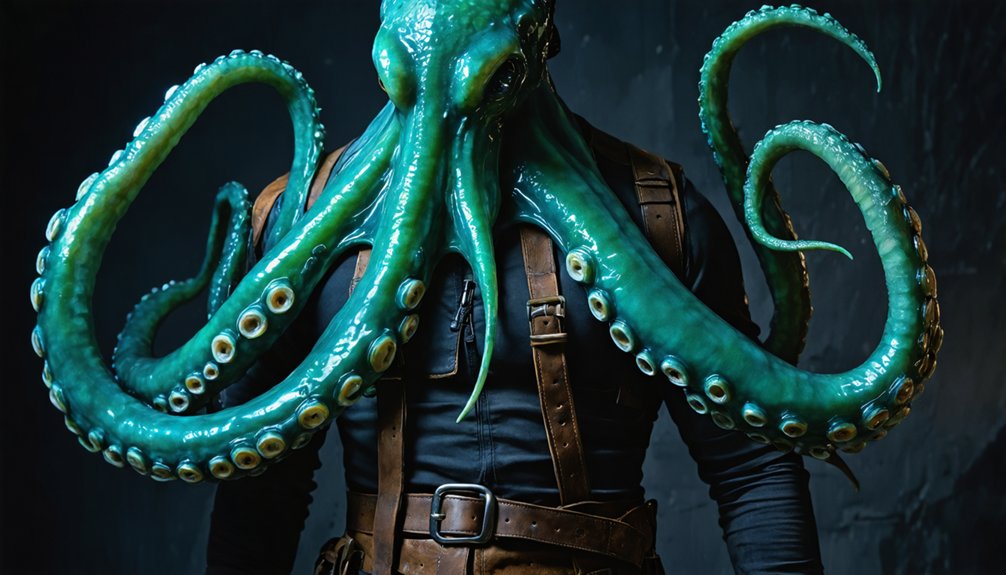
Building a chest harness that handles heavy kraken tentacles requires you to distribute weight intelligently across your torso rather than concentrating stress on any single anchor point.
Effective chest harness designs incorporate wide shoulder straps, crossed back panels, and a reinforced sternum plate that collectively redirect load across multiple muscle groups simultaneously.
Wide shoulder straps, crossed back panels, and a reinforced sternum plate distribute load across multiple muscle groups simultaneously.
Start with a rigid base—thick nylon webbing or boned corsetry material works excellently. You’ll want to integrate multiple attachment points using D-rings positioned at the sternum, shoulders, and lateral ribcage.
These distributed nodes prevent tipping and swaying when tentacles extend outward dramatically.
Mastering weight distribution techniques means padding contact zones with neoprene to prevent bruising during extended wear.
Test your harness loaded before debuting it, adjusting tension incrementally until movement feels balanced and unrestricted.
How to Attach Kraken Tentacle Props Without Damaging Your Costume
Attaching massive Kraken tentacles without wrecking your carefully crafted costume requires choosing the right adhesive, backing, or mechanical system for your specific fabric and prop weight.
You’ll want to match your adhesive choice—spirit gum for skin-adjacent applications, Pros-Aide for flexible fabric bonds, or industrial velcro for heavier foam builds—to the material you’re working with, since using the wrong product tears fibers or leaves permanent residue.
For the most versatile, damage-free solution, integrate modular magnetic attachment points into a structured backing panel that distributes load across a corset or harness, letting you snap tentacles on and off without stressing a single seam.
Adhesive Options For Fabrics
When attaching kraken tentacle props to fabric costumes, you’ll want adhesives that bond securely without leaving residue, warping delicate materials, or compromising the garment’s structural integrity.
Matching adhesive types to fabric compatibility guarantees longevity without destruction.
Consider these targeted solutions:
- Spirit gum bonds lightweight foam tentacles to sturdy woven fabrics without saturating fibers.
- Pros-aide creates flexible, skin-safe connections ideal for stretch-based costumes like spandex or lycra.
- Heat-activated adhesive tape delivers repositionable bonds on structured fabrics, preserving original garment condition.
- Adhesive pads offer residue-free removal on delicate materials including satin and organza.
Always test your chosen adhesive on a hidden fabric section first.
Temperature, humidity, and fabric weave density dramatically affect bond strength, so matching your specific materials prevents costly, irreversible costume damage.
Harness And Backing Systems
Three core harness systems solve the problem of mounting heavy kraken tentacle props without transferring destructive stress onto your costume’s fabric or seams.
First, chest harness materials like nylon webbing distribute weight across your sternum and shoulders, completely bypassing delicate costume layers.
Second, corset-style backing designs integrate rigid boning channels that anchor tentacle mounts structurally, letting your costume float independently over the framework.
Third, plate-style backing designs use rigid thermoplastic sheets positioned against your back, spreading load across a broader surface area.
You’ll want to layer a moisture-wicking underlayer between harness materials and skin for extended convention wear.
Incorporate quick-release buckles at strategic connection points so you’re never trapped inside your rig.
Magnetic secondary attachment points further stabilize individual tentacles while preserving complete modular flexibility.
Modular Magnetic Attachment Points
Magnetic attachment points solve the core dilemma of securing heavy tentacle props without punching holes, stripping threads, or stressing delicate costume fabric. Through magnetic integration, you’re embedding neodymium magnets directly into your tentacle base and corresponding costume backing, creating invisible connection points that hold firmly yet release instantly.
Your modular design benefits include:
- Repositionable placement lets you shift tentacle clusters between costume sections throughout the event.
- Weight-rated magnet pairs (N52 grade recommended) handle props exceeding two pounds reliably.
- Thin ferrous steel backing plates distribute magnetic pull across broader fabric surfaces, preventing localized stress.
- Quick-disconnect capability eliminates fumbling with clasps during crowded convention navigation.
Sew backing plates between costume lining layers before finishing seams, keeping external surfaces completely clean and undisturbed.
Paint and Finish Kraken Tentacles Like a Pro
How you paint and finish your kraken tentacles can mean the difference between a prop that looks like painted foam and one that stops convention-goers dead in their tracks.
Start with strategic paint layering, building your base coat from deep purples and charcoals before introducing mid-tones. Color mixing reveals organic variation — blend ochres, greens, and blues to avoid flat, artificial hues.
Apply textural contrast by dry-brushing raised suction details with lighter pigments while keeping recessed areas shadowed. Surface detailing gets sharper when you stipple veining patterns using sponges or crumpled plastic.
Dry-brush raised details with lighter pigments, keeping recessed areas shadowed for depth that transforms flat foam into something alive.
Aging effects through diluted washes simulate genuine biological wear. Complete your finishing techniques by sealing matte areas while hitting moisture-suggesting zones — suction cups, membrane edges — with targeted gloss medium for striking realism.
Poseable Wire-Core Kraken Tentacles You Can Shape and Reset
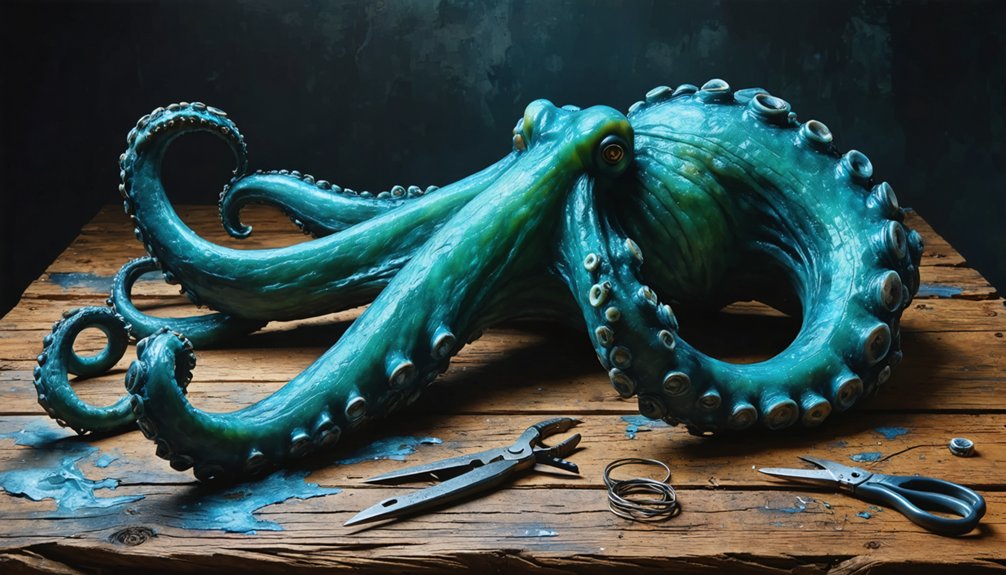
Selecting the right wire core transforms your Kraken tentacles from static props into infinitely repositionable performance pieces — you’ll want to use aluminum armature wire or multi-strand steel cable, sized between 3mm and 6mm depending on your tentacle’s length and required rigidity.
You shape each tentacle by bending the wire core manually, working from the base outward in smooth, progressive curves that mimic the natural coiling motion of cephalopod appendages.
When you’re ready to reset a pose, simply reverse the bend incrementally rather than folding sharply, which prevents metal fatigue and keeps your wire core functional across dozens of convention appearances.
Wire Core Selection
Three wire types dominate poseable tentacle construction, and choosing the right one determines how well your kraken prop holds its shape between resets. Understanding wire core types and wire flexibility lets you build tentacles that actually perform.
- Aluminum armature wire offers excellent shape memory and resists fatigue through repeated repositioning.
- Steel cable provides superior load-bearing strength for longer, heavier tentacle segments.
- Copper wire bundles deliver ultra-fine flexibility for delicate curl details near tentacle tips.
- Twisted multi-strand wire combines rigidity with smooth bending arcs without kinking.
Match your wire gauge to tentacle diameter — thicker sections need 4mm–6mm cores, while tapered tips use 1mm–2mm strands.
Doubling wires increases structural integrity without sacrificing wire flexibility, giving your kraken prop clean, dramatic poses that hold.
Shaping And Resetting
Once your wire core is locked inside the tentacle, shaping becomes an intuitive push-and-pull process — bend from the base first, then work outward toward the tip to avoid kinking the core midspan.
This graduated tentacle shaping technique distributes stress evenly across the wire’s length, preserving structural integrity through repeated adjustments.
For reset techniques, straighten the tentacle by reversing your movement sequence — tip back to base — while supporting the foam or silicone skin against tearing.
Applying gentle heat from a heat gun softens EVA foam builds, allowing cleaner repositioning without creasing the surface material.
Keep movements deliberate rather than sharp. Aggressive bending concentrates fatigue at single stress points, eventually fracturing the wire.
Rotating your tentacle’s curl direction periodically extends core lifespan considerably during heavy convention use.
Mechanical Kraken Tentacle Rigs With Pulleys and Cables
Mechanical Kraken tentacle rigs transform static props into living, breathing performance pieces by harnessing a network of pulleys, cables, and anchor points that translate subtle hand movements into dramatic tentacle articulation.
Mastering rigging techniques requires understanding movement mechanics and how tension travels through each cable segment.
- Route pulley systems along a reinforced harness spine for ideal weight distribution.
- Integrate safety measures like breakaway cable clips preventing sudden snapping under stress.
- Apply balance considerations by counterweighting heavier tentacle segments near attachment points.
- Test performance integration during rehearsals before committing to full convention wear.
Your mechanical design should prioritize smooth, responsive actuation without binding.
Strategic anchor placement keeps motion fluid while preventing strain.
When everything’s properly calibrated, you’ll command genuinely unsettling, organic-looking movement that electrifies any performance space.
Frequently Asked Questions
How Long Do Kraken Tentacle Props Typically Last With Regular Convention Use?
Ironically, your “immortal” sea beast surrenders to time — but you’ll maximize durability factors through proper storage and cleaning. Apply maintenance tips like cool, dry conditions, and your tentacle props typically last 2-3 active convention seasons.
Can Kraken Tentacle Props Safely Pass Through Standard Convention Security Checkpoints?
Your tentacle props can typically pass security checkpoints when you’ve prioritized prop material safety—foam, fabric, and silicone clear most screenings. Always check venue-specific security item classification policies beforehand, as mechanical rigging systems may require additional inspection.
What Storage Solutions Work Best for Transporting Large Kraken Tentacle Cosplay Builds?
Like a nautical vessel securing its cargo, you’ll master tentacle transport using foam-lined hard cases and breathable storage materials—protecting EVA foam and silicone builds from crushing, moisture damage, and UV degradation throughout your convention journey.
Are Kraken Tentacle Props Appropriate for Outdoor Festivals in Hot Weather Conditions?
You’ll want to prioritize heat management when wearing kraken tentacles outdoors. Choose lightweight EVA foam over silicone, seal surfaces with breathable coatings, and guarantee festival readiness by storing props in shaded areas between performances.
How Do You Repair a Damaged Kraken Tentacle Prop Quickly Between Convention Days?
Like a ship’s crew patching sails mid-voyage, you’ll tackle quick repair with Pros-Aide or spirit gum as your adhesive options, resealing foam splits and reattaching silicone tears overnight, keeping your kraken convention-ready.
References
* https://www.youtube.com/watch?v=Ait5tZaRknA