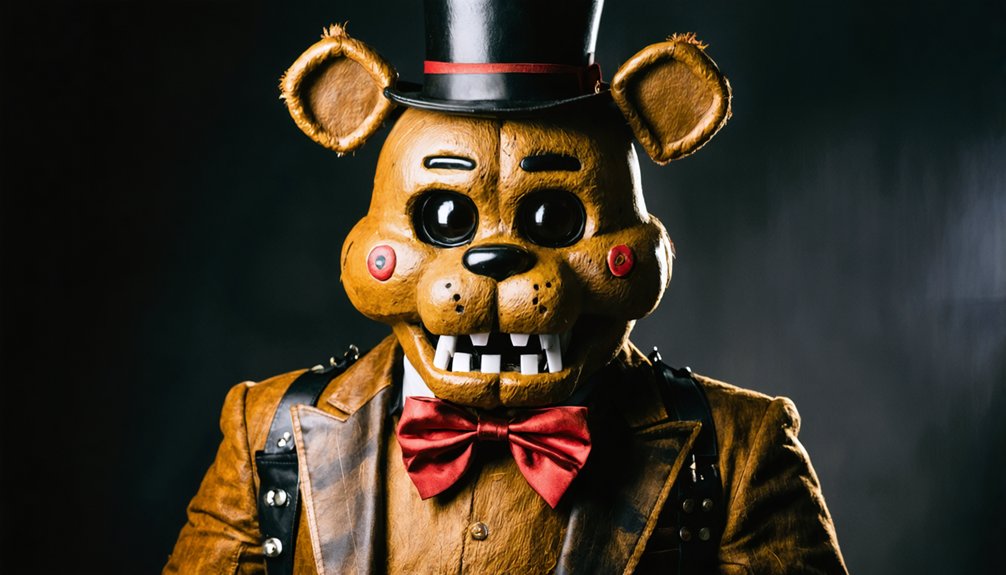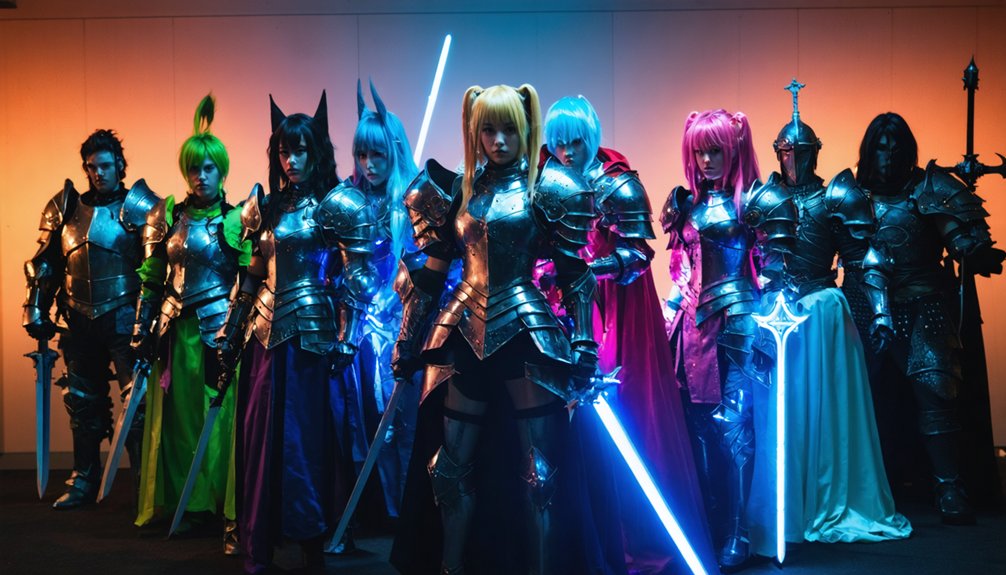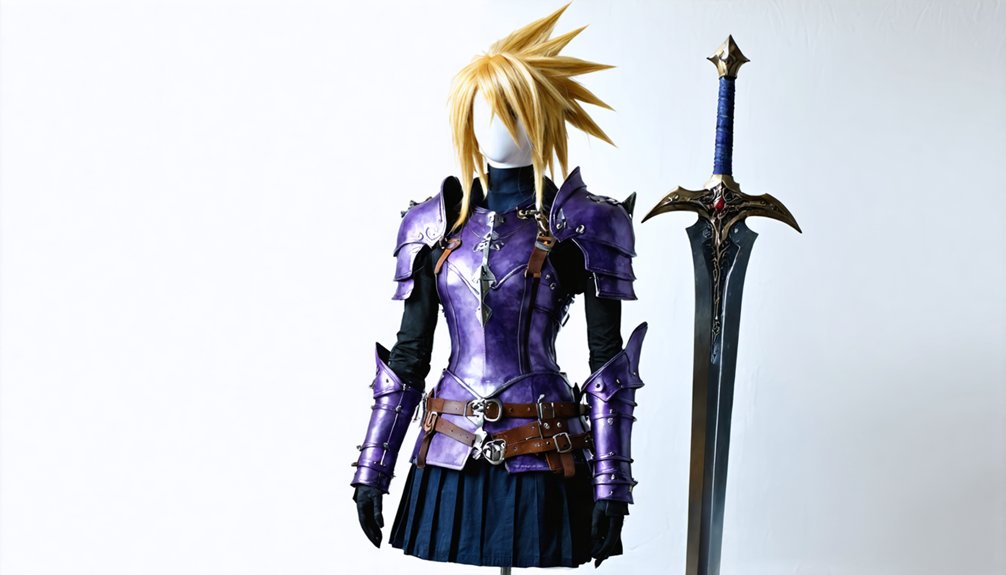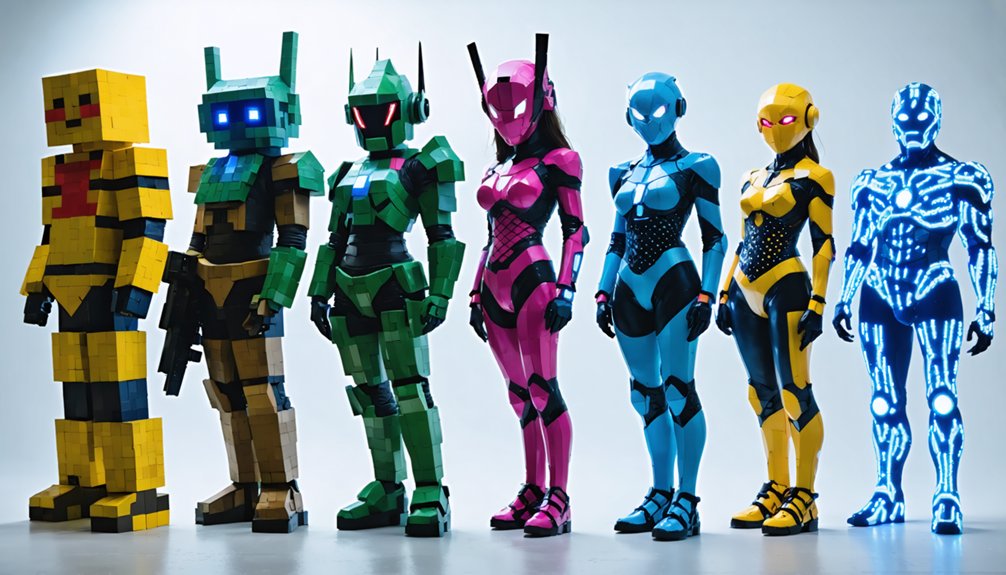
Video game character cosplay traces its roots to a 1939 science fiction convention that established costume competitions, craftsmanship standards, and character embodiment practices. Gaming communities inherited this framework in the 1980s-1990s, when iconic characters like Chun-Li and Link defined visual benchmarks. The 2000s internet era accelerated skill-sharing globally, while professional circuits, thermoplastics, and LED integration transformed cosplay into a disciplined art form. There’s considerably more to this documented evolution than most fans realize.
Key Takeaways
- Cosplay’s roots trace to 1939’s World Science Fiction Convention, where fans wore character costumes, establishing contest formats and craftsmanship standards still used today.
- During the 1980s–1990s, cosplay transferred into gaming fandom, with Nobuyuki Takahashi coining the term by merging “costume” and “play” in Japan.
- Characters like Chun-Li, Link, and Zelda defined 1990s cosplay, establishing bold visual archetypes that drove ongoing costume refinement and craftsmanship standards.
- In the 2000s, platforms like DeviantArt enabled global sharing of tutorials and construction guides, rapidly elevating cosplay skill and quality worldwide.
- Modern cosplay evolved into a professionalized craft through material innovations like thermoplastics and LED integration, alongside sponsorships, brand partnerships, and competitive prize circuits.
How Science Fiction Fandom Invented the Cosplay Template
Before video game characters ever appeared at a convention hall, science fiction fandom had already built the structural template that cosplay would inherit. The first World Science Fiction Convention in 1939 documented fans wearing character costumes, establishing convention-based identity performance as a legitimate social practice.
That early fandom collaboration created shared standards around costume innovation, contest formats, and public character embodiment that later gaming communities would directly adopt. You can trace every major structural element of modern video game cosplay — the masquerade stage, the craft-driven construction, the competitive judging — back to these sci-fi precedents.
Because the video game industry hadn’t yet emerged as a mass fandom, this era operated independently, yet it engineered the exact framework gaming culture would scale dramatically across subsequent decades.
How Sci-Fi Convention Culture Created the Video Game Cosplay Blueprint
What sci-fi fandom built in those early convention decades wasn’t just a costume culture — it was a transferable system. You can trace every core element of modern video game cosplay directly back to those early masquerades: organized competitions, peer critique, and fandom collaboration that pushed costume innovation forward collectively rather than individually.
When gaming fandom emerged in the 1980s and 1990s, it didn’t construct cosplay conventions from scratch. It inherited a documented framework — contest formats, construction techniques, community feedback loops — and applied it to new characters.
The blueprint transferred cleanly because the underlying mechanics were already proven.
What changed wasn’t the system; it was the source material. Game characters simply became the new subjects inserted into structures science fiction fans had already engineered and refined across decades.
How the Word “Cosplay” Emerged Alongside Gaming Fandom in the 1980s
When you trace the word “cosplay” to its origin, you find Nobuyuki Takahashi coining it in the 1980s by merging “costume” and “play,” a label that gave the practice a distinct cultural identity.
Japan’s anime and manga fandoms drove the term’s early momentum, building the social infrastructure that video game fans would soon adopt.
As the game industry expanded through franchises like Street Fighter and The Legend of Zelda, you can see how gaming fandom accelerated cosplay‘s reach beyond its anime origins.
Origin Of The Term
Though gaming fandom and cosplay culture share overlapping roots, the word “cosplay” itself didn’t emerge from gaming circles—it’s widely attributed to Japanese journalist Nobuyuki Takahashi, who coined it in the 1980s by combining “costume” and “play.” Takahashi’s coinage reflected a cultural moment in Japan where fan-driven character dressing had already taken hold through anime and manga communities.
Three documented factors shaped this terminology’s emergence:
- Costume craftsmanship had already evolved into a sophisticated practice within Japanese fan conventions before the term existed
- Fandom participation shifted from passive consumption to active character embodiment, demanding precise vocabulary
- Video game franchises expanding in the 1980s created additional character identities that fans urgently wanted to replicate
This linguistic consolidation gave an emerging global practice a defined, transferable identity.
Japanese Cosplay Culture Rises
As the 1980s reshaped Japan’s entertainment landscape, cosplay culture didn’t develop in isolation—it grew alongside an expanding gaming fandom that gave fans an entirely new roster of characters worth embodying.
Cultural influences from anime, manga, and arcade gaming converged, creating a fertile environment where character identity became something you could physically perform.
Fans sourced accessible costume materials—foam, fabric, and household items—to reconstruct increasingly complex character designs emerging from franchises like Street Fighter and The Legend of Zelda.
Japanese convention culture institutionalized this practice, establishing standards for craftsmanship and character accuracy that later spread internationally.
You can trace today’s global cosplay competitions directly to this decade’s foundational momentum, where gaming fandom and costume culture didn’t simply coexist—they actively shaped each other’s trajectory.
Gaming Fandom Fuels Cosplay
Two forces converged in the 1980s to permanently alter fan culture: the coining of the word “cosplay” and the explosive growth of video gaming as a mass fandom. Nobuyuki Takahashi’s term fused “costume” and “play,” giving the fan community a shared identity and vocabulary precisely when gaming needed one.
Key developments accelerating this convergence included:
- Street Fighter and The Legend of Zelda launching visually iconic characters ideal for costume evolution
- DIY construction becoming the dominant method as commercial options remained scarce
- Gaming fandom expanding the cosplay framework beyond anime into interactive media characters
You can trace today’s sophisticated cosplay competitions directly to this decade’s intersection of language, identity, and expanding game franchises that demanded visual representation from dedicated fans.
Which Video Game Characters Defined 1990s Cosplay?
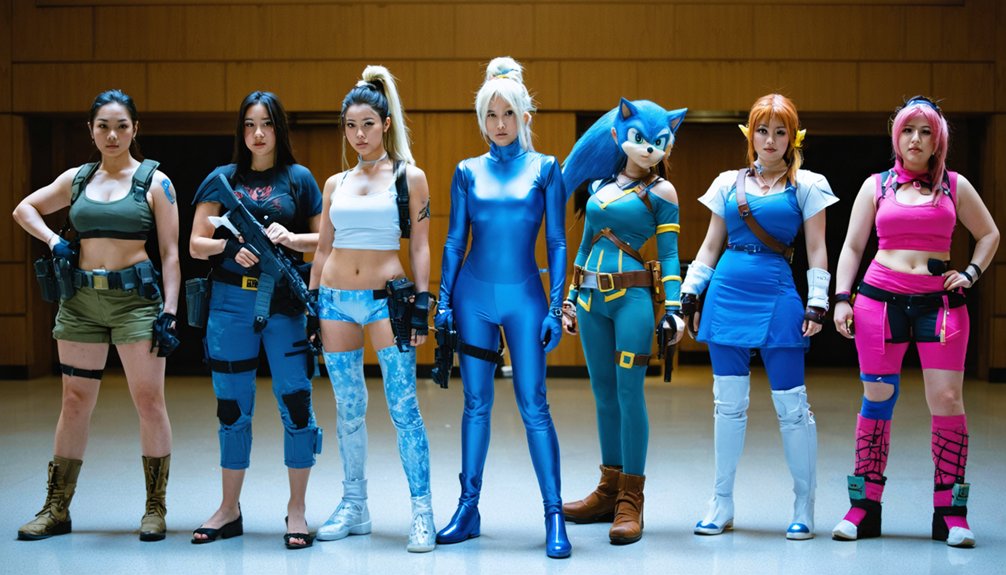
During the 1990s, a handful of video game characters rose to define what cosplay looked like at conventions and fan events. Characters like Chun-Li, Link, and Zelda dominated costume culture because their strong silhouettes, armor, and vibrant color palettes translated powerfully into physical builds.
A handful of 1990s video game characters defined cosplay culture — their bold silhouettes and vibrant palettes made them impossible to ignore.
You can trace cosplay sustainability during this decade directly to these franchise icons — their recurring game appearances gave fans ongoing motivation to refine and revisit costumes.
Fan cosplay economics also shifted as demand for recognizable character builds pushed crafters to develop cost-effective construction methods using accessible materials.
Fighting game and fantasy RPG characters became the visual standard others measured against. These characters didn’t just inspire individual costumes; they established repeatable archetypes that structured how gaming cosplay would develop into the following decades.
How the Internet Transformed Video Game Cosplay in the 2000s
The iconic characters that anchored 1990s cosplay didn’t sustain their cultural momentum on their own — the internet gave that momentum infrastructure. Platforms like DeviantArt and cosplay blogs let you document builds, share tutorials, and benchmark craft standards globally.
Three documented shifts defined this transformation:
- Online communities replaced isolated trial-and-error with collaborative, iterative costume development
- Convention cosplay contests gained wider visibility through digital documentation and cross-platform sharing
- Tutorial exchanges measurably elevated construction quality across the broader cosplay ecosystem
You’re watching a period where cosplay professionalized through networked knowledge. Even early virtual reality and augmented reality discussions began intersecting with costume design conversations, hinting at immersive character embodiment beyond physical fabric.
The 2000s didn’t just accelerate cosplay — they restructured it into a documented, scalable, innovation-driven practice.
The Shift From DIY to Professional Video Game Cosplay Builds
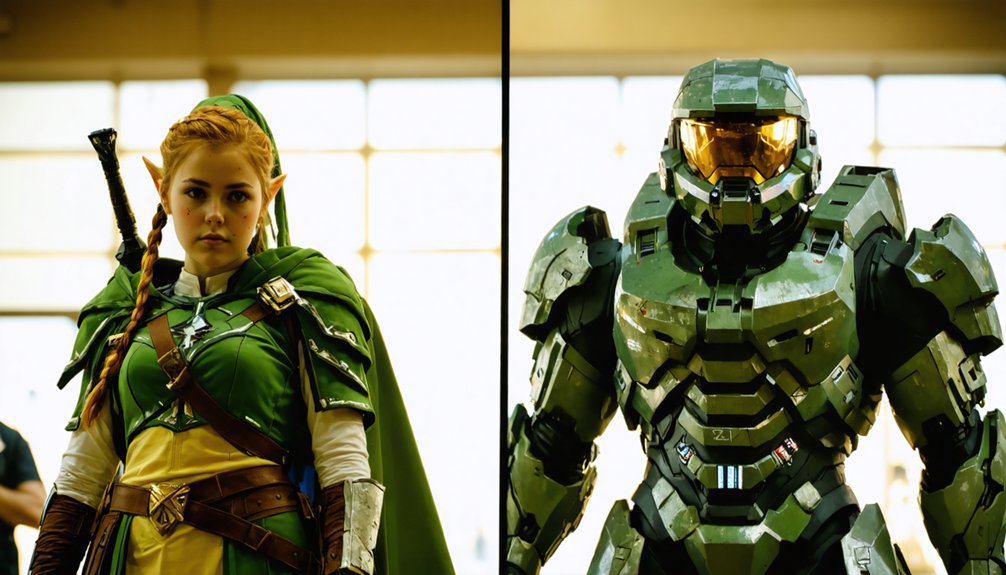
When you trace the arc of video game cosplay, you’ll notice it began as a purely DIY practice driven by necessity—commercial costume options didn’t exist, so fans built everything from scratch using household materials and improvisation.
Online communities then changed the equation by giving you access to shared tutorials, construction techniques, and peer critique that steadily raised the craft’s baseline quality.
That accumulated knowledge eventually fed a competitive circuit where you now see builders applying professional fabrication methods, engineered materials, and performance standards that mirror theatrical costume design.
Early Homemade Costume Beginnings
Before commercial costume infrastructure existed to support it, video game cosplay was a strictly homemade practice built on resourcefulness and fandom commitment. You’d find early adopters constructing game-accurate pieces from foam, fabric scraps, and household materials — a DIY foundation that shaped costume evolution permanently.
Key characteristics defined this formative cosplay fashion period:
- Material improvisation drove creativity, with fans repurposing everyday items into recognizable game character elements
- Limited references forced builders to work from pixelated sprites and low-resolution screenshots
- Community knowledge-sharing happened offline, through conventions and zines rather than digital platforms
These constraints didn’t diminish quality ambitions — they sharpened problem-solving instincts. Early builders established the technical and creative benchmarks that professional cosplay would later standardize and scale considerably.
Online Communities Elevated Craftsmanship
As internet platforms emerged in the early 2000s, they fundamentally restructured how cosplayers learned, shared, and competed — collapsing the geographic and informational barriers that had kept craftsmanship uneven across fan communities.
DeviantArt and early cosplay blogs gave you direct access to construction breakdowns, pattern drafts, and sourcing guides for specialized costume materials previously unknown outside niche circles. You could now reverse-engineer a professional build by studying cosplay photography that documented each fabrication stage.
This transparency accelerated skill transfer dramatically. What once required years of isolated trial-and-error compressed into months of community-guided iteration. Costume quality standardized upward as collective knowledge replaced individual guesswork.
The shift wasn’t incidental — online infrastructure systematically converted hobbyist dress-up into a craft discipline with documented methodology, measurable benchmarks, and increasingly competitive construction standards.
Competitive Cosplay Goes Professional
Once online communities standardized construction knowledge, competitive cosplay didn’t stay amateur for long. You can trace the professionalization arc through measurable shifts in cosplay economics and costume innovation across major gaming events.
Key markers of this progression include:
- Structured competition circuits at PAX, gamescom, and Tokyo Game Show formalized judging criteria around craftsmanship, performance, and accuracy
- Costume innovation accelerated as competitors integrated electronics, fabrication techniques, and engineered materials into builds
- Cosplay economics expanded into sponsorships, brand partnerships, and dedicated prize pools rewarding technical excellence
What emerged wasn’t simply better costumes—it was an entirely redefined practice. You’re now looking at a discipline where construction methodology rivals theatrical costume design.
Video game character cosplay had shifted from fan expression into a documented, competitive craft with professional stakes.
Iconic Video Game Characters That Shaped Cosplay History
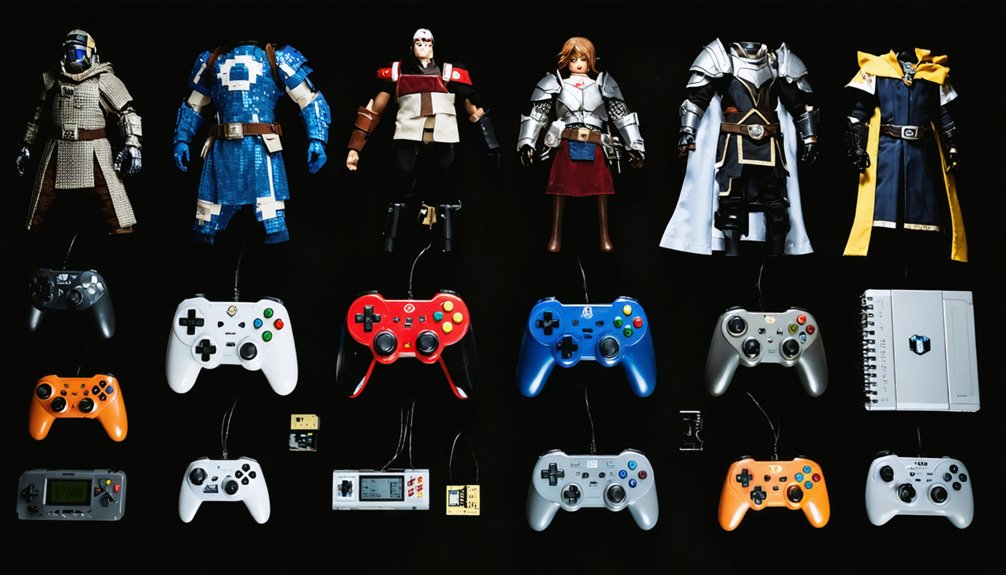
Several video game characters have functioned as pivotal anchors in cosplay history, shaping how fans approach character recreation at a craft and cultural level. Characters like Chun-Li, Link, and Zelda didn’t just inspire costumes — they redefined cosplay fashion by demanding structural precision, material research, and visual fidelity.
Their distinctive silhouettes pushed crafters toward higher standards of character authenticity, requiring you to replicate specific armor geometry, color accuracy, and accessory detail that casual dress-up couldn’t achieve. These characters became measurable benchmarks within competitive and community spaces.
When you examine cosplay’s evolution, these figures consistently appear as turning points where fan expression transformed into disciplined craft. Their recurring presence across decades confirms their role as cultural anchors that continue shaping how cosplayers define excellence and identity.
How Gaming Conventions Made Video Game Cosplay a Main Event
Gaming conventions didn’t just host cosplay — they institutionalized it. By the 2000s, events like PAX and gamescom weren’t treating game cosplay as peripheral; they were building infrastructure around it. You can trace the shift through three documented developments:
- Dedicated cosplay contest circuits emerged, rewarding both costume durability and performance quality
- Convention staff began enforcing cosplay etiquette policies, signaling that cosplay held formal event status
- Gaming brands started partnering with cosplayers, transforming fans into marketing assets
These structural changes redefined participation. You weren’t just attending a convention — you were entering a competitive, community-regulated space where craftsmanship standards rose annually.
Costume durability became a measurable factor, and cosplay etiquette evolved into enforceable convention policy. Conventions didn’t follow cosplay culture; they actively shaped its trajectory.
Why Professional Builds and Global Events Define Video Game Cosplay Now
What conventions institutionalized, the broader global market refined. You’re now operating in an era where costume material innovations—thermoplastics, EVA foam engineering, LED integration, and resin casting—have transformed amateur builds into gallery-worthy constructions.
These aren’t weekend projects; they’re documented craft disciplines with measurable benchmarks.
Fan community influence accelerated this shift. Online platforms redistributed technical knowledge rapidly, compressing skill-development timelines that once took years into months.
Competitive circuits at PAX, gamescom, and Tokyo Game Show formalized evaluation standards, rewarding precision and innovation equally.
You’re witnessing cosplay function as both cultural documentation and artistic production.
Game publishers now recognize professional cosplayers as brand amplifiers, blurring the boundary between fandom and marketing.
The discipline has become self-sustaining, globally distributed, and analytically inseparable from contemporary gaming culture’s identity architecture.
Frequently Asked Questions
What Materials Are Most Commonly Used in Video Game Cosplay Today?
You’ll find EVA foam, thermoplastics, and 3D-printed components dominating today’s builds, maximizing costume durability. You’re also integrating professional cosplay makeup and LED elements, reflecting an analytically documented shift toward innovative, high-performance material choices.
How Much Does an Average Professional Video Game Cosplay Costume Cost?
You’ll typically spend $500–$2,000 on a professional video game cosplay costume. Costs scale with character accuracy and costume durability, as innovative builders invest heavily in precision materials, advanced fabrication techniques, and detailed finishing that competitive circuits now demand.
Are There Age Restrictions for Entering Video Game Cosplay Competitions?
Bright lights, roaring crowds—you’ll find cosplay contest rules vary by event. Most competitions use age verification procedures to separate junior and open divisions, so you’d check each convention’s specific guidelines before entering.
How Long Does It Typically Take to Complete a Cosplay Build?
You’ll typically spend weeks to months completing a build, depending on complexity. When crafting prop weapons, you’re investing significant time ensuring costume durability, as documented costume-building practices from the 1960s onward confirm elaborate construction demands sustained, innovative effort.
Do Video Game Companies Sponsor or Support Cosplay Events Officially?
With over 40% of major gaming expos featuring branded cosplay zones, yes—you’ll find that video game companies actively pursue event sponsorship, strengthening the cosplay community through official contests, character showcases, and dedicated convention partnerships.
References
- https://en.wikipedia.org/wiki/Cosplay
- https://www.gamody.com/article/the-evolution-of-gaming-cosplay-and-its-role-at-major-conventions
- https://www.reddit.com/r/animecons/comments/1i6atls/is_it_acceptable_to_cosplay_a_video_game/
- https://www.youtube.com/watch?v=cQBJZkU3GP0
- https://blogs.plitch.com/en/blog/cosplay-at-gaming-conventions
- https://www.tpr.org/arts-culture/2025-08-29/san-japan-the-anime-and-gaming-convention-returns-to-san-antonio
- https://en.gamefa.com/3044/the-art-of-cosplay-from-origins-to-future/
- https://www.youtube.com/watch?v=5UO2-LOP7TQ
- https://www.britannica.com/topic/cosplay
- https://www.watchmojo.com/video/top-10-most-cosplayed-video-game-characters-of-all-time