Fostering positivity in your cosplay community starts with celebrating creativity and diversity over perfection. You’ll want to shut down accuracy policing, champion body inclusivity, and establish clear anti-harassment guidelines everyone can see. Encourage group activities that bond members across skill levels, and build social media habits that protect your space from gatekeeping and negativity. When you prioritize empowerment over judgment, your community truly thrives — and there’s so much more to explore ahead.
Key Takeaways
- Dismantle accuracy policing and celebrate body diversity to create an inclusive environment where creativity and reimagined designs are welcomed without judgment.
- Establish clear community guidelines addressing harassment, consent, and reporting mechanisms to ensure members feel consistently safe and supported.
- Strengthen community bonds through group cosplays, creative workshops, and feedback circles that pair experienced cosplayers with newcomers.
- Promote positive social media practices by enforcing inclusive policies, highlighting member milestones, and providing accessible mental health resources.
- Design beginner-friendly participation formats, sensory-friendly spaces, and mentorship programs to ensure accessibility for all skill levels and needs.
Why Do Cosplay Communities Struggle With Negativity?
Understanding these struggles is your first step toward meaningful change.
Recognizing the root causes empowers you to actively reshape your community’s culture.
Celebrate Every Body in Your Cosplay Space
You have real influence here.
Use it to create a space where everyone feels seen, celebrated, and genuinely welcomed.
Shut Down Cosplay Accuracy Policing for Good
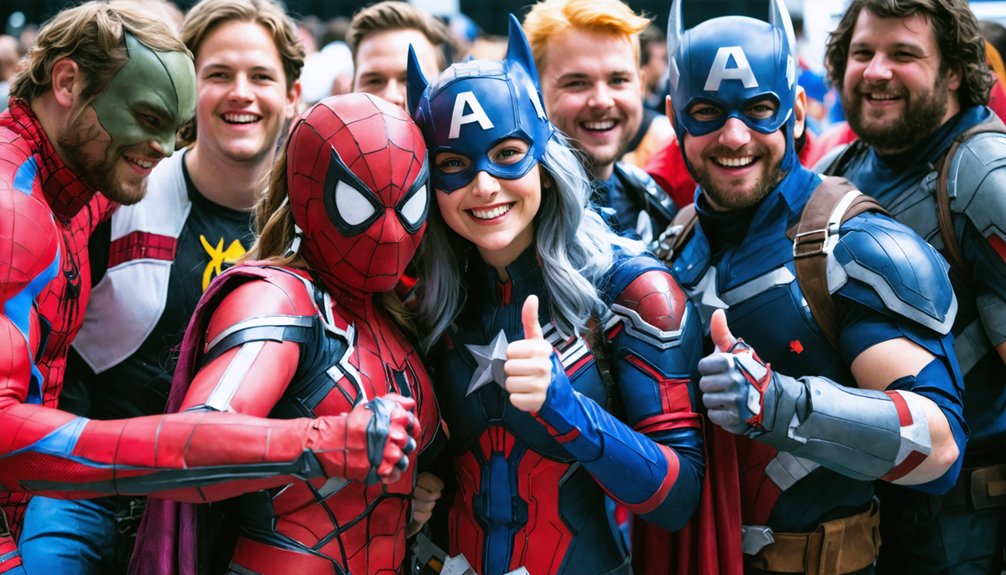
Accuracy policing is one of the most damaging behaviors in cosplay spaces, and you have the power to stop it in its tracks. When someone critiques another’s costume for being “too inaccurate” or their body for not matching a character’s look, speak up directly and redirect the conversation.
Cosplay creativity thrives when people feel safe to interpret characters through their own lens. Body diversity isn’t a deviation from cosplay—it’s what makes the community richer and more innovative.
Cosplay flourishes when creators feel free to reimagine characters boldly—diversity of expression is the community’s greatest strength.
Movements like Anyone Can Cosplay prove that representation matters more than rigid accuracy standards.
Set clear expectations in your community: critique isn’t welcome unless requested. Normalize celebrating reimagined designs and diverse portrayals.
When you actively dismantle policing culture, you build a space where everyone creates boldly.
Build Social Media Habits That Protect Your Members
Social media’s double-edged nature means it can amplify your community’s best moments while quietly fueling harmful comparisons among your members.
Prioritize social media mindfulness by establishing clear content creation guidelines that celebrate diverse cosplays without ranking accuracy or body presentation.
Deploy positive engagement strategies like highlighting member milestones and sharing encouragement-focused posts.
Build community feedback loops so members actively shape platform culture rather than passively absorbing it.
Strengthen digital support networks by connecting members to mental health resources directly within your platforms.
Use online event promotion to spotlight inclusive participation opportunities, reinforcing belonging.
Finally, enforce inclusive platform policies that swiftly address body-shaming or gatekeeping comments.
When your community intentionally designs its digital spaces, social media transforms from a comparison trap into a genuine empowerment tool.
Use Group Cosplays to Strengthen Community Bonds
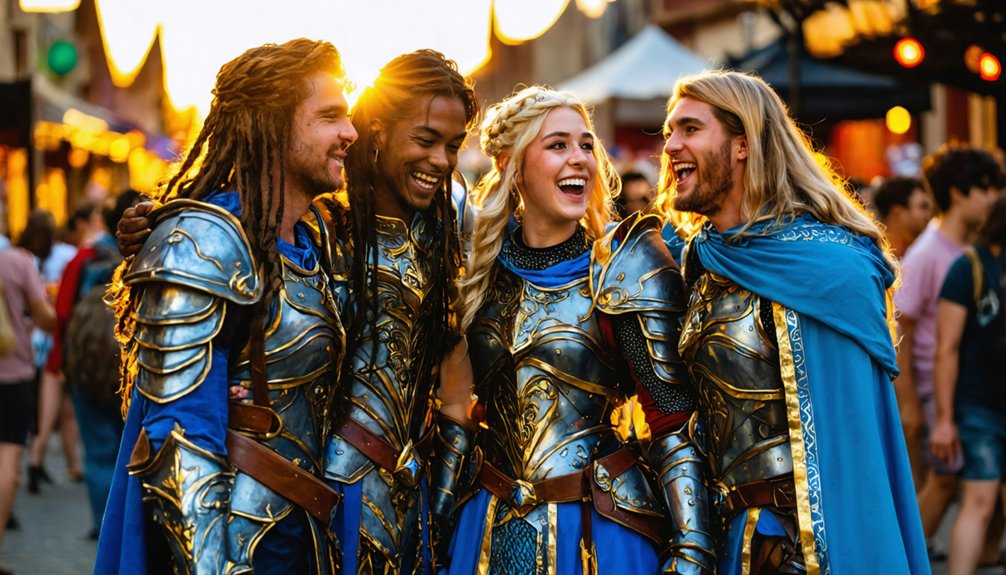
When you coordinate costumes with others, you’re doing more than matching outfits — you’re building real connections that strengthen your community’s foundation.
Research shows that nearly half of all cosplayers collaborate on group costumes two to five times per year, and those shared experiences create lasting social bonds.
Coordinating Costumes Builds Bonds
Group cosplays are one of the most powerful ways to forge lasting bonds within the cosplay community. When you coordinate costumes with others, you’re blending costume creativity with character collaboration to create something far greater than any solo effort.
Shared experiences naturally emerge through group dynamics, whether you’re attending cosplay workshops, refining skill-sharing techniques, or diving into narrative crafting together.
Inclusive practices guarantee everyone contributes meaningfully, regardless of experience level. You can explore identity exploration collectively, letting each member bring their unique perspective to your group’s vision.
Community storytelling becomes richer when diverse voices shape the final presentation.
Research confirms that nearly half of cosplayers coordinate costumes two to five times yearly, proving that intentional group engagement consistently strengthens connections and cultivates a more vibrant, supportive cosplay culture for everyone involved.
Group Cosplay Fosters Belonging
Belonging thrives when you step into a group cosplay, transforming individual creativity into a shared identity that binds people together. Group dynamics strengthen naturally when you coordinate themes, distribute roles, and celebrate each member’s unique contributions.
Through creative collaboration, you’ll discover that shared experiences build lasting friendships beyond convention floors.
Mutual support becomes your foundation—teammates help refine costumes, troubleshoot last-minute challenges, and champion one another’s visions. Collective enthusiasm elevates everyone’s confidence, making inclusive practices essential for welcoming cosplayers of all skill levels.
Teamwork benefits extend beyond aesthetics; you’re co-creating memories that reinforce community belonging.
Prioritize meaningful social interactions by intentionally inviting diverse participants into your group projects. When everyone feels valued, your cosplay circle evolves into a powerful, innovation-driven community rooted in genuine connection.
Design Participation Formats Any Skill Level Can Join
When designing events, you can create beginner-friendly structures that welcome newcomers without intimidating them, such as guided costume walks or low-stakes showcases where participation matters more than polish.
You’ll strengthen your community further by organizing skill-inclusive challenges that let experienced and novice cosplayers compete in separate tiers or collaborate on shared themes.
These formats signal to everyone that your space values creativity and effort over technical perfection.
Beginner-Friendly Event Structures
Designing beginner-friendly event structures means building participation formats that welcome cosplayers at every skill level, from first-timers piecing together a closet cosplay to seasoned crafters debuting elaborate builds.
Prioritizing costume accessibility removes financial and skill barriers that discourage new participants. Try these three structural approaches:
- Host beginner workshops covering basic construction techniques, helping newcomers build confidence before the main event.
- Create tiered competition categories so first-time cosplayers aren’t competing directly against experienced builders.
- Offer designated “no-judgment” showcase spaces where participation matters more than execution.
These formats reflect what research confirms: regular cosplay engagement, even two to five times yearly, strengthens community bonds and self-expression.
When your event structure signals that everyone belongs, you attract a diverse, energized community that keeps growing.
Skill-Inclusive Costume Challenges
Pair these challenges with skill sharing workshops where veterans and newcomers exchange techniques without hierarchy.
Everyone teaches something; everyone learns something. This dynamic strengthens community bonds while reducing the intimidation that often keeps beginners on the sidelines.
Replace harsh costume critique with structured, constructive feedback sessions that celebrate effort alongside execution.
When participants feel genuinely supported rather than judged, they engage more boldly and return consistently.
Inclusive challenge formats don’t lower standards—they expand who gets to meet them.
Support Queer and Neurodivergent Cosplayers Actively
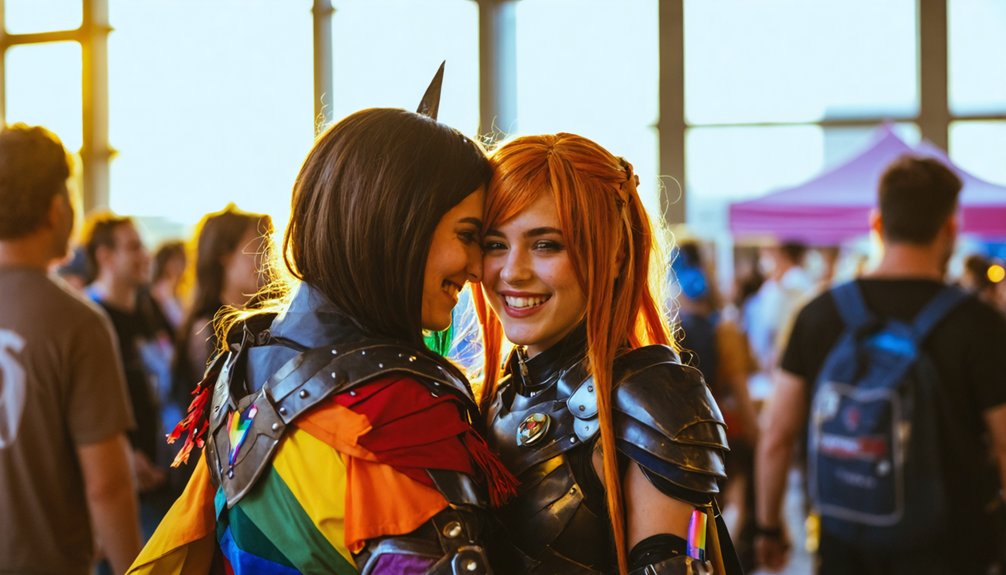
Cosplay spaces offer queer and neurodivergent participants something genuinely valuable: an environment where differing social norms make gender-diverse expression and neurodivergent behaviors more accepted.
You can strengthen that foundation through intentional community engagement:
- Champion queer representation and neurodivergent visibility by spotlighting diverse characters and intersectional cosplaying in celebration events, making inclusive storytelling central rather than supplemental.
- Provide accessibility resources and supportive mentorship that address mental health needs, ensuring sensory-friendly spaces and clear communication options are available at conventions.
- Normalize intersectional identities by actively celebrating cosplayers who blend multiple marginalized experiences into cohesive, authentic self-expression.
When you embed these practices into your community’s culture, you’re not just accommodating difference — you’re innovating how cosplay communities define belonging, creativity, and collective strength.
Make Cosplay Conventions Safer for Everyone
To make cosplay conventions safer for everyone, you’ll need to start by establishing clear safety guidelines that address harassment, consent, and inclusive behavior.
Train your volunteers and staff to enforce these guidelines consistently and compassionately, so attendees feel genuinely protected.
Finally, create accessible reporting systems that allow anyone to flag concerns quickly and confidentially, reinforcing a culture where safety isn’t just a policy—it’s a shared commitment.
Establish Clear Safety Guidelines
Safety guidelines are the backbone of any thriving cosplay convention, ensuring everyone feels welcome and protected. When you’re organizing or attending events, clear community guidelines make participation safer and more enjoyable for all.
Here’s how to establish effective safety measures:
- Post visible codes of conduct at entrances and digital platforms, outlining respectful behavior expectations.
- Create accessible reporting systems so attendees can quickly flag harassment or unsafe situations without fear.
- Train volunteer staff to recognize and respond to boundary violations, reinforcing community guidelines consistently.
When conventions prioritize structured safety measures, they transform into genuinely inclusive spaces.
You’ll notice stronger participation, deeper connections, and greater creativity flourishing naturally. Clear guidelines don’t restrict expression—they protect it, empowering everyone to engage authentically and confidently within the cosplay community.
Train Volunteers And Staff
Establish strong support networks and feedback mechanisms so staff can share concerns and refine approaches continuously.
Prioritize resource sharing to guarantee every team member has the tools they need to create an environment where all cosplayers feel genuinely valued and safe.
Create Accessible Reporting Systems
When cosplayers feel safe reporting concerns, conventions become genuinely welcoming spaces for everyone. Accessible feedback tools empower attendees to voice member concerns without fear.
Implement these core reporting mechanisms:
- Anonymous submissions portals — Let attendees flag issues confidentially, encouraging honest, constructive criticism without social risk.
- Transparency initiatives — Publish regular updates on reported concerns and resolutions, reinforcing trust through inclusive dialogues and open community engagement.
- Supportive policies with clear escalation paths — Guarantee safety reporting procedures are posted visibly, outlining exactly how staff responds to each concern.
You’ll strengthen your convention’s culture by making these systems intuitive and multilingual.
When attendees see their feedback driving real change, participation grows, belonging deepens, and your community evolves into a genuinely innovative, inclusive environment.
Champion the Anyone Can Cosplay Movement
Research confirms cosplay participation positively shifts body image perception—so keep championing this movement boldly and consistently.
Structure Community Activities That Build Member Confidence
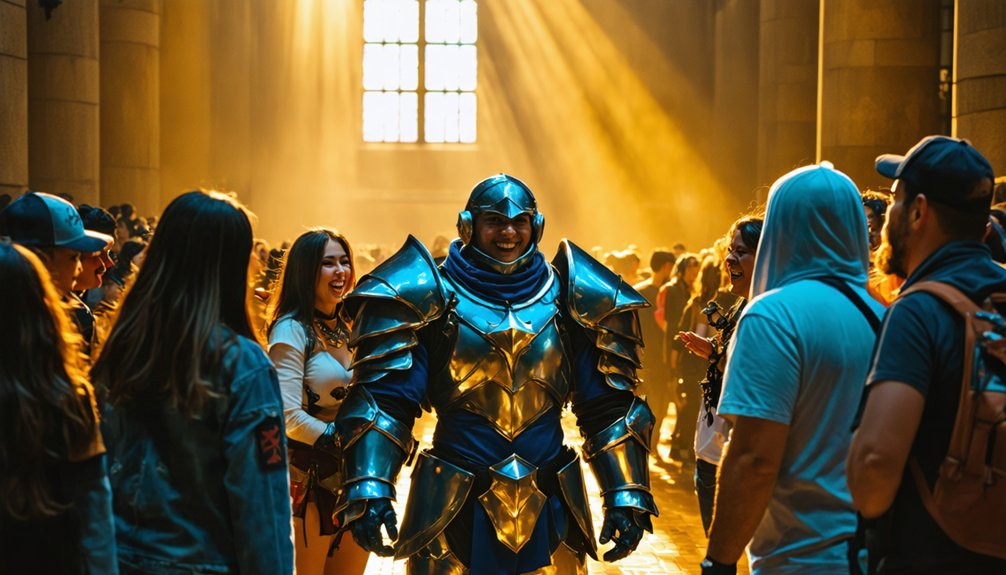
Structuring community activities around shared creative goals gives your members a natural sense of belonging and purpose. Confidence building happens organically when you design spaces that celebrate growth over perfection.
Try these empowerment sessions to get started:
- Creative workshops and skill sharing — Pair experienced cosplayers with newcomers for collaborative projects that strengthen technical abilities and deepen connections.
- Feedback circles — Establish structured, positive reinforcement sessions where members exchange constructive insights without judgment, normalizing vulnerability.
- Community showcases — Host regular events highlighting diverse member work, reinforcing that every skill level deserves recognition.
These formats activate cosplay’s natural capacity for play and social engagement. When members see their contributions valued, they’re more willing to innovate, experiment, and champion each other’s creative journeys forward.
Frequently Asked Questions
How Does Cosplay Frequency Affect a Member’s Long-Term Psychological Wellbeing?
When you cosplay 2-5 times yearly, you’re actively building emotional resilience and strengthening community support. Regular participation boosts your confidence, reduces social anxiety, and fosters belonging—key ingredients for long-term psychological wellbeing and innovative self-expression.
Can Financial Barriers to Cosplay Negatively Impact Body Image Satisfaction?
Yes, financial barriers can hurt your body image satisfaction. When financial accessibility limits your cosplay options, it’s harder to embrace body positivity. Don’t let costs define you—creative, budget-friendly solutions can still empower your self-expression!
How Does Masking During Cosplay Influence a Cosplayer’s Sense of Identity?
42% of cosplayers feel *more* themselves behind a mask! Masking fuels your identity exploration, letting you shed everyday pressures. It’s a powerful tool for authentic emotional expression, helping you discover who you truly are.
What Brain Functions Does Cosplay Actually Activate During Community Participation?
When you participate in cosplay, you’re activating your brain’s sense of play and social language centers, fueling a creativity boost and social bonding that strengthen community connections—it’s an innovative, inclusive experience designed just for you!
How Often Do Cosplayers Typically Coordinate Costumes With Other Community Members?
Like bees building a hive together, you’ll find that nearly half of cosplayers (48%) engage in costume collaboration 2-5 times yearly, weaving community bonding into each shared creative experience that strengthens your collective identity!
References
- https://researchonline.stthomas.edu/view/pdfCoverPage?instCode=01CLIC_STTHOMAS&filePid=13450340620003691&download=true
- https://papers.iafor.org/wp-content/uploads/papers/acp2015/ACP2015_08467.pdf
- https://trace.tennessee.edu/cgi/viewcontent.cgi?article=12348&context=utk_graddiss
- https://intensitiescultmedia.com/wp-content/uploads/2013/07/expressions-of-fandom-findings-from-a-psychological-survey-of-cosplay-and-costume-wear-robin-s-rosenberg-and-andrea-m-letamendi.pdf