Honoring intellectual property in cosplay means understanding what copyright actually protects and where your legal risks lie. Physical garments get weak protection, but props, armor, logos, and distinctive symbols like Superman’s “S” carry much stronger rights. Selling costumes without a license puts you in direct infringement territory, regardless of fan community norms. Fair use defenses exist, but only if you’ve made genuinely transformative creative choices. Keep exploring to understand exactly where those legal lines fall.
Key Takeaways
- Physical garments have weak copyright protection, but props, armor, and logos like Superman’s “S” carry stronger, independent protections.
- Selling costumes without a license constitutes infringement, as commercial sales directly threaten copyright holders’ revenue streams.
- Fair use requires genuine creative transformation; simply scaling or swapping materials does not qualify as transformative use.
- Reproducing recognizable symbols, logos, or detailed armor designs increases infringement risks, especially in commercial contexts.
- Developing original characters, securing licenses, and documenting creative processes are the safest approaches to cosplay commercialization.
What Does Copyright Actually Protect in Cosplay?
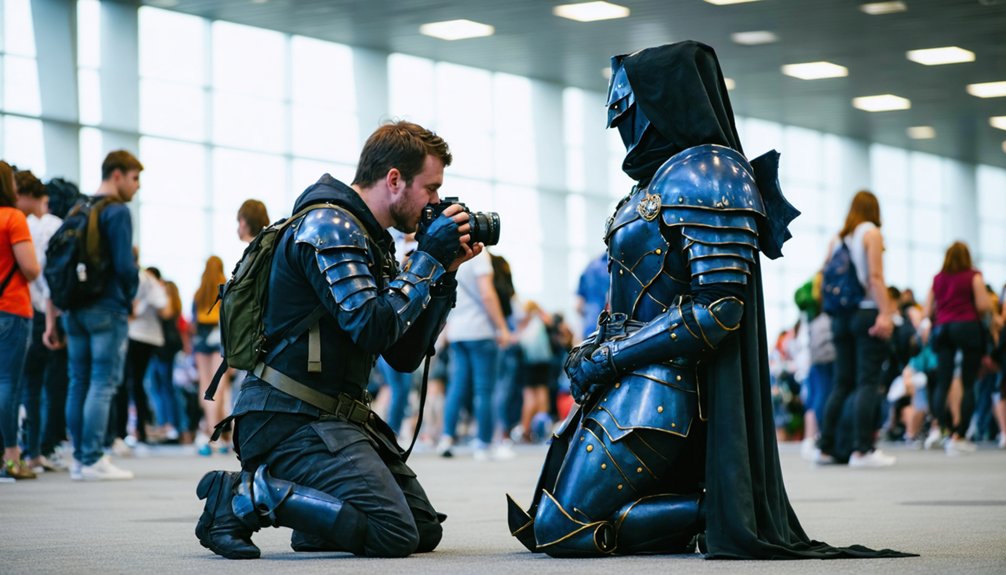
When you craft a cosplay costume, copyright law doesn’t protect everything equally—and understanding those distinctions matters. Physical garments typically receive weak protection, but props, armor, and accessories qualify as sculptural works—making them far more vulnerable to infringement claims.
Not all costume elements carry equal legal risk—props and armor face far greater copyright scrutiny than the garments beneath them.
Specific graphic elements, like Superman’s iconic “S,” carry independent copyright protection regardless of the garment beneath them.
Design originality determines where protection begins and ends. Animated and drawn characters enjoy stronger protections than their physical counterparts because they contain numerous distinctive design elements. The more unique a character’s visual representation, the more enforceable its copyright becomes.
If you’re building an original character, design originality is your greatest legal asset—and your strongest creative differentiator. Understanding these boundaries helps you innovate confidently without inadvertently crossing into protected territory.
When Does Your Cosplay Costume Become Copyright Infringement?
When you sell a commissioned cosplay costume without a license, you’re crossing from fan expression into copyright infringement, since IP owners hold exclusive economic rights over derivative works.
You can, however, defend your work under fair use if your costume adds new expression or meaning rather than faithfully replicating the original character.
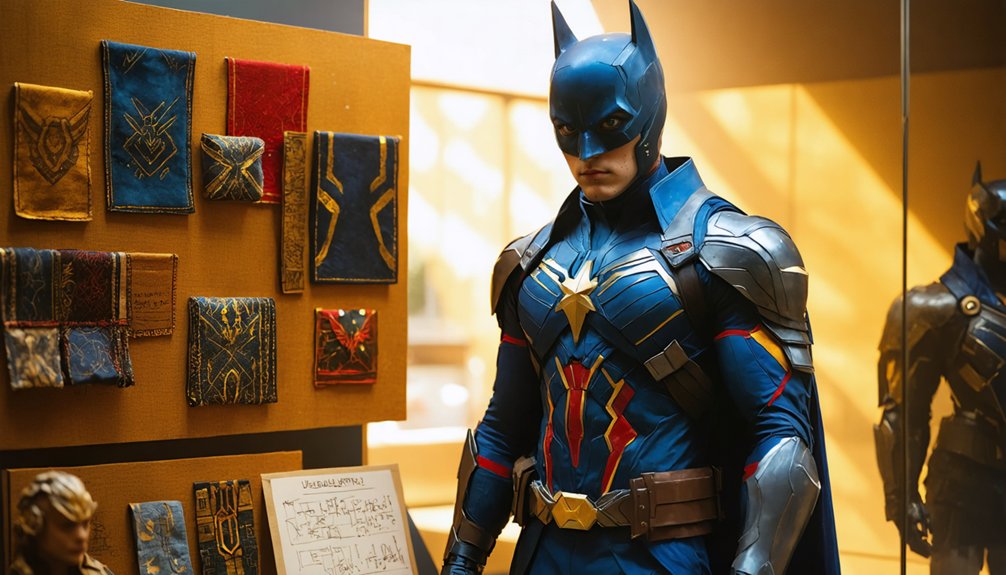
Beyond the garment itself, you must also account for props, armor, and symbols—Superman’s “S,” for instance, carries independent copyright protection as a sculptural or graphic work, making it a separate infringement risk.
Commercial Sales Trigger Infringement
The moment you attach a price tag to that meticulously crafted costume, you’ve crossed a critical legal threshold. Selling commissioned cosplay costumes without proper licensing constitutes copyright infringement, period.
Copyright holders maintain exclusive economic rights over derivative works — and your replica falls squarely within that category.
Mass-produced costumes substantially amplify infringement risks considerably, directly threatening a copyright holder’s revenue streams. Unlike cosplay photography or fan art licensing, which sometimes navigate fair use territory through transformative expression, commercial costume sales rarely qualify for similar protections.
Your safest commercial strategy involves designing original characters with distinctive visual identities rather than reproducing existing intellectual property.
If you’re committed to selling licensed character costumes, securing an official License Agreement isn’t optional — it’s legally mandatory and commercially advantageous, often commanding premium pricing.
Transformative Use Provides Protection
Transformative use offers a potential legal shield, but it’s a narrow one that most cosplayers misunderstand. Your costume qualifies for protection only when it demonstrates genuine creative transformation, not mere replication.
Courts evaluate three critical factors:
- New expression added — You’ve introduced original meaning beyond the source material.
- Artistic originality present — Your design choices reflect distinguishable, non-trivial creative decisions.
- Market impact minimized — Your work doesn’t substitute for the copyright holder’s commercial interests.
Faithful replicas rarely satisfy these standards. Simply switching materials or scaling a design doesn’t constitute transformation.
You’ll need demonstrable creative departures—reinterpreted color palettes, structural modifications, or conceptual reimagining—to mount a credible fair use defense. Without these elements, you’re reproducing, not transforming.
Props And Symbols Matter
Beyond the costume itself, props, armor, and accessories introduce a distinct layer of copyright exposure that many cosplayers overlook. Unlike garments, copyright law classifies these elements as sculptural works, granting them stronger legal protection.
Your accessory design choices carry real legal weight—armor pieces, weapons, and replicated objects with consistent, widely identifiable traits are fully eligible for copyright protection.
Visual symbolism amplifies this risk further. Specific insignias printed or embedded into a costume—like Superman’s “S”—hold independent copyright protection separate from the broader character.
You’re not just reproducing a costume when you replicate these symbols; you’re copying a protected expression.
The more distinctive and recognizable the prop or symbol, the stronger the IP holder‘s claim becomes against unauthorized reproduction, especially in commercial contexts.
What Fair Use Defenses Can Cosplayers Actually Rely On?
When it comes to copyright infringement, fair use serves as your primary legal shield—but it’s not a blanket protection. Courts evaluate fair use case-by-case, weighing four factors that directly impact your cosplay activities.
Fair use is your legal shield against copyright infringement—but courts weigh every cosplay case individually.
- Transformative purpose: Your work must add new expression or meaning—fan art and parody cases succeed here most often.
- Commercial vs. non-commercial use: Personal costumes carry far less legal risk than commissioned or mass-produced pieces sold for profit.
- Market harm: If your cosplay undermines the copyright holder’s revenue stream, fair use arguments weaken considerably.
Without a license, you’ll need a legitimate fair use defense to incorporate protected elements legally. The safest path? Build original characters that sidestep these complexities entirely while still showcasing your creative vision.
Do Props, Armor, and Symbols Face Stricter Copyright Rules?
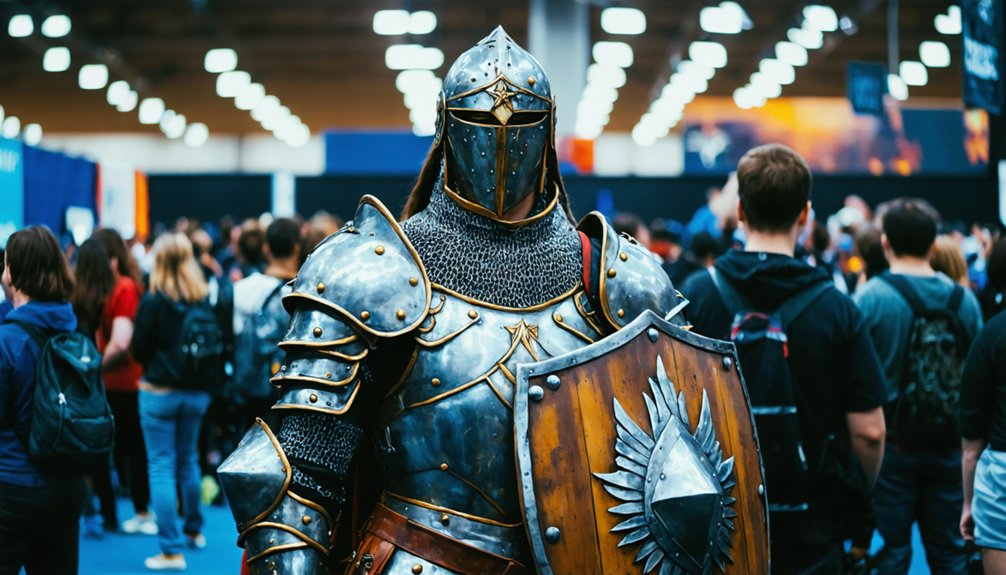
Props, armor, and accessories operate under stricter copyright rules than standard clothing because the law classifies them as sculptural works—a category that carries stronger protections. Unlike garments, which copyright law covers weakly, sculptural works demand that you obtain proper authorization before replicating them commercially.
Symbols compound this challenge further. Designs like Superman’s “S” hold independent copyright status, meaning you can’t reproduce them without risking infringement—even on otherwise generic clothing. Artistic interpretations of props, including 3D models and detailed drawings, receive equal protection.
If you’re pursuing material modifications to existing prop designs, those changes must demonstrate non-trivial distinguishable variation to qualify as transformative. Without clear differentiation, your work remains legally tied to the original.
Prioritizing original sculptural designs protects both your creativity and your commercial activity.
Can You Legally Sell Cosplay Costumes Without a License?
Stricter rules for props and symbols set the stage for an even sharper legal reality: selling cosplay costumes without a license puts you directly in copyright infringement territory.
Selling cosplay costumes without a license isn’t a gray area — it’s copyright infringement, plain and simple.
Cosplay etiquette within fan community guidelines often normalizes costume sales, but legal exposure remains real.
Copyright owners hold exclusive economic rights over derivative works, meaning commissioned or mass-produced costumes require explicit permission.
Three key risks define unlicensed costume sales:
- Commissioned costumes constitute copyright infringement regardless of scale
- Mass production amplifies harm to the IP holder’s bottom line
- Derivative work classification eliminates clothing’s typical copyright exemptions
Your safest commercial strategy involves designing original characters with unique visual identities.
A license agreement not only legitimizes your work but also commands higher market prices.
How Do You Sell Cosplay Commercially Without Infringing Copyright?
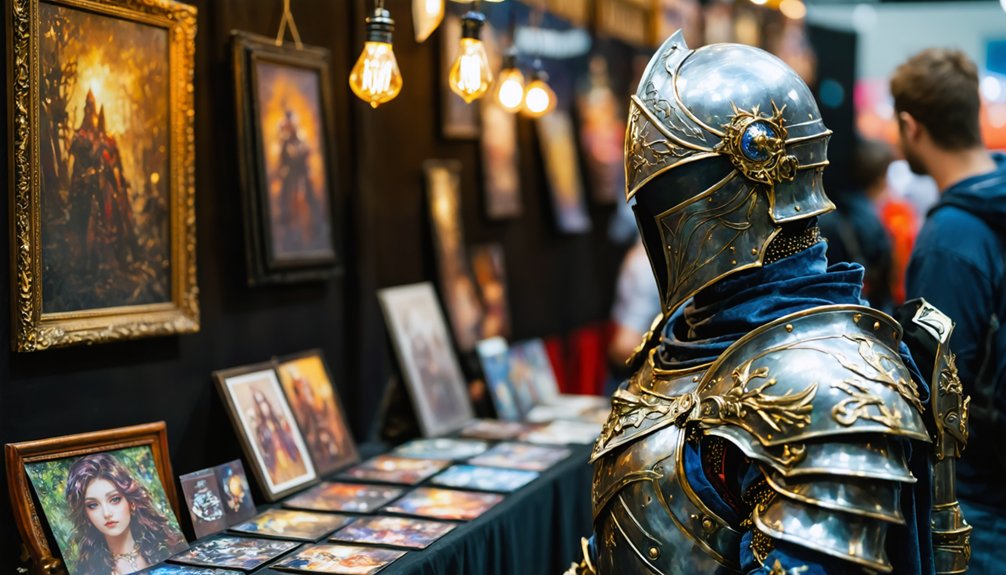
Selling cosplay commercially without infringing copyright demands a clear strategy built around two legitimate paths: securing a license or creating original characters. A license grants you official authorization, elevating costume authenticity while potentially commanding higher market prices.
Without one, you’re risking infringement claims, particularly when mass-producing recognizable character designs.
Your safer alternative is designing wholly original characters with distinctive visual identities that you own outright. This approach respects cosplay community ethics while protecting your commercial interests long-term.
If you’re reproducing existing IP, avoid copying specific protected elements like Superman’s “S” or proprietary armor designs, which qualify as sculptural works. Instead, introduce non-trivial creative variations that establish transformative expression. Document your creative process carefully—it strengthens your position if infringement questions arise.
Frequently Asked Questions
Do Cosplay Competitions Require Licensing Agreements for Copyrighted Character Costumes?
You don’t always need a licensing agreement, but some competitions restrict participation to specific IPs. Prioritize costume authenticity while embracing creative reinterpretation to navigate copyright boundaries effectively, especially when popular characters drive the event’s main attraction.
Can Non-Commercial Cosplay Duplication Ever Harm a Copyright Holder’s Legal Interests?
Yes, your non-commercial cosplay can harm a copyright holder’s legal interests if it damages their reasonable interests. Even fan art and derivative works can infringe when they undermine market value or dilute the character’s distinctive identity.
How Does Character Distinctiveness Affect Copyright Protection Strength for Cosplayers?
Like a double-edged sword, character recognition amplifies copyright protection—the more distinctive your chosen character’s visuals and trademark relevance, the stronger the legal shield you’ll face when replicating their iconic appearance in cosplay.
Do Exclusive Copyright Rights Arise Automatically Without Formal Registration for Creators?
Yes, your exclusive rights arise automatically upon realizing your creative expression—no formal registration’s required. Copyright duration begins immediately, granting you control over reproduction and derivative works, empowering innovative creators to protect original cosplay designs instantly.
Can Events Featuring Popular Characters as Attractions Require Special IP Permissions?
Like a stage demanding its script’s rights, yes—when you’re spotlighting popular characters as main attractions, you’ll need special IP permissions, ensuring fan engagement thrives and costume authenticity remains legally sound within your event’s framework.
References
- https://www.beyonceweekumbc.org/cosplay-legal-issues
- https://ipwatchdog.com/2015/07/31/comic-con-considerations-cosplay-the-right-of-publicity-and-copyright-concerns/
- https://publicknowledge.org/copyright-and-cosplay-working-with-an-awkward-fit/
- https://www.firstamendment.com/cosplay-legal/
- https://scholarship.law.ufl.edu/cgi/viewcontent.cgi?article=1038&context=feslr
- https://affa.co.id/global/2023/09/22/cosplay-and-intellectual-property-navigating-the-legal-landscape/
- https://ipwatchdog.com/2015/07/31/comic-con-considerations-cosplay-the-right-of-publicity-and-copyright-concerns/id=60084/