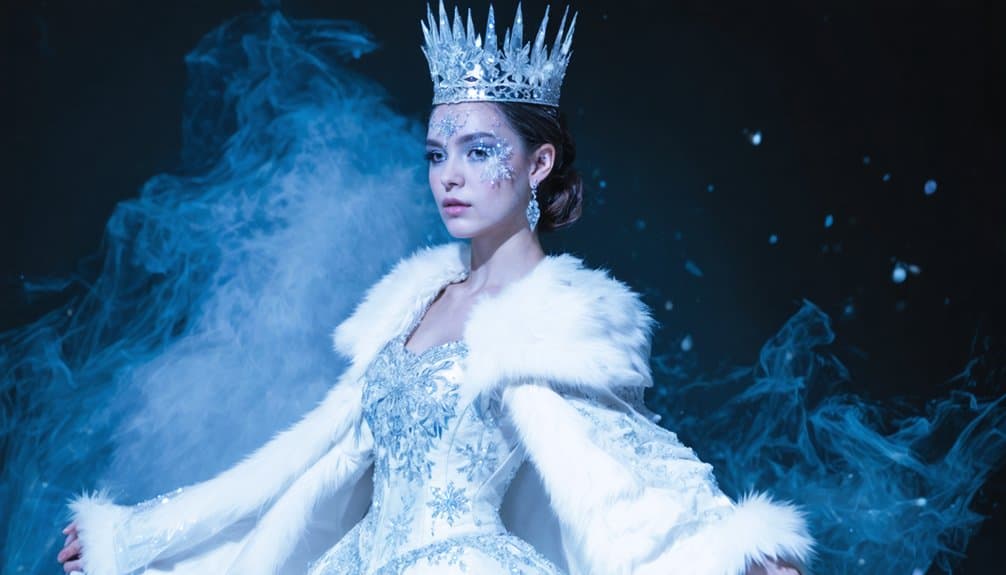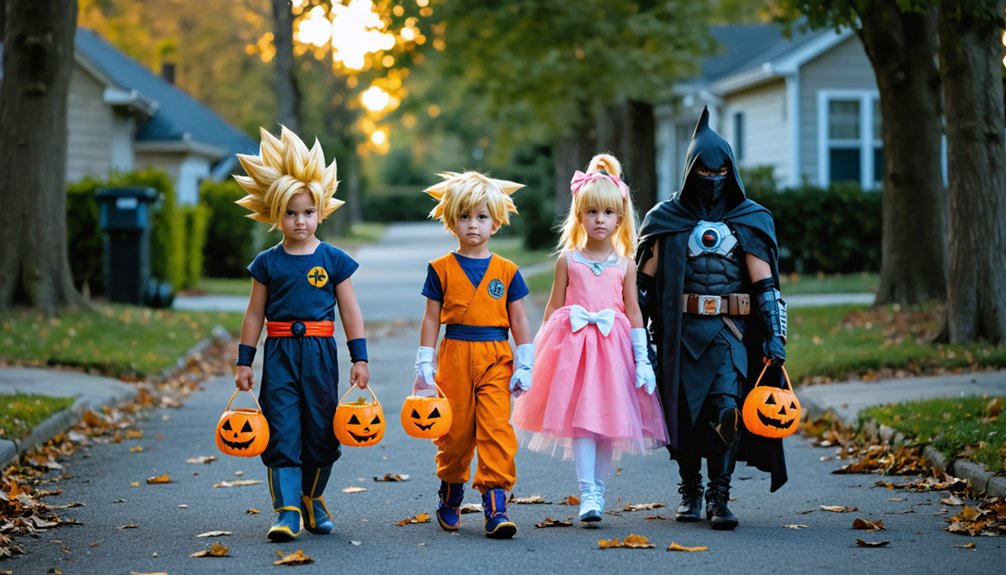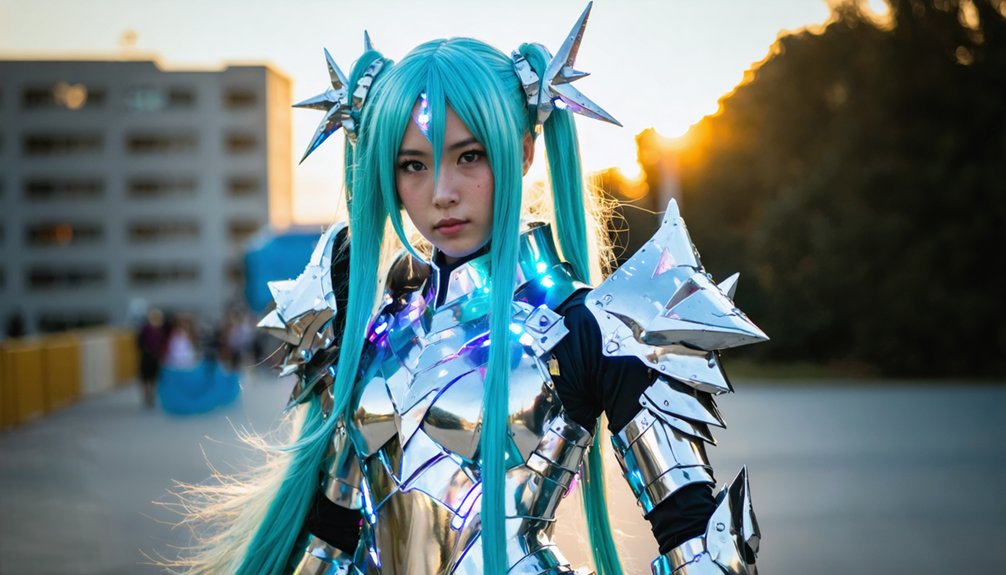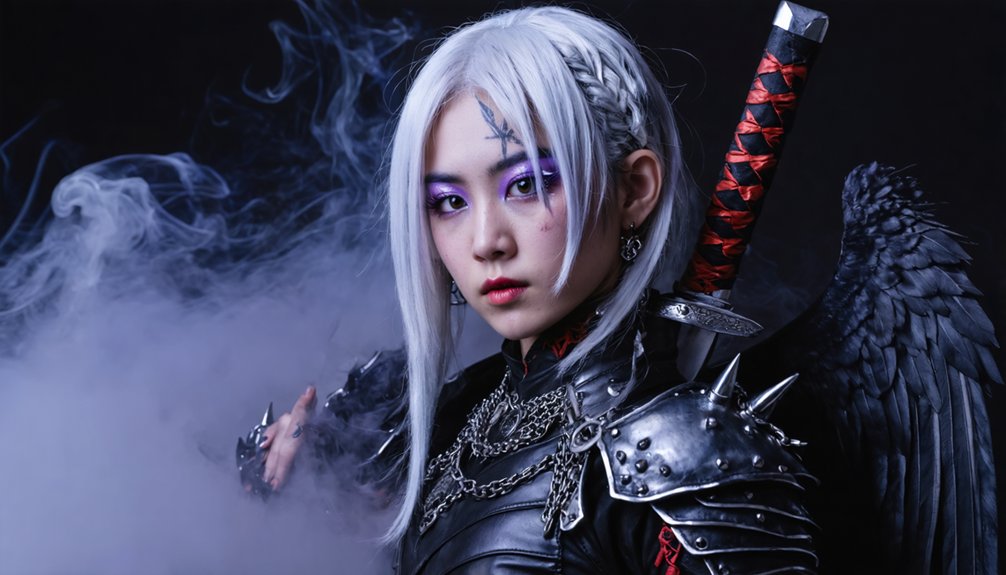
To cosplay K-pop demon hunter characters, you’ll select between Huntrix’s three fierce archetypes or Saja Boys‘ five distinct builds, matching visual profiles to your physical capabilities. Construct signature weapons using layered EVA foam (2mm-6mm thicknesses), applying heat-gun manipulation for curved elements. Assemble performance outfits through strategic fabric layering, securing with iron-on interfacing and temporary fabric glue before permanent sewing. Apply character-specific makeup anchored in Shadow Black #000000, achieving glass-skin radiance through multi-step foundation techniques. Master combat-ready poses that merge choreographic elements with defensive stances—the complete construction process reveals advanced supernatural enhancement methods.
Key Takeaways
- Select your character from Huntrix or Saja Boys based on visual profile, performance attributes, and costume complexity requirements.
- Craft signature weapons using layered EVA foam, heat shaping for curves, and finishing with primer and spray paint.
- Build the performance outfit by layering fabrics, adding gold accents, and incorporating dimensional foam elements for authenticity.
- Apply character-specific makeup with glass-skin foundation techniques and style hair using advanced braiding for dimensional texture.
- Master combat-ready poses combining choreographic elements, hunter stances, and expressive facial dynamics for authentic character portrayal.
Choosing Your Huntrix or Saja Boys Character
Before selecting your character, examine the distinct visual profiles and performance attributes that define each demon hunter. Huntrix offers three archetypes: Rumi’s fierce Jennie-inspired presence, Zoey’s sharp Chaeyoung mystery, and Mira’s bold Yeji energy. Each character demands specific construction approaches for costume accuracy and movement dynamics.
Saja Boys provides five distinct builds: Jinu’s serious leadership visual matching Cha Eun Woo, Mystery’s intense Junji-style aura, Abby’s powerful San physicality emphasizing ab definition, Romance’s smooth Yeonjun aesthetic, and Baby Saja’s Felix-inspired contrast between cute appearance and deep vocal delivery.
Match your physical capabilities to striking character personalities—consider vocal range for performance moments and complex backstory details when developing character interpretation. Assess fabric requirements, armor construction needs, and movement restrictions before committing. Your selection determines material specifications and technical build complexity.
Recreating Signature Weapons and Props
Your character selection directly determines your weapon construction requirements. Mira’s iconic Gok-Do polearm, with its distinctive crescent moon blade, demands precise curvature and balanced proportions. DIY prop construction guides recommend EVA foam as your primary material—combine 2mm, 5mm, and 6mm thicknesses for structural integrity while maintaining lightweight portability.
Proper character authenticity starts with weapon accuracy—Mira’s Gok-Do requires layered EVA foam construction for both structural integrity and convention-friendly portability.
Essential construction workflow:
- Pattern Development: Use masking tape and rulers to map symmetrical blade dimensions
- Foam Shaping: Apply heat gun manipulation for curved elements and dimensional contouring
- Assembly Bonding: Secure components with contact cement for permanent structural adhesion
- Surface Finishing: Layer rubber primer before applying aesthetic weapon customization through targeted spray painting
Alternatively, you’ll find pre-made replicas available—Mira’s spear retails at $94.40, while Etsy vendors offer handmade alternatives. Consider bamboo construction for enhanced durability.
Assembling the Performance Outfit
Character-accurate costume assembly begins with establishing proper layering sequences that match your chosen demon hunter’s signature aesthetic. Start by layering fabric textures through your base sweatshirt-and-turtleneck combination, securing hems with iron-on elastic interfacing. Apply temporary fabric glue to stabilize thin layers before overlock sewing joins pieces per pattern specifications.
Incorporating gold accents transforms basic garments into performance-ready costumes—finish all cut edges with gold bias binding, then attach tassels at precise two-inch intervals across jacket fronts, backs, and shoulders. Install gold snaps as military-style button details, four per side. Enhance dimensional elements by beveling foam with a dremel, heat-sealing edges, then priming and spray-painting gold. Complete your transformation with character-specific footwear and coordinated leggings for cohesive visual impact.
Styling Hair and Makeup Details
Your demon hunter’s visual identity requires precise makeup application and strategic hair placement to bridge K-pop idol aesthetics with supernatural combat readiness. Each character demands distinct color combinations—Rumi’s smokey blacks and browns, Zoey’s warm reddish tones, or Derpy’s blue-white contrasts—applied through contouring techniques that reshape facial features while maintaining stage-ready polish.
Hair styling must accommodate both movement during combat choreography and the practical demands of weapon handling, securing strands away from vision while preserving the character’s signature silhouette.
Character-Specific Color Palettes
When selecting pigments for K-Pop demon hunter cosplays, anchor your palette in Shadow Black #000000 as the foundational base for both hair and makeup applications. Character color motifs determine your construction approach—demon-possessed characters require Neon Green #39FF14 highlights against black, while hunter roles demand Dark Blood Red #8A1B1B roots for intensity. Color palette symbolism follows cinematic principles:
- Villainous transformations: Layer dark teal shadows with Mystic Purple #6A1B9A contours to emphasize evil energy
- Hero-villain duality: Apply magenta blushes (#b51ac1) connecting opposing character arcs
- Redemption sequences: Blend purple-blue gradients (#31469e to Electric Blue #1F8EF1) for tonal restoration
- Energetic idol aesthetics: Incorporate #ce7bdc ethereal highlights with #f4b1c2 harmonious accents
Build dimensional contrast through strategic value shifts between vibrant and shadow tones.
K-Pop Idol Makeup Techniques
How can you achieve the signature glass-skin radiance that defines K-Pop demon hunter aesthetics under harsh convention lighting? Begin with spray cream base before your cushion foundation application—this guarantees stage lighting techniques won’t wash out your dimensional work. Apply brightening concealer strategically: forehead, under-eye zones, nose bridge, and chin. Green color-correcting primer neutralizes redness before base layers.
For eyes, layer eyeshadow darker on outer corners, then add aegyosal highlighting underneath. Draw thin upward eyeliner wings that blend into your lower lash line. Apply mascara vertically for length, then horizontally for volume—this ensures pointed, natural lashes.
Execute reverse contouring with concealer to lift facial planes. Contour nose sides inward toward eye sockets. Position blush near eyebrows and upper eyelids for integrated brightness. Finish with strategic highlighter placement and dewy lip gloss.
Weapon-Wielder Hair Styling
Because weapon-wielding characters demand hairstyles that balance dramatic visual impact with practical combat positioning, your styling approach must prioritize structural integrity alongside aesthetic accuracy. Advanced braiding techniques deliver both dimensional texture and secure construction.
Essential Construction Methods:
- Pull-through foundation – Create multiple small ponytails positioned strategically across the scalp, then sequentially connect each section by dividing and linking progressive segments
- Interior manipulation – Apply deliberate pulling techniques to braid interiors for enhanced chunking rather than flat compression
- Hair volume enhancement – Steam or straighten 28-inch+ wig bases before implementing character-specific configurations
- Securing strategy – Utilize elastic ties for structural points, larger fabric alternatives for damage-free extended wear
Strategic face-framing partitions from ear to crown soften features while maintaining combat-ready positioning for extended event durability.
Mastering Character Poses and Expressions
Character poses form the structural foundation of KPop demon hunter cosplay, requiring precise body mechanics that merge choreographic elements with combat aesthetics. You’ll need to master pose variations that range from low crouches mimicking Stray Kids’ predatory stalks to high-kick sequences echoing Twice’s dynamic attacks. Execute the modified V-sign with claw-hand gestures for hunter stances, or deploy crossed-arm defensive positions inspired by BTS choreography.
Performance dynamics demand facial precision—narrowed eyes with furrowed brows convey focus, while smirking lip curls project confidence. Combine spinning heel drops with victory fists for battle sequences, and practice weapon-mimicry poses like sword-slash arcs with hip thrusts. Group formations require V-patterns with staggered heights or circle huddles breaking into outward thrusts, replicating the coordinated intensity of professional KPop combat choreography.
Adding Supernatural Elements and Effects
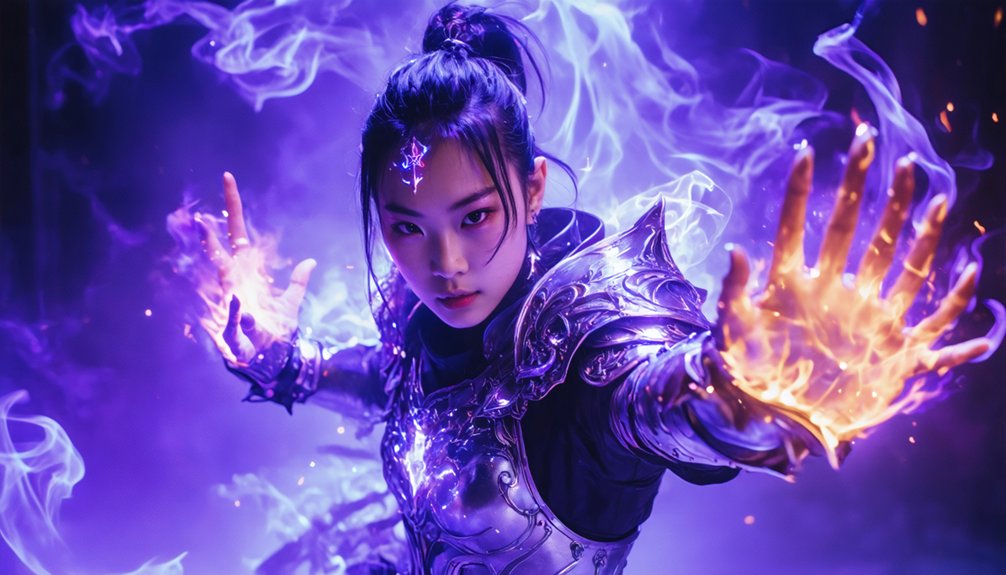
You’ll construct supernatural credibility through two technical pillars: illuminated weapon props and layered demonic makeup effects.
For weapons, integrate LED strips or EL wire into foam or PVC cores to simulate otherworldly energy signatures.
The makeup foundation requires ghost-pale base layers topped with dimensional smoky eyes, strategic glitter overlays for galaxy-blue luminescence, and ritual tattoo stickers that anchor the supernatural transformation to Korean folklore elements.
Glowing Weapon Prop Techniques
Three core construction methods form the foundation for supernatural weapon props in KPop demon hunter cosplay. You’ll achieve authentic glowing effects by layering specialized materials that simulate spirit-infused weaponry. Start with Rustoleum filler primer to seal your EVA foam base, then apply Iron Lock gloss acrylic in Electro color for metallic luminescence.
Essential glowing weapon techniques:
- Layer gloss spray paints over primed surfaces to build luminous blade edges
- Apply glitter foam sheets at hilts to simulate supernatural energy trails
- Wrap shiny vinyl over foam for maximum reflective properties
- Use neon-referenced Electro acrylics that activate under stage lighting
Integrate prop weathering techniques during final assembly to balance supernatural shine with realistic combat wear. Practice your combat stance practice while testing prop durability—luminescent finishes must withstand dynamic movement without cracking.
Demonic Special Effects Makeup
Supernatural makeup transformation requires precise layering techniques that build dimension before adding demonic features. Start with foundation darker than your natural tone across eyelids, creating depth for prosthetic demon appendages integration.
Contour beneath cheekbones while extending powder along smile lines for dimensional structure. Apply light pink blush under eyes, then layer reddish brown tones for definition. Connect cat eye liner from upper lid to lower wing, creating lifted intensity. Paint triangular cosmetic points directly onto skin, mimicking character-specific demon designs.
Use brown powder to outline enhanced eye forms, then touch up any inconsistencies. Highlight nose bridge, tip, cheekbones, and lip cupid’s bow for supernatural glow. Blend pink lip base with dark red for anime-inspired dimension. Finish with performance ready makeup setting spray, locking all demonic elements for extended wear.
Photography Tips for Demon Hunter Cosplay
Capturing demon hunter cosplay demands strategic lighting setups that highlight both KPop-inspired aesthetics and intricate costume fabrication techniques. Your Godox off-camera flash positioning reveals demonic features while softboxes diffuse harsh shadows across armor details.
Master these lighting environment composition fundamentals:
- Position multiple light sources at 45-degree angles for even group illumination, eliminating dead zones between clustered cosplayers
- Apply color gels to simulate supernatural glows matching your KPop aesthetic palette
- Shoot at low angles to enhance intimidating demon hunter presence while incorporating weapons as compositional guides
- Utilize shallow depth of field to isolate costume elements from minimalist backgrounds
Post-processing requires dodge and burn techniques emphasizing muscular poses, frequency separation smoothing skin without compromising costume realism, and 4K exports for print-ready outputs.
Frequently Asked Questions
Which Voice Actors Should I Credit When Posting My Cosplay Photos?
Credit voice actors for specific characters you’re portraying: Arden Cho for Rumi, Ji-young Yoo for Zoey, or May Hong for Mira. You’ll need to obtain written permission from voice actors before posting, ensuring proper attribution protocols in your captions.
Can I Combine Weapons From Different Characters in One Cosplay?
You can mix different character weapons, though purists prefer single-character accuracy. Balance practical wearability with accuracy by choosing complementary pieces—Zoey’s lighter Shin-kal pairs well with Mira’s Gok-do for dual-wielding builds requiring innovative construction techniques.
Are There Official Character Height References for Accurate Cosplay Proportions?
No official character height references exist from creators, so you’ll need to estimate accurate cosplay measurements through visual analysis of character proportions in music videos and comparing standing positions relative to Maya’s established taller frame.
How Do I Pronounce Saingeom, Gokdo, and Shinkal Correctly at Conventions?
73% of cosplayers mispronounce prop names at cons. You’ll master proper pronunciation techniques by stressing “SAIN-geom,” aspirating “GOK-do’s” k-sound, and clearly enunciating “SHIN-kal.” Cosplay convention etiquette demands accurate weapon terminology for authentic character representation.
What’s the Difference Between Hunter and Demon Hunter Cosplay Guidelines?
Hunter cosplays use simpler construction with minimal embellishments, while demon hunter requires accurate costume details like gold trim, tassels, and elastic X-crossings. You’ll need believable character poses showcasing those signature layered elements and metallic finishing techniques for authenticity.