Start by choosing Instagram as your central hub, then secure an identical handle across all platforms before posting content. Document each cosplay with three to four high-resolution images from multiple angles, positioning them alongside source material for comparison. Balance your hashtag strategy by combining one high-traffic tag with three mid-tier options and two ultra-specific identifiers. Maintain visual consistency through grid-based layouts with uniform dimensions and color temperature. The sections below break down platform-specific techniques that convert casual viewers into dedicated supporters.
Key Takeaways
- Choose Instagram as your central platform and secure an identical, unique handle across all social media channels before posting content.
- Post three to four high-resolution images per cosplay showing multiple angles, construction progress, and side-by-side comparisons with source material.
- Use one high-volume hashtag, three mid-tier community tags, and two ultra-specific identifiers to maximize discoverability without overwhelming posts.
- Maintain a consistent grid layout with uniform dimensions, color temperature, and composition to create a professional, cohesive visual identity.
- Complement social media presence with a personal website for full portfolio control and layer monetization platforms like Patreon.
Choosing Your Platform Mix and Building Your Central Hub
While selecting your platform mix might seem overwhelming, you’ll find success by anchoring your cosplay presence to one central hub and strategically extending outward. Instagram’s visual-first architecture makes it ideal for central hub growth, serving 50,000+ cosplay creators globally.
You’ll maximize reach by adapting platform specific content styles—prioritize high-resolution shots for Instagram feeds, behind-the-scenes progress for TikTok’s 2+ billion cosplay views, and long-form tutorials for YouTube’s dedicated subscriber base.
Analyze your hub’s insights to identify peak follower activity windows, then schedule cross-posts accordingly. Complement your social presence with a personal website for complete portfolio control and direct monetization links.
Layer Patreon or similar platforms atop your hub to convert engaged followers into paying supporters, building sustainable creator revenue streams.
Selecting the Right Cosplay Handle Across All Channels
Your cosplay handle functions as your visual signature across every convention floor photo credit, competition entry form, and photographer’s tagged post. Prioritize handle uniqueness by testing availability across Instagram, TikTok, Twitter, DeviantArt, and YouTube simultaneously—fragmented branding dilutes discoverability.
Mesh unexpected inspirations from everyday life rather than direct fandom references to maintain flexibility as your repertoire expands. Your handle anchors persona development while protecting privacy through separation from professional accounts and legal names.
Analyze successful cosplayers‘ handle structures: portmanteaus, character trait mashups, and aesthetic descriptors consistently outperform generic username formats. Verify multicultural neutrality to prevent unintended meanings across global audiences.
Lock identical handles platform-wide before content creation begins—retroactive changes fracture follower recognition and SEO momentum. Your handle becomes shorthand for your craft quality, niche specialization, and community reputation.
Curating High-Quality Content for Your Portfolio Pages
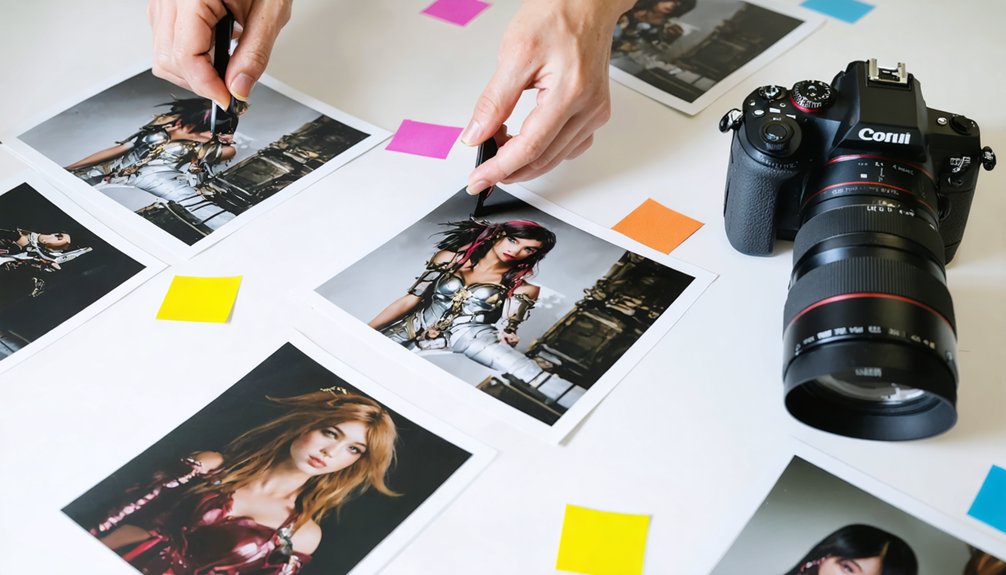
Portfolio strength hinges on visual storytelling that demonstrates technical progression and character interpretation simultaneously. Your curated content must showcase craftsmanship through strategic image composition and professional photo editing techniques that elevate raw shots into compelling narratives.
Strategic visual documentation transforms technical skill into narrative proof, merging craftsmanship with character authenticity through intentional composition and elevated presentation.
Essential Portfolio Elements:
- Multi-Angle Documentation – Include minimum three to four high-resolution images featuring front, back, and detail shots of each costume, avoiding cluttered collages that diminish visibility.
- Reference Pairings – Position cosplay images alongside source material for direct comparison, highlighting accuracy and interpretation choices.
- Build Hour Transparency – Document construction time investments, adding credibility and demonstrating commitment to craft.
- WIP Progression Series – Display technical evolution through work-in-progress sequences that reveal problem-solving abilities and skill development.
Submit current-state documentation even for incomplete projects, maintaining authentic engagement with your community.
Optimizing Hashtag Strategy for Maximum Discoverability
Your cosplay portfolio’s visibility depends on strategic hashtag selection backed by concrete performance data. Research each tag’s total post count, daily usage rate, and competition score before adding it to your rotation—#cosplay’s 100/100 competition score means your content competes against 2.9K daily posts for exposure.
Balance your hashtag mix by combining high-traffic tags like #anime (205.2M posts) with medium-tier community tags such as #cosplayphotography (1.8M posts) and niche-specific options like #marvelcosplay (961K posts) to maximize reach while maintaining discoverability.
Research Platform Hashtag Metrics
How can cosplayers cut through the noise when 10 million creators worldwide flood social feeds daily? You’ll need platform-specific analytics to decode what actually drives discoverability. Each platform reveals unique metrics that transform generic tags into targeted engagement engines.
Master these platform-specific metrics:
- Instagram Reels: Track saves-to-likes ratio (>15% signals strong shareability) and reach-beyond-followers percentage for cosplay tutorials
- TikTok: Monitor video completion rates (>70% ideal) and hashtag view counts for niche community targeting
- Twitter: Analyze impression velocity during convention weekends when 36 million attendees amplify event-specific tags
- YouTube: Measure click-through rates on thumbnail-hashtag combinations and watch time retention for tutorial content
Deploy hashtag community targeting by cross-referencing engagement patterns with your portfolio’s aesthetic direction—emotional atmospheres outperform neutral presentations in 2026’s algorithm landscape.
Balance Popularity and Competition
When viral hashtags like #cosplay accumulate 89 billion views, they simultaneously guarantee visibility and condemn your portfolio to algorithmic obscurity within seconds. You’ll need strategic layering: combine one high-volume tag (#cosplay) with three mid-tier options (#mhacosplay at 2.1M views) and two ultra-specific identifiers (#kyokajiro, your character name). This tiered approach balances discoverability against competition.
For personal brand development, create custom tags that function as searchable archives of your work. Your branded hashtag (#YourNameCosplay) transforms scattered posts into catalogued portfolios while encouraging follower participation. Mid-tier tags drive targeted audience engagement—communities actively searching #bnhacosplay seek specific content, increasing meaningful interactions over passive scrolling. Analytics reveal which combinations convert impressions into followers, allowing continuous optimization across platform-specific algorithms.
Designing Professional Visual Layouts That Showcase Your Work
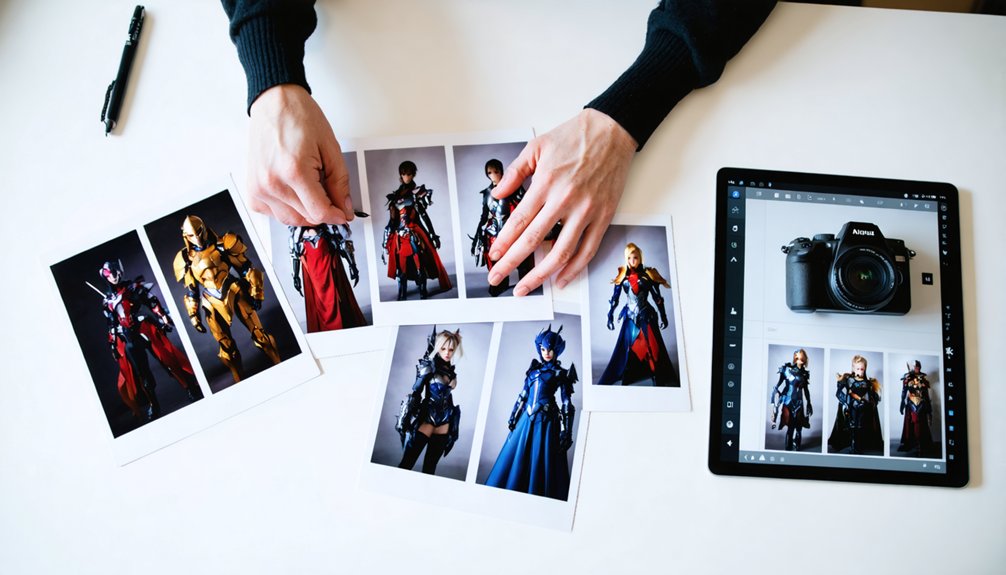
Your portfolio’s visual architecture should follow a grid-based system where each post maintains identical dimensions, color temperature, and compositional weight to create a cohesive feed aesthetic.
Establish minimum resolution requirements of 1080x1080px for Instagram or 1500x2000px for vertical platforms, ensuring intricate details like weathering, fabric texture, and prop construction remain crisp when viewers zoom in.
This consistency signals professionalism to commissioners, event organizers, and fellow makers while strengthening your brand recognition across the cosplay community.
Consistent Layout Principles
Before you photograph a single costume piece, establish a visual framework that transforms scattered images into a cohesive professional presentation. Your portfolio’s composition balance determines whether viewers perceive amateur snapshots or professional craftsmanship.
Implement these page formatting standards:
- Mount consistently – Black cardboard backing creates unified presentation across all plates, eliminating visual noise that distracts from your work.
- Limit density – Maximum three smaller images per A3 page prevents overwhelming your audience while maintaining breathing room around each piece.
- Balance elements – Position cosplay photos adjacent to reference images, demonstrating accuracy while maintaining proportional visual weight across the layout.
- Standardize labeling – Include character name, series, and construction techniques on every plate, creating navigable documentation that respects your audience’s time.
This systematic approach transforms individual projects into portfolio-worthy presentation materials.
Image Quality Standards
Layout consistency means nothing if your images can’t communicate the craftsmanship behind each costume element. Professional-grade photography captures your work from multiple perspectives—full-length shots establish overall accuracy while close-ups reveal intricate detailing that separates exceptional craftsmanship from amateur construction. Master lighting and angles to showcase texture, seam work, and material choices that demonstrate your technical skill.
Save files in JPEG or PNG format at medium compression ratios, maintaining resolution while ensuring file size optimization for social media platforms. Resize images to approximately 2800×1800 pixels maximum—large enough to display detail without sacrificing load times. Never save JPEGs multiple times; each compression degrades quality.
Include work-in-progress documentation alongside finished shots, proving hands-on construction. Your portfolio should demonstrate both artistic vision and technical execution through strategic visual documentation.
Cross-Promoting Content to Grow Your Audience
Cross-platform promotion isn’t optional anymore—it’s the backbone of audience growth in 2026’s fragmented social landscape. With social platforms driving over 60% of product discovery, your cosplay portfolio needs strategic distribution across multiple channels. You’ll maximize reach by leveraging social proof through consistent branding while optimizing influencer partnerships for cross-promotional opportunities.
Deploy these cross-promotion tactics:
- Hub-and-spoke distribution – Post extensive builds on Instagram, then repurpose clips for TikTok to achieve 35% reach increases
- Platform-specific optimization – Adapt captions and hashtags per network for 40% higher discoverability
- Strategic timing – Maintain 5 posts weekly across primary platforms for algorithmic consistency
- Community tagging – Tag fellow cosplayers and brands to tap into their 3.70% TikTok engagement rates
Frequently Asked Questions
How Often Should I Update My Cosplay Portfolio With New Content?
You’ll want to establish a regular posting schedule based on your build completion rate—typically 2-3 times weekly with effective photo curation. Balance WIP documentation with finished shots, ensuring you’re consistently engaging your community without sacrificing content quality.
What Equipment Do I Need for Taking Professional Cosplay Photographs?
You’ll need a DSLR or mirrorless camera with interchangeable lenses (35mm, 50mm, or 85mm prime), external lighting equipment like softboxes or strobes, and professional backdrops. Don’t forget tripods and light modifiers for studio-quality shots.
Should I Include Failed Projects in My Portfolio?
Don’t highlight failed projects in your portfolio—save them for social media stories or WIP posts. Your portfolio should showcase progress over time through polished, competition-ready pieces that demonstrate your technical growth and craftsmanship evolution.
How Do I Handle Negative Comments on My Cosplay Posts?
Don’t let trolls rain on your parade—block harmful comments immediately while keeping constructive feedback that improves your craft. Practice positive self-affirmation, curate your portfolio’s comment section strategically, and foster community connections that elevate cosplay innovation together.
Can I Monetize My Cosplay Portfolio Once It Gains Followers?
Yes, you’ll access multiple revenue streams through OnlyFans exclusives, brand collaborations, and sponsored content. Strong fan engagement metrics attract partnerships, while platforms like Patreon monetize your portfolio directly. Track analytics to maximize your earning potential consistently.