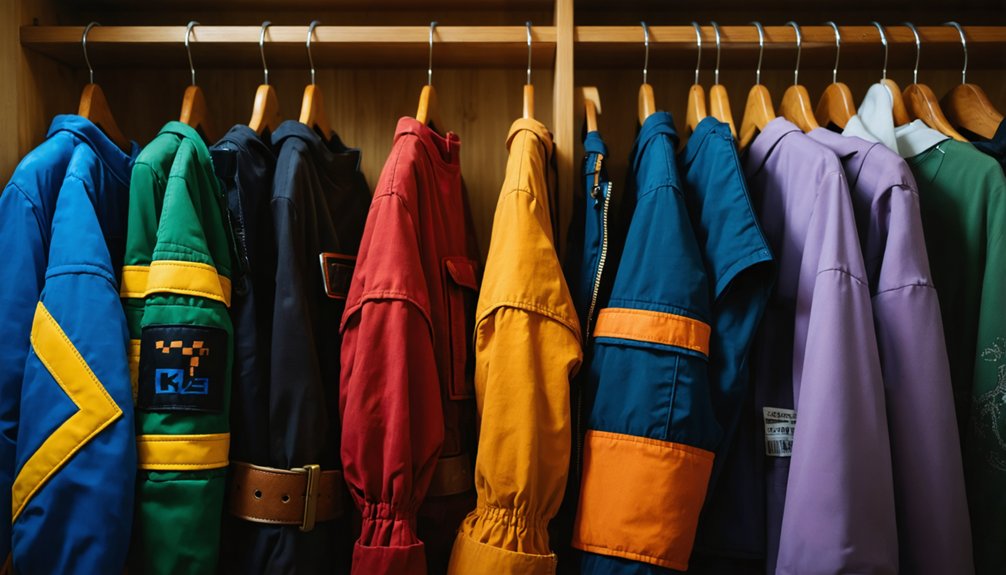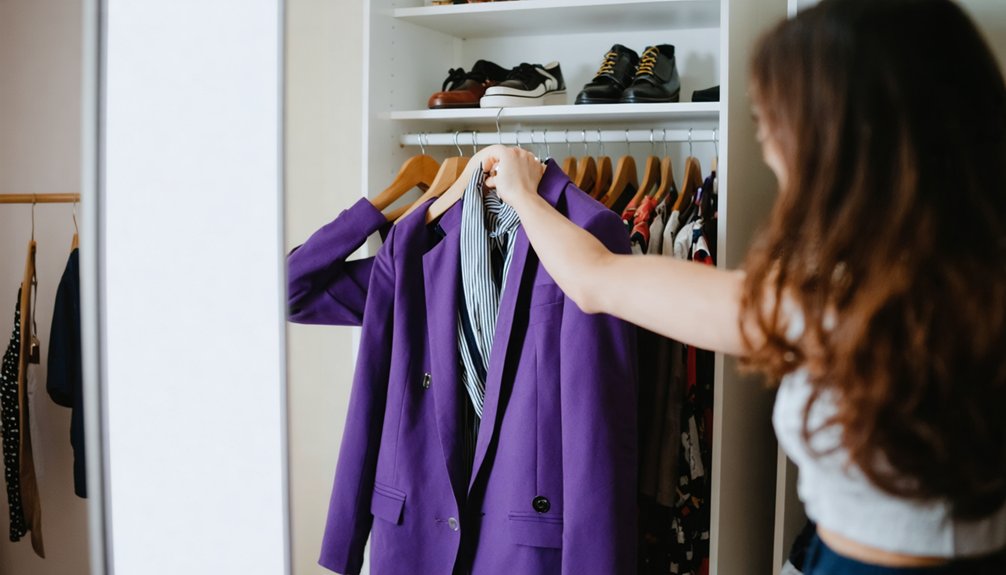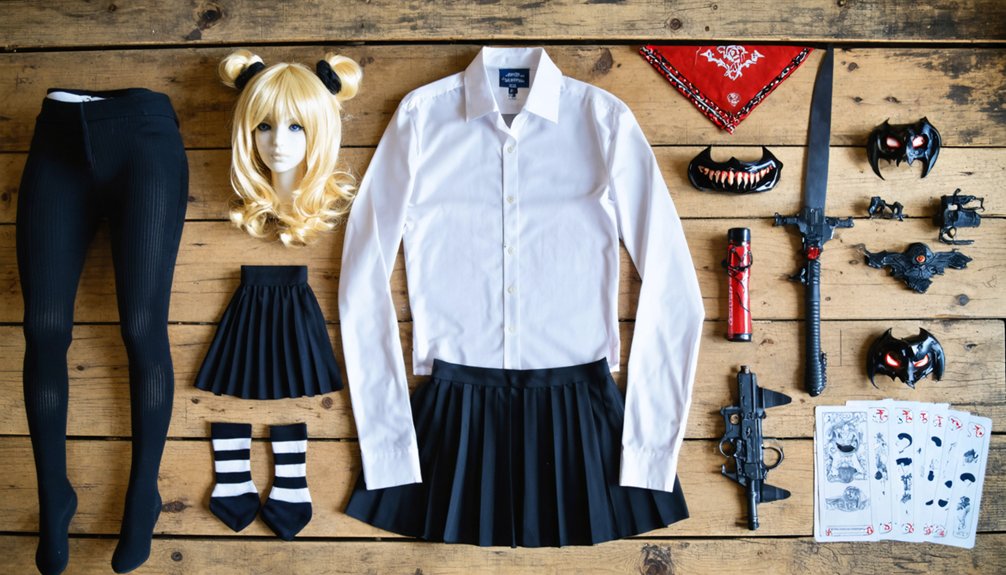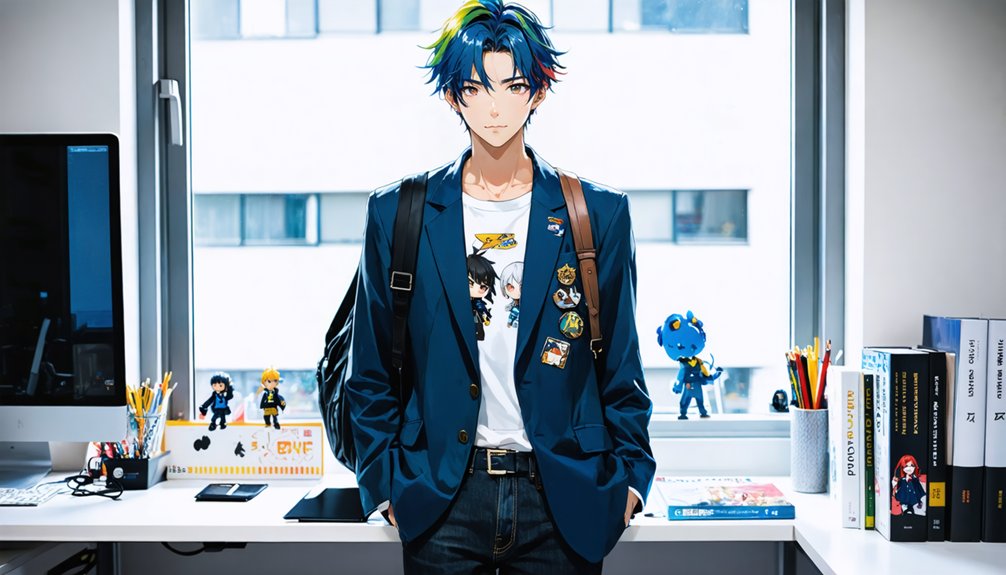
Start by choosing a character whose color palette and silhouette align with your existing wardrobe and institutional dress code. You’ll build your casual cosplay using everyday pieces—think strategic layering with blazers, sweater vests, and color-blocked combinations that create recognizable impressions without costume elements. Focus on subtle accessories that fellow fans will notice while maintaining workplace appropriateness, avoiding masks, weapons, or theatrical props. Your goal is character resonance through intentional styling choices rather than perfect accuracy. The techniques below will help you confidently embody your favorite character while staying professional.
Key Takeaways
- Choose characters whose color schemes and style naturally align with your existing wardrobe and institutional dress code requirements.
- Focus on recreating recognizable silhouettes and color palettes rather than pursuing exact costume accuracy or theatrical elements.
- Build outfits using everyday pieces like blazers, cardigans, and belts that match your character’s defining aesthetic features.
- Add subtle character-specific accessories that fellow fans recognize while maintaining workplace or school appropriateness.
- Avoid costumes requiring weapons, masks, or culturally sensitive elements that violate dress codes or attract unwanted attention.
Understanding the Basics of Casual Cosplay
When you’re scrolling through your closet and spot that burgundy cardigan that matches Mabel Pines’ signature style, you’ve stumbled onto casual cosplay territory. This approach transforms your everyday wardrobe into character-inspired outfits without requiring costume construction or theatrical elements. You’ll work with existing clothing pieces—jeans, shirts, jackets—and layer subtle accessories like character-specific pins or color-matched jewelry.
The technique centers on balancing style and practicality. You’re not replicating costumes; you’re adapting aesthetics for real-world wear. Think color palettes rather than exact garments, symbolic accessories instead of props. Incorporating cultural references becomes natural when you choose a navy blazer for a magical student or vintage boots for a time-traveling adventurer. Your outfit remains workplace-appropriate while expressing fandom through intentional styling choices that only fellow fans might recognize.
Selecting the Right Character for Your Setting
When choosing a character for school or work, you’ll need to evaluate your institution’s dress code first—some settings prohibit costumes entirely, while others allow creative expression within professional boundaries. Select characters whose aesthetic naturally aligns with your existing wardrobe and daily style, ensuring you don’t look conspicuously costumed.
Focus on incorporating subtle character elements like color schemes, accessories, or fabric textures rather than pursuing perfect accuracy, which helps you maintain the appropriate environment while expressing your fandom.
Consider Dress Code Restrictions
Before selecting a character for casual cosplay at school or work, you’ll need to thoroughly review your institution’s dress code policy—whether that’s an employee handbook, student code of conduct, or posted guidelines.
Corporate environments typically require covered shoulders, appropriate necklines, and knee-length hemlines, while retail settings often mandate specific color schemes like navy shirts with khaki pants. Healthcare facilities prohibit potentially insensitive costume choices, whereas costume stores operate under relaxed standards.
Student specific considerations include understanding educational institution policies that differ from corporate workplace expectations. Seasonal influences may temporarily relax certain restrictions during Halloween or spirit weeks, but confirm these exceptions beforehand.
Avoid costumes with weapons, masks that obstruct vision, or culturally appropriative elements. Choose characters whose authentic appearance naturally aligns with professional standards rather than forcing inappropriate designs into restricted environments.
Match Your Daily Aesthetic
Once you’ve confirmed your chosen character fits within dress code boundaries, focus on selecting someone whose visual style naturally complements what you already wear. Analyze your existing wardrobe’s color palette, cuts, and silhouettes. If you favor monochrome professional attire, characters like Shouta Aizawa offer corporate approved adaptations using black basics.
Prefer casual denim and stripes? Haida provides seamless incorporation with everyday pieces. Match character aesthetics to your personal style rather than forcing unfamiliar looks. Someone who gravitates toward turtlenecks and skirts will find Hotaru Tomoe more authentic than attempting punk-inspired designs.
This alignment guarantees you’ll feel confident throughout the day while maintaining costume accuracy. Your natural clothing preferences become the foundation for effortless character embodiment, eliminating the disconnect between your daily presentation and cosplay identity.
Prioritize Subtlety Over Accuracy
While screen-accurate recreations impress at conventions, workplace and classroom environments demand restraint that transforms detailed costumes into suggestion-based styling. You’ll achieve character resonance through silhouette recognition rather than perfect replicas.
Focus on shape breakdown using printed references—identify whether your character’s defining features come from layered clothing, specific color blocking, or distinctive accessories that translate into everyday items.
Season-appropriate styling naturally limits options while maintaining recognition:
- Winter selections: Aizawa’s all-black ensemble or Raven’s dark cardigan layers blend seamlessly into professional settings
- Summer adaptations: Tanjirō’s red hoodie becomes a lightweight jacket paired with tinted sunglasses
- Year-round basics: L’s casual shirts and pants require zero seasonal adjustment
Strategic approximation creates subtle nods that fellow fans recognize without triggering dress code violations or unwanted attention from administrators.
Building Your Outfit From Everyday Wardrobe Pieces
The easiest cosplays start with what’s already hanging in your closet. Begin with core garments that match your character’s color palette—a red sweater becomes Yor’s base, while a white V-neck paired with loose shorts channels Killua.
Layer strategically: add blazers or sweater vests over button-ups for schoolgirl uniforms, incorporate chunky belts beneath shirts, or stack knee-high socks atop boots for dimensional silhouettes.
Focus on functional garment modifications rather than exact replicas. Tape printed elements directly onto existing shirts for instant character recognition. Substitute colors thoughtfully—black baseball caps replace gray originals, blurplish shorts stand in for canonical shades.
These techniques excel at transforming existing wardrobes through intentional color blocking and layering combinations. You’re building recognizable character impressions using everyday pieces, making last-minute assembly feasible while maintaining workplace or classroom appropriateness.
Choosing Accessories That Make the Character Recognizable
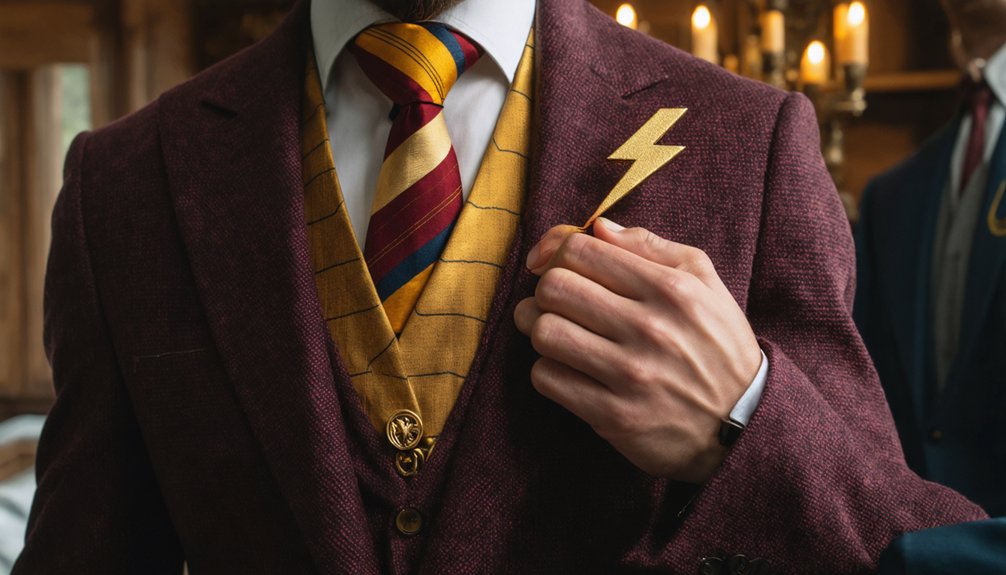
Strategic accessory selection transforms basic outfits into instantly recognizable characters without requiring elaborate costumes. You’ll maximize impact through accessory minimalism—choosing one or two defining pieces that instantly communicate your character’s identity. Devil horn clips establish villain personas, while aviator goggles signal adventure protagonists.
Single statement accessories communicate character identity more effectively than full costumes—one strategic piece delivers instant recognition while maintaining everyday wearability.
Cohesive color schemes strengthen recognition: pair black face masks with matching fingerless gloves for mysterious thieves, or coordinate furry bucket hats with themed headbands for anime characters.
Consider these character-defining combinations:
- Samurai warriors: Bokken props with themed headbands create unmistakable Japanese character silhouettes
- Team Rocket identification: Red R emblems on black clothing deliver instant franchise recognition
- Fantasy elements: Unicorn headdresses or feather masquerade masks establish magical personas without full costume commitment
Pin magnets and Velcro enable temporary prop attachment, letting you adapt professional wardrobes into character-appropriate ensembles.
Applying Subtle Makeup and Hairstyle Techniques
You’ll transform your look through character-inspired makeup choices that balance recognizability with workplace appropriateness, focusing on subtle color palettes and defining features that mirror your character without dramatic stage makeup. Signature hairstyle adaptations modify your character’s iconic look into wearable styles—whether through strategic styling of your natural hair, temporary color products, or sleek bang adjustments that suggest the character without requiring extreme cuts or permanence.
Wigs for everyday wear offer the most dramatic transformation while maintaining professional standards when you select natural-looking styles in believable colors and secure them properly for all-day comfort during school or work activities.
Character-Inspired Makeup Choices
When building character-inspired looks for everyday wear, you’ll want to master foundation techniques that transform your complexion without screaming “costume.” Start with pale base applications if you’re channeling Tim Burton characters—apply white foundation strategically under your eyes for a highlight effect that mimics his signature ghostly aesthetic, then set everything with translucent powder to mattify cream products on your face and neck.
For eye enhancements that capture character personality nuances:
- Line waterlines with NYX jumbo pencil in milk to create bigger, more expressive eyes
- Apply darker purple in creases and outer corners for depth without theatrical intensity
- Use concealer to cut creases, then layer shimmery shadow for dimension
Complete your look with matte lipstick blended seamlessly with facial shadows. Remember proper makeup removal techniques preserve skin health between character transformations.
Signature Hairstyle Adaptations
Character hairstyles anchor your casual cosplay just as powerfully as makeup does. You’ll achieve authentic looks through integrated grooming techniques using everyday styling tools—no wigs required. Start by analyzing reference images of characters like Reagan Ridley or Goro Akechi, then replicate key elements such as volume, part placement, or distinctive bangs.
Minimalist hairstyle applications work best for professional settings, where you’ll tone down dramatic anime spikes into sleek, tailored finishes.
Match your hair’s color palette with clothing choices from your existing wardrobe. Akechi’s refined style pairs naturally with dark accessories and structured jackets, while Reagan’s signature look complements office-appropriate outfits. Apply minimal product to maintain workplace acceptability, and incorporate subtle accessories that reference character personality without disrupting dress codes.
Social media platforms offer character-specific tutorials for feasible adaptations that balance creativity with practicality.
Wigs for Everyday Wear
While natural hair adaptations work for many characters, wigs open up transformative possibilities that everyday styling can’t achieve. Modern wig construction methods like skintop crowns and lace fronts create natural hairlines suitable for professional settings. You’ll preserve your natural hair’s health while accessing character-accurate colors and lengths impossible with temporary dyes or extensions.
Consider these versatile options for daily wear:
- Layered short wigs like Aether provide low-maintenance styling that shifts seamlessly from workplace to convention
- Lace front constructions in 25-inch lengths deliver glamorous everyday appearance with natural parting capabilities
- Skintop-enabled wigs such as Theia allow flexible styling and natural-looking hair distribution at the crown
Strategic wig color selection matters—while neon shades work for casual outings, subtle tones in black, blonde, or brown maintain workplace appropriateness. Remember that frequent outdoor wear accelerates tangling and dirt accumulation, requiring consistent maintenance.
Adapting Anime and Gaming Characters for Professional Environments
Bringing your favorite anime or gaming character to life at work requires striking a careful balance between creative expression and professional appropriateness. You’ll need to evaluate your costume against existing dress codes, safety requirements, and workplace culture.
Avoid culturally insensitive depictions, revealing designs, or full-face masks that obscure vision. In industrial settings, eliminate flowing costume elements that could catch on machinery, and guarantee footwear meets safety standards. Leave props like fake weapons at home.
Instead, demonstrate creativity through toned-down accessories—character-themed scarves, hats, or t-shirts that work within your existing wardrobe. This approach allows expressing company values while maintaining professionalism. Consult HR for pre-approval rather than relying solely on coworker recommendations, and bring backup clothes for client-facing interactions.
Creating Schoolgirl-Inspired Looks Within Dress Code Guidelines

When adapting schoolgirl-inspired cosplay for actual school or work environments, start by selecting skirt lengths that extend at least to mid-thigh or knee-length to satisfy most institutional dress codes.
Choose muted color palettes—navy, gray, burgundy, or forest green—that mirror traditional academic uniforms while remaining workplace-appropriate. Incorporate character references through subtle accessories like specific hair clips, small enamel pins, or colored ribbons that won’t violate professional appearance policies.
Choosing Appropriate Skirt Lengths
Creating a schoolgirl-inspired look requires you to measure skirt length with precision before you cut any fabric. Traditional seifuku skirts extend from mid-kneecap to mid-calf, calculated using the golden ratio formula: 0.618 × your total height. This guarantees authentic skirt silhouette proportions while meeting dress code requirements.
Before construction, verify your school’s specific length policies to avoid violations. Measure from your waist downward, accounting for:
- Fabric width: skirt length plus hem allowances
- Band construction: 1½ inch thickness with 1 inch hook overlap
- Hem additions: final measurements for polished edges
Your fabric selection considerations should balance pleated fullness with body proportions. Calculate fabric length as waist measurement × 2.2 for moderate pleating. Test-fit before final assembly to secure coverage doesn’t balloon at hips while maintaining traditional styling.
Acceptable Color Palette Selection
Perfect skirt proportions mean nothing if your color choices violate workplace or campus policies. Coordinating character palettes begins with analogous schemes—adjacent wheel colors like blue, purple, and teal create unified looks that satisfy conservative guidelines. You’ll achieve subtle elegance through pastel tones mimicking characters like Cinderella while maintaining appropriate muted contrasts.
Selecting color families for cosplay requires strategic thinking. Triadic combinations—turquoise, dark blue, beige—deliver balanced energy without overwhelming professional settings. Monochromatic palettes using cold blues or greens add Elsa-inspired sophistication through single-hue depth variations.
Apply the 60-30-10 rule: dominant color occupies 60%, secondary 30%, accent 10%. Split-complementary schemes let you reference bold characters like Deadpool through red-white-black while keeping compositions workplace-appropriate. Avoid pure black; substitute dark grays or deep reds for definition within dress code parameters.
Subtle Accessory Integration Methods
Since dress codes scrutinize obvious costume elements, your accessory strategy should layer character references through regulation-compliant pieces. Transformative accessory elements like ties, stockings, and collar details establish character identity without triggering violations. Standard JK uniform sets at $7.99 include these components pre-coordinated, while individual pieces enable modular integration under existing codes.
Deploy unobtrusive styling techniques through:
- Regulation ties that reference character color schemes while appearing as standard uniform elements
- Coordinated stockings paired with skirt lengths that meet dress code measurements, completing seifuku aesthetics subtly
- Collar modifications using sailor-style shirts as approved base garments, emphasizing character-specific design through pattern selection
Source accessories through wholesale options starting at $14.56 for volume purchases, or select Etsy patterns for custom-fitted pieces in sizes XS-4XL that maintain workplace appropriateness.
Using Wigs and Props Without Drawing Unwanted Attention
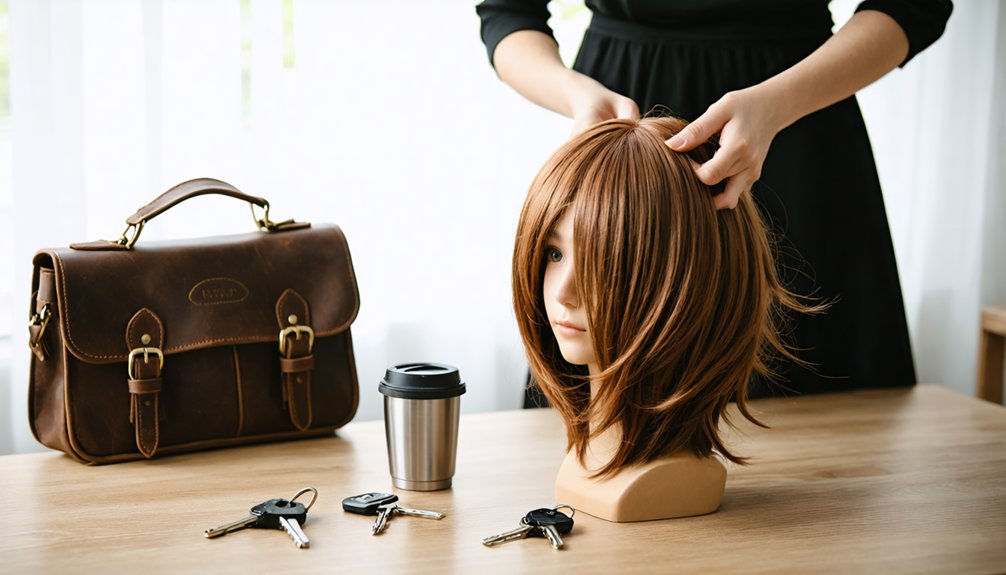
Wigs and props can transform your casual cosplay while maintaining workplace appropriateness when you select pieces that mirror everyday fashion choices. Prioritize wig quality enhancement by choosing natural colors and textures that resemble standard hairstyles—think subtle waves or sleek ponytails rather than vibrant character-specific shades. Secure clip-in or partial wigs firmly to prevent shifting during daily activities, and blend edges seamlessly with your scalp for authenticity.
For props, select functional accessories like themed notebooks, keychains, or lanyards that serve practical purposes while reflecting character backstory integration. Avoid oversized items or replica weapons that trigger security concerns. Test your wig’s comfort for full-day wear, ensuring no itching or slippage occurs. Practice quick removal techniques for unexpected professional situations, and limit yourself to one or two small props per outfit to maintain subtlety.
Balancing Character Expression With Workplace Appropriateness
When translating character aesthetics into professional settings, you’ll need to decode your workplace’s costume policies before selecting any costume elements. Consult your supervisor and multiple sources rather than relying on single coworker guidance, as office culture varies considerably. Your interpretation of “good judgment” differs from leadership’s expectations, making verification critical.
Avoid these violations that trigger employee accountability measures:
- Culturally insensitive attire representing groups outside your own membership or stereotypical portrayals
- Provocative costumes creating workplace harassment risks through sexually suggestive elements
- Props containing weapon imagery or accessories obstructing vision and creating safety hazards
Your costume choices carry legal implications when photographed and circulated online, potentially damaging employer brand reputation. Maintain professional dress code alignment during all celebrations while selecting subtle character references that preserve job function and safety protocols.
Boosting Confidence Through Low-Key Character Embodiment

Character embodiment works as a psychological tool even when you’re wearing minimal costume elements to school or work. You’ll tap into your character’s traits through subtle accessories—a pin, color palette, or hairstyle—triggering confidence shifts that reduce concern over others’ opinions. This comfort zone expansion happens incrementally: each day wearing character-inspired pieces trains you to inhabit stronger versions of yourself.
Select characters who’ve overcome struggles similar to yours. Their resilience becomes your mental framework during challenging meetings or presentations. You’re not performing—you’re accessing authentic self-aspects through symbolic representation.
This approach enables social skill reinforcement without full costume commitment. Conversations start organically when someone notices your themed watch or bag charm, creating networking opportunities while maintaining professional boundaries. You’ll build everyday confidence through repeated low-stakes character channeling.
Frequently Asked Questions
Can I Casual Cosplay if My Workplace Has a Strict Uniform Policy?
You can’t bypass strict uniform policies, but you might negotiate subtle professional costume accessories like themed pins, watches, or hair clips. Request accommodation through proper channels before incorporating creative costume pieces into your required work attire.
How Do I Handle Coworkers or Classmates Asking About My Outfit Choices?
Be polite when coworkers ask about your outfit—45% of offices encourage creative dress. Maintain professionalism by explaining it’s character-inspired workwear, not full cosplay. Keep responses brief, friendly, and refocus conversations on work tasks to minimize distractions.
What’s the Best Way to Store Costume Pieces at Work or School?
Keep portable costume containers like zippered bags or compact bins in secure storage locations such as your locker, desk drawer, or car trunk. You’ll maintain quick access while protecting pieces from damage, dust, and unwanted attention throughout your day.
Are There Characters That Work Better for Conservative Professional Environments?
You’ll find modest character choices like Papa Smurf’s blue suits or Paddington’s duffle coats work exceptionally well. Professional character inspirations such as Fruits Basket’s high-neck designs and sailor-inspired Popeye looks blend workplace appropriateness with creative expression.
How Often Should I Casual Cosplay Without It Seeming Repetitive or Odd?
Since 36% of workplaces now allow daily casual dress, you can comfortably casual cosplay 1-2 times weekly. Try different cosplay ideas monthly and avoid overused characters to maintain novelty while staying professionally appropriate.