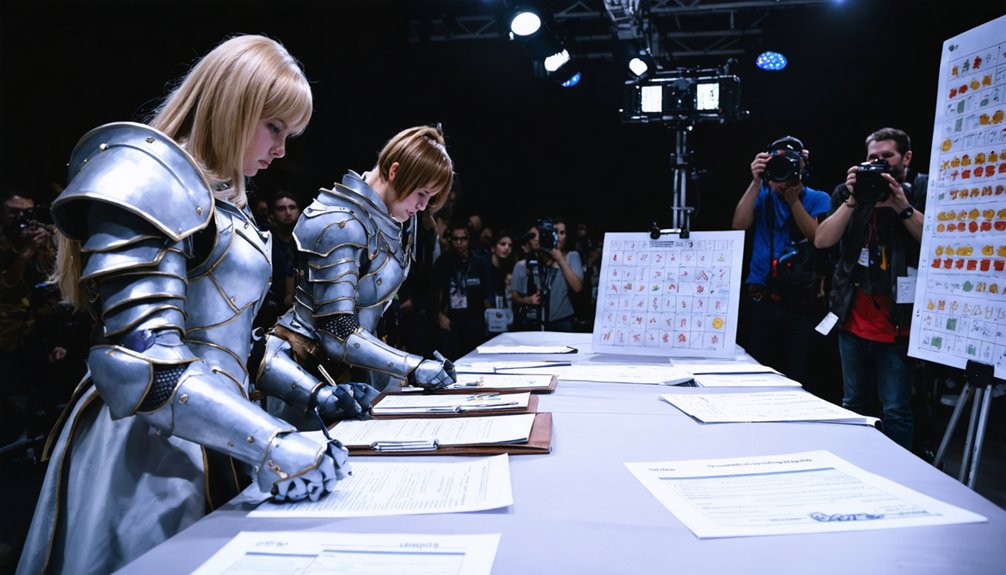
To prepare a winning cosplay competition entry, you’ll need to meet your division’s handmade percentage requirements (typically 60-80%), complete 70% of construction before submission, and document every fabrication technique with process photos. Master the prejudging presentation by articulating your methods with technical specificity, arrive within your assigned time window, and disclose purchased components upfront. Develop a compelling stage performance that showcases character interpretation, guarantee all props meet safety regulations, and strategically select your competition category based on your costume’s technical attributes rather than personal preference. Understanding these interconnected elements separates successful competitors from disqualified entries.
Key Takeaways
- Meet handmade percentage requirements (60-80% depending on division) and complete 70% of construction before application submission with proper documentation.
- Prepare a detailed construction report with progress photos, technical terminology, and verification of methods like 3D printing or advanced fabrication.
- Arrive punctually for prejudging, articulate construction techniques specifically, disclose purchased elements upfront, and justify any source material deviations with references.
- Develop a strong stage performance with choreography and character interpretation, as presentation quality receives substantial points and separates winners from competitors.
- Select the correct competition category by analyzing technical attributes against division requirements: Craftsmanship demands 75%+ handmade work; Performance prioritizes choreographed content.
Understanding the Judging Criteria and Point Distribution
Before entering any cosplay competition, you must decode its specific scoring system—since point distributions vary dramatically across events and directly determine where you should invest your effort. Most competitions divide evaluation into five equally weighted categories at 20% each, though some employ alternative structures.
Construction-heavy formats allocate 70% to craftsmanship versus 30% for costume accuracy assessment, while performance-centric events assign 50 points to stage execution alone. Pre stage demonstration typically emphasizes technical elements—clean seams, material quality, complexity of techniques—where judges scrutinize your work’s structural integrity before you perform.
Meanwhile, on-stage scoring evaluates character embodiment, presentation confidence, and entertainment value. Strategic competitors analyze these weightings beforehand, allocating build time and rehearsal energy proportionally to maximize their score potential across all evaluated dimensions.
Meeting Construction Requirements and Handmade Standards
You must meet the minimum handmade percentage for your division—typically 50-80% depending on skill tier—with at least 70% of construction completed before application submission.
Document every construction technique through progress photos, material receipts, and process notes, as Journeyman and Masters divisions require exhaustive build books for prejudging verification.
Your documentation should clearly demonstrate which elements you fabricated versus purchased, showing judges exactly how you achieved the required handmade threshold through specific construction methods like pattern drafting, foam work, thermoplastics, or textile manipulation.
Achieving 50% Handmade Minimum
Most cosplay competitions establish a 50% handmade minimum as the baseline threshold for entry, though this percentage augments substantially based on your chosen skill division. You’ll calculate this by counting handmade pieces relative to total costume components, where modified items contribute half-value toward your percentage.
Handmade qualification requires sourcing handmade materials and transforming them from raw state—not merely purchasing finished garments. Modifying existing pieces through heavy alteration, kit-bashing, or 3D printing earns full handmade credit, while basic modifications count as half. Shoes, wigs, and modern support garments receive exemption from calculations.
Disqualification occurs if you misrepresent your work percentage or fail to meet division thresholds—judges retain final assessment authority. Advanced divisions demand 60-70% handmade content, while Master-level competitors must achieve 75-80% to remain competitive.
Demonstrating Construction Techniques Effectively
Judges assess your construction techniques through multiple documentation channels that collectively prove your handmade percentage claims. Your costume construction report must detail specific production methods, while 3D files require digital signatures or process screenshots as verification.
Quality trumps quantity—executing one complex technique flawlessly outscores multiple mediocre attempts. Focus your garment embellishment strategies on challenging needlework like detailed embroidery or advanced armor fabrication using molding and EVA foam. Document material application techniques through reference images: bring minimum one reference and two costume photos.
Your portfolio should explain craftsmanship behind custom 3D work thoroughly. Remember, construction weighs 70% of judging versus 30% for accuracy and design. Special techniques or mechanisms that transform your costume’s appearance or structure earn higher technical scores, particularly when properly indicated on your performance sheet.
Mastering the Prejudging Process
You’ll need to manage three critical aspects during prejudging: arriving within your assigned time window to avoid disqualification, articulating your construction methods with technical specificity when judges inspect your work, and providing clear justifications for any deviations from source material accuracy.
Judges evaluate handmade techniques against rubric criteria, so prepare to demonstrate seam construction, material choices, and fabrication processes through both verbal explanation and physical documentation. Your ability to defend design modifications with reference images and progress photos directly impacts scoring, as identical accuracy to the original yields maximum points while unexplained differences result in zero.
Understanding Time Allocation Rules
Since prejudging sessions determine your competition eligibility and provide judges their primary assessment opportunity, you must comprehend the temporal framework governing these evaluations. Sessions span 10:00 AM to 5:00 PM, with individual assessments lasting three minutes and group evaluations extending to five minutes.
Competitions featuring 30+ entrants require five to six hours total, accommodating detailed costume examination and judge deliberation.
You’ll benefit from prejudging schedule flexibility, as organizers assign time slots until the Friday preceding the convention, enabling last-minute schedule adjustments. Arrive within your designated 30-minute window—early or late arrival disrupts judge scheduling protocols. Late arrivals risk disqualification entirely.
Plan additional time for mandatory photography documentation before your judging session. This structured approach guarantees equitable assessment while maintaining operational efficiency throughout the evaluation process.
Presenting Construction Techniques Effectively
Your preparation extends beyond time management into strategic presentation of your craftsmanship during the evaluation itself. Efficient planning techniques require you to organize your build documentation chronologically, demonstrating progressive skill application. Your build book should feature high-resolution process photos, material specifications, and technique annotations that judges can review between sessions.
Clear communication strategies involve structuring your five-minute presentation to emphasize innovative construction methods rather than basic assembly. When judges question your material choices or technical decisions, respond with specific terminology—describe your foam thermoplastic forming process or fabric pattern drafting rather than generic descriptions. You’ll strengthen your credibility by disclosing purchased elements upfront, then directing attention toward your actual fabrication work. This transparency allows judges to accurately assess your demonstrated skill level within appropriate craftsmanship divisions.
Documenting Design Deviation Explanations
When judges compare your finished costume against source material, intentional design modifications require documented justification to avoid accuracy penalties. Your build book must contextualize deviations through thorough reference documentation—include comparison images showing original designs alongside your adaptation rationale.
Explain construction necessities that forced alterations: fabric availability limitations, safety modifications for wearability, or structural adjustments for movement. Visible process details demonstrate these weren’t oversight but deliberate problem-solving.
During prejudging questions, articulate your reasoning directly. Judges assess skill level through rubric-based scoring, where contextualized deviations showcase advanced decision-making rather than diminish craftsmanship scores.
Post-prejudging deliberation involves reviewing full documentation ranges before final score adjustments. Your reference photos in the application establish baseline comparisons, while build book narratives transform potential accuracy concerns into evidence of thoughtful, innovation-driven costume engineering.
Developing Your Stage Performance and Character Presentation
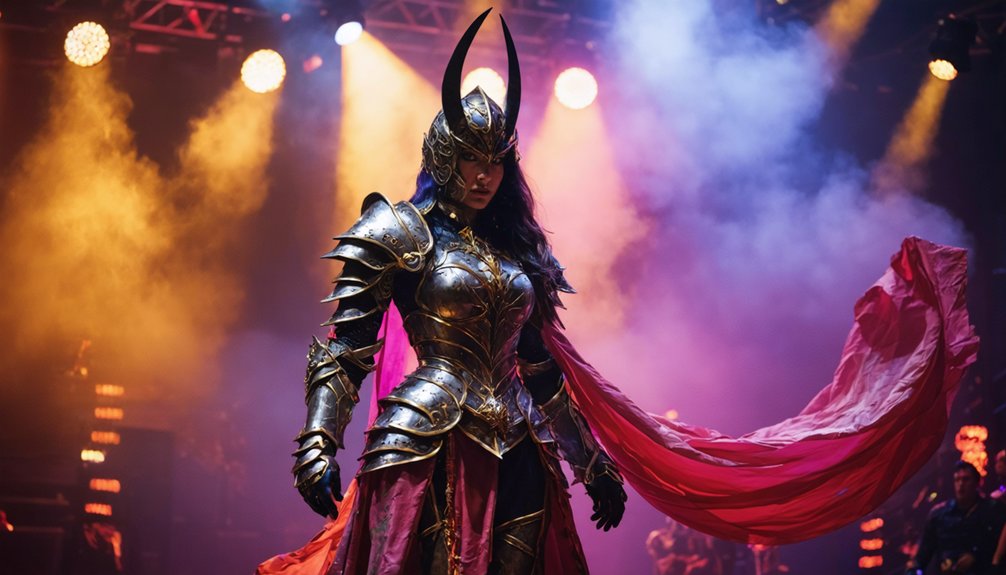
Stage performance separates competent costumers from competition winners, as judges allocate substantial points to presentation quality and character interpretation.
Portraying character authenticity requires complete identity assumption—react to costume malfunctions in-character, maintain distinctive walks and mannerisms throughout, and avoid static photo-shoot poses.
Maximizing visual impact demands exaggerated movements visible to back-row judges: amplified facial expressions, expansive arm gestures, and dynamic stances held several seconds.
Strategically navigate all stage areas, showcasing costume angles through choreographed movement.
Master pre-judging descriptions within 2-5 minutes, rehearsing before mirrors, then progressive audiences until execution feels natural. Verify competition-specific rules regarding skits versus walk-ons, adapting your 2-minute routine accordingly.
Time management proves critical—overruns trigger deductions. Familiarize yourself with venue layouts beforehand, integrating entrance, poses, and exit into seamless performance flow that demonstrates both craftsmanship and theatrical competence.
Ensuring Safety Compliance and Prop Guidelines
While stage presence captivates audiences, safety violations will disqualify even masterwork costumes before you reach the judges’ table. Understanding prop safety inspections guarantees your creative vision survives scrutiny.
Mastering safety protocols protects your hard work—even the most stunning costume fails if props don’t pass inspection.
Staff conduct mandatory checks on all props and weapons—their decisions are final and non-negotiable. Plan accordingly.
Cosplay weaponry restrictions demand strategic material choices. Live steel, sharp edges, and functional weapons face immediate rejection. Props exceeding 6-8 feet won’t pass inspection. Firearms require orange tips or face blanket prohibition. Projectile mechanisms, explosives, and hard blunt objects that could cause injury are forbidden.
Wear protective hard-sole footwear throughout—bare feet or socks violate hygiene and safety protocols. Stage combat choreography needs pre-approval. Running, acrobatics, pyrotechnics, and audience interaction remain prohibited. Compliance isn’t limitation—it’s the framework enabling your innovation to compete successfully.
Selecting the Right Category and Entry Type for Your Costume

Choosing your competition category incorrectly triggers disqualification regardless of costume quality—you’ll bypass judges entirely through administrative removal. Division selection demands precise rule interpretation: calculate your award history against three-tier thresholds (Novice: 0-1, Journeyman: 2-3, Master: 4+). Don’t underestimate coordinators’ reassignment authority—they’ll elevate you based on professional experience or international recognition.
Match entry types to construction percentages exactly. Craftsmanship requires 75%+ handmade work and mandatory prejudging attendance; Performance accepts any construction level but demands choreographed content. The hybrid Craftsmanship & Performance option doubles your judging opportunities but intensifies time commitments.
Analyze your costume’s technical attributes against category requirements before registration. Commission-wearing isn’t viable in Craftsmanship unless you’re the maker. Strategic division placement maximizes competitive advantage—higher divisions remain accessible, but downward movement post-inquiry becomes permanently restricted.
Frequently Asked Questions
You can’t compete without your model at prejudging. You must attend personally to explain costume construction challenges and present pre-recorded character references. Judges require direct creator interaction to verify authenticity and assess your technical craftsmanship adequately.
How Many Handlers Are Allowed in the Green Room per Group?
You’re allowed one handler per two group members in the green room. This ratio addresses both group size restrictions and prop safety regulations, ensuring you’ll have adequate assistance while maintaining secure backstage conditions for innovative costume presentations.
Are Bare Feet Permitted if They Match My Character Design?
No, bare feet aren’t permitted regardless of character authenticity. You’ll need foot coverings like flesh-toned dance shoes or clear sandals to satisfy safety requirements while maintaining your design’s visual integrity and competitive viability.
What Happens if a Group Member Cannot Attend Prejudging?
Your team’s stage dreams crumble instantly. Group member substitutions aren’t permitted under any circumstances. You can’t arrange alternate costume arrangements either. Absence from prejudging triggers automatic disqualification, as all participants must attend the mandatory jury inspection before performing.
Can I Use a Prop That Intertwines With Audience Members?
No, you can’t use props that intertwine with audience members—they’re explicitly prohibited due to prop safety considerations and liability concerns. Audience participation must maintain physical separation; violating these requirements results in automatic disqualification from competition.