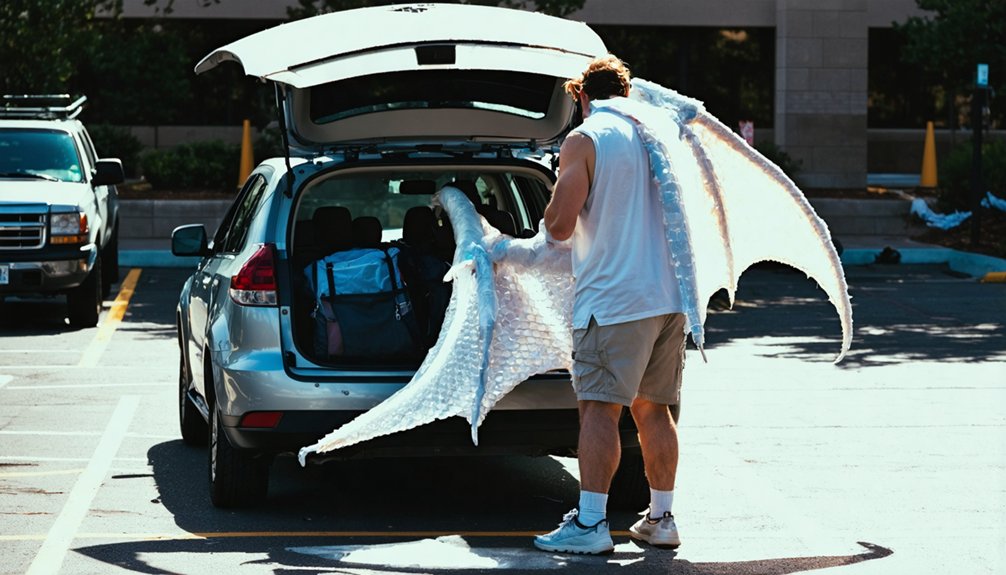
To transport large cosplay props to conventions, you’ll need to build them with disassembly in mind, using modular sections and collapsible joints. Pack components in hard-shell cases lined with foam, and fill gaps with bubble wrap or crumpled paper to prevent shifting. Research airline policies on oversized baggage and declare weapon-like props at security. Test your prop’s mobility before hitting the convention floor. Keep exploring to master every step of the journey.
Key Takeaways
- Build large props in modular sections using collapsible joints, threaded connectors, or quick-release fasteners for easy disassembly and reassembly.
- Pack components in hard-shell cases lined with foam padding, filling gaps with crumpled paper to prevent shifting.
- Research airline oversized baggage policies, declare weapon-like props at security, and distribute heavy items across multiple checked bags.
- For road travel, secure props with straps or bungee cords and bring a repair kit for emergencies.
- At conventions, use a foldable dolly, assign a handler, and avoid narrow aisles to navigate safely.
Build Your Cosplay Props to Collapse, Pack, and Travel
When building large cosplay props, design for disassembly from the very start. Modular construction lets you break complex builds into interlocking or screw-together sections that fit neatly into standard luggage. Measure your travel containers before cutting a single piece, ensuring every component slots in without forcing or bending.
Use collapsible joints reinforced with magnets, quick-release fasteners, or threaded connectors so sections separate cleanly and reassemble fast. Prioritize expanded PVC or similar lightweight, rigid materials that handle repeated assembly cycles without weakening.
Creative storage becomes effortless when each module has a designated spot in your packing system. Label components, group related pieces together, and you’ll never scramble at the hotel.
Smart structural planning at the build stage eliminates transport headaches long before convention day arrives.
Pack Large Cosplay Props Without Breaking Them
Once you’ve built your props to disassemble smartly, your next priority is ensuring each piece survives the journey intact.
Wrap individual components in bubble wrap, foam sheets, or old blankets, then fill any remaining empty spaces with crumpled paper to eliminate shifting during transit.
Always choose hard-shelled suitcases or Husky containers over flexible bins, since soft-sided bags buckle under stacked weight and leave your props vulnerable to crushing damage.
Smart Disassembly Design Tips
Designing your cosplay prop for disassembly from the start saves you countless headaches at the airport or loading dock. Building modular components with adjustable joints lets you break down even the most elaborate builds into suitcase-friendly sections.
Follow these three core principles:
- Use quick-release fasteners or magnets to separate sections rapidly without tools or fumbling under pressure.
- Measure your travel container first, then engineer each modular component to fit those exact dimensions before cutting a single piece.
- Choose expanded PVC for structural sections — it’s lightweight, strong, and won’t add remarkably heavy weight to your checked luggage.
Adjustable joints aren’t just convenient; they’re essential for protecting connection points during repeated assembly cycles. Design smart upfront, and every convention trip becomes considerably more manageable.
Protective Packing Materials Matter
Even the most brilliantly engineered modular prop will arrive shattered if you pack it carelessly. Choose hard-shelled suitcases or Husky containers over flexible bins that buckle under stacked weight.
Line each container’s interior with foam padding cut specifically for soundproofing applications — it absorbs impact better than standard packaging foam. Follow that layer with bubble wrapping around individual pieces, securing every joint, tip, and painted surface susceptible to scratching.
Fill remaining gaps with crumpled paper or stuffing to eliminate interior movement entirely. A prop that shifts during transit is a prop that breaks.
Custom-fitted containers eliminate that risk by creating a snug environment tailored to your component dimensions. Treat your packing process as deliberately as your build process, because sloppy logistics erase brilliant craftsmanship before you ever reach the convention floor.
Choosing Sturdy Travel Containers
Your choice of travel container determines whether your prop survives the journey intact, so prioritize hard-shelled suitcases or Husky-style storage containers over flexible bins that buckle under stacked weight. Material durability directly impacts long-term prop protection, making container selection a critical decision before any convention trip.
Consider these three container priorities:
- Hard-shell construction — resists crushing forces from airport baggage handlers or stacked cargo
- Custom-fitted sizing — eliminates internal movement that causes scratches and fractures
- Secure latching systems — prevents accidental openings during transit
Measure your disassembled prop pieces before purchasing any container, ensuring each component fits snugly without forcing. A properly sized, rigid container paired with foam lining creates a near-impenetrable travel solution that keeps your craftsmanship convention-ready upon arrival.
Assemble the Repair Kit You Need Before You Travel
Before you leave for the convention, assemble a compact repair kit that’ll save you from a costume catastrophe mid-event. Pack essential repair supplies like superglue, a mini hot glue gun, extra glue sticks, and a small roll of gaffer tape to handle emergency fixes quickly and efficiently.
Include spare fasteners, zip ties, and a compact sewing kit for fabric-based components that may tear under stress. Store everything in a hard-shell organizer or a rigid pencil case so your tools stay protected and accessible without adding bulk.
Label each item for fast identification when you’re under pressure. A well-stocked kit means you’re never sidelined by a broken joint or snapped fastener, keeping your costume convention-ready from the moment you arrive until you leave.
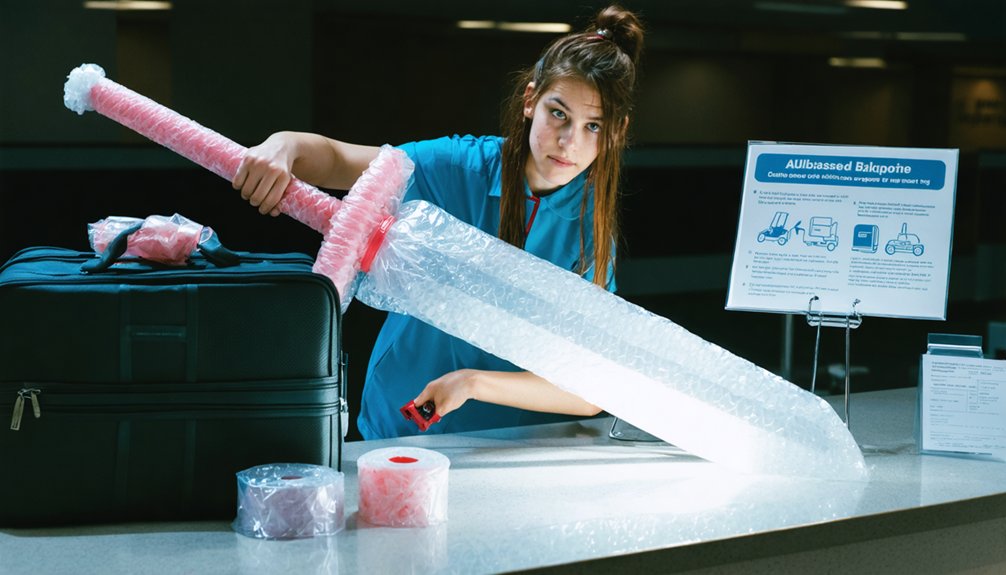
When flying with large cosplay props, you’ll need to research your airline’s oversized baggage policies in advance, since fees and size restrictions vary considerably between carriers.
Always declare weapon-like items—swords, staffs, or replica firearms—to security personnel to avoid confiscation or delays at the checkpoint.
You’ll also want to distribute heavy props across multiple checked bags to stay within per-bag weight limits and dodge costly overweight fees.
Declare Weapon-Like Items
Flying with weapon-like cosplay props requires careful planning, so you’ll want to research your airline’s specific policies well before your departure date.
Weapon safety and legal considerations vary considerably between carriers and destinations, making early research essential.
Follow these key steps when declaring weapon-like props:
- Contact your airline directly to confirm their specific prop declaration procedures and restricted item classifications before packing.
- Pack props in checked luggage only, ensuring they’re secured in hard-shell cases with proper documentation labeling them as costume accessories.
- Notify TSA agents proactively at check-in rather than waiting for security to flag your items, which streamlines the inspection process.
Declaring items transparently prevents costly delays and confiscation, keeping your convention timeline intact while demonstrating responsible travel practices.
Research Oversized Baggage Policies
Managing airline oversized baggage policies can make or break your convention trip, so you’ll want to research each carrier’s specific size and weight thresholds well before booking your ticket. Airlines differ considerably on dimensional limits, fees, and restricted items, meaning storage optimization becomes critical during your prop’s construction phase.
Design components to fall within standard checked baggage dimensions whenever possible.
Material selection directly impacts compliance—lightweight expanded PVC keeps total weight under carrier limits while maintaining structural integrity. Distribute heavier pieces across multiple bags to avoid overweight surcharges.
Check whether your airline classifies certain prop shapes as restricted items, and contact their customer service directly for written clarification. Documenting airline approval in advance prevents costly gate-side surprises and keeps your cosplay experience running smoothly.
Distribute Weight Across Bags
Once you’ve confirmed your airline’s size and weight thresholds, your next move is splitting your prop components strategically across multiple bags. Smart weight distribution prevents overweight fees and protects fragile pieces from crushing pressure.
Effective bag organization follows three core principles:
- Separate heavy structural components across two checked bags to keep each under the airline’s per-bag weight limit, typically 50 pounds.
- Pair dense items with lighter costume pieces to balance load without exceeding limits or concentrating stress on one container.
- Reserve your carry-on for irreplaceable or fragile parts, ensuring critical components survive even if checked luggage gets delayed.
This approach also improves handling safety, since baggage crews manage lighter individual bags more carefully than single oversized, awkward containers.
Drive to Conventions Without Damaging Your Cosplay Gear
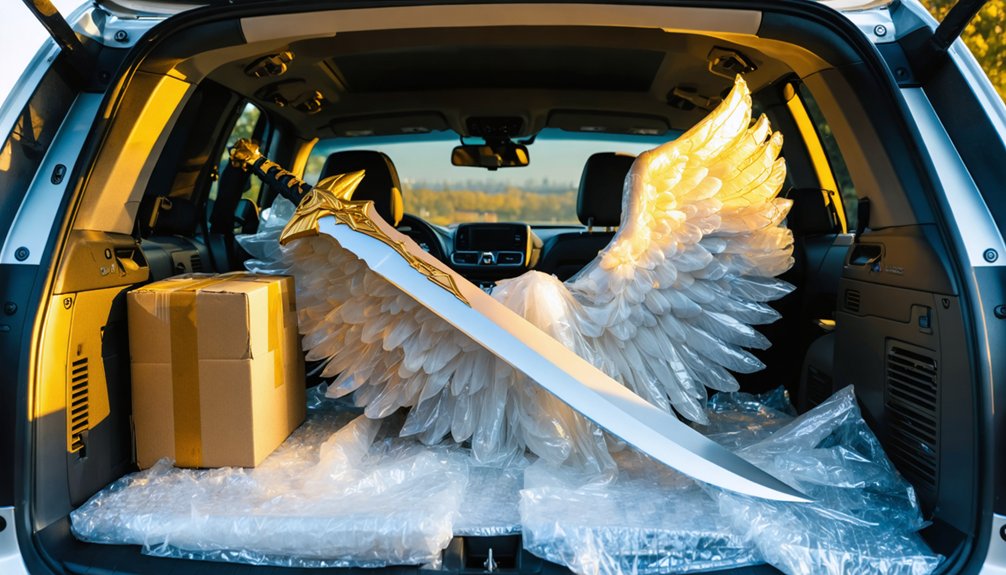
Driving to a convention gives you far more control over your cosplay gear than flying, but you’ll still need to treat your vehicle like a cushioned display case to avoid damage. Pad your cargo area with foam or blankets before loading anything, then secure props using straps or bungee cords to eliminate shifting during transit.
Proper costume storage starts before you leave home — pack each piece intentionally rather than stacking items loosely.
For costume maintenance on the road, bring your repair kit so minor damage gets addressed immediately.
If your props are too bulky to carry through crowded convention halls, use a foldable hand truck to move everything efficiently.
Always verify venue accessibility rules regarding dolly usage before you arrive.
Move Large Cosplay Props Through the Convention Floor
Steering a convention floor with oversized props requires strategy before you ever step inside. Poor aisle navigation wastes energy and risks damaging others’ work. Prioritize costume mobility by testing every movement—sitting, turning, reaching—before entering the floor.
- Avoid narrow vendor aisles — Artist alley rows restrict movement and increase collision risk with delicate artwork.
- Use a foldable dolly — A compact hand truck reduces physical strain and keeps large props stable across long distances.
- Identify a nearby break location — Pre-scout changing areas or quiet corners where you can remove sections quickly.
Always bring a dedicated handler to navigate crowds alongside you. Wider main aisles give you room to maneuver without constantly apologizing or repositioning your prop.
Frequently Asked Questions
How Do You Handle Prop Damage Caused by Other Convention Attendees?
Keep a prop repair kit handy for quick fixes using superglue or a mini hot glue gun. You’ll also want to explore insurance coverage options to protect against costly damage caused by other attendees at conventions.
Are There Conventions That Prohibit Oversized Props Entirely?
Like a locked gate blocking your path, yes, some conventions do prohibit oversized props entirely. You’ll want to research prop safety policies beforehand and apply smart transportation tips to avoid wasted effort at check-in.
How Do You Budget for Prop Transport Costs on a Tight Budget?
Ship props ahead using cost-effective shipping rates by comparing carriers. You’ll save money with DIY transport solutions like repurposed foam-lined boxes, splitting baggage fees across two checked bags, and distributing weight strategically to avoid costly overweight charges.
Can You Rent Storage Space at Conventions for Large Props?
“Necessity is the mother of invention!” You can often rent storage options at conventions, but you’ll need to research each venue’s rental policies in advance. Store remaining props in lockers or hotel rooms for smart, innovative solutions.
How Do You Photograph Large Props Effectively at a Convention?
Find wide, naturally lit areas to showcase your prop’s scale. You’ll want to use framing strategies like low angles and lighting techniques that highlight details, ensuring your shots capture the prop’s full innovative impact.
References
- https://www.reddit.com/r/PAX/comments/5xqnqi/question_cosplayers_how_do_you_typically/
- https://cosplayadvice.com/how-to-transport-your-cosplay-to-a-con/
- https://www.reddit.com/r/CosplayHelp/comments/1n13snq/how_do_i_transport_a_large_cosplay_piece/
- https://www.youtube.com/watch?v=t9UWIxm1iEg
- https://www.reddit.com/r/cosplayers/comments/5xqrgv/help_how_do_you_typically_transport_your_props_to/
- https://www.youtube.com/watch?v=xZxHZjt6DSU
- https://www.reddit.com/r/CosplayHelp/comments/1pp41qp/tips_on_transporting_and_walking_around_in_large/