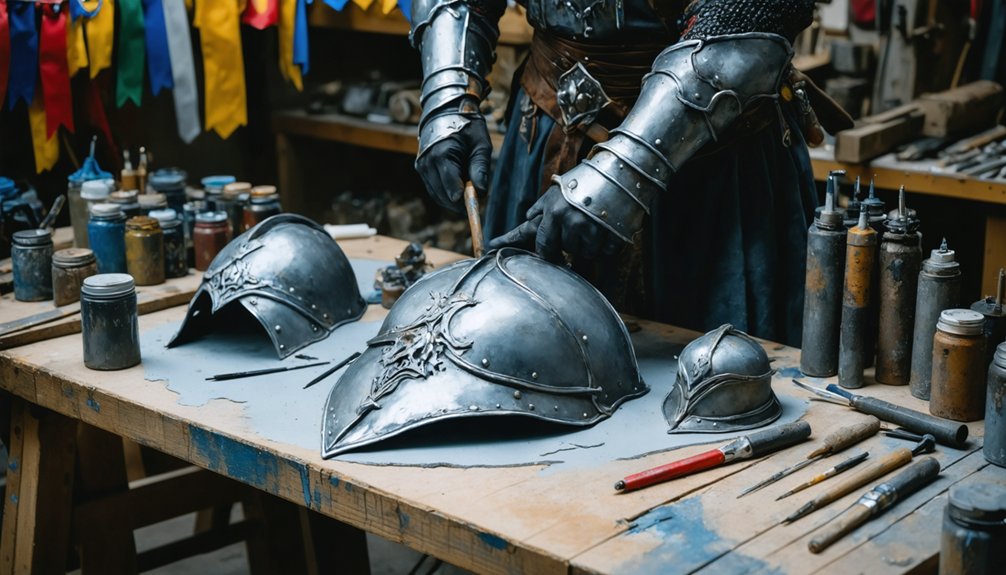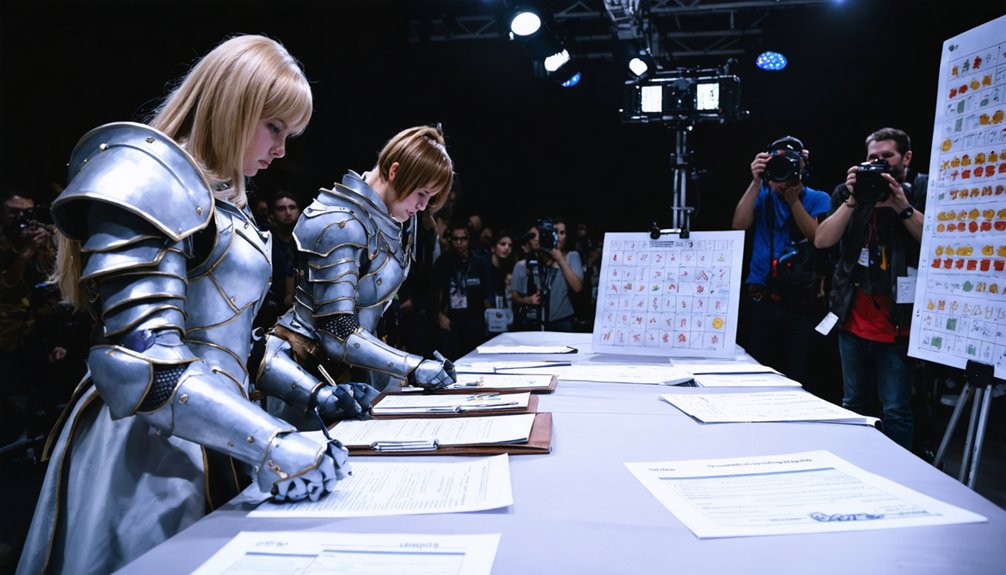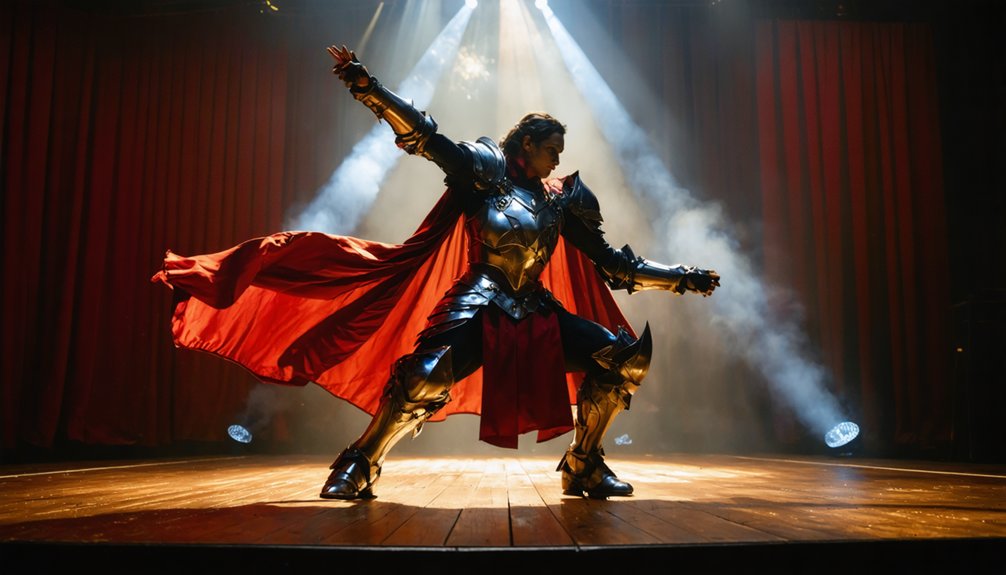
To win Best in Show, you’ll need to impress judges across craftsmanship, character fidelity, and stage presence simultaneously. Choose a costume that aligns with your strongest technical skills — clean construction consistently beats ambitious but sloppy builds. Press your seams, eliminate raw edges, document your process in a progress book, and rehearse a confident, character-driven performance. Every element works together as a scored package, and mastering that combination is what separates winners from contenders.
Key Takeaways
- Master multiple construction techniques, including pressed seams, resin casting, and embroidery, demonstrating technical versatility rather than relying on costume scale alone.
- Choose a costume that aligns with your strongest skills, prioritizing clean execution over ambitious but poorly finished builds.
- Build a well-organized progress book with chronological photos, technique annotations, and material notes to significantly boost judging scores.
- During pre-judging, present your costume top-to-bottom within five minutes, immediately identifying the character and highlighting specific craftsmanship techniques.
- Rehearse confident, character-driven stage movements and body language, as strong performance execution complements technical achievements during judging.
What Do Judges Actually Look for in Best in Show?
When you step onto the judging floor, you need to understand that Best in Show isn’t awarded to the flashiest costume—it’s earned by the entry that demonstrates the highest overall standard across craftsmanship, accuracy, and presentation.
Judges evaluate judging criteria spanning every visible layer of your build. They’re scrutinizing craftsmanship quality through clean seams, intentional construction, and technique variety—from resin work to hand embroidery.
Character fidelity and detail accuracy determine whether your material choice reads as authentic or approximate.
Performance execution carries significant weight; your confidence, stage presence, and rehearsed movements communicate mastery beyond the costume itself.
Progress tracking through a documented design book signals seriousness and elevates your score.
Judges don’t reward scale alone—they reward precision, intentionality, and complete command of your craft.
Choose a Costume That Plays to Your Technical Strengths
Your best shot at Best in Show starts with choosing a costume that showcases the skills you’ve already mastered, whether that’s precision tailoring, resin casting, foam fabrication, or wig styling.
Judges evaluate execution quality above ambition, so a flawlessly built mid-complexity costume consistently outscores a technically sloppy flagship build.
Match your costume selection directly to your strongest techniques, and you’ll compete from a position of genuine authority rather than compensating for gaps in your skill set.
Highlight Your Best Skills
Choosing the right costume is a strategic decision, not just a creative one. Your entry should function as a skill showcase, spotlighting your strongest technical abilities. Judges reward intentional craftsmanship over ambitious builds executed poorly.
Prioritize costumes that let you deploy unique techniques you’ve genuinely mastered:
- Resin or prop work — demonstrate precision casting, finishing, and painting
- Tailoring and textiles — show clean seams, structured silhouettes, and accurate fabric selection
- Foam fabrication — exhibit smooth sanding, heat-shaping, and sealed surfaces
- Mixed-media construction — combine 3D printing, embroidery, or electronics strategically
Don’t chase complexity for its own sake. A tightly executed mid-difficulty build consistently outperforms an overreaching build with visible flaws.
Build where you’re strongest, and let your competence speak authoritatively on stage.
Match Costume To Expertise
Matching your costume choice to your actual technical skill set is one of the most decisive advantages you can build before competition day. Judges evaluate costume coherence instantly — a technically ambitious build executed poorly loses to a simpler design executed flawlessly.
Skill alignment means selecting characters whose construction demands mirror your strongest disciplines. If you excel at resin casting and prop fabrication, choose armor-heavy characters. If tailoring and embroidery define your strengths, prioritize garment-intensive designs.
Avoid overextending into unfamiliar techniques under competition pressure. Instead, select a character that lets your proven abilities dominate every element. A cohesive build where every component reflects deliberate, confident craftsmanship communicates mastery far more effectively than scattered technical ambition.
Your costume should be a direct showcase of what you genuinely do best.
Which Construction Techniques Actually Impress Competition Judges
When it comes to impressing competition judges, mastery across multiple craft specialties carries far more weight than scale alone. Your construction techniques, detail precision, and finishing touches signal genuine craftsmanship expertise.
Judges consistently reward these four technical strengths:
- Fabric selection — matching silk, leather, or spandex authentically to character design
- Sewing methods — pressed seams, zero raw edges, and pattern accuracy throughout
- Embellishment styles — hand embroidery, resin work, and intentional surface decoration
- Prop making — foam fabrication, 3D printing, and professional-grade painting techniques
Clean builds outperform ambitious but sloppy large-scale entries every time.
Precision beats scale — a flawlessly executed small build will always outshine an ambitious, poorly crafted large one.
You’ll distinguish your work by combining precise tailoring with purposeful embellishment styles rather than compensating through sheer size.
Judges notice everything — prioritize execution over spectacle.
Build a Cosplay Progress Book That Sets Your Entry Apart
A single well-organized progress book can elevate a novice entry to Best in Show — judges consistently cite documentation as a deciding factor in close contests.
Your progress book essentials include chronological build photos, annotated technique breakdowns, and material sourcing notes that demonstrate intentional decision-making rather than accidental results.
Structure each section head-to-toe, mirroring your pre-judging walkthrough. Showcasing techniques like resin casting, foam patterning, or hand embroidery through clear before-and-after comparisons gives judges tangible evidence of your skill ceiling.
Include photos capturing early mistakes and your corrections — this signals problem-solving ability, which experienced judges actively reward.
Print physical copies rather than relying on digital screens under harsh convention lighting. A tactile, well-formatted book signals professionalism and communicates that your craft extends beyond the costume itself.
How to Nail Pre-Judging at Cosplay Competitions
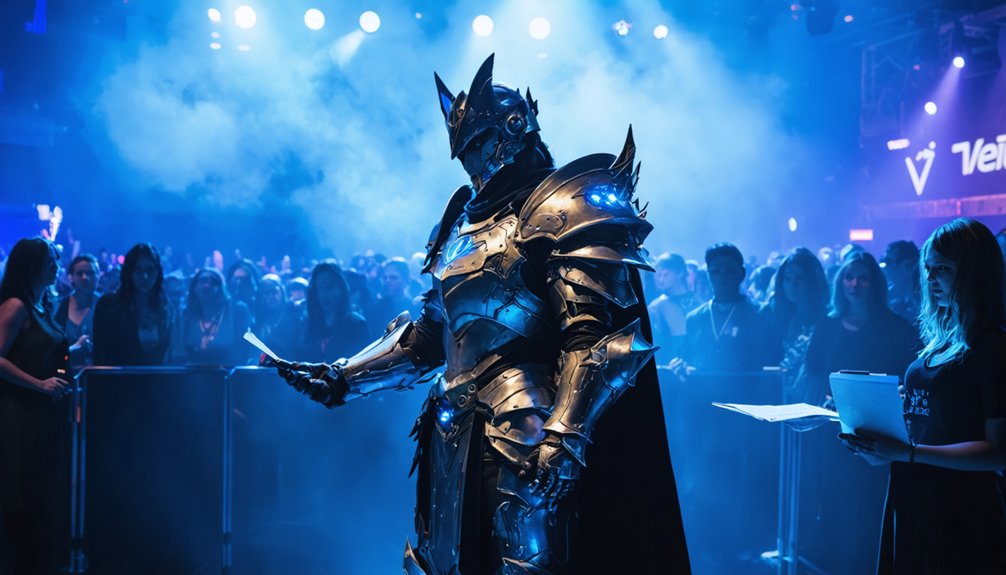
Your progress book earns its real payoff the moment pre-judging begins. Arrive fully dressed and on time—late entries risk elimination.
Structure your costume presentation strategically, moving top-to-bottom from wig to shoes within two to five minutes. Pre-judging etiquette demands confidence, clarity, and preparation.
Follow this sequence for maximum impact:
- Open strong — identify your character and source material immediately
- Highlight craftsmanship — name specific techniques like resin casting, hand embroidery, or foam fabrication
- Present your progress book — let documented evidence reinforce your verbal explanation
- Invite questions — proactively offer reference images and ask judges for clarification if needed
Practice this presentation at home, timing yourself precisely. Judges reward cosplayers who communicate their creative process with technical fluency and purposeful detail.
Own the Masquerade Stage With Character-Led Performance
Once pre-judging concludes, the masquerade stage becomes your most visible proving ground—and judges evaluate performance with the same critical rigor they apply to construction.
Your stage presence must communicate character motivation instantly—every gesture, stance, and movement should reflect deliberate choices rooted in who your character is, not who you are.
Rehearse until your blocking feels instinctive. Practice your skit within the allotted time limit, eliminating hesitation and dead space.
Supply your own music track and synchronize movement to it precisely. Judges notice when performers drift from their character’s emotional core mid-performance.
Own your character’s physicality completely—their walk, their weight, their attitude.
Confident, character-driven execution transforms a technically strong costume into a compelling, unified performance that separates Best in Show contenders from strong finalists.
What Knocks Cosplayers Out of Best in Show Contention

Even a technically impressive costume can fall short of Best in Show if critical errors undermine the overall package. Judges evaluate every layer, and common disqualifiers surface quickly.
- Poor craftsmanship and rushed execution — Raw edges, mismatched proportions, and jury-rigged construction signal inadequate research and careless building habits.
- Lack of detail — Vague character interpretation, wrong fabric choices, and missing accessories expose insufficient documentation and weak reference work.
- Unoriginal designs — Pre-made garments with minimal modification demonstrate no innovative thinking, immediately reducing your competitive standing.
- Weak performance — Hesitant stage presence, poor body language, and unrehearsed movements undercut even your strongest technical achievements.
Identify these failure points early, correct them systematically, and you’ll eliminate the preventable mistakes separating competent entries from Best in Show winners.
Frequently Asked Questions
Can Beginners Realistically Win Best in Show at Cosplay Competitions?
Yes, you can win Best in Show as a beginner! Master key costume techniques, document your progress thoroughly, and apply smart beginner strategies—judges value dedication and craftsmanship quality over experience level every time.
How Important Is Networking With Other Cosplayers Backstage During Competitions?
Backstage bonding builds brilliant costume collaboration opportunities. You’ll gain friendship benefits, fresh techniques, and innovative insights by connecting with fellow creators. Supporting others strengthens your competitive community, elevates everyone’s craft, and transforms rivals into valuable, resourceful allies.
Should Cosplay Competition Entries Focus on Popular Characters or Obscure Ones?
Both approaches work, but you’ll win by striking the right creativity balance. Popular characters boost character recognition with judges, while obscure picks showcase innovation. Prioritize flawless execution, accuracy, and craftsmanship—those consistently outweigh character familiarity in competitive judging.
How Soon Before the Competition Should You Finish Your Costume Completely?
Finish your costume at least one week early. That buffer lets you address costume maintenance issues, apply critical finishing touches, and rehearse confidently without last-minute panic compromising your innovative build’s quality before competition day.
Is It Worth Competing in Smaller Conventions Before Entering Major Competitions?
Yes, you’ll sharpen your competition strategy and costume quality at smaller conventions. They’re invaluable testing grounds where you can refine pre-judging presentations, identify construction flaws, and build stage confidence before tackling major, high-stakes competitions.
References
- https://www.reddit.com/r/CosplayHelp/comments/1fnah4y/what_does_it_take_to_win_a_cosplay_competition/
- https://theswordstall.co.uk/blogs/news/how-to-win-a-cosplay-contest
- https://geeknewsnetwork.net/teedees-tips-cosplay-competition/
- https://cosplay.com/archive/thread/dy2xy4/how-to-win-cosplay-competitions
- https://whatsernamescosplay.wordpress.com/2022/06/28/tips-tricks-competitive-cosplay/
- https://www.blackowlstudio.com/en/behind-the-scenes-of-cosplay-contests/
- https://www.youtube.com/watch?v=X6-rkVaDOts
- https://www.facebook.com/groups/CostumingTrack/posts/10162519458746229/
- https://www.tiktok.com/discover/how-to-win-cosplay-contests
- https://www.comicconla.com/cosplay-national-championship-rules