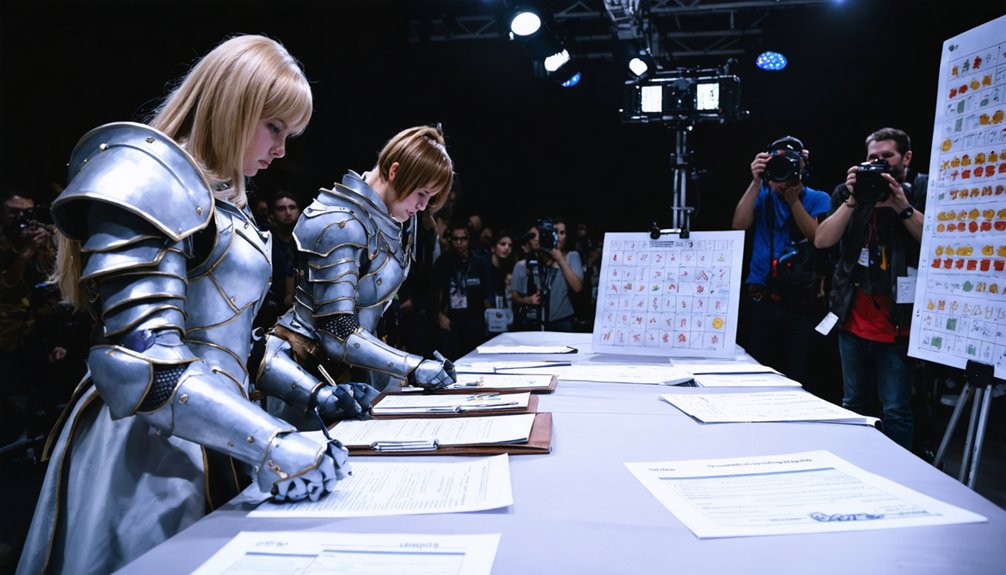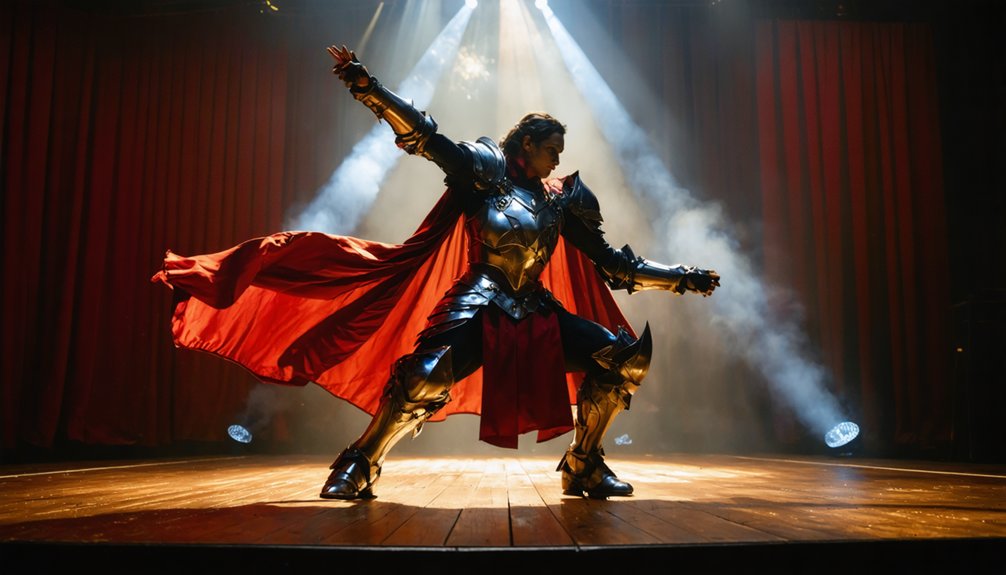
Maximizing your cosplay contest storytelling performance means treating every element — your costume, movement, props, and soundtrack — as part of a unified narrative. You’ll need to hook judges and audiences within 30 seconds, structure your skit with a clear beginning, middle, and emotional payoff, and rehearse until your character feels instinctive rather than performed. Align every decision with how judges actually score, and you’ll transform a good costume into an unforgettable competitive moment — and there’s much more to unpack.
Key Takeaways
- Structure your skit using a three-act format to establish character, escalate conflict, and deliver a powerful emotional payoff.
- Capture audience attention within the first 30 seconds using a strong visual element or unexpected dramatic action.
- Synchronize costume reveals, props, and movements with audio cues to create a seamless, cohesive performance.
- Build audience participation through call-and-response moments, timed pauses, and feeding crowd energy back into your performance.
- Articulate your creative process to judges with precision, highlighting intentional design choices and construction techniques confidently.
Understand What Cosplay Competition Judges Actually Score
Knowing what judges actually score separates strategic competitors from hopeful ones. Most panels evaluate craftsmanship, stage presence, and performance execution simultaneously. You can’t rely on a stunning costume alone — your Character Development must translate visibly through movement, voice, and conviction.
Judges watch how authentically you embody your character’s psychology, not just their appearance. Emotional Resonance drives scoring because it creates memorable moments judges discuss after deliberation ends.
Research your specific panel’s professional backgrounds beforehand. A prop-maker judge prioritizes construction techniques; a theatrical director values dramatic timing and spatial awareness.
Align every performance decision — your skit structure, gestures, and vocal delivery — directly to those criteria. Strategic preparation transforms your presentation from impressive to unforgettable, positioning you competitively before you ever step onstage.
Build Your Cosplay Skit Around a Three-Act Structure
Three acts give your skit a spine — without them, even a visually stunning performance collapses into a sequence of disconnected moments.
Structure your beginning as a setup: introduce your character’s world, personality, and stakes within seconds. Judges and audiences need immediate context.
Your opening seconds aren’t a warm-up — they’re your audition. Nail the setup or lose the room forever.
Your middle act drives Character Development forward. Create conflict, escalate tension, and force your character to react. This is where your performance earns emotional investment from the crowd.
Your final act delivers the Emotional Arc’s payoff — the transformation, revelation, or triumphant moment your audience has been building toward.
Plant three high-impact attention grabbers across all three acts to maintain energy and retention.
Map every movement, line, and music cue to this framework before rehearsing. Structure isn’t a creative limitation; it’s the engine that makes your storytelling land.
Sync Your Costume, Props, and Soundtrack Before You Step Onstage
Once your three-act structure is locked, your next job is making sure every physical element of your performance — costume, props, and soundtrack — operates as a single unified system.
Costume synchronization means your outfit’s reveal moments, transformation pieces, or wearable mechanics align precisely with specific audio cues. Map each beat.
For prop integration, assign every prop a defined entry point, function, and exit within your script. A prop without a purpose wastes precious stage seconds.
Test your soundtrack shifts in full costume, not rehearsal clothes. Armor restricts movement, oversized pieces shift sight lines, and long skirts change your timing.
Record multiple run-throughs, identify friction points, and eliminate them before competition day. Synchronization isn’t polish — it’s infrastructure.
Hook the Cosplay Crowd in the First 30 Seconds
Whether your entry runs two minutes or five, the audience decides if they’re invested within the first 30 seconds — so you can’t afford a slow build. Open with your strongest visual: a dramatic silhouette reveal, a booming voice line, or a single explosive movement that commands the entire stage.
Effective storytelling demands you establish character, tone, and conflict immediately — not gradually. Your soundtrack’s opening beat should hit precisely as you strike your first pose.
Audience engagement peaks when something unexpected happens early, so subvert assumptions. Don’t walk out neutrally; enter as the character mid-action. That instant momentum signals confidence to judges and spectators alike, framing everything that follows as intentional, compelling, and worth watching completely.
Use Poses, Gestures, and Stage Space That Read From the Back Row

When you step onto that stage, you’ve got to own every inch of it — move from corner to corner, hit your marks with intention, and never cluster yourself in one spot.
Exaggerate every gesture far beyond what feels natural in conversation, because subtlety disappears past the third row and your performance has to land for the person standing at the very back.
Strike poses with locked, extended limbs and strong angular lines that create unmistakable silhouettes, giving judges and audience members a clear, striking read of your costume and character from any distance.
Command The Entire Stage
A cosplay stage can swallow you whole if you let it—so don’t. Treat every corner as yours. Walk with intention, hit designated marks, and pivot deliberately to sweep your gaze across the full audience. Your stage presence depends on deliberate spatial ownership—center, downstage, and wings all serve your story.
Plant wide stances instead of standing narrow. Extend arms fully rather than gesturing close to your body. Judges seated far left and far right need equal audience engagement, so rotate purposefully and hold each pose two beats longer than feels natural.
Map your blocking before tech rehearsal and memorize it cold. When movement becomes automatic, your performance energy shifts from logistics to character—and that’s exactly when the crowd locks in.
Exaggerate Every Gesture Boldly
Scale every movement up two sizes past what feels comfortable—what reads as natural up close becomes invisible past the fifth row. Judges and audience members in the back row need bold movements and exaggerated emotions to register your character’s intention instantly.
Point dramatically, not casually. Hold poses one full second longer than instinct suggests. When expressing rage, shock, or triumph, push your face and body beyond theatrical—push toward operatic. Your raised arm needs full extension; your defiant stance needs maximum width.
Record rehearsals from 30 feet away to audit what actually translates. Movements that feel enormous in your living room often look moderate on stage. Calibrate accordingly.
The cosplayer who owns every corner of the stage with committed, oversized expression consistently commands judge attention.
Strike Powerful Visible Poses
Everything on stage lives or dies by whether it reads from the back row—so plant your feet wider than hip-width, extend your arms fully outward, and angle your body 45 degrees toward the audience to create the widest possible silhouette.
Every pose you strike must deliver visible impact regardless of distance.
Claim the full stage intentionally. Move toward corners, hit center mark dramatically, and use diagonal travel lines to generate dynamic energy that pulls every eye toward you.
Avoid clustering near other performers—spread out and own the space.
Hold each signature pose for a full three-count minimum. Judges need time to photograph and evaluate.
Lock your gaze upward, elongate your spine, and freeze with absolute conviction so your character’s power translates completely across the venue.
Rehearse in Full Costume Until Movement Feels Automatic

Rehearsing in full costume transforms awkward, stiff movements into fluid, confident stage presence. Wear every element — armor, wigs, oversized props — during practice sessions to discover real movement restrictions before competition day.
You’ll identify which gestures strain your costume and which poses showcase it best. Record multiple rehearsal takes to analyze movement fluidity and pinpoint mechanical-looking shifts.
Pair each scripted line with its corresponding blocked movement until execution becomes automatic, eliminating conscious concentration during performance.
Target costume comfort by practicing specifically problematic sequences — sitting, spinning, dramatic falls — repeatedly until they feel natural.
Sync movements precisely to your soundtrack, drilling until music cues trigger responses instinctively.
When movements require zero mental effort, your energy redirects entirely toward authentic character embodiment and genuine audience connection, dramatically elevating your overall performance impact.
Nail Your Cosplay Prejudging Talk With Craft-Focused Confidence
Your prejudging talk is a sales pitch, so treat it like one — walk judges through your specific craft techniques, from the materials you chose to the construction methods that solved your toughest challenges.
Articulate your creative process with precision, explaining *why* you made each decision rather than simply describing what you built.
Speak with genuine confidence by framing your work around intentional choices and proud achievements, letting your expertise carry the conversation naturally.
Showcase Your Craft Techniques
Nail your prejudging talk by treating it as a confident sales pitch for your craft, not a casual chat about your finished costume. Judges want your storytelling elements to illuminate your process, not just your results. Walk them through your technical decisions with precision and intention.
Highlight these craft techniques to maximize your performance dynamics:
- Construction breakthroughs: Explain innovative materials, structural solutions, or fabrication methods you pioneered.
- Problem-solving moments: Describe specific challenges you overcame and why those decisions elevated the costume’s authenticity.
- Intentional design choices: Connect visual details to character accuracy, demonstrating deliberate artistic thinking.
Strong audience engagement starts here, before you ever hit the stage. Judges reward cosplayers who articulate *why* every technique serves the bigger creative vision.
Articulate Your Creative Process
Use storytelling techniques to frame your process as a journey: “I noticed this character’s armor reflects emotional vulnerability, so I deliberately distressed the edges.”
That’s compelling. That’s intentional artistry.
Practice this talk as a structured pitch — top to bottom, proud achievement to proud achievement.
Judges reward cosplayers who demonstrate purposeful thinking. When you articulate *intent*, you transform a costume into a statement, making your entire presentation impossible to ignore.
Present With Genuine Confidence
Confidence in prejudging isn’t about performing bravado — it’s about trusting the work you’ve already done. Craft engaging introductions by leading with your costume’s most technically ambitious element, immediately signaling your skill level to judges.
- Own your process: Speak about construction decisions as intentional choices, not happy accidents.
- Control your pacing: Pause after key reveals, letting judges absorb details before advancing.
- Deliver memorable conclusions: Summarize your proudest achievement last, anchoring judges’ final impressions.
Use power poses backstage beforehand, then channel that physical openness directly into your presentation stance.
Make direct eye contact while explaining techniques — you’re not asking for approval, you’re sharing expertise. Your preparation transformed uncertainty into authority, so let that knowledge speak clearly and precisely.
Use Call-and-Response and Crowd Reaction to Elevate Your Score
The crowd isn’t just your audience — it’s your secret weapon for scoring higher. Judges watch crowd engagement as an X-factor, meaning a roaring audience directly amplifies your perceived performance value.
Build audience participation intentionally into your skit script. Insert a call-and-response moment — shout a character catchphrase and cue the crowd to echo it back.
Script crowd participation on purpose — build in a call-and-response moment that gets the audience shouting back.
Pause deliberately after punchlines, letting laughter swell before continuing. That timing signals confidence and stage mastery.
Make direct eye contact with sections of the audience, pointing or gesturing toward them to trigger emotional investment. When spectators cheer louder, judges lean forward.
Feed that energy back into your performance, escalating your intensity in real time. The crowd’s reaction becomes your living score multiplier.
Frequently Asked Questions
How Do I Handle Unexpected Costume Malfunctions During a Live Performance?
Stay calm — quick recovery defines great performers. Use emergency tactics: improvise character reactions to engage the audience, execute swift costume repairs offstage if possible, and transform malfunctions into memorable moments that showcase your authentic audience engagement skills.
Should I Introduce Myself as the Character or as the Cosplayer During Prejudging?
Introduce yourself as the character to maximize character immersion and strengthen audience connection. You’ll captivate judges instantly by fully embodying your role, delivering backstory details confidently, and demonstrating authentic personality traits that showcase your cosplay’s depth and creative vision.
How Many Cosplayers Can Realistically Perform Together in One Skit?
You can realistically perform with three to five cosplayers, optimizing group dynamics without overwhelming the stage. Beyond five, you’ll struggle with performance timing, coordination, and visibility, diluting your individual impact and confusing judges tracking multiple characters simultaneously.
Can Beginners Compete Successfully Against Experienced Cosplayers in Open Categories?
Nearly 40% of cosplay contest winners are first-timers. You can absolutely compete successfully by channeling costume creativity and performance confidence—judges reward originality and authentic storytelling over technical experience every time.
What Should I Do if I Forget My Lines Mid-Performance Onstage?
Stay in character and use your stage presence to improvise naturally. Your memory techniques should’ve made movements automatic, so let physical cues trigger forgotten lines. Pause dramatically, use a gesture, and continue confidently—judges reward recovery!
References
- https://starstruckpanda.com/perfecting-your-cosplay-contest-skit/
- https://www.youtube.com/watch?v=WQZKNPLQrY8
- https://www.youtube.com/watch?v=2VlBQasNt2I
- https://www.youtube.com/watch?v=p-tzOgMMlBc
- https://www.blackowlstudio.com/en/behind-the-scenes-of-cosplay-contests/
- https://wigs101.com/cosplay-contest-101
- https://akwirru.com/2018/12/17/10-things-a-strong-cosplay-competitor-should-be-pretty-good-at/
- https://starstruckpanda.com/cosplay-contest-interview-preparation-tactics/
- https://www.reddit.com/r/cosplayers/comments/1eh8e0h/what_are_you_supposed_to_do_in_a_cosplay_contest/
- https://geeknewsnetwork.net/teedees-tips-cosplay-competition/