You’ll optimize your group cosplay by matching each member’s specialized skills—sewing, armor fabrication, prop-making—to specific role requirements through written agreements. Establish clear construction milestones and divide responsibilities strategically: pattern drafters with 3D specialists, cutters with painters. Schedule regular alignment check-ins connecting individual contributions to your collective performance goals while documenting techniques for prejudging. Master contest frameworks including division requirements and scoring criteria, ensuring gracious conduct throughout. The strategies ahead reveal how systematic coordination transforms scattered efforts into championship-caliber presentations.
Key Takeaways
- Assign costume construction tasks based on individual expertise like sewing, armor fabrication, or prop-making rather than forcing uniform workflows.
- Establish written agreements defining responsibilities, schedules, and resource commitments to prevent conflicts and ensure accountability throughout collaboration.
- Conduct regular alignment check-ins mapping individual motivations—recognition, skill development, character portrayal—against collective performance goals.
- Practice gracious conduct and publicly support competitors regardless of placement to maintain positive competitive spaces and team reputation.
- Enable parallel processing by pairing complementary skills like pattern drafters with 3D specialists to reduce bottlenecks while maintaining quality.
Understanding Contest Categories and Fair Competition Frameworks
When you’re preparing to enter a cosplay contest, understanding the division structure guarantees you compete fairly and maximize your chances of recognition. Division selection factors include your award history, professional status, and international achievements. Novice suits first-timers with 0-1 awards, while Journeyman accommodates 2-3 wins.
Master-level competitors need 4+ awards or professional credentials, and Advanced division requires 5+ major recognitions. Skill level evaluation criteria extend beyond simple counts—coordinators assess construction quality, performance capabilities, and overall experience. Major awards like Best in Show trigger division advancement, but honorable mentions typically won’t.
You can’t enter lower divisions after placement, though moving up remains optional. Professionals face strict restrictions from Novice and Journeyman categories. Coordinators retain reassignment authority based on demonstrated expertise, ensuring competitive integrity across all experience levels.
Building Effective Collaborative Teams Across Skill Disciplines
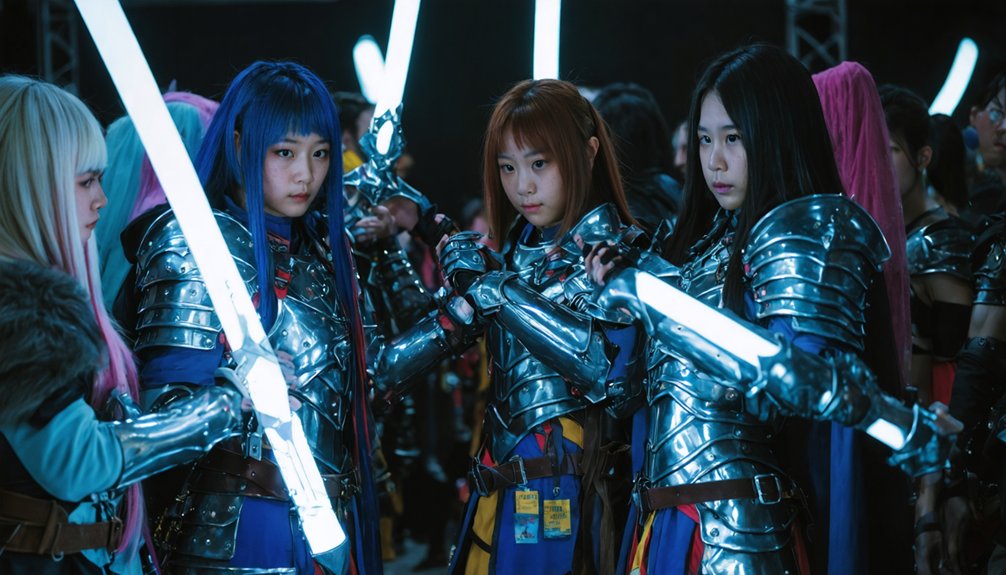
Before assembling your cosplay group, identify the specific skills each project demands—sewing, armor fabrication, wig styling, prop-making, and performance coordination. Match members to roles based on their expertise and genuine enthusiasm for their assigned characters. This alignment guarantees motivation remains high through deadline pressures.
Align team members’ specialized skills with character assignments to maintain enthusiasm and accountability throughout intensive construction timelines.
Establish clear responsibilities early through written agreements covering:
- Costume paired activities like fabric sourcing trips and construction workshops
- Joint photoshoot planning including pose rehearsals and location scouting
- Resource commitments encompassing time blocks, budget limits, and material sharing
Build relationships before requesting collaboration. Schedule prep sessions where all skill levels contribute, fostering innovation through diverse perspectives. Coordinate schedules for both costume creation milestones and event-day logistics. Discuss boundaries upfront—what’s negotiable versus fixed—to prevent miscommunication as deadlines approach.
Leveraging Diverse Expertise in Costume Construction
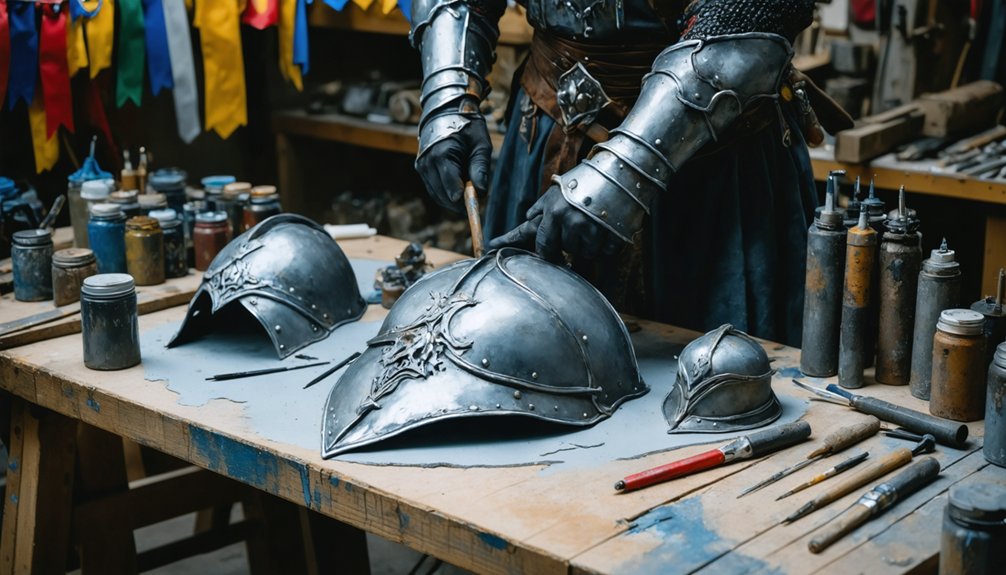
As your team tackles costume construction, assign tasks based on members’ proven strengths rather than forcing everyone through identical workflows. Material sourcing optimization begins when individuals leverage their unique skills—whether that’s disassembling garments for pattern development, casting body parts with liquid latex, or fabricating armor from EVA foam and aluminum.
You’ll discover some excel at alterations like shortening dresses, while others master complex assemblies requiring bandsaws and heat guns. Time management tradeoffs become clearer when you recognize that women’s costumes often simplify through basic sewing modifications, whereas armor-heavy builds demand specialized fabrication expertise.
Divide responsibilities strategically: pattern drafters work simultaneously with 3D software specialists, fabric cutters coordinate with painters. This parallel processing reduces bottlenecks while maintaining quality standards your innovation-focused judges expect.
Your costume’s technical excellence matters little if interpersonal conflicts derail your contest experience. Promoting gracious behavior protects competitive spaces from monopolization by egotistical participants who diminish everyone’s investment.
Gracious conduct safeguards the competitive environment against those whose egos threaten to undermine the collective experience of all participants.
You’ll encounter rule gaps that create exploitable advantages—repeated costume entries, inconsistent handmade requirements, and varying enforcement standards across contests. Managing competitive egos requires strategic preparation:
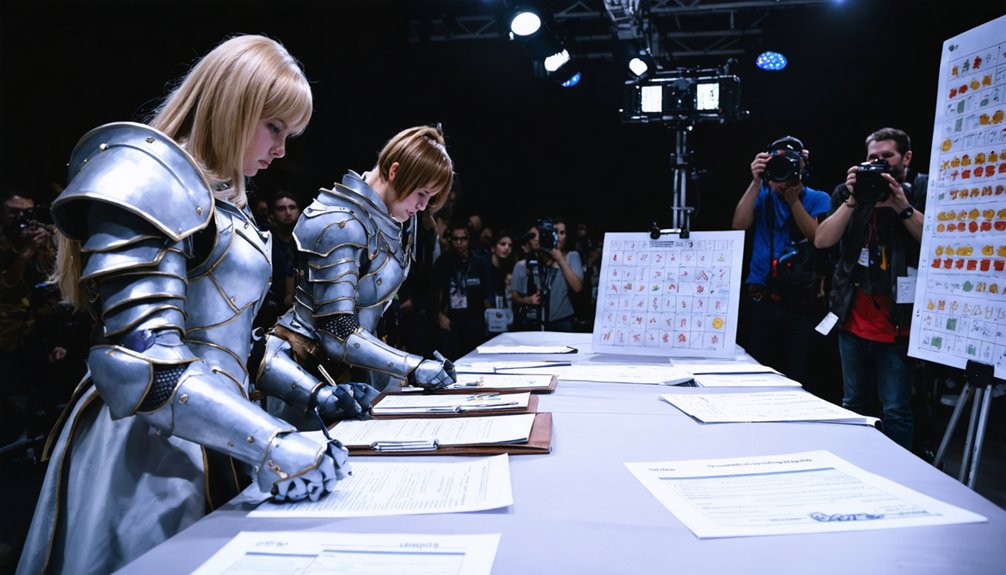
- Document efficiently: Provide judges concise character overviews, technique summaries, and progress photos during five-minute prejudging windows
- Support competitors publicly: Avoid sulking during ceremonies or throwing yourself into winners’ spaces, regardless of placement disappointment
- Master rule frameworks: Research each contest’s craftsmanship percentages, material requirements, and scoring criteria before committing time
Contest pages explicitly outline sportsmanship expectations—uphold them to maintain integrity while traversing underdeveloped regulations that vary dramatically between events.
Aligning Individual Motivations With Collective Team Goals
Group cosplay entries multiply logistical complexity exponentially—each member brings distinct skill levels, availability constraints, and creative priorities that require reconciliation before your first fabric purchase. You’ll need structured frameworks to balance personal creative vision with team unity.
Start by documenting each member’s core motivations: recognition, skill development, character attachment, or social connection. Map these against your collective performance goals through transparent milestone discussions. Establish clear role definitions that let individuals showcase signature strengths while serving the overall narrative.
Schedule regular alignment check-ins where team members articulate how their contributions connect to shared objectives. When conflicts arise between someone’s artistic direction and group cohesion, revisit your documented motivations to find innovative compromise solutions that honor both individual expression and unified presentation standards.
Maximizing Feedback Mechanisms for Continuous Team Improvement
When team performance plateaus, structured feedback mechanisms transform subjective impressions into actionable improvement protocols. You’ll maximize growth by implementing participant led communication channels that capture real-time performance insights. Digital questionnaires and voice notes enable team members to document challenges immediately after rehearsals, creating timestamp-specific data for targeted refinements.
Real-time feedback channels convert fleeting performance observations into documented insights, enabling teams to address specific challenges with precision rather than relying on memory.
Effective multi stakeholder facilitation requires:
- Hybrid coding sessions where performers and support staff independently analyze rehearsal footage, then reconcile observations into unified improvement frameworks
- Iterative feedback loops that refine costume construction, choreography, and character portrayal through scheduled check-ins before competition deadlines
- Role-specific interviews addressing motivation alignment, interaction quality, and execution gaps
This systematic approach converts emotional responses and subjective assessments into concrete adjustments, ensuring continuous advancement toward contest excellence while maintaining inclusive participation standards.
Frequently Asked Questions
How Do Organizers Decide When to Reassign Entries Between Contest Categories?
Need fair placement? You’ll see organizers apply entry reassignment policies during pre-judging when your craftsmanship exceeds your registered level. Costume categorization decisions happen through portfolio review, ensuring you’re competing where your demonstrated skills—like 70% handmade work—truly belong.
What Percentage of Cosplay Teams Include Members With Circuit and LED Skills?
Specific percentages aren’t documented, but you’ll find electronics skills increasingly common in cosplay team dynamics. Effective team skill coordination now prioritizes at least one member with LED/circuit expertise to meet modern contest expectations and delivery deadlines.
Are There Age-Based Divisions in Cosplay Contests Beyond Standard Skill Categories?
Yes, you’ll find dedicated youth divisions (under 13) and kids categories (11-15) across major conventions. When forming teams, consider age diversity considerations and team member backgrounds, since group placement depends on your most experienced participant’s skill level.
How Do Scripted Masquerade Performances Get Scored Compared to Costume Craftsmanship?
You’ll find stage acts receive equal weight to builds—50% each. Your costume originality and technical innovation score separately from performance delivery. Meet deadlines for both components, as judges evaluate craftsmanship and theatrical execution independently before combining totals.
What Vendor Resources Best Support Teams Needing Specialized Materials for Collaborations?
You’ll find vendor partnerships with custom material suppliers like Cast4Art and CosplayPros deliver bulk orders efficiently. They’ll meet your team’s deadline needs while providing specialized thermoplastics, foam varieties, and innovative materials that support collaborative projects requiring consistent quality across multiple builders.