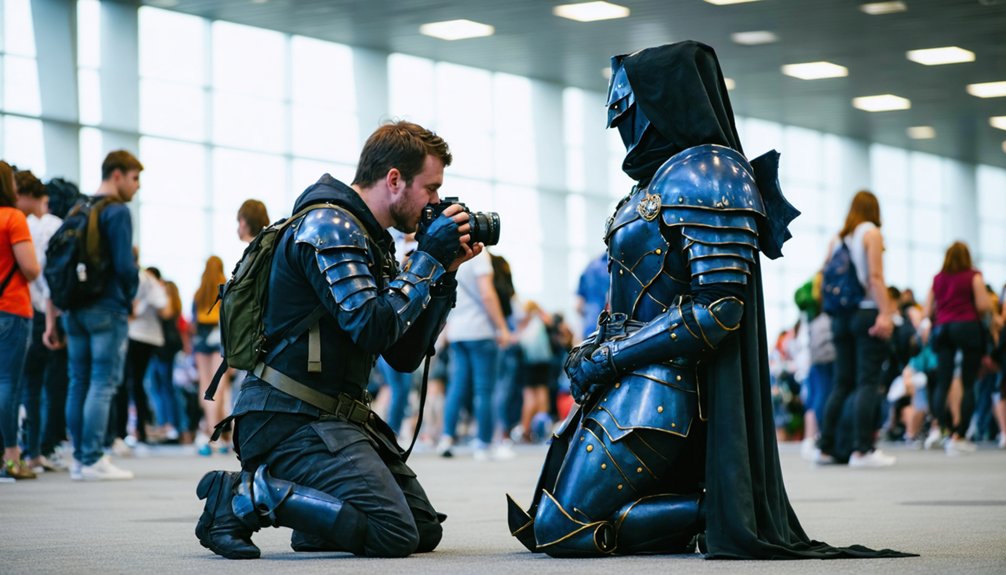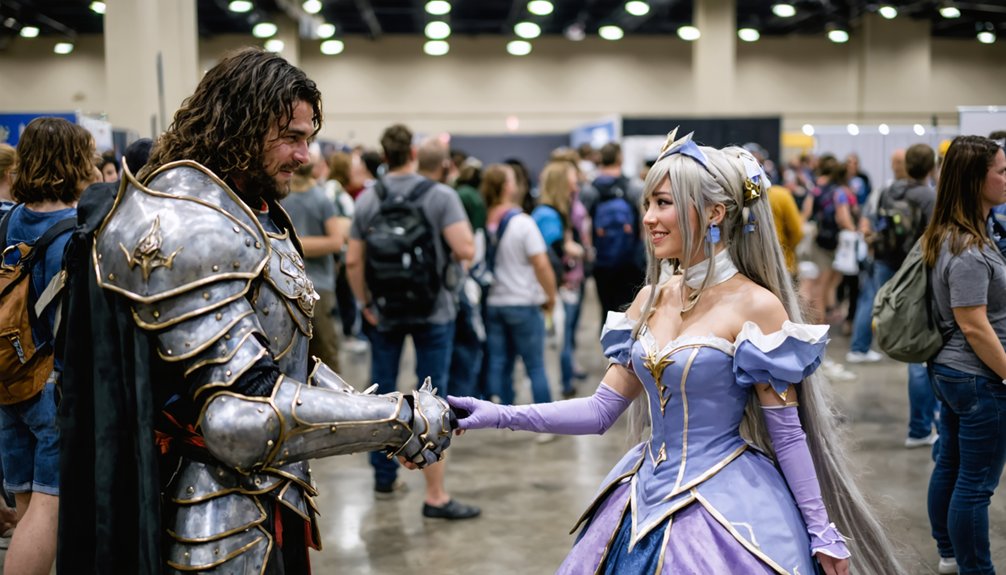
Respecting boundaries in cosplay means recognizing that a costume signals creativity, not consent. When you interact with a cosplayer, you’re engaging with a person who retains full autonomy over their body and space — regardless of what they’re wearing. Convention harassment affects all demographics, including minors, and carries lasting psychological consequences. Communities that enforce “Cosplay Is Not Consent” policies actively reshape cultural norms. Understanding this issue fully means examining the systemic forces that make these boundaries necessary in the first place.
Key Takeaways
- Costumes are a form of self-expression, not an invitation for unwanted interaction, touch, or sexualized commentary from others.
- Consent requires an enthusiastic “yes,” meaning silence or passive tolerance never qualifies as permission for any interaction.
- Harassment affects cosplayers across all genders, ages, and appearances, making it a systemic cultural issue requiring community accountability.
- Reporting mechanisms must be accessible and trusted, as most harassment goes unreported due to social pressure and victim-blaming.
- “Cosplay Is Not Consent” policies and consent education help reshape behavioral standards and enforce respectful community engagement.
What Does Consent Actually Mean at Conventions?
Consent, at its core, means an enthusiastic “yes” — not a reluctant silence, not a tolerated touch, and certainly not an outfit.
Consent clarification matters here: wearing a costume isn’t an open invitation, and desensitization to harassment never constitutes enthusiastic agreement. At conventions, you’re traversing a layered cultural space where personal boundaries intersect with performance, identity, and community responsibility.
A costume is an expression, not an invitation — full stop.
Understanding informed decisions means recognizing that every interaction requires mutual respect — before you photograph, touch, or comment.
Harassment prevention isn’t passive; it demands active awareness campaigns and empowerment strategies that shift the cultural norm. Safe spaces don’t build themselves — communities build them through accountability.
You have a role in this. Consent isn’t just policy signage; it’s lived practice, embedded in every interaction you choose to make or refuse.
How Common Is Sexual Harassment at Conventions?
When you look at the data, sexual harassment at conventions isn’t rare — thirteen percent of attendees report unwanted sexual comments, and eight percent of all genders report being groped, assaulted, or raped.
You’ll find that victims span every type of cosplayer, regardless of appearance, costume, or gender identity, dismantling the myth that harassment targets only conventionally attractive individuals.
At a major event like Comic Con, these percentages translate to roughly 9,500 attendees subjected to unwanted sexual commentary alone, revealing harassment as a systemic cultural problem rather than an isolated occurrence.
Reported Harassment Statistics
Sexual harassment at conventions is far more widespread than many attendees realize, with documented statistics painting a sobering picture of community culture.
Thirteen percent of attendees report unwanted sexual comments, while eight percent across all genders report being groped, assaulted, or raped.
Applying these figures to major events like Comic Con, you’re looking at approximately 9,500 people experiencing sexual commentary alone.
These numbers demand serious harassment prevention strategies and genuine community accountability.
You can’t dismiss these statistics as isolated incidents — they reflect systemic patterns embedded within convention culture.
Harassment affects cosplayers regardless of appearance or costume choice, dismantling the dangerous myth that certain presentations invite unwanted attention.
Understanding these documented realities positions you to advocate meaningfully for safer, more equitable convention spaces.
Widespread Victim Demographics
Harassment at conventions cuts across demographic lines far more broadly than popular assumptions suggest, targeting cosplayers of every gender, age, and appearance.
You’ll find victims aren’t limited to conventionally attractive individuals—harassment reaches anyone traversing convention floors.
Critically, minor safety emerges as an urgent concern, since most cosplayers experiencing harassment fall between twelve and seventeen years old, a developmentally vulnerable period where sustained trauma disrupts identity formation.
Many sexualized character portrayals feature characters canonically under eighteen, compounding this risk.
Eight percent of all genders report being groped, assaulted, or raped at conventions, while thirteen percent receive unwanted sexual commentary.
Recognizing these patterns demands that you prioritize community support structures that protect participants across every demographic, dismantling assumptions that certain cosplayers somehow attract or deserve unwanted attention.
Major Convention Impact
Scaling these statistics to major conventions reveals just how staggering the problem becomes. Consider Comic Con’s approximately 130,000 attendees — roughly 9,500 people likely faced unwanted sexual commentary during a single event.
Convention culture, when left unchecked, normalizes boundary violations that devastate real people.
You’re witnessing a community at a crossroads. Safety awareness campaigns, empowerment initiatives, and “Cosplay is Not Consent” signage represent meaningful progress, yet harassment persists.
Community support structures only succeed when paired with systematic consent education and robust harassment training for staff and attendees alike.
Reporting mechanisms must be accessible, visible, and trusted. Without measurable accountability, policies remain performative.
You have both the opportunity and responsibility to demand conventions treat harassment prevention as infrastructure — not an afterthought.
Why Costumes Are Never an Invitation
Although a cosplayer’s costume may be elaborate, revealing, or modeled after a sexualized character, it’s never an invitation for unsolicited comments or physical contact.
One of the most persistent costume misconceptions is that appearance signals availability or consent. It doesn’t. Consent requires an enthusiastic “yes” from all parties involved — clothing choices communicate nothing of the sort.
Cosplay etiquette demands that you recognize the distinction between a character’s fictional portrayal and the real person embodying it.
When you approach a cosplayer, you’re engaging with an individual exercising creative expression, not performing for your consumption.
Desensitization to harassment within convention spaces doesn’t normalize it either. Unwanted comments and physical contact carry genuine psychological consequences, regardless of how normalized such behavior has become culturally.
Respect that boundary unconditionally.
Why Women Cosplayers Face More Harassment Than Anyone Acknowledges
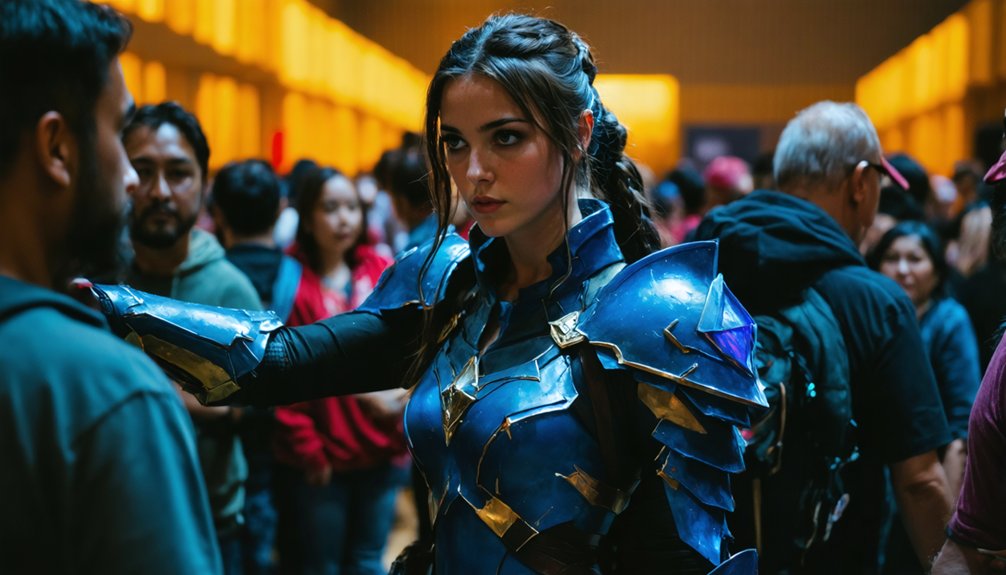
When you walk through a convention floor as a woman cosplayer, you’re traversing a space that’s structurally male-dominated, where subjugation remains rare enough to go unnoticed by the broader community yet frequent enough to shape your entire experience.
The stigma attached to women who cosplay — often framed as attention-seeking or provocative — silences victims before they can even articulate what’s happened to them, making underreporting not just common but culturally enforced.
You’re less likely to report harassment when the community’s own gatekeeping norms subtly position your cosplay as complicit in attracting unwanted behavior.
Stigma Silences Women Cosplayers
Despite being spaces that ostensibly celebrate creative expression and social difference, cosplay communities reproduce the same gendered hierarchies that women navigate in broader society.
You’ll find that stigma effects operate insidiously here—women who report harassment often face skepticism, victim-blaming, or outright dismissal from community members who’ve normalized predatory behavior.
This silencing of women isn’t accidental. It’s structurally reinforced through cultural gatekeeping mechanisms that prioritize male comfort over female safety.
When you experience unwanted commentary about your costume, you’re frequently positioned as the problem—accused of inviting attention through your appearance choices.
The consequence is a chilling effect: women self-censor legitimate grievances, absorbing harassment as an expected convention cost rather than the rights violation it actually represents.
Community silence becomes complicity.
Male-Dominated Spaces Enable Harassment
The silencing mechanisms women face don’t operate in a vacuum—they’re sustained by the structural reality that cosplay conventions, for all their countercultural positioning, function as male-dominated spaces.
Male privilege shapes community dynamics invisibly, creating power imbalances that normalize harassment culture before you even recognize it’s happening.
Women maneuvering through these environments develop sophisticated coping strategies, building community attachments that function as informal safe spaces within hostile territory.
Yet individual resilience shouldn’t substitute for structural accountability.
Intersectional identities compound vulnerability—race and gender stratify who receives protection and who absorbs harm.
Meaningful change requires deliberate allyship practices, systematic consent education, and genuine boundary awareness embedded into convention culture itself.
Without dismantling these foundational power structures, harassment remains not an aberration but an architectural feature of the space.
Underreported Incidents Among Women
Statistics only capture what gets reported—and in cosplay communities, most harassment never does.
You’re witnessing a culture where women’s underreported experiences remain buried beneath social pressure to endure discomfort silently. Women cosplayers frequently internalize harassment as an expected cost of participation, normalizing behavior that fundamentally violates consent boundaries.
These silent struggles persist because reporting mechanisms feel inaccessible, ineffective, or socially risky.
You’ll notice that women who speak out often face community backlash, accused of overreacting or misreading “harmless” interactions. This cultural gatekeeping actively suppresses accurate documentation of harassment’s true scope.
The thirteen percent reporting unwanted sexual comments represents a fraction of actual incidents.
Real numbers are considerably higher—shaped by shame, fear of disbelief, and the exhausting calculation women make about whether speaking up changes anything at all.
Minors in Cosplay Face the Highest Risk
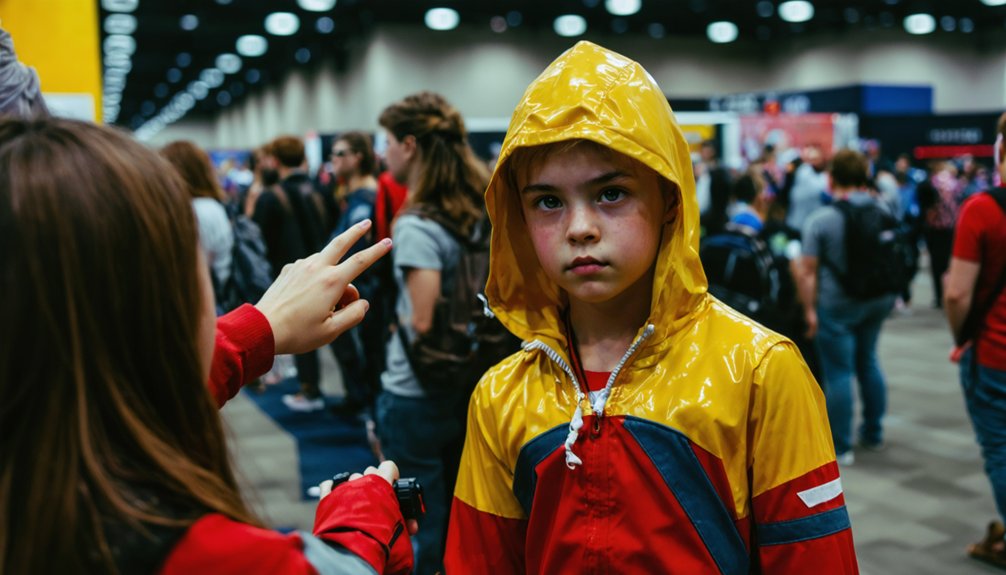
Within cosplay communities, minors bear a disproportionate share of harassment risks, and the demographic data makes this reality difficult to ignore. The average cosplayer is between eleven and seventeen years old, meaning most participants haven’t yet reached the legal age of consent. Many sexualized fictional characters they portray are canonically underage, compounding the vulnerability.
Cosplay awareness demands you recognize that the twelve-to-seventeen age range represents a developmentally critical period. Harassment during these years doesn’t simply fade — it actively disrupts identity formation and psychological development. Sustained sexual abuse at this stage interferes with a young person’s developing sense of self in measurable, lasting ways.
Minor safety isn’t optional within these spaces. You’re maneuvering through a community where protecting its youngest members requires deliberate, proactive cultural accountability from every participant.
The Psychological Toll Convention Harassment Leaves Behind
Harassment doesn’t stop mattering once it’s over. The psychological impacts linger, disrupting identity formation and mental health long after the convention ends. When you experience harassment, your sense of self fractures — especially during developmentally critical years.
Research confirms sexual trauma interferes with emotional resilience and well-being. You’re not overreacting; the damage is real and documented.
Community support accelerates trauma recovery through shared coping strategies:
- Connection: Engaging deeply with cosplay communities reduces depression and rebuilds identity.
- Advocacy: Participating in safety measures reinforces your agency and boundaries.
- Accountability: Naming harassment collectively dismantles normalization within the culture.
You deserve spaces prioritizing your psychological safety. Conventions implementing zero-tolerance policies aren’t just symbolic — they’re structural interventions that protect your mental health and transform community culture from passive acceptance into active protection.
What “Cosplay Is Not Consent” Policies Actually Do?
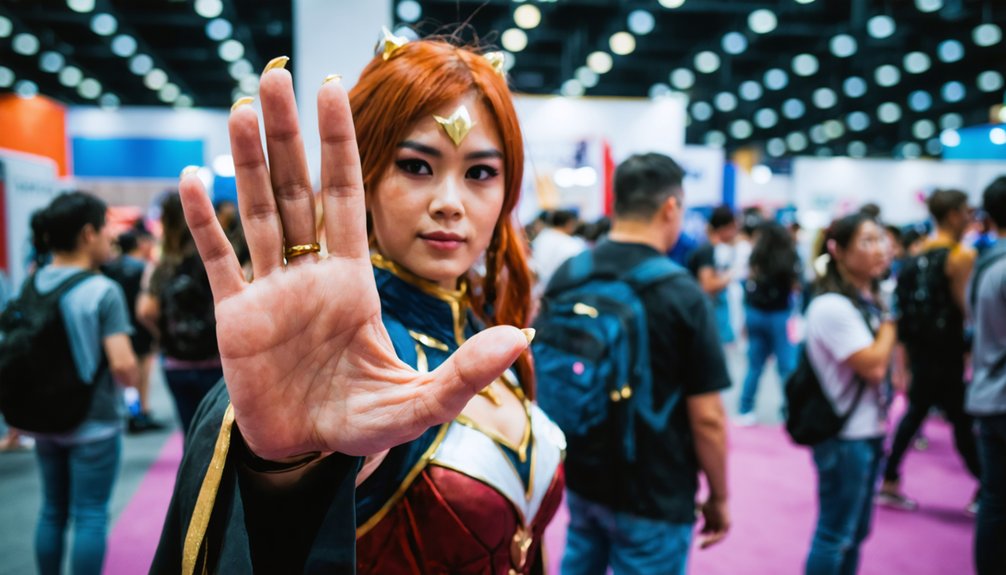
When convention organizers post “Cosplay Is Not Consent” signage throughout their venues, they’re doing more than stating the obvious — they’re codifying a cultural standard that reshapes what community members consider acceptable behavior.
These inclusive policies operationalize consent education by transforming abstract ethics into enforceable community accountability. You’ll notice how visible boundary awareness messaging shifts power dynamics, empowering cosplayers to name violations without social penalty.
These frameworks establish reporting mechanisms that create genuine safe spaces, not performative ones. Support networks form organically around these structures, giving attendees — particularly minors comprising the twelve-to-seventeen demographic — concrete recourse when harassment occurs.
You’re witnessing policy functioning as culture-building infrastructure. When zero-tolerance standards are consistently enforced, conventions stop being spaces where harassment is normalized and start becoming communities defined by mutual respect.
How Cosplayers Are Fighting Back Against Convention Harassment
Policy frameworks set the stage, but cosplayers themselves are driving the most immediate cultural shifts on convention floors. Through community empowerment and grassroots advocacy initiatives, you’re witnessing cosplayers reshape behavioral norms from within.
Active resistance strategies include:
Active resistance strategies within cosplay communities are reshaping convention culture from the ground up, one empowered attendee at a time.
- Peer accountability networks where attendees collectively intervene during harassment incidents rather than deferring to convention staff.
- Visibility campaigns amplifying survivor testimonials across social media platforms, creating documented cultural pressure.
- Consent education workshops embedded directly into convention programming, targeting behavioral change before incidents occur.
These bottom-up strategies complement institutional policies by creating decentralized accountability structures.
You’ll notice that cosplayers aren’t waiting for organizational leadership—they’re establishing community standards through direct cultural negotiation.
This organic resistance reflects a sophisticated understanding that lasting behavioral transformation requires sustained social pressure from within the community itself.
How to Respect Cosplayers’ Boundaries at Every Convention
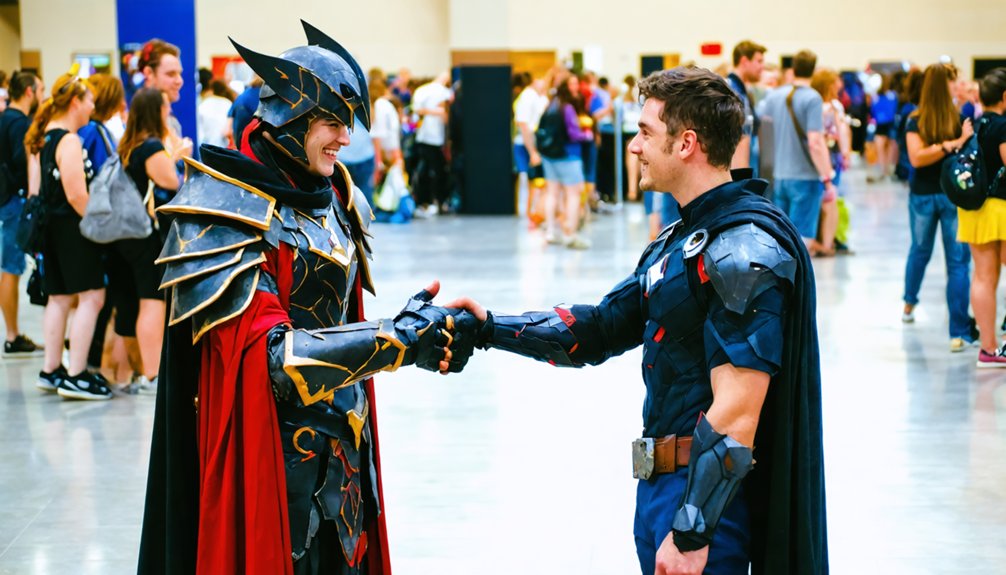
Understanding where cultural performance ends and personal violation begins is essential knowledge for any convention attendee.
You’re traversing a space where boundary awareness isn’t optional — it’s foundational.
Respectful engagement starts before you approach anyone. Don’t touch costumes, props, or the person wearing them without explicit permission.
Asking “Can I take your photo?” isn’t enough — wait for an enthusiastic yes. Silence or hesitation means no.
Recognize that elaborate cosplay signals creative expression, not invitation. A character’s fictional presentation never transfers consent onto the actual person embodying them.
Watch how you speak. Unsolicited commentary about someone’s appearance, body, or costume accuracy causes real psychological harm, particularly to younger attendees who represent the community’s majority demographic.
You set the convention’s tone through every individual interaction you choose to have.
Frequently Asked Questions
Are There Legal Consequences for Harassment Violations at Cosplay Conventions?
Yes, you can face serious legal ramifications for harassment violations. Conventions enforce zero-tolerance policies, and harassment definitions extend beyond venue rules—groping, assault, and unwanted contact carry criminal charges that’ll follow you outside convention walls.
How Do Convention Organizers Train Staff to Enforce Consent Policies Effectively?
Convention organizers equip you with staff training programs emphasizing consent awareness, teaching you to recognize harassment patterns, intervene safely, and enforce zero-tolerance policies—transforming cultural gatekeeping into active, community-driven protection within cosplay spaces.
Can Cosplayers File Official Reports Against Harassers at Conventions?
Yes, you can file official reports against harassers. Convention staff’s harassment awareness training supports reporting procedures, empowering you to document incidents, escalate concerns, and contribute to culturally transformative, zero-tolerance enforcement practices shaping safer cosplay spaces.
Do Online Cosplay Communities Face Similar Harassment Issues as Physical Conventions?
Like shadows mirroring light, online interactions replicate convention harassment patterns. You’ll find unwanted comments and boundary violations thriving digitally, yet community support networks actively combat this, creating safer spaces where cosplayers collectively defend consent culture.
How Does Harassment Reporting Differ Between Large and Small Conventions?
At large conventions, you’ll find structured harassment policies and dedicated reporting systems, yet reporting challenges persist due to scale. Smaller conventions offer more intimate accountability but often lack formalized frameworks, leaving victims traversing inconsistent cultural enforcement mechanisms.
References
- https://aimsreview.aims.edu/incite/wp-content/uploads/2023/05/Cosplay-is-Not-Consent-James-Zimmerman-English-Composition-1.pdf
- https://mds.marshall.edu/etd/1145/
- https://digitalcommons.usf.edu/cgi/viewcontent.cgi?article=7946&context=etd
- https://egrove.olemiss.edu/cgi/viewcontent.cgi?article=3900&context=etd
- https://nbc16.com/news/nation-world/cosplay-is-not-consent-cosplayers-experience-sexual-harassment-and-abuse-at-cons
- https://www.emerald.com/rege/article/32/3/192/1270454/Cultural-consumers-gatekeeping-in-cosplay-cynical