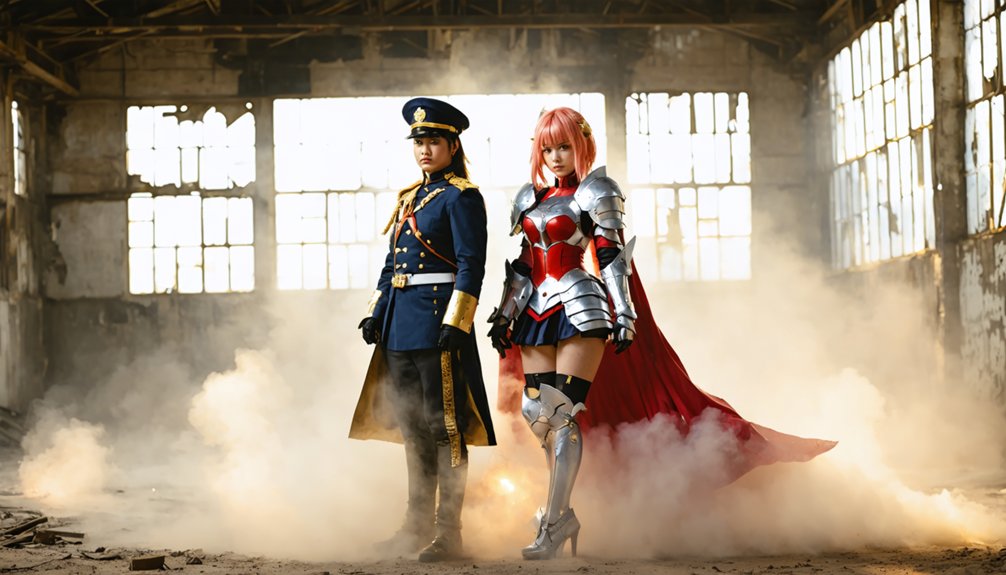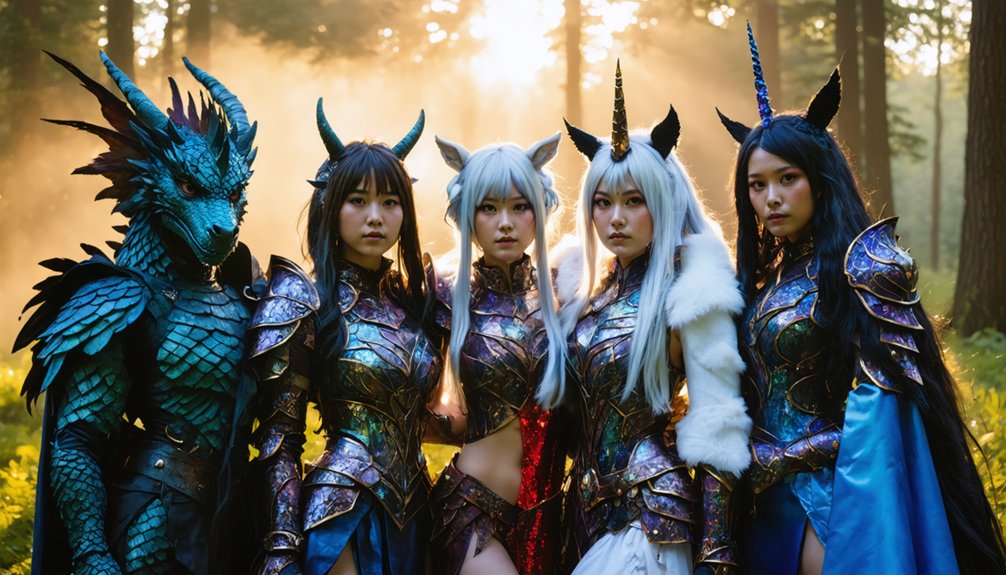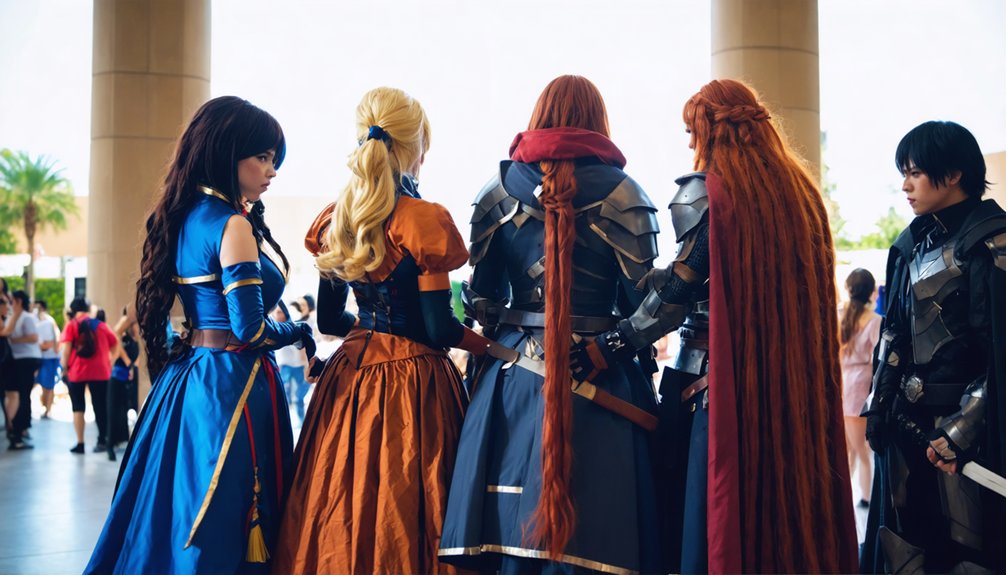
Start by choosing a literary universe that matches your group’s size and skill level—consider house-based systems like Harry Potter or numbered districts from Hunger Games for larger teams. Assign characters based on personality compatibility and body types, then establish a unified color scheme using one to two primary hues with coordinating accents. Research authentic costume details from book descriptions and fan resources, while distributing prop-building tasks according to each member’s crafting strengths. The following strategies will transform your literary squad into convention showstoppers.
Key Takeaways
- Choose literary universes with built-in groups like Hogwarts houses or Narnia siblings to ensure natural character cohesion and relationships.
- Assign characters by matching personalities to roles, considering body types, crafting skills, and balancing heroes, villains, and supporting cast.
- Coordinate a unified color palette using one to two primary colors, varying accent shades per character for visual cohesion.
- Distribute prop-making duties based on team expertise, cataloging signature items and deciding DIY versus purchased options per budget.
- Research source material thoroughly for costume details, fabric textures, and character evolution to ensure authentic group portrayal.
Selecting Your Literary Universe and Theme
Selecting the right literary universe sets the foundation for your entire group cosplay experience, so you’ll want to ponder both the breadth of available characters and your team’s collective interests. Start by evaluating literary universe canon depth—Harry Potter offers house divisions and creature variety, while Percy Jackson provides mythological demigod themes.
Your theme conceptualization should align with group size: tight-knit Narnia’s Pevensie siblings work for quartets, whereas Lord of the Rings fellowships accommodate larger assemblies.
Consider cohesion factors like Hogwarts’ color-coded houses or fellowship medieval aesthetics that create visual unity. Match complexity levels to your team’s skills—simple wizard robes versus intricate Greek armor. Districts from Hunger Games enable scalable numbered tributes, perfect for convention-sized parties seeking coordinated survival motifs.
Assigning Characters Based on Personality and Preferences
How do you guarantee each team member embodies a character they’ll genuinely enjoy portraying throughout your event? Begin by mapping personality compatibility—match natural leaders with bold protagonists, while creative members shine in quirky supporting roles. Consider body language dynamics: evaluate how each person’s physical presence and movement style align with specific characters.
Factor in body type and costume complexity, pairing elaborate designs with skilled crafters and simpler outfits with beginners. Implement fair assignment methods like democratic voting or random selection to prevent conflicts. Track decisions through shared documents for transparency.
Balance your group’s composition by distributing heroes, villains, and supporting characters evenly, creating meaningful interactions and visual storytelling. Prioritize passionate interests—enthusiasm translates directly into authentic portrayals that elevate your entire group’s cosplay experience.
Coordinating Color Schemes and Visual Cohesion
Every successful group cosplay relies on strategic color coordination that transforms individual costumes into a unified visual statement. You’ll want to establish one to two primary colors before construction begins, allowing each member to incorporate these shared hues through garments or accessories.
Triadic and tetradic color schemes offer sophisticated approaches for larger groups, while blending complementary hues creates striking visual impact that commands attention at conventions.
Balance cohesion with personal expression by maintaining consistent primary colors while varying accent shades per character. This flexibility lets you showcase individual traits without sacrificing group unity.
Consider maximizing color contrasts through split complementary schemes, which provide dynamic interest while preserving harmony. Layer coordinating patterns and solids strategically, and use accessories to strengthen connections between costumes while respecting each character’s unique design elements.
Crafting and Sourcing Props and Accessories
You’ll need to catalog each character’s signature items before deciding which props to craft yourself and which to purchase. Start by listing weapons, accessories, and distinctive objects that define your characters, then assess your group’s collective skills in foam work, 3D printing, and thermoplastic shaping.
This inventory lets you divide tasks efficiently—assign complex builds like lightsabers or armored pieces to experienced crafters while directing others toward simpler cardboard accessories or store-bought alternatives that match your budget.
Identifying Essential Character Items
Bringing literary characters to life starts with pinpointing the items that make them instantly recognizable. You’ll need Sherlock Holmes’s magnifying glass and deerstalker hat, Matilda’s stack of books, or lightsabers for Jedi characters. These signature pieces establish character authenticity testing before your event.
Start by raiding your closet for base items—t-shirts, leggings, and jackets—then identify which single prop transforms the outfit. A plaid jacket becomes Sherlock with the right cap, while a green shirt turns into Peter Pan with a paper hat and belt.
Stock up on crafting essentials: paint, glue, heat guns for thermoplastics, and sewing supplies. Consider prop storage solutions early, especially for convention travel. Test materials on mock-ups before committing to final builds, ensuring each piece withstands wear while maintaining visual impact.
DIY Versus Store-Bought
Once you’ve identified your character’s signature items, the next challenge becomes deciding whether to craft them yourself or purchase ready-made options. Start with a cost benefit analysis: DIY approaches using EVA foam, cardboard, and tissue paper dramatically reduce expenses but require mastering 30+ step techniques. Store-bought Worbla kits and pre-made thermoplastics deliver consistent quality while accelerating group timelines.
Consider storage considerations—DIY props offer lightweight adjustability for transport, while commercial options provide rigid durability with separable designs. For innovation-focused groups, DIY excels through character adaptation using sketches and fabric scraps. However, store-bought materials guarantee safety with pre-tested adhesives and ventilation masks. Balance your decision by assigning team members specialized roles: some craft foam weapons while others source 3D printer files online.
Researching Character Details for Authenticity

Before you sketch a single costume design, dive deep into the source material to extract every visual and behavioral detail your author provides. Start by analyzing scene descriptions that mention clothing colors, accessories, and fabric textures. Track how costumes evolve while incorporating character arc—a warrior’s battle-worn armor tells a different story at chapter one versus the climax.
Expand your research beyond the book. Search #bookcosplay and #fantasycosplay for trending interpretations, then compare fan art to identify authentic recurring details. Consult costume history resources and library sewing guides for era-appropriate construction techniques. Study dialogue patterns and movement descriptions to inform your physical portrayal. Cross-reference world-building elements like setting and genre to guarantee your group’s costumes exist harmoniously within the story’s universe rules.
Rehearsing Group Poses and Character Interactions
You’ll want to recreate those memorable scenes readers recognize instantly—whether it’s the Pevensie siblings standing before Aslan or the Marauders casting spells in formation. Start by identifying 2-3 signature moments from your book that showcase character relationships, then assign each person their position based on height, personality, and how they’ll interact with props or each other. Practice these formations repeatedly until everyone moves into place naturally, ensuring faces remain visible and costume details don’t get obscured by overlapping bodies.
Practice Iconic Character Moments
When your group commits to embodying characters from the same book, rehearsing iconic moments together transforms individual costumes into a cohesive performance. Identify pivotal scenes that define your characters’ relationships—confrontations, celebrations, or dramatic revelations—and choreograph these moments with precision.
Character embodiment techniques require studying dialogue delivery, signature gestures, and emotional dynamics between characters. Schedule dedicated practice sessions where you experiment with spatial positioning, guaranteeing each member occupies their character’s natural place within the scene hierarchy.
Ensemble performance strategies involve recording rehearsals to identify timing issues and visual imbalances. Develop connections between static poses and dynamic interactions, allowing photographers to capture both staged tableaus and authentic character moments.
This collaborative preparation confirms your group doesn’t just wear costumes—you recreate the narrative energy that makes these literary characters unforgettable.
Coordinate Group Formation Shapes
Mastering individual character moments sets the foundation, but transforming your group into a visually striking unit requires deliberate formation planning. Start with group size evaluation—tight sets of 2-3 characters allow intimate interactions, while 4-6 creates balanced visual weight, and 7+ delivers impressive crowd effects. Select formations that mirror your characters’ relationships: circles emphasize teamwork, lines showcase hierarchy, and dynamic triangles highlight conflict or tension.
Use positioning consideration during initial planning sessions to mark exact positions, ensuring precise alignment before adding props or accessories. Factor in your event space constraints—stage dimensions and photo backdrop sizes directly impact formation feasibility. Integrate character personalities into group-held poses, assigning archetypes that embody interactions like fire versus ocean. Practice stepping patterns and shifts at 70% speed, drilling sequences repeatedly to build muscle memory for seamless execution.
Planning for Convention Appearances and Photo Opportunities

Group cosplay success hinges on meticulous coordination well before convention doors open. You’ll need several months’ lead time to break preparations into manageable weekly tasks—from costume assembly to prop creation. Establish group chats on WhatsApp or Discord for real-time updates, and designate specific meeting spots within venues for regrouping. Account for traffic buffers when coordinating arrival times with peak attendance periods.
For prime photo opportunities, prioritize onsite photographer scheduling and secure camera setups at convention hotspots with ideal lighting. Master convention venue navigation by identifying high-traffic areas perfect for showcasing your book characters. Plan sessions during golden hours, ensuring breathable fabrics allow comfortable prolonged posing. Leverage hashtags like #bookcosplay to connect with communities, share behind-the-scenes content, and discover collaborative opportunities that elevate your group’s visibility.
Building Team Chemistry Through Collaborative Workshops
Your cosplay group’s success depends on relationships forged outside convention halls, where collaborative workshops transform strangers into synchronized performers. Organize prop-building sessions where members contribute diverse skills while identifying potential issues early. You’ll develop crafting and organizational capabilities through hands-on collaboration, watching YouTube tutorials together and exchanging real-time feedback.
Structure monthly practice sessions with mandatory attendance contracts, requiring weekly video uploads to your private group page. These team building activities guarantee consistent member engagement while you rehearse character poses, interactions, and performance elements.
Schedule dedicated bonding time during workshops—help each other with makeup application, compile reference photos collaboratively, and practice dance moves together.
Board games between intensive work periods reveal unreliable members and negative dynamics before convention deadlines. This screening process upholds your group’s commitment standards while building essential skill pools.
Leveraging Social Media for Inspiration and Community Connection

While your workshop sessions build tangible skills, social media platforms unveil showcase infinite creative possibilities for book character cosplay through visual inspiration and engaged communities. Instagram creators like @katespeldewinde demonstrate innovative techniques—transforming wardrobes into 101 Dalmatians costumes using simple glue guns. You’ll discover sustainable alternatives to fast fashion while tracking cosplay trends that resonate with your group’s vision.
Maximize your social media strategy:
- Start curating inspirational boards from platforms showcasing DIY transformations, from *Coraline’s* button-eye aesthetics to *The Lorax’s* environmental messaging
- Engage comment sections on Book Riot and Good Housekeeping posts to exchange closet cosplay experiences and last-minute solutions
- Build connections through shared hashtags during Book Week events, fostering conversations around nostalgic favorites like *Where the Wild Things Are*
These digital communities transform solo planning into collaborative innovation.
Frequently Asked Questions
How Do We Handle Last-Minute Dropouts From Our Group Cosplay?
Choose flexible themes that’ll work with fewer members, maintain open communication channels to anticipate issues early, and plan group contingencies by pre-stocking backup costume pieces. You’ll adapt seamlessly when dropouts occur, preserving your cosplay’s creative impact.
What’s the Best Way to Transport Bulky Props to Conventions?
Like Tetris masters optimizing every block, you’ll maximize space using portable storage containers with wheeled mobility. Choose lightweight materials for prop construction, then layer pieces strategically with protective cushioning. You’ll maneuver through crowds effortlessly while safeguarding your creations.
How Should We Split Costs Fairly Among Group Members?
Split costs through transparent budget allocation: divide shared materials equally, charge makers fairly for labor hours, and guarantee equitable reimbursement by tracking individual expenses. Use proportional splits based on costume complexity and require upfront material deposits.
Can We Mix Book Versions With Movie Adaptations in One Group?
You’ll spark heated debates faster than casting directors! Yet mixing book and movie versions absolutely works when you’ve established clear costume coordination guidelines upfront. Focus on unified character representation through consistent tone and era, letting individual interpretation enhance your group’s creative vision.
How Do We Photograph Our Group Effectively Without Professional Equipment?
You’ll photograph effectively by using natural lighting near windows or in shaded outdoor spots, coordinating group poses through reference images, and employing budget tripods with phone remotes. Rotate smaller combinations systematically to maximize your shoot’s creative potential.