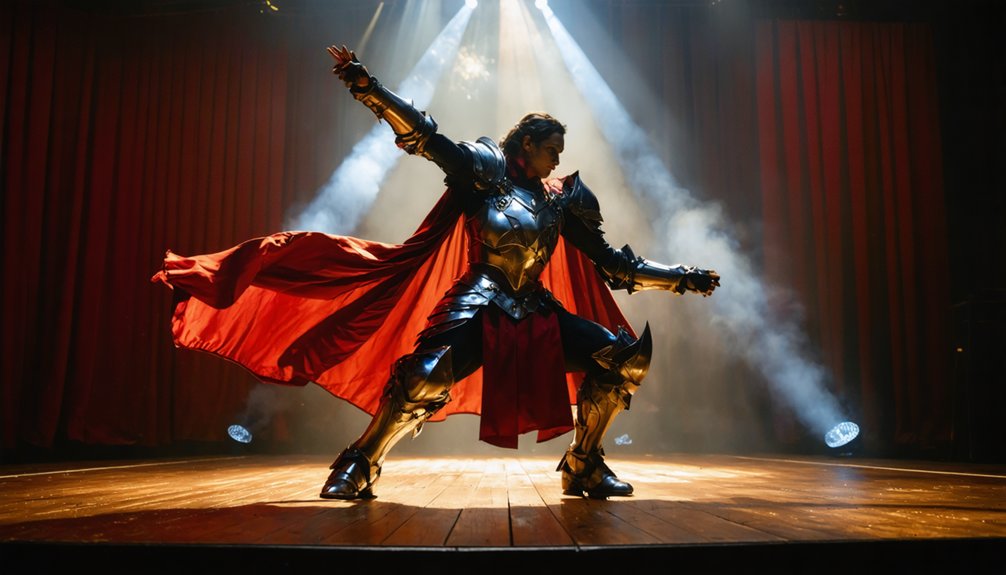
To dominate cosplay contests, you’ll want to select characters with bold, exaggerated silhouettes that photograph dramatically under stage lighting. Prioritize designs featuring high-contrast color blocking, dimensional armor elements, and unconventional material combinations that showcase your technical skills—whether that’s precision sewing, thermoplastic fabrication, or intricate weathering techniques. Focus on structural engineering that guarantees durability during performance while maintaining visual impact from both stage distance and close-up judging inspection. The following inclusive guide explores proven construction methods and documentation strategies.
Key Takeaways
- Research character authentically through reference materials, prioritizing realistic appearance and documenting signature poses, colors, and movements for accuracy.
- Showcase your strongest skillset—sewing, prop fabrication, or wig styling—with documented construction techniques and progress photos throughout the build.
- Create visual impact using exaggerated proportions, high-contrast color blocking, and unconventional material combinations with proper structural stabilization.
- Construct dimensional armor using EVA foam, thermoplastic shells, beveled joints, and Plasti Dip sealant for professional durability and finish.
- Document your build process like a visual presentation with workflow logs, concept art, and highlighted techniques to substantiate craftsmanship claims.
Planning Your Contest-Winning Costume From Concept to Completion
Every successful contest costume begins with a foundation of meticulous research and strategic planning. You’ll need to analyze your character through reference materials, studying authentic colors, movements, and signature poses. Your fabric manipulation choices should prioritize realistic appearance over theatrical costume aesthetics—texture selection directly impacts visual credibility.
Develop extensive documentation tracking your construction journey: technique lists, progress photographs, and material specifications. Choose designs showcasing your strongest skillset, whether that’s advanced sewing, prop fabrication, or wig styling. Execute complex elements with precision rather than attempting techniques beyond your current capabilities.
Strategic planning means documenting paint swatches, patterns, and construction notes as tangible proof of craftsmanship. Organize your presentation materials methodically, preparing reference images and work-in-progress photography that demonstrates technical proficiency and innovative problem-solving throughout your creative process.
Essential Tools and Materials for Professional-Level Cosplay
While ambitious costume concepts fuel your creativity, professional-level execution demands strategic investment in specialized tools and materials that convert your vision into award-worthy reality.
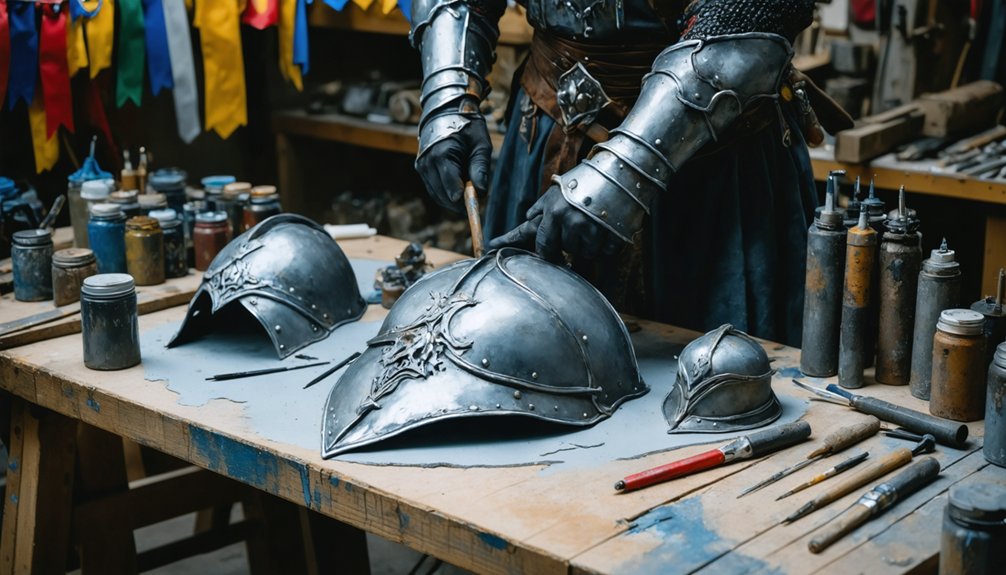
Your foundational arsenal requires a reliable sewing machine with walking foot attachments for complex fabrics, complemented by precision comfort-grip scissors. For armor fabrication, EVA foam paired with heat guns enables thermoplastic shaping, while Dremel rotary tools with concave carving blades deliver intricate detailing. Advanced moldmaking techniques demand thermoplastics and dual-temperature glue guns for seamless component bonding.
Fabric dyeing and manipulation elevates your aesthetic control—invest in airbrush systems for gradient effects and weathering. Versatip soldering irons move seamlessly between foam cutting and leather engraving. Strategic acquisitions like laser cutters and 3D printers accelerate workflow efficiency, though band saws and scroll saws remain indispensable for dimensional prop construction.
Creating Impact Through Scale, Contrast, and Visual Design
Mastering sophisticated tools and premium materials establishes your technical foundation, but transformative costume design hinges on manipulating visual perception through strategic scale distortion, deliberate contrast engineering, and calculated compositional architecture.
Push exaggerated proportions beyond comfortable limits—oversized collars, cascading capes, and monumental helmets demand structural stabilization through hidden cages and support systems.
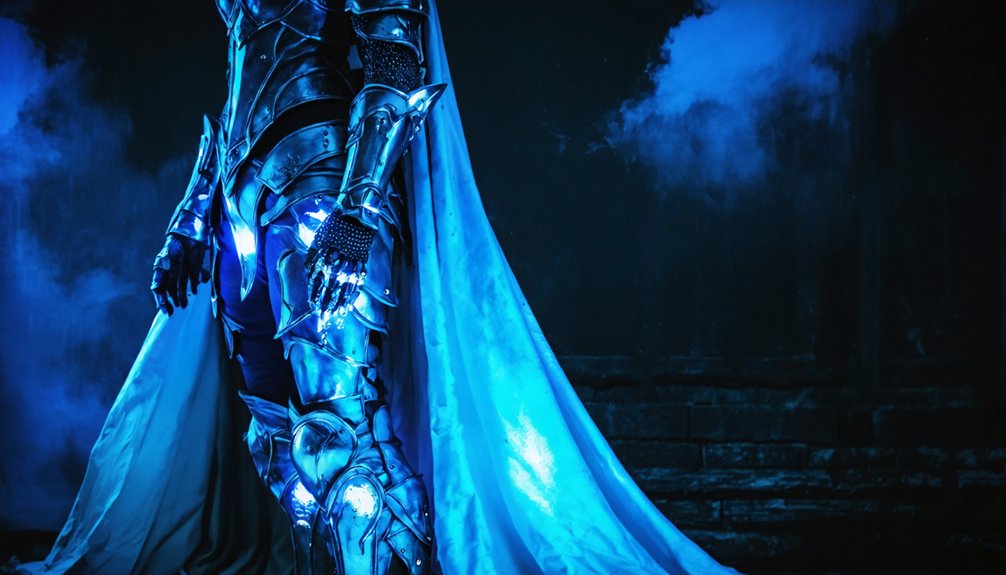
Stage distances flatten details, so amplify high-contrast color blocking and manipulating texture through unconventional material combinations: melted garbage bags create organic patterns against smooth foam, while cotton-polyester blends deliver lightweight textural depth.
Pre-visualize impact through graph-paper patterning and fabric mock-ups before construction. Heat-gunned shrink wrap produces dramatic wrinkled surfaces, and post-production color enhancement guarantees punch under spotlights.
Separate planning pathways for soft goods versus rigid props streamline your workflow, while body-specific pattern grading ensures movement won’t compromise your silhouette’s dramatic presence.
Mastering Key Costume Components: Armor, Bodysuits, and Accessories
When your design demands dimensional presence rather than flat fabrication, armor construction becomes the critical differentiator between forgettable cosplay and competition-dominating builds. EVA foam foundations paired with thermal plastic shells create professional-grade pieces that withstand convention rigor.
Dimensional armor construction separates amateur cosplay from championship-caliber builds that command attention and survive the demanding convention floor.
Master beveled cuts for seamless miter joints on helmets and pauldrons, then seal finished surfaces with Plasti Dip to prevent paint degradation.
Securing armor pieces for durability requires strategic integration—hot-glue nylon webbing straps with adjustable buckles directly to armor interiors, or anchor components to Velcro-covered fabric layers. Adapting bodysuits for comfort means positioning zippers on tight bracers and reinforcing stress points with stitched fabric underlays.
Weather surfaces using rotary tools for authentic battle damage, layer craft foam for dimensional texturing, and document your process for replication refinement.
Documenting Your Build Process for Portfolio and Community Sharing
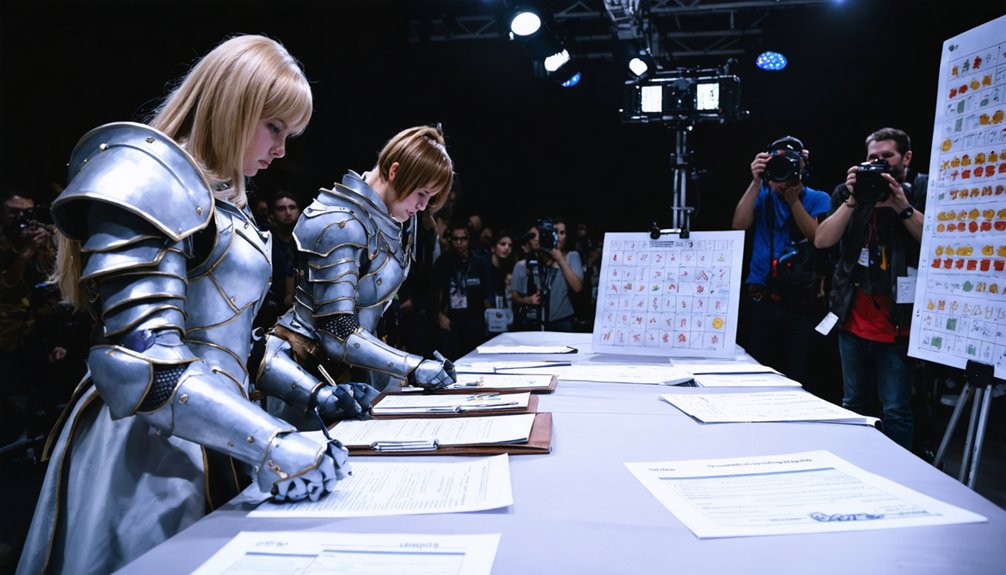
As competition cosplay evolves beyond stage presentation into detailed portfolio evaluation, your documentation strategy transforms from optional afterthought into scored judging criterion. Structure your build book like visual PowerPoint—bold section headers (“Construction Notes,” “Wig Work”) enable rapid scanning during deliberation periods.
Implement real-time workflow management: log purchases immediately with sources, photograph pattern drafting sessions, capture 3D print files mid-process. Keyword highlighting amplifies technical achievements—hand-dyed, mitered corners, resin casting—while speech bubbles with dotted arrows direct judges’ attention to specific construction details.
Your reference section requires strategic curation: one extensive concept art sheet showing all character angles, maximum two inspiration pieces for design liberties. Leverage existing social media content—Instagram story highlights, Twitter threads—then repurpose these presentation techniques into cohesive portfolio narratives that substantiate craftsmanship claims beyond fleeting stage moments.
Frequently Asked Questions
How Much Does It Typically Cost to Create a Contest-Winning Cosplay Costume?
You’ll invest $800 to $5,000+ for contest-winning cosplay, with material costs spanning premium fabrics, armor components, and custom accessories. Your time investment reaches 60-100 hours of meticulous craftsmanship, elevating your creation beyond standard convention wear.
What Are the Most Common Judging Criteria at Major Cosplay Competitions?
Judges primarily evaluate your costume design elements through construction quality (40%), character interpretation accuracy (40%), and stage presentation (20%). You’ll be scored on craftsmanship execution, source material fidelity, technical skills, and performance authenticity during thorough assessment.
How Far in Advance Should I Start Building for a Competition Deadline?
You’ll need four months minimum for major competitions—yes, *four entire months*! Your costume planning timeline should begin immediately after selecting your contest, incorporating material sourcing strategies early to avoid catastrophic con-crunch disasters and guarantee meticulous construction quality.
Can Beginners Realistically Compete or Should I Gain Experience First?
You’ll realistically compete in novice divisions right away—contests accelerate skill development through judge feedback. Start simple, documenting your construction process thoroughly. Each entry refines your technique, regardless of costume complexity, building toward intermediate-level proficiency organically.
What Should I Do if My Costume Breaks Right Before Judging?
Over 60% of competitors face last-minute malfunctions. You’ll need rapid-deployment repairs from your emergency kit, guarantee durability testing beforehand, and seek backup costume components. Execute stress-point reinforcement using double-stitched seams, contact cement, or strategic Velcro attachments immediately.