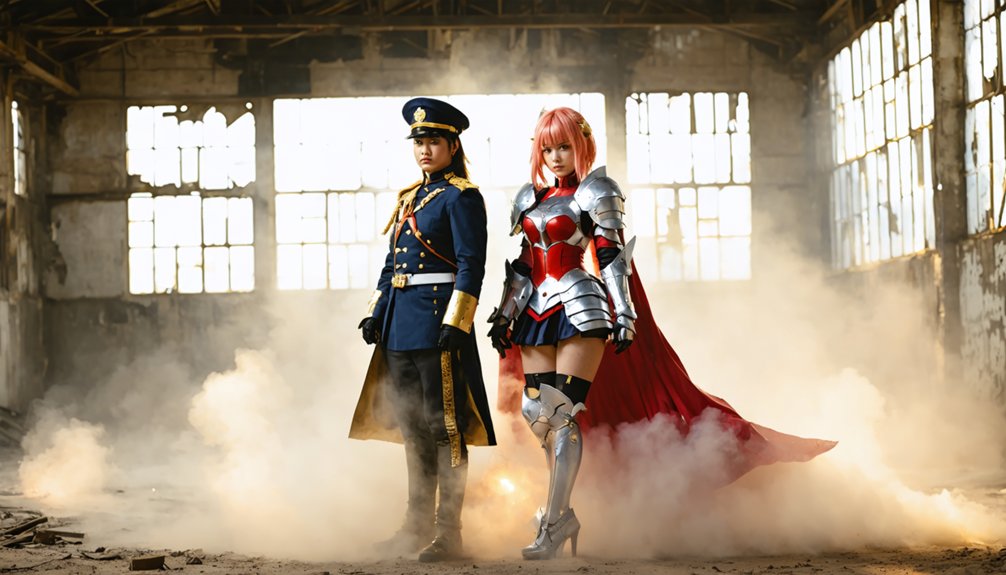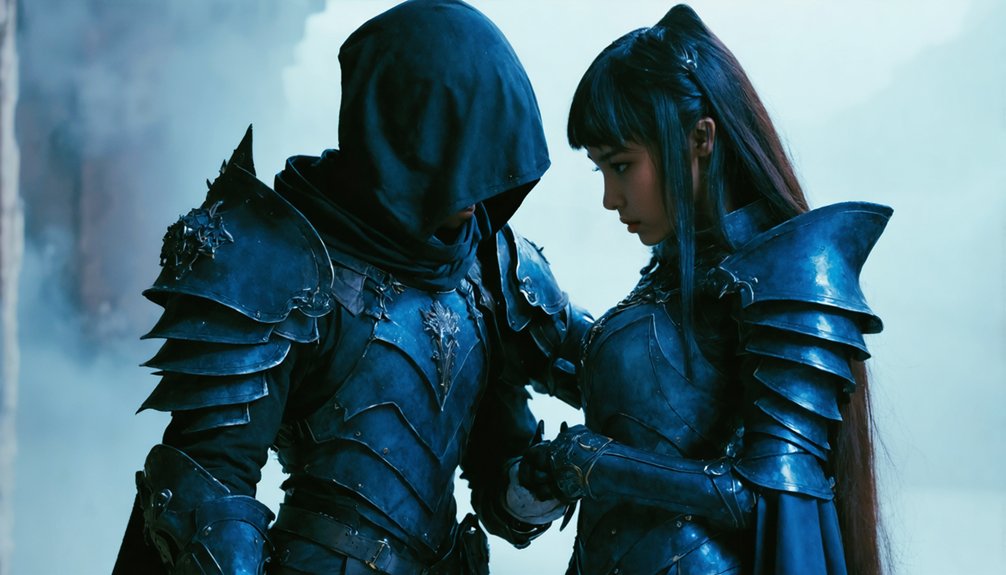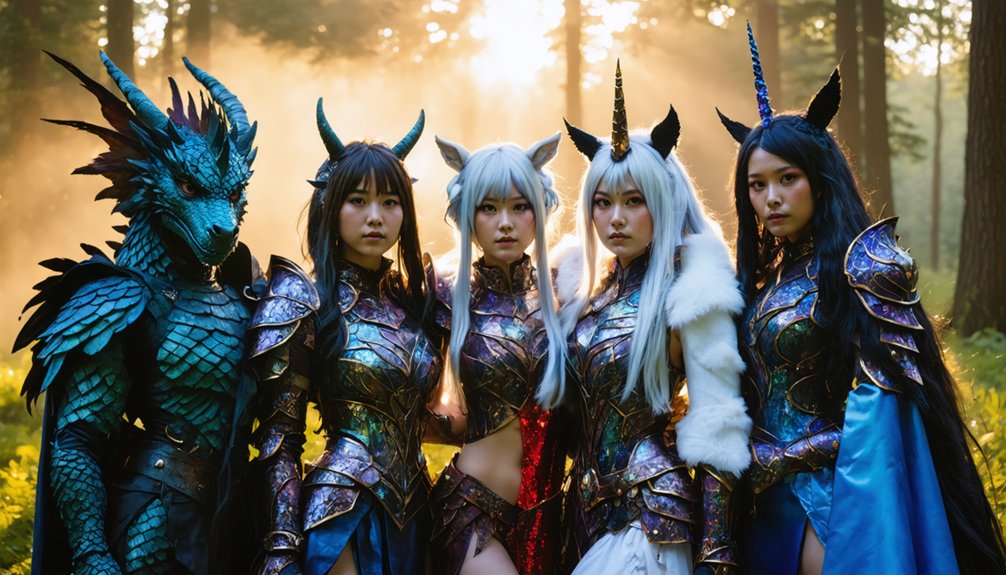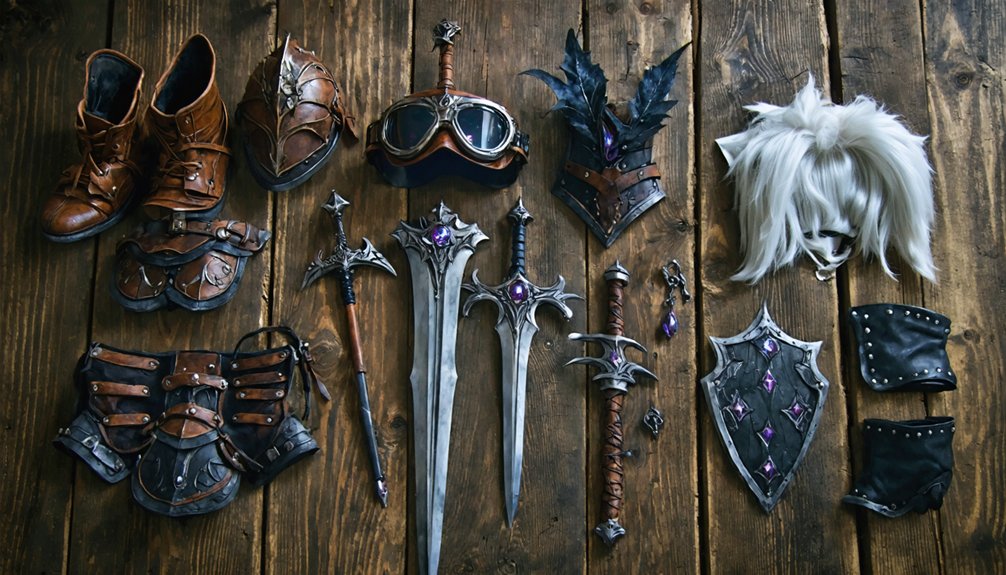
You’ll maximize your group cosplay impact by coordinating themed weapon sets using EVA foam cores with UV resin detailing, while matching emblems fabricated through foam cutting, Mod Podge sealing, and acrylic paint layering establish team identity. Color-coded accessories following Rainbow Spectrum or Elemental Quartet palettes enable quick recognition when you arrange your group in gradient order. Portable foam-core stage props and PVC framework systems assemble tool-free in minutes for enhanced photography. The construction techniques below reveal how modular designs create seamless character variations throughout your convention experience.
Key Takeaways
- Create themed weapon sets using EVA foam cores with UV resin detailing and modular builds for uniform, lightweight props across group members.
- Design matching badges and emblems with EVA foam cutting, embroidered patches, or laser-etched acrylic for team identity and visual coordination.
- Implement color-coded accessories using Rainbow Spectrum or Elemental Quartet palettes with matching shields, weapons, and morphsuit elements for recognition.
- Build portable stage props from foam-core or PVC frameworks with LED lighting for lightweight transport and enhanced group photography backdrops.
- Develop interchangeable costume pieces with reversible bodices, magnetic attachments, and cohesive color palettes for multiple character variations per member.
Themed Weapon Sets for Coordinated Character Groups
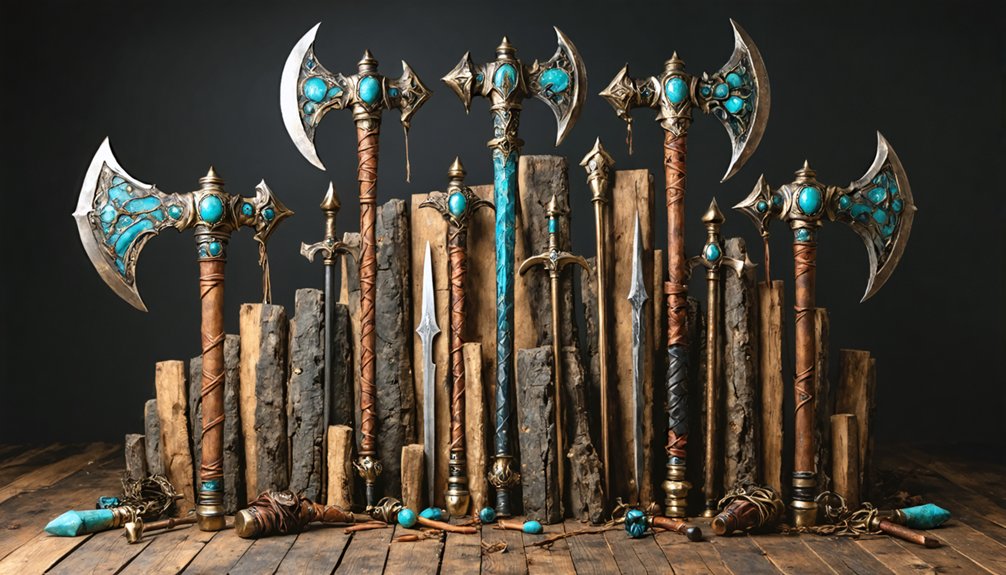
When assembling themed weapon sets for group cosplay, you’ll need to prioritize material consistency and scale accuracy across all props to maintain visual cohesion. For Lord of the Rings Fellowship builds, combine EVA foam sword cores with UV resin detailing to achieve uniform finishes across Anduril, elven bows, and dwarven axes.
Marvel’s Thor and Loki duo benefits from modular material build techniques—layering foam clay over cardboard armatures for Mjolnir and Stormbreaker creates authentic weight distribution. Witcher groups should employ versatile prop construction methods using custom foam blades with removable medallion attachments.
Harry Potter house-themed weapons integrate XPS foam wand cores with posable wire elements for dynamic staging. Specialty Etsy vendors offer coordinated weapon sets, while silicon glove tutorials enable articulated hand poses that enhance weapon drama during group photography sessions.
Matching Badges and Emblems for Team Identity
Matching badges and emblems tie together your group’s visual identity through strategic material selection and placement consistency. You’ll achieve iconic character recognition through custom emblem fabrication methods like EVA foam cutting paired with Mod Podge sealing and acrylic paint layering.
For precision detail, employ embroidered patches with metallic or glow-in-the-dark threads, or laser-etched acrylic featuring through-cut logotypes. Create symmetrical designs using folded freehand drawing techniques, ensuring emblem faithfulness to source material.
Your emblem placement strategy maximizes visibility: position signature symbols on chest or shoulders for immediate recognition, sleeves for gauntlet coordination, or backs for intricate team patches. Cape pins unify Fire Emblem groups effectively.
Gold mirrored acrylic surfaces deliver polished bling without overpowering costumes, while rounded edges prevent fabric snags. Pre-made editable badge resources from Vexels streamline customization for team achievement emblems.
Coordinated Color-Coded Accessories for Quick Recognition
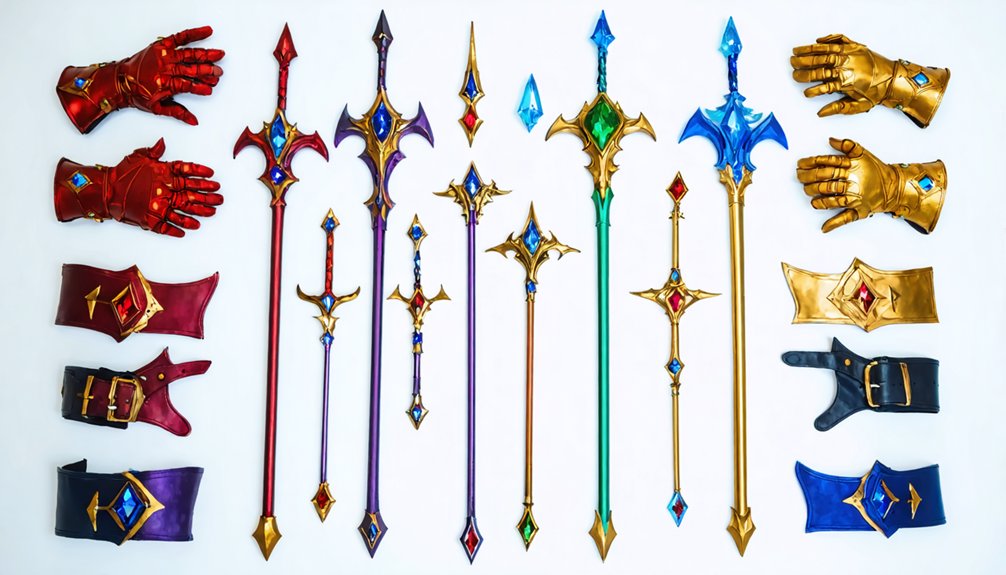
Color-coded accessories amplify your group’s instant recognizability by assigning distinct hues to individual members or roles within your ensemble. Consistent color themes establish visual cohesion—whether you’re executing a Rainbow Spectrum palette scaling from three primary colors to twelve variations, or implementing themed assignments like the Elemental Quartet‘s fire-red, water-blue, earth-brown, and air-white representations.
Character specific costume elements demand precision. Integrate signature accessories through morphsuits in designated colors, complemented by props from cosplay supply stores. For DIY innovation, construct shields and weapons matching your assigned palette. Enhance visual impact by arranging your group in color-wheel order during photo opportunities, creating striking gradient effects. Materials like iron-on letters, colored balloons for Tic-Tac costumes, or neon accents paired with black accessories maximize recognition while maintaining thematic integrity across your collective presentation.
Portable Stage Props That Enhance Group Photography
Lightweight backdrops, collapsible stands, and modular set pieces transform ordinary convention spaces into professional photo environments that showcase your team’s collective effort. You’ll maximize versatility with customizable prop kits featuring interchangeable elements—swap weapon components, architectural fragments, or thematic panels between scenes.
Posable prop mannequins serve dual purposes: they hold costumes during breaks and populate backgrounds as scene extras, adding depth to compositions. Foam-core constructions maintain structural integrity while remaining transport-friendly; you’ll appreciate their 70% weight reduction compared to wooden alternatives.
PVC framework systems assemble in minutes without tools, creating multi-level staging that accommodates groups of eight or more. Consider LED-integrated props that eliminate external lighting setup—you’ll achieve consistent illumination across all shots while streamlining your photography workflow.
Interchangeable Costume Pieces for Multiple Character Variations
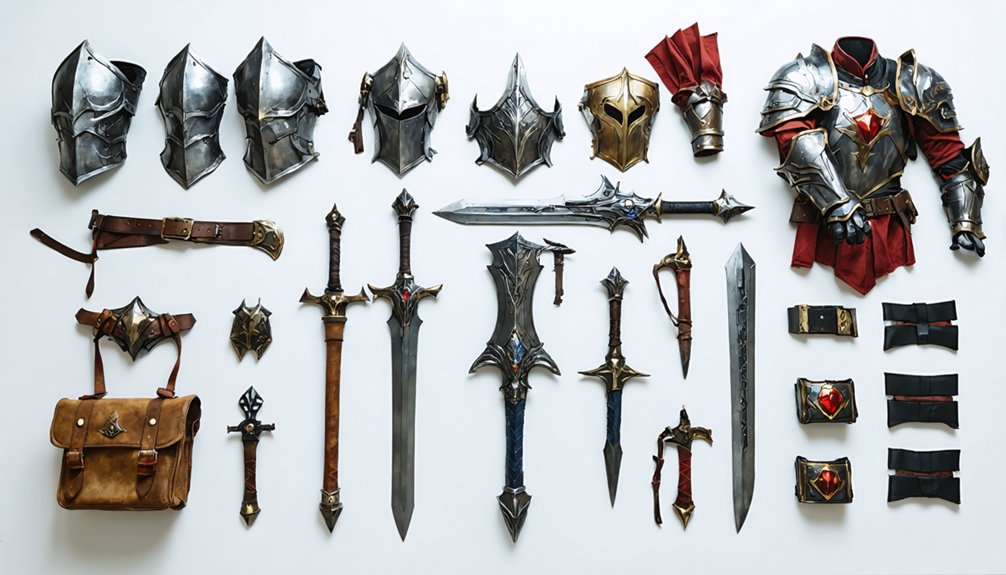
Strategic costume design extends beyond staged photography into the garments themselves—you’ll multiply your character roster exponentially when base pieces serve multiple interpretations. Establish a cohesive color palette (greens/burgundy/black or brown/gold schemes) enabling tops, skirts, and corsets to recombine seamlessly across characters.
You’ll create a layered costume foundation by reversing bodices between fairy and witch variations, while split-front skirts enable instant transformations through strategic layering.
Technical alterations maximize your mix and match outfit pieces: split steampunk pants into panels, integrate denim segments with pleat-folded permanence retaining functional pockets. Customize 3D-printed armor components—gauntlets, helmets, interchangeable mask features—scaling files for character-specific accuracy. Modify accessories through EVA foam reconstruction, magnetic prop attachments, and color-matched footwear alterations.
This modular approach delivers multiple characters from minimal investment, essential for innovative group presentations.
Lightweight Modular Props for Easy Convention Transport
You’ll need props that break down quickly without sacrificing structural integrity when traveling to conventions with your group. Collapsible foam core designs let you flatten large weapons and shields into thin profiles that fit standard luggage, while magnetic assembly systems eliminate fumbling with screws or adhesives during setup.
These techniques reduce transport weight by 40-60% compared to solid builds and allow you to reassemble full-sized props in under five minutes at the venue.
Collapsible Foam Core Designs
Polystyrene foam boards form the foundation of collapsible convention props because they’re lightweight, cutable with a hot knife, and bondable with Foam Fusion adhesive. You’ll create customizable display structures by layering multiple boards together, then cutting perpendicular edges for clean separations.
Design snap fit component attachments by carving interlocking tabs and slots into your foam pieces—this allows shields and weapons to disassemble into compact sections.
Apply Foam Coat in two layers on connection points where pieces join, creating durable edges that withstand repeated assembly cycles. After coating hardens for several hours, you’ll add acrylic paint finishes that mimic metal while maintaining structural integrity. The bounce coating creates a rubbery surface resistant to convention handling damage.
Your modular components stack flat for transport, then reassemble on-site without additional tools or adhesives required.
Magnetic Assembly Component Systems
Neodymium magnets transform bulky convention props into separable components that fit inside standard luggage while maintaining battlefield-ready strength during wear. You’ll need magnets with double your prop’s weight in pull force—a 3 lb shield requires 6 lb magnets. Install dual magnet positioning side-by-side to eliminate unwanted rotation when attaching shields or back-mounted weapons.
Drill precisely-sized holes in PVC staffs and sword segments, securing 7mm x 2mm magnets with super glue after confirming polarity alignment. For vertical mounting, rubber-coated magnets increase shear resistance fourfold compared to bare metal.
Magnetic personality integration shines when embedding cube magnets in resin gauntlet parts using Devcon plastic welder, allowing separate painting and assembly.
Your 5 lb sword needs 20 lb pull force for reliable vertical hold with easy removal—always prototype-test actual weights and mounting angles.
Signature Items That Define Character Relationships
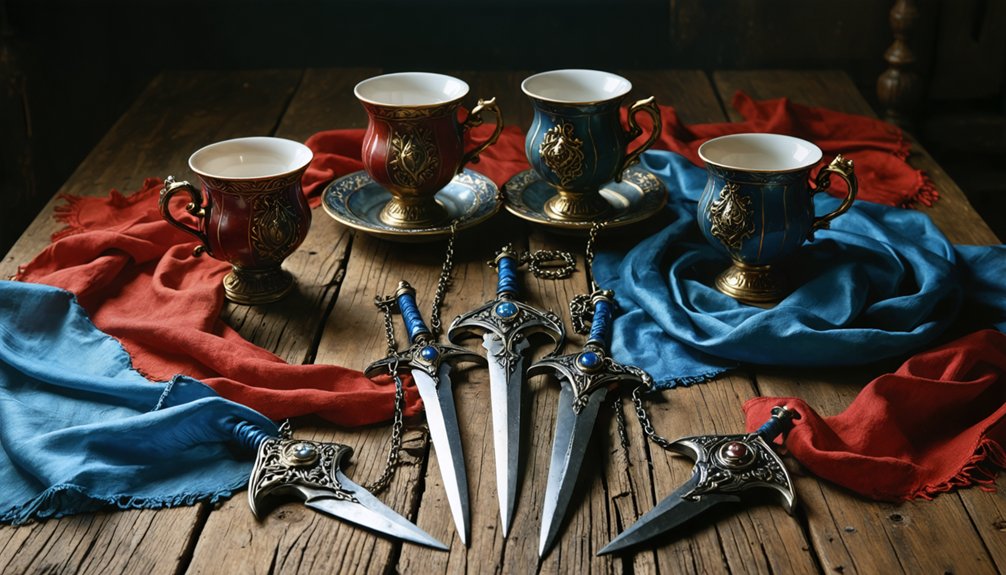
You’ll establish character connections through props that visually communicate relationships—matching weapons like paired lightsabers signal mentor-apprentice bonds, while complementary tools such as a shepherd’s crook and lasso define leadership dynamics.
Color-coded accessories distinguish group members while maintaining cohesion: Mario’s red cap and Luigi’s green hat immediately identify the brother duo without spoken explanation.
Shared symbolic objects like yellow brick road mats or gold record props unify your ensemble, anchoring individual costumes to a collective narrative that convention attendees recognize instantly.
Matching Weapons and Tools
Signature weapons transform group cosplays from simple costume collections into cohesive narrative presentations, establishing both individual character identities and ensemble relationships through carefully selected props. You’ll need specialized retailers like The Sword Stall for coordinated medieval aesthetics that maintain franchise accuracy while meeting prop durability requirements for convention handling.
Effective sword pairing techniques balance visual differentiation with thematic unity—Aragorn’s Anduril alongside Legolas’s bow creates Fellowship cohesion through complementary designs. Similarly, House Targaryen groups utilize distinctive blades like Dark Sister while maintaining shared lineage aesthetics.
For darker franchises, Witcher medallions paired with character-specific swords instantly communicate role relationships. Star Wars groups leverage lightsaber color coding for immediate recognition, while anime ensembles often require custom fabrication for signature pieces like Wolfwood’s crucifix gun, demonstrating advanced construction skills.
Complementary Color-Coded Accessories
Strategic color distribution across group members creates immediate visual hierarchy while establishing character relationships through deliberate accessory choices. You’ll achieve cohesive collaborative color palettes by assigning primary hues—red for leaders, blue for strategists, yellow for optimists—then reinforcing these through coordinated accessory styling. Implement color-coded communicators, belts, or gloves that mirror your team’s Power Rangers-inspired scheme.
For magical girl ensembles, differentiate members through accent colors: red ribbons for Mars-types, green bows for Jupiter analogs. Apply spectrum arrangements in rainbow order for gradient effects, or employ light-versus-dark contrasts for hero-villain dynamics. Add signature items—tiaras, eye masks, wrist guards—in each member’s designated color. This technique guarantees instant recognition in group photos while communicating elemental affiliations, superpowers, or team roles through material-specific props that unite your squad visually.
While color coordination establishes visual unity, the objects your group members carry define who they’re within the narrative. Sailor Moon’s crescent tiara and Wonder Woman’s lasso function as dual symbolic anchors that establish character authority within ensemble presentations. These signature accessories elevate coordinated apparel trappings from basic costumes into outstanding character embodiments.
Strategic prop selection creates visual hierarchy—Snow White’s red bow contrasts the Evil Queen’s poisoned apple, defining their relationship through portable objects. Within Shrek ensembles, ogre ears and medieval weaponry establish character differentiation. Batman’s utility belt communicates tactical expertise, while Papa Smurf’s distinctive accessories separate him within blue-themed costume elements.
Crafted shields, Lord of the Rings staffs, and Viking axes unite groups through shared construction processes, transforming individual props into collaborative narrative statements that reinforce thematic authenticity.
Quick-Change Accessories for Group Performance Routines
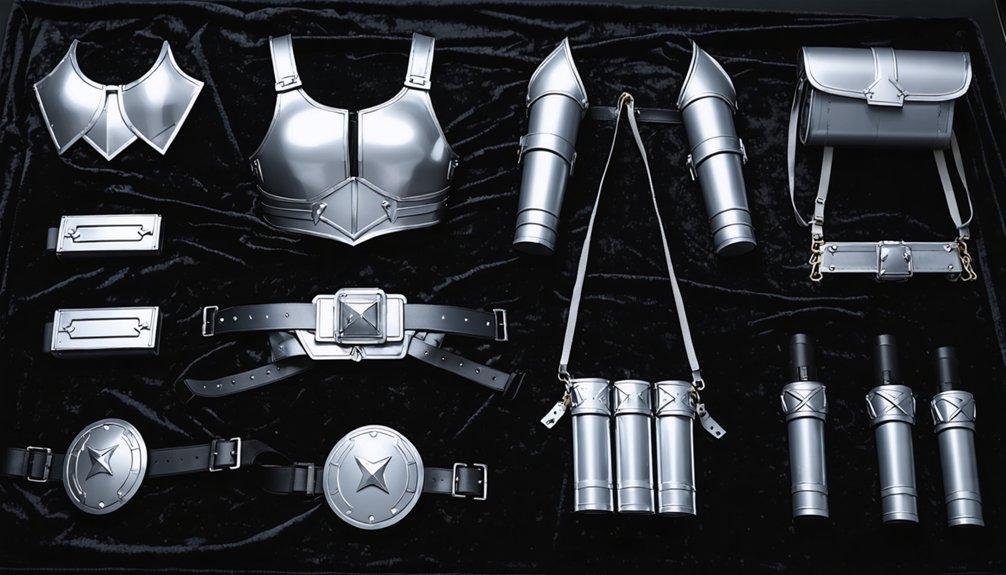
When coordinating group cosplay performances that demand synchronized costume shifts, you’ll need to master specialized fastening systems that enable your entire team to execute changes within strict time windows. Velcro attachments create dramatic rip-away effects while maintaining concealed placement along waistbands and seams. Sewable magnet tape delivers automatic closure as costume pieces approach each other, perfect for integrating with programmable LED lighting components that enhance magical conversions.
Snap fasteners provide silent, secure holds superior to traditional closures. Consider false layering techniques that construct tuxedo shirts, waistcoats, and accessories as unified garments to eliminate change time entirely. Quick release attachment systems require strategic dresser coordination, with teams executing choreographed sequences to remove and apply garments simultaneously.
Maintain emergency equipment including scissors and flashlights backstage to address unexpected complications during sub-minute transformations.
Frequently Asked Questions
What’s the Ideal Group Size for First-Time Coordinated Cosplay Projects?
For first-time coordinated cosplay projects, you’ll find 3-5 participants ideal. This group size planning allows manageable communication while coordinating costume cohesion through shared fabric sourcing, construction timelines, and prop-building sessions. You’ll achieve innovative results without overwhelming logistics or creative conflicts.
How Much Should I Budget per Person for Matching Group Accessories?
Budget $50-$150 per person when calculating per person costs for matching group accessories. You’ll find budgeting group accessories varies based on material complexity—EVA foam props cost less than 3D-printed pieces, while shared items like banners reduce individual expenses considerably.
Do Cosplay Contests Require Handmade Props or Can We Purchase Them?
You can use purchased props—most competition regulations allow them! Consider Team Phoenix’s winning entry: they bought resin swords but hand-painted each blade. Just guarantee purchased props stay under 25% of your total costume and disclose them during judging.
How Do We Organize Photoshoot Schedules With Multiple Character Variations?
You’ll master organizing efficient photoshoot rotations by creating detailed call sheets listing character variations chronologically. Start managing prop distribution logistics through designated handlers who coordinate costume changes while photographers maintain continuous shooting schedules, maximizing your creative output systematically.
What’s the Best Way to Recruit Members for Group Cosplays?
Leverage dedicated cosplay social networks and convention communities for recruitment, building team camaraderie through shared character workshops. You’ll foster online communities effectively using targeted hashtags, influencer partnerships, and detailed project portfolios showcasing costume specifications and collaborative techniques.