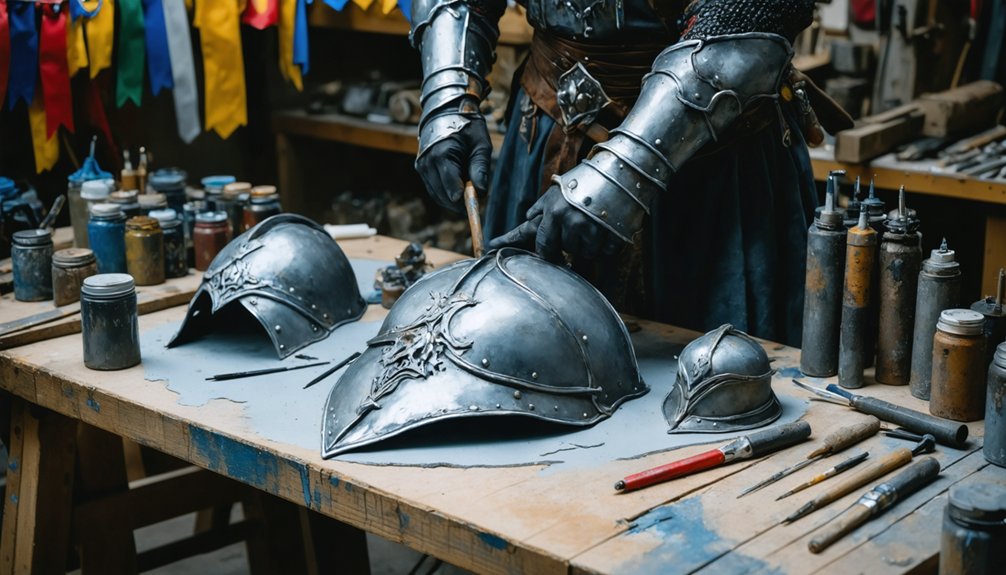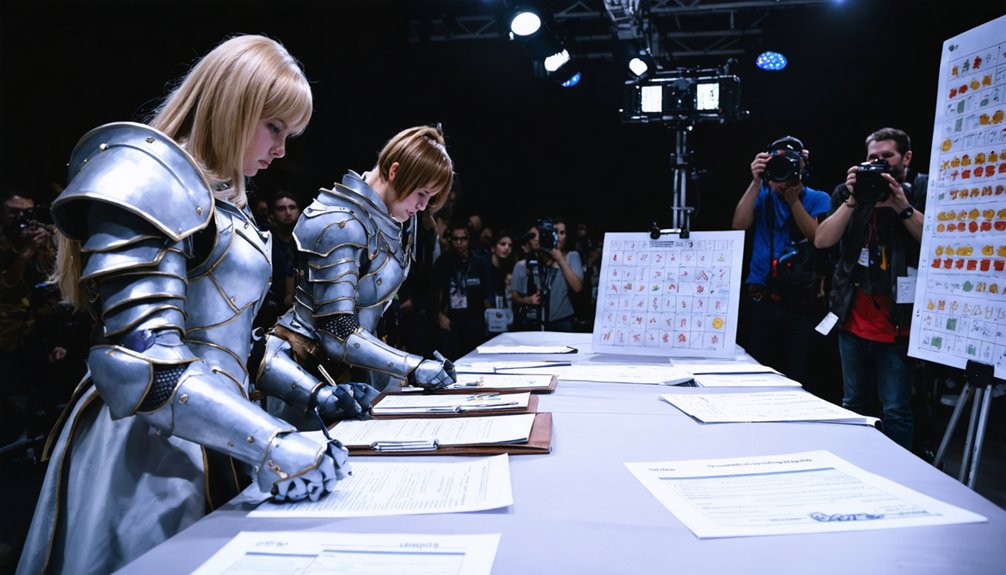
To win an anime cosplay competition, you’ve got to choose the right skill division, select a character that matches your construction strengths, and use quality materials throughout your build. Iron every seam, line your garments, and prime your armor pieces for a flawless finish. Walk the stage with intention, show every angle, and explain your techniques confidently to judges. Master these fundamentals, and everything else falls into place below.
Key Takeaways
- Choose the right competition division (Novice, Journeyman, or Master) based on an honest assessment of your current skill level.
- Select characters that align with your strongest construction skills, whether armor fabrication, tailoring, or other mastered techniques.
- Use appropriate fabric weights, line all garments, and press every seam flat for a polished, professional finish.
- Prepare a reference binder with WIP photos, construction notes, and multi-angle images to clearly communicate your process to judges.
- On stage, rotate your body, pause at center, and extend arms to showcase all costume details confidently.
Choose a Competition Category That Matches Your Skill Level
Choosing the right competition category can make or break your convention experience, so don’t just enter the highest division because it sounds impressive. Conduct an honest skill assessment before registering.
Most competitions divide entrants into Novice, Journeyman, and Master divisions, each demanding progressively refined construction techniques, material mastery, and stage presence.
If you’ve never competed or recently started building costumes, enter Novice. If you’ve placed in prior competitions or expanded into advanced techniques like armor fabrication or complex tailoring, Journeyman fits better. Master-level competition categories expect exceptional execution across every element.
Entering the wrong tier hurts you twice—you’ll feel overwhelmed competing above your level or unchallenged below it.
Match your division strategically, build confidence incrementally, and let your craftsmanship evolve naturally through each competitive experience.
Pick an Anime Character That Plays to Your Construction Strengths
Before committing to a character, audit your existing skillset honestly—because a stunning cosplay built from genuine strengths will always outperform an ambitious one riddled with technical gaps.
Character selection isn’t about choosing your favorite anime hero; it’s about strategically matching design complexity to your construction strengths.
Character selection is a strategic calculation—align design complexity with your construction strengths before committing to any build.
If you excel at armor fabrication, target characters with intricate plate work. If tailoring is your forte, pursue structured garments with precise silhouettes.
Analyze reference material critically—identify which construction elements you’ve already mastered versus which require entirely new techniques. Attempting multiple unfamiliar skills simultaneously under competition deadlines invites failure.
Smart character selection amplifies your technical credibility before judges. Build from demonstrated competency, then layer one or two challenging new elements to signal growth without compromising overall execution quality.
Use the Right Materials for a Polished, Pro-Level Cosplay Build
Choosing the right fabric weight is one of the most critical decisions you’ll make, since lightweight cotton won’t hold structure in a tailored jacket, and heavy brocade will kill the flow of an ethereal dress.
Once you’ve matched weight to function, lining your garment is non-negotiable — it conceals raw seams, interfacing, and stitching that would otherwise expose every construction shortcut to a judge’s eye.
These two principles alone separate costumes that photograph well from builds that hold up under close, hands-on scrutiny at competition.
Fabric Weight Matters
When it comes to achieving a polished, pro-level cosplay build, fabric weight can make or break your finished piece. Lightweight cotton won’t hold the structure a tailored jacket demands, while heavy canvas will kill the fluid movement a flowing dress requires.
Matching fabric weight to your design’s function isn’t optional — it’s foundational.
Fabric durability depends heavily on choosing materials that can withstand construction stress, stage movement, and repeated wear without losing shape or integrity.
Fabric drape determines whether your costume reads as intentional craftsmanship or amateur guesswork. A silk charmeuse cascades beautifully; a polyester broadcloth stiffens awkwardly.
Study your reference images critically. Identify how the fabric behaves in motion, then source materials that replicate that behavior precisely.
Every technical decision you make at the fabric store shows on stage.
Lining Hides Construction
Selecting the right fabric weight sets the structural foundation, but lining your garments is what separates a finished build from an exposed one. Lining techniques eliminate visible seam allowances, interfacing edges, and raw construction work that immediately signal amateur execution to trained judges.
You’re encasing your craftsmanship deliberately, creating a clean interior that reflects intentional precision. Hidden details matter enormously during pre-judging inspections. Judges will flip hems, examine interiors, and scrutinize construction choices up close.
When your lining is smooth, properly anchored, and color-matched, it communicates mastery beyond surface aesthetics. Choose lightweight lining fabrics that won’t add bulk but still conceal every construction decision underneath.
A polished interior transforms your build from functional to professional, demonstrating that your technical commitment extends where the audience never looks.
Iron, Line, and Hem Every Costume Piece Before Competition Day
Before you step into any competition, iron every seam flat — judges notice puckered, uneven construction immediately, and sloppy finishing kills an otherwise strong build.
Lining your garments is non-negotiable; it conceals raw edges, interfacing, and structural elements that would otherwise expose your techniques to scrutiny.
These two steps alone elevate your costume from a home-sewn project to a polished, stage-ready piece that commands respect in the judging room.
Ironing Ensures Flat Seams
Ironing every seam flat before competition day separates polished, professional-looking costumes from rushed builds that judges immediately notice. When you press seams open or to one side using proper ironing techniques, you’re eliminating bulk that distorts silhouettes and reveals amateur construction.
Judges run their hands across fabric and examine seam finishes closely, so puckered, uneven lines immediately signal incomplete work.
Use a pressing cloth on delicate materials to prevent shine or scorching, and invest in a quality iron with steam capability. Press each seam immediately after sewing rather than waiting until the costume’s complete. This sequential approach locks in precision before additional layers complicate access.
Your finished costume should lie smooth, structured, and intentional, communicating the craftsmanship and technical discipline that competition judges genuinely reward.
Lining Hides Construction Details
Flat seams give your costume structure, but what’s happening on the inside tells judges just as much about your skill as what’s visible on the outside.
Lining conceals raw edges, secures your construction techniques, and elevates your overall presentation. Your fabric choices directly impact how cleanly the lining lays and whether it complements or fights the outer shell.
Line every garment to demonstrate mastery:
- Hide all internal stitching, interfacing, and raw seam allowances
- Match lining weight to your outer fabric choices for smooth drape
- Secure lining edges cleanly at hems, cuffs, and collars
- Use lining to reinforce complex construction techniques like boning channels
- Flip hems during judging to showcase your interior craftsmanship confidently
Judges notice everything. Make your inside work as impressive as your outside.
Prime and Finish Armor Pieces for a Smooth Stage Look
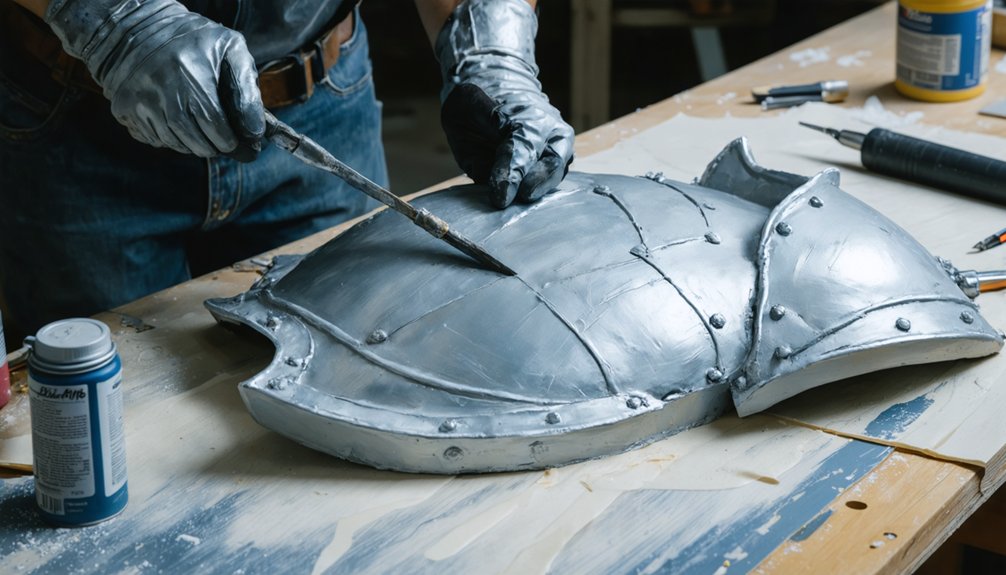
When you’re building armor pieces for the stage, priming is non-negotiable — it’s what separates a polished, professional look from a rough, unfinished one.
Apply a quality primer to seal your material’s surface, eliminating porous textures that catch light unevenly under stage conditions. Sand between coats using progressive grits to achieve maximum smoothness before your topcoat.
Your armor finishing techniques determine how judges perceive craftsmanship up close during pre-judging inspection.
Use texture contrast strategies deliberately — smooth metallics against matte base layers create visual depth that elevates realism markedly. Seal everything with an appropriate topcoat matching your desired finish, whether glossy or weathered.
Rushed finishing destroys hours of structural work, so budget adequate time for this critical phase. Precision here communicates mastery.
Build a Reference Binder That Impresses Cosplay Judges
Judges make snap decisions during pre-judging, so your reference binder is your single most powerful tool for controlling that narrative. Organize reference images strategically, walking judges through your construction decisions with precision and confidence. Your binder layout directly shapes how judges perceive your craftsmanship.
- Print color reference images from multiple angles at Kinko’s or similar shops.
- Compile WIP pictures chronologically to demonstrate your build progression.
- Use point-form notes highlighting new skills and complex techniques.
- Structure your binder layout so judges flow naturally from concept to completion.
- Sharpen your presentation skills by rehearsing exactly what you’ll say.
Strong organization tips transform a chaotic explanation into a compelling story.
Don’t rush judges during inspection—let them absorb every detail you’ve worked hard to create.
Research Peace Bonding Rules Before You Bring Props to the Con
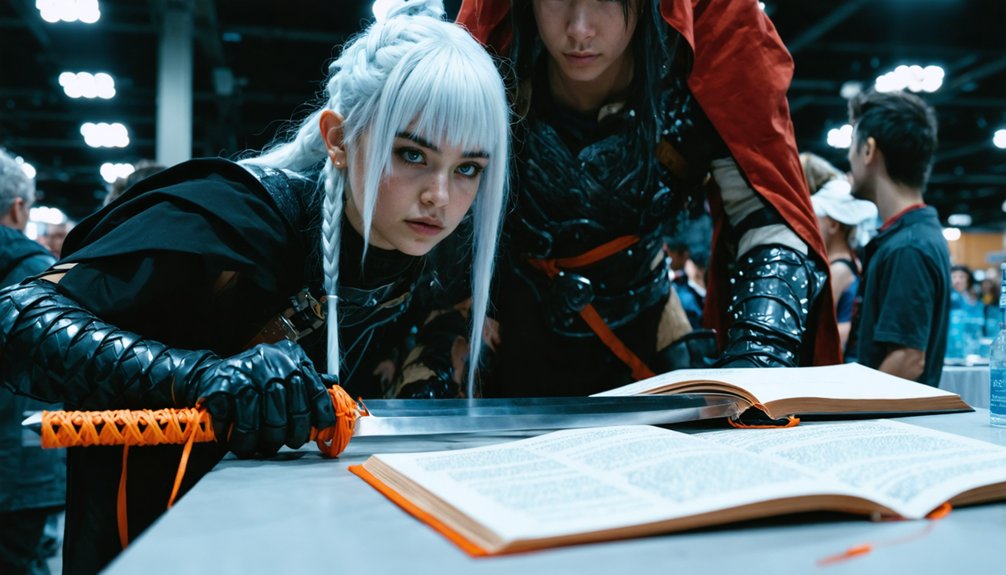
Before you haul that oversized sword or replica firearm to the con floor, you need to research each convention’s specific peace bonding rules, because requirements vary wildly between events and non-compliance can get your prop confiscated or your badge pulled.
Most conventions restrict prop materials, banning items made from sharpened metal, actual wood, or hard rigid plastics above a certain density, so you’ll want to construct your props from foam, worbla, or other approved lightweight materials from the start.
On the day of the event, locate the peace bonding station early, submit your props for inspection, and secure the official tag or zip tie approval before you hit the main floor.
Understanding Peace Bonding Requirements
Many conventions require props to undergo a peace bonding process, and you’ll want to research your specific con’s guidelines well before the day of the event. Prop safety standards vary greatly between cons, so never assume last year’s rules still apply.
- Confirm whether your prop materials meet prop safety restrictions
- Check blade length limits for swords or similar items
- Verify if functional mechanisms require disabling before entry
- Assess costume durability when peace bonding tape or zip ties attach to your build
- Contact convention staff directly if guidelines seem unclear
Arriving prepared means zero surprises at the door. Download official prop policies from the con’s website, screenshot them, and store everything on your phone.
Proactive research protects your cosplay experience and keeps your hard work competition-ready.
Prop Material Restrictions
Prop material restrictions differ greatly from one convention to the next, so you’ll need to dig into the official rules well before packing your build. Most conventions publish detailed material guidelines covering acceptable densities, rigidity thresholds, and prohibited substances like metal blades or hardened resins.
Prop safety isn’t optional—staff will flag non-compliant builds immediately, potentially disqualifying your entire entry.
Cross-reference multiple sources: the convention’s official website, their social media updates, and past attendee reports. Contact the prop inspection team directly if guidelines seem ambiguous.
Innovators building complex mixed-material props should document every component, noting foam densities, adhesives, and finishing coatings. Judges respect thorough preparation.
Non-compliance wastes your creative investment entirely, so treat material research as foundational to your construction process, not an afterthought.
Tagging and Approval Process
Once you’ve confirmed your prop materials meet convention standards, understanding the peace bonding and approval process becomes your next critical step. Smart tagging strategies and knowing approval timelines prevent last-minute complications.
- Research your specific convention’s peace bonding guidelines well before arrival.
- Arrive early—approval timelines vary, and lines grow quickly during peak registration.
- Bring documentation proving prop compliance, including materials lists or photos.
- Accept peace bond tags willingly; removing them violates convention policy immediately.
- Photograph your tagged props for digital records before entering the convention floor.
Security staff make final approval decisions, so approach inspections respectfully and confidently.
You’ve built something remarkable—let your preparation speak. Knowing the process protects your creativity and keeps your competition experience running smoothly from check-in forward.
How Do You Explain Your Build Techniques to Judges During Pre-Judging?
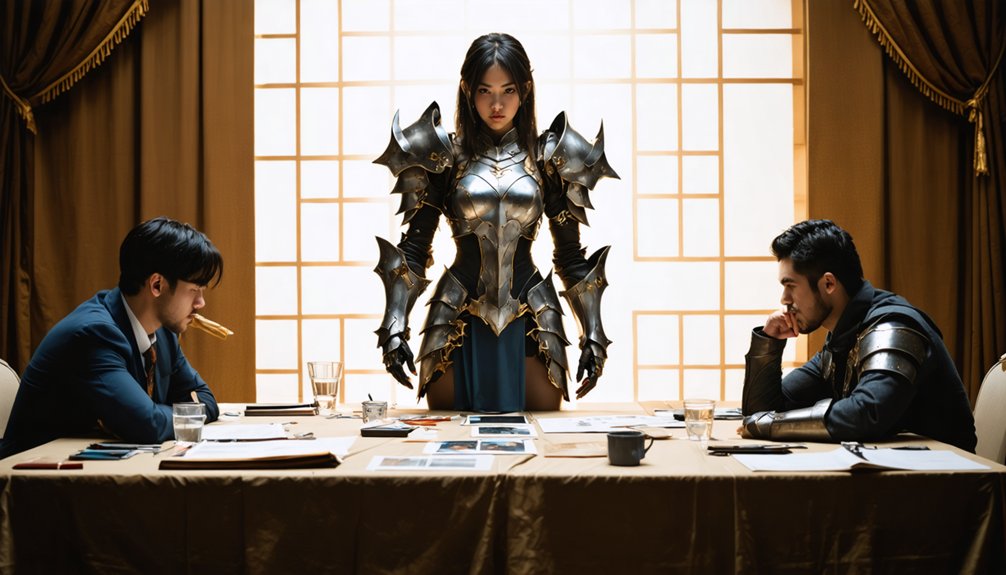
Pre-judging is where your costume truly gets to shine beyond its visual impact, so you need to walk in prepared and confident. Bring a binder or phone document containing reference images, WIP photos, and point-form notes detailing your build techniques. Color prints showing multiple angles strengthen your presentation considerably.
During judge engagement, walk them through each construction method deliberately — explain materials chosen, highlight new skills you developed, and articulate why specific techniques elevated the piece. Flip up hems to expose internal construction, point out intricate detailing without rushing past critical elements.
Judges want to understand your creative problem-solving process. Demonstrate mastery by connecting every decision back to intentional craftsmanship, ensuring they recognize the technical complexity your costume actually represents.
Show Every Angle of Your Cosplay During the Stage Walk
The stage walk is your singular opportunity to communicate every dimension of your costume to judges and audience alike, so treat it as a choreographed showcase rather than a casual stroll. Maximize stage visibility by deliberately rotating your body to expose front, back, and both sides during your walk-on.
- Turn completely around to reveal back detailing
- Pause at center stage for full audience engagement
- Extend arms to display sleeve and gauntlet work
- Tilt headpieces toward judges for overhead visibility
- Step deliberately to showcase footwear and leg armor
Every movement should serve a strategic purpose. Judges can’t score what they haven’t seen, so engineer your stage presence to eliminate blind spots completely.
Your costume deserves a full visual presentation, not a rushed pass across the platform.
Stage Etiquette and Judging Conduct That Serious Competitors Follow
Serious competitors understand that stage etiquette and judging conduct aren’t afterthoughts—they’re disciplines that distinguish polished cosplayers from amateurs. Your stage presence begins before you step into the spotlight.
Stage etiquette and judging conduct are disciplines—not afterthoughts—that separate polished competitors from amateurs before the spotlight hits.
Arrive prepared with reference images, WIP photos, and concise construction notes organized in a binder or phone document. When judges inspect your work, flip up hems, highlight structural techniques, and point out intricate detailing without rushing. Let them examine your craftsmanship thoroughly.
A competitor mindset means you’re selling your entire build—not just the aesthetics. Speak confidently about your methods, explain complex elements clearly, and never downplay your skill.
Research each convention’s specific rules, particularly regarding previously awarded costumes at events like MTAC or Momocon. Precision in conduct signals that you take your craft seriously.
Frequently Asked Questions
Can I Compete in the Same Costume at Multiple Conventions?
You can compete with the same costume at multiple conventions, but always check each event’s competition rules on costume originality. Some cons, like MTAC and Momocon, don’t allow previously award-winning costumes, so research carefully!
What Snacks Should I Pack to Stay Energized During Competition Day?
You’ll practically collapse without fuel! Pack healthy snacks like energy bars and portable fruits such as bananas and grapes. Follow smart hydration tips—carry water constantly. Granola bars and fruit keep you energized, focused, and competition-ready all day!
Should I Notify My Bank Before Traveling to an Out-Of-Town Convention?
Yes, you should set your bank card travel notices before heading to an out-of-town convention! Understanding bank policies and taking proper travel precautions guarantees you’ll access funds seamlessly, letting you focus on competing and purchasing vendor finds confidently.
Are Beverages Allowed at Convention Dances Following the Cosplay Contest?
You’ll want to check your con’s dance etiquette rules beforehand, as beverage policies vary by event. Always research the specific convention’s guidelines before participating in post-contest dances to guarantee you’re fully compliant.
How Do I Respectfully Ask Another Cosplayer for a Photo?
Approach them with a warm smile, ask “May I take your photo?” and respect their answer. Master photo etiquette by allowing comfortable posing tips, giving personal space, and never touching their costume without explicit permission.
References
- https://wissnow.com/news/2024/oct/09/10-tips-to-enjoy-your-anime-convention/
- https://www.youtube.com/watch?v=5XCVpcu30rU
- https://aleathiaburns.livejournal.com/39934.html
- https://www.firststopcosplay.com/blogs/fsco-blog/new-blog-post-wip-cosplay-convention-survival-guide