Start with mesh cap constructions featuring coarse heat-resistant fibers like Kanekalon for superior spike grip and architectural styling. You’ll need to detangle systematically from tips upward using wide-tooth combs, never fine teeth that tear synthetic strands. Build volume through backcombing to create friction points, then secure gravity-defying structures with got2b products. Match character accuracy by analyzing hue, saturation, and brightness across the color spectrum. The techniques below will transform your convention-grade styling from amateur to professional-level craftsmanship.
Key Takeaways
- Choose mesh cap wigs with coarse heat-resistant fibers like Classic or Futura for gravity-defying styles requiring superior grip and architectural hold.
- Detangle using wide-tooth combs from tips upward to prevent fiber damage, then apply directional heat downward to reduce static and maintain integrity.
- Create realistic hairlines by trimming lace fronts with point-cutting techniques and positioning geometric triangular sections for natural density distribution.
- Build volume through backcombing and teasing sections with fine-tooth combs to create friction points that support spikes and vertical structures.
- Match character hair colors by analyzing hue, saturation, and brightness, testing fabric dyes on samples for custom shades and undertone accuracy.
Selecting the Right Wig Base and Fiber Thickness for Your Character
How do you guarantee your cosplay wig withstands intensive styling while preserving character accuracy? Strategic wig density planning determines your styling capabilities—budget options under $20 limit manipulation potential through insufficient fiber volume. Prioritize mesh cap constructions with thicker bases like Daphne styles for cosplay-grade versatility over natural aesthetics.
Fiber thickness directly impacts styling outcomes. Coarse heat-resistant fibers deliver superior grip for spike work and architectural styles, while thinner variations suit everyday wear but restrict heavy manipulation. Kanekalon fibers respond to low-temperature heat treatment techniques using blow dryers, whereas Futura and extra heat-resistant options maintain post-styling integrity under higher temperatures. Classic fiber from Arda provides manipulative texture essential for gravity-defying constructions.
Match fiber coarseness to character requirements—slick varieties challenge self-styling efforts, while textured plastics retain teased shapes without reverting.
Mastering the Art of Detangling Without Damaging Fibers
Once you’ve secured the proper wig base and fiber type, improper detangling techniques will destroy your investment before you complete your first styling session. Mount your wig securely with roundhead pins, then section strategically using clips for controlled access.
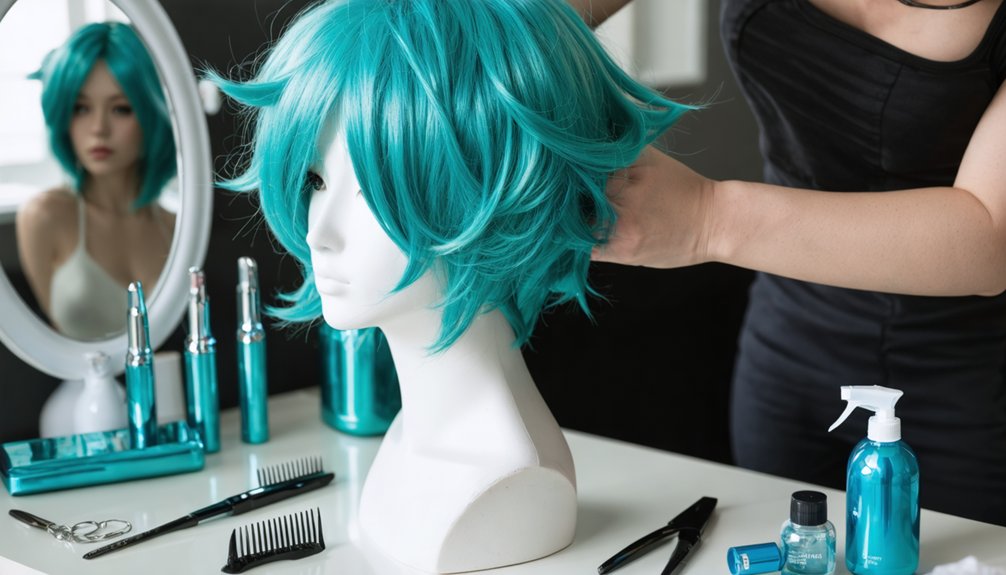
Begin fiber preservation by manually separating major knots—grip with thumb and index finger, hook through the middle, pull downward systematically. Deploy wide-tooth combs or short-bristled detangling brushes; fine combs tear synthetic fibers irreparably. Always work from tips upward, preventing knot migration down the strand.
For static reduction post-detangle, apply directional heat from above while maintaining gentle tension. Execute strand tests before any thermal intervention. On heat-resistant fibers, recurl using hot-water plastic rollers. This methodical approach guarantees structural integrity throughout your styling workflow.
Creating Realistic Hairlines for Maximum Authenticity
Your hairline construction method determines whether your cosplay reads as amateur or professional-grade, requiring deliberate selection between bald cap recession techniques, pre-constructed lace fronts, or direct fiber manipulation.
Lace front application demands precise adhesive choice—spirit gum for temporary wear versus pros-aide for extended durability—paired with strategic trimming to 1-2mm from the knotted edge.
Daily maintenance preserves authenticity through scheduled edge regluing, Got2b gel reapplication to baby hairs, and protective storage on foam heads to prevent fiber memory distortion.
Choosing Your Hairline Type
Creating an authentic hairline requires understanding three primary construction methods, each suited to different character types and skill levels. Skin top bases allow darker hair to shine through transparent materials, enhancing skin tone matching while eliminating harsh cap edges. This custom base construction proves particularly effective for characters requiring natural scalp visibility.
Alternatively, positioning your natural hairline in front while pinning the wig behind creates seamless integration without visible shifts—ideal for elven characters demanding authenticity.
The third approach involves precision trimming: cut hair close to the cap, point-cut tips into V-shapes, and remove bulk knots row by row. Combine this with geometric triangle shaping at individual sections, creating realistic density distribution where base knots remain visible only millimeters behind your constructed edge.
Lace Front Application Methods
How do you achieve the imperceptible shift between synthetic fibers and living skin that separates amateur applications from professional-grade results? Begin with lace customization: trim excess material to approximately quarter-inch from the hairline, preventing fiber fallout while maintaining blend capacity.
Apply thin adhesive layers—spirit gum, lace glue, or tape—directly to skin below your desired placement point. Wait twenty seconds until tacky. Position the wig front-first at your widow’s peak, pressing lace firmly into adhesive using a rat tail comb’s back edge for even distribution.
Execute blending techniques by applying skin-matched foundation along the lace edge with a flat brush, then tap thoroughly to certify complete adhesive contact. For extended wear durability, layer multiple glue applications before final placement, creating professional-grade adhesion.
Maintaining Natural Appearance Daily
When hairline authenticity determines whether observers perceive premium craftsmanship or budget construction, strategic material selection becomes non-negotiable. Skin tops allow natural shine penetration through dark hair bases, eliminating the compact, artificial appearance that compromises realism. Position these silicone-blend foundations millimeters behind your hairline to conceal knot visibility while preventing harsh demarcation lines.
For characters requiring extended wear, integrate your natural front hair through precision pinning techniques—securing the wig behind your biological hairline creates seamless shifts. This method proves essential for elven characters and long-haired realistic portrayals while reducing daily upkeep substantially. Your retained hair remains functional under the wig’s posterior section, maintaining flexible styling options without permanent commitment. Apply point-cutting techniques to trimmed additions, creating V-shaped tapers that mirror organic growth patterns rather than blunt, manufactured edges.
Precision Trimming Techniques for Game-Accurate Lengths
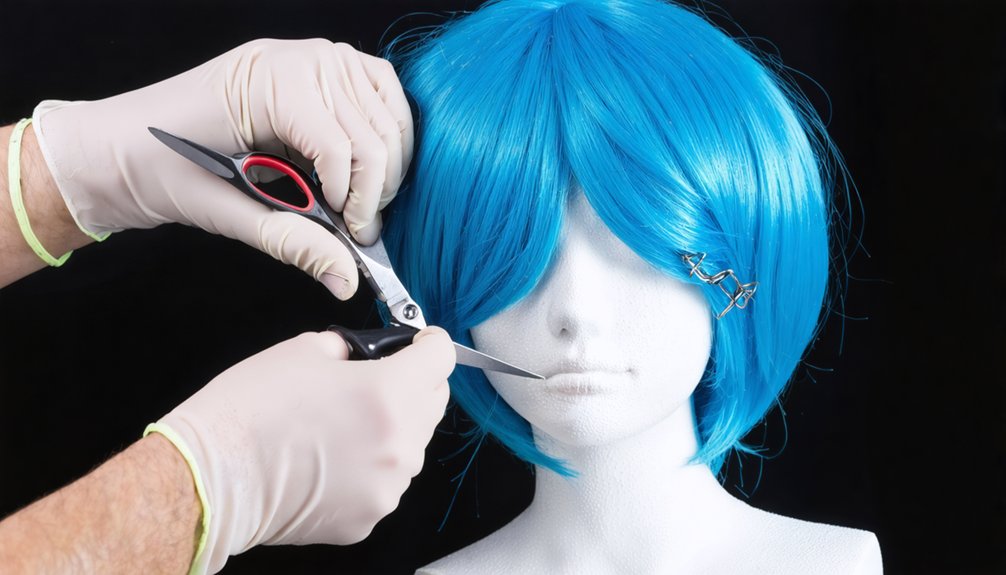
Sharp scissors designed specifically for hair cutting form the foundation of precision wig trimming for game-accurate cosplay. You’ll achieve ideal results by securing your wig on a mannequin head and working with completely dry, detangled fiber. Point your scissors upward into the ends, cutting incrementally with only the tips to maintain control.
For character-accurate face framing, employ graduated framing techniques by angling your scissors while trimming sections around the face. Implement segmented layering through wispy cuts for dimensional styles, or execute blunt cuts for solid, even lengths. Apply point-cutting methods to create soft, blended edges that mirror your reference material.
Check length frequently against character screenshots, and always re-trim after styling to achieve game-precise accuracy.
Building Volume and Texture Through Teasing and Wefting
Creating gravity-defying video game hairstyles requires strategic volume manipulation through three core techniques: teasing, weft insertion, and crimping.
You’ll build structural foundations by backcombing fiber sections to create friction points that maintain spike integrity, while supplemental wefts address density gaps in base constructions.
Crimping pre-styled sections establishes uniform texture distribution across larger surface areas, ensuring cohesive volume that reads authentically under convention lighting and camera scrutiny.
Teasing for Spike Foundation
Before sculpting gravity-defying spikes into distinct formations, you must establish a robust internal foundation through systematic teasing that transforms smooth synthetic fibers into a textured matrix capable of supporting vertical structures. Fine-tooth combs create essential friction points that prevent collapse during wear. This density increase occurs through multiple backcombing passes, building graduated support from roots to tips.
Essential teasing techniques for spike foundation:
- Layer your teasing work—apply base-layer foundation across the entire wig before targeting individual spike sections with secondary intense passes
- Control your brushing—light surface strokes shape exterior appearance while preserving internal textured structure
- Master setting techniques—mist hairspray while pinching sections, then blow-dry to accelerate hold and lock fiber positioning
Strategic teased placement enables directional spike control while maintaining flexibility throughout the styled piece.
Adding Wefts for Thickness
Extreme video game character styles demand densities that exceed standard wig construction, requiring strategic weft integration to achieve the superhuman volume depicted in source material. You’ll create custom wefts by applying hot glue generously to synthetic hair pieces, squishing them into shape, then measuring against wig sections for precise width matching.
Weft placement strategies begin at the crown, progressing downward section-by-section while sewing de-wefted hair onto the netting. Managing weft appearance involves overlapping layers secured with water-based adhesive, then utilizing the curtain method to confine criss-cross visibility to the bottom triangle.
Double-thick construction enables rockabilly teases and gravity-defying spikes. Direct excess hair toward the back using a hair dryer on high heat for 10-15 seconds, ensuring seamless integration without visible attachment points.
Crimping for Even Texture
Strategic crimping transforms standard wig fibers into textured foundations that support extreme styling without the weight penalties of excessive wefting.
Deep crimping technique creates substantial volume when applied thoroughly to bottom weft layers, then brushed out for fluffy texture. Hold your crimper vertically and press only halfway to avoid harsh indentations. Quick travel crimping means moving efficiently along hair length rather than holding static positions.
Essential implementation strategies:
- Layered approach: Clip majority of hair up, leaving 2-3 bottom weft layers for targeted texturing that remains invisible yet volumetrically impactful
- X-pattern application: Apply horizontal and diagonal crimps to eliminate harsh marks while creating dimensional wave patterns
- Pressure control: Half-press applications produce subtle texture; full compression delivers dramatic volume when brushed through densely-bristled tools
This commission-tested method delivers professional fullness without additional weight distribution challenges.
Achieving Gravity-Defying Spikes With Proper Support Methods
Creating gravity-defying spikes requires you’ll build a robust foundation through systematic fiber manipulation before any styling product touches the wig. Start mastering teasing methods by backcombing designated sections rapidly, creating the essential support matrix despite initial disheveled appearance.
Foundation dictates success—systematic backcombing creates the crucial support matrix that enables truly gravity-defying architecture in synthetic wig styling.
Section strategically using character reference templates, color-coding natural leave-out zones for precision placement. After establishing teased volume, apply crimper at 275-degree maximum to small segments, enhancing structural integrity without fiber degradation.
Progress to perfecting spike shaping techniques through upward-angled trimming, followed by thinning scissor refinement for tapered ends. Deploy Got2b high-hold spray while molding individual spikes, simultaneously applying heat-setting with directed airflow. Secure base structure using bobby pins at stress points—hairline and nape regions.
This methodical approach transforms conventional synthetic fibers into architectural styling elements.
Color Theory and Matching for Perfect Character Recreation
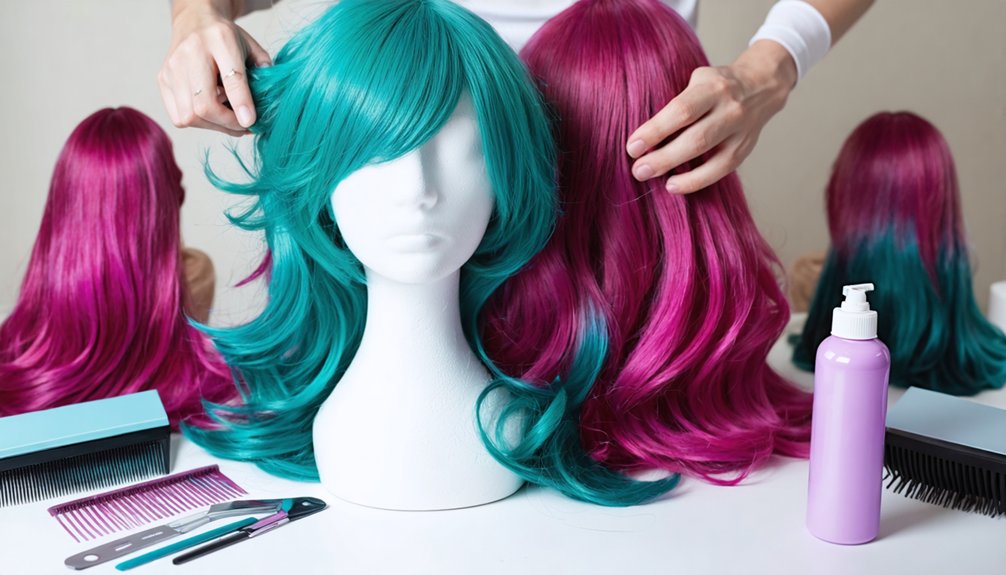
Three fundamental color dimensions—hue, saturation, and brightness—determine whether your wig selection achieves character accuracy or falls into the uncanny valley of “close enough” cosplay. You’ll need to analyze your character’s hair across the color wheel spectrum while accounting for undertone balance. Cool blue-based purples differ fundamentally from warm red-based variants, affecting how they interact with your skin’s undertones and costume palette.
Screen calibration inconsistencies distort digital references, making physical color samples essential for hair fiber consistency verification before purchasing.
Consider these strategic approaches:
- Match lighter shades like Fusion Vanilla Pink to pastel characters, reserving deeper Raspberry Pink for saturated designs
- Test fabric dyes (Rit Dyemore) on heat-resistant synthetic fibers for custom color modifications
- Apply acrylic paint techniques for cel-shaded effects with calculated root darkening and edge saturation
Essential Tools and Products for Long-Lasting Convention Wear
Before you can transform a stock wig into a convention-ready character piece, you’ll need specialized tools that withstand the environmental stressors of packed exhibition halls—humidity fluctuations, constant physical contact, and eight-hour wear cycles.
Convention-ready wigs demand professional-grade tools engineered to endure humidity shifts, prolonged contact, and marathon wear sessions in crowded venues.
Invest in canvas mannequin heads for fiber prepping techniques requiring multi-angle access, paired with stabilizing stands that prevent movement during intricate sectioning.
Wide-tooth combs and detangling brushes preserve synthetic integrity, while rat-tail combs enable precise parting for character-accurate styling.
Heat-resistant fibers respond to garment steamers more effectively than dry heat sources, creating lasting curls without melt damage.
Secure your work with professional-grade hairspray and duck bill clips that grip firmly during high-movement scenarios.
Implement proper storage solutions using wig tape strips (24-count kits) and bobby pins for slippage prevention under accessories throughout extended wear periods.
Frequently Asked Questions
How Do I Store My Styled Wig Between Conventions Without Ruining It?
Store your styled wig on a foam head covered with plastic to maintain its shape. Proper wig care techniques require dust-free wig storage between uses in cool, dry locations. You’ll preserve elaborate styling while preventing deformation through this method.
Can I Use Heat Styling Tools on Synthetic Cosplay Wigs Safely?
You’re playing with fire, but yes—heat-friendly synthetic wigs tolerate 270-350°F. For wig product recommendations prioritizing heat damage prevention, choose modacrylic or treated polyester fibers, verify temperature accuracy, and limit contact to 10-second intervals per section.
How Do I Prevent My Wig From Slipping During Active Performances?
You’ll prevent slippage by mastering proper wig grip techniques—secure friction bands behind ears, then employ strategic wig attachment methods like reinforced bobby pin X-patterns through wefts and roll-on adhesives along your hairline for maximum performance stability.
What’s the Best Way to Remove Got2b Glue From Lace Fronts?
Spray water on your lace for 30 seconds, then apply oil to dissolve the adhesive bond. You’ll remove glue residue efficiently by soaking in Dawn-infused water for 2-3 hours before using wig caps for your next cosplay performance.
How Often Should I Wash My Cosplay Wig With Regular Use?
You’ll achieve proper wig maintenance by washing after every 10-15 wears with regular use. Following synthetic fiber care protocols, you should employ air drying techniques on a wig stand, preventing heat damage while maintaining ideal fiber integrity between styling sessions.