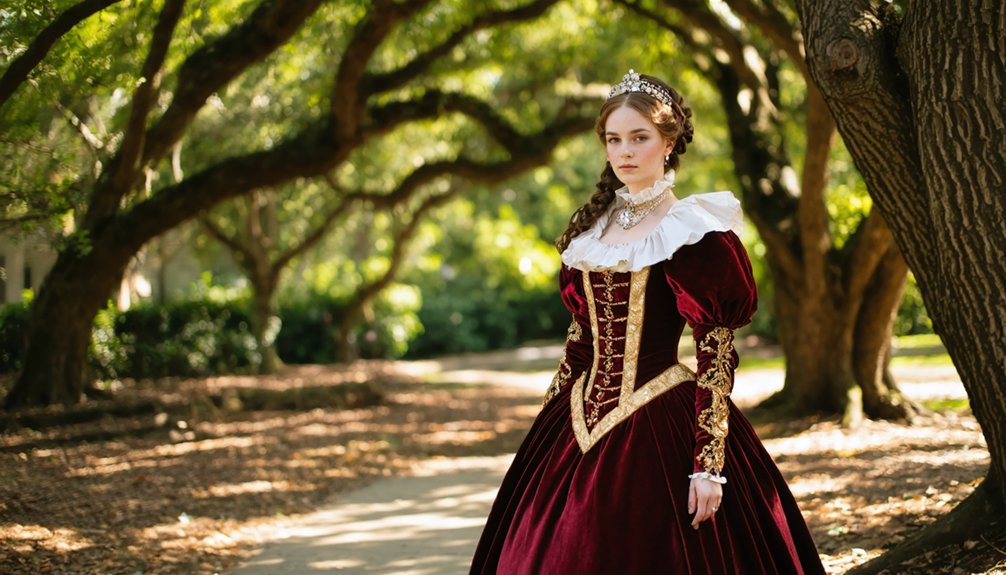
You’ll need at least four foundational layers—chemise, corset, petticoat, and farthingale—before you even think about constructing the kirtle that defines your Tudor silhouette. Start with a flat-fronted bodice using proper boning channels, then add a square-necked gown with trumpet sleeves for nobility or a simpler wool kirtle for working class. Complete your look with either a French hood’s curved elegance or an English gable hood’s angular authority, ensuring your fabric choices respect period sumptuary laws that dictated rank-appropriate materials and colors. The following sections explore each element’s construction details.
Key Takeaways
- Start with essential foundation layers: linen chemise, boned corset, petticoat, and farthingale for authentic Tudor silhouette and structure.
- Choose between French hood (curved, feminine) or English hood (angular, authoritative) to complete your period-appropriate headwear.
- Construct a kirtle with flat-fronted bodice using proper boning, side-back lacing, and tightly-woven linen or wool fabric.
- Add elite gown elements like square bodice, trumpet oversleeves, slashed sleeves showing chemise, and decorative beadwork or fur trim.
- Study period portraits and wardrobe accounts to ensure accurate fabric choices, dye colors, and rank-appropriate decorative elements.
Essential Base Layers for Authentic Tudor Women’s Costumes
Before you can slip into an elaborate Tudor gown, you’ll need to build the foundation that shapes its iconic silhouette. Start with a linen chemise quality piece—this innermost layer protects your outer garments from body oils while its drawstring neckline creates that signature square-necked ruffle.
Next, you’ll want a properly constructed corset, emerging from 1550s design principles. Layer buckram-stiffened canvas or opt for a luxurious velvet corset silhouette with boning channels sewn between fabric layers to achieve the era’s flat, conical shape.
Add a petticoat for warmth and volume, then consider a farthingale if you’re recreating post-1545 styles. These Spanish-inspired hooped underskirts dramatically flare your gown from the waist.
Complete your foundation with wool stockings and optional bumroll padding for authentic period proportions.
Building the Perfect Kirtle With Historical Accuracy
Once you’ve established your foundation garments, the kirtle becomes your Tudor wardrobe’s structural centerpiece—a garment that’s far more complex than its “underdress” label suggests. Your Tudor kirtle fabrication starts with understanding its evolution: early Tudor one-piece construction morphed to Elizabethan bodice-and-skirt separates.
You’ll need tightly-woven linen or wool (silk for upper-class portrayals) with four-layer construction in critical areas—calico, top fabric, lining, and canvas interlining.
For bodice styling preferences, create that distinctive flat-fronted silhouette using reeds or whalebone in channels stitched at quarter-inch intervals. Avoid curved breast-conforming panels—Tudor bodies achieved their barrel-shaped profile through rigid, flat-drafted patterns. Side-back lacing preserves the period’s characteristic unbroken neckline, while pad-stitching and quilting between layers provide authentic structural support.
Gown Styles and Decorative Elements for Elite Portrayal
Layer your low-cut square bodice with trumpet-shaped oversleeves—detach them with ties for interchangeability. Pull linen chemise through slashed undersleeves, displaying Catherine of Aragon’s signature blackwork embroidery. Embellish with intricate beadwork, precious jewels, and fur-trimmed guards. These removable panels weren’t merely decorative—they signaled your adherence to sumptuary laws while demonstrating sophisticated fabric manipulation techniques.
French Hood vs. English Hood: Choosing Your Headwear
The choice between French and English hoods fundamentally alters your silhouette’s geometry—one projects a curved, feminine frame while the other asserts angular authority. English gable hoods dominated earlier decades with their squared, static construction before yielding to French innovations.
Curved femininity versus angular authority—your hood choice defines your silhouette’s visual language and social positioning.
The variety of French hood shapes evolved dramatically from 1510-1590, adapting to changing hairstyles while maintaining core components: under-cap, black hood body, and goldwork billaments.
Key Construction Distinctions:
- Wiring techniques: French hoods used flexible shaping for round profiles; English maintained rigid gable architecture
- Hair accommodation: French permitted fashionable side poufs; English concealed entirely
- Evolution of hood construction: French transformed from substantial 1530s pieces to delicate 1580s pearl-studded billiments
- Fabric variety: French offered diverse decorative options; English remained conservative
- Longevity: French persisted 1530-1580; English disappeared earlier
When selecting fabrics for your Tudor costume, you’ll navigate a complex hierarchy where your character’s social rank dictates every textile choice—from the weave of your linen smock to the pile depth of your velvet gown. Fabric type regulations enforced strict boundaries: purple silk remained exclusively royal territory, while cloth of gold tissued stayed within the King’s immediate family.
If you’re portraying a duchess, you’ll access sable fur and cloth of gold; countesses received velvet and tufted taffeta for petticoats. Knights’ wives could wear damask in specific garments, but lower-ranking women faced prohibition. Men under Knight of the Garter rank couldn’t touch crimson or blue velvet in outerwear.
Seasonal color restrictions didn’t formally exist, though expensive colorfast dyes—particularly blacks and greens—remained cost-prohibitive, naturally limiting their use across social strata.
Recreating Katherine of Aragon’s Iconic Look
You’ll need to master the gable hood, Katherine’s signature headpiece that covered her hair completely in her later portraits, constructed from stiffened black velvet often enriched with gold lamé stripes and jeweled embellishments. Your foundation layer begins with a linen smock, followed by a kirtle that serves as your structural undergown—this isn’t optional, as it creates the proper silhouette for your overdress of cloth of gold or silver lamé.
The proper layering sequence dictates that each garment supports the next, from your corded stays through your petticoat to your final gown of costly fabrics like black tilsent shot silk or violet velvet.
Choosing Her Hood Style
Historically, Katherine of Aragon’s gable hood stands as the most recognizable headwear silhouette of the early Tudor court, making it an essential choice for authentic period cosplay. You’ll achieve front silhouette accuracy by constructing the distinctive angular peak through stiffened linen or canvas layers, wired frameworks, and strategic padding.
Prioritize outer fabric variation with wool or silk exteriors that complement your square-necked gown while maintaining structural integrity.
Essential Construction Elements:
- Stiffened bonnet base using coarse linen for architectural support
- Side lappets angled precisely to frame your face
- Embroidered borders or fur edging for richness
- Interchangeable paste and frontlet panels for versatility
- Jeweled neckline accents matching portrait references
Compromise rear construction when necessary—front-facing accuracy matters most for photography and presentation, reflecting inventoried Tudor assembly methods.
Layering Foundation Garments Correctly
Beneath Katherine of Aragon’s magnificent gable hood and outer garments lies a complex architecture of foundation layers that created her distinctive silhouette. You’ll start with a fine white linen smock featuring square necklines and embroidered cuffs—consider linen smock modifications like blackwork designs for authenticity.
Next, add your gathered petticoat and kirtle, whose corset construction techniques involve whalebone channels backstitched between tightly-woven linen layers to achieve that characteristic flattened bosom and angled waist.
The Spanish farthingale forms your structural base—red taffeta stretched over willow withies creates the rigid bell shape. Attach it securely to prevent shifting during wear. This minimum four-layer ensemble (smock, petticoat, kirtle, gown) demands quality fabrics: crimsons, blacks, silks, and wools that reflect Tudor craftsmanship standards while allowing seasonal adjustability for modern comfort.
Jane Seymour’s Portrait Gown: A Cosplay Guide
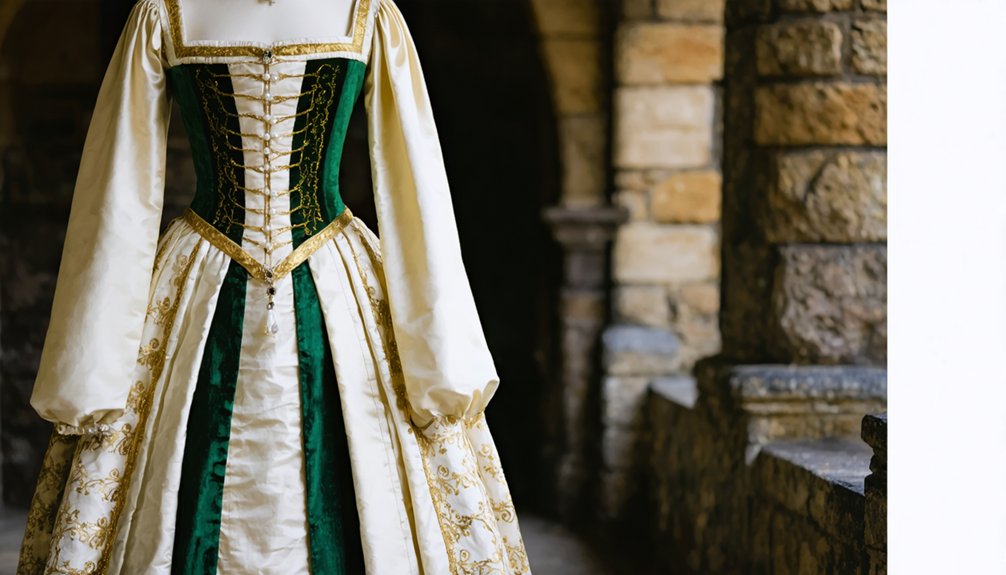
You’ll need to begin your Jane Seymour gown with a foundation of crimson satin beneath the red velvet kirtle, ensuring proper structural layering that mirrors the English court’s exacting standards.
The gold-headed pins securing your partlet and sleeves aren’t mere decoration—they’re essential fastening elements visible in Holbein’s portrait and required for authentic Tudor construction.
Work from the innermost smock outward through each textile layer, as the period’s dress code demanded precise fabric quality at every level, from the linen against your skin to the outer velvet gown.
Gold-Headed Pin Details
Close examination of Jane Seymour’s portraits reveals a striking detail that’s often overlooked: the vertical line of gold-headed pins securing her gown’s front closure. Both the Vienna and Mauritshuis versions display these functional-decorative elements, suggesting an underlayer of front lacing covered by a pinned-over flap.
This construction method exemplifies innovative metalwork techniques while serving symbolic pin meanings that broadcast wealth and royal status.
Replication Essentials:
- Pin Placement: Position gold-headed pins vertically along your bodice’s right-side closure
- Size Accuracy: Note the slightly larger pin heads in the Mauritshuis portrait
- Material Coordination: Match pins with gold thread embroidery and neckline jewels
- Functional Design: Secure overlapping fabric panels over concealed lacing
- Modern Sourcing: Select crystal-detailed replicas that echo Renaissance goldwork
This detail transforms a simple closure into a statement of Tudor magnificence.
Crimson Satin Construction
When analyzing Holbein’s c.1536 portrait of Jane Seymour, the gown’s crimson velvet captures immediate attention—though cosplayers should note that achieving this exact shade requires understanding Tudor dye technology. Cochineal-derived reds were exclusive to wealthy patrons, producing that distinctive deep hue you’ll need to replicate through careful textile quality assessment.
Modern velvet alternatives can approximate the period appearance if you understand velvet manipulation techniques: pile direction affects color depth dramatically under varied lighting conditions.
Your crimson bodice demands structural integrity beyond surface appearance. Steel boning flanking the front opening creates the characteristically rigid Tudor silhouette, while hand-sewn hooks and clasps secure closure without visible gaps. The square neckline’s jeweled decoration isn’t merely ornamental—it conceals construction edges while signaling status.
Cartridge-pleated skirt attachment distributes fabric weight evenly, preventing bodice distortion under the train’s pull.
Authentic Layering Technique
Achieving Jane Seymour’s 1536 silhouette requires constructing a minimum four-layer foundation that creates the portrait’s characteristic rigid torso and voluminous sleeves. Start with a fine cambric smock featuring wide sleeves that’ll puff through undersleeve openings. Add your petticoat and kirtle for proper corset construction support. The farthingale framework shapes your skirt’s distinctive cone silhouette beneath the outermost gown.
Essential Layering Components:
- Linen smock with cambric sleeves creating authentic puffs at wrist openings
- Kirtle bodice providing structural foundation for visible gown attachment
- Farthingale framework establishing period-correct cone shape from waist
- Undersleeves tied with ribbons through oversleeve diamond openings via ouches
- Forepart panel displaying luxurious cloth of silver with geometric patterns
Your undersleeves must match the forepart’s silver textile, connecting through the oversleeves’ bottom curve openings for Holbein’s documented aesthetic.
Common Historical Mistakes to Avoid in Tudor Costuming
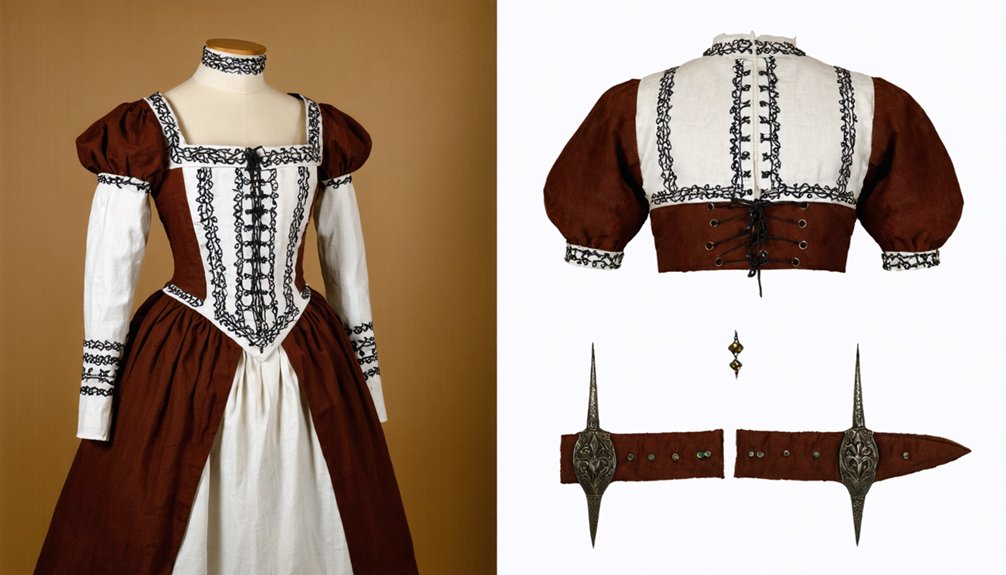
Many aspiring Tudor costumers fall into predictable traps that instantly mark their garments as inauthentic. You’ll sabotage your work by skipping the essential chemise underlayer or exposing bare shoulders—period silhouettes demanded complete coverage and multiple structural layers.
Authentic Tudor reconstruction begins beneath the surface—the chemise isn’t optional decoration but the foundation determining every layer above.
Proper fit concerns extend beyond aesthetics: waist darts must sit close to center front, and seamlines should follow historically functional placement rather than modern convenience.
Accurate embroidery techniques require intricate, multifaceted patterns across bodices and sleeves, not oversized single motifs. Don’t overlook headwear distinctions—gabled hoods versus French hoods carried political significance and personal identity markers.
Finally, eliminate anachronistic accessories: replace ponytails with researched period hairstyles, substitute wire earrings for authentic jewelry, and choose leather gloves with proper bonnets. These details separate convincing recreation from costume-box mediocrity.
Using Portraits and Wardrobe Accounts as Reference Sources
You’ll achieve the most accurate Tudor cosplay by studying period portraits with a trained eye, noting how artists meticulously recorded textile patterns, jewelry placement, and garment construction details.
Royal wardrobe accounts—like Elizabeth I’s inventories listing 260 gowns and hundreds of accessories—provide essential information about fabric types, colors, and embellishment techniques that portraits alone can’t fully reveal.
Cross-reference multiple sources from the same decade to verify details, since regional variations and artistic license mean a single portrait shouldn’t be your sole authority.
Portrait Analysis for Accuracy
Hans Holbein’s court drawings from 1526-43 reveal a systematic approach that’s invaluable for Tudor cosplay accuracy. You’ll notice he selected pinkish-coloured grounds for complexion determination, matching paper tone to each sitter’s skin. His progression from red chalk outlines to coloured features shows deliberate facial mapping, while clothing remained deliberately sketchy—he prioritized likeness over embellishment.
Key Portrait Analysis Techniques:
- Examine underdrawing techniques through infrared imagery to understand garment construction patterns
- Study facial contours rendered in precise detail versus abstracted clothing lines
- Identify “dab and twist” brushwork for ruffs and flicked paint strokes simulating fur textures
- Analyze neutral expressions dominant in 976 Tudor portraits for period-appropriate deportment
- Reference earth pigments confirmed in paint analysis for authentic colour replication
This technical understanding elevates historical recreation beyond surface mimicry.
Wardrobe Inventories Decode Details
While portraits freeze Tudor courtiers in lavish silks and jeweled trims, wardrobe accounts reveal what they actually owned—and it’s far more extensive than any single painting suggests.
Great Wardrobe records from the National Archives document fabric specifications you’ll need: crimson silk petticoats layered beneath gowns, trumpet sleeves lined with velvet or fur, and blackwork embroidery adorning linen shifts.
These accounts detail construction hierarchies—from bias-cut hose requiring elasticity to pinking and snipping techniques found on Mary Rose jerkins.
You’ll discover courtiers owned multiple doublets and kirtles in varied colors, not just ceremonial pieces.
Cross-reference these inventories with extant fragments like Eleanor of Toledo’s funeral gown to decode authentic cut and trim placement, advancing your needle skills development beyond surface-level reproduction.
Cross-Referencing Multiple Sources
Creating an authentic Tudor costume demands reconciling what you see in portraits with what wardrobe accounts document courtiers actually wore. Portrait analysis reveals structural elements like farthingale wheels and leg-of-mutton sleeves, while inventories specify fabric quantities and construction methods.
You’ll discover detachable sleeve composition through both sources—portraits show jewel-studded examples on Katherine Parr, while accounts list separate sleeve entries. Linen shift variations appear as blackwork-embroidered cuffs in paintings, yet wardrobe records detail multiple shifts for daily changing.
Cross-reference these critical elements:
- Sumptuary law restrictions on cloth of gold versus actual portrait appearances
- Pearl placement symbolism documented in Elizabeth I’s wardrobe books
- Ruff complexity levels matching laundress employment records
- Padded doublet dimensions from tailoring accounts versus painted silhouettes
- Busk positioning mechanics described in layering instructions
Reenactment Standards and Authenticity Guidelines for Tudor Dress
Authentic Tudor reenactment demands meticulous attention to the sumptuary laws that governed dress during the period. You’ll need precise fabric calculations: doublet bodies require 2.25 yards, while each sleeve component demands approximately one yard.
Tudor authenticity begins with respecting sumptuary laws and calculating fabric precisely: 2.25 yards for doublet bodies, one yard per sleeve.
Women’s bodices need 18-20 inches of structured material, with skirts consuming 5-7 yards depending on fullness. These measurements aren’t arbitrary—they’re rooted in historical construction methods.
Your innovative approach should respect rank-based restrictions: reserve purple silk and cloth of gold exclusively for royal portrayals, while limiting embroidered materials to characters above Viscount rank. Mandatory headwear for anyone over thirteen wasn’t optional—it functioned as essential class signaling.
Focus on authentic structural elements like pourpoints, farthingales, and properly stiffened bodices rather than theatrical shortcuts. Innovation thrives within historical constraints.
Frequently Asked Questions
How Do I Properly Wash and Maintain Linen Tudor Smocks?
Though modern convenience tempts, you’ll preserve your linen Tudor smocks best using proper washing techniques with cold water and gentle cycles, followed by strict air drying requirements on padded hangers—methods that’ll soften fibers naturally while maintaining authentic period integrity.
What Shoes Are Historically Accurate for Tudor Women’s Court Attire?
You’ll want mules with ankle straps, chopines, or bejeweled pinsons in silk or velvet for authentic court wear. While leather boot designs existed, they weren’t supportive footwear options for formal settings—prioritize ornamental slip-ons instead.
Can I Wear Spectacles With My Tudor Costume for Authenticity?
Like discovering a hidden treasure in history’s wardrobe, you’ll achieve period accuracy with Tudor spectacles for vision correction. They’re nose-gripping riveted designs or handheld frames—no temples yet—perfectly authentic for innovative cosplay that honors sixteenth-century craftsmanship.
How Long Does It Take to Fully Dress in Authentic Layers?
Donning multiple layers takes 30-45 minutes with assistance, as you’ll navigate the time-consuming dressing process of pinning, lacing, and layering smock through gown. Solo attempts often require an hour for proper authentic assembly.
Where Can I Source Affordable Historically Accurate Tudor Fabrics?
You’ll discover authentic Tudor textiles through specialized fabric suppliers like Stuart Press, which offers documented period reproductions. Local textile merchants stock affordable linen and wool basics, while online historical costume communities connect you to innovative sourcing solutions for budget-conscious recreationists.