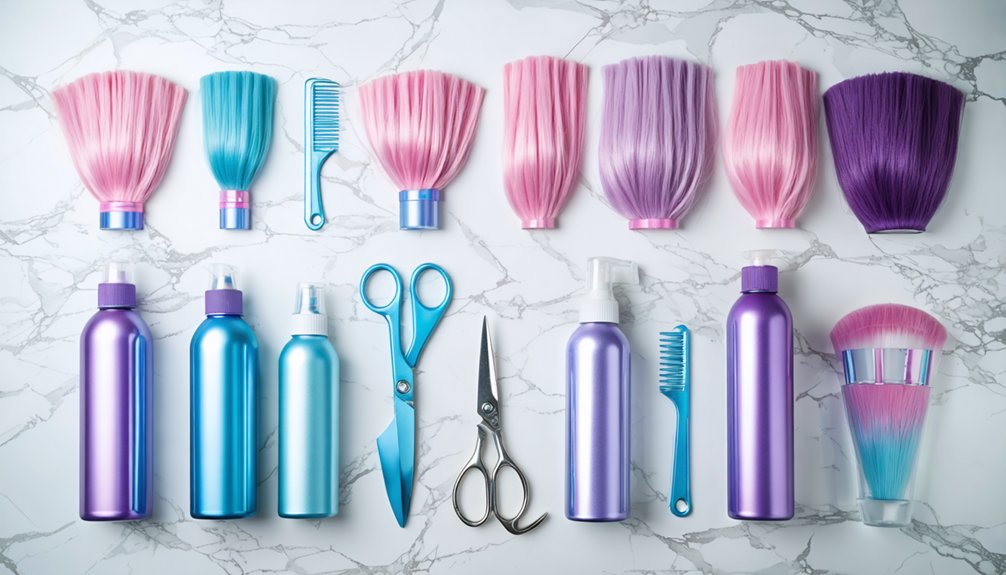
You’ll need Got2b Glued or Aussie Instant Freeze for extreme hold, paired with Paul Mitchell Styling Glue for gravity-defying spikes that’ll last through multi-day conventions. Heat-resistant synthetic fibers require temperature-controlled tools between 280-340°F, while Futura fibers tolerate up to 410°F. Use wide-tooth combs for detangling and teasing brushes for volume at the roots. Cable ties and extra-long sewing pins secure complex constructions, and clear caulk creates permanent structural holds when standard products can’t deliver the architectural integrity your character demands.
Key Takeaways
- Got2b Glued hairspray delivers instant hold with fine mist application for long-lasting cosplay wig styles.
- Paul Mitchell Styling Glue provides professional-grade tackiness and industrial-strength hold for gravity-defying synthetic fiber constructions.
- Temperature-controlled heat tools between 280-340°F safely transform standard synthetic fibers without damage when properly tested.
- Wide-tooth combs and teasing brushes enable professional detailing by preventing fiber breakage while building dramatic volume.
- Mechanical fasteners like extra-long pins, cable ties, and flesh-colored rubber bands secure temporary complex wig arrangements.
Essential Hairsprays and Freeze Sprays for Long-Lasting Holds
When styling cosplay wigs, freeze sprays form the foundation of gravity-defying styles that last through convention halls and photoshoots. Got2b Glued delivers instant hold with fine mist application, though watch for Got2b consistency issues in certain batches that produce watery formulas. For synthetic fibers, it’s your safest bet with superior drying speed.
Aussie Extra Hold Instant Freeze ranks as top alternative, featuring Aussie scent preferences like grape over coconut. Use the aerosol version to avoid weighing down your wig. TRESemmé Freeze Hold provides even coverage with easy water washout, perfect for building base structure. Bed Head Hard Head requires less product and medium heat for ideal freeze without crustiness. Aquanet remains the powerhouse for extreme volume, delivering 80s-level structure that withstands marathon wear sessions.
Styling Glues and Pomades for Gravity-Defying Styles
You’ll need specialized adhesives beyond hairsprays to achieve extreme anime spikes and architectural wig shapes. Paul Mitchell Styling Glue offers professional-grade tackiness for synthetic fibers, while clear caulk (100% silicone) creates permanent structural holds when applied with precision tools.
Layering these products—glue at roots, pomade mid-shaft, setting spray as topcoat—generates the compound adhesion required for 90-degree angles that withstand convention environments.
Paul Mitchell Styling Glue
Paul Mitchell Styling Glue stands as the preferred adhesive solution in the cosplay wig community, delivering industrial-strength hold with an approximate $10 price point that balances performance against accessibility. You’ll achieve silhouette accentuation through its dual-action formula that combines pomade thickening properties with aggressive adhesion mechanics. This hybrid composition enables real-time reshaping while maintaining long term hold capacity under movement-intensive convention conditions.
Apply generous quantities directly to wig fibers, layering with complementary products like hairspray for maximum structural integrity. The pliable-yet-firm consistency prevents brittleness while supporting vertical and angular positioning essential for anime character accuracy.
Professional cosplayers demonstrate its effectiveness in short-form tutorials, showcasing gravity-defying spikes and sculptural elements that maintain dimensional stability throughout extended wear periods. You’re investing in proven technology that transforms synthetic fibers into architectural styling statements.
Clear Caulk Application Techniques
Multiple adhesive formulations compete for dominance in gravity-defying wig construction, yet clear caulk remains the underground champion for achieving permanent architectural spikes that withstand convention-floor punishment. You’ll need to master low odor application methods to avoid overwhelming your workspace during extended styling sessions.
Application Protocol:
- Pre-Application Preparation: Comb synthetic fibers thoroughly before applying non toxic clear glue formulas to prevent visible clumping
- Strategic Distribution: Apply caulk internally within spike structures rather than surface coating for maximum structural integrity
- Drying Position Management: Maintain desired angles using foam blocks or wire supports during 24-hour cure time
- Post-Cure Finishing: Seal exposed caulk sections with matching fiber spray to eliminate residual tackiness
This technique delivers professional-grade results without commercial wig glue expenses.
Layering Products for Hold
While clear caulk establishes the architectural foundation for permanent spikes, strategic product layering amplifies hold strength and introduces sculptural flexibility that pure adhesive methods can’t achieve. Begin with Got2b Glued as your base layer, applying to roots for maximum vertical lift.
Once partially dry, overlay American Crew Fiber pomade containing conditioning agents for improved pliability on mid-lengths, creating graduated firmness. For extreme defiance, cross-hatch Spirit gum beneath Layrite Original Pomade—this technique prevents slippage during dynamic movement while maintaining workability.
Hold boosting hybrid products like silicone-infused pomade-glue formulas optimize humidity resistance at conventions. Test your layered approach on wig scraps first: glues withstand 45-degree tilts versus pomades’ 30-degree threshold. Remember—thin applications prevent weight accumulation that compromises gravity-defying architecture.
Heat Tools That Transform Synthetic Fibers Safely
You’ll need to select heat tools based on your wig’s fiber composition and apply precise temperature control to avoid melting or singeing. Standard synthetic fibers require temperature-controlled styling tools kept between 280-340°F, while Futura fibers tolerate temperatures up to 410°F.
Steam methods activate and straighten fibers in approximately five minutes, whereas flat irons (excluding Chi brand, which damages synthetic fibers) take longer but offer more precise control when held at proper temperatures.
Temperature Settings Matter Most
Because synthetic cosplay wigs melt rather than burn when exposed to excessive heat, understanding precise temperature thresholds separates successful fiber transformation from permanent damage. Proper temperature testing protects your investment and guarantees repeatable styling results.
Essential Temperature Protocol:
- Verify fiber specifications – Modacrylic tolerates 300°F, treated polyester blends reach 350°F, while Futura fibers peak at 410°F with optimal range of 280-340°F
- Test tool accuracy – Temperature dials often run 20-30°F hotter than displayed; confirm actual output with an infrared temperature gun
- Start conservative – Begin at 270-280°F, increasing gradually only after testing hidden underlayers shows no melting
- Limit exposure duration – Restrict heat contact to 10 seconds per section for heat sensitive fiber care
Single passes prevent cumulative damage while maintaining styling precision.
Steam Versus Direct Heat
Although both methods reshape synthetic fibers through thermal manipulation, steam conditioning and direct heat application serve fundamentally different purposes in your cosplay wig toolkit. Steam introduces moisture that restores matted fibers and improves combability, while flat irons lock precise shapes through controlled heat application techniques. You’ll achieve sleek results with steam’s wet heat at low temperatures, then air-dry completely.
Direct heat targets specific sections for curls or bumps, requiring 280-340°F settings with thermal spray protection.
For fiber damage prevention, steam demands plastic nozzles only—metal heads fry synthetics instantly. Direct heat needs single slow passes per strand with complete cooling periods. Both heat application techniques require canvas block heads and heat-resistant wigs verified through inconspicuous testing before full styling.
Clips and Fasteners for Sectioning and Securing
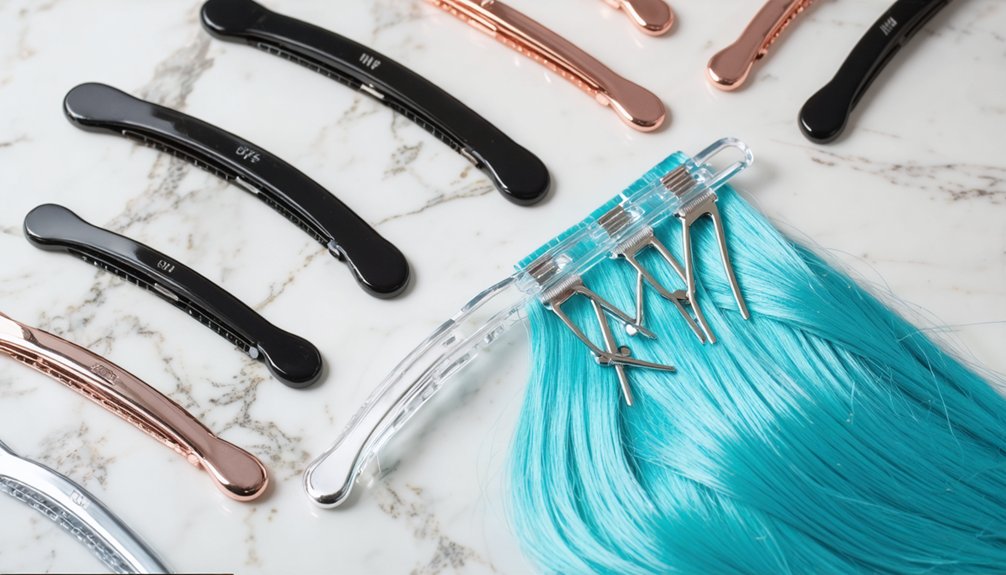
When styling cosplay wigs, you’ll need reliable fasteners to section hair fibers during construction and secure finished elements in place. Extra-long sewing pins work with wig sectioning templates to temporarily hold complex arrangements, while cable ties provide industrial-strength securing for gravity-defying styles preferred by advanced cosplayers.
Essential Fastening Systems:
- Elastic Components: Flesh-colored rubber bands offer superior strength over standard alternatives, with tiny elastics providing discrete tension adjustment for delicate fiber groupings
- Mechanical Hooks: Plastic hook systems feature multiple slot positions—closer to the tag increases tightness, farther decreases tension
- Specialty Clips: French barrettes and alligator clips grip synthetic fibers without slipping or causing damage
- Thread Integration: Clear nylon thread with curved needles enables permanent attachment without color-matching requirements
Specialty Adhesives for Permanent Wig Modifications
While clips and fasteners provide temporary control during wig construction, certain cosplay styles demand adhesives that won’t budge under convention center lights or extended wear periods. White PVA glue and tacky glue deliver permanent bonding considerations you’ll need for structural modifications.
Dilute tacky glue to one-to-three parts glue-to-water, then paint directly onto hair strands for even distribution. This creates holds stronger than hairspray that won’t release unless you soak the entire wig.
Foam-based structural integrity requires permanent adhesives to prevent loosening during movement and wear. Your sculptural spikes and embellishments maintain their shape across multiple convention appearances when properly secured. Don’t use PVA for spiking and teasing applications—permanent bonding interferes with desired texture. Reserve these adhesives for large spike construction and foam attachment where temporary solutions compromise your costume’s appearance.
Brushes and Combs for Professional-Level Detailing
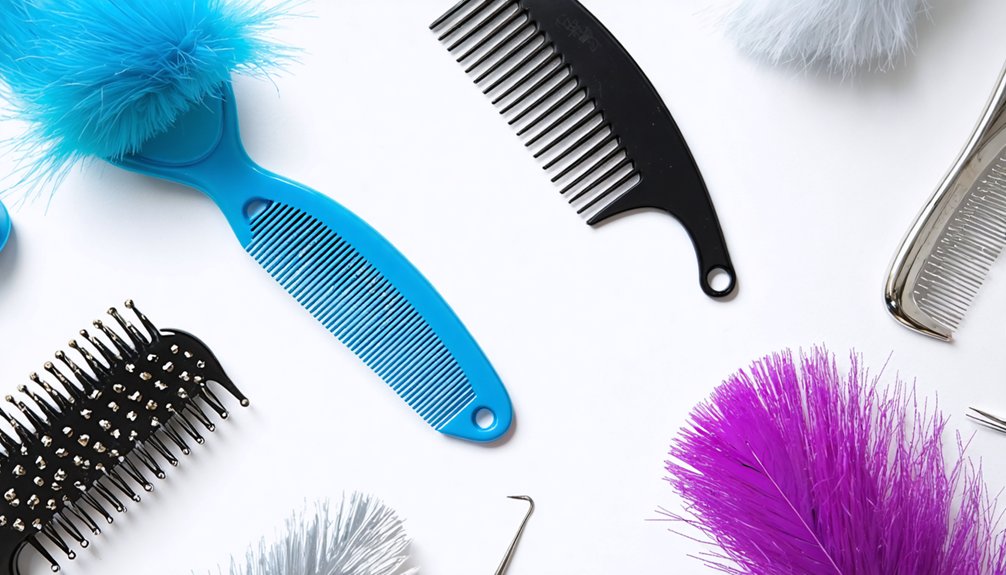
- Wide-tooth combs – Start at ends, working upward through long strands to prevent fiber breakage
- Fine-tooth combs – Execute precise sectioning and teasing for intricate character styling
- Teasing brushes – Build dramatic volume at roots, then smooth surface layers with thin bristles
- Multi-layer detangling tools – Restore matted cosplay wigs by combining gentle separation with smoothing action
Annies Wig Brush and Brainbow Detangling Comb deliver consistent, damage-free performance across styling sessions.
Curling and Texturing Tools for Dynamic Volume
Achieving dramatic spikes, cascading waves, and gravity-defying volume requires specialized heat tools that won’t melt synthetic fibers or flatten meticulously crafted shapes. Crimping irons with adjustable settings between 160-220°C deliver tapered styling methods through ceramic plates that protect fibers while adding texture.
Follow crimping with lightweight clothes steamers to smooth and set voluminous formations without damaging synthetic materials. QuickStyle flat irons enable strategic heat application for precise sectioning—curl bit-by-bit using controlled temperatures suitable for both synthetic and human hair constructions.
Integrate velcro-free rollers in various diameters with your rat tail comb to lift and section large areas efficiently. Combine backcombing techniques with crimped texture, then finish with steam to lock dynamic shapes. This layered approach creates professional-grade volume that withstands convention wear while maintaining character-accurate silhouettes.
Fiber Addition and Reinforcement Supplies for Complex Builds
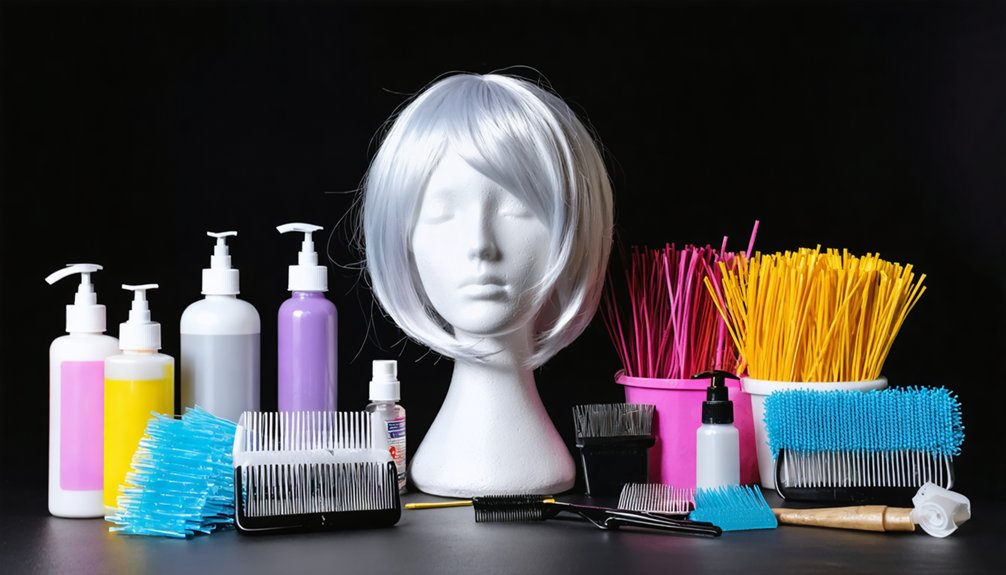
Complex character builds demand strategic fiber reinforcement beyond surface styling—particularly for gravity-defying constructions that require structural integrity throughout multi-day convention wear.
Strategic fiber reinforcement transforms convention wigs from surface-styled accessories into architecturally sound constructions capable of maintaining gravity-defying shapes across multiple wearing days.
Essential reinforcement techniques include:
- Backcombing reinforcement strengthens upright sections through controlled fiber density adjustment at the base, building volume without excessive product weight
- Steamer molding creates foundational structure by holding shaped sections until cooled, enabling you to sculpt and set tension into complex spike formations
- Layered hold application combines hairspray (1-2 distance passes) with gel at tips, locking steam-set shapes against wind exposure
- Heat setting fundamentals mirror thermoplastic techniques—hold heated Futura Fibers (optimal 280-340°F range) until completely cooled to permanently retain curls, flips, or architectural constructions
Combining these methods creates resilient constructs that withstand convention environments.
Frequently Asked Questions
How Do I Wash and Maintain My Styled Cosplay Wig?
Gently wash your styled wig in lukewarm water with mild shampoo, then apply proper wig conditioning techniques by soaking with conditioner. Follow proper wig drying methods: air-dry on a stand, never rubbing, to preserve your character’s signature style.
What’s the Best Way to Store Wigs Between Conventions?
Think of your wigs as sleeping beauties between events. You’ll extend wig lifespan through proper wig storage methods: comb thoroughly, bag with air pressed out, label clearly, and store on foam heads in temperature-controlled spaces away from sunlight.
Can I Use Regular Hair Products on Synthetic Wigs?
You shouldn’t use regular hair products on synthetic wigs. Wig hair type considerations require specialized formulas—synthetic wig styling techniques demand paraben-free, sulfate-free products that won’t damage fibers. Choose manufacturer-recommended shampoos, conditioners, and hairsprays designed specifically for synthetic materials.
How Do I Match Wig Color to My Character?
Like medieval scribes perfecting illuminated manuscripts, you’ll master wig matching techniques by comparing reference images against your wig’s undertones. Use color coordinating strategies with Arctic Fox dyes, adjusting saturation levels until you’ve achieved character-accurate brilliance.
What Budget Should I Set for Basic Wig Styling?
You’ll need $50-70 for basic styling: $30-80 for quality synthetic wig materials, plus $20-40 for essential wig styling tools like heat-safe scissors, wig heads, and freeze spray. Complex commissions require $100+ budgets.