Protect your cosplay wigs from humidity by maintaining storage environments below 55% relative humidity using silica gel packets and climate control systems. You’ll need lightweight wigs with open wefting for airflow, moisture-wicking cap liners, and proper washing techniques that preserve fiber integrity. Store wigs on perforated stands with cotton-linen canopies to prevent moisture accumulation and frizz formation. Never manipulate damp fibers, as humidity above 70% causes irreversible structural damage within 24 hours. This guide covers advanced preservation strategies and emergency restoration protocols.
Key Takeaways
- Choose lightweight wigs with open wefting and breathable caps to maximize airflow and reduce moisture accumulation on your scalp.
- Wash wigs with diluted shampoo using gentle sloshing motions, then air-dry completely in ventilated spaces to prevent frizz.
- Store wigs on perforated stands in climate-controlled areas maintaining below 55% relative humidity with silica gel packets.
- Use moisture-wicking headbands and bamboo liners to actively draw perspiration away from wig fibers during wear.
- Maintain storage temperatures between 60-70°F and avoid humidity above 70% to preserve fiber integrity and curl retention.
Understanding How Humidity Affects Cosplay Wig Fibers
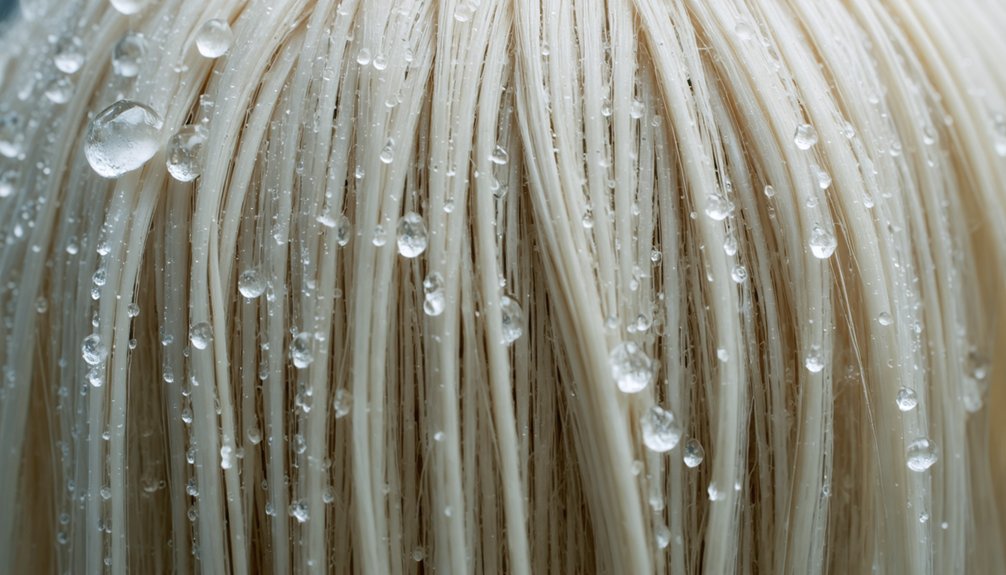
When moisture levels exceed 70%, synthetic wig fibers undergo a physical transformation that compromises their structural integrity. You’ll notice your wig’s fibers absorb atmospheric moisture, causing microscopic swelling that disrupts smooth textures and creates frizz. This process affects wig fiber density, making strands separate unevenly and lose their original formation.
The chemical structure of synthetic materials reacts to humidity by altering hydrogen bonds, which directly impacts curl retention and style longevity. Your wig’s polished appearance deteriorates as moisture absorption dulls the fiber sheen, diminishing light reflection within 24 hours of high-humidity exposure.
Wig fiber quality determines resistance levels, yet even premium heat-resistant synthetics experience degradation under sustained humid conditions. Without natural protective oils, cosplay wig fibers become vulnerable to matting, tangling, and permanent structural damage.
Choosing the Right Materials and Caps for Humid Climates
Since synthetic fibers lack natural moisture regulation, you’ll need specialized cap constructions that actively combat humidity’s destabilizing effects. Lightweight wig construction with open wefting maximizes airflow circulation, while natural fiber ventilation through bamboo liners actively wicks perspiration to external surfaces where evaporation occurs rapidly.
Optimize your humid-climate setup with:
- Bamboo fabric liners that transfer moisture away from scalp contact points
- Open-wefted cap architecture promoting continuous air exchange
- Moisture-wicking headbands with integrated cooling gel technology
- Breathable synthetic alternatives featuring heat-resistant fiber compositions
- Adjustable strap systems preventing pressure-induced heat accumulation
Human hair options provide superior moisture management through natural porosity, though premium synthetics with advanced fiber engineering deliver comparable performance. Prioritize caps featuring multiple ventilation zones and quick-drying materials to maintain fiber integrity during extended wear in challenging atmospheric conditions.
Proper Washing and Drying Techniques to Combat Moisture
Every 10-15 wears for casual use or 3-6 performances for intensive styling sessions, your synthetic cosplay wig requires strategic cleansing to eliminate humidity-induced product accumulation and environmental residue. Begin by detangling from ends to roots, then submerge in lukewarm water with diluted shampoo.
Gently slosh side-to-side—never scrunch or knead, as wet fibers weaken considerably. For wax or hairspray buildup from managing humidity exposure, add dish soap pumps. After five minutes, drain and apply conditioner sparingly through identical sloshing motions, preserving wig condition through selective moisture balance.
Rinse thoroughly until bubble-free, pat with microfiber towels, and secure over wig stands for complete air-drying in ventilated spaces. Never manipulate damp fibers—this critical protocol prevents frizz, maintains structural integrity, and optimizes humidity resistance.
Smart Storage Solutions With Optimal Air Circulation
Proper storage infrastructure determines whether your cosplay wig maintains its styled integrity or deteriorates into a frizzy mass during humidity exposure. Implement these evidence-based systems for maximum fiber preservation:
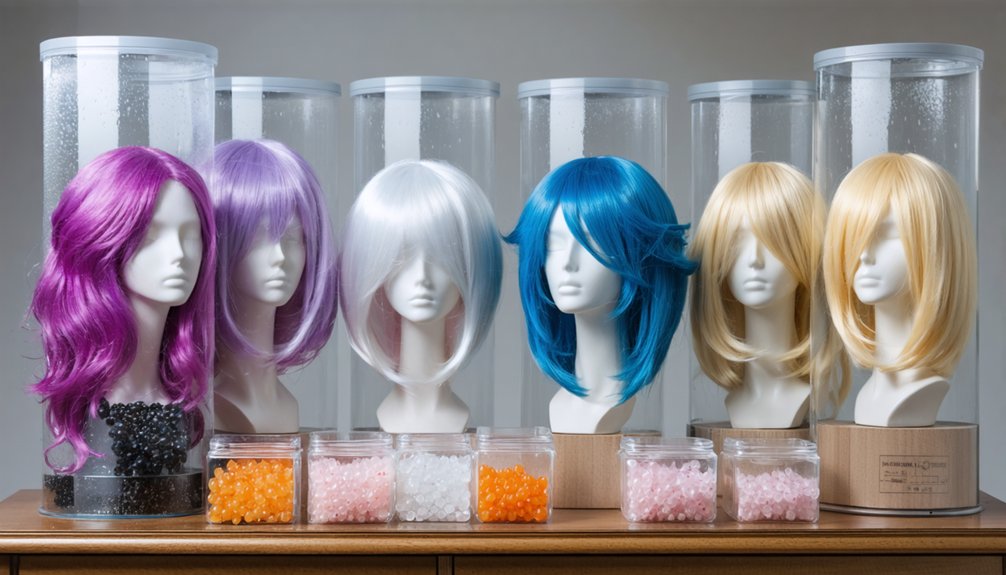
- Perforated acrylic stands enable 360° air exchange beneath the cap line, preventing moisture accumulation and static buildup that solid bases create
- Cotton-linen blend canopies clipped to closet rods achieve 91% curl retention when paired with monthly-replenished silica gel canisters
- Climate-controlled environments maintaining 60-70°F and below 55% relative humidity prevent the fiber expansion that causes structural damage
- Pre-storage preparation requires microfiber blotting followed by 90-second cool-air drying to eliminate residual moisture
- Periodic storage inspections and fiber rejuvenating techniques assure your system maintains effectiveness between convention seasons
Maintaining Ideal Humidity Levels in Your Wig Storage Area
Your wig storage area requires precise humidity control between 50-70% to prevent fiber degradation and maintain structural integrity.
Humidity levels above 70% compromise knot stability in laced wigs and promote mold growth, while readings below 40% cause fiber brittleness and static damage.
Deploy silica gel packets within storage containers as your first line of defense—they’ll actively absorb excess moisture and stabilize localized humidity without introducing chemical treatments or power requirements.
Target 50-70% Humidity Range
- Sub-55% RH environments maximize synthetic fiber cortex stability in climate-controlled spaces
- Exceeding 60% RH during AC cycles destroys curl memory within 20-40 minutes of exposure
- First 72 hours post-wear represent peak vulnerability—unsupported storage reduces curl rebound by 67%
- Biochemical infiltration occurs when humidity penetrates fiber cortex structures at elevated levels
- Continuous climate regulation through standalone AC units prevents intermittent RH spikes
Deploy perforated acrylic stands with cotton-linen canopies to achieve 91% moisture management efficacy while maintaining ideal storage conditions.
Use Silica Gel Packets
Monitor color indicators weekly; exhausted pink packs require immediate intervention.
The silica gel recharging process involves baking at 220°F for two hours, restoring desiccant capacity through moisture evaporation. This reusability cycle extends wig longevity by 3–5 seasons while meeting Cosplay Sustainability Accord standards.
Neglecting saturated packs invites musty odors and fiber degradation—preventable outcomes through systematic maintenance protocols.
Styling Strategies to Minimize Frizz and Maintain Shape
When humidity threatens your cosplay wig’s appearance, implementing targeted styling strategies becomes essential for maintaining fiber integrity and visual appeal. Your wig care routine should prioritize heat-free techniques that prevent structural damage while combating moisture-related frizz. Incorporate humidity resistant accessories like breathable bamboo wig caps to manage scalp moisture at its source.
Combat moisture-induced wig damage through strategic heat-free styling interventions and humidity-resistant accessories that preserve fiber integrity during extended cosplay wear.
Strategic Styling Interventions:
- Apply anti-frizz serums specifically formulated for synthetic fibers before exposure to humid environments
- Construct protective braids or updos to minimize fiber exposure to atmospheric moisture
- Select shorter wig styles (pixie cuts, bobs) that optimize airflow and reduce sweat accumulation
- Integrate leave-in conditioners with UV protection to shield fibers from compound environmental stressors
- Utilize moisture-wicking wig liners to intercept perspiration before it compromises fiber texture
These preventative measures maintain costume-accurate aesthetics throughout extended wear periods.
Pre-Event and Post-Event Wig Care Protocols
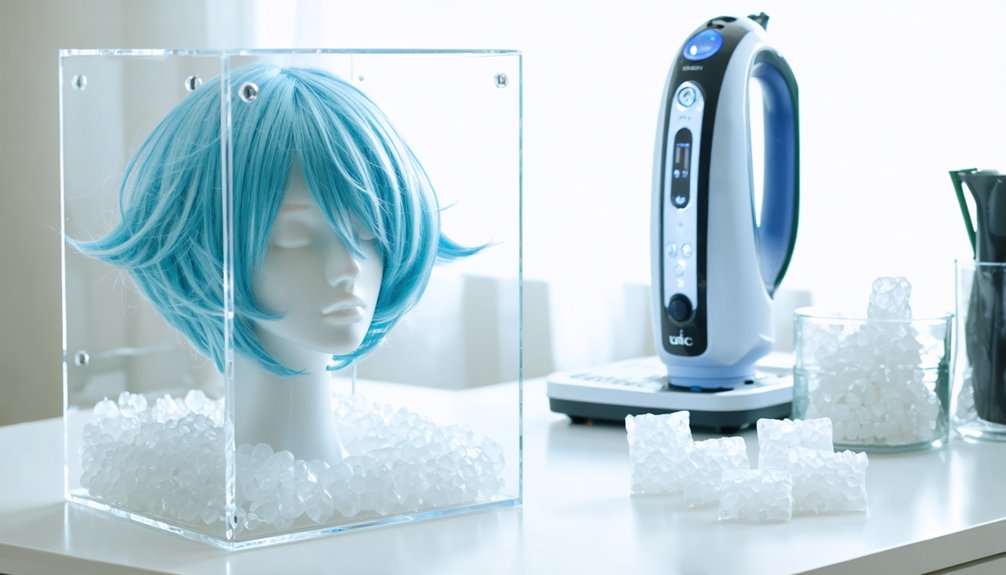
Beyond immediate humidity defense during wear, your wig’s longevity depends on systematic preparation before events and stabilization afterward. Pre-event protocols require blotting the interior cap with microfiber cloth, followed by 90 seconds of cool-air drying on low setting. Rest the wig upright on a perforated acrylic stand for two hours, incorporating silica gel packets to achieve 91% curl retention in 65% RH environments. Wig transportation precautions include silk or satin pouches—never plastic—to prevent condensation trapping.
Post-event stabilization is critical within 72 hours to avoid 67% curl rebound loss. Rinse immediately after sweat exposure using wig-specific products, gently squeeze excess water, and air-dry on stands. Wig element safety demands avoiding velvet-covered stands in humid conditions due to moisture retention at cap interfaces.
Rotating Your Wig Collection to Extend Lifespan
Strategic wig rotation establishes critical recovery intervals that counteract cumulative humidity damage across your collection. An effective wig rotation schedule prevents moisture saturation in synthetic fibers while extending style retention across multiple pieces. Implementing wig rest periods between uses allows absorbed humidity to dissipate naturally, reducing frizz accumulation.
Essential Rotation Protocol:
- Switch wigs weekly during regular wear cycles to minimize environmental stress exposure
- Detangle and clean each piece before exchanging into rest rotation
- Apply protective treatments like detangler spray and oil sheen during storage prep
- Store on stands with strategic pin placement to preserve structural integrity
- Limit wear on extreme humidity days by rotating to protective alternative styles
Combine rotation with deep conditioning treatments and overnight roller sets to maintain ideal performance for extended cosplay seasons.
Emergency Fixes for Humidity-Damaged Cosplay Wigs
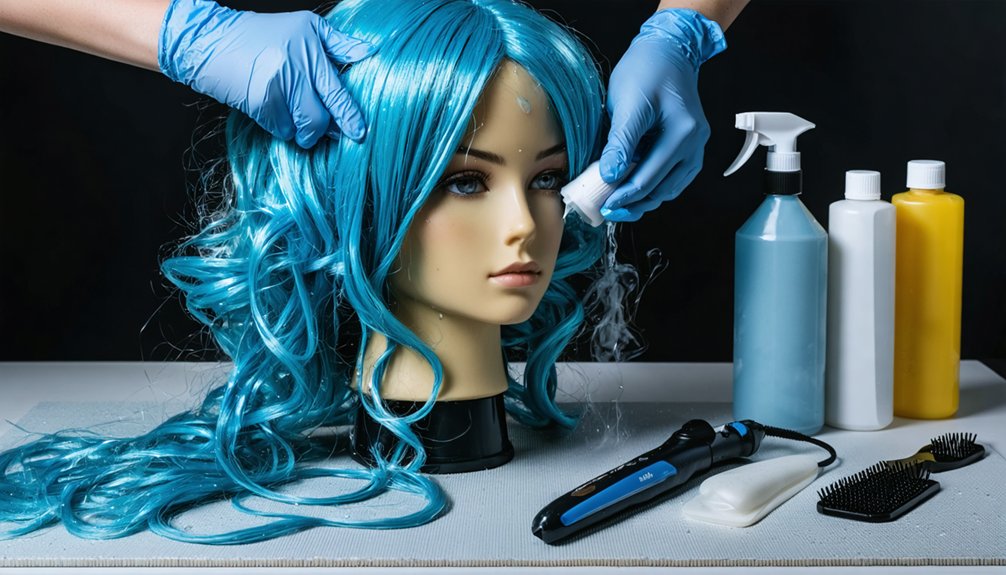
When humidity compromises your cosplay wig’s integrity, you’ll need targeted interventions to address three critical damage types: frizzed synthetic fibers that have lost their smooth texture, heat-styled curls that have fallen flat or become misshapen, and persistent musty odors from moisture trapped within the fiber structure.
These emergency repairs require specific product formulations and application techniques that differ from routine maintenance protocols. Acting quickly prevents permanent fiber degradation and restores your wig’s performance for upcoming conventions or photo shoots.
Revive Frizzy Fiber Texture
Humidity-damaged cosplay wigs demand immediate intervention to restore fiber integrity and visual appeal. You’ll need to revitalize fiber volume through systematic treatment protocols that refresh synthetic texture effectively.
Emergency Revival Protocol:
- Fabric softener soak – Submerge wig in water with one capful of fabric softener for 6 hours to soften compromised fibers
- Wet detangling – Use loop brush designed for extensions, working from tips to roots while fibers remain pliable
- Anti-frizz application – Apply wig-specific serums and protective sprays to create humidity barriers on synthetic strands
- Heat restoration – For heat-resistant wigs, straighten sections then wrap onto foam curlers while hot to restore curl patterns
- Air dry protocol – Position wig on foam head away from direct sunlight to lock in restored texture
This systematic approach guarantees complete fiber rehabilitation without permanent damage.
Restore Lost Curl Definition
How can you rescue curl patterns after humidity transforms your cosplay wig into an undefined mess? Implement heatless curl setting techniques using rollers or flexi rods with firm tension—wrap sectioned fibers evenly to prevent stretching while establishing definition.
Apply curl-specific refresher spray or leave-in conditioner from ends upward, minimizing product weight. Scrunch damp fibers with your fingers to revive bounce, never brushing through curl clumps. For intensive restoration, apply curl custard and comb through before air-drying creates fluffy definition.
Proper drying methods prove essential—always utilize cool water during washing to maintain original patterns, then air-dry completely or employ low-heat tools cautiously. Pin curls and braids offer alternative setting options. Separate individual curl strands manually once dry, then gently shake the wig to distribute volume while preserving the restored curl architecture.
Eliminate Trapped Moisture Odor
Moisture trapped within synthetic fibers creates persistent musty odors that standard airing won’t eliminate—you’ll need targeted intervention methods. Minimizing wig odor requires immediate post-wear treatment protocols that address sweat and humidity accumulation before bacterial growth intensifies.
Enhancing wig freshness through strategic odor neutralization:
- Alcohol-based spray application: Target inner cap netting with isopropyl alcohol or fabric freshener to disinfect without full washing cycles
- Activated ventilation positioning: Mount wigs on breathable stands in low-humidity environments for accelerated moisture evaporation
- Preventative barrier integration: Install moisture-wicking bamboo cap liners that absorb scalp perspiration before fiber contamination
- Diluted conditioner immersion: Execute 30-minute soaks in mild conditioning solution to refresh fibers between major cleaning sessions
- Protective spray reinforcement: Apply lightweight anti-humidity serums that seal fibers against moisture penetration during extended wear
Frequently Asked Questions
Can I Wear My Cosplay Wig in the Rain or During Water-Based Events?
You shouldn’t wear your cosplay wig during water-based events. Avoid swimming while wearing wig, as synthetic fibers absorb moisture causing irreversible tangling and structural damage. Take wig off before getting caught in rain to prevent fiber degradation and mold growth.
Do Lace Front Wigs Handle Humidity Differently Than Traditional Cap Wigs?
Yes, lace fronts breathe better, dry faster, and resist moisture buildup through superior wig construction materials—ventilated caps versus enclosed domes. You’ll need different wig storage considerations: lace fronts demand humidity-controlled environments while traditional caps tolerate standard conditions better.
Will Colored or Dyed Synthetic Fibers React Worse to Humid Conditions?
Colored synthetics won’t react worse—they’re pre-dyed with humidity-resistant pigments ensuring superior fiber color retention. However, you’ll face synthetic fiber degradation if you overheat style them, increasing frizz susceptibility. Heat-resistant varieties outperform standards in moisture conditions.
Can I Use Regular Hair Products on My Wig in Humid Weather?
You shouldn’t use regular hair products—they’ll cause fiber breakdown. Instead, apply humidity-resistant wig adhesive for secure placement and specialized protective hairspray application designed for synthetic fibers. These innovative formulations prevent hydrolysis while maintaining structural integrity in moisture-rich environments.
How Do I Transport Wigs to Outdoor Conventions in Humid Climates?
Like Pandora’s box releasing chaos, humidity attacks unprotected wigs. You’ll need specialized humidity resistant wig bags inside hard-shell wig storage containers with moisture-absorbing packets, maintaining controlled environments that prevent fiber degradation during transport to outdoor venues.