You’ll captivate convention crowds with instantly recognizable heroes like Batman and Spider-Man, whose Google Trends dominance guarantees photo requests throughout the day. These characters offer layered backstories that let you channel complex emotions—from Wolverine’s feral intensity to Winter Soldier’s transformation arc. Their distinctive color schemes and design elements create striking visual impact, while anti-hero personalities give you permission to explore moral ambiguity through performance. The techniques below reveal how to maximize each character’s unique appeal.
Key Takeaways
- Instantly recognizable heroes like Batman and Spider-Man guarantee photo opportunities and connection with fans across multiple generations.
- Layered backstories enable cosplayers to express internal conflict and channel complex emotions like Wolverine’s feral edge or Winter Soldier’s transformation.
- Distinctive movement styles from assassin-trained characters like Elektra, Deadshot, and Cheshire create unique performance opportunities beyond static posing.
- Anti-heroes with moral complexity allow cosplayers to portray flawed personalities and cynicism that mirror authentic human struggles.
- Bold color schemes and design elements like Black Panther’s iconic silhouette create immediate visual impact through strategic contrasts.
Stand Out at Conventions With Instantly Recognizable Heroes
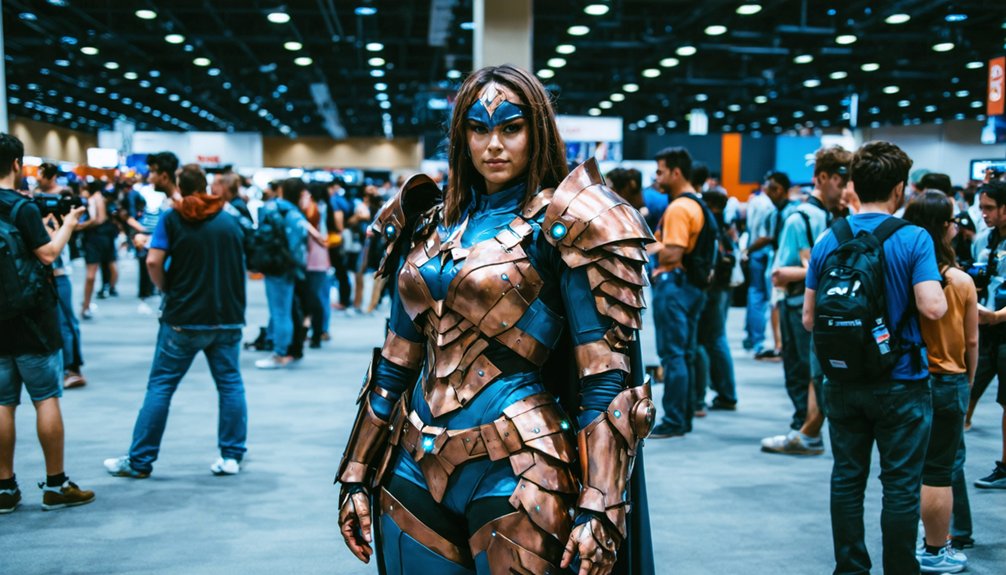
Zeroing in on the right character can make or break your convention experience, especially when you’re competing for attention in crowded exhibition halls. Batman’s Google Trends dominance (73 versus Superman’s 54) proves instant recognition translates to memorable cosplay moments.
Spider-Man’s universal appeal certifies you’ll connect with fans across generations, while Harley Quinn’s #1 post-Bronze Age ranking assures countless photo opportunities. Wolverine’s temperamental fighter persona lets you showcase personal connections through aggressive posing and signature claw gestures.
Wonder Woman’s status as the most popular female superhero creates immediate visual impact. These characters evoke emotional resonance because they’ve starred in multiple feature films and animated series—attendees recognize them instantly, transforming your cosplay from costume into conversation starter that commands exhibition floor attention.
Tap Into Complex Backstories That Add Depth to Your Performance
Characters with layered histories give you richer material to embody through subtle gestures and informed character choices.
When you cosplay Wolverine, knowing his trauma-driven origin lets you channel that feral edge beneath the hero’s surface—every clenched fist carries decades of betrayal.
Anti-heroes like those shaped by moral compromise offer even more range, allowing you to express internal conflict through posture, expression, and deliberate costume weathering that tells their story without words.
Assassin-Trained Heroes Shine
When you slip into the costume of an assassin-turned-hero, you’re embodying characters forged through brutal training and impossible moral choices.
Winter Soldier’s transformation from Bucky Barnes showcases powerful physical capabilities that evolved from Soviet experimentation, while KGBeast’s iconic cybernetic enhancements—literally severing his own arm to escape Batman—demonstrate commitment beyond reason. These characters offer rich performance opportunities through their lethal expertise.
Deadshot’s supernatural marksmanship, Elektra’s Hand-trained precision, and Cheshire’s League of Assassins mastery each present distinct movement styles you’ll research and replicate. Study how they’ve pushed heroes like Batman and Daredevil to breaking points.
Your cosplay gains authenticity when you understand the tactical thinking, weapon handling, and moral complexity that separates trained killers from mindless villains.
Anti-Heroes Challenge Traditional Norms
Beyond the calculated precision of trained killers lies a different breed of character—the anti-hero who operates in moral gray zones you’ll find far more challenging to portray.
These characters offer moral complexity through flawed personalities that mirror real human struggles. Their cultural significance emerged from 1960s disillusionment, questioning heroic ideals through icons like Wolverine and Punisher.
Your performance gains depth through:
- Cynicism and vulnerability that replace traditional heroic confidence
- Personal motives driving actions beyond simple world-saving
- Norm-disrupting behaviors like Black Condor’s smoking and gambling habits
- Evolution arcs transforming characters from selfish to reluctantly heroic
- Moral ambiguity challenging audiences to question right versus wrong
Characters like Deadpool, Harley Quinn, and Yuri Lowell provide multifaceted interpretations. Their complex backstories create layers you’ll explore through costume details, mannerisms, and emotional range—delivering performances that resonate authentically.
Create Visual Impact Through Distinctive Color Schemes and Design Elements
Your cosplay’s visual impact starts with mastering color theory—whether you’re channeling a character’s bold monochromatic scheme like Spider-Man’s red-and-black or creating dramatic contrast through villain-hero mashups that merge opposing palettes.
Study how your character’s signature materials translate into wearable elements: Nightwing’s textured kevlar requires different fabrication techniques than Mystique’s scale-patterned skin.
Lock in these distinctive design choices early, since they’ll define how recognizably you embody the character from across a crowded convention floor.
Bold Monochromatic Superhero Palettes
While most superhero costumes compete for attention with rainbow color schemes, monochromatic designs achieve the opposite effect—they command your focus through deliberate restraint. Black Panther’s unchanged design since 1966 proves single-color foundations create iconic silhouettes that transcend decades and media formats.
You’ll maximize visual impact through:
- Textured differentiation: Grooved gloves and boots suggest armor variations without requiring additional colors
- Strategic metallic accents: Chrome necklaces and mask details convey regality and advanced technology
- Diverse visual texture: Surface variations indicate leather, fabric, and specialized materials while maintaining color unity
- Enhanced recognition: Solid-color full-face masks create instantly identifiable profiles against any background
- Simplified construction: Monochromatic schemes reduce complexity, making ambitious cosplay projects achievable
Neutral bases like black eliminate visual competition, letting architectural costume elements become your primary recognition features.
Mashup Color Contrast Techniques
When opposing colors collide in mashup cosplay designs, they transform familiar characters into arresting visual statements that photographers can’t ignore. Deploy complementary pairings—red against teal, cool grays against warm yellow-orange—to anchor your villain-hero fusion with intentional tension.
Triadic color combinations using purple, orange, and green create dynamic movement across your costume’s surfaces without overwhelming the design’s focal points.
Layer saturation contrasts strategically: desaturated darks in one material plane, saturated lights in another, then high-contrast accents that pop your character’s signature elements. This value hierarchy guides viewer attention more powerfully than hue alone. Mood evoking contrasts like melancholic blues against toxic orange-greens establish your character’s psychological depth instantly.
Balance these techniques with 70% organic color flow and 30% deliberate scheme work for maximum convention floor impact.
Signature Material and Texture Choices
Because costume materials transmit character essence before dialogue begins, strategic texture selection anchors your cosplay’s believability within its fictional universe. Specialized texture treatments elevate ordinary fabrics into character-defining statements—Elsa’s crystalline gown captures ice through reflective surfaces, while Wolverine’s slash-marked costume conveys feral intensity. Your innovative material usage should mirror supernatural abilities and backstory elements.
Material Selection Strategies:
- Animalistic overlays: Tiger-striped textures, claw-shaped accents, and feral cowl contours establish beast-themed identities
- Power-responsive fabrics: Ice crystal patterns, star-like sheens, flame-gradient materials visualize abilities
- Environmental authenticity: Rustic leathers for wilderness characters, regal brocades for royal figures
- Surface variation: Matte darks paired with glossy highlights create dimensional interest
- Weathering techniques: Distressed edges and worn patches add narrative depth
Match texture complexity to your character’s sophistication level while maintaining silhouette clarity.
Form Dynamic Duos and Group Cosplays With Popular Pairings
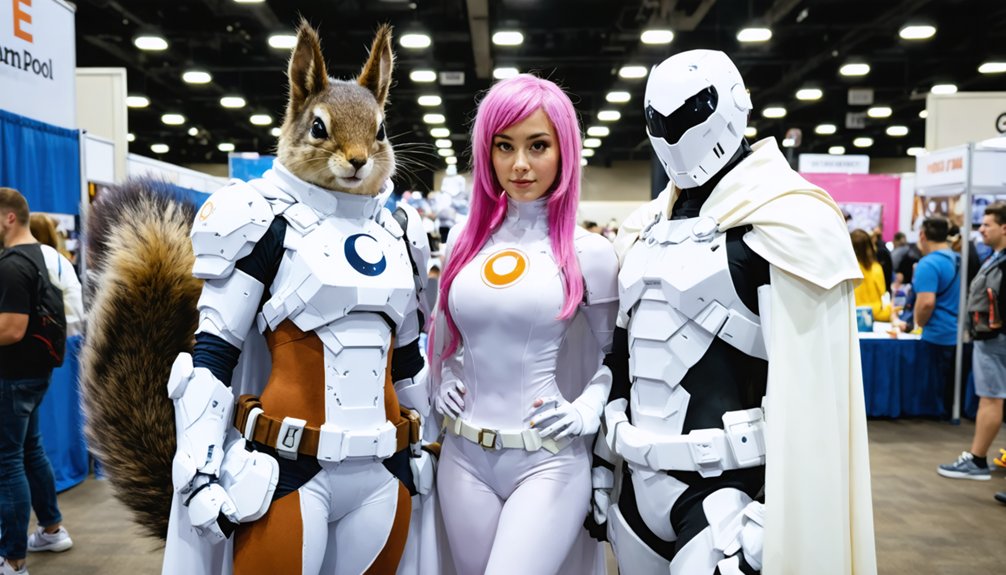
Spider-Verse pairs like Spider-Man and Spider-Gwen capitalize on multiverse popularity with accessible red-and-blue classics meeting unique designs. For X-Men enthusiasts, Jean Grey and Cyclops or Gambit and Rogue provide balanced power duo aesthetics with signature materials.
Consider interdependent heroes like Cloak and Dagger, whose light-dark contrast creates striking visuals, or Power Man and Iron Fist for unbreakable 1970s teamwork vibes. Each pairing scales from duo to group expansion.
Express Your Creativity Through Imaginative Character Mashups
Character mashups transform standard cosplay into artistic statements that showcase your design instincts and cultural fluency. When you explore fan made Lego superhero mashup designs, you’ll discover endless possibilities for combining contrasting elements into cohesive costumes. The key lies in selecting characters with complementary visual signatures—like Maleficent’s horns paired with Gamora’s green skin, or Jack Skellington’s skeletal features merged with Winter Soldier’s tactical gear.
To showcase unique thematic superhero villain hybrid crossovers effectively:
- Contrast color palettes strategically (FlashHulk’s red-to-green transformation amplifies visual impact)
- Layer accessories from multiple franchises (HarleyDeadbaneMoon’s Bat Belt, lightsaber, and facemask combination)
- Integrate cultural commentary (Captain Native America’s hand-beaded political messaging)
- Balance recognizable elements (Dark Claw’s Batman silhouette with Wolverine claws)
- Challenge genre boundaries (Tank Belle’s post-apocalyptic fairy reimagining)
Channel Empowerment With Fierce Defenders and Anti-Heroes
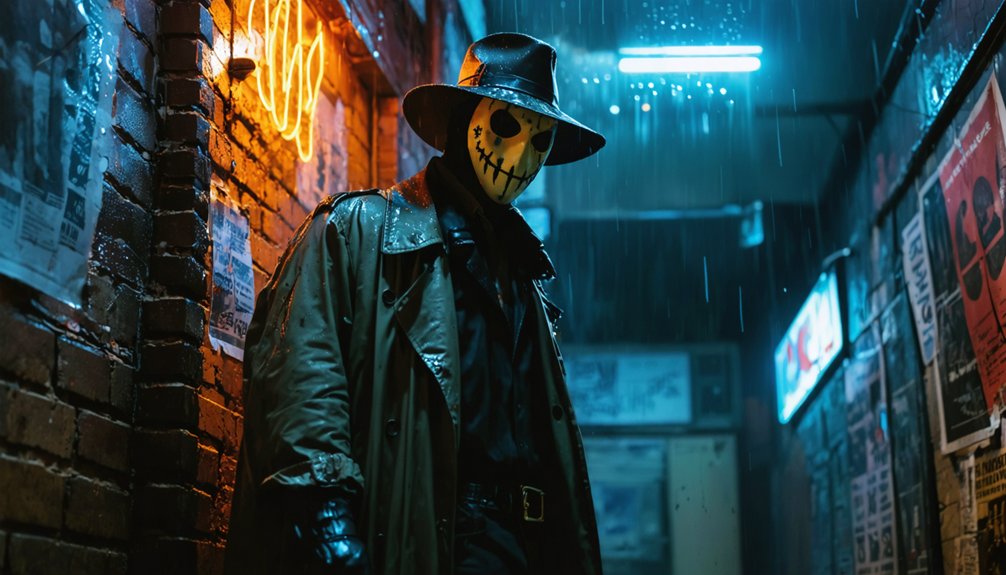
When you embody anti-heroes through cosplay, you tap into characters who mirror society’s frustration with traditional heroism’s limitations. Wolverine’s haunted psyche and berserker rage showcase heroic inner conflicts that resonate beyond simple good-versus-evil dynamics.
Anti-hero cosplay channels our collective disillusionment with perfect heroes, embracing the messy complexity of characters who fight darkness with darkness.
The Punisher’s lethal vigilantism represents calculated morally gray decisions—rejecting law enforcement’s restraints while hunting criminals with Marine precision.
Choose Black Adam to channel ancient power wielded through ultra-violent protection of Kahndaq. Harley Quinn’s evolution from abused sidekick to irreverent defender offers theatrical chaos wrapped in sympathetic backstory.
Spawn’s hellish origins provide striking visual transformation alongside redemption’s tormented journey.
These costumes empower you through characters who act as judge, jury, and executioner. They’re driven by personal tragedy—murdered families, weaponized memories, betrayal—making their ruthless methods feel earned rather than gratuitous, perfectly suited for innovation-seeking cosplayers.
Master Authentic Poses Using Direct Comic Art References
Beyond selecting the perfect anti-hero, your cosplay’s impact depends on how accurately you recreate their iconic stances and movements. Master this through a gesture drawing workflow that transforms pose photo references into muscle memory.
Start by tracing gesture lines over comic panels to capture dynamic essence, then practice the shift from reference to stylized execution.
Essential pose mastery techniques:
- Access specialized databases with 82,000+ high-res comic poses and extreme angles
- Break down proportions by comparing limbs to body segments (think Hulk’s massive arms)
- Study three-dimensional accuracy from statues and right-angle photography
- Build Pinterest boards of recurring character poses for quick visualization
- Practice gesture-to-detail transitions to speed your understanding of dynamic movement
This reference-based approach eliminates frustrating redrawing while building authentic character embodiment.
Embrace the Rising Popularity of Superhero Gatherings
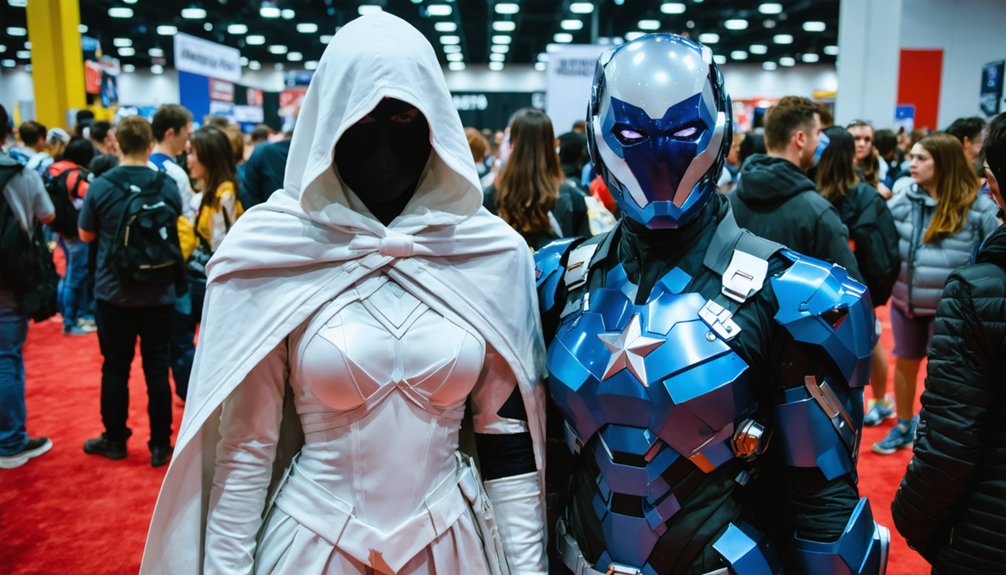
The superhero convention landscape has exploded into a year-round phenomenon that’s fundamentally reshaping how cosplayers showcase their craft. You’ll find major events like San Diego Comic-Con drawing 135,000 attendees pre-pandemic, while New York Comic Con reaches 200,000 participants.
Consider attendee experience trends through multi-city series like GalaxyCon and Fan Expo, which span seventeen combined locations offering virtual Q&As, specialized photo ops, and curated panels. Regional powerhouses such as MegaCon Orlando‘s 150,000 attendees and long-standing conventions like HeroesCon’s 42-year legacy demonstrate sustained expansion.
When you explore new venue partnerships, you’re tapping into 280,000-square-foot spaces and specialized programming that elevates cosplay visibility. This growth mirrors global trends—CCXP Brazil’s 280,000 attendees and Japan’s Comiket prove superhero gatherings dominate international pop culture circuits.
Bring Mischief and Edge With Villainous Character Choices
As convention crowds swell with heroes, you’ll discover that villainous cosplays command twice the attention—and for good reason. Characters like Harley Quinn (641,182 hashtags) and Joker deliver unmatched cosplay appeal through aesthetic versatility and performance opportunities.
Loki’s relatable duality resonates deeper than pure heroism, while Deadpool’s fourth-wall breaking invites improvisation that boundary pushing costume choices demand.
Why villains dominate cosplay culture:
- Personality projection: Charismatic “crazy” traits and darker self-recognition create memorable interactions
- Technical challenges: Evolving Joker makeup variants and explosive Bakugou outfits advance craftsmanship skills
- Aesthetic drama: Colorful DC designs—capes, scars, gimmicky themes—amplify visual impact
- Performance freedom: Irreverent characters encourage photobombing, crowd engagement, mashup experimentation
- Emotional complexity: Cunning, charming backstories humanize villains beyond generic menace
DC’s colorful villainy particularly excites innovation-seekers exploring anti-hero strength and confidence.
Frequently Asked Questions
What Budget Should Beginners Allocate for Their First Comic Book Cosplay?
You’ll want to allocate $50–$150 for your first comic book cosplay, focusing on budgeting for materials strategically. Apply cost saving techniques like thrifting accessories and crafting props from foam, letting you experiment with innovative construction methods while controlling expenses.
How Long Does It Take to Craft a Quality Superhero Costume?
You’ll need 2-4 months for quality results. The costume design process requires testing different materials and patterns, while mastering sewing techniques through iteration. Professional designers spend similar timeframes perfecting fit, functionality, and iconic details before finalizing their creations.
Where Can I Find Accurate Fabric Materials for Specific Character Costumes?
You’ll discover accurate materials through specialized cosplay fabric stores, online marketplaces like Spandex House, and local textile districts. Follow fabric sourcing tips from cosplay forums, and don’t hesitate to place custom material orders for precise character authenticity.
Are There Copyright Issues When Selling Photos in Commissioned Cosplay Characters?
Yes, you’ll face copyright issues selling commissioned cosplay photos. Legal considerations include whether you’re creating derivative works commercially. Permission requirements typically demand licenses from copyright holders, as selling photos transforms your cosplay from fair use into potential infringement.
Which Body Types Work Best for Different Comic Book Characters?
You’ll nail Wonder Woman with muscular body types showcasing defined arms, while curvy body types perfectly embody Black Cat’s silhouette. Match your physique strategically—athletic builds enhance superhero armor, whereas softer curves amplify vintage pinup-style characters authentically.