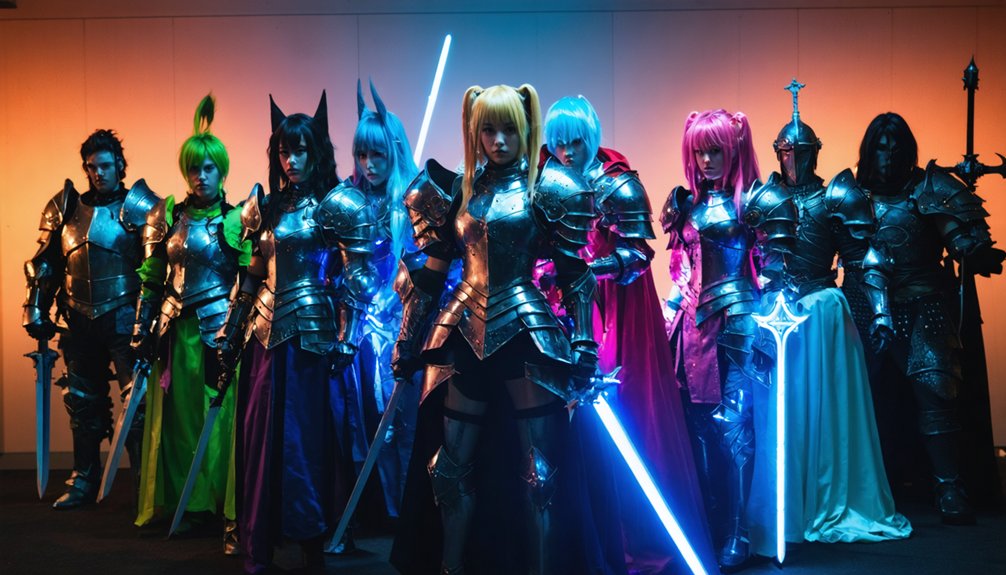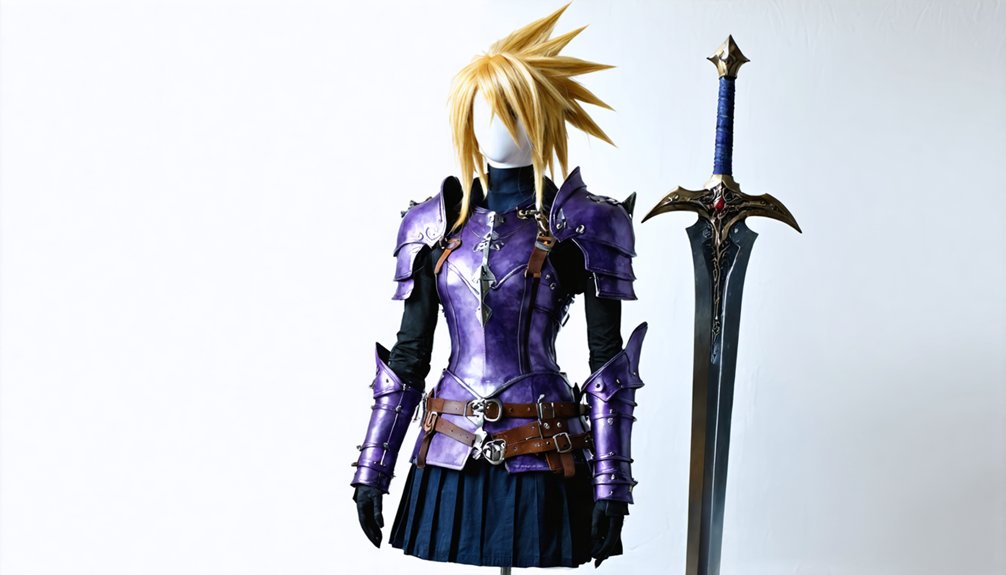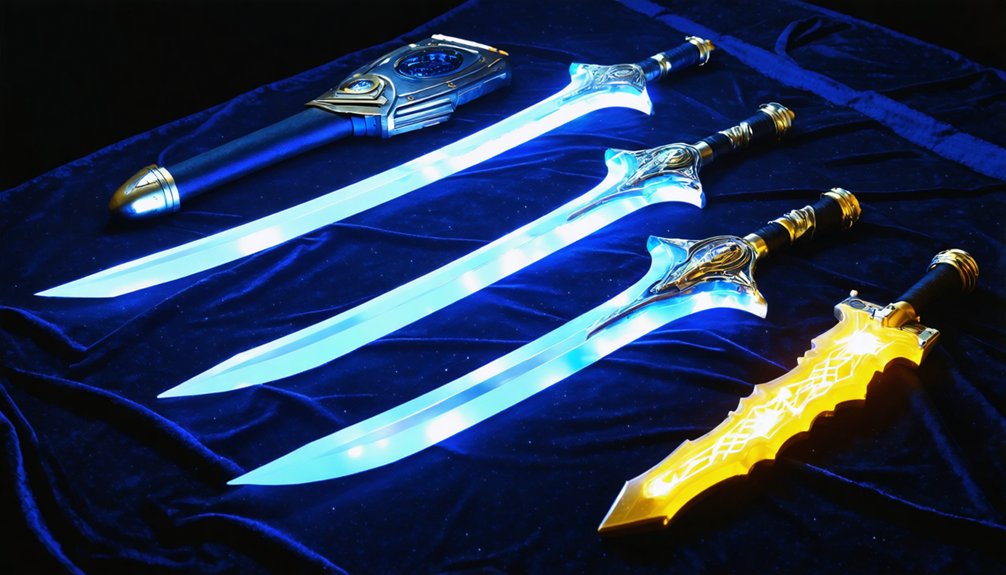
Unique video game cosplay props include Master Chief’s resin-crafted helmet with its iconic reflective visor, Sub-Zero’s lightweight foam mask, Zelda’s recognizable Master Sword and layered Hylian Shield, and Solaire’s battle-worn warrior sword. You can also build modular Destiny Hunter weapons that let you flex serious creative control. Each prop transforms your costume into a fully realized character. Stick around and you’ll discover exactly how to source materials, master foam techniques, and build these iconic pieces yourself.
Key Takeaways
- Master Chief’s helmet is a standout prop, crafted from resin to authentically capture its iconic reflective visor and structural design.
- Zelda’s Master Sword is highly recognizable, achievable through tutorials requiring precise blade and crossguard shaping techniques.
- The Hylian Shield uses layered high-density EVA foam with heat-shaped edges and iconic blue and gold painted finishes.
- Destiny Hunter weapons offer modular, creative prop choices that complete character storytelling through mixing materials and textures.
- Sub-Zero’s mask balances lightweight wearability with strong visual impact, making it a practical yet striking cosplay prop.
Why Game-Accurate Details Make or Break a Cosplay Prop
When you’re building a cosplay prop, game-accurate details aren’t just aesthetic choices — they’re the difference between a convincing tribute and a generic costume.
Cosplay accuracy demands that you study every curve, texture, and color from the source material. Consider the Master Chief helmet‘s reflective golden visor or Solaire’s holy symbols — these aren’t decorative afterthoughts. They’re identity markers that define authenticity.
Prop authenticity signals your deep understanding of the character’s world. When you nail the Zelda Master Sword’s proportions or replicate Sub-Zero’s foam chest piece correctly, fellow fans immediately recognize your commitment.
Cutting corners destroys that recognition instantly.
You’re not just wearing a costume — you’re embodying a legacy. Every precise detail reinforces that connection between player, character, and community.
Iconic Video Game Weapons Worth Adding to Your Build List
Beyond the armor and helmets that define your favorite characters, the weapons they carry complete the story. If you’re serious about gaming craftsmanship, weapons deserve the same dedication as any other build element.
Start with the Zelda Master Sword — detailed video tutorials and Hylian Shield blueprints make this essential Link prop highly achievable. It’s a symbol of Hyrule that immediately reads across any crowd.
For dark fantasy enthusiasts, Solaire’s skilled warrior sword from Dark Souls adds raw, battle-worn prop authenticity that elevates the entire costume.
Don’t overlook Hunter builds from Destiny, where modular weapon choices like Cayde-6 or Shaxx variations let you push creative boundaries. Each weapon you add transforms your cosplay from costume into character — that distinction matters deeply to serious builders.
Where to Buy Foam, Resin, and Fabric for Cosplay Props
Once you’ve committed to building your cosplay props, sourcing quality foam, resin, and fabric becomes the foundation that determines everything else.
For foam suppliers, check out Cosplay Supplies, TNT Cosplay Supply, and even local hardware stores carrying EVA foam rolls. These materials work perfectly for pieces like Sub-Zero’s shin guards and chest armor.
For resin options, Smooth-On remains the industry standard, offering casting and molding products ideal for Master Chief helmet construction. Amazon and specialty craft retailers also stock accessible polyurethane resins.
Fabric stores like JOANN and Mood Fabrics carry stretch materials essential for base layers resembling Samus’s bodysuit.
When gathering cosplay materials, prioritize density ratings for foam, Shore hardness for resins, and stretch percentages for fabric to guarantee professional results.
Foam Cosplay Props That Look Professional Without Advanced Tools
Foam stands out as the most beginner-friendly cosplay material precisely because it rewards patience and creativity over expensive equipment. When building Sub-Zero’s gear, you’ll discover that foam prop techniques like heat-shaping and contact cement bonding transform flat sheets into dimensional armor pieces for shins, gauntlets, and chest components.
Foam rewards patience over expensive equipment, transforming flat sheets into dimensional armor through heat-shaping and contact cement bonding.
You don’t need industrial machinery — just a heat gun, sharp blade, and steady hand.
These beginner crafting tips apply immediately: score foam edges for cleaner cuts, use sandpaper to smooth surfaces before painting, and layer pieces strategically for depth.
Priming foam with Plasti-Dip creates a professional finish that holds acrylic paint beautifully. Your results will rival commissioned work when you prioritize precision over speed, making foam your most powerful cosplay ally.
Crafting the Master Sword and Hylian Shield Step by Step
If you’re ready to bring Link’s most iconic weapons to life, you’ll find that detailed video tutorials break the Master Sword and Hylian Shield down into clear, manageable steps that any dedicated cosplayer can follow.
You start the Master Sword by shaping your base material to match the blade’s distinct taper, then layer paint and finishing details to capture that legendary Hylian steel look.
For the shield, you’ll follow the blueprint closely, cutting and assembling each section before adding the Triforce emblem and signature color work that makes it instantly recognizable on any convention floor.
Master Sword Crafting Process
Crafting the Master Sword and Hylian Shield requires just a few core materials, but the real magic lies in following detailed video tutorials that walk you through every cut, layer, and paint stroke.
The master sword design demands precision—you’ll shape the blade’s distinctive crossguard, refine its tapered edges, and apply layered painting techniques to capture that legendary blue and gold finish.
These crafting techniques aren’t guesswork; they’re structured, replicable processes that even intermediate builders can master confidently. You’ll learn material selection, structural reinforcement, and surface finishing in sequence.
Each tutorial breaks complex steps into manageable stages, ensuring your final prop genuinely represents Hyrule’s iconic weapon. When you’re equipped with the right guidance, this build transforms from intimidating to deeply rewarding.
Hylian Shield Building Steps
Building the Hylian Shield involves five core stages that transform raw foam into one of gaming’s most recognizable defensive weapons.
You’ll start by cutting your Hylian Shield materials — high-density EVA foam — into the shield’s distinctive layered silhouette.
Next, you’ll heat-shape the edges for authentic curvature before sealing the foam with Plasti-Dip, creating a paintable surface.
Shield painting techniques define the final result.
You’ll apply a deep cobalt blue base coat, then carefully hand-paint Hyrule’s golden Triforce emblem and red bird crest using acrylic paints.
Dry-brushing silver along raised edges adds battle-worn depth that elevates realism dramatically.
Finally, you’ll attach sturdy arm straps to the back, ensuring the shield stays secure while you’re channeling Link’s legendary heroism throughout any convention floor.
Samus and Solaire Armor: When Cosplay Builds Require Custom Fabrication
Some cosplay builds demand more than a shopping cart and a sewing machine — Samus Aran’s Power Suit and Solaire’s Knight of the Sunlight armor are prime examples of props that require serious custom fabrication.
With Samus, you’re tackling cosplay mobility challenges head-on; her power armor demands advanced custom armor techniques that balance rigidity with wearability. You can commission a suit, but off-the-shelf options simply don’t exist. Her blue bodysuit serves as your flexible base layer before armor pieces attach.
Solaire’s build shifts focus toward detail-driven craftsmanship. His holy sun symbols must read authentically, and his warrior’s sword demands equal attention as a key prop element.
Both builds reward builders who embrace precision engineering over shortcuts, pushing your fabrication skills into genuinely innovative territory.
Master Chief and Sub-Zero: Helmets That Define the Whole Costume
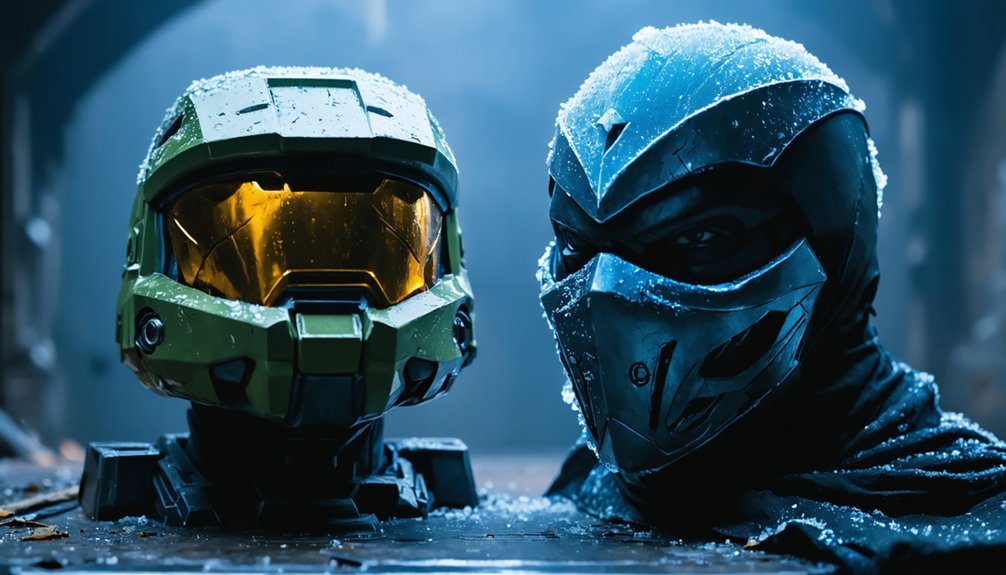
When you’re building a Master Chief or Sub-Zero costume, the helmet isn’t just an accessory — it’s the entire identity of the character, anchoring every other piece around it.
Master Chief’s iconic look demands a resin-constructed ODST helmet with a reflective golden visor, while Sub-Zero’s mask is achievable with foam, making it far more accessible for first-time builders.
Once you’ve nailed the headgear, completing each full costume becomes a focused process of pairing army green armor or foam shin guards and gauntlets with everyday clothing sourced from thrift stores.
Iconic Helmet Design Elements
Few costume elements carry the same visual weight as a helmet, and for Master Chief and Sub-Zero, the headgear isn’t just an accessory — it’s the entire identity of the look.
Mastering helmet aesthetics and visor functionality transforms your build from ordinary to unforgettable.
- Resin construction gives Master Chief’s ODST helmet structural integrity and screen-accurate detail.
- Reflective golden visor delivers visor functionality while creating that iconic super-soldier mystique.
- Sub-Zero’s foam mask balances lightweight wearability with striking visual impact.
- Color accuracy — army green for Master Chief, icy blue for Sub-Zero — anchors the entire costume’s cohesion.
You’re not just wearing a helmet; you’re communicating a complete character identity through a single, engineered piece of wearable design.
Crafting Materials And Techniques
Choosing the right materials separates a forgettable costume from a jaw-dropping one, and for Master Chief and Sub-Zero, those choices couldn’t be more different — or more deliberate.
For Master Chief, resin is your go-to material. It delivers that rigid, battle-hardened structure essential for an authentic ODST helmet replica. Your material selection here demands precision — resin captures sharp detail and holds its shape under display conditions.
Sub-Zero flips the script entirely. Foam becomes your primary crafting medium, shaping shins, gauntlets, the mask, and chest piece with surprising versatility. These crafting techniques prioritize lightweight wearability without sacrificing visual impact.
Both approaches require intentionality. You’re not just building props — you’re engineering character identity.
Master the material, master the build, and your helmet transforms the entire costume instantly.
Completing The Full Costume
A single helmet can anchor your entire costume, and for Master Chief and Sub-Zero, that’s exactly what happens. Your costume assembly strategy determines whether the full look succeeds or fails.
For Master Chief, build outward from the golden visor. For Sub-Zero, the foam mask dictates every subsequent choice, including fabric selection for your undershirt and pants.
Follow this construction sequence:
- Complete your helmet before purchasing any other components
- Match your fabric selection to the helmet’s dominant color palette
- Layer armor pieces progressively from torso outward
- Finalize footwear last, since shin guards conceal your shoes entirely
Both costumes reward disciplined sequencing. The helmet isn’t decorative—it’s structural.
Every material decision you make afterward should serve what you’ve already committed to on your head.
Building a Fully Custom Destiny Hunter Cosplay From Scratch
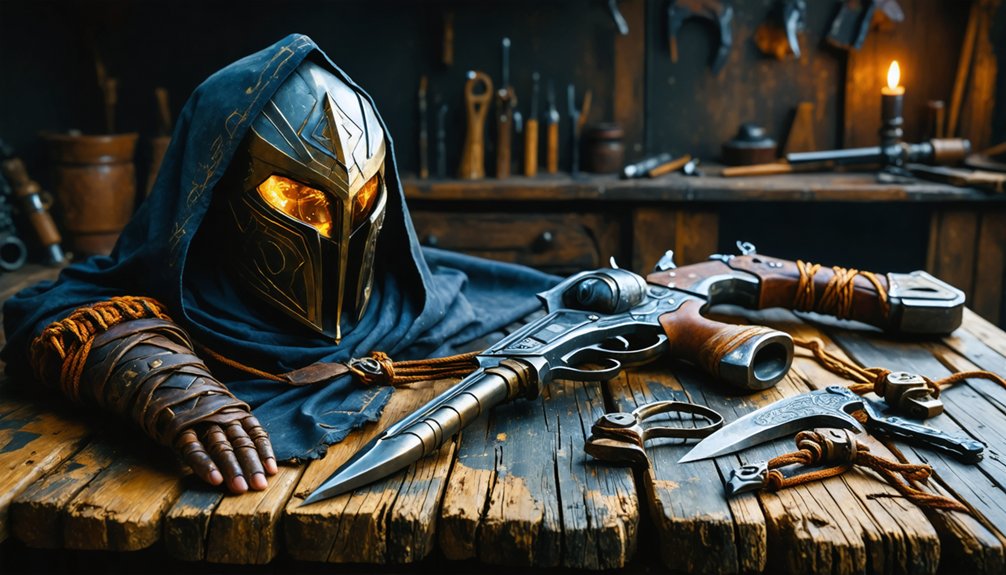
Building a fully custom Destiny Hunter cosplay puts you in creative control unlike almost any other video game costume project. Destiny lore supports deep character customization, meaning you’re never locked into a single look.
Whether you channel Cayde-6’s roguish charm, Mara Sov’s regal authority, Shaxx’s imposing warrior aesthetic, or Uldren Sov’s calculating edge, each direction demands intentional fabrication choices.
You’ll construct modular armor pieces independently, allowing you to mix materials, textures, and color schemes without restriction. This flexibility rewards builders who prioritize innovation over imitation.
Research each character’s signature silhouette carefully before cutting a single piece. Your Hunter’s identity emerges through deliberate decisions, not default selections.
When executed with precision, a scratch-built Destiny Hunter costume communicates your mastery of both craftsmanship and the universe you’re celebrating.
Frequently Asked Questions
How Long Does a Typical Video Game Cosplay Prop Take to Complete?
You’ll find prop crafting timelines vary wildly! Simple builds like Sub-Zero’s foam gear take about one week, while complex projects demand careful time management. Advanced suits like Samus’s armor require considerably longer, personalized dedication.
Can Beginner Cosplayers Successfully Build Armor Without Prior Crafting Experience?
Like a first-time blacksmith forging steel, you can absolutely build armor! Sub-Zero’s foam construction proves beginner tools and basic crafting techniques make stunning results achievable. You’ll transform raw materials into incredible wearable art without prior experience.
What Video Game Cosplay Props Are Most Recognized at Conventions?
You’ll turn heads with Master Chief’s resin helmet, Link’s Master Sword, and Solaire’s iconic weapon designs. Your prop material choices define recognition—foam, resin, and fabric transform these legendary pieces into convention showstoppers everyone instantly celebrates.
Are Commissioned Cosplay Suits Worth the Cost Compared to DIY Builds?
Coincidentally, you’ll find commissioned quality shines when you’re short on time, like Samus Aran’s complex power armor proves. Yet DIY challenges build real passion and innovation. You’ve got to weigh your budget, skills, and creative drive carefully.
Which Video Game Characters Have the Most Fan-Built Cosplay Communities Online?
You’ll find thriving fan-built communities in the Overwatch fandom, Final Fantasy communities, League cosplay scenes, and Destiny builders’ groups—each passionately crafting innovative, detailed props and armor that continuously push creative boundaries and inspire fellow cosplayers worldwide.
References
- https://www.etsy.com/uk/market/cosplay_props_video_game
- https://costumewall.com/category/video-games/
- https://corecosplay.com/video-game-cosplay-ideas/
- https://www.xcoser.com/blogs/news/5-awesome-video-game-cosplay-ideas
- https://theeightysixthfloor.com/😲-incredible-video-game-cosplay-2023/
- https://www.youtube.com/watch?v=TMxv11xK-wM