Confidence in cosplay competition performances grows through deliberate preparation, repeated convention exposure, and intentional character alignment. You build it by finishing your costume completely, choosing characters that match your natural energy, and performing consistently until boldness becomes routine. Community feedback recalibrates your self-assessment in real time, while friendly competition sharpens your craft without isolating you. The deeper mechanics behind each of these confidence drivers will transform how you approach every stage you step onto.
Key Takeaways
- Completing your costume build shifts mental focus from anxiety to performance readiness, allowing craftsmanship to command attention naturally.
- Repeated convention attendance conditions comfort levels, gradually transforming bold self-expression from overwhelming to routine.
- Choosing characters that reflect your personal traits creates authentic performances through natural energy alignment.
- Community support accelerates confidence-building by reflecting your growth back before you recognize it yourself.
- Confidence comes from committing to performance action, not waiting until you feel ready beforehand.
Why Cosplay Confidence Feels So Hard at First
When you first step into the world of cosplay competitions, self-doubt hits hard and fast. Initial challenges feel overwhelming because skill gaps between you and experienced competitors are immediately visible.
Stepping into cosplay competitions means confronting visible skill gaps that make self-doubt hit immediately and overwhelmingly hard.
You’re traversing an emotional journey where self-expression collides with insecurity, making internal validation nearly impossible early on.
The transformative experiences come later. You’ll discover that character connection bridges the psychological distance between who you’re and who you’re portraying.
Supportive environments at conventions accelerate this shift dramatically, replacing judgment with genuine encouragement.
Mindset shifts don’t happen overnight. Personal growth requires accepting that every skilled cosplayer once stood exactly where you’re standing — nervous, uncertain, comparing themselves unfairly.
Recognizing this equalizes everything. Your confidence isn’t absent; it’s simply waiting for enough repeated experiences to activate it permanently.
What Ten Conventions Do to Your Cosplay Confidence
Each convention you attend chips away at the anxiety that made your first appearance feel unbearable, replacing it with a functional familiarity that repeated exposure reliably produces.
By your tenth event, you’ve normalized wearing armor, wigs, and elaborate props in public spaces where bold expression isn’t just accepted—it’s expected.
That environmental conditioning retrains your baseline comfort level, making what once felt audacious feel routine.
Repeated Exposure Builds Comfort
Attending your first convention in costume is a nerve-wracking exercise in vulnerability, but by your tenth, something fundamental shifts. Repeated practice rewires your psychological response to public scrutiny. Each convention functions as a controlled stress test, and gradual exposure systematically dismantles anxiety through accumulated data points — you’ve survived before, and you’ll survive again.
Performance comfort doesn’t arrive suddenly; it compounds. You learn crowd navigation, posing instincts, and character embodiment through iteration, not theory. Skill mastery follows the same trajectory — your hands stop shaking during photo requests because muscle memory replaces conscious self-monitoring.
Ten conventions fundamentally recalibrate your baseline. What once triggered fight-or-flight becomes routine, then enjoyable. You’re not suppressing nervousness; you’re genuinely outgrowing it through deliberate, repeated engagement with the environment that once intimidated you.
Conventions Normalize Bold Expression
Convention spaces operate as cultural permission structures — environments where bold, theatrical self-expression isn’t merely tolerated but actively expected. When you attend ten conventions, something measurable shifts internally. Each event recalibrates your baseline — what felt audacious at your first convention becomes standard behavior by your tenth.
Convention camaraderie accelerates this recalibration. Surrounded by peers who celebrate elaborate armor, exaggerated makeup, and character-embodied movement, you internalize that boldness is the norm, not the exception. Your nervous energy transforms into performative confidence because the environment demands it.
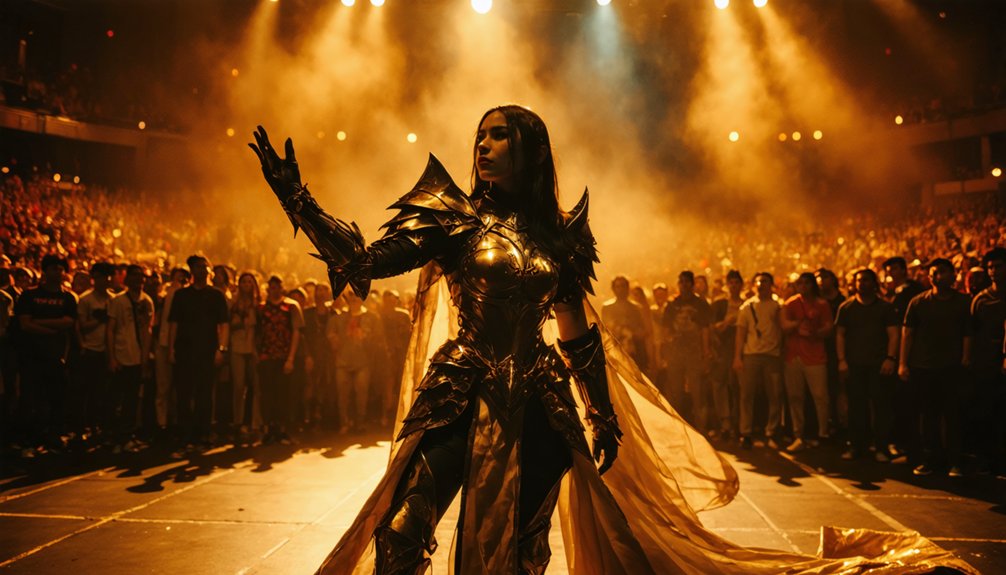
Performance encouragement compounds this effect. Strangers actively request photos, offer unprompted compliments, and cheer stage appearances. This consistent external validation rewires your self-perception gradually.
You stop performing *despite* visibility and start performing *because* of it — a fundamental psychological shift that directly strengthens competition-stage presence.
Choose Characters That Match Your Natural Energy
When you choose a character whose core traits mirror your own personality, you eliminate the psychological distance between performer and role, making confident presentation feel instinctive rather than forced.
If you’re naturally bold, emulating warriors like Korra or Erza lets you channel real inner qualities rather than manufacture a false persona on stage.
Matching your natural energy to a character’s archetype isn’t just a creative choice—it’s a strategic one that directly amplifies your competitive presence.
Reflect Personal Strengths
Authenticity is the cornerstone of a compelling cosplay performance, and it starts with selecting a character whose core traits mirror your own natural energy. When your personality aligns with your character, you perform with genuine conviction rather than manufactured bravado.
Reflect your personal achievements by choosing characters whose journeys parallel your own skill evolution:
- Bold personalities suit naturally expressive performers who command attention effortlessly.
- Resilient archetypes resonate with cosplayers who’ve transformed early failures into refined builds.
- Intellectual characters amplify confidence for detail-oriented crafters who excel in technical execution.
This strategic alignment eliminates performative awkwardness, letting your authentic self drive the portrayal. You’re not mimicking someone else’s vision—you’re embodying a character that genuinely reflects who you already are.
Align Character Traits
Choosing a character whose core traits mirror your natural energy eliminates the performance gap that undermines confidence on stage. Character alignment isn’t cosmetic — it’s strategic. When you embody someone whose boldness, wit, or intensity already exists within you, you’re amplifying authentic qualities rather than manufacturing foreign ones.
Personal resonance transforms your performance from imitation into expression. If you’re naturally assertive, Korra’s defiant stance feels instinctive. If you carry quiet intensity, Tigress demands no exaggeration. You’re not acting; you’re channeling.
This alignment removes the cognitive load of pretending, freeing your focus for stage presence, crowd engagement, and technical execution. Judges recognize authentic embodiment — it reads as mastery.
Select characters that challenge your growth while honoring your existing energy, and your competition performance becomes a natural extension of who you already are.
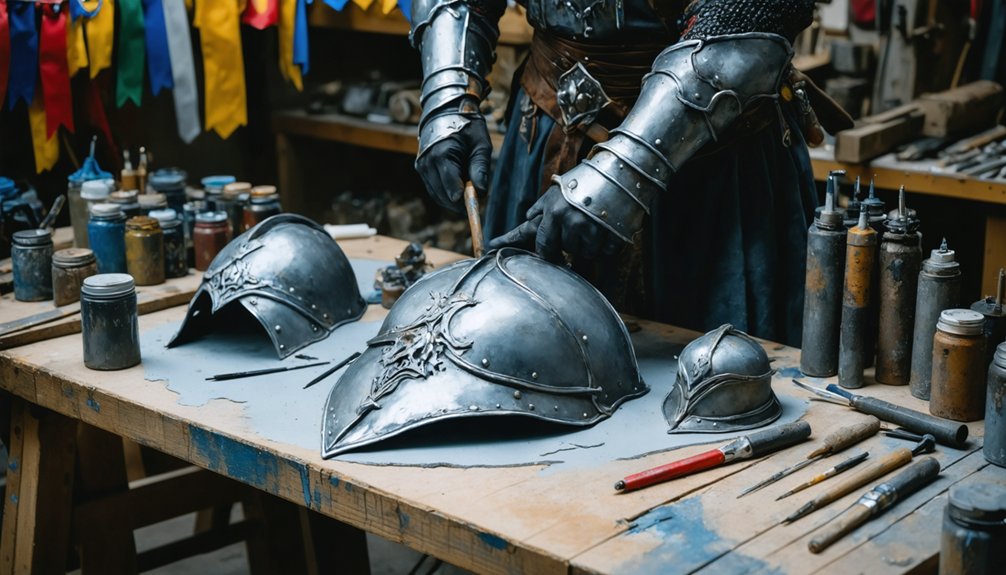
Why Finishing Your Build Changes How You Show Up on Stage
There’s a measurable difference in how you carry yourself on stage when your build is truly finished versus when you’re still mentally patching gaps in your construction.
Build completion shifts your focus from anxiety to performance readiness, enabling deeper character immersion.
Finishing transforms your internal experience:
- Skill Transformation becomes visible — completed craftsmanship produces undeniable visual impact that commands attention.
- Emotional Connection deepens — a polished build eliminates distraction, letting you fully inhabit your character’s energy.
- Personal Growth registers physically — your posture, movement, and stage presence reflect earned confidence, not performance.
You stop managing problems and start delivering a performance.
That cognitive shift is everything. When your costume works completely, your body communicates authenticity automatically, and judges notice the difference between someone wearing a costume and someone *becoming* one.
Why Your Cosplay Community Is Your Best Confidence Hack

No amount of internal mindset work accelerates confidence faster than placing yourself inside a community that already treats your participation as valid.
Community encouragement operates as an external feedback loop that reinforces your internal progress before you’ve fully recognized it yourself. Shared experiences normalize failure, making costume critiques productive rather than demoralizing.
Community doesn’t just cheer you on — it reflects your growth back to you before you can see it yourself.
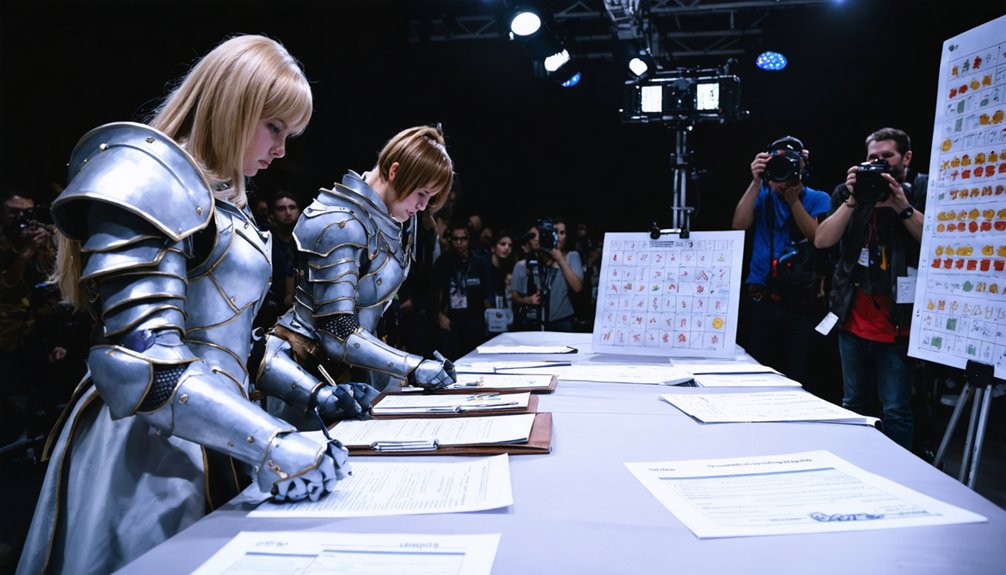
Skill sharing compresses your learning curve, while collaborative projects expose you to construction methods you wouldn’t discover alone. Emotional support from peers who’ve stood nervously in the same prejudging line recalibrates your self-assessment in real time.
Friendly competition sharpens your craft without breeding isolation. Networking opportunities connect you to mentors whose year-ten expertise becomes your roadmap.
You don’t build stage confidence in a vacuum — you build it surrounded by people already invested in watching you succeed.
Stop Comparing Your First Year to Someone’s Tenth
Community support accelerates your confidence, but it also exposes you to cosplayers operating at skill levels you haven’t reached yet — and that gap can quietly sabotage the progress you’ve already made.
Comparison pitfalls emerge when you measure your first year against someone’s tenth. That’s not a growth perspective — it’s a distorted one. Your personal journey has its own timeline, and self acceptance means honoring where you actually are.
Reframe your assessment using these anchors:
- Every skilled cosplayer you admire once stood exactly where you’re standing.
- Your “day one” versus their “year ten” isn’t a fair benchmark.
- Internal validation drives sustainable motivation more effectively than external talent comparisons.
You’re not behind. You’re on a different chapter of the same story.
The Confidence Reframe That Changes How You Perform

Once you stop measuring your worth against external benchmarks, a more productive reframe becomes available: confidence isn’t a prerequisite for performing — it’s a byproduct of it. You don’t wait until you feel ready — you act, and readiness follows.
This shift restructures your entire approach to competition. Instead of entering the stage hoping to avoid scrutiny, you enter with a defined objective: execute your costume storytelling with precision. That intentionality displaces anxiety with purpose.
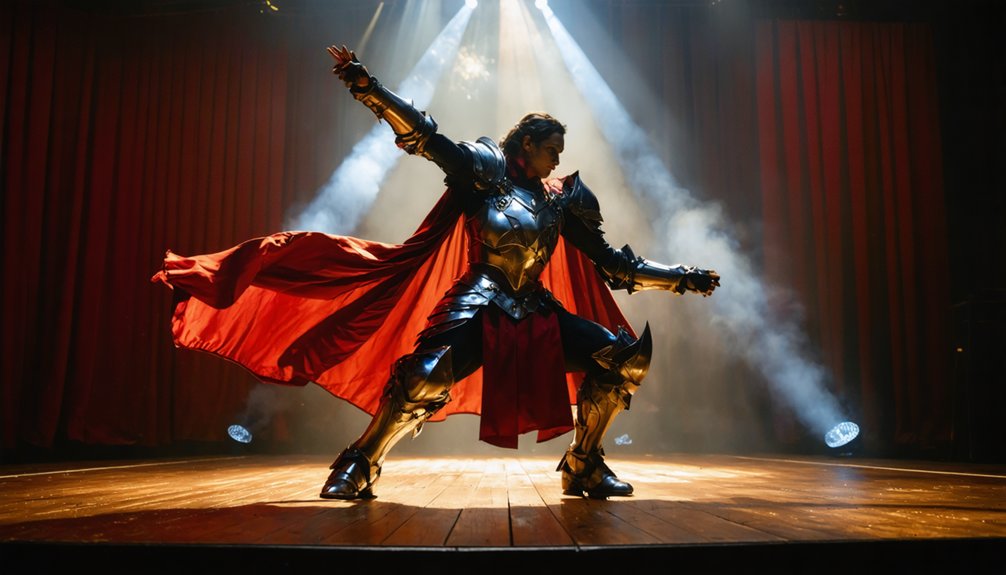
Performance authenticity emerges when you commit to the character fully — movement, posture, presence — rather than monitoring the audience’s reaction. The moment you redirect attention inward toward execution, external judgment loses its grip.
Confidence, then, isn’t something you arrive with. It’s something you generate through deliberate, repeated performance — built action by action, competition by competition.
Frequently Asked Questions
How Do Photos Help Track Cosplay Confidence Growth Over Time?
Photos track your cosplay confidence growth by documenting costume evolution visually, letting you compare early builds to refined work. Photography impact reveals measurable skill progression, reinforcing self-assurance and validating your creative investment across each competitive performance milestone.
Can Revisiting Older Costumes Actually Improve Your Competition Stage Presence?
Like rekindling an old flame, revisiting older costumes absolutely sharpens your competition stage presence. Costume nostalgia deepens your character connection, letting you perform with refined technical precision, transforming past imperfections into powerful, confident storytelling that captivates audiences innovatively.
Does Embodying Shy Characters Still Build Performative Confidence on Stage?
Yes, embodying shy characters still builds performative confidence. You’ll leverage character connection to externalize emotions, transforming performance anxiety into authentic stage presence. Even reserved archetypes teach you to inhabit vulnerability purposefully, strengthening your overall competitive delivery.
How Quickly Can Beginners Expect Noticeable Confidence Improvements Through Cosplay?
Studies show 68% of beginners notice confidence shifts after just three conventions. Your costume preparation sharpens skills incrementally, while audience interaction accelerates growth. You won’t flip a switch—you’ll build assurance steadily through consistent practice and persistence.
What Role Does Internal Validation Play During Cosplay Competition Judging?
During judging, you’ll anchor stability through self acceptance strategies, silencing external scrutiny. Apply positive affirmation techniques by affirming your craftsmanship’s worth independently. You’ve validated your growth internally, transforming nervousness into confident, performance-driven assurance regardless of judges’ assessments.
References
- https://shuffleonline.net/2015/06/29/cosplay-101-confidence-while-cosplaying/
- https://www.fargocorecon.org/2018/02/08/confidence-through-cosplay/
- https://www.youtube.com/watch?v=VpRoBeJNQzQ