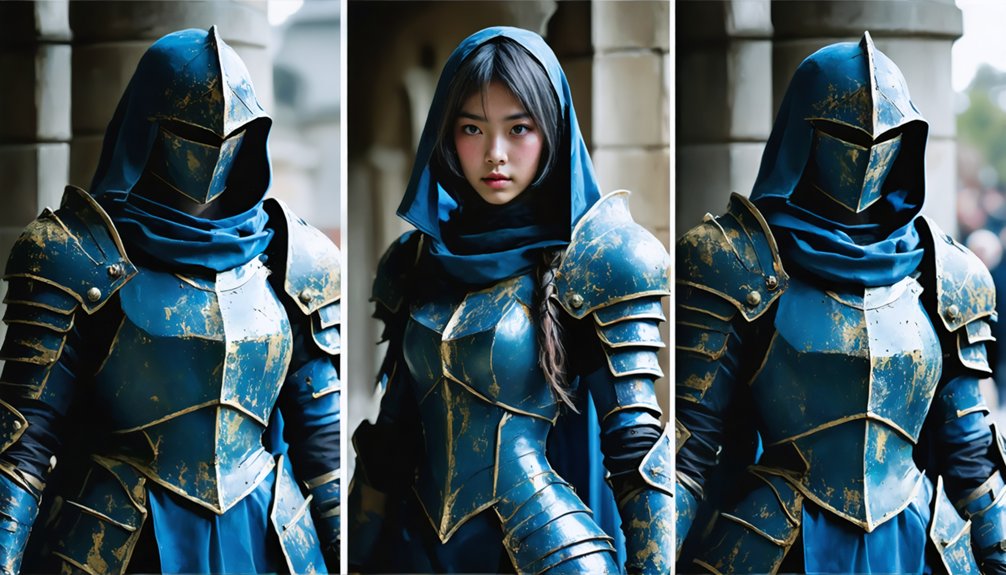
Accurate character details in cosplay depend on your ability to replicate three core elements: surface-level precision (weathering patterns, color matching, typography), structural authenticity (proportion accuracy, material engineering, construction methodology), and performance integration (mobility functionality, wear duration, character embodiment). You’ll need to demonstrate technical diversity through hand-sewing, machine stitching, 3D modeling, and prop fabrication while maintaining at least 75% self-fabrication. Your costume must balance screen accuracy with practical considerations like ventilation systems, structural reinforcements, and material substitutions. The following sections break down each measurement category’s specific requirements.
Key Takeaways
- Surface texture replication through digital printing preserves microscale details like weathering patterns and typography that hand-painting cannot match.
- Construction quality requires 75% personal fabrication demonstrating diverse technical skills including sewing, 3D modeling, and prop-making under weight limits.
- Character embodiment involves backstory-informed gestures, strategic stage movement, and transitioning from performer identity to character consciousness during portrayal.
- Material substitutions balance screen accuracy with practical needs, using foam instead of metal while maintaining visual fidelity and wearability.
- Inclusive representation treats body diversity, crossplay, and race-independent interpretation as valid technical specifications within cosplay communities.
The Foundation of Design Fidelity in Costume Recreation
Surface texture replication demands equal precision. Digital weathering—rust patterns, scratch sequences, grime accumulation—transfers with perfect fidelity through modern printing techniques. You’ll preserve crisp linework and microscale typography that hand-painting can’t match.
This methodology guarantees your costume reflects source material through verifiable measurements and replicable surface details, establishing authenticity through technical execution rather than approximation.
Construction Quality and Material Selection Standards
While digital accuracy establishes visual fidelity, structural integrity determines whether your costume survives convention hours and judging scrutiny. Material safety regulations mandate non-toxic adhesives and flame-resistant fabrics—wool, cotton blends, and treated rayon optimize wearability while meeting compliance standards. Your handmade crafting techniques must demonstrate mastery across multiple disciplines to maximize the 20-point technique allocation.
Quality benchmarks include:
- Handmade threshold: Minimum 75% fabrication by cosplayer, excluding base materials like wigs and footwear
- Technical diversity: Hand-sewing, machine stitching, 3D modeling, millinery work with documented proof
- Prop specifications: Under 10kg weight, foam/PVC construction preferred over metal/wood
- Ventilation engineering: Breathable, moisture-wicking materials for extended wear comfort
- Construction documentation: High-resolution process photography demonstrating technique progression
Judges allocate 40 points for quality assessment—combination aesthetics, fit precision, and finishing cleanliness directly impact competitive placement.
Embodying the Character Through Performance and Portrayal
Deploy narrative-driven physicality: construct backstory foundations that inform gesture mechanics and spatial utilization patterns. Scale movement amplitude to venue specifications—expansive articulation guarantees visibility across competition halls. Implement strategic stage traversal protocols, activating multiple performance zones to maintain adjudicator engagement.
Emotional Investment elevates technical execution beyond surface-level mimicry. Characterization Nuance demands psychological preparation before entering presentation space—transition from performer identity to character consciousness. Effective storytelling architecture creates measurable audience resonance, validating your performance framework through documented engagement metrics and adjudication scores.
Respecting Physical Diversity in Cosplay Communities
Contemporary convention systems now implement inclusive competitions as standardized infrastructure:
- Visibility matrices: Historical coverage concentrated on narrow demographics; current systems require proportional representation across body types, races, and abilities
- Identity performance frameworks: Crossplay and race-independent character interpretation operate as technical specifications, not exceptions
- Religious integration protocols: Hijabi cosplayers demonstrating superhero characters reconstruct cultural perception architectures
- Body-positive validation systems: Hashtag campaigns function as distributed support networks
- Festival infrastructure: Events like Black Comic Book Festival establish diversity benchmarks industry-wide
Balancing Screen Accuracy With Practical Considerations
Screen accuracy functions as a precision target—the measured deviation between your fabricated costume and its source material reference. You’ll encounter material substitutions dictated by budget constraints—foam architectures replacing metal composites, synthetic fabrics approximating screen-used textiles.
Wearability considerations demand engineering modifications: ventilation systems in full-body suits, structural reinforcements for extended wear durations, mobility joints in armor assemblies. Time parameters necessitate strategic simplification—prioritizing hero pieces over background elements.
Legal reproduction rights complicate direct pattern replication from licensed properties, requiring original construction interpretation. Advanced fabrication techniques like 3D scanning and parametric modeling enable precise prop recreation within amateur budgets.
Your optimization calculus balances recognizability thresholds against practical constraints, determining which canonical elements drive character identification versus expendable details that compromise functionality without visual impact.
Adding Creative Innovation While Preserving Character Essence
When modifying canonical designs, you’ll maintain character recognition through preservation of identifying signifiers—color schemas, silhouette geometries, signature accessories—while introducing fabrication innovations that distinguish your interpretation from reference material.
Strategic material substitutions create cohesive aesthetics: replacing fabric armor with thermoplastic compounds or integrating programmable LED arrays into traditionally static costume elements. Your improvised details should amplify character traits rather than obscure them.
Innovation techniques that preserve essence:
- Genre fusion mashups combine multiple intellectual properties while retaining primary character markers
- Material experimentation with foam, Worbla, or resin elevates construction complexity beyond fabric-only builds
- Arduino-controlled lighting systems animate costumes with synchronized effects maintaining canonical color palettes
- 3D-printed components fabricate screen-accurate props with personalized surface treatments
- Sustainable material repurposing introduces eco-conscious elements without compromising visual fidelity
Key Elements That Make Characters Instantly Recognizable
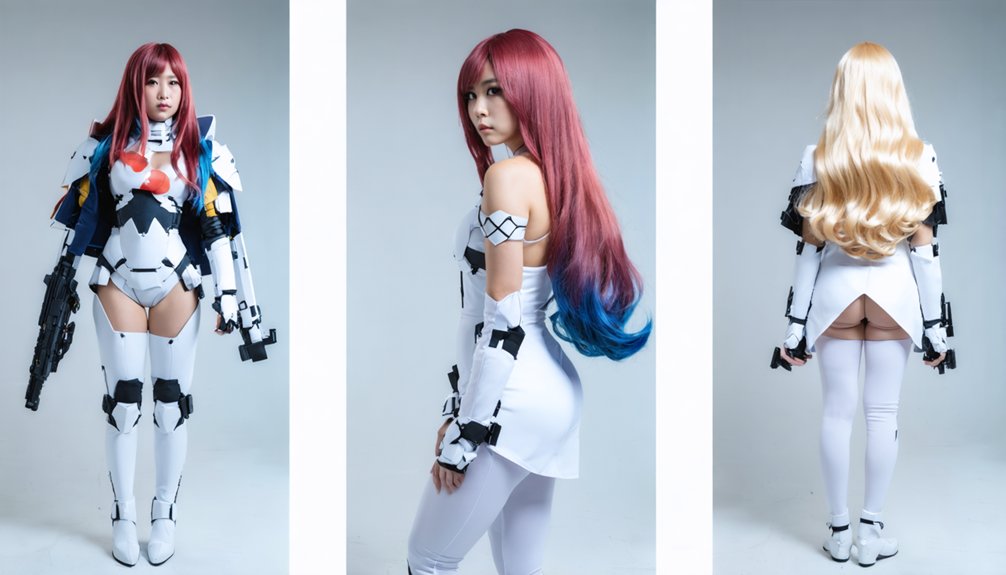
Character recognition depends on two technical foundations: accurate silhouette replication and precise color palette execution. You’ll establish the silhouette through reference image analysis—print, cut, and overlay your pattern pieces to match the character’s exact proportions and clothing drape before fabric selection.
Your color accuracy combined with signature accessories creates the visual shorthand that enables instant identification from distance, whether through AI recognition software or human observers at convention spaces.
Silhouette and Color Palette
Before fabric selection or prop fabrication begins, a character’s silhouette establishes the foundation for instant recognition—even when viewed as a solid black outline against white space. You’ll verify accuracy by blocking out reference images in solid black, testing whether ears, head shape, and arm positions remain identifiable. Shape language communicates character traits: triangular forms signal danger, rectangular structures convey stability, while exaggerated proportions emphasize personality attributes.
Critical silhouette validation techniques:
- Create orthographic T-pose views (front, back, side) to assess neutral form accuracy
- Test pose dynamics through jumping and bending positions while maintaining outline clarity
- Utilize negative space strategically to enhance readability in crowded convention environments
- Layer contrasting material textures—bulky jackets over compression suits—to define dimensional boundaries
- Align color palette planning with silhouette geometry for cohesive trait communication
Signature Accessories and Props
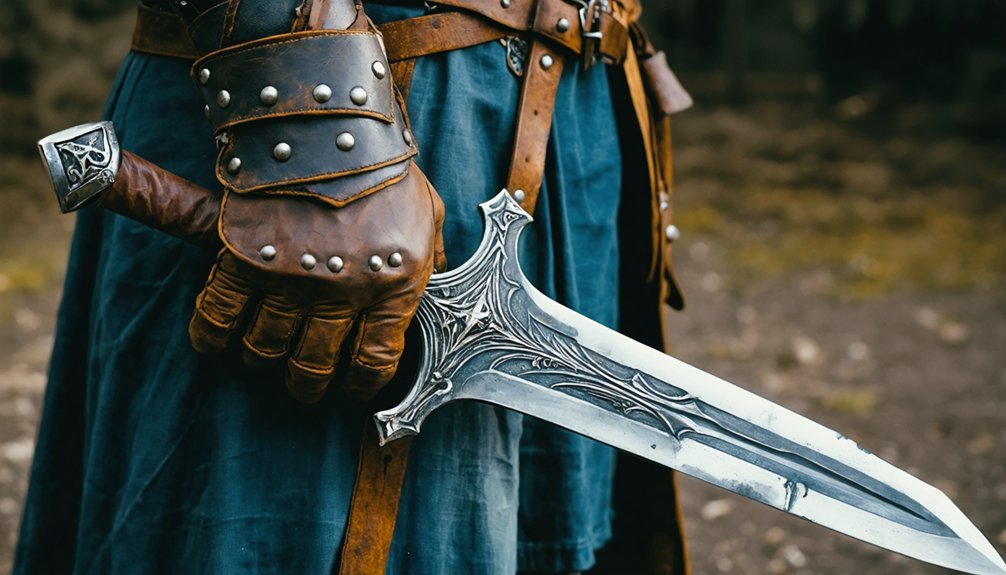
Silhouette recognition collapses without the dimensional anchors that signature accessories provide. You’ll achieve instant character identification through weapons like swords, blasters, or staffs that dictate posture adjustments and interaction choreography. Mandalorian Beskar helmets or Ichigo’s Hollow Mask offer identity concealment while establishing cinematic visual dynamics through authentic replication.
Material selection drives durability—lightweight EVA foam, 3D-printed components, or EpoxAcoat Grey with fiberglass for hollow castings enable mobility without compromising structural integrity. Rebound 25 silicone captures intricate molding detail for props requiring metallic finishes from Onyx resin with metal powders.
Prioritize one or two signature items meeting con-friendly specifications: EVA foam weapons under 110cm with rounded edges, weathered jetpacks matching reference geometry, or Glass Cursed Tool replicas with anime-accurate detailing. These dimensional elements transform static costume into embodied character recognition.
Frequently Asked Questions
How Do Judges Weigh Costume Accuracy Versus Performance Skills in Competitions?
You’ll find costume accuracy comprises 40% of craftsmanship scoring while performance skills weight 50-70% onstage. Performer judging criteria balance technical precision with stage presence, though audience perception impact varies considerably between construction-focused versus theatrical competition formats.
Should Beginners Prioritize Screen Accuracy or Comfort in Their First Cosplay?
You’ll want to prioritize comfort in your initial costume selection, allowing foundational construction skills to develop naturally. Screen accuracy becomes achievable as you gain technical proficiency, while personal expression keeps you motivated throughout your cosplay journey.
What’s the Acceptable Margin of Color Variation When Matching Character Costumes?
You’ll find acceptable variation spans approximately 10-15% in color saturation and hue shift, provided you’re maintaining correct fabric texture and undertone family. Prioritize relative contrast between costume elements over absolute screen-matching for ideal character recognition and construction feasibility.
How Can You Balance Anime Proportions With Realistic Human Body Constraints?
Masterfully merge proportions through muscle mass alterations using padding and shapewear. You’ll employ costume construction techniques like platform footwear, structured undergarments, and strategic paneling to simulate anime ratios while maintaining bilateral symmetry and functional mobility.
Do Photography Angles Affect How Accurately Your Cosplay Is Perceived Online?
Yes, angles dramatically impact perception—low angles stretch proportions while high angles compress them. You’ll need strategic camera settings and lighting techniques to counteract distortion, ensuring your armor plating, fabric drape, and character silhouette translate accurately online.