Historical figure costumes that stand out in cosplay succeed through precise, research-grounded choices in silhouette and iconic accessories. You’ll achieve instant recognition when you prioritize signature elements: Lincoln’s stovepipe hat, Washington’s tricorn, or Napoleon’s bicorn communicate identity before anyone reads a name tag. Marie Antoinette’s powdered wig and layered brocades signal excess with equal efficiency. These aren’t decorative choices—they’re cognitive anchors. The deeper principles behind selecting and executing these elements reward closer examination.
Key Takeaways
- Abraham Lincoln’s stovepipe hat and black suit create an instantly recognizable silhouette that stands out powerfully in cosplay settings.
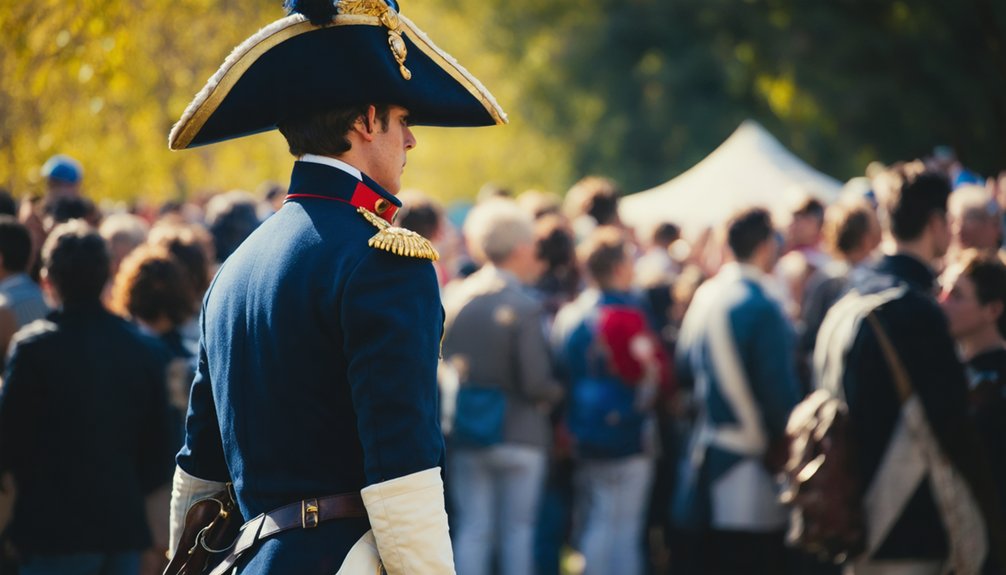
- Napoleon Bonaparte’s bicorn hat and military epaulettes project commanding authority, making him one of the most visually striking historical cosplay choices.
- Marie Antoinette’s powdered wigs and layered pastel court gowns create an unmistakable, extravagant presence that dominates historical cosplay events.
- George Washington’s tricorn hat, colonial coat, and white cravat combine to form a highly readable, crowd-friendly American historical costume.
- Joan of Arc’s unique blend of medieval armor and feminine aesthetics creates a compelling, visually distinctive historical cosplay portrayal.
Historical Figure Costumes That Get Recognized Instantly
When selecting a historical figure costume for cosplay, instant visual recognition depends almost entirely on a handful of deliberate design choices. You’ll achieve stronger audience identification by prioritizing iconic accessories over elaborate layering. A stovepipe hat communicates Lincoln before a single word is spoken. A bicorn hat signals Napoleon across a crowded convention floor.
These visual shortcuts function as cognitive anchors, bypassing the need for contextual explanation. Historical accuracy reinforces this effect by grounding each costume in documented visual evidence rather than generalized period aesthetics.
You’re not simply wearing old clothing; you’re reconstructing a recognizable identity. Cleopatra’s dramatic eyeliner and Betsy Ross’s colonial apron demonstrate how precision in singular details carries more communicative weight than broad stylistic gestures.
Prioritize specificity, and recognition follows naturally.
Costume Elements That Signal Historical Identity Fast
Recognizing which costume elements carry the most communicative weight moves the conversation beyond individual figures and toward a broader visual grammar of historical identity.
You’ll find that the most effective recognition cues operate through silhouette, headwear, and symbolic props rather than layered accessory accumulation. A stovepipe hat communicates Lincoln before fabric color does. Armor plating signals Joan of Arc before her sword appears.
These costume details function as compressed historical syntax, translating complex biographical associations into immediate visual signals. You strengthen your portrayal by prioritizing high-contrast, period-defining elements over ornamentation that lacks associative clarity.
Costume details act as historical shorthand — prioritizing defining elements over ornament sharpens recognition instantly.
Fabric texture and color palette reinforce rank and era, but structural choices — hat shape, coat cut, prop selection — remain the primary drivers of rapid, crowd-readable historical identification.
Top American Historical Figures for Cosplay and Their Signature Looks
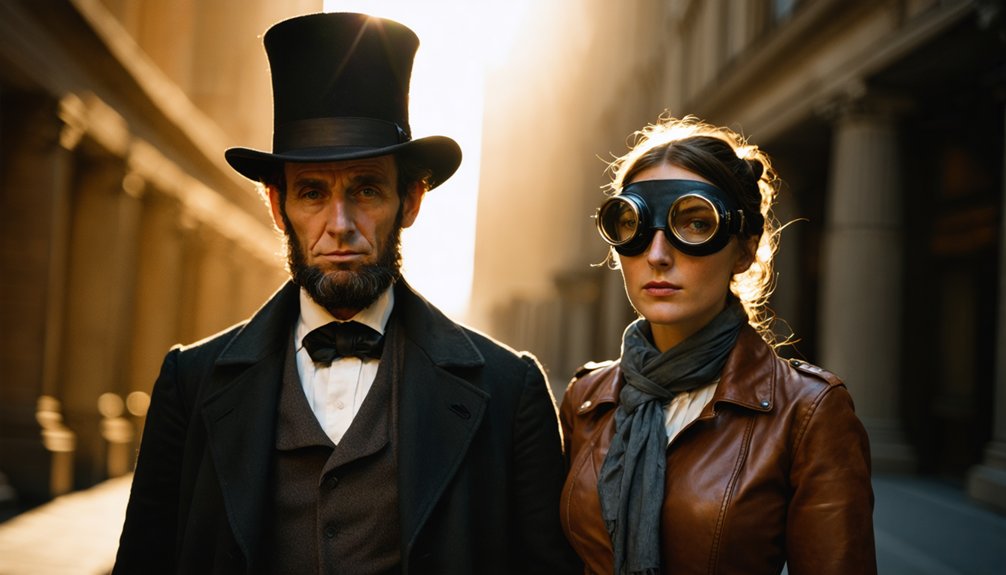
American historical figures offer some of the most instantly decodable costume frameworks in cosplay because their visual identities compress biography, authority, and era into a compact set of garment choices.
When you build these looks strategically, you activate immediate recognition across convention floors, patriotic celebrations, and reenactment settings. American Revolution and Civil Rights figures dominate this category through strong silhouette logic.
- George Washington — tricorn hat, colonial coat, white cravat, and knee-high boots anchor the revolutionary commander aesthetic precisely.
- Abraham Lincoln — stovepipe hat, formal black suit, and lean silhouette communicate presidential gravity without excessive accessorizing.
- Betsy Ross — colonial dress, apron, and sewing tools synthesize craftsmanship with patriotic symbolism efficiently.
Each figure rewards your investment in one signature accessory that functions as the primary identification trigger.
European Royalty and Military Leaders Worth Cosplaying
European royalty and military leaders compress centuries of political theater into costume frameworks that reward precise garment selection. When you choose figures like Marie Antoinette or Napoleon Bonaparte, you’re engaging regal aesthetics and military symbolism simultaneously through deliberate textile choices, structured silhouettes, and historically coded accessories.
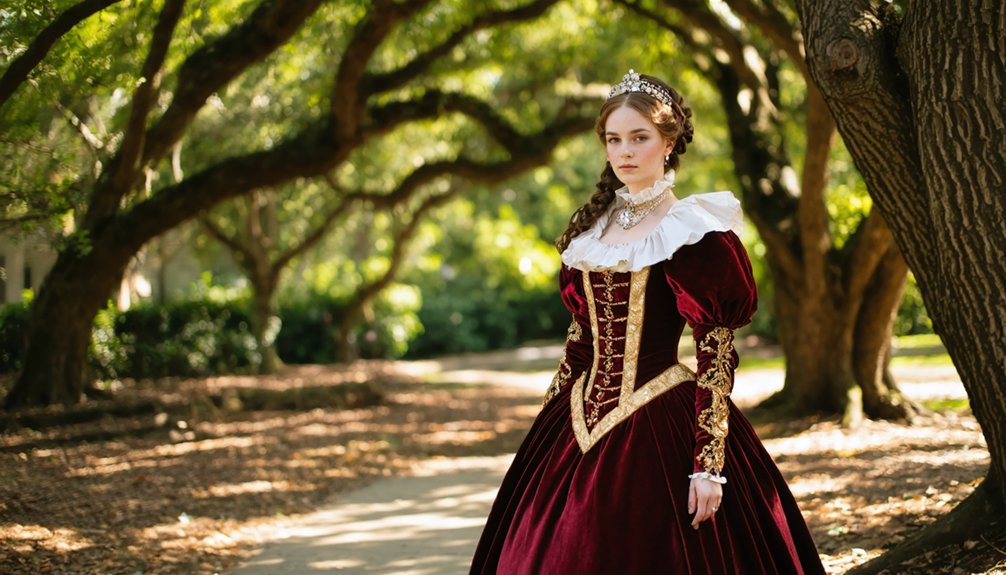
Marie Antoinette demands pastel brocades, powdered wigs, and layered court gowns that signal aristocratic excess immediately. Napoleon requires a bicorn hat, epaulettes, and a disciplined military coat that projects calculated authority rather than decorative excess.
Joan of Arc merges martial and feminine visual registers, creating conceptual tension that distinguishes your portrayal from conventional royal interpretations.
Prioritize headwear, distinctive color palettes, and symbolic props because these elements communicate historical identity most efficiently within crowded cosplay environments.
How to Make Your Historical Costume Accurate for Any Event
Selecting the right garments for European royalty or military figures sharpens your eye for the kind of historical precision that translates across every event context. Fabric choices and accessory importance anchor authenticity more than volume of detail.
Authentic historical costuming begins with fabric and accessories — precision over abundance defines every truly compelling period look.
- Layer period-accurate textiles: Brocade, velvet, and linen communicate social rank immediately, distinguishing aristocratic from military personas.
- Prioritize silhouette over decoration: A correctly structured doublet or military coat reads historically accurate from a distance before accessories register.
- Curate symbolic accessories deliberately: A bicorn hat, crown, or epaulette functions as a concentrated visual signal, collapsing centuries of context into a single recognizable element.
Balance scholarly fidelity with practical wearability.
Rigorous research transforms your costume from decoration into a studied, intellectually compelling historical statement.
Frequently Asked Questions
Which Historical Figure Costumes Work Best for Group Cosplay Themes?
You’ll find that iconic leaders like Napoleon, Washington, and Lincoln pair brilliantly as famous duos or ensembles, creating analytically cohesive group themes that blend strong silhouettes, recognizable props, and period-accurate styling for maximum collective visual impact.
How Much Does a High-Quality Historical Cosplay Costume Typically Cost?
Carefully calculating costume quality costs, you’ll typically spend $100–$500. Budget considerations vary based on materials, craftsmanship, and complexity. You can find premium historical cosplay pieces through specialized artisans, theatrical suppliers, or detailed DIY construction methods.
Can Children Wear Historical Figure Costumes for School Projects?
You can absolutely dress children in historical figure costumes for school projects. Balance historical accuracy with creative interpretation to craft age-appropriate, visually compelling portrayals that deepen engagement, stimulate critical thinking, and transform abstract figures into tangible, memorable learning experiences.
Where Can Beginners Buy Pre-Made Historical Cosplay Costumes Affordably?
You’ll find affordable pre-made historical cosplay costumes at budget costume shops and online thrift stores like ThredUp or eBay. These platforms offer diverse, cost-effective selections, enabling beginners to experiment with historically inspired silhouettes without substantial financial commitment.
Are Historical Figure Costumes Appropriate for Professional Themed Corporate Events?
Yes, because nothing screams “quarterly synergy” like Napoleon’s bicorn hat. You’ll want to align your historical figure costume with corporate guidelines and observe costume etiquette to guarantee your choice projects professionalism while creatively energizing the themed event.
References
- https://starstruckpanda.com/unique-historical-figure-costume-inspiration/
- https://halloweenpartyonline.com/blogs/partyideas/5-historical-figures-to-cosplay-for-the-upcoming-4th-of-july-celebration
- https://www.pinterest.com/ideas/history-cosplay/932635258109/
- https://www.facebook.com/groups/1365531183542966/posts/4092930620802995/
- https://www.amightygirl.com/toys/imaginative-play/costumes-dress-up/historic-character
- https://www.amazon.com/historical-figure-costume/s?k=historical+figure+costume
- https://www.halloweencostumes.com/historical-figures-costumes.html
- https://www.reddit.com/r/HistoricalCostuming/comments/1911hbu/historical_costume_list_for_2024_tell_me_yours/
- https://www.pinterest.com/ideas/funny-historical-cosplay-ideas/926163530523/
- https://heritagecostumes.com/collections/famous-people