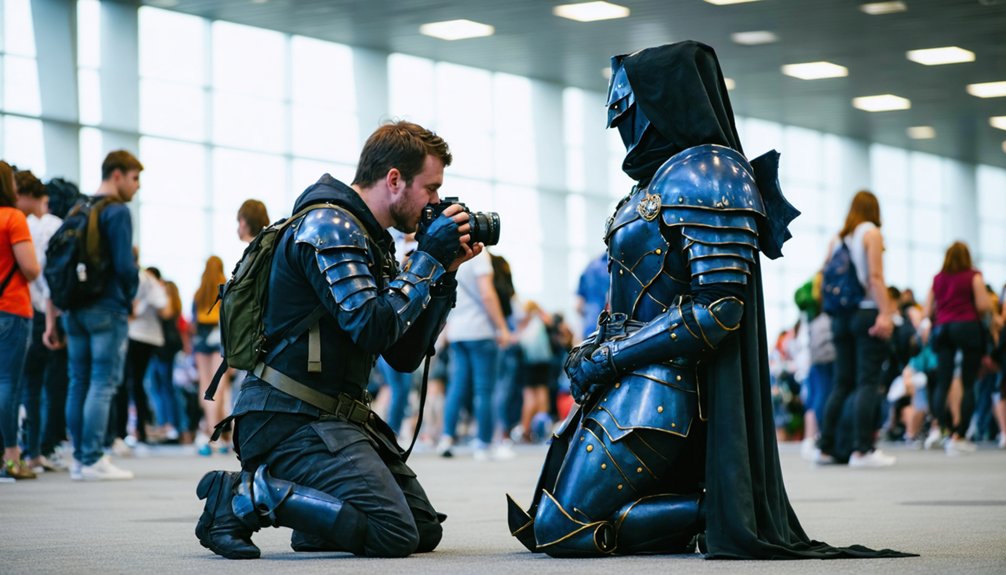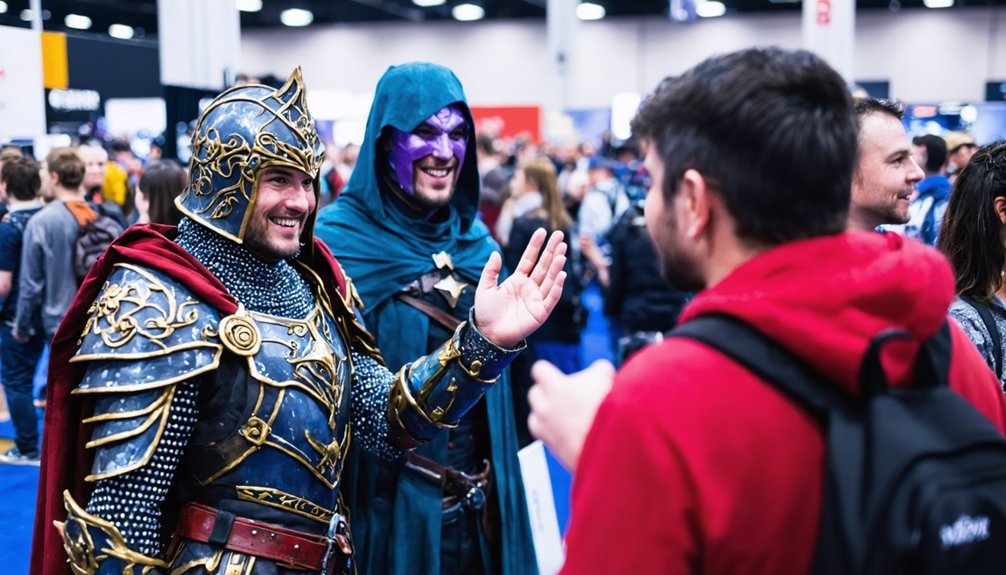
Cosplay consent means you ask before you touch, photograph, or physically interact with a cosplayer — and you only proceed when you receive an enthusiastic, explicit “yes.” It matters because a costume isn’t an invitation, and assuming otherwise enables harassment that damages the entire community. Consent is also ongoing, meaning you can’t rely on a single approval for repeated interactions. Stick around, and you’ll discover exactly how to recognize, prevent, and respond to violations.
Key Takeaways
- Cosplay consent means obtaining explicit permission before any physical interaction or photography with a cosplayer, regardless of their costume.
- Wearing a revealing or character-specific costume does not imply consent to touching, photography, or unwanted interaction.
- Consent must be ongoing and enthusiastic; silence, avoidance, or hesitation should be treated as a refusal.
- The “Cosplay Isn’t Consent” movement emerged to combat harassment at conventions and redefine community etiquette.
- Respecting cosplay consent protects individuals from harassment and fosters a safer, more inclusive community for everyone.
What Is Cosplay Consent?
Cosplay consent is the active agreement required before anyone initiates physical or verbal interaction with a cosplayer. It’s defined by an enthusiastic “yes” or clearly visible approval—not assumption.
The phrase “cosplay isn’t consent” exists precisely because cosplay stereotypes have long distorted how people perceive cosplayers, wrongly suggesting that costume authenticity or character portrayal implies openness to unsolicited contact or commentary.
You need to understand that consent isn’t a one-time checkbox—it’s an ongoing process. A cosplayer embodying a fictional character hasn’t surrendered their personal boundaries.
Their costume reflects creative expression, not an invitation. Reassessing comfort throughout an interaction matters because circumstances shift.
When you treat consent as continuous and non-negotiable, you actively contribute to a community where cosplay remains a safe, voluntary, and respected art form.
Why “Cosplay Is Not Consent” Defined the Cosplay Consent Movement
When you look at the cosplay community’s history, the phrase “cosplay isn’t consent” emerged as a direct response to rampant harassment at conventions, giving victims and allies a unified rallying cry.
This movement reshaped how fans, organizers, and attendees understand the boundaries between fictional character portrayal and real-person interaction. Its cultural influence still holds strong today, reinforcing that a costume never functions as an open invitation for unwanted contact or photography.
Phrase’s Origins and Impact
Few phrases have shaped a community’s values as concisely and powerfully as “Cosplay isn’t consent.” Emerging from the broader cultural conversations around sexual harassment at conventions, the phrase became a rallying cry that directly challenged the harmful assumption that wearing a costume implies openness to unwanted physical contact, photography, or sexual remarks.
Convention organizers, cosplayers, and advocates adopted the slogan to redefine cosplay etiquette on a foundational level. It pushed communities to recognize that costume etiquette isn’t just about presentation—it’s about respecting the person wearing it.
The phrase spread through social media, convention policy boards, and grassroots campaigns, transforming an unspoken tension into an explicit standard. Its impact remains measurable: today, many major conventions display it prominently, making consent an expectation rather than a conversation you’d need to initiate yourself.
Movement’s Lasting Cultural Influence
What started as a grassroots catchphrase has since reshaped how entire fandoms understand boundaries and mutual respect. “Cosplay isn’t consent” didn’t just give people a slogan—it gave them a framework.
You can see its influence across convention policies, online communities, and even costume design culture, where creators now openly discuss boundaries alongside their craft.
Fan interactions have fundamentally shifted—attendees increasingly understand that approaching a cosplayer requires the same courtesy you’d extend to anyone else.
The movement normalized consent conversations in spaces that once dismissed them entirely.
It pushed fandoms to evolve past performative inclusion toward genuine accountability.
When you participate in convention culture today, you’re benefiting from standards this movement helped establish.
That’s not a small legacy—it’s a structural cultural shift that continues driving meaningful change.
How Cosplay Consent Protects Cosplayers From Harassment
Cosplay consent directly shields cosplayers from harassment by establishing clear behavioral boundaries that the entire convention community must respect. When you follow proper cosplay etiquette, you’re actively dismantling entitlement culture that enables harassment.
Consent frameworks transform fan interactions from potentially exploitative exchanges into mutual, respectful engagements.
You protect cosplayers by requiring explicit verbal approval before touching costumes, taking photos, or initiating physical contact. This approach counters dangerous narratives suggesting costumes signal automatic permission.
Silence, hesitation, or avoidance aren’t ambiguous signals—they’re clear refusals you must acknowledge.
Community enforcement amplifies individual protection. When you intervene during witnessed harassment, acknowledge inappropriate behavior, and support affected cosplayers, you’re collectively reinforcing that “cosplay isn’t consent” isn’t just a catchphrase—it’s a non-negotiable community standard everyone must uphold.
The Most Common Cosplay Consent Violations at Conventions
Despite growing awareness around cosplay consent, certain violations remain persistently common at conventions. Understanding these breaches helps you recognize and prevent them in real time.
The most frequent violations include:
- Unsolicited touching – You don’t grab someone’s costume, props, or body without asking first. Costume boundaries exist regardless of how elaborate or interactive a design appears.
- Photography without permission – Snapping photos before receiving a clear “yes” directly undermines cosplay etiquette and the cosplayer’s autonomy.
- Unwanted physical proximity – Placing your arm around someone’s waist or shoulders without consent crosses a clear line.
- Ignoring refusals – Pushing past a declined request amplifies harm.
Recognizing these patterns positions you as an informed, proactive community member who helps conventions remain genuinely safe spaces for everyone.
Does a Costume Count as Cosplay Consent?
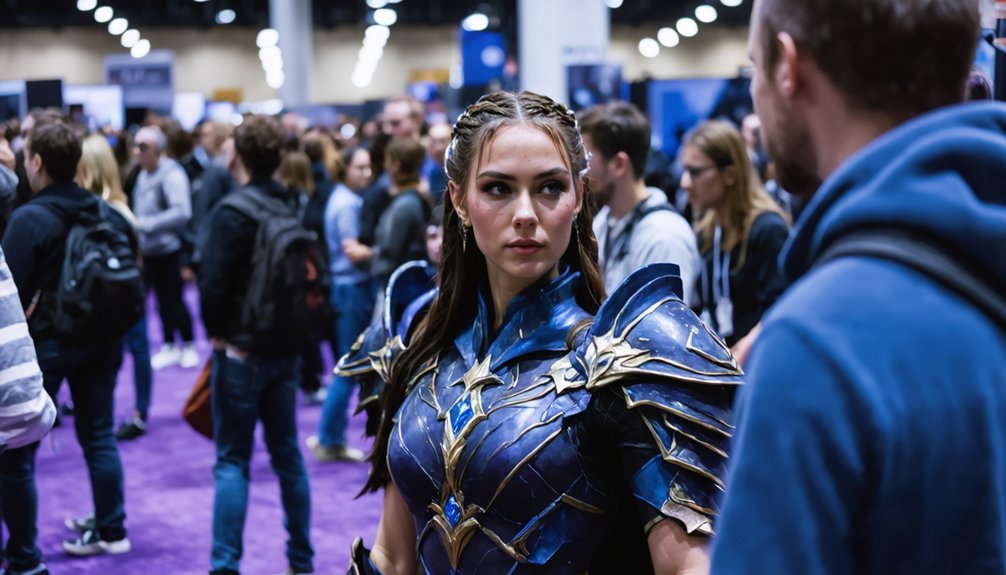
One question sits at the heart of many violations you just read about: does wearing a revealing or character-specific costume automatically signal consent? It doesn’t. Understanding costume boundaries protects everyone in the community.
A character’s fictional narrative never transfers to the real person portraying them. Consent importance remains constant regardless of what someone wears.
Here’s what a costume never communicates:
- Permission to touch the cosplayer’s body or props
- An open invitation for unsolicited photography
- Agreement to engage in any verbal interaction
- Acceptance of sexualized comments or gestures
- Entitlement to physical proximity without asking
You must treat every cosplayer as an individual with full autonomy. Their creative expression isn’t a social contract.
When you’re unsure, simply ask—explicit verbal confirmation remains the only valid measure of consent.
How to Ask a Cosplayer for a Photo the Right Way
Asking a cosplayer for a photo is simpler than you might think, yet many fans still get it wrong. Start with direct eye contact and say, “Can I take a photo with you?” That’s it. Don’t assume their intricate costume design signals openness to interaction.
Respect that event scheduling keeps cosplayers moving between panels, meetups, and competitions, so accept a “no” without pushing further.
When they agree, let them choose the pose and maintain appropriate distance. Watch for non-verbal hesitation like leaning away or avoiding eye contact — these signal discomfort even without words.
After taking the photo, thank them and move on.
How to Tell When a Cosplayer Is Uncomfortable Without Them Saying It
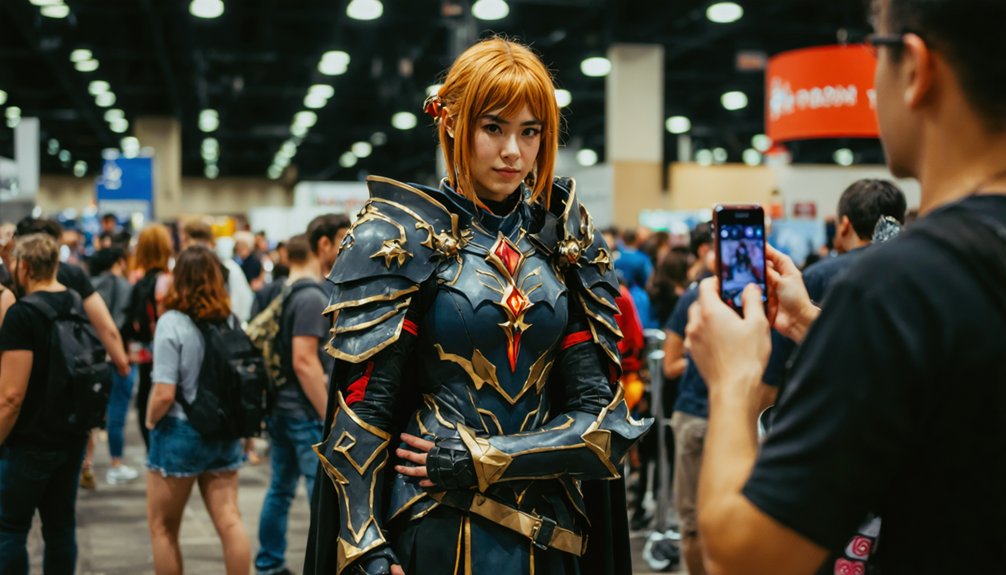
Not every cosplayer will verbally express discomfort, so you need to sharpen your ability to read nonverbal cues. Watch for crossed arms, a stiffened posture, averted eyes, or a body angled away from you — these signals often communicate refusal more honestly than words.
If a cosplayer becomes unresponsive, moves away, or suddenly engages with someone else after your approach, take those avoidance behaviors as a clear indicator to back off and respect their space.
Reading Body Language Cues
While verbal consent is the clearest standard, body language often signals discomfort before someone finds the words to say it. Strong cosplay etiquette and costume etiquette require you to read these cues actively and respond immediately.
Watch for these key signals:
- Leaning away or creating physical distance from you
- Avoiding eye contact or scanning the area for an exit
- Tense posture, crossed arms, or a stiff, guarded stance
- Short, clipped responses without engagement or enthusiasm
- Forced smiling paired with visible unease or silence
When you notice any of these signs, stop. Don’t push the interaction further. Respecting non-verbal communication is just as critical as honoring a spoken refusal.
The community strengthens when everyone commits to recognizing discomfort—spoken or not.
Recognizing Avoidance Behaviors
Body language cues reveal discomfort in real time, but avoidance behaviors tell a deeper story—one that unfolds before you’re even close enough to make eye contact.
When a cosplayer redirects their path, shortens responses, or suddenly becomes occupied with their phone, they’re communicating costume boundaries without words. These aren’t coincidences—they’re deliberate signals.
Strong cosplay etiquette means you’re actively reading behavioral patterns, not just facial expressions. Notice whether someone consistently moves away as you approach, avoids prolonged conversation, or positions others between themselves and you.
These cues demand the same respect as a verbal “no.”
Don’t rationalize avoidance as shyness or distraction. Recognize it as a clear boundary, adjust your behavior immediately, and redirect your attention elsewhere.
Respecting unspoken signals is what separates a safe convention experience from a harmful one.
Safe Practices Every Cosplayer Should Follow to Protect Cosplay Consent
Protecting cosplay consent starts with practical habits that keep you safe and empowered in convention spaces. Strong cosplay etiquette and costume safety aren’t just courtesies—they’re strategic tools for maintaining control over your experience.
Implement these core practices:
- Stay grouped with trusted people who know your whereabouts at all times
- Avoid engaging with intoxicated or unresponsive individuals entirely
- Treat silence and avoidance as clear refusal signals, not ambiguous responses
- Use concealment by covering your face or repositioning when unwanted photographers approach
- Document harassment discreetly by photographing offenders with your personal phone when direct confrontation feels unsafe
These aren’t passive suggestions—they’re active frameworks that shift power back to you. Your costume choice never compromises your right to boundaries, and smart preparation reinforces that truth consistently.
What to Do When You See a Cosplay Consent Violation Happen
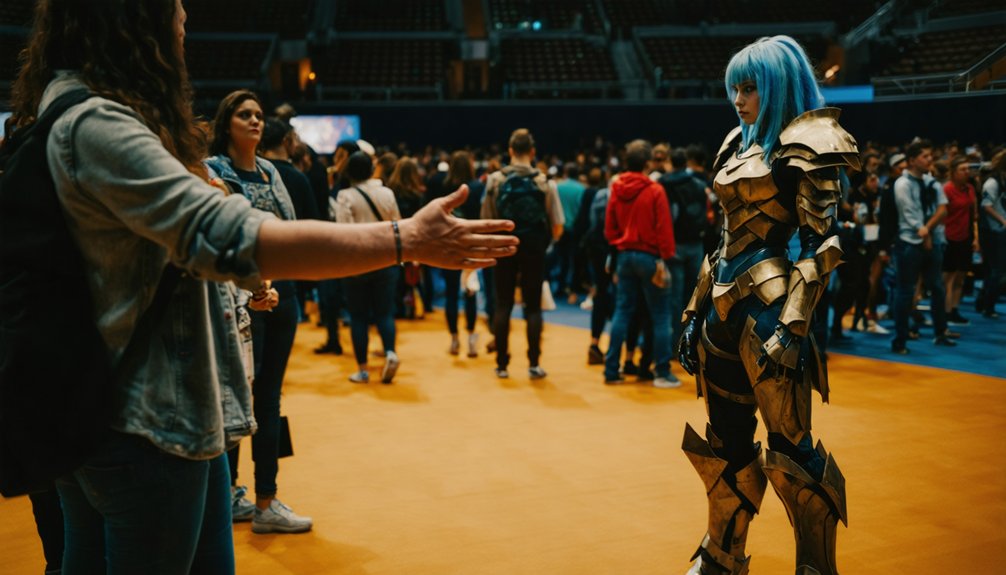
When you witness a cosplay consent violation, you must first recognize what’s happening—whether it’s unwanted touching, forced photography, or verbal harassment—so you can respond appropriately.
You can intervene safely by stepping in as a bystander, redirecting the situation, or simply standing with the affected cosplayer to signal they’re not alone.
If confrontation feels unsafe, you should document the incident and report it to event staff or convention security so the community’s enforcement systems can take over.
Recognize the Violation
Recognizing a cosplay consent violation as it happens is the first step toward stopping it. Whether it’s a breach of cosplay etiquette or disrespect toward someone’s intricate costume design, you need to identify the behavior quickly.
Watch for these clear violations:
- Touching a cosplayer’s body, costume, or props without asking
- Taking photos after an explicit refusal
- Making inappropriate comments about a cosplayer’s appearance
- Placing arms around someone without verbal permission
- Continuing unwanted interaction despite visible discomfort
Trust your instincts. If something feels wrong, it probably is.
Non-verbal cues like body stiffening, stepping back, or avoiding eye contact signal distress. You don’t need a formal rulebook to recognize when someone’s boundaries are being crossed—awareness alone positions you to act decisively.
Intervene Safely
Stepping in when you witness a cosplay consent violation doesn’t require confrontation—it requires strategy. Strong cosplay etiquette means the community collectively enforces boundaries, not just individuals.
Use distraction techniques—walk up and start a casual conversation with the cosplayer, giving them an exit opportunity. You can also alert nearby convention staff or security, who’re trained to handle these situations efficiently.
Prioritizing costume safety extends beyond physical protection; it means safeguarding someone’s emotional security too. If direct intervention feels unsafe, document the incident discreetly using your phone.
Afterward, check in with the affected cosplayer, acknowledge what happened, and let them decide their next steps. You don’t need to escalate every situation dramatically—sometimes a simple, strategic interruption is enough to dismantle harassment and reinforce that the community’s watching out for everyone.
Report and Document
Beyond intervening in the moment, knowing how to report and document a cosplay consent violation strengthens the community’s ability to hold violators accountable long-term. When costume boundaries are crossed, your response directly shapes whether conventions remain safe spaces.
Follow these documentation and reporting steps:
- Photograph the violator discreetly using your phone without escalating confrontation
- Record incident details — time, location, and specific cosplay etiquette violations observed
- Report immediately to convention staff or security with your collected evidence
- Support the affected cosplayer by offering to corroborate their account officially
- Submit formal complaints to convention organizers post-event if staff response proves inadequate
Systematic reporting creates paper trails that organizers can’t ignore. Each documented violation builds institutional pressure to enforce stronger cosplay etiquette policies, ultimately transforming community standards from reactive to preventative.
How Communities and Conventions Actually Stop Cosplay Harassment
Communities and conventions don’t just acknowledge cosplay harassment — they actively work to stop it through enforceable policies and collective accountability. Most major conventions now embed cosplay etiquette guidelines directly into their codes of conduct, making violations grounds for badge revocation or permanent bans. These aren’t suggestions — they’re rules with real consequences.
You’ll also notice trained staff and volunteer safety teams patrolling event floors, specifically watching for costume safety concerns and boundary violations. When you witness harassment, you’re part of that enforcement system too. Bystander intervention matters, and conventions increasingly provide clear channels for reporting incidents in real time.
Community-led initiatives, social media accountability, and panel discussions on consent further reinforce these standards. Stopping harassment isn’t one person’s job — it’s a shared, ongoing commitment everyone at the event owns.
Frequently Asked Questions
Can Minors Cosplay Safely Without Parental Supervision at Conventions?
Exploring uncharted waters alone isn’t wise—minors shouldn’t attend conventions without parental supervision. You’ll enhance cosplay safety by ensuring guardians actively monitor interactions, helping young enthusiasts enjoy community experiences while staying protected from potential consent violations.
Are There Legal Consequences for Violating Cosplay Consent at Events?
Yes, you can face legal consequences! Violating cosplay consent breaches harassment laws, while ignoring cosplay etiquette and intellectual property rights may trigger civil liability. You’re accountable—communities increasingly support survivors pursuing formal legal action against offenders.
How Does Online Cosplay Content Relate to Consent Issues?
Have you ever seen your content shared without permission? Online boundaries matter just as much as physical ones. You’re vulnerable to digital harassment when others repost, edit, or monetize your cosplay content without your explicit consent.
Do Conventions Have Official Written Cosplay Consent Policies Attendees Sign?
Many conventions don’t require you to sign official written policies, but they’re increasingly embedding cosplay etiquette guidelines into their codes of conduct. Through consent education initiatives, you’ll find these standards actively shaping safer, more innovative community experiences.
Can Cosplayers File Formal Complaints Against Specific Harassment Incidents?
Yes, you can file formal complaints against cosplay harassment incidents through convention staff or security. Consent enforcement relies on your reporting, so document incidents, identify witnesses, and submit detailed reports to organizers for appropriate disciplinary action.
References
- https://www.youtube.com/watch?v=rwhztwxzwU8
- https://aimsreview.aims.edu/incite/wp-content/uploads/2023/05/Cosplay-is-Not-Consent-James-Zimmerman-English-Composition-1.pdf
- https://fanlore.org/wiki/Costumes_Are_Not_Consent
- https://www.startrek.com/news/conventional-behavior-for-cons-cosplay
- https://www.youtube.com/watch?v=UFPxBh_dQHE
- https://tripproject.ca/cosplay-consent/
- https://www.youtube.com/watch?v=lQgkmc7rMUY
- https://www.queencosplay.com/blog/cosplay-is-not-consent
- https://hablemosdecosplay.com/cosweek/cosplay-is-not-consent/