When you pursue character accuracy in cosplay, you’re doing more than replicating a costume — you’re engaging in a form of analytical tribute to the source material. Precise details validate the original creator’s choices, reinforce cultural significance, and strengthen audience recognition. Mannerisms, micro-level construction nuances, and contextual understanding collectively transform a costume into a living representation. Getting these nuances right separates surface-level imitation from genuinely immersive portrayal, and there’s considerably more to unpack across each dimension.
Key Takeaways
- Character accuracy transforms a costume into a genuine tribute, strengthening character identity and deepening audience engagement at conventions.
- Respecting original design preserves cultural significance, avoiding harmful stereotypes while honoring the craftsperson’s creative choices.
- Small details trigger genuine recognition, communicating dedicated research and elevating overall craftsmanship quality.
- Mastering mannerisms and body language transforms static accuracy into a dynamic, living performance for viewers.
- Balancing creative interpretation with accuracy ensures character recognition remains intact while allowing personal artistic expression.
What Makes Character Accuracy Matter in Cosplay?
Character accuracy in cosplay matters because it transforms a costume into a genuine tribute to the source material. When you prioritize visual recognition, you strengthen character identity and deepen audience engagement across the cosplay community.
Precise detailing fuels immersive storytelling, allowing narrative authenticity to resonate beyond surface aesthetics. You’re not merely wearing a costume—you’re embodying performance dynamics that communicate emotional connection to both character and audience.
Accurate cultural appreciation guarantees you honor the nuanced layers embedded within diverse source materials, avoiding reductive portrayals. Artistic expression flourishes when accuracy serves as your foundation rather than your constraint.
Each deliberate choice you make—fabric, silhouette, prop—signals analytical commitment to the craft. Ultimately, character accuracy elevates cosplay from imitation into sophisticated, community-validated artistic innovation.
How Costume Details Show Respect for the Original Design
This meticulous approach also validates the original craftsperson’s choices within broader creative discourse.
When you preserve specific details faithfully, you’re participating in a scholarly conversation about visual storytelling—transforming your costume into a three-dimensional analytical tribute that reinforces the character’s cultural and narrative significance.
The Skill Required to Nail Character Accuracy in Every Detail
When you pursue character accuracy in cosplay, you must master complex costume construction techniques that demand both technical knowledge and practiced skill.
You’ll find that advanced methods—such as pattern drafting, thermoplastic molding, and fabric manipulation—directly determine how faithfully you can reproduce intricate design elements.
Your command of these techniques not only elevates the costume’s visual accuracy but also signals a measurable level of craftsmanship that distinguishes serious practitioners from casual enthusiasts.
Mastering Complex Costume Construction
Mastering complex costume construction demands a convergence of advanced technical skills, from precise sewing techniques to intricate prop fabrication, all working in concert to achieve faithful character representation.
You’ll find that fabric selection directly impacts how accurately a costume replicates the original design’s texture and movement. Strategic pattern fitting guarantees dimensional accuracy across diverse body types, while embellishment techniques reinforce surface-level authenticity.
Layering methods create visual depth that mirrors illustrated or filmed references, and disciplined color matching eliminates tonal discrepancies that undermine recognition.
Where historical accuracy applies, you must research period-appropriate construction methods to honor the character’s contextual origins. Maintaining structural integrity throughout the build process prevents premature deterioration, and deliberate finishing touches elevate the costume from competent replica to compelling, exhibition-worthy artistic achievement.
Advanced Techniques Elevate Accuracy
Achieving character accuracy at the highest level requires you to integrate a sophisticated array of techniques that extend well beyond basic costume assembly.
Advanced tailoring guarantees structural precision, while fabric manipulation allows you to replicate textures that mirror source material authentically. Your material selection directly influences how light interacts with your costume, affecting visual storytelling across varied event environments.
Costume layering adds dimensional complexity, reinforcing character embodiment through silhouette depth and tonal variation. Prop integration demands mechanical understanding, as poorly executed accessories undermine otherwise meticulous builds.
You must also study performance dynamics, aligning physical behavior with visual presentation to produce cohesive portrayals. Each technique compounds upon the others, creating a disciplined framework where technical mastery and artistic intention converge into a fully realized, recognizable character representation.
Why Cultural Nuance Can Make or Break Character Accuracy
When you portray a character rooted in a specific cultural tradition, your research into that culture’s history and customs becomes as critical as your costume construction.
Skipping this step risks reducing rich cultural heritage to harmful stereotypes, undermining the authenticity you’ve worked to achieve.
Preventing Harmful Cultural Stereotypes
Cultural nuance can make or break the authenticity of a cosplay, particularly when a character’s identity is rooted in a specific heritage or tradition. Without cultural sensitivity, even technically precise costumes risk reducing rich traditions to harmful caricatures.
Stereotype avoidance requires deliberate research before construction begins.
Consider these critical prevention strategies:
- Research primary sources — consult cultural practitioners, academic texts, and community voices rather than relying on mainstream media depictions
- Distinguish decorative from sacred elements — certain garments or symbols carry ceremonial significance that casual replication disrespects
- Contextualize the character’s cultural framework — understanding historical and societal background prevents reductive, surface-level interpretation
You strengthen your portrayal by approaching cultural elements analytically rather than aesthetically alone.
Precision here isn’t merely technical—it’s ethical, reflecting a sophisticated understanding of what authentic character representation genuinely demands.
Honoring Traditional Attire Significance
Traditional attire carries layered meaning that extends far beyond visual aesthetics, and ignoring that depth fundamentally undermines character accuracy. When you research a costume’s cultural significance, you’re decoding centuries of heritage representation embedded within fabric, color, and construction. Each element carries costume symbolism tied to social rank, spiritual practice, or regional identity.
You must treat historical context as a non-negotiable foundation, not optional background research. Authentic expression demands that you understand *why* specific garments appear as they do, not simply *how* they look. Misrepresenting traditional attire strips characters of their cultural integrity, reducing meaningful symbols to surface-level aesthetics.
Precision in this area distinguishes skilled cosplayers from casual ones. Your commitment to accuracy signals genuine respect for the cultural frameworks that shaped these characters’ identities.
How Mannerisms Elevate Character Accuracy Into a Full Performance

Beyond the visual components of a costume, mannerisms transform static accuracy into dynamic, living performance. You elevate your portrayal when you internalize a character’s behavioral patterns, converting costume accuracy into embodied authenticity.
Mannerism mastery requires systematic study of movement, speech, and emotional response.
Key performance enhancement strategies include:
- Body language alignment: Replicating signature stances and gestures reinforces immediate character recognition.
- Vocal inflection study: Matching speech cadence and tonal patterns deepens audience immersion considerably.
- Emotional consistency: Responding situationally as the character strengthens behavioral believability throughout interactions.
When you integrate these behavioral dimensions, your portrayal transcends surface-level representation. The psychological connection between performer and character intensifies, creating a multidimensional experience that resonates deeply with audiences who recognize nuanced, technically precise character embodiment.
Balancing Creative Interpretation With Character Accuracy
While perfect replication remains the foundation of serious cosplay, creative interpretation allows you to infuse personal artistry without sacrificing character essence. Your creative freedom becomes most effective when grounded in deep source material analysis, ensuring your unique interpretation enhances rather than distorts the original design.
Maintaining authenticity balance requires deliberate decision-making. You must identify which elements are non-negotiable to character recognition and where individual style can strategically emerge. Your personal touch should amplify emotional connection between performer and audience, never dilute core visual identity.
Authentic creative balance demands precision—preserve what defines recognition while allowing personal artistry to strategically elevate the character.
Your artistic vision functions best when applied to adaptation challenges—material substitutions, physical limitations, or cultural translations—rather than arbitrary stylistic deviation.
Precise, informed creative choices demonstrate scholarly understanding of the source while producing a portrayal that reflects disciplined innovation and genuine respect for the original work.
Does Perfect Accuracy Always Mean a Better Cosplay?
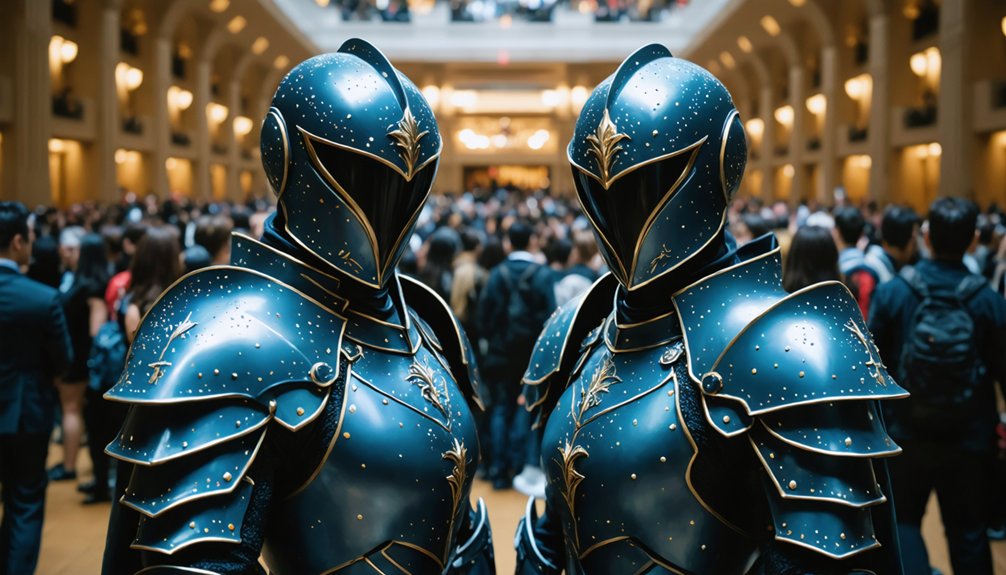
Does perfect accuracy guarantee the strongest cosplay performance? Not necessarily. Character evolution, cultural context, and emotional connection often matter more than pixel-perfect replication. Your artistic freedom lets you prioritize visual storytelling over rigid duplication.
Consider these critical factors:
- Personal preferences shape how you interpret a character’s performance nuances, creating authentic portrayals beyond surface accuracy.
- Community feedback reveals whether your creative choices resonate emotionally, validating artistic decisions that deviate from strict canon.
- Cultural context demands thoughtful adaptation, sometimes requiring deliberate modifications that strengthen rather than undermine representation.
You’re ultimately constructing a living narrative, not a static replica.
When your emotional connection to the character drives your choices, you’ll frequently produce more compelling portrayals than technically flawless but emotionally hollow recreations.
Accuracy serves your vision—it doesn’t define it.
How Character Accuracy Shapes the Convention Experience
Character accuracy at conventions operates as a social currency, shaping how others engage with your portrayal the moment you step onto the floor.
Strong character recognition amplifies audience engagement, triggering spontaneous community interaction rooted in shared experiences. When your visual impact aligns precisely with established source material, you’re actively contributing to immersive storytelling that transforms the convention atmosphere into a collaborative narrative space.
Role-playing dynamics intensify when accuracy removes ambiguity—attendees connect emotionally rather than analytically. That emotional connection converts fleeting encounters into lasting event memories, reinforcing bonds across the broader cosplay community.
You’re not simply wearing a costume; you’re functioning as a living reference point that elevates collective immersion. Precision, consequently, isn’t vanity—it’s a deliberate, measurable contribution to the convention’s shared cultural experience.
Why Small Details Are What People Actually Remember
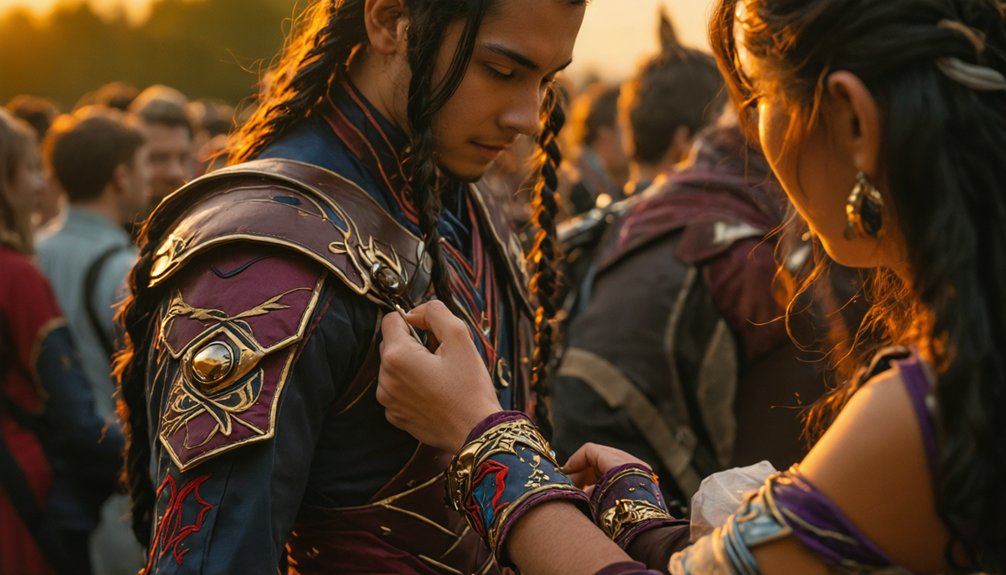
Beyond the broad silhouette and color palette, it’s the granular details—a character’s signature buckle, a weathered texture on armor, or a precisely matched insignia—that trigger genuine recognition in observers.
These memorable details define costume impact by activating emotional connection through visual storytelling. Your intricate design choices shape audience perception far beyond surface-level impressions.
Small details drive:
- Character immersion – precise execution of minor elements deepens believability, reinforcing character recognition across diverse community engagement settings.
- Narrative authenticity – micro-level accuracy communicates dedicated research, elevating your personal interpretation into a scholarly visual statement.
- Emotional resonance – observers unconsciously register subtle accuracies, strengthening their psychological bond with the portrayed character.
Ultimately, audiences retain specificity, not generality. Your commitment to granular precision transforms a costume into a compelling, analytically sound contribution to cosplay’s evolving visual language.
Frequently Asked Questions
Can Character Accuracy Affect a Cosplayer’s Confidence During Live Events?
Carefully crafting costume accuracy you’ll experience a confidence boost, as precise portrayal validates your dedication. However, perfectionism can trigger performance anxiety, so balancing meticulous authenticity with adaptive flexibility guarantees you’re delivering immersive, psychologically grounded, and innovative character representations effectively.
How Does Character Accuracy Influence Judging Criteria in Cosplay Competitions?
Character accuracy shapes judging standards by validating your technical mastery, cultural research, and craftsmanship precision. It guarantees competition fairness, as judges analytically assess how authentically you’ve replicated source material details, rewarding innovative construction methods alongside faithful visual representation.
Does Studying a Character’s Backstory Improve Overall Cosplay Accuracy?
Studying backstory depth absolutely sharpens your cosplay accuracy. When you grasp character motivation, you’ll embody authentic mannerisms, emotional responses, and nuanced gestures—transforming your portrayal from mere visual replication into a psychologically immersive, analytically informed artistic performance.
Can Inaccurate Cosplay Portrayals Negatively Impact Fan Communities Online?
Yes, your “creative interpretation” can ignite authenticity debates, warp community perceptions, and fuel hostile online behavior. You’re actively failing fan expectations when inaccuracies misrepresent beloved characters, fracturing the community’s shared immersive identity.
How Do Cosplayers Handle Accuracy When Characters Have Multiple Design Versions?
You’ll choose a specific version intentionally, researching design evolution thoroughly. You analyze fan interpretations, select canonical or personally resonant iterations, then meticulously replicate defining details that authentically distinguish your chosen variant from alternative character depictions.
References
- https://starstruckpanda.com/character-accuracy-mistakes-to-avoid-in-cosplay/
- https://starstruckpanda.com/cosplay-character-accuracy-and-cultural-representation/
- https://cosplay.com/archive/thread/w2ognp/how-important-is-character-accuracy-when
- https://starstruckpanda.com/balancing-character-accuracy-and-comfort-in-cosplay/
- https://www.momokarinyo.com/single-post/2018/12/05/cosplay-convos-accuracy
- https://www.youtube.com/watch?v=jaynRwzl0ds
- https://www.youtube.com/watch?v=fm4CxNdBQBY
- https://snowdragon.tv/en/blog/does-cosplay-have-to-be-accurate
- https://www.youtube.com/watch?v=QGCEDY0eYMI
- https://starstruckpanda.com/mastering-character-mannerisms-in-cosplay/